Recommended Free Tools
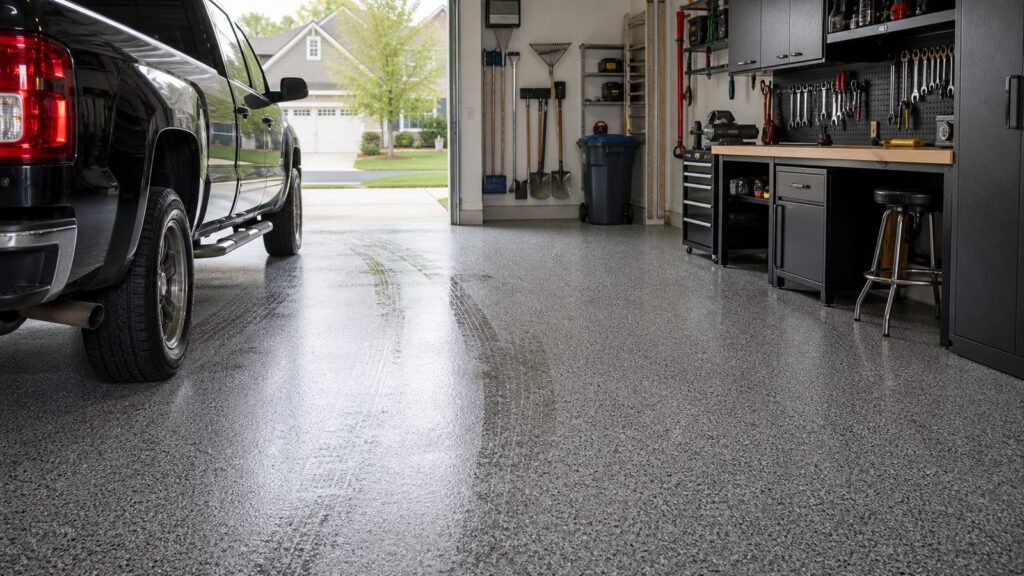
The best garage flooring is not the one that looks sharpest in a showroom photo. It is the floor that matches how the garage is actually used: daily parking, road salt, hot tires, oil drips, slab moisture, storage, tools, kids bikes, gym equipment, and the occasional dropped jack stand.
For most US homeowners in 2026, the top garage floor choices are a professional polyaspartic or polyurea flake system, a 100%-solids epoxy base with a UV-stable polyaspartic topcoat, rigid interlocking garage tiles, sealed or polished concrete for good slabs, and porcelain tile or containment mats for specific situations. The three options we generally steer clients away from are bargain floor paint or one-part epoxy paint in vehicle bays, indoor carpet or foam gym tile across the garage, and wood, laminate, or standard click LVP where cars park.
As an Amazon Associate I earn from qualifying purchases.
On our job sites, garage floors fail for predictable reasons. The slab was not profiled correctly. Moisture vapor was ignored. The product was too thin. The floor was put back into service too soon. Or the owner chose an indoor flooring product for a space that behaves more like a small service bay than a living room. This guide breaks the options down the way a contractor would: cost, prep, durability, repairability, safety, and the situations where each material makes sense.
Windows Errors? Fix Them Before They Spread
Repair common Windows errors and clear accumulated junk for a smoother, more stable PC - no reinstall needed.Free scan · no reinstallCrashes, No Sound, or Screen Glitches?
Random freezes, missing sound and display glitches usually trace back to one bad driver. Find and replace yours safely.Free scan · under a minuteQuick Decision Matrix: Match the Floor to the Garage
If you park daily vehicles in the garage, start with durability and chemical resistance. Hot tires, tire plasticizers, road salt, brake fluid, oil, and wet snow are harder on a floor than normal foot traffic. If the garage is also a gym or workshop, plan for comfort at work zones with removable mats instead of turning the whole garage into a soft floor.
#1 Best Overall
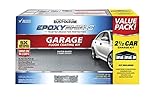
- Durable, 2-part epoxy formula works on interior concrete surfaces, such as garage floors, workshops, basements and more
- Professional glossy finish is easy to clean and provides a long lasting protection that is 5X harder than 1-part epoxy floor paint
- Walk on ready in 24 hours, vehicle and drive-on ready in 3 days
- Superior adhesion coating ensures no hot tire pickup and protects against gasoline, antifreeze, motor oil, and salt
- Low odor, low VOC gloss finish provides a show room shine
| Garage use case | Best fit | Typical 2026 cost | Main caution |
|---|---|---|---|
| Daily parking, road salt, fast return to service | Professional polyaspartic or polyurea flake coating | $5-$12 per sq ft, often $2,000-$6,900 for a two-car garage | Prep and moisture limits matter more than the product name |
| Heavy-use garage, workshop, long-term coating | 100%-solids epoxy base with polyaspartic topcoat | $4-$10 per sq ft commonly; Homewyse May 2026 lists $7.78-$12.71 per sq ft for basic mid-range professional epoxy coating | Epoxy can yellow in UV unless protected by a UV-stable topcoat |
| DIY, rental, reversible upgrade | Interlocking polypropylene or PVC garage tiles | Roughly $1.60-$7.75 per sq ft for materials; installed jobs often $6-$10 per sq ft | Water can migrate under tiles; expansion gaps are required |
| Sound slab, clean budget finish | Sealed, stained, or polished concrete | Sealer about $0.85-$1.60 per sq ft; stain $3-$25+; polish about $3-$16 | It will not hide structural cracking or bad concrete |
| High-end showroom garage | Garage-rated porcelain tile | Often $15-$50 per sq ft installed for porcelain in demanding conditions | Needs a flat, stable slab, epoxy grout, movement joints, and correct tile rating |
| Winter-only protection | Heavy-duty containment mat | About $200-$750 per roll, with many around $380 | Not a full floor rebuild; clean underneath periodically |
A standard two-car garage is often 400 to 500 square feet. That size matters because small differences in square-foot pricing become real money fast. A $6 per sq ft coating on 450 square feet is $2,700 before unusual repairs. A $12 per sq ft premium system is $5,400. A $2 per sq ft DIY tile or mat decision can look attractive, but only if the product is rated for vehicles and installed with the right edge and expansion details.
What Makes a Garage Floor Different From an Interior Floor
A garage slab is part structure, part driveway, and part utility room. It may see 4,000-pound vehicles, turning tires, jack stands, rolling cabinets, water, deicing chemicals, gasoline, oil, brake fluid, and freeze-thaw cycles. Interior flooring language does not cover that kind of service.
Hot-tire pickup is one of the big failure points. When a vehicle comes in after highway driving, the tires are hot and slightly softened. Thin paints and weak coatings can bond to the tire more strongly than they bond to the concrete. The next time the vehicle leaves, the finish peels in tire-shaped patches.
Do these 3 things before closing this tab:
1Scan for outdated or missing drivers - takes under a minute2Clear out junk files and repair common Windows errors3Fix the driver behind crashes, sound loss and screen glitchesMoisture vapor transmission is the other issue many homeowners never see coming. Concrete is porous. Moisture can move upward through the slab, especially in older homes, humid climates, coastal regions, below-grade garages, and slabs without a vapor barrier. If an impermeable coating is installed over a wet slab, vapor pressure can cause bubbles, whitening, peeling, or delamination. Before any coating that seals the slab tightly, we want a moisture test and a product system rated for the measured condition.
Garage floors also need traction. A glossy coating, polished concrete, or smooth tile can become slick when wet. That does not mean those floors are bad. It means the specification should include broadcast flake, aluminum oxide, polymer grit, a textured sealer, a slip-resistant tile surface, or another traction plan appropriate for the use.
1. Professional Polyaspartic or Polyurea Flake Coating
For a daily-use garage where the owner wants a finished look and minimum downtime, a professional polyaspartic or polyurea flake system is usually the first option we price. It is durable, fast-curing, attractive, and better against UV yellowing than standard epoxy. The common 2026 installed range is about $5-$12 per square foot for polyaspartic and about $5-$10 per square foot for polyurea, with many two-car garages landing around $2,000-$6,900 depending on prep, repairs, flake coverage, topcoat, and local labor.
A good system usually includes diamond grinding, crack and spall repair, a base coat, full or partial broadcast flake, scraping, vacuuming, and a clear topcoat. Full-flake floors hide small imperfections and dirt better than solid-color coatings. They also add texture, which helps with wet traction if the installer balances the topcoat thickness correctly.
Free tools Windows power users keep installed
One-click scans. No signup required.
Where Polyaspartic and Polyurea Shine
These coatings are strong candidates for homeowners who park daily vehicles, live in road-salt states, want a garage back quickly, or have sunlight hitting the front of the garage. Polyaspartic topcoats are valued because they cure quickly and resist UV discoloration better than many epoxies. In many jobs, foot traffic can return within hours and vehicle traffic within roughly 24 to 72 hours, depending on the exact system, temperature, humidity, and manufacturer limits.
The fast cure is also the reason we do not treat these as casual DIY products. Short pot life gives the installer less time to mix, spread, broadcast, and correct mistakes. A trained crew can move quickly and keep a wet edge. A first-time DIYer working alone in a hot garage can lose the material before it lays down properly.
What to Ask the Contractor
Do not shop only by the words polyaspartic or polyurea. Ask how the slab will be prepared. We want to hear diamond grinding, not just acid etching. Ask what cracks are included, how spalls are repaired, what moisture limits apply, how thick the system will be, whether the topcoat is UV-stable, what traction additive is used, and what the warranty excludes.
Ask about edge detailing at the garage door. That front edge takes sunlight, heat, water, salt, and tire abrasion. A clean termination, proper prep, and enough coating thickness at the threshold can be the difference between a floor that looks good for years and a floor that starts lifting where the weather hits first.
Quick wins for a faster PC:
Scan for outdated or missing drivers - takes under a minuteDriver Scan →Repair Windows errors before they cause bigger problemsFix Now →Fix the driver behind crashes, sound loss and screen glitchesFind Drivers →2. 100%-Solids Epoxy Base With a Polyaspartic Topcoat
Epoxy is not outdated. Weak epoxy kits and thin paint-like coatings are the problem. A properly prepared 100%-solids epoxy base can bond very well to concrete, build meaningful film thickness, and create a strong foundation for a garage floor system. Pairing that epoxy base with a UV-stable polyaspartic topcoat gives the floor better resistance to yellowing and abrasion than epoxy alone.
Professional epoxy garage floor coatings commonly run $4-$10 per square foot, with Homewyse’s May 2026 estimate for basic mid-range professional epoxy coating at $7.78-$12.71 per square foot. For a 400 to 500 square foot two-car garage, a realistic installed price is often $1,600-$5,800, but heavy prep, moisture mitigation, decorative flake, or high-cost metro labor can push the number higher.
Rank #2
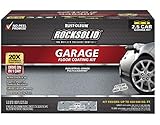
- HIGH GLOSS GRAY FINISH: Self-leveling polycuramine coating creates a durable, showroom-quality garage floor finish
- RESISTS CHEMICALS AND HOT TIRES: Excellent resistance to salt, oil, gasoline and other harsh chemicals
- COMPLETE KIT INCLUDED: Burst pouch coating, foam roller, decorative chips and concrete etch are included
- READY FOR VEHICLES IN 36 HOURS: Foot traffic ready in 8-10 hours; full vehicle traffic ready in 24-36 hours
- LOW ODOR, INDOOR APPLICATION: Formulated without VOC-containing solvent and offers a 7-day recoat window without sanding
Best Uses for Epoxy Hybrid Systems
This is a strong choice for workshops, storage-heavy garages, and homeowners who want a hard, cleanable floor with good impact and chemical resistance. Epoxy gives the installer more working time than many fast-cure polyureas, which can help on more complex floors. It is also useful when the system needs build thickness to smooth minor surface defects after grinding and repair.
The main limitation is UV exposure. Standard epoxy can amber or chalk when exposed to sunlight. In a garage with windows or a door that stays open, we prefer a UV-stable polyaspartic topcoat. That topcoat also improves abrasion resistance and makes the floor easier to clean.
What’s actually slowing this PC down?
Pick the symptom - the matching free tool is one click away.
Prep Is the Product
On a coating job, the surface profile is not a detail. It is the foundation. The slab should be mechanically profiled so the coating can bite. Cracks should be routed or cleaned and filled with compatible repair material. Oil contamination needs more than a quick wipe. If the concrete is saturated with oil, silicone, tire dressing, or old sealer, the contractor may need degreasing, grinding, testing, or in some cases a warning that no coating can be guaranteed without deeper remediation.
We also watch cure conditions. Cold concrete, high humidity, and poor ventilation can change cure time and appearance. A good installer will give clear return-to-service timing for foot traffic, storage, and vehicle parking. Putting hot tires back on a coating too early is an avoidable way to damage an otherwise good floor.
3. Interlocking Rigid Garage Tiles
Interlocking polypropylene and PVC garage tiles are the best reversible DIY garage flooring option. They install quickly, need less slab prep than coatings, and individual damaged tiles can be replaced. For renters, DIYers, or homeowners who want a clean look without grinding concrete, they deserve serious consideration.
Material pricing in 2026 ranges widely. Big-box retail examples run roughly $1.60-$4.49 per square foot, while premium garage tile brands report about $4.49-$7.75 per square foot. Installed modular tile jobs are often around $6-$10 per square foot, though many homeowners install them in a day with basic layout tools.
Rigid Tile Details That Matter
Choose garage-rated polypropylene or PVC, not lightweight indoor utility tile. The tile should be rated for vehicle loads, rolling loads, and temperature swings. Rigid vented tiles let water and debris pass through, which can be helpful in snowy climates but requires occasional cleaning underneath. Solid-top tiles keep more debris on the surface but may show dust, tire marks, or moisture differently.
Leave expansion gaps at walls, cabinets, posts, and the garage door edge. Plastic expands with heat, and the front few feet of a garage can get much hotter than the back when sun hits the door opening. Skipping expansion space can cause tenting or buckling. Use edge ramps where tires enter and where people walk across exposed tile edges.
What Tiles Do Not Solve
Tiles are not a moisture barrier and they are not a slab repair. Water, road salt, and spilled liquids can migrate below the tile field. In wet climates, plan to lift sections periodically and wash underneath. If the garage has active drainage problems, poor slope, or water entering under the door, fix those problems before relying on tiles to make the floor feel finished.
For a workshop, tiles can be comfortable underfoot and attractive, but small screws, sawdust, and metal shavings can collect in patterns or seams. If precision cleanup matters, a coating or sealed concrete floor may be easier to sweep.
The Tool Desk
Outbyte PC Repair FREEClear out junk files and repair common Windows errorsFree Scan →Outbyte Driver Updater FREEFix the driver behind crashes, sound loss and screen glitchesFind Drivers →4. Sealed, Stained, or Polished Concrete
If the slab is sound, simple concrete finishes are often the most honest and cost-effective garage flooring choice. They do not pretend to be a thick coating or a floating floor. They improve cleanability, reduce dusting, and keep the garage surface noncombustible and practical.
Sealed concrete is the budget option. Angi lists sealed concrete around $0.85-$1.60 per square foot, and painted and sealed concrete around $1.50-$3 per square foot. Stained concrete pricing from Concrete Network is about $3-$6 per square foot for a basic one-color stain with sealer, $6-$11 for intermediate work, $11-$16 for upgraded decorative work, and $16-$25 or more for high-end designs. Polished concrete commonly runs $3-$12 per square foot for basic finishes, with decorative work often $5-$15 or more; broader 2026 ranges run about $2-$16 depending on size, technique, stain complexity, and slab condition.
When Concrete Finishes Make Sense
These finishes work best on slabs that are structurally stable, reasonably flat, and not heavily contaminated. They are good for homeowners who want a clean working garage without the cost of a full resin coating. They also make sense when the owner wants to avoid a plastic or film-forming surface that can peel.
Rank #3
- 2-PART EPOXY COATING: Water-based epoxy kit finishes concrete garage floors in good, sound condition with a gloss, color-flecked finish
- READY FOR VEHICLES IN 3 DAYS: Light foot traffic ready in 12-16 hours, normal use in 24-48 hours, full vehicle traffic in 3 days
- COMPLETE KIT INCLUDED: Burst pouch coating, decorative chips and concrete etch are included for a full application
- EASY ROLLER APPLICATION: Apply with a synthetic nap roller in 4x4 foot sections and scatter chips onto the wet coating as you go
- OPTIONAL CLEAR TOPCOAT AVAILABLE: Pair with EpoxyShield Clear Finish Coating Kit for additional protection and shine
Stain and sealer can improve appearance while keeping the slab readable. Polishing can create a dense, durable surface, but garage polish needs traction planning. A highly polished wet floor can be slippery, especially near the vehicle path and door opening. For active vehicle bays, we prefer a finish level and sealer system chosen for grip, not just shine.
Limits of Sealer and Polish
Sealer does not bridge structural cracks. Stain does not hide patched concrete uniformly. Polish will not fix a slab that is heaving, scaling, or deeply spalled. If the slab has widespread freeze-thaw damage, exposed aggregate from surface loss, or moving cracks, the right answer may be repair or replacement before any finish goes down.
Maintenance is straightforward but real. Expect periodic cleaning and resealing depending on traffic, chemical exposure, and product type. In a daily parking garage, a cheap sealer may need attention much sooner than a professional coating. That is acceptable if the owner understands the tradeoff upfront.
5. Porcelain Tile or Heavy-Duty Containment Mats for Special Cases
The fifth spot depends on the goal. For a permanent high-end showroom garage, garage-rated porcelain tile can be excellent. For winter salt and snow control without rebuilding the whole floor, a heavy-duty containment mat may be the smarter buy.
Porcelain Tile for Showroom Garages
Porcelain is underused in many garage flooring discussions. Properly selected porcelain is dense, hard, noncombustible, and easy to clean. A high-load, frost-resistant, slip-resistant porcelain tile with epoxy grout can perform very well in a garage. Through-body or high-PEI porcelain is preferable because chips and wear are less obvious than with decorative surface-only products.
The catch is installation. National 2026 tile sources put basic tile installation around $5-$15 per square foot and porcelain-specific installation around $15-$50 per square foot. In a garage, the higher end is realistic when the slab needs flattening, crack-isolation membrane, movement joints, epoxy grout, and careful layout. A garage tile floor is only as stable as the slab below it. If the slab moves, cracks, or has poor drainage, the tile assembly can crack or debond.
Use porcelain only when the slab is flat, stable, and dry enough for the assembly. The tile should have appropriate slip resistance for wet use, and the installer should plan movement joints at the perimeter and at required intervals. This is not the place for bargain wall tile or smooth interior tile.
Containment Mats for Seasonal Protection
A containment mat is not a full flooring system, but it solves a real problem: snow, slush, mud, and salt dripping off vehicles. Roll-out garage mats and containment mats commonly cost about $200-$750 per roll, with many around $380 depending on size and construction.
For a homeowner in a winter climate with an otherwise acceptable slab, a containment mat can protect the main tire path and keep dirty water from spreading across stored items. The tradeoff is water management. Mats need to be emptied, squeegeed, or cleaned, and the slab underneath should be checked periodically. Trapped moisture and grit can mark concrete or hide early signs of deterioration.
3 Garage Flooring Ideas to Skip
1. Bargain Concrete Paint or One-Part Epoxy Paint for Daily Parking
Concrete paint and one-part epoxy paint can make a garage look better for a short time, but they are poor choices for daily vehicle bays. They are thin, usually less chemical-resistant than professional resin systems, and vulnerable to hot-tire pickup. They can be acceptable for a storage closet, a low-traffic utility area, or a temporary cosmetic refresh, but they should not be sold as the same category as a properly prepared 100%-solids epoxy or polyaspartic system.
If the budget only supports paint, be realistic. Clean and etch or grind as required by the product, patch obvious defects, allow proper dry time, and expect maintenance. Do not paint over moisture problems, oil contamination, or peeling old coatings and expect a permanent result.
2. Indoor Carpet or Foam Gym Tiles Across the Garage
Indoor carpet and foam gym tiles do not belong under vehicles. They absorb or trap moisture, hold odors, compress under load, and can become a fire and contamination concern around vehicles, fuel, tools, and mechanical work. Foam can deform under tires, jacks, stands, and rolling cabinets. Carpet can hide spills and keep the slab wet.
If the garage doubles as a gym, use a hard, cleanable floor as the base and place removable rubber mats only in the workout zone. Keep vehicle paths separate from training areas. If the car comes in wet, salty, or oily, the gym surface should not be the first thing it touches.
Rank #4
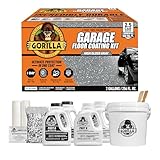
- Ultimate Protection in One Coat: 2-part 100% solids epoxy delivers, incredibly durable, exceptional resistance to chemicals, abrasions, salt, oil, gas, and hot tire peel-up that is ideal for garages, basements, workshops, & more.
- High Gloss Finish: Achieve a showroom-quality finish that is crack resistant, peel proof, low VOC, while enhancing the appearance and performance.
- Covers up to 550 sq. ft.: Includes two gallons of premium material – enough for a thick, long-lasting coat on a standard 2.5-car garage floor.
- Drive on After 1 Day: Quick curing epoxy resin and hardener allows you to use your space 24 hours after application.
- 12 Pc DIY Kit: Epoxy resin, epoxy hardener, decorative gray blend flakes, concrete etch for proper surface prep, mixing buckets, stir sticks, roller covers, decorative and easy-to-follow pictured with printed instructions as well as how-to video guides for a seamless application.
3. Wood, Laminate, and Standard Click LVP Where Cars Park
Wood flooring, laminate, and standard click luxury vinyl plank are interior products. They are not designed for hot tires, vehicle loads, wet road salt, garage temperature swings, or slab vapor. Floating floors can trap moisture underneath. Click joints can separate or break. Wood-based cores can swell. Adhesives and wear layers may not tolerate automotive chemicals.
There are specialty commercial vinyl and industrial flooring systems, but that is a different specification than standard residential LVP from a flooring aisle. For a real parking bay, use garage-rated materials.
Slab Condition: Repair Before You Cover
The best garage flooring will fail over a bad slab. Before choosing a finish, inspect the concrete in daylight after the garage has been cleared. Look for deep cracks, heaving, settlement, widespread spalling, hollow-sounding patches, old coating failure, oil saturation, poor slope, and water entry at the door.
Hairline shrinkage cracks are common and can often be filled before coating. Moving cracks, vertical displacement, and heaving are different. If one side of a crack is higher than the other, the floor system cannot make that structural movement disappear. A tile floor may crack. A coating may telegraph the crack. Interlocking tiles may bridge it visually, but the slab issue remains.
Do these 3 things before closing this tab:
1Fix the driver behind crashes, sound loss and screen glitches2Repair Windows errors before they cause bigger problems3Scan for outdated or missing drivers - takes under a minuteSpalling and scaling also need judgment. Small pop-outs can be patched. Widespread surface loss may require grinding, resurfacing, or slab replacement. If the concrete surface is weak, coatings may bond to the top layer and then pull that layer off. A contractor should test the surface, not just quote over it.
Drainage matters as much as cosmetics. The 2021 IRC section R309.1 requires garage floors to be of approved noncombustible material, and the area used for parking needs to slope to facilitate movement of liquids to a drain or toward the main vehicle entry doorway. Local rules vary, and some jurisdictions add their own requirements. In Fort Worth, for example, residential work can involve local permit requirements depending on scope. Coating an existing slab usually does not require a permit in many areas, but changing drainage, adding a floor drain, rebuilding the slab, or converting garage use can trigger code review.
Be careful with floor drains. Some areas restrict where garage drains can discharge because of oil, fuel, salt, and contaminants. Draining to a septic system can be a serious problem. Before adding or altering a garage drain, check local plumbing and environmental rules.
Independent reader supportYour contribution helps us test, update, and keep practical guides available for everyone.When to DIY and When to Hire a Pro
DIY makes sense when the risk is low, the product is forgiving, and the slab does not need major correction. Interlocking garage tiles are the clearest DIY-friendly option. A careful homeowner can clean the slab, snap a layout line, leave expansion gaps, cut border pieces, and install edge ramps in a day or weekend. Roll-out mats and containment mats are also DIY-friendly as long as they are sized correctly and cleaned periodically.
Recommended Free Tools
Sealer can be DIY if the slab is clean, dry, and in good condition, but product choice matters. Solvent-based products, strong cleaners, and some coating materials require ventilation, protective equipment, and careful handling. Always follow the manufacturer’s temperature, humidity, dry time, and recoat windows.
Professional installation is the better call for polyaspartic, polyurea, serious epoxy systems, porcelain tile, slab grinding, crack repair, moisture mitigation, and anything involving drainage correction. The equipment alone changes the equation. A professional coating crew should bring grinders, dust control, repair materials, moisture testing knowledge, mixing discipline, and enough labor to place the product within its working time.
For safety, remember that coatings are chemicals. VOC rules apply to architectural coatings under federal regulations, and state or regional limits may be stricter. Some polyurethane-related products can involve isocyanate hazards, which NIOSH and OSHA treat seriously because inhalation and skin exposure can cause health problems. That does not mean these products should be avoided altogether. It means the installer should control ventilation, respirators, gloves, eye protection, ignition sources, and occupant access during installation and cure.
How to Compare Garage Flooring Quotes
A low square-foot price is not useful unless the scope is the same. When we compare garage floor quotes, we look at prep first. Diamond grinding is generally the baseline for professional coatings. Acid etching is not equivalent on many slabs, especially if the concrete is hard, sealed, contaminated, or uneven. Ask whether dust control is included and whether the crew will grind all the way to edges, corners, stem walls, and door thresholds.
Quick wins for a faster PC:
Scan for outdated or missing drivers - takes under a minuteDriver Scan →Clear out junk files and repair common Windows errorsFree Scan →Next, compare repair scope. Does the price include filling hairline cracks only, or also routing and filling larger cracks? Are spalls included? What happens if oil contamination appears after grinding? Is moisture testing included, and what test method or product limit will be used?
Best Value

- 10x Stronger Than Steel, Zero Shrinkage: Military-grade 100% solids epoxy bonds permanently to concrete, resisting cracks, peeling, and hot tire pickup - no more stains or tire marks ruining your garage.
- Complete 17 Pc DIY Kit for 300 Sq Ft: Includes etching solution, decorative flake mix, non-slip additive, roller, and squeegee - everything for a professional glossy finish without hiring contractors.
- Slip & Chemical-Proof for Workshops/Basements: 3-layer epoxy shields floors from oil, solvents, and spills. Textured finish prevents slips, even in wet automotive or retail spaces.
- Custom Flake Designs or Heavy Coverage: Start with medium broadcast flakes or add 3lb/6lb bags for full coverage - ideal for Airbnbs or car showrooms
- 24-Hour Cure, 72-Hour Vehicle Ready: Faster than cheap water-based epoxies! Apply in 3 steps ensuring long lasting and high gloss finish with no special skills - perfect for busy homeowners and contractors.
Then compare the system. For coatings, ask for the base coat type, solids content, flake broadcast rate, topcoat type, traction additive, approximate dry film thickness, cure schedule, and warranty. A 100%-solids epoxy base with full flake and polyaspartic topcoat is not the same as a thin water-based kit. A polyaspartic system installed over poor prep is not automatically better because the chemistry sounds premium.
For tile, ask for tile rating, load rating, slip resistance, grout type, crack isolation, slab flatness requirements, and movement joints. For modular tiles, ask about expansion gaps, edge ramps, cleaning underneath, replacement tiles, and heat exposure at the garage door.
Maintenance: What Keeps Each Floor Looking Good
No garage floor is maintenance-free. Coatings should be swept and washed with mild cleaners. Avoid harsh solvents unless the coating manufacturer approves them. Wipe oil and brake fluid promptly. In salt states, rinse the floor periodically so salt does not sit at the door edge, control joints, and wall lines.
Interlocking tiles need sweeping or vacuuming on top, plus occasional lifting in wet areas. If the garage sees snowmelt, remove grit and salt from below the tile field before it abrades the slab or creates odor. Keep expansion gaps clear so the tile field can move.
Sealed concrete needs resealing when water stops beading or the surface starts dusting or staining easily. Polished concrete may need periodic cleaning with appropriate pads and cleaners. Porcelain tile is easy to wash, but grout lines need attention; epoxy grout reduces staining and chemical absorption compared with standard cement grout.
Containment mats should be emptied and cleaned. If water sits on the mat for days, the garage will still feel damp. Lift the mat periodically so the slab can dry and so you can inspect for salt damage or trapped debris.
Bottom Line: The Best Garage Floor Is a Specification, Not a Product Name
If you want the strongest all-around choice for a daily parking garage, get quotes for a professionally prepared polyaspartic or polyurea flake coating, and compare it against a 100%-solids epoxy base with a polyaspartic topcoat. If you want a reversible DIY upgrade, choose rigid garage-rated interlocking tiles. If your slab is already good and budget matters, sealed, stained, or polished concrete can be the cleanest answer. If you are building a true showroom garage, consider porcelain tile with the right installation system. If winter slush is the only problem, a containment mat may solve it without pretending to be a full remodel.
The decision should start with the slab, the climate, the vehicles, and how the garage is used. Product names matter less than preparation, moisture control, traction, drainage, and honest expectations. That is the difference between a floor that photographs well for a week and one that works for years.
Frequently Asked Questions
What is the best garage flooring for daily parking?
For most daily parking garages, a professionally installed polyaspartic or polyurea flake coating is the best all-around choice. A 100%-solids epoxy base with a polyaspartic topcoat is also excellent when the slab is properly ground, repaired, and moisture-tested.
How much does it cost to epoxy a two-car garage floor in 2026?
A professional epoxy garage floor commonly costs $4-$10 per square foot, with Homewyse’s May 2026 range at $7.78-$12.71 per square foot for basic mid-range professional work. A 400-500 square foot two-car garage often lands around $1,600-$5,800 depending on prep, repairs, flake, topcoat, and region.
Is polyaspartic better than epoxy for a garage floor?
Polyaspartic usually cures faster and resists UV yellowing better than standard epoxy. Epoxy still performs very well when it is a 100%-solids base applied over properly prepared concrete, especially when protected with a UV-stable polyaspartic topcoat.
Why do garage floor coatings peel?
Most peeling comes from poor prep, moisture vapor, oil contamination, weak concrete, thin products, or putting vehicles back on the floor before the coating has cured. Diamond grinding, crack repair, moisture testing, and correct cure time matter more than brand claims.
Are interlocking garage tiles better than epoxy?
Interlocking tiles are better for DIY installation, renters, reversibility, and quick visual upgrades. Epoxy or polyaspartic coatings are usually better for a sealed, easy-to-wash surface where liquids, road salt, and shop cleanup are major concerns.
Can I put vinyl plank, laminate, or carpet in a garage?
Not in vehicle bays. Standard vinyl plank, laminate, carpet, and foam flooring are interior products and are not designed for hot tires, wet salt, automotive chemicals, heavy rolling loads, or slab moisture.
Quick Recap
Product prices and availability are accurate as of the date/time indicated and are subject to change. Any price and availability information displayed on Amazon at the time of purchase will apply.

