Some links on this page are affiliate links: if you buy through them we may earn a commission, at no extra cost to you.
For most American kitchens, the best freestanding gas range is a 30-inch natural-gas model in the $700 to $1,500 appliance-price range, paired with a properly sized gas connection, a grounded 120V receptacle, and a range hood that actually captures cooking fumes. That answer is less flashy than a ranked list of luxury models, but it is the answer that holds up on real job sites.
On our kitchen remodels, we see the same mistake over and over: the homeowner shops the range as if it is a stand-alone box. A gas range is part of a system. The cabinet opening, countertop depth, gas shutoff location, electrical outlet, floor level, backsplash material, upper-cabinet clearance, hood width, duct route, and local inspection rules all affect whether the appliance looks right and works safely.
If you already have a compliant gas line, a standard 30-inch opening, and decent ventilation, a good freestanding gas range can be a straightforward upgrade. If you are converting from electric, moving the range, adding a high-BTU model, or replacing old cabinetry, the cost and planning change quickly. This guide explains what to buy, what to measure, what it should cost in 2026, and when to bring in a licensed professional.
What’s actually slowing this PC down?
Pick the symptom - the matching free tool is one click away.
As an Amazon Associate I earn from qualifying purchases.
What Counts as a Freestanding Gas Range?
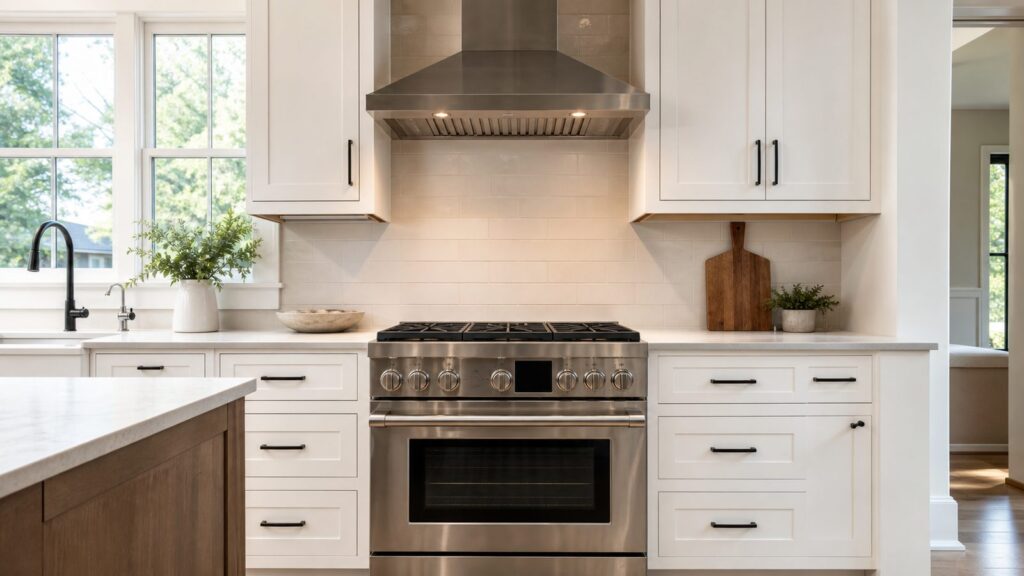
A freestanding gas range is a single appliance with a cooktop and oven in one body. It has finished sides, usually a rear control panel, and is designed to stand between cabinets or at the end of a cabinet run. Most models slide into a 30-inch-wide opening, sit about 36 inches high at the cooking surface, and are roughly 25 to 30 inches deep depending on the handle, rear clearance, and control layout.
That makes it different from a slide-in range, which usually has front controls and a more built-in appearance, or a cooktop and wall oven combination, which requires separate cabinet planning. Freestanding ranges are popular because they are cost-effective, available in every major brand, easy to replace, and forgiving in older kitchens where cabinet dimensions are not perfect.
Popular on Amazon

- COMPACT CAPACITY: A 2 cu. ft. oven gives you room to bake and roast everyday meals while helping smaller kitchens stay functional and uncluttered
- RELIABLE EVERYDAY HEAT: Four 9000 BTU burners with cast iron grates help you boil, simmer, and saute with steady support for daily cooking tasks
- EASY TO USE CONTROLS: Push and turn knobs, full oven temperature control, and automatic electronic ignition make everyday cooking feel simple and familiar
- SPACE SAVING DESIGN: The freestanding 20 inch footprint fits apartments, condos, offices, and vacation homes while still delivering complete cooking versatility
- ADDED PEACE OF MIND: ETLus Listed and backed by a 1 Year Limited Warranty, this range brings confidence and dependable value to everyday meal preparation
For a typical remodel budget, a freestanding gas range gives you the most cooking function per dollar. You can get sealed burners, a center griddle burner, convection baking, self-cleaning, air-fry modes, continuous grates, and stainless finishes without stepping into pro-style pricing.
The Best Choice for Most Kitchens in 2026
For most homeowners, we recommend starting with a 30-inch, five-burner, freestanding natural-gas range with sealed burners, continuous cast-iron grates, convection baking, a storage or warming drawer, and a strong local service network. In 2026, that usually puts the appliance between $1,000 and $1,500.
Entry-level 30-inch gas ranges around $700 to $900 can be perfectly acceptable for rentals, budget remodels, secondary kitchens, and homeowners who cook simply. The tradeoff is usually lighter grates, fewer oven modes, less precise simmering, weaker broiler performance, and fewer finish options. Premium and pro-style gas ranges can run $2,000 to $5,000 or more, especially at 36 inches wide or with higher-output burners, but those appliances also raise the bar for ventilation and cabinet planning.
Do not buy based only on maximum BTU. A 17,000 or 18,000 BTU burner sounds impressive, but a range also needs a burner that can hold a low simmer without scorching sauce, an oven that bakes evenly, grates that do not wobble, knobs that are easy to read, and a finish that cleans up after daily use. We would rather see a homeowner buy a reliable midrange model with good fundamentals than overpay for a high-output range that overwhelms the hood and cooks unevenly.
Gas Range Cost in 2026
The appliance price is only one part of the real cost. A basic replacement may be a few hundred dollars beyond the appliance. A conversion from electric to gas can require gas piping, wall repair, a new outlet, ventilation work, permits, and inspection.
Free tools Windows power users keep installed
One-click scans. No signup required.
| Item | Typical 2026 Cost | What Changes the Price |
|---|---|---|
| Entry-level 30-inch freestanding gas range | $700-$900 | Basic burners, standard oven, fewer convenience features |
| Midrange 30-inch gas range | $1,000-$1,500 | Convection, air fry, fifth burner, griddle, better grates |
| Premium or pro-style gas range | $2,000-$5,000+ | Width, BTU output, brand, oven capacity, finish, controls |
| Basic appliance installation | $123-$299, often around $187 | Delivery, haul-away, connector, leveling, access |
| Range installation with fit-up | $1,032-$2,113 starting range | Site conditions, labor, materials, modifications |
| Gas line addition or extension | $350-$1,000+ | Distance, wall/floor access, pipe sizing, permits |
| Ducted ventilation work | Several hundred to several thousand dollars | Duct path, exterior cap, cabinetry, electrical, make-up air |
If you are replacing an existing gas range in the same location and the shutoff, connector, receptacle, and clearances are compliant, the job may take one to three hours after delivery. If a new gas branch line must be run, expect a longer schedule: often one day for straightforward access, several days if walls, ceilings, flooring, or exterior penetrations need to be opened and repaired.
On larger remodels, we coordinate the range decision before cabinets are finalized. Moving a gas stub-out two inches after cabinets and countertops are installed is far more expensive than placing it correctly during rough-in.
Measure Before You Shop
Before ordering a range, take measurements and photos. We want the width of the opening at the front and back, countertop depth, cabinet face alignment, floor level, backsplash thickness, outlet position, gas shutoff position, and hood height. A range that is technically 30 inches wide may still create problems if the opening is out of square, the countertop overhang is tight, or the gas valve sits directly behind the appliance where the manufacturer needs clearance.
Standard Width
Most freestanding gas ranges are 30 inches wide. The cabinet opening is commonly about 30 inches, but the installation manual controls the exact clearance. Some manufacturers allow very little side tolerance; others require specific spacing from combustible surfaces.
Recommended Free Tools
Older homes can be tricky. We have measured openings that are 29 7/8 inches at the front and 30 1/4 inches at the back because the cabinets were installed out of square. That small difference can turn an easy appliance swap into a cabinet adjustment.
Depth and Rear Clearance
Depth is where many homeowners get surprised. The range body may fit the cabinet depth, but the handle, rear vent, gas connector, regulator, and shutoff valve can prevent the appliance from sitting flush. Some ranges need a recessed outlet or a specific gas connection zone near the floor. Always download the exact installation manual before purchase, not just the sales-page dimensions.
Countertop Height and Floor Level
Most kitchen counters are about 36 inches high. Range legs can adjust, but not infinitely. If the floor slopes or a previous installer tiled up to the old range instead of under it, the new range may sit low, high, or tilted. Final leveling matters for oven performance, pan stability, and anti-tip bracket engagement.
Features That Matter More Than Marketing
Gas ranges are packed with feature labels, but a few basics matter most in daily use.
Do these 3 things before closing this tab:
1Fix the driver behind crashes, sound loss and screen glitches2Repair Windows errors before they cause bigger problems3Scan for outdated or missing drivers - takes under a minuteBurner Layout
A five-burner layout is useful only if the grates and spacing allow real cookware to fit. Look for one high-output burner for boiling and searing, one true low-simmer burner, two everyday burners, and a center burner that can handle a griddle or long pan. If your household uses large skillets, stockpots, or a wok, burner spacing matters more than the total burner count.
Oven Evenness
If you bake often, put oven performance ahead of a massive power burner. Convection can help with air circulation, browning, and multi-rack baking, but the oven still needs consistent heat. Look for sturdy racks, clear rack positions, a usable broiler, and an oven capacity that fits your pans. Many 30-inch ranges land around 5 cubic feet of oven capacity, which is enough for most households.
Controls and Cleaning
Freestanding ranges often have rear controls. That keeps the front clean and familiar, but it means you may reach over hot cookware to adjust the oven or timer. For aging-in-place kitchens, shorter users, or anyone with mobility concerns, front controls may be worth considering, even if that pushes you toward a slide-in style.
Also popular on Amazon

- STAINLESS STEEL FINISH: Durable stainless steel construction with a seamless framed glass oven door brings a clean look and easy everyday upkeep to compact kitchens
- DEPENDABLE COOKING POWER: Four gas burners and 8800 BTU output help you prepare multiple dishes with the responsive heat control needed for everyday meals
- SPACE SAVING DESIGN: The 20 inch freestanding footprint and 2.1 cu. ft. oven make it easier to enjoy full range cooking in apartments, condos, offices, and vacation spaces
- EASY EVERYDAY USE: Dial controls, automatic electronic ignition, an oven light, and a 60 minute timer help simplify cooking and monitoring from start to finish
- TRUSTED SUPPORT: DOE certification, ETLus listing, and a 1 year limited warranty provide added confidence in quality, compliance, and long term value
For cleaning, sealed burners, continuous grates that lift easily, a smooth enamel cooktop surface, and dishwasher-safe knobs or caps are more valuable than app controls. Stainless steel looks good, but it varies widely in smudge resistance. Black stainless can show scratches differently than standard stainless, and white finishes can be excellent in the right kitchen if the surrounding materials are chosen intentionally.
Ventilation Is Not Optional Planning
Gas cooking creates heat, moisture, grease, and combustion byproducts, including nitrogen dioxide. A range hood that exhausts outdoors is the better solution compared with a recirculating microwave or filter-only hood, especially in tighter modern homes.
For a standard 30-inch gas range, we typically want the hood to be at least as wide as the range. A 30-inch hood over a 30-inch range is common; a 36-inch hood can improve capture if the cabinet layout allows it. The hood should be installed at the height specified by both the hood and range manufacturers. Many residential hoods land roughly 24 to 30 inches above the cooking surface, but the manual and local code requirements control the final number.
High-output burners need better capture. A cheap recirculating unit may satisfy a basic appliance package, but it does not remove combustion pollutants from the house. Duct route matters too. Short, straight duct runs work better than long routes with multiple elbows. Exterior wall caps, roof caps, duct size, electrical supply, cabinet modifications, and make-up air rules can all affect cost.
On remodels, we prefer to select the range and hood together. If the homeowner chooses a powerful gas range after cabinets are ordered, the hood may be undersized, the duct path may be boxed in, or the upper cabinets may not leave the correct clearance.
Crashes, No Sound, or Screen Glitches?
Random freezes, missing sound and display glitches usually trace back to one bad driver. Find and replace yours safely.Free scan · under a minuteWindows Errors? Fix Them Before They Spread
Repair common Windows errors and clear accumulated junk for a smoother, more stable PC - no reinstall needed.Free scan · no reinstallGas, Propane, and Electrical Requirements
Most gas ranges sold in the U.S. are set up for natural gas. If your home uses propane, the range must be approved for LP conversion, and the correct orifices and regulator settings must be used. This is not a cosmetic change. Incorrect conversion can cause poor combustion, soot, carbon monoxide risk, weak flames, or unsafe operation.
A gas range also usually needs electricity. Most residential gas ranges use a standard grounded 120V receptacle for ignition, controls, lights, fans, convection, clocks, and safety systems. If you are replacing an electric range, do not assume the existing 240V range circuit solves the problem. You may need a properly located 120V receptacle in addition to gas piping.
The gas shutoff valve should be accessible and located according to the appliance instructions and local code. The flexible connector must be approved for the appliance, correctly sized, undamaged, and not reused if the manufacturer or local rules prohibit reuse. After connection, the installer should leak-test the joints and verify flame quality.
Permits, Codes, and Safety Details
Permit rules are local. Appliance-only replacement often does not require a permit when the existing gas, electrical, and ventilation systems remain unchanged and compliant. But gas-line additions, gas-line relocation, new shutoff valves, electrical receptacle work, new hood ducting, exterior penetrations, and structural or cabinet changes may trigger permits and inspection.
In Georgia and many other states, gas work is regulated, and local jurisdictions can add their own requirements. In the Atlanta area, county and city rules may affect who can perform the work, what inspections are required, and what code edition is enforced. The practical takeaway for homeowners is simple: confirm before work starts, especially when changing fuel type, moving the appliance, or opening walls.
The anti-tip bracket deserves special attention. Every freestanding range should be secured so it cannot tip forward when weight is placed on the open oven door. We check the bracket after the range is leveled and pushed into final position. Installing the bracket before final placement is not enough; it must actually engage the range foot or rear leg as designed.
Clearances also matter. Combustible cabinets, trim, side walls, backsplash materials, and overhead surfaces must meet the range manufacturer’s installation instructions and applicable code. If upper cabinets are too low or side panels sit too close to high-output burners, the issue is not solved by hoping the homeowner cooks carefully.
Best Range Types by Homeowner Need
Best Budget Choice
Choose a 30-inch freestanding gas range in the $700 to $900 range with four sealed burners, continuous or semi-continuous grates, a broiler, and a simple self-clean or manual-clean oven. This is a smart choice for basic remodels, rental properties, and households that cook straightforward meals.
The Tool Desk
Outbyte Driver Updater FREEFix the driver behind crashes, sound loss and screen glitchesFind Drivers →Outbyte PC Repair FREERepair Windows errors before they cause bigger problemsFix Now →Best Overall Remodel Choice
Choose a $1,000 to $1,500 model with five burners, convection, a center oval burner or griddle, sturdy cast-iron grates, and a widely serviced brand. This is the sweet spot for most families because it improves daily cooking without pushing the project into specialty ventilation or cabinet modification territory.
Best for Frequent Bakers
Prioritize oven evenness, convection performance, rack glide, broiler consistency, and easy temperature controls. A giant front burner will not help cookies bake evenly. For this homeowner, we care more about the oven cavity, rack spacing, and temperature recovery after the door opens.
Best for High-Heat Cooking
Look for a strong power burner, durable grates, enough spacing for large pans, and a hood that exhausts outdoors. If stir-fry, blackened fish, cast-iron searing, or frequent griddle cooking is part of the routine, ventilation should be upgraded at the same time as the range.
Best for Aging-in-Place Kitchens
Choose controls that are easy to read, knobs with clear markings, smooth-gliding racks, good oven lighting, and a range height aligned with the countertops. Avoid overly complicated touch controls if the user prefers tactile operation. Safety and clarity beat extra modes.
Also popular on Amazon

- Air Cooking Technology with Air Fry & Air Baking: Uses dynamic hot air circulation to deliver crispy, fast results without preheating and even baking on multiple racks — perfect for wings, fries, pastries, and breads with golden, consistent results.
- No Preheat Air Fry: Start air frying immediately — saving up to ~10 minutes* compared with traditional modes — and get crispy textures without the extra oil.
- 12,000 BTU Griddle Zone & Flexible Cooking Modes: Expand your cooktop options with a large griddle burner for pancakes, grilled sandwiches, and other wide-area cooking, plus six modes including No Preheat Mode, Bake, Broil, Keep Warm, Air Baking, and No Preheat Air Fry.
- Adjustable Self Clean Oven Cycle: Easily clean up cooked-on messes by using a customizable self-cleaning cycle that handles different soil levels without manual scrubbing.
- Large 5.0 cu. ft. Oven Capacity & Cast-Iron Grates: The spacious oven fits full-size dishes like roasts and turkeys, and edge-to-edge cast-iron grates on the cooktop give plenty of stable space to sauté, boil, and simmer multiple pots and pans.
When to DIY vs. When to Hire a Pro
A homeowner can safely handle some parts of the process: measuring the opening, comparing models, checking the manual, clearing the work area, photographing the existing setup, and confirming the hood size. If local rules allow it, a confident homeowner may also be able to slide out the old appliance for cleaning and measurement after shutting off power and following the manufacturer’s instructions.
Hire a licensed professional for gas connection, leak testing, regulator setup, LP conversion, gas-line extension, shutoff relocation, and any work involving new piping. Also hire the right trade for new receptacles, hood wiring, duct penetrations, make-up air, cabinet modifications, and countertop changes.
The cost of professional gas connection is small compared with the consequences of a leak, failed inspection, damaged appliance, voided warranty, or unsafe combustion. On our projects, we also want one accountable installer verifying the final details: level, clearance, flame pattern, anti-tip engagement, and whether the appliance sits flush without crushing the connector.
Common Mistakes We See on Kitchen Remodels
The first mistake is buying the appliance before checking the manual. Sales dimensions are not enough. The installation manual shows the gas and electrical connection zones, clearance requirements, anti-tip bracket location, and LP conversion instructions.
Quick wins for a faster PC:
Repair Windows errors before they cause bigger problemsFix Now →Scan for outdated or missing drivers - takes under a minuteDriver Scan →Clear out junk files and repair common Windows errorsFree Scan →The second mistake is ignoring depth. A new range may stick out because the gas valve, outlet, backsplash, or rear trim conflicts with the appliance. That can make a new kitchen look unfinished even when the range technically fits.
The third mistake is under-sizing the hood. A high-output gas range under a weak recirculating microwave is a poor match. If you are paying for better burners, plan the capture and ducting to support them.
The fourth mistake is assuming a 36-inch pro-style range is a simple upgrade. Wider ranges can require cabinet demolition, new countertops, stronger ventilation, larger gas supply, and sometimes make-up air review. The appliance may be beautiful, but it is rarely just a swap.
The fifth mistake is skipping the final safety check. The range should be level, the shutoff accessible, the connector un-kinked, the anti-tip bracket engaged, the burners adjusted correctly, and the oven tested before the installer leaves.
Recommended Free Tools
Our Practical Buying Checklist
Before you place the order, confirm these items:
- The range width matches the opening at the front and back.
- The installation manual allows your countertop depth, rear wall condition, and side clearances.
- The gas shutoff and connector location fit inside the manufacturer’s approved zone.
- The home has the correct fuel type: natural gas or propane with approved LP conversion.
- A grounded 120V receptacle is correctly located for the appliance.
- The hood is at least as wide as the range and preferably exhausts outdoors.
- Upper cabinets, backsplash materials, and nearby walls meet clearance requirements.
- The floor is level enough for proper adjustment and anti-tip bracket engagement.
- The delivery path can handle the appliance width, depth, weight, stairs, and turns.
- Local permit requirements have been checked if gas, electrical, ducting, or cabinets are changing.
Final Recommendation
If you want the best freestanding gas range for a normal kitchen remodel, start with a 30-inch midrange model from a brand with strong local service support. Expect to spend about $1,000 to $1,500 for a well-equipped appliance, plus installation costs that can range from under $300 for a clean replacement to several thousand dollars when gas piping, ventilation, cabinetry, or electrical work enters the picture.
Spend your money on the fundamentals: stable simmer, useful burner spacing, even oven heat, solid grates, easy cleaning, reliable parts availability, and a hood that fits the way you cook. A range is not successful because it looks impressive on a showroom floor. It is successful when it fits the kitchen, passes inspection, vents properly, cooks consistently, and still feels right after ten years of weeknight dinners.
Frequently Asked Questions
What is the best freestanding gas range for most kitchens in 2026?
For most kitchens, the best choice is a 30-inch freestanding natural-gas range in the $1,000 to $1,500 range with five burners, convection, sealed burners, sturdy grates, and strong local service support.
How much does a freestanding gas range cost?
In 2026, basic 30-inch freestanding gas ranges commonly cost about $700 to $900. Midrange models with convection, air fry, griddles, or five burners usually cost $1,000 to $1,500. Premium or pro-style models can run $2,000 to $5,000 or more.
The Tool Desk
Outbyte Driver Updater FREEScan for outdated or missing drivers - takes under a minuteDriver Scan →Outbyte PC Repair FREEClear out junk files and repair common Windows errorsFree Scan →How much does it cost to install a gas range?
A simple appliance installation often falls around $123 to $299, with many homeowners near $187. More complete range installation with fit-up can start around $1,032 to $2,113, especially when site conditions, materials, and modifications are included.
Do I need a permit to replace a gas range?
A straight appliance replacement may not require a permit if the existing gas, electrical, and ventilation systems remain compliant. Permits are more likely when adding or moving gas lines, changing shutoff valves, adding electrical work, installing new ducting, or modifying structure. Local rules control.
Does a gas range need a hood that vents outside?
Outdoor-vented source-capture ventilation is the better choice for gas cooking because gas ranges produce heat, moisture, grease, and combustion byproducts. Recirculating hoods are cheaper but less effective because they do not exhaust pollutants outdoors.
Can I replace an electric range with a gas range?
Yes, but it is not usually a plug-and-play swap. You may need a properly sized gas line, shutoff valve, 120V grounded receptacle, permit, inspection, cabinet adjustments, and better ventilation. A licensed professional should handle gas connection and leak testing.
Quick Recap
Product prices and availability are accurate as of the date/time indicated and are subject to change. Any price and availability information displayed on Amazon at the time of purchase will apply.

