Flowering cherry trees are best used as ornamental spring trees: they give you a short, dramatic bloom, attractive branching, fall color, and a strong focal point near a patio, driveway, front walk, or lawn edge. They are not the right pick if you want a long-lived shade tree, a low-maintenance street tree, or a reliable fruit crop.
For most U.S. homeowners, the four flowering cherries worth comparing first are Yoshino, Kwanzan or Kanzan, Okame, and a Snow Fountain or other weeping cherry. The best one for your garden depends less on the bloom photo and more on five practical numbers: USDA hardiness zone, mature height, mature spread, clearance from structures, and installed cost.
On our job sites, the expensive mistakes are usually made before the tree arrives. A cherry gets tucked into a 6-foot foundation strip even though it wants a 25-foot canopy. A weeping cherry is bought from a tag photo without checking graft height. A root ball is planted too deep. Or the homeowner skips the utility locate because the hole seems shallow. A flowering cherry is a beautiful tree when it is placed like a permanent landscape feature, not like a seasonal plant.
As an Amazon Associate I earn from qualifying purchases.
Free tools Windows power users keep installed
One-click scans. No signup required.
Quick Comparison: 4 Flowering Cherry Trees Worth Planting
Use this table as a first pass. Sizes vary by nursery stock, region, pruning, and site quality, but these ranges are realistic enough for layout planning.
| Tree | Typical Mature Size | Bloom Style | Best Use | Main Caution |
|---|---|---|---|---|
| Yoshino cherry | About 20-30 ft. tall and wide, sometimes larger | White to pale blush single flowers | Broad spring canopy for front lawns and open yards | Needs room, sun, and protection from drought stress |
| Kwanzan or Kanzan cherry | Often 25-40 ft. tall and wide | Heavy double pink flowers | Maximum spring color and a bold ornamental statement | Can be short-lived, often around 15-25 years |
| Okame cherry | About 15-30 ft. tall with a 15-25 ft. spread | Early pink flowers | Smaller yards, front entries, and earlier spring bloom | Still needs full sun and well-drained soil |
| Snow Fountain or weeping cherry | Dwarf forms around 6-12 ft.; larger forms roughly 20-30 ft. | Cascading white or pink flowers | Courtyards, garden beds, patios, and specimen planting | Buy by graft height and mature spread, not the tag photo |
Before You Choose: Check the Site Like a Contractor
A flowering cherry is a small tree, but it still deserves real site planning. Before we plant trees near hardscape, foundations, utilities, or drainage work, we look at the whole area, not just the open patch of soil.
#1 Best Overall
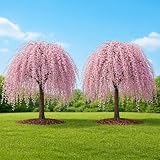
- WHAT YOU WILL RECEIVE: 2 Cherry blossom tree live plant approximately 6 - 12 inches tall, prepared for transplanting into garden soil or outdoor containers
- BEAUTIFUL SPRING BLOOMS: Flowering cherry trees are admired for their seasonal blossoms that create a soft pink or white floral display each spring
- ORNAMENTAL LANDSCAPE TREE: Japanese cherry blossom trees are widely planted to add elegant structure and seasonal color to gardens
- SIMPLE GROWING CONDITIONS: These trees perform best in full sun with well-draining soil and moderate watering once established
- IDEAL FOR OUTDOOR LANDSCAPES: Cherry trees live plants work well as garden accents, along walkways, or as focal points in landscape designs
Start with your USDA hardiness zone
Use the current USDA Plant Hardiness Zone Map by ZIP code before choosing a cultivar. The updated map is based on 1991-2020 temperature data and replaced the older 2012 version. That matters because winter low temperatures are the baseline for whether a tree is likely to survive long term.
Do not buy a cherry just because a nursery sells it locally or a website ships it to your state. In marginal cold areas, a hardier selection or a smaller Okame-style tree may be the better bet than choosing only by flower color. In hot southern sites, soil moisture, reflected heat, and afternoon sun exposure may matter as much as winter hardiness.
Recommended Free Tools
Plan for mature spread, not nursery size
A 5-gallon flowering cherry may look small enough to fit anywhere. That is temporary. A Yoshino or Kwanzan can need a 25- to 40-foot canopy footprint. That means it should not be centered 4 feet off a porch, squeezed between a driveway and a foundation, or planted under overhead service lines.
As a working rule, keep large flowering cherries at least 15-20 feet from a house when possible, and more if the mature spread is listed near 40 feet. For compact or dwarf weeping forms, check the specific mature spread and leave room for maintenance access, air movement, and pruning. A tree that technically fits on paper can still become a nuisance if every branch touches siding, roof shingles, gutters, or parked vehicles.
Call 811 before digging
Call 811 before planting, even for a shallow planting hole. Utility depths are not always predictable, especially where grading, previous landscaping, irrigation, or older service work has changed the site. In Alabama, use Alabama 811. In Florida, Sunshine 811 provides safe planting guidance. In other states, the national 811 system routes you to the proper locate service.
Also check HOA rules, right-of-way restrictions, and local setbacks if you are planting near a sidewalk, curb, drainage easement, or shared property line. A tree planted in the wrong strip can become a removal problem later.
1. Yoshino Cherry: Best for a Broad, Classic Spring Canopy
Yoshino cherry is the tree many homeowners picture when they think of cherry blossoms: a wide, graceful canopy covered in white to light blush flowers. It is a strong choice for an open front lawn, a wide side yard, or a garden where you want a soft spring canopy instead of a tight formal shape.
Expect a Yoshino to reach roughly 20-30 feet tall and wide in many residential settings, with some trees growing larger where soil, water, and space are favorable. It performs best in full sun, meaning at least 6 hours of direct sun per day, and in moist, well-drained soil. It does not like drought stress, compacted fill, or chronically wet clay.
Yoshino works best when you can give it a generous bed or lawn opening. If your available space is only 8 feet wide between a walkway and the house, choose something smaller. If you have a 25- to 35-foot-wide planting area and want a canopy that reads from the street, Yoshino is a strong candidate.
Where Yoshino fits best
Plant Yoshino where the canopy can spread without constant pruning. Good locations include the outer edge of a front lawn, a wide planting island, the far side of a driveway, or a backyard view corridor. Avoid tight foundation beds and sites where heat reflects off pavement all day unless irrigation and soil quality are handled well.
Rank #2

- WHAT YOU WILL RECEIVE: 1 Cherry blossom tree live plant approximately 6 - 10 inches tall, prepared for transplanting into garden soil or outdoor containers
- BEAUTIFUL SPRING BLOOMS: Flowering cherry trees are admired for their seasonal blossoms that create a soft pink or white floral display each spring
- ORNAMENTAL LANDSCAPE TREE: Japanese cherry blossom trees are widely planted to add elegant structure and seasonal color to gardens
- SIMPLE GROWING CONDITIONS: These trees perform best in full sun with well-draining soil and moderate watering once established
- IDEAL FOR OUTDOOR LANDSCAPES: Cherry trees live plants work well as garden accents, along walkways, or as focal points in landscape designs
What to watch
Yoshino cherries can struggle when planted too deep, watered lightly instead of deeply, or placed in compacted construction soil. If the home is new or recently remodeled, assume the soil around the house may be compacted. On construction sites, we often find a few inches of topsoil over dense subsoil or equipment-packed clay. That is not a planting detail to ignore; roots need oxygen as much as moisture.
2. Kwanzan or Kanzan Cherry: Best for Big Double Pink Flowers
Kwanzan, also sold as Kanzan, is the showiest of the four. Its double pink flowers are dense, bright, and easy to see from the street. If the goal is a bold spring display, this is usually the tree homeowners react to first.
The tradeoff is size and longevity. Kwanzan commonly matures around 25-40 feet tall and wide, depending on the source and site. It is also considered relatively short-lived compared with many landscape trees, with a common useful lifespan around 15-25 years. That does not make it a bad tree. It just means you should treat it as a medium-term ornamental feature, not a 75-year legacy shade tree.
Kwanzan is best in full sun and well-drained soil. It is not a good choice for wet, compacted low spots. Like other ornamental cherries, it can face pest and disease pressure including brown rot, cherry leaf spot, black knot, borers, scale, and stress-related gummosis. Brown rot can be especially noticeable as flowers fade, and Kwanzan is often called out as susceptible.
Do these 3 things before closing this tab:
1Scan for outdated or missing drivers - takes under a minute2Repair Windows errors before they cause bigger problems3Fix the driver behind crashes, sound loss and screen glitchesWhere Kwanzan fits best
Use Kwanzan where you want a strong spring focal point and have room for a broad canopy. It can work well along a long driveway, in a large front yard, or as part of a bigger landscape bed. It is usually too much tree for a narrow bed between a porch and sidewalk.
What to watch
The biggest mistake with Kwanzan is underestimating mature spread. A 25- to 40-foot-wide tree needs the same kind of planning you would give a small shade tree. Keep it clear of rooflines, overhead utilities, and cramped hardscape. If you want the double pink look near a patio, consider whether a smaller ornamental tree would be easier to live with.
3. Okame Cherry: Best for Earlier Bloom and Smaller Yards
Okame cherry is often the most practical flowering cherry for a suburban yard. It is smaller than many Yoshino and Kwanzan trees, typically reaching about 15-30 feet tall with a 15-25 foot spread. That still is not tiny, but it is easier to place near a front entry, small lawn, or garden edge.
Okame is known for early pink bloom. In many regions, it flowers before larger cherries put on their main show, which makes it useful if you want spring color sooner. Its size also makes it a better fit where a 35-foot canopy would crowd the house, driveway, or neighboring trees.
Like the others, Okame needs full sun and well-drained soil. It is not a shortcut around poor planting conditions. If the soil stays wet after rain, if downspouts discharge into the bed, or if the site was compacted by equipment, fix those issues first.
Where Okame fits best
Okame is a good front-yard tree where you need a visible but controlled canopy. It can work near a walkway, at the corner of a lawn, or as a single specimen in a mixed bed. For many homeowners, it gives the best balance of bloom, size, and placement flexibility.
Rank #3

- WHAT YOU WILL RECEIVE: 2 Cherry blossom tree live plant approximately 6 - 10 inches tall, prepared for transplanting into garden soil or outdoor containers
- BEAUTIFUL SPRING BLOOMS: Flowering cherry trees are admired for their seasonal blossoms that create a soft pink or white floral display each spring
- ORNAMENTAL LANDSCAPE TREE: Japanese cherry blossom trees are widely planted to add elegant structure and seasonal color to gardens
- SIMPLE GROWING CONDITIONS: These trees perform best in full sun with well-draining soil and moderate watering once established
- IDEAL FOR OUTDOOR LANDSCAPES: Cherry trees live plants work well as garden accents, along walkways, or as focal points in landscape designs
What to watch
Even a smaller cherry should not be planted directly against a foundation. Give the tree enough space for its mature spread, plus access for pruning, siding maintenance, gutter work, and mowing. If the listed spread is 20 feet, plan for a 10-foot radius from the trunk as a minimum canopy footprint.
4. Snow Fountain and Weeping Cherry: Best for a Compact Specimen Shape
Weeping cherries are bought for form as much as flowers. A Snow Fountain or similar weeping cherry gives a cascading shape that can look excellent beside a patio, in a courtyard, near a garden path, or in a small front-yard bed. The key is understanding graft height.
Quick wins for a faster PC:
Clear out junk files and repair common Windows errorsFree Scan →Fix the driver behind crashes, sound loss and screen glitchesFind Drivers →Repair Windows errors before they cause bigger problemsFix Now →Many weeping cherries are grafted. The trunk height you buy often determines the height where the canopy starts to cascade. A low-grafted dwarf tree may stay around 6-12 feet tall. A taller graft or full-size weeping selection can reach roughly 20-30 feet. Two trees with similar tag photos can behave very differently in a real yard.
Before buying, ask for the mature height, mature spread, and graft height. If the tree is already 5 feet tall with a weeping top grafted at 4 feet, it will not magically become a 20-foot umbrella just because the photo looked larger. If you want a small garden specimen, that may be perfect. If you want clearance over a walkway, patio furniture, or mower route, it may not be.
Where weeping cherry fits best
Use weeping cherry as a specimen, not as a shade tree. It looks best with a clean mulch ring, low groundcovers, or a simple bed around it. Dwarf forms work well in tight gardens because the visual impact comes from the cascading branches rather than sheer size.
What to watch
Do not bury the graft union or confuse it with the root flare. The root flare is the point where the trunk widens into the major roots, and it should remain visible at or slightly above finished grade. The graft union is higher on many weeping cherries and should remain above soil as well. Planting too deep is one of the fastest ways to shorten the life of an ornamental cherry.
The Tool Desk
Outbyte Driver Updater FREEFix the driver behind crashes, sound loss and screen glitchesFind Drivers →Outbyte PC Repair FREEClear out junk files and repair common Windows errorsFree Scan →What Flowering Cherry Trees Cost in 2026
Installed cost depends heavily on tree size. A $60 online cherry and a $1,200 installed cherry are not the same product. The cheaper tree may be a young bare-root or small container plant. The expensive quote may include a larger caliper tree, delivery, equipment, soil prep, mulch, staking if needed, and an establishment warranty.
| Project Type | Typical 2026 Budget | What Is Usually Included |
|---|---|---|
| DIY small tree | About $75-$250 | Young tree, mulch, hose or watering bag, basic soil materials if needed |
| Pro-installed 5-15 gallon tree | About $250-$900 | Tree, delivery, planting labor, mulch, basic cleanup |
| Larger B&B or specimen cherry | About $900-$3,000+ | Larger caliper tree, delivery, equipment, crew labor, access work, possible warranty |
| Broader planting or bed refresh | About $120-$2,500+ | Tree plus shrubs, edging, mulch, soil correction, irrigation adjustments |
National consumer cost guides in 2026 commonly put professional tree planting around a $300 average, with broad ranges from about $50-$680 for small stock and several thousand dollars for larger specimen trees or difficult access. Tree-planting labor is often listed around $50-$150 per hour, with higher rates common in expensive coastal metros and lower rates in some Midwest and Southeast markets.
Nursery stock prices vary just as much. In 2026, small bare-root or young ornamental cherries can be found around $20-$45. Common 5-gallon or container trees often run around $60-$125. Larger 6- to 10-foot shipped trees may be around $100-$160 before local delivery, planting, soil work, or warranty. Local balled-and-burlapped or 2-inch caliper trees can cost much more.
How to Plant a Flowering Cherry the Right Way
The planting method matters more than most homeowners expect. A correctly chosen cherry can still fail if it is planted too deep, mulched against the trunk, or watered only at the surface.
PC Slower Than It Used to Be?
A free scan shows the junk files, broken settings and background clutter dragging Windows down - then fixes them in one click.Free scan · Windows 10 & 11Outdated Drivers Are Slowing You Down
One free scan finds every outdated or missing driver and matches the right update for your exact hardware.Free scan · exact hardware matchRank #4
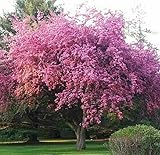
- For sale is one Kwanzan Cherry tree that is approximately 8-14" tall and shipped in a 2.5" pot
- Please note: If you order during the months from October-April, your plant will arrive in its natural dormant state, meaning it will not have any leaves
- Abundant Double Pink Flowers: Enjoy a profusion of showy, double pink blossoms that cover the branches in spring, creating a stunning spectacle
- Upright, Vase-Shaped Form: The Kwanzan Cherry Tree has an attractive upright, vase-shaped growth habit, making it an excellent focal point in any garden
- Low Maintenance: Requires minimal care once established, making it ideal for gardeners of all levels
Plant in fall or early spring
In much of the United States, fall and early spring are the best planting windows. Avoid midsummer heat, frozen soil, and waterlogged soil. A spring-planted cherry may need closer watering through its first hot season. A fall-planted tree still needs moisture until the ground freezes in colder regions.
Dig wide and shallow
Dig the planting hole about 2-3 times the width of the root ball and no deeper than the measurement from the root flare to the bottom of the root ball. The root flare should be visible when the tree is set in the hole. Container and balled-and-burlapped trees often arrive with extra soil piled over the flare, so expose it before setting final depth.
Set the tree on firm, undisturbed soil so it does not settle deeper after watering. Backfill with the native soil unless a soil test or site condition gives you a clear reason to do otherwise. Heavy amendment in only the planting hole can create a bathtub effect in clay or discourage roots from moving into the surrounding soil.
Mulch wide, not high
Install mulch 2-4 inches deep in a wide, flat ring. Pull mulch back from the trunk so the bark stays dry. A 3- to 4-foot mulch ring is a good starting point for a young tree because it reduces turf competition, mower damage, and string-trimmer injury.
Do not volcano mulch. Mulch piled against the trunk traps moisture, encourages decay, hides girdling roots, and creates pest habitat. If you see mulch shaped like a cone around the trunk, pull it back and flatten it.
Water the root ball, not just the surrounding soil
New roots stay concentrated in the original root ball for a while. The surrounding soil can look damp while the root ball is dry. Check 1-2 inches down into the root ball and water when it begins to dry. Water deeply and less frequently instead of sprinkling lightly every day.
Newly planted trees typically need careful watering through at least the first 1-2 growing seasons. Exact frequency depends on weather, soil, tree size, and mulch. During hot dry periods, a new cherry may need water several times per week. In cool wet periods, it may need very little. Check the soil rather than watering by calendar alone.
Stake only if needed
Most small trees do not need staking if the root ball is stable. Stake only when the tree is top-heavy, exposed to strong wind, or unable to stand straight. Use flexible ties, allow some trunk movement, and remove stakes after establishment, commonly within the first year.
What’s actually slowing this PC down?
Pick the symptom - the matching free tool is one click away.
Common Problems: Disease, Pests, and Short Lifespan
Flowering cherries are not maintenance-free trees. They are beautiful ornamentals with known vulnerabilities. Common problems include brown rot, cherry leaf spot, black knot, borers, scale, and stress-related gummosis.
Stress is the multiplier. A cherry planted too deep, crowded by turf, hit by a mower, sitting in wet clay, or starved for water is more likely to show disease and pest problems. Good placement and planting do not make the tree bulletproof, but they reduce the pressure.
Best Value

- WHAT YOU WILL RECEIVE: A Cherry Blossom Tree live plant, arrived as a young starter tree suitable for transplanting into garden beds or outdoor containers.
- BEAUTIFUL SEASONAL BLOOMS: Flowering cherry trees are admired for their delicate blossoms that create a striking spring display, bringing soft color and ornamental beauty to outdoor landscapes.
- POPULAR JAPANESE ORNAMENTAL TREE: These cherry blossom trees are widely planted in gardens, parks, and landscapes for their elegant appearance and classic ornamental value.
- PREFERRED GROWING CONDITIONS: Cherry blossom trees grow best in full sun with well-draining soil and moderate watering to steady development.
- IDEAL FOR LANDSCAPING: Suitable for garden accents, yard planting, or decorative landscape designs, flowering cherry trees add structure and seasonal interest to outdoor spaces.
Watch for dieback, oozing sap, cankers, black swollen knots on twigs or branches, leaf spotting, and flowers that collapse into brown infected tissue as bloom fades. Remove dead, damaged, or diseased branches using clean cuts. For major pruning or recurring disease, bring in a certified arborist rather than cutting heavily at random.
Also set expectations on lifespan. A flowering cherry may give you excellent value for 15-30 years depending on cultivar and site, but many are shorter-lived than oaks, maples, elms, or other large shade trees. That is acceptable when the tree is chosen as an ornamental feature and not oversold as a permanent canopy tree.
Quick wins for a faster PC:
Repair Windows errors before they cause bigger problemsFix Now →Scan for outdated or missing drivers - takes under a minuteDriver Scan →When to DIY and When to Hire a Pro
DIY planting makes sense for a small bare-root, 3-gallon, 5-gallon, or manageable container tree when access is easy and the site has normal soil. If you can lift the tree safely, identify the root flare, dig a wide hole, call 811, and commit to watering for the first 1-2 seasons, DIY can keep the total budget around $75-$250.
Hire a professional when the tree is large, balled-and-burlapped, expensive, or going near hardscape, drainage, slopes, utilities, irrigation, or compacted construction soil. A crew also makes sense when you are planting multiple trees in one trip, correcting grade, adding a bed, removing old roots, or trying to preserve a warranty. For many homeowners, a pro-installed 5- to 15-gallon cherry in the $250-$900 range is the best balance of cost, size, and establishment success.
Bring in an arborist or qualified landscape contractor if you are dealing with black knot, repeated dieback, trunk injury, drainage failure, or a cherry that was planted too deep years ago. Those are not solved by adding more mulch or fertilizer.
Our Practical Recommendation
If you have an open yard and want the classic cherry blossom canopy, choose Yoshino. If you want the biggest pink flower display and accept a shorter useful lifespan, choose Kwanzan or Kanzan. If your yard is smaller or you want earlier bloom, choose Okame. If you want a compact sculptural specimen near a garden, patio, or walkway, choose Snow Fountain or another weeping cherry after checking graft height.
What’s actually slowing this PC down?
Pick the symptom - the matching free tool is one click away.
Whichever tree you choose, make the decision in this order: hardiness zone, mature spread, drainage, sun, utility clearance, then flower color. That sequence is less romantic than shopping by bloom photo, but it is how you get a flowering cherry that actually works in the yard for years.
Frequently Asked Questions
What is the best flowering cherry tree for a small yard?
Okame cherry is often the best standard flowering cherry for a smaller yard because it typically stays around 15-30 feet tall with a 15-25 foot spread. For tighter garden beds, a dwarf Snow Fountain or other weeping cherry may fit better, but check the graft height and mature spread before buying.
How much does it cost to plant a flowering cherry tree in 2026?
A DIY small flowering cherry usually costs about $75-$250 including the tree, mulch, and basic supplies. A professionally installed 5- to 15-gallon tree often runs about $250-$900. Larger balled-and-burlapped or specimen cherries can cost $900-$3,000 or more depending on size, delivery, equipment, access, and warranty.
How far from a house should I plant a flowering cherry tree?
For larger cherries such as Yoshino or Kwanzan, leave at least 15-20 feet from the house when possible, and more if the mature spread is listed near 40 feet. Smaller Okame or dwarf weeping cherries can fit closer, but you still need room for the mature canopy, pruning access, gutters, siding, and air movement.
What is the difference between Yoshino and Kwanzan cherry trees?
Yoshino cherry usually has a broad canopy with white to pale blush single flowers and commonly reaches about 20-30 feet tall and wide. Kwanzan or Kanzan cherry has heavier double pink flowers and can mature around 25-40 feet tall and wide, but it is often shorter-lived, commonly around 15-25 years.
Do flowering cherry trees produce fruit?
Most flowering cherry trees are grown for ornamental value, not harvest. Some may produce small fruit, but many cultivars produce little or no usable fruit. Their value is spring bloom, form, bark, fall color, and pollinator activity.
When is the best time to plant a flowering cherry tree?
In much of the United States, fall or early spring is best. Avoid midsummer heat, frozen ground, and waterlogged soil. Newly planted flowering cherries need careful watering through at least the first 1-2 growing seasons.
Quick Recap
Product prices and availability are accurate as of the date/time indicated and are subject to change. Any price and availability information displayed on Amazon at the time of purchase will apply.
Do these 3 things before closing this tab:
1Clear out junk files and repair common Windows errors2Scan for outdated or missing drivers - takes under a minute3Repair Windows errors before they cause bigger problems
