Quick wins for a faster PC:
Scan for outdated or missing drivers - takes under a minuteDriver Scan →Clear out junk files and repair common Windows errorsFree Scan →Fix the driver behind crashes, sound loss and screen glitchesFind Drivers →A good electric mixer with a bowl can change how a kitchen works. It makes bread dough, cookie batches, whipped cream, mashed potatoes, cake batter, pasta dough, and holiday prep faster and more consistent. But from a builder’s point of view, the appliance itself is only half the decision. The other half is whether your kitchen gives that mixer a practical place to live, plug in, open, run, clean, and store.
For most American households in 2026, the sweet spot is a 4.5- to 5.5-quart stand mixer. That size handles routine baking without taking over the entire kitchen. Compact 3- to 3.5-quart mixers make sense for apartments, small kitchens, and occasional bakers. Serious bread makers, large families, and frequent entertainers should look at 6- to 7-quart bowl-lift machines or specialty bread mixers.
As an Amazon Associate I earn from qualifying purchases.
Budget matters too. Basic electric stand mixers with bowls generally run about $100 to $250. Mainstream models land around $250 to $500. Premium bowl-lift and bread-focused mixers often cost $500 to $1,000 or more. Extra bowls commonly add $40 to $150, and attachments can add another $25 to $250 each. If you are remodeling, also budget for the kitchen around the mixer: storage, lighting, outlet placement, counter depth, and sometimes a mixer-lift cabinet.
Do these 3 things before closing this tab:
1Repair Windows errors before they cause bigger problems2Fix the driver behind crashes, sound loss and screen glitches3Clear out junk files and repair common Windows errorsBest Electric Mixers With Bowls by Kitchen Type
The best mixer is not the most powerful one on the shelf. Bowl capacity, gearing, stability, attachment geometry, dough performance, storage weight, and clearance matter more than the wattage number printed on the box. On kitchen projects, we see homeowners regret oversized mixers more often than underpowered ones. A 30-pound machine stored in a deep lower cabinet is not convenient, and a tall mixer that cannot open under the wall cabinets becomes a daily annoyance.
#1 Best Overall
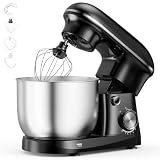
- Motor and Speed Options: OLIXIS packs a 300W motor with ten speed levels to mix anything from stiff pizza dough to runny cake batter Rivals well-known kitchen stand mixers for all your home baking projects
- Essential Baking Tools Included: Arrives with a dough hook, wire whisk, and flat beater similar to expensive kitchen appliances This ready-to-use kitchen mixer gives you everything needed for bakery-quality results from day one
- All-in-One Lid with Six Features: The clever bowl cover combines six helpful kitchen tools including magnifier, slicer, egg separator, measuring cup, scale, and serrated edge to boost your stand mixer's usefulness and save counter space
- Size and Color Selections: OLIXIS lets you choose between 4.2Qt and 6.3Qt bowls plus Black or Blue exteriors to match your cooking space and meal size This premium-grade versatility makes your stand mixer ideal for preparing breads or desserts
- Solid Build and Affordable Quality: Crafted from safe, simple-to-clean materials for long-lasting daily use Provides high-level performance at a reasonable price, competing with discounted premium kitchen mixers for years of reliable service
Best for most homes: 4.5- to 5.5-quart tilt-head mixer
A 4.5- to 5.5-quart tilt-head mixer is the safest recommendation for a household that bakes weekly or a few times a month. This class includes the popular KitchenAid Artisan 5-quart style mixer, which is commonly listed around $499.95 at full retail and often sells for less depending on color, bundle, and seasonal promotions.
A 5-quart bowl is large enough for most cookie dough, cake batter, frosting, and standard bread recipes. KitchenAid markets its 5-quart Artisan as capable of handling up to 9 dozen cookies in one batch. In real kitchens, that is more capacity than most homeowners need on a normal week, but it gives enough headroom for holidays and school events.
Best for small kitchens: 3- to 3.5-quart compact mixer
If counter space is tight, a compact stand mixer can be the right choice. A 3- to 3.5-quart mixer works for smaller batches, occasional baking, and kitchens where every inch of counter has to earn its keep. These mixers are easier to move, easier to store, and less likely to dominate a small countertop.
Free tools Windows power users keep installed
One-click scans. No signup required.
The tradeoff is batch size. A compact mixer is not the best tool for double batches of cookie dough, large cakes, or stiff bread dough. It is a good appliance for one- or two-person households, condos, ADUs, and secondary kitchens.
Best for bread and heavy dough: 6- to 7-quart bowl-lift or specialty mixer
If you make bread, pizza dough, brioche, bagels, or large batches often, move up to a heavier machine. Top tested picks in this category commonly include KitchenAid 7-quart bowl-lift models and Ankarsrum-style mixers for bread-heavy users. These machines are built for torque, stability, and long mixing cycles.
The kitchen needs to be ready for that decision. Many heavy-duty stand mixers weigh roughly 25 to 30 pounds or more. They are usually too heavy to lift comfortably from a low shelf every weekend. If the appliance is going to stay on the counter, confirm countertop depth, head or bowl clearance, and vibration control before you buy.
Stand Mixer Cost Comparison for 2026
There is a large price spread in electric mixers with bowls, and the sticker price does not tell the whole story. Bowls, beaters, dough hooks, flex-edge paddles, pasta attachments, meat grinders, slicers, shredders, and storage upgrades can double the real cost of the setup.
| Mixer category | Typical 2026 cost | Best for | Kitchen planning notes |
|---|---|---|---|
| Budget stand mixer | $100-$250 | Occasional baking, starter kitchens, rental-friendly setups | Check bowl lockup, stability, dough limits, and replacement parts availability. |
| Mainstream 4.5- to 5.5-quart mixer | $250-$500 | Most home kitchens and weekly bakers | Plan a permanent counter spot or reachable pantry shelf. Verify tilt-head clearance. |
| Premium bowl-lift mixer | $500-$1,000+ | Large batches, stiff dough, frequent entertaining | Heavy appliance. Best on counter, pantry work surface, or properly rated mixer lift. |
| Extra bowl | $40-$150+ | Batch baking, frosting, multiple recipes | Match the exact mixer series, bowl size, handle style, and lift bracket. |
| Specialty attachments | $25-$250+ | Pasta, grinding, slicing, spiralizing, specialty prep | Store attachments near the mixer or they will not get used regularly. |
| Mixer-lift hardware | $214.99-$409.99 hardware only | Heavy mixers stored below counter | Installed cost commonly reaches $500-$1,500+ with shelf, labor, cabinet work, and finish matching. |
When a homeowner is choosing between two mixer sizes, we usually ask three questions: How often do you bake? What is the heaviest dough you make? Where will the mixer live when it is not being used? The third question is the one most buyers skip, and it is the one that affects the kitchen longest.
What the Best Mixer Reviews Usually Miss
Product reviews are useful for comparing whipping speed, dough performance, noise, accessories, and bowl scraping. They rarely cover how the mixer fits into the room. That gap matters because a stand mixer is not a toaster. It is a heavy appliance with a bowl, moving parts, a cord, attachments, vibration, and cleanup needs.
On our job sites, we treat a stand mixer as part of the kitchen workflow. A good mixer station needs landing space for flour, sugar, eggs, sheet pans, cooling racks, measuring cups, and trash. It should be close enough to the sink for cleanup and close enough to the oven that you are not carrying loaded pans across the room. It also needs a code-compliant receptacle where the cord reaches without an extension cord.
Measure these five things before you buy
First, measure counter depth. Standard counters are often about 25 inches deep, but appliance garages, backsplashes, trim, and outlet locations can reduce usable space.
Recommended Free Tools
Rank #2
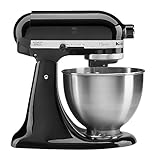
- Built to take it all on with the durable and built-to-last metal construction, and 59 touchpoints around the mixer bowl for great mixing results.
- 4.5 Quart Stainless Steel Bowl to mix up to 8 dozen cookies in a single batch. Dishwasher safe. Using the flat beater; 28g dough each
- Easily add ingredients with the tilt-head design, because you'll have better access to the bowl - lock the head in place while mixing
- 10 speeds for nearly any task or recipe, from mixing ingredients together on the stir speed, to whipping cream at speed 8, you'll get thorough ingredient incorporation every time
- 10 plus attachments to make more with your mixer to make everything from fresh pasta to burgers, veggie noodles, ice cream and more, sold separately
Second, measure vertical clearance under upper cabinets. Do this with a tilt-head mixer fully open, not just closed. Some mixers fit under cabinets for storage but cannot be operated there.
Third, measure outlet distance. A mixer should plug directly into a properly located receptacle. Relying on an extension cord is poor workflow and a safety red flag.
Fourth, measure the storage opening. If the mixer will go in a pantry, appliance garage, or base cabinet, confirm clear width, depth, and door swing.
Fifth, check appliance weight. A 15-pound mixer is manageable for many people. A 30-pound mixer stored below the counter may become impractical fast, especially for older homeowners or anyone with shoulder, back, or grip limitations.
Designing a Real Baking Zone
A well-planned baking zone is compact, not complicated. The mixer, dry goods, measuring tools, prep counter, trash or compost, sink, and oven path should sit within a few steps. That layout matters more than having a huge island.
For a remodel, the best time to decide mixer placement is before electrical rough-in and cabinet ordering. After cabinets and countertops are installed, your options narrow and costs rise. Moving an outlet, modifying a base cabinet, or adding an appliance garage after the fact can involve drywall repair, cabinet finish matching, new trim, and countertop constraints.
Countertop mixer station
A countertop station works well when the mixer is used often. It should have at least 18 inches of landing space on one side, with more if you bake in batches. For serious bakers, 30 to 36 inches of uninterrupted prep space beside the mixer is much more comfortable.
Quartz, granite, solid surface, and butcher block can all support a stand mixer, but vibration matters during dough mixing. Felt or silicone feet can help protect stone counters, but they should not trap moisture or make the mixer unstable. A mixer that walks across the counter under load is not just irritating; it can damage finishes or fall.
Appliance garage
An appliance garage can keep the mixer off the visible counter while leaving it ready to use. The design needs enough interior depth, door clearance, cord management, and a receptacle location that complies with the local electrical code. Tambour doors, lift-up doors, pocket doors, and bifold cabinet doors all require different clearances.
Rank #3

- Built to take it all on with the durable and built-to-last metal construction, and 59 touchpoints around the mixer bowl for great mixing results.
- 4.5 Quart Stainless Steel Bowl to mix up to 8 dozen cookies in a single batch. Dishwasher safe. Using the flat beater; 28g dough each
- Easily add ingredients with the tilt-head design, because you'll have better access to the bowl - lock the head in place while mixing
- 10 speeds for nearly any task or recipe, from mixing ingredients together on the stir speed, to whipping cream at speed 8, you'll get thorough ingredient incorporation every time
- 10 plus attachments to make more with your mixer to make everything from fresh pasta to burgers, veggie noodles, ice cream and more, sold separately
Do not design the garage from the closed appliance height alone. Confirm the bowl can be installed, the head can tilt if applicable, the cord can route without pinching, and the door hardware does not block the appliance. Ventilation is also worth discussing if the same garage will store a toaster, coffee maker, or other heat-producing appliance.
Mixer-lift base cabinet
A mixer lift is a hinged shelf system installed in a base cabinet. Rev-A-Shelf heavy-duty lift mechanisms are commonly listed around $214.99 to $409.99, with many retail listings around $300 to $400 depending on soft-close features, finish, and whether the shelf is included.
The total installed feature often runs $500 to $1,500 or more once you include the lift hardware, shelf, cabinet modification or new full-height base cabinet, labor, and finish matching. Custom cabinetry can push the number higher.
What’s actually slowing this PC down?
Pick the symptom - the matching free tool is one click away.
The key is cabinet compatibility. Many mixer lifts require a full-height base cabinet and specific minimum width, depth, and height. The lift must be rated above the appliance weight plus the bowl and attachments. This is not where we like to see guesswork. A lift that binds, sags, or twists under a heavy mixer will not age well.
Electrical and Code Planning
Kitchen power planning should happen before cabinets are finalized. A stand mixer does not usually need a dedicated circuit by itself, but it does need a safe, accessible receptacle in the right place. Kitchen receptacles are commonly subject to GFCI protection, and modern code cycles may also require AFCI protection depending on the circuit and jurisdiction.
Outlet installation near a mixer station commonly costs about $130 to $300 per outlet in 2026, according to national homeowner cost references. That price can rise when the work requires a new circuit, panel capacity review, island wiring, drywall repair, permit fees, or fishing wire through finished walls.
Island and peninsula outlets deserve special attention. Recent National Electrical Code changes have changed how required receptacles are handled at kitchen islands and peninsulas, and local adoption varies. Some jurisdictions are still on older code editions while others enforce newer requirements. The right answer is the one your local authority having jurisdiction has adopted.
The Tool Desk
Outbyte Driver Updater FREEFix the driver behind crashes, sound loss and screen glitchesFind Drivers →Outbyte PC Repair FREERepair Windows errors before they cause bigger problemsFix Now →From a practical standpoint, we do not want homeowners stretching cords across walkways, over sink edges, or across a cooktop path. If the mixer is planned for an island, the island power strategy needs to be decided during rough-in. Retrofitting island power after the countertop is installed can be expensive and sometimes visually awkward.
When to DIY and When to Hire a Pro
Buying the mixer is a normal homeowner decision. Installing the kitchen infrastructure around it is where the line shifts.
Good DIY tasks
Most homeowners can compare bowl sizes, read tested reviews, measure counter clearance, buy compatible bowls and attachments, add a stable counter mat, and organize nearby baking supplies. If you are using an existing counter outlet and the mixer fits comfortably under the cabinets, no construction work may be needed.
Rank #4
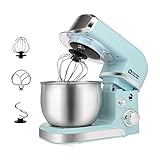
- Compact Designed And More Color Options - The stand mixer is less than 7lbs with dimension 12.9*7*10.2 In, small and easy to storage,which could help space-saving. Perfectly suitable for small kitchen,apartment,or limited storage space. And multiple colors to choose,meet a variety of aesthetic needs for your kitchen.
- 3.2Qt Capacity and Tilt Head Design - Our little kitchen mixer equipped with 3.2Qt stainless steel bowl,suitable for new baker,1-2 members family or couples,easy to operate and clean up.Tilt-head design mixer allows access to install or uninstall bowl and accessories easily.And transparent anti-splash lid could prevent the ingredient making a mess.
- 6 Speeds and 4 Anti-Slip Suckers - This Mini Mixer has 6 different speed options,suitable for mixing bread dough, thick batters, meringues, and whipping cake cream, plus lower speeds for stirring and finessing your most delicate concoctions,could suit perfectly to different ingredients.Chassis 4 stronger suckers,can keep the machine steady and avoid moving or bounce during operation.
- Upgraded Multi Attachments - Aluminium dough hook and flat beater,stainless steel whisk are easy to attach,using upgraded material,more sturdy and durable.There is a gasket at the top joint to prevent food residue from splashing into the joint to make cleaning more convenient.
- Excellent Gift and Support - The electric mixer is also a excellent gift idea for your family and friends. We have confidence in the quality of our products and will provide after-sales guarantee for it,if you have any questions when received or during your using, please contact us at ease.
You can also install some simple pullout shelves if the cabinet is in good condition, the shelf is rated for the load, and you are comfortable fastening hardware squarely into cabinet framing. Check the mixer weight first. Hardware rated for light pantry goods is not automatically appropriate for a heavy stand mixer.
PC Slower Than It Used to Be?
A free scan shows the junk files, broken settings and background clutter dragging Windows down - then fixes them in one click.Free scan · Windows 10 & 11Outdated Drivers Are Slowing You Down
One free scan finds every outdated or missing driver and matches the right update for your exact hardware.Free scan · exact hardware matchHire a pro for electrical, cabinet modification, and remodel integration
Hire a licensed electrician when adding or relocating outlets, working inside an island, changing circuits, adding GFCI or AFCI protection, or dealing with panel capacity. Many jurisdictions require permits for new outlets or circuit changes, and kitchen electrical work is not a place to improvise.
Hire a cabinet professional or remodeler for mixer-lift installation when the cabinet needs structural modification, finish matching, new doors, shelf fabrication, or confirmation that the cabinet can carry the load. A poorly installed lift can rack the cabinet box, damage the door opening, or make the mixer feel unsafe to use.
If you are already remodeling the kitchen, include the mixer zone in the design scope. In 2026, national kitchen remodel references commonly place small to moderate kitchen projects around $14,500 to $41,500, with an average near $27,000. Mid-range full remodels can reach $75,000 to $125,000, and major or luxury remodels can exceed $130,000. Compared with those totals, planning the mixer location early is a small decision that can prevent expensive rework.
Independent reader supportYour contribution helps us test, update, and keep practical guides available for everyone.Common Buying and Remodeling Mistakes
The most common appliance mistake is buying by wattage alone. A higher watt number does not guarantee better dough performance. Torque, gearing, bowl shape, hook design, stability, and real testing results matter more.
The second mistake is choosing a mixer too large for the kitchen. A premium bowl-lift mixer may be the right machine for bread, but it is the wrong choice if it blocks upper cabinets, crowds the coffee station, or has to be lifted from the floor of a pantry every time it is used.
Another common issue is incompatible accessories. Bowls and attachments can vary by mixer series, quart size, tilt-head versus bowl-lift design, bracket type, and handle style. Before buying a second bowl or specialty attachment, match the exact model number.
In remodels, the bigger mistakes are spatial. Homeowners plan a mixer parking spot but forget ingredient landing space. They plan an appliance garage without enough depth or cord clearance. They install a mixer lift in a cabinet opening that is too narrow or shallow. They put the mixer on an island but do not resolve code-compliant power before the island is built.
The fix is simple: choose the appliance and the kitchen layout together. A stand mixer should not be treated as an afterthought if baking is part of how the household uses the kitchen.
Best Value

- Built to take it all on with the durable and built-to-last metal construction, and 59 touchpoints around the mixer bowl for great mixing results.
- 5 Quart Stainless Steel Bowl with comfortable handle for small or large batches, to mix up 9 dozen cookies* in a single batch. Dishwasher safe. *Using the flat beater; 28g dough each.
- Easily add ingredients with the tilt-head design, because you'll have better access to the bowl - lock the head in place while mixing.
- 10 speeds for nearly any task or recipe, from mixing ingredients together on the stir speed, to whipping cream at speed 8, you'll get thorough ingredient incorporation every time.
Our Practical Recommendation
For most homeowners, start with a 5-quart class stand mixer from a proven brand. It offers the best balance of capacity, storage, attachment support, and resale familiarity. The KitchenAid Artisan 5-quart remains a strong mainstream benchmark, while Breville, Cuisinart, Beautiful, NutriMill-style budget options, compact KitchenAid Artisan Mini models, KitchenAid 7-quart bowl-lift mixers, and Ankarsrum machines all have a place depending on budget and baking style.
If you bake occasionally, do not overbuy. A compact or budget mixer may serve you well. If you bake weekly, buy the 4.5- to 5.5-quart machine and give it a permanent, convenient location. If bread dough is your priority, invest in a heavier bowl-lift or specialty mixer and design the storage so you are not wrestling with it.
The construction advice is this: before you order cabinets or approve an electrical plan, decide where the mixer will work, where it will rest, where the attachments will go, and how the cord reaches power. A good kitchen is not just a room with expensive appliances. It is a room where the tools land in the right place, at the right height, with enough clearance and power to use them without friction.
Frequently Asked Questions
What size stand mixer bowl is best for most home kitchens?
A 4.5- to 5.5-quart bowl is best for most households. It handles weekly baking, cookies, cakes, frosting, and standard dough recipes without the size and weight of a commercial-style mixer.
What’s actually slowing this PC down?
Pick the symptom - the matching free tool is one click away.
Is a bowl-lift mixer better than a tilt-head mixer?
A bowl-lift mixer is better for large batches and stiff dough because it is typically heavier and more stable. A tilt-head mixer is easier to use, easier to store, and usually the better fit for everyday home kitchens.
How much does a good electric mixer with a bowl cost in 2026?
Budget stand mixers usually cost about $100 to $250, mainstream models cost about $250 to $500, and premium bowl-lift or specialty bread mixers often cost $500 to $1,000 or more. Extra bowls and attachments add to the total.
Do I need a permit to add an outlet for a stand mixer?
Often, yes. Permit rules vary by city and county, but adding or relocating kitchen outlets can require licensed electrical work, GFCI protection, AFCI protection, and inspection under the locally adopted electrical code.
Are mixer-lift cabinets worth it?
They are worth considering if the mixer is heavy and you do not want it living on the counter. Expect roughly $500 to $1,500 or more installed once hardware, shelf, labor, cabinet changes, and finish matching are included.
The Tool Desk
Outbyte PC Repair FREEClear out junk files and repair common Windows errorsFree Scan →Outbyte Driver Updater FREEScan for outdated or missing drivers - takes under a minuteDriver Scan →Where should a stand mixer go in a kitchen remodel?
Place it in a baking zone near dry goods, measuring tools, prep counter space, trash or compost, sink access, and a clear path to the oven. Decide the location before cabinet ordering and electrical rough-in.
Quick Recap
Product prices and availability are accurate as of the date/time indicated and are subject to change. Any price and availability information displayed on Amazon at the time of purchase will apply.

