Do these 3 things before closing this tab:
1Clear out junk files and repair common Windows errors2Scan for outdated or missing drivers - takes under a minute3Repair Windows errors before they cause bigger problemsSome links on this page are affiliate links: if you buy through them we may earn a commission, at no extra cost to you.
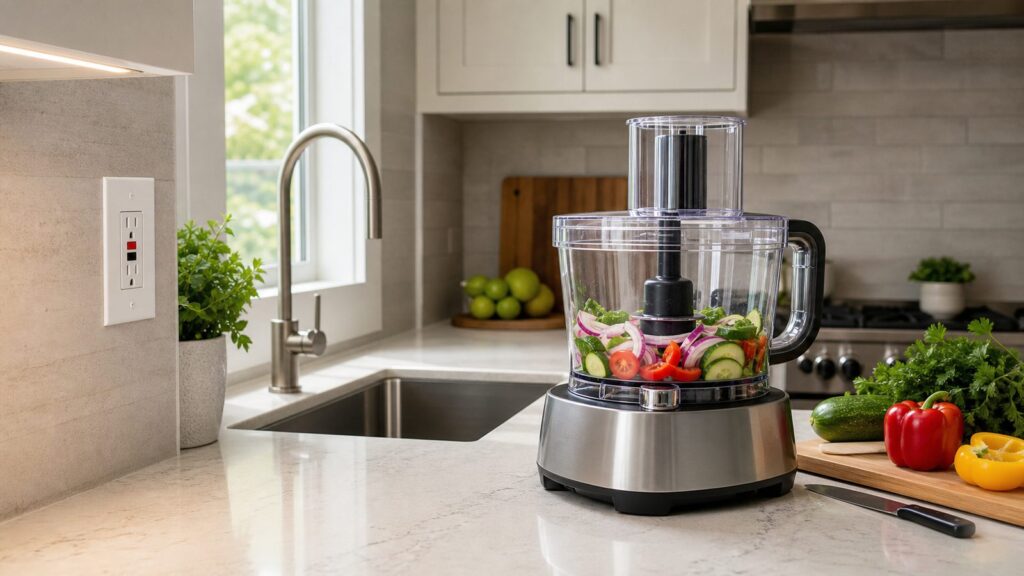
A good BPA-free food processor should do more than chop vegetables. It should fit the way your kitchen actually works: enough capacity for real meal prep, food-contact parts that are clearly labeled BPA-free, a stable base, parts you will actually clean, and a safe place to plug it in without dragging a cord across a sink or cooktop.
For most households, the best BPA-free food processor is a 12- to 14-cup model. That size is large enough for shredded vegetables, hummus, salsa, pie dough, cauliflower rice, and family meal prep, but it is not so oversized that it becomes a 25-pound appliance you avoid using. Smaller 3- to 7-cup processors still have a place in compact kitchens, and 16-cup machines make sense for batch cooking, dough, entertaining, or serious from-scratch cooks.
As an Amazon Associate I earn from qualifying purchases.
The Tool Desk
Outbyte PC Repair FREEClear out junk files and repair common Windows errorsFree Scan →Outbyte Driver Updater FREEFix the driver behind crashes, sound loss and screen glitchesFind Drivers →On our kitchen remodels, we look at appliances like this differently than a typical product roundup. The machine matters, but so does the counter run, outlet location, GFCI protection, cabinet storage, cleanup path, and how the appliance behaves on quartz, granite, butcher block, or solid-surface counters. A healthy kitchen is not only about the plastic label on the bowl. It is about making the tool easy enough and safe enough to use every week.
Best BPA-Free Food Processors: Quick Picks
If you want the short version, start with capacity and daily use. A food processor that is too small will frustrate you. One that is too large may never leave the cabinet. The best choice is the smallest machine that can comfortably handle your normal batch size.
#1 Best Overall

- POWERFUL PERFORMANCE: The 1000-peak-watt motor precisely powers through tough ingredients to ensure smooth, consistent results every time.
- AUTO-IQ TECHNOLOGY: Four intelligent Auto-iQ preset programs take the guesswork out of food prep, providing one-touch control for chopping, slicing, shredding, pureeing, and dough making.
- LARGE CAPACITY: The 9-cup bowl with large feed chute is perfect for large batches, family meals, entertaining, or weekly meal prep, saving you time and effort.
- PRECISION CHOPPING BLADES: Stainless steel Ninja Blades are designed for optimal food processing, perfectly precise chopping, even slicing and shredding, and smooth pureeing.
- SLICING/SHREDDING DISC: This ultra-versatile reversible disc can slice cucumbers, meats and more on one side and shred cheese, carrots, and more on the other side.
| Best Fit | Recommended Size | Typical 2026 Cost | What to Look For |
|---|---|---|---|
| Small kitchens, sauces, herbs, garlic, baby food | 3 to 4 cups | $40 to $80 | BPA-free food-contact parts, simple controls, dishwasher-safe bowl |
| Couples, compact kitchens, occasional prep | 7 to 9 cups | $80 to $180 | Stable base, sharp blade, easy lid lock, manageable storage height |
| Most family kitchens | 12 to 14 cups | $100 to $300 | Wide feed tube, sealed bowl, slicing and shredding discs, strong motor design |
| Batch cooking, dough, entertaining | 16 cups | $250 to $550+ | Heavy base, large BPA-free bowl, accessory storage, dough performance |
Our default recommendation for a primary kitchen food processor is a 12- to 14-cup BPA-free unit. That is the range where capacity, footprint, cost, and usefulness line up best. It can shred a head of cabbage without constant emptying, make a double batch of pesto, mix pie dough, or prep vegetables for several weeknight meals.
Premium 16-cup machines are excellent when they fit the household. They are heavier, wider, and often taller with the lid and feed tube attached. Before buying one, measure the cabinet or appliance garage where it will live. Many large processors need roughly 11 to 13 inches of counter depth, 8 to 10 inches of width, and 15 to 18 inches of vertical clearance depending on the feed tube and lid design.
What’s actually slowing this PC down?
Pick the symptom - the matching free tool is one click away.
What BPA-Free Actually Means in a Food Processor
BPA, or bisphenol A, is used in some polycarbonate plastics and epoxy resins. The FDA’s current position is that BPA is safe at current levels in approved food-contact uses, but many homeowners still prefer BPA-free bowls, lids, pushers, and food-contact parts. That preference is reasonable, especially in a kitchen where the processor may touch warm sauces, acidic salsa, nut butters, or food for children.
The detail that matters is the food-contact zone. A listing that says “BPA-free bowl” is useful, but the bowl is not the only part touching food. The lid, pusher, feed tube, blade hub, accessory spindle, and storage pieces may also contact ingredients. When comparing models, look for manufacturer language such as “BPA-free food zones” or “BPA-free food-contact parts.” That is stronger than a vague claim on a retailer page.
Do not assume a plastic work bowl is automatically a problem. Most modern food processors use plastic bowls because they are lighter, clearer, and less likely to shatter than glass at full-size capacities. The practical question is whether the manufacturer identifies the food-contact plastic as BPA-free and whether the parts can survive normal cleaning without clouding, cracking, or holding odors.
Our Top BPA-Free Food Processor Picks by Kitchen Type
Best Overall for Most Homes: 12- to 14-Cup BPA-Free Processor
A 12- to 14-cup BPA-free processor is the right primary machine for most households. The Cuisinart Custom 14-Cup style of machine is a good example of this category: a 14-cup work bowl, a 720-watt motor listing, and a simple control layout that favors durability over gimmicks. Current pricing commonly lands around $299.95 for this class, though sales can move that number.
For a homeowner who meal preps, cooks for four, or wants one appliance that can handle hummus, shredded cheese, salsa, dough, and vegetables, this is the practical sweet spot. In our experience planning kitchens, this size also stores better than many 16-cup units. It can often fit in a base cabinet, pantry shelf, or appliance lift without forcing custom dimensions.
Look for a stable base, a work bowl that locks in cleanly, a lid that does not require awkward twisting, and a feed tube wide enough for potatoes, cucumbers, carrots, and cabbage wedges. A sealed or well-contained bowl also matters because liquids and purees can make a mess fast if the lid or center post is poorly designed.
Best Premium Pick: 16-Cup BPA-Free Processor
A 16-cup processor, such as a premium Sous Chef-style machine, makes sense for the homeowner who cooks in batches. This category often includes an ultra-durable BPA-free bowl, larger work capacity, more blades and discs, and a heavier motor base. Expect to spend about $250 to $550 or more.
The benefit is capacity and control. These machines are better suited for kneading dough, slicing large quantities of vegetables, making nut butters, processing multiple onions at once, or prepping food for a party. The tradeoff is size. A loaded 16-cup processor can be awkward to lift, and the base may be heavy enough that it deserves a permanent home or a lift shelf.
During remodel planning, we treat a large processor almost like a stand mixer. If the client uses it weekly, it should not live above shoulder height. A pullout shelf, appliance garage, or base-cabinet lift can reduce strain, especially for aging-in-place kitchens.
Best Midrange Family Pick: 13-Cup BPA-Free Processor
KitchenAid 13-cup models are strong midrange options for families that want useful accessories without jumping to a large commercial-feeling unit. These models typically list a 13-cup BPA-free plastic work bowl and functions for chopping, shredding, slicing, kneading, mixing, and pureeing. Some versions add dicing or french-fry cutting kits.
This size is a good fit when the kitchen has limited storage but the household still wants full-size performance. In remodel terms, a 13-cup machine is easier to plan around than a 16-cup processor. It is still large enough for vegetables, dough, and weeknight prep, but it is usually less punishing to move.
Accessory storage is worth paying attention to. Loose discs and blades create clutter and safety problems in a drawer. A storage caddy or on-board accessory case is not just a convenience; it keeps sharp parts protected and easier to find.
Best Budget Full-Size Pick: 10- to 12-Cup BPA-Free Processor
Budget full-size BPA-free processors, including Hamilton Beach Stack & Snap-style 10- to 12-cup models, usually land around $45 to $100 depending on retailer, certification status, and included accessories. Hamilton Beach has explicitly identified BPA-free food zones or food-contact zones on several Stack & Snap models, which is the kind of wording homeowners should look for.
This category is best for homeowners who want full-size capacity without a premium price. The tradeoffs are usually motor refinement, noise, accessory quality, and long-term feel. Still, a 12-cup budget machine can be a smart buy for shredding vegetables, making salsa, chopping onions, or preparing weekly ingredients.
Rank #2

- 【Patented Button Design】Upgraded Ganiza food processors for effortless use, and easier pressing. The ergonomic design of the Buttons & Appearance reduces hand fatigue and provides good control and stability.
- 【Innovative Overheat Protection Light Display】Built-in overheat protection system ensures safe operation of the food chopper and extends the food processor's lifespan. The patented smart light provides clear, intuitive feedback on overheating, allowing better control over processing times for safer use.
- 【Indispensable Kitchen Helper】GANIZA BPA-FREE food processor features 2 sets of blades and dual bowls (8-Cup glass bowl and 8-Cup stainless steel bowl). Easily chop meat, fish, vegetables, nuts, fruit, or make a salad, guacamole, salsa, burgers, etc, the food chopper is ideal for multiple kitchen tasks!
- 【Efficient Motor & Safety Insurance】The Full-copper motor supports a 3 times longer service life than regular motors. Adopting patented automatic stopping design to protect your family and child, and blades are spring-loaded and stop rotating immediately once you pop the motor out of the way.
- 【Unlock Versatility with Two Bowls】Your food hygiene, we care. The Mixing Bowls are made from different materials (glass and sus 304 stainless steel) to avoid confusion between bowls for different uses, meat chopper and vegetable chopper, food processor. Note: Glass bowl: max 149 °F (65 °C); hotter water may cause shattering.
From a construction perspective, budget processors may be lighter and more prone to vibration. On stone counters, we often recommend a thin silicone mat or anti-vibration pad under small appliances that walk during use. It protects the counter surface, reduces noise, and makes the appliance feel more stable.
Best Compact Pick: 3- to 4-Cup BPA-Free Chopper
A mini processor is not a replacement for a full-size machine, but it earns its place in the right kitchen. Cuisinart Mini-Prep-style 3-cup choppers commonly list BPA-free parts, a 250-watt motor, and a 3-year limited warranty. Typical 2026 prices are about $40 to $80.
Choose a mini chopper for herbs, garlic, sauces, dressings, small portions of baby food, nuts, and quick prep. Do not buy it expecting to shred cabbage, make dough, or process large meal-prep batches. If your household cooks full meals from scratch, a mini unit is a companion appliance, not the main processor.
Food Processor Features That Matter More Than Wattage
Wattage is easy to compare, but it is not the full story. A 720-watt machine with a good blade, stable bowl, and efficient motor can outperform a higher-watt appliance with poor geometry. What matters in daily use is how the processor handles real ingredients: hard cheese, carrots, dough, nuts, onions, herbs, and wet mixtures.
Start with the blade and bowl. The S-blade should sit low enough to pull food into the cutting path instead of leaving large chunks spinning above it. The bowl should lock firmly without flexing. The lid should engage easily and should not require so much force that an older homeowner or child helping in the kitchen struggles with it.
Next, look at the feed tube. A wide feed tube saves time because you do less pre-cutting. This is especially useful for potatoes, tomatoes, cucumbers, carrots, and blocks of cheese. Adjustable slicing discs are useful, but only if the markings are clear and the disc stores safely.
Quick wins for a faster PC:
Repair Windows errors before they cause bigger problemsFix Now →Fix the driver behind crashes, sound loss and screen glitchesFind Drivers →Dishwasher-safe parts are valuable, but read the manual. BPA-free plastic can still cloud, warp, or crack if exposed to high heat or harsh detergent over time. In a working kitchen, we recommend rinsing the bowl and lid right after use, then washing on the top rack if the manufacturer allows it. For oily foods like pesto or nut butter, a quick warm-water rinse before dishwasher loading makes a noticeable difference.
Capacity Guide: Match the Bowl to the Way You Cook
Capacity is where many homeowners overspend or undershoot. A 3-cup chopper is convenient until you try to make slaw. A 16-cup processor is powerful until you realize it weighs too much to pull out for one onion.
| Bowl Size | Best For | Limitations | Good Remodel Planning Note |
|---|---|---|---|
| 3 to 4 cups | Garlic, herbs, dressings, small sauces | Too small for family meal prep | Can store in a shallow drawer or small appliance cabinet |
| 7 to 9 cups | Couples, small kitchens, occasional cooking | Limited for cabbage, dough, large batches | Works well in condos and galley kitchens |
| 12 to 14 cups | Family cooking, weekly prep, hummus, shredding, dough | Needs real cabinet space | Best all-around size for most remodeled kitchens |
| 16 cups | Batch cooking, entertaining, dough, large families | Heavy, taller, more expensive | Plan a lift shelf, appliance garage, or permanent counter location |
For a family kitchen, we usually plan around a 12- to 14-cup machine unless the homeowner already owns and loves a larger model. If a client bakes bread weekly, makes nut butters, or cooks in bulk, we make room for 16 cups. If they mostly chop herbs and make dressing, a mini chopper may be enough.
Measure before you buy. Check width, depth, height with lid installed, and height with the feed tube. Also check the cord length. If the cord is 30 inches and the outlet is behind a coffee maker or across a sink, the appliance will be annoying or unsafe to use.
The Remodeler’s Checklist for a Food Processor-Friendly Kitchen
Most product guides stop at the appliance. On our job sites, that is only half the decision. A food processor is loud, heavy, wet, sharp, and frequently used near a sink, trash pullout, cutting board, and refrigerator. It deserves a planned work zone.
Counter Space
Give the appliance at least one clear counter run, ideally 30 to 36 inches wide. That gives room for the processor, a cutting board, ingredients, and a landing area for the bowl or lid. If the processor sits under upper cabinets, confirm the lid can come off without hitting the cabinet bottom. Many upper cabinets start about 18 inches above the countertop, but crown, light rail, and appliance height can reduce practical clearance.
Outlet Placement
Place a receptacle close enough that the cord reaches without crossing a sink, cooktop, or main walkway. In a remodel, this is a small detail that prevents daily irritation. Countertop appliance cords should not be stretched tight, routed behind wet areas, or draped across a prep aisle.
Modern kitchens require careful electrical planning. Small-appliance receptacles at kitchen counters are generally served by two or more 20-amp small-appliance branch circuits. GFCI protection is required for kitchen countertop receptacles, and many jurisdictions also require AFCI protection depending on local code adoption. Island and peninsula outlet rules changed under the 2023 National Electrical Code, so do not assume an old island layout can simply be repeated without review.
PC Slower Than It Used to Be?
A free scan shows the junk files, broken settings and background clutter dragging Windows down - then fixes them in one click.Free scan · Windows 10 & 11Outdated Drivers Are Slowing You Down
One free scan finds every outdated or missing driver and matches the right update for your exact hardware.Free scan · exact hardware matchRank #3

- POWERFUL PERFORMANCE: Equipped with a 1000-peak-watt motor, this Ninja food processor effortlessly handles tough ingredients, ensuring smooth and consistent results every time.
- AUTO-IQ TECHNOLOGY: Features 4 Auto-iQ intelligent preset programs that take the guesswork out of food prep, providing one-touch control for chopping, slicing, pureeing, and dough making.
- LARGE CAPACITY: The 9-cup bowl is perfect for large batches, making it ideal for family meals, entertaining, or weekly meal prep, saving you time and effort in the kitchen.
- PRECISION BLADES: Includes stainless steel precision blades designed for optimal performance, ensuring even chopping, slicing, and pureeing of all your ingredients.
- DOUGH BLADE INCLUDED: Comes with a specialized dough blade that makes mixing dough for bread, pizza, and pastries a breeze, delivering professional-quality results at home.
Storage
A full-size food processor should be stored between knee and chest height whenever possible. Upper shelves are a bad place for a 15- to 30-pound appliance. For aging-in-place kitchens or frequent cooks, consider a base-cabinet pullout, appliance lift, or a dedicated shelf directly below the prep counter.
If you want an appliance garage, measure the processor with the bowl and lid attached. A shallow garage that looks clean in drawings may fail in real life if the feed tube is too tall or the door hardware steals interior depth.
Cleanup Workflow
The best location is usually between the sink and the main prep surface, with trash or compost nearby. This lets you rinse vegetables, trim scraps, process food, and move the bowl to the sink without crossing the room. A durable counter surface such as quartz, granite, porcelain, solid surface, or sealed butcher block can all work, but each needs the right care. A silicone mat helps with vibration and protects polished stone from appliance movement.
Electrical Costs, Permits, and Safety Notes
If you are simply plugging a food processor into an existing code-compliant kitchen outlet, there is usually no special project. The appliance does not normally need its own dedicated circuit the way some large built-in appliances do. But if your kitchen is short on countertop outlets, has older two-prong receptacles, lacks GFCI protection, or trips breakers when several appliances run at once, that is a remodeling issue, not an appliance issue.
Free tools Windows power users keep installed
One-click scans. No signup required.
For 2026 budgeting, professional outlet installation nationally averages roughly $138 to $320, with many homeowners around $229. Permit fees may add about $50 to $100 depending on location. GFCI outlet installation or replacement commonly runs about $130 to $300 per outlet, with a typical average around $210. New GFCI outlet installation is often quoted around $150 to $350, while replacement may be closer to $90 to $200.
A dedicated circuit is a bigger job. National cost ranges commonly fall around $250 to $900, with many homeowners near $650. Another 2026 range places dedicated circuit installation around $570 to $1,100, averaging roughly $700. Costs rise when the panel is far from the kitchen, walls are finished, attic or crawlspace access is poor, the existing wiring is ungrounded, panel capacity is limited, or GFCI/AFCI breaker protection is required.
Always verify local code with your electrician or building department. The National Electrical Code is adopted and amended locally, and kitchen requirements are too important to guess at. In many remodels, electrical work also triggers permit and inspection requirements. That is normal and should be planned into the schedule.
Independent reader supportYour contribution helps us test, update, and keep practical guides available for everyone.When to DIY vs. When to Hire a Pro
Buying the food processor is a homeowner decision. Measuring the counter, checking cabinet clearance, comparing bowl capacity, and choosing BPA-free food-contact parts are all safe DIY steps. You can also add a silicone mat, reorganize a base cabinet, or dedicate a drawer for blades and discs without hiring anyone.
Recommended Free Tools
Hire a licensed electrician if you need a new outlet, GFCI protection added, a circuit repaired, a breaker replaced, wiring extended, or a dedicated small-appliance circuit installed. Do not run extension cords as a permanent solution for countertop appliances. Do not move outlets or cut into finished walls unless you know the circuit, box fill, grounding, GFCI/AFCI requirements, and local permit rules.
Hire a remodeler or cabinet professional if the appliance storage affects cabinetry. Pullout shelves, mixer lifts, appliance garages, and modified base cabinets need proper clearances and weight ratings. A heavy processor on a poorly supported pullout is not just inconvenient; it can damage cabinet boxes, slides, doors, and adjacent finishes.
For a larger kitchen remodel, select your major countertop appliances before final electrical and cabinet drawings are approved. The processor, coffee station, stand mixer, toaster oven, blender, and air fryer all compete for the same counter space and outlets. Planning them after cabinets are ordered usually leads to compromises.
Healthy-Kitchen Use Cases That Justify the Appliance
A BPA-free food processor earns its space when it changes how often you cook real food. The strongest use cases are repetitive prep jobs: shredding carrots, slicing cucumbers, chopping onions, making cauliflower rice, mixing hummus, pulsing salsa, preparing pesto, grinding nuts, and making dough.
What’s actually slowing this PC down?
Pick the symptom - the matching free tool is one click away.
For families, a 12- to 14-cup machine can turn one hour of weekend prep into several easier meals. Shred vegetables for tacos and slaw, prep onions and peppers for weeknight cooking, make hummus for lunches, and pulse herbs for sauces. If the processor is stored near the prep zone and the bowl is easy to clean, it becomes part of the routine.
Rank #4

- SUPERIOR FUNCTION: The Cuisinart Mini-Prep Plus Food Processor offers an efficient 250-watt motor and patented reversible stainless steel blade to quickly chop herbs, dice vegetables, and grind hard cheese
- CONVENIENT CONTROL: The 24-ounce food chopper with durable, lightweight plastic body features a push-button control panel and auto-reversing SmartPower blade for two powerful processing options—chop and grind (not recommended to grind beans as it chops)
- EASY CLEANUP: A dishwasher-safe bowl and lid provide for easy cleanup, while the motor base can be wiped clean with a damp sponge or cloth
- WHAT’S INCLUDED: The mini chopper includes a 24-ounce work bowl with handle, stainless steel blade with sharp blunt edges, spatula, and instruction/recipe book
- LIMITED 18-MONTH WARRANTY: The BPA-free Cuisinart mini chopper comes with a limited 18-month warranty
For homeowners focused on lower-waste kitchens, place the processor near compost or trash. Vegetable prep creates peels, stems, and trimmings. When the disposal path is convenient, the work surface stays cleaner and the appliance is less frustrating to use.
Common Buying Mistakes to Avoid
The first mistake is buying by wattage alone. Motor design, blade quality, bowl stability, feed tube shape, and actual food handling matter more than a single number on the box. A machine that bogs down on dough or leaves uneven chunks will not be fixed by a flashy wattage claim.
The second mistake is buying too small. A 7-cup processor can be perfect for a compact kitchen, but it is not the best choice for a family that regularly shreds cabbage, makes pizza dough, or meal preps several pounds of vegetables. If the bowl has to be emptied three times for one recipe, the machine is undersized.
The third mistake is ignoring storage height. Large processors are not light. Storing one on an upper shelf turns every use into a lift-and-carry job. If you are remodeling, build storage around the appliance you will actually use.
The fourth mistake is assuming “BPA-free” means every part is equally durable. BPA-free plastic can still scratch, stain, crack, or warp. Avoid harsh scrubbing pads, let parts cool before washing if they touched warm food, and follow dishwasher instructions carefully.
The fifth mistake is placing the prep zone too far from the sink or trash. A food processor is part of a workflow. It needs water, cutting space, ingredients, waste handling, an outlet, and a landing area.
Final Recommendation
For most homeowners, choose a 12- to 14-cup BPA-free food processor with clearly identified BPA-free food-contact parts, a wide feed tube, stable bowl, dishwasher-safe components, and safe accessory storage. Expect to spend about $100 to $300 for a good full-size model, with premium large-capacity options reaching $250 to $550 or more.
If you are remodeling, plan the appliance into the kitchen instead of treating it as loose countertop clutter. Give it a real prep zone, a nearby GFCI-protected outlet, storage below or beside the work area, and a counter surface that can handle vibration and cleanup. That is how a healthy-kitchen purchase becomes a kitchen that works better every day.
Frequently Asked Questions
Are food processors BPA-free?
Many current food processors are BPA-free, but you should verify the manufacturer’s wording. Look for BPA-free food-contact parts or BPA-free food zones, not just a vague claim about the bowl.
What is the best BPA-free food processor size for a family kitchen?
A 12- to 14-cup food processor is the best fit for most family kitchens. It handles meal prep, shredding, salsa, hummus, dough, and vegetables without being as bulky as many 16-cup machines.
Is a 3-cup food processor enough?
A 3-cup processor is useful for herbs, garlic, dressings, sauces, and small portions, but it is too small for most family meal prep. It works best as a secondary chopper or for compact kitchens.
Do these 3 things before closing this tab:
1Fix the driver behind crashes, sound loss and screen glitches2Clear out junk files and repair common Windows errors3Scan for outdated or missing drivers - takes under a minuteDoes a food processor need a dedicated circuit?
A countertop food processor usually does not need its own dedicated circuit, but kitchen countertop outlets should be properly protected and served by code-compliant small-appliance circuits. Hire an electrician if outlets are missing, ungrounded, not GFCI-protected, or frequently trip breakers.
Where should outlets go for a food processor in a kitchen remodel?
Place the outlet close to the prep zone so the cord reaches without crossing a sink, cooktop, or walkway. The best setup has clear counter space, GFCI protection, nearby trash or compost, and storage directly below or adjacent.
Is BPA-free plastic dishwasher-safe?
Sometimes, but BPA-free does not automatically mean dishwasher-safe. Check the manual for each model. When allowed, top-rack washing is usually safer for bowls, lids, and pushers than high-heat lower-rack cycles.
Quick Recap
Product prices and availability are accurate as of the date/time indicated and are subject to change. Any price and availability information displayed on Amazon at the time of purchase will apply.
Recommended Free Tools

