Quick wins for a faster PC:
Repair Windows errors before they cause bigger problemsFix Now →Scan for outdated or missing drivers - takes under a minuteDriver Scan →Clear out junk files and repair common Windows errorsFree Scan →Some links on this page are affiliate links: if you buy through them we may earn a commission, at no extra cost to you.
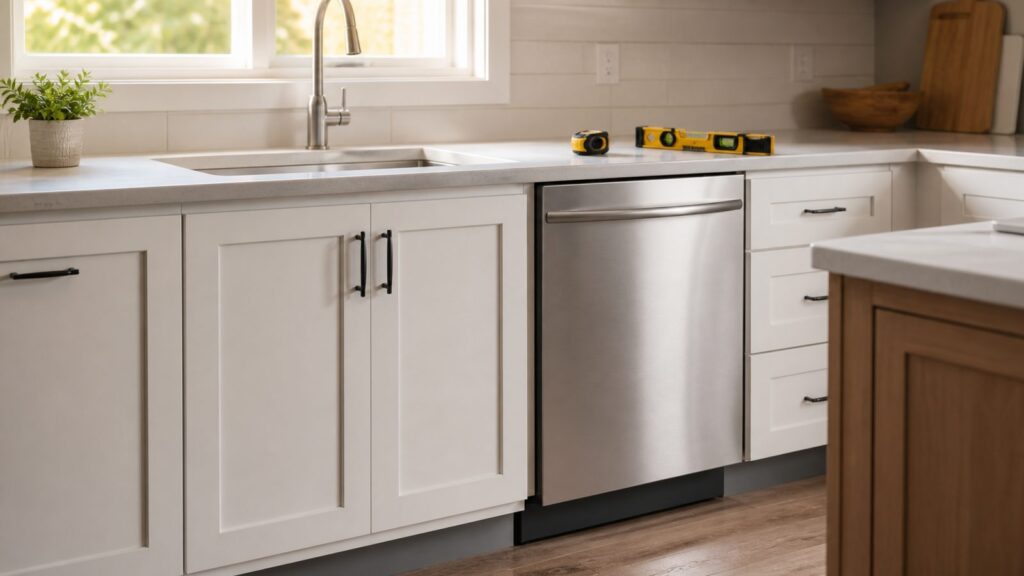
The best basic dishwasher is not always the cheapest one on the sales floor. For most homeowners, the right choice is a simple 24-inch built-in model that fits the existing opening, cleans reliably, dries well enough for everyday dishes, runs quietly enough for the kitchen layout, and can be installed without expensive corrections.
In 2026, entry-level dishwashers commonly start around $300 to $500. Many good basic full-size units land in the $500 to $900 range. Once installation, parts, haul-away, plumbing adjustments, and electrical corrections are included, a normal replacement often totals about $550 to $1,550. A new dishwasher location during a remodel can run $1,000 to $3,500 or more because cabinetry, drain routing, water supply, electrical, flooring, and inspection requirements all come into play.
As an Amazon Associate I earn from qualifying purchases.
The Tool Desk
Outbyte PC Repair FREERepair Windows errors before they cause bigger problemsFix Now →Outbyte Driver Updater FREEScan for outdated or missing drivers - takes under a minuteDriver Scan →On our kitchen projects, we treat the dishwasher as part appliance decision and part jobsite planning decision. A great deal on a dishwasher can turn into a bad purchase if the unit is too tall for a raised floor, too loud for an open kitchen, incompatible with the countertop mounting method, or headed into a cabinet bay without the right drain, power, or shutoff access.
What “Basic” Should Mean in a Dishwasher
A basic dishwasher should be straightforward, serviceable, and durable. It does not need Wi-Fi, decorative handles, bottle jets, interior lights, or a panel-ready door. Those features can be nice, but they do not matter as much as fit, cleaning performance, leak protection, drying, and access for future service.
Popular on Amazon
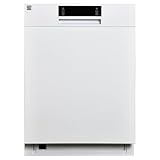
- 3 Stage Ultra Wash Filter: The 3-stage UltraWash Filter captures particles as small as a grain of fine sand and drains them away, so they can’t redeposit on dishes - for a sparkling clean every time. The filter removes easily for monthly cleaning
- SmartWash Adjusts to the Mess: Sensor technology detects soil levels and automatically adjusts the water temperature, pressure, and cycle time. Leak detection prevents damage before it starts
- SmartDry Technology: SmartDry drying selects the best drying cycle and adjusts for optimized drying performance. Hot water forces condensation onto the stainless tub, and down the drain
- Roomy Interior & Adjustable, Removable Rack: Fit up to 14 place settings or just a few items using the Half Load option. The MoreSpace Adjustable Upper Rack raises, lowers, or removes entirely to make room for pots, tall items, or delicate stemware
- Sani Rinse Option: This ENERGY STAR certified dishwasher has a UL-certified Sani Rinse option for seriously clean dishes
For a typical homeowner, the value threshold starts with a standard 24-inch built-in dishwasher, ENERGY STAR certification, a decibel rating under 50 dBA if the kitchen is open to living space, a stainless steel interior if the budget allows, and a filter system that can be cleaned without tools. Leak detection is worth paying attention to, especially in homes with hardwood floors, finished basements below the kitchen, or older supply valves.
Standard built-in dishwashers in the U.S. are generally 24 inches wide. Compact built-ins are typically 18 inches wide and make sense for apartments, accessory dwelling units, wet bars, basement kitchens, and small older kitchens where cabinet space is tight. Portable and countertop dishwashers can be reasonable for rentals or temporary setups, but they are not the same as a clean built-in installation during a kitchen remodel.
Free tools Windows power users keep installed
One-click scans. No signup required.
Best Basic Dishwasher by Kitchen Scenario
Instead of ranking one appliance for every home, it is more useful to match the dishwasher to the kitchen. A rental unit, a family kitchen with plastic cups, and an open-plan remodel do not have the same priorities.
Best for a Straight Replacement
For a standard replacement in the same 24-inch opening, look for a front-control or top-control dishwasher in the $500 to $800 range with an ENERGY STAR label, stainless or hybrid tub, adjustable upper rack, and a published noise rating around 48 to 52 dBA. This is the practical middle of the market for many homes.
Before buying, measure the rough opening width, height, and depth. Many openings are close to 24 inches wide, 34 inches high, and 24 inches deep, but finished flooring can reduce the usable height. We often see older dishwashers trapped by tile, hardwood, or luxury vinyl installed after the appliance went in. If the finished floor sits higher than the dishwasher’s feet, removal and replacement can take more time and may require trim or flooring adjustments.
Best for an Open Kitchen
For kitchens open to a family room, dining area, or work-from-home space, quiet operation is worth paying for. A basic dishwasher in the high-40s dBA range is usually comfortable for normal conversation. If the budget allows, 44 to 48 dBA is a smart target. Some value models reach the low-40s or even upper-30s dBA, but those can move out of the basic price bracket.
Every 10 dB increase is perceived as a major jump in loudness. That means the difference between a 44 dBA dishwasher and a 54 dBA dishwasher is not subtle in a quiet open-plan room. In a closed-off kitchen or a rental where the dishwasher usually runs overnight, a louder but reliable front-control unit may be acceptable.
Best for Families With Plastics
If your dishwasher is used heavily for plastic cups, storage containers, lunch boxes, and baby items, drying performance matters. Basic dishwashers may use heated dry, condensation dry, fan-assisted drying, or a combination of methods. Plastics are harder to dry because they do not hold heat like ceramic, glass, or metal.
For this use case, look for a model with a strong drying option, stainless interior if possible, rinse aid support, and rack spacing that does not force plastic items to flip over and collect water. A third rack can help with lids and utensils, but it is only useful if the main racks still fit your plates and taller glasses.
Best for Rentals, ADUs, and Utility Kitchens
For rental units and ADUs, the best basic dishwasher is usually simple, available, and easy to service locally. Front controls, a durable plastic or hybrid tub, a manual filter, and common replacement parts can be more valuable than premium features. In these settings, staying around $400 to $700 for the appliance often makes sense, assuming the layout and hookups are already in place.
For very small ADUs or basement suites, an 18-inch built-in dishwasher can preserve cabinet storage while still providing real dishwashing capacity. Expect fewer loading options and a smaller interior, but the tradeoff can be worthwhile where every inch of base cabinet space counts.
Best for a Remodel-Ready Kitchen
During a kitchen remodel, we prefer placing the dishwasher directly beside the sink whenever possible. Short water and drain runs are easier to install, easier to inspect, and easier to service later. The layout also works naturally because dishes move from sink to dishwasher without crossing the kitchen.
If you are selecting cabinets, countertops, and appliances at the same time, confirm the dishwasher model before final cabinet installation. Door clearance, handle projection, side-mount requirements, panel thickness, and finished floor height can all affect the final fit.
Dishwasher Cost in 2026: Appliance Price vs Installed Price
Dishwasher shopping gets confusing because appliance prices are advertised separately from the work required to install the appliance. A $449 dishwasher is not a $449 project if the supply line is old, the shutoff valve leaks, the disposal knockout is still in place, or the electrical setup needs correction.
What’s actually slowing this PC down?
Pick the symptom - the matching free tool is one click away.
The table below separates the common 2026 cost categories homeowners should budget for.
| Cost Item | Typical 2026 Range | What It Includes |
|---|---|---|
| Entry-level dishwasher | $300-$500 | Basic 24-inch built-in unit, usually fewer cycles, louder operation, plastic or hybrid tub |
| Good-value basic dishwasher | $500-$900 | Better racks, quieter operation, improved drying, possible stainless interior, ENERGY STAR options |
| Mainstream built-in dishwasher | $400-$1,200 | Broader range of brands, finishes, tub materials, controls, and sound ratings |
| Premium or panel-ready unit | $1,500-$2,000+ | Ultra-quiet operation, custom panels, premium racks, higher-end finishes, advanced drying |
| Labor-only replacement | $150-$350 | Straightforward swap where plumbing, drain, electrical, and opening are already correct |
| Installed replacement budget | $550-$1,550 | Appliance, basic labor, install kit, connection, leveling, testing, and typical haul-away |
| Complicated replacement | $900-$1,700+ | Valve replacement, electrical correction, trapped unit, drain changes, countertop mounting issues |
| New dishwasher location | $1,000-$3,500+ | Cabinet modification, water line, drain, electrical circuit, air-gap hole, flooring, permits |
Common add-ons are small by themselves but add up quickly. A new supply line or installation kit often costs $20 to $50. Drain hose fittings may run $10 to $40. Replacing a questionable shutoff valve can add $75 to $250 or more. Haul-away commonly falls around $40 to $150. Electrical corrections, including GFCI protection or a proper receptacle, can add several hundred dollars depending on access and local rates.
The most predictable dishwasher installations are replacements where the old unit was installed correctly, the cabinet opening is clear, the finished floor does not trap the unit, the sink base has an accessible shutoff valve, the drain routing is correct, and the electrical connection meets current local requirements.
Features Worth Paying For in a Basic Dishwasher
The goal is not to buy every feature. The goal is to pay for the few features that make daily use better and reduce service headaches.
Stainless Steel vs Plastic Tub
A plastic tub keeps the price down and is common in entry-level dishwashers. It can work fine, especially in rentals, utility kitchens, or budget replacements. A stainless steel tub usually costs more but helps with drying, sound control, stain resistance, and long-term durability. A hybrid tub can be a reasonable middle ground.
For a homeowner planning to stay in the house, we usually recommend pricing the jump from plastic to stainless. If the difference is $100 to $200 and the rest of the machine fits the project, stainless is often worth it. If the upgrade forces the budget from a $550 installed replacement into a much larger project, a reliable plastic-tub model can still be a practical choice.
Noise Rating
Dishwasher sound ratings are measured in dBA. Basic models often fall from the high-40s into the mid-50s. For closed kitchens, 50 to 55 dBA may be tolerable. For open kitchens, we prefer under 50 dBA, with 44 to 48 dBA as a strong target.
Do not buy on dBA alone. A quiet dishwasher that dries poorly, has weak rack layout, or lacks service support is not automatically better. But if two models are similar in price and quality, the quieter one is usually easier to live with.
Drying System
Heated dry uses an electric heating element to help dry dishes. It can work well but may use more energy and can be harder on some plastics. Condensation drying relies on heat retained by the dishes and the tub, often performing better with stainless interiors and rinse aid. Some models add fans or door-opening features, though those are usually above the most basic price point.
If dry plastics are a priority, read the drying details before buying. Basic dishwashers can clean well and still leave plastic lids wet. That is not always a defect; it is often the physics of lightweight plastic.
Filter vs Hard-Food Disposer
Many modern dishwashers use a manual filter. It is quiet, efficient, and simple, but it must be cleaned. In a busy kitchen, we suggest checking it monthly at first, then adjusting based on how quickly debris collects.
A hard-food disposer grinds some debris before it reaches the drain. It can reduce filter maintenance but may be louder and is less common on some quiet models. Either system can work. What matters is that the homeowner understands the maintenance.
Recommended Free Tools
Third Rack and Adjustable Upper Rack
A third rack is helpful for flat utensils, small lids, and measuring spoons. An adjustable upper rack is often more valuable because it helps fit tall glasses, mixing bowls, and dinner plates. If you are choosing between the two on a basic unit, prioritize the rack layout that matches your dishes.
Bring a real measurement if you use oversized plates. Some large dinner plates are 11 to 12 inches in diameter, and some tall tumblers or water bottles need extra clearance. A dishwasher that looks large outside can still feel tight inside.
Front Controls vs Top Controls
Front controls are easy to see and common on basic units. They are practical for rentals and households that want visible cycle status. Top controls are hidden when the door is closed and create a cleaner appearance, but they can cost more and may be less obvious for guests or tenants.
Also popular on Amazon

- ADJUSTABLE DESIGN: Upper rack features 2-inch height adjustment capability to accommodate taller dishes and provide flexible loading options
- QUIET OPERATION: Library Quiet technology delivers peaceful dishwashing at just 52 dBA noise level, perfect for open-concept homes
- EFFICIENT CLEANING: Half Load Option enables washing smaller loads while reducing water and energy usage for daily convenience
- HYBRID CONSTRUCTION: Features a durable stainless steel interior combined with heavy-duty plastic floor for optimal performance
- VERSATILE CAPACITY: Accommodates 12 place settings with fold-down tines for flexible loading of various dish sizes and shapes
For a basic dishwasher, both are acceptable. Choose based on use, not fashion. A simple front-control unit with good cleaning and local parts support is often a better buy than a sleek top-control unit with weak drying.
Windows Errors? Fix Them Before They Spread
Repair common Windows errors and clear accumulated junk for a smoother, more stable PC - no reinstall needed.Free scan · no reinstallOutdated Drivers Are Slowing You Down
One free scan finds every outdated or missing driver and matches the right update for your exact hardware.Free scan · exact hardware matchEnergy and Water Use
ENERGY STAR-certified standard residential dishwashers must meet criteria of no more than 240 kWh per year and 3.2 gallons per cycle. Federal efficient-purchasing data compares ENERGY STAR standard dishwashers at about 240 kWh per year and 688 gallons per year versus less efficient models around 307 kWh per year and 1,075 gallons per year.
That difference is meaningful over the life of the appliance. New certified dishwashers can also save about 8,400 gallons of water per year compared with hand washing. For homeowners replacing a very old dishwasher, the improvement is not just convenience. It can reduce water use, reduce hot water demand, and make cleanup more consistent.
Cycle length is the tradeoff homeowners notice first. Efficient dishwashers may run longer than older units because they use less water and heat it more carefully. A two- to three-hour normal cycle is not unusual. For most households, the right habit is to run full loads, use rinse aid, clean the filter, and avoid over-rinsing dishes before loading.
Pre-Purchase Checklist Before You Order
This is the checklist our crews care about before a dishwasher is ordered. It prevents the most common surprises.
Do these 3 things before closing this tab:
1Clear out junk files and repair common Windows errors2Fix the driver behind crashes, sound loss and screen glitches3Repair Windows errors before they cause bigger problems- Opening width: Confirm the cabinet opening is suitable for a 24-inch or 18-inch unit. Measure at the top, middle, and bottom.
- Opening height: Check from finished floor to underside of countertop. Raised flooring can reduce clearance.
- Depth: Confirm the appliance will sit flush without crushing hoses or blocking the door swing.
- Finished floor: Look for tile, hardwood, or vinyl installed in front of the old dishwasher that may trap it.
- Water shutoff: Confirm there is an accessible shutoff valve under the sink or nearby, and that it actually turns.
- Supply line: Plan to replace old or kinked lines while the unit is out.
- Drain route: Confirm the drain hose path to the disposal, sink tailpiece, air gap, or high loop.
- Disposal knockout: If draining into a new garbage disposal, verify the dishwasher knockout plug has been removed.
- Electrical connection: Identify whether the unit uses a cord-and-plug connection or hardwire connection.
- GFCI protection: Many current installations require GFCI protection for dishwashers. Local code and adopted electrical rules govern the final requirement.
- Mounting method: For stone countertops, use side-mount brackets or manufacturer-approved anchoring instead of drilling into stone unless the countertop installer specifies that method.
- Haul-away: Confirm whether old-unit removal and disposal are included in the install price.
If one of those items is uncertain, solve it before delivery day. Appliance delivery teams often work on tight windows. If they find a leaking valve, missing part, trapped dishwasher, or noncompliant connection, they may leave the new unit uninstalled.
Independent reader supportYour contribution helps us test, update, and keep practical guides available for everyone.Installation, Code, and Permit Notes
Dishwasher installation is not complicated when the rough-in is correct, but it touches water, drain, electrical, cabinetry, and sometimes countertop work. That is why local requirements matter.
Most dishwashers need a hot water supply, a drain connection, and a dedicated or properly protected electrical connection. Current residential code language and many local jurisdictions require attention to manufacturer instructions, accessible servicing, proper drain connection, and electrical safety. Many areas require GFCI protection for dishwashers. Some jurisdictions require permits for dishwasher replacement, while others allow like-for-like replacement without a full building permit if plumbing and electrical are already compliant.
Drain protection is especially important. Depending on local code and sink configuration, the dishwasher drain may need an air gap or a properly installed high loop. An air gap is a small fitting mounted at the sink or countertop that helps prevent dirty sink water from backing into the dishwasher. A high loop routes the drain hose upward under the sink before it drops to the disposal or tailpiece. Local rules decide which approach is acceptable.
After installation, run a full cycle and check the supply valve, inlet connection, drain hose, air gap or disposal connection, door gasket, and underside of the unit. We do not consider a dishwasher installation complete until it has filled, washed, drained, and shown no leaks under real operation.
When to DIY vs When to Hire a Pro
A capable homeowner may be able to handle a like-for-like replacement when the old dishwasher slides out easily, the shutoff valve works, the drain and electrical are already correct, and the new unit uses the same connection style. Expect a careful DIY replacement to take two to four hours, especially if you are working slowly to avoid leaks and cabinet damage.
DIY is more reasonable when you are replacing a standard 24-inch unit in the same opening, using a new supply line, connecting to an existing disposal or tailpiece, and plugging into an existing compliant receptacle. You still need to follow the manufacturer’s installation instructions, level the unit, secure it properly, and test it under a full cycle.
Hire a pro when the dishwasher is going into a new location, the cabinet opening must be modified, the unit is trapped by flooring, the shutoff valve is corroded, there is no proper drain connection, the home needs GFCI protection or a new circuit, the countertop is stone, or local permitting applies. Also hire a pro if the kitchen has previous water damage. A slow dishwasher leak can damage subflooring, cabinets, drywall, and finished ceilings below.
Crashes, No Sound, or Screen Glitches?
Random freezes, missing sound and display glitches usually trace back to one bad driver. Find and replace yours safely.Free scan · under a minutePC Slower Than It Used to Be?
A free scan shows the junk files, broken settings and background clutter dragging Windows down - then fixes them in one click.Free scan · Windows 10 & 11For remodels, the best result usually comes from coordinating the appliance selection with the cabinet installer, plumber, electrician, countertop fabricator, and flooring installer. The dishwasher bay looks simple after the kitchen is finished, but several trades affect whether the appliance fits and can be serviced later.
Common Mistakes to Avoid
The first mistake is buying only on appliance price. A $399 dishwasher can be a good value, but not if it is too loud for the room, too short on drying performance, or expensive to adapt to the existing opening.
The second mistake is ignoring finished floor height. When flooring is installed up to the dishwasher instead of under it, the old unit may not come out cleanly. The new unit may also have too little vertical adjustment to fit under the countertop.
The third mistake is trusting an old shutoff valve. If the valve is stiff, corroded, or weeping, replace it while the dishwasher is out. Paying for that small repair during installation is cleaner than dealing with a leak after the cabinet bay is closed back up.
Free tools Windows power users keep installed
One-click scans. No signup required.
The fourth mistake is drilling into stone countertops without a plan. Many dishwashers can be side-mounted to adjacent cabinets. Use the manufacturer’s brackets and the countertop installer’s guidance.
The fifth mistake is skipping the documentation. Keep the model number, serial number, install date, warranty terms, permit or inspection records if applicable, and service receipt. That information helps with warranty claims, future service, and resale.
Bottom Line: The Best Basic Dishwasher Is the One That Fits the House
For most homeowners, the sweet spot is a basic-but-solid dishwasher in the $500 to $900 appliance range with ENERGY STAR certification, under-50 dBA operation, leak protection, a serviceable filter, practical rack layout, and a stainless steel interior if the budget allows. Installed, many straightforward replacements land around $550 to $1,550, while remodel or new-location installations can move into the $1,000 to $3,500-plus range.
Skip the features that do not change daily performance: Wi-Fi, specialty spray zones, premium handles, and rare finishes. Spend instead on the details that make the appliance work well in your actual kitchen: correct size, quiet operation, dependable drying, good installation access, safe electrical protection, proper drain routing, and clean service documentation.
Recommended Free Tools
A dishwasher is a basic appliance, but it sits at the intersection of cabinetry, plumbing, electrical, flooring, and countertop work. Choose it like a builder would: measure first, confirm the hookups, respect the code requirements, and buy the simplest machine that solves the real problem.
Frequently Asked Questions
What is a good price for a basic dishwasher in 2026?
Entry-level dishwashers commonly start around $300 to $500, while better basic built-in models often cost $500 to $900. A full installed replacement commonly lands around $550 to $1,550 depending on labor, parts, haul-away, and site conditions.
Is a stainless steel dishwasher tub worth it?
Usually, yes, if the upgrade fits the budget. Stainless steel tubs tend to help with drying, sound control, stain resistance, and durability. For rentals or tight budgets, a plastic or hybrid tub can still be acceptable.
How quiet should a basic dishwasher be?
For an open kitchen, aim for under 50 dBA, ideally 44 to 48 dBA if budget allows. For a closed-off kitchen, a model in the low- to mid-50s dBA range may be acceptable.
Can I install a dishwasher myself?
A like-for-like replacement may be DIY-friendly if the opening, shutoff valve, drain, and electrical connection are already correct. Hire a pro for new locations, electrical corrections, plumbing changes, stone countertop mounting, trapped units, or permit-required work.
Do dishwashers need an air gap?
Some jurisdictions require an air gap, while others allow a properly installed high loop. The correct answer depends on local plumbing code, sink configuration, and inspection requirements.
What basic dishwasher features should I avoid paying extra for?
Wi-Fi, decorative handles, specialty bottle jets, premium finishes, and rarely used specialty cycles are usually optional. Quiet operation, leak protection, drying performance, rack layout, and serviceable parts are more practical upgrades.
Quick Recap
Product prices and availability are accurate as of the date/time indicated and are subject to change. Any price and availability information displayed on Amazon at the time of purchase will apply.
What’s actually slowing this PC down?
Pick the symptom - the matching free tool is one click away.

