Some links on this page are affiliate links: if you buy through them we may earn a commission, at no extra cost to you.
If you searched for the best angled foundation brush and expected a construction answer, not a makeup brush, here is the practical version: the best brush is usually a 2-inch to 2.5-inch angled sash brush for clean detail work, paired with a 4-inch to 6.5-inch masonry or waterproofing brush for rough concrete, CMU block, parged walls, and coating-heavy areas.
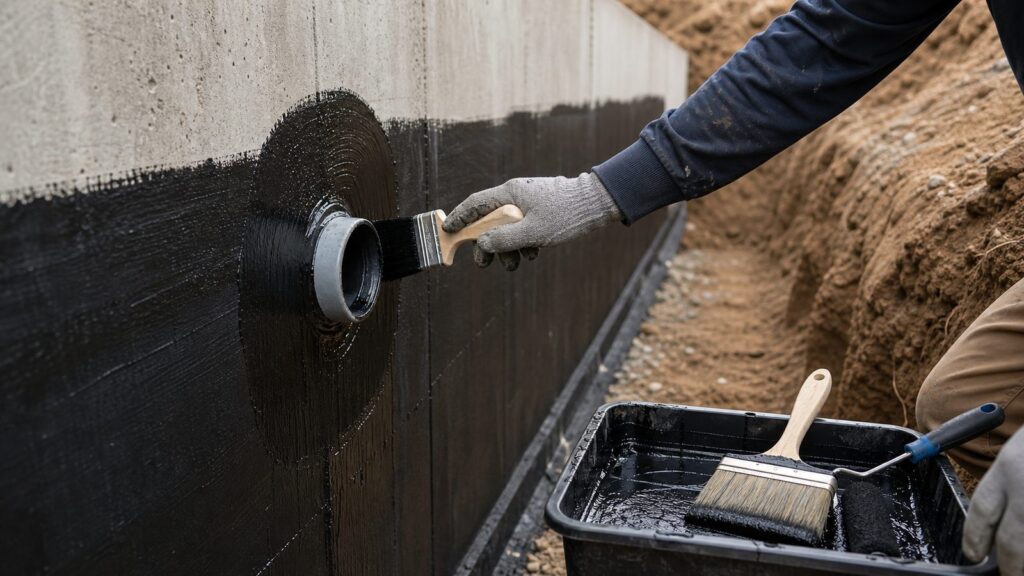
On our job sites, angled brushes are not the tool we use to coat an entire foundation wall. They are the control tool. We use them at sill transitions, inside corners, pipe penetrations, brick ledges, steps, window wells, form ties, cracks after patching, and the top edge of exposed foundation walls. The broad field of the wall is usually faster and more consistent with a roller, sprayer, or wide masonry brush.

As an Amazon Associate I earn from qualifying purchases.
Free tools Windows power users keep installed
One-click scans. No signup required.
That distinction matters. A $12 brush can help you place a coating cleanly, but it cannot make a dampproofing product perform like a full waterproofing system. If the wall has active water pressure, open cracks, failed footing drains, poor grading, or saturated backfill, brush selection is only one small part of the solution.
Best Brush Types for Foundation Coatings
For most foundation work, we keep several brush types on hand instead of trying to make one brush do everything. Concrete, block, asphalt coating, acrylic masonry paint, elastomeric coating, and cementitious waterproofing all load and release differently.
Popular on Amazon
- Flexible purple Shergrip handle that measurers only 2 Inches long that adds maneuverability in tight spaces
- White nylon and gold polyester blend for all paints
- Brass-plated steel ferrule
- Package designed to peg hook brush by the handle and illustrate proper holding position
- Q3211 counter display carton has a full-color 9 Inch x 7 Inch sign
| Brush type | Best use | Typical size | 2026 cost range |
|---|---|---|---|
| Angled nylon/polyester sash brush | Cutting clean lines at exposed foundation edges, trim, siding, steps, and penetrations | 1.5 in. to 2.5 in. | $3 to $15 basic; $15 to $35+ premium |
| Stiff synthetic masonry brush | Scrubbing waterproofing into rough CMU, parged concrete, and porous masonry | 4 in. to 6 in. | $7 to $20 common retail range |
| Stucco or masonry applicator brush | Cementitious coatings, block fillers, stucco-type coatings, and rough surfaces | 6 in. to 6.5 in. | About $7 to $20; some contractor tools cost more |
| Disposable chip or utility brush | Small asphalt, tar, or bituminous touch-ups where cleanup is not worth the time | 1 in. to 3 in. | $1 to $5 each, often sold in packs |
| Solvent-compatible brush | Solvent-based foundation coatings when the manufacturer allows brush application | 2 in. to 4 in. | $5 to $20 depending on construction |
For angled detail work, 2 inches to 2.5 inches is the sweet spot. A 1-inch or 1.5-inch brush is useful around pipe penetrations, anchor bolts, and tight corners. A 3-inch angled brush can move faster along an exposed top edge, but it is harder to control when you are working near siding, brick, finished landscaping, or masking tape.
For open wall area, especially below grade, a 4-inch masonry brush, thick-nap roller, or manufacturer-approved sprayer usually gives better production and more even coverage. The angled brush gets the places the roller cannot reach.
Our Top Recommendations by Job Type
Best all-around detail brush: 2.5-inch angled nylon/polyester sash brush
Use this for exposed foundation paint, acrylic masonry coatings, elastomeric coatings, and neat cut lines along siding, trim, brick, porch slabs, and steps. A dense nylon/polyester blend holds water-based coating well and keeps a cleaner edge than a cheap chip brush.
This is the brush we would choose when appearance matters. If the foundation wall will remain visible, the top line should be straight, the corners should be fully covered, and the coating should not be smeared onto adjacent finishes. A decent 2.5-inch angled sash brush in the $10 to $25 range is usually worth buying.
Best for rough block: 4-inch stiff synthetic masonry brush
Concrete masonry units have pores, joints, corners, bugholes, and texture that a soft paint brush will skate over. For heavy-bodied waterproofers and block fillers, a stiff synthetic masonry brush lets you scrub the first coat into the wall. That mechanical action matters more than the brand name on the handle.
For CMU, we usually brush the first coat aggressively into the pores and joints, then apply the second coat after the manufacturer’s recommended recoat window. Coverage rate matters. If a product requires a certain square footage per gallon or a specified wet-film thickness, stretching the pail farther than directed is not a bargain.
Best for cementitious or stucco-type coatings: 6-inch to 6.5-inch masonry applicator brush
Cementitious waterproofing and stucco-like coatings need a brush that can carry material and work it into texture. A wide masonry applicator brush, such as a 6-inch to 6.5-inch brush with a thick bristle block, is faster than a sash brush and better suited to rough surfaces.
One current retail signal from the research pack is a 6.5-inch by 2-inch stucco and masonry waterproofing applicator brush listed at $7.49. That is the category to look for: wide, stiff enough to scrub, and inexpensive enough that replacing it after a harsh coating job does not hurt.
Best for asphaltic foundation coating: disposable or solvent-compatible brush
Asphalt and bituminous foundation coatings are hard on brushes. A foundation coating such as Henry 101 non-fibered black foundation coating was listed at $67.97 for a 4.75-gallon pail at Home Depot, with bulk pricing shown at $61.17 each when buying 8 or more. On that kind of job, the coating and labor dwarf the cost of a brush.
For asphaltic work, we often treat small brushes as disposable. Keep them separate from water-based coating brushes. Do not use a good exposed-finish brush in black foundation coating and expect it to behave like new afterward. Also check regional product restrictions and VOC rules. The Henry listing noted that the product was not sold in Southern California.
Recommended Free Tools
Also popular on Amazon

- COMPLETE 5-PIECE BRUSH SET FOR EVERY PAINTING TASK — Includes 1 Inch Flat, 1.5 Inch Angle, 2 Inch Flat, 2 Inch Angle Stubby, and 2.5 Inch Angle brush giving you every size professional painters use daily. Get all 5 for less than the price of a single brush from hardware store brands — professional grade performance at a fraction of the cost. Perfect for walls, trim, cabinets, doors, furniture, and detailed cutting-in work on any project.
- ZERO BRISTLE LOSS — GUARANTEED BY PRECISION ADHESIVE BONDING — Every bristle is locked in place with precision-set adhesive that keeps them in the brush — not in your paint job. The coated steel ferrule provides structural support while the adhesive bond ensures clean performance on every stroke. Premium SRT synthetic filaments load more paint and release it evenly for a smooth streak-free finish on walls, ceilings, and trim. Works with latex, oil-based paint, primer, sealer, and wood stain.
- INCLUDES THE ANGLE STUBBY MOST SETS LEAVE OUT — Professional painters know the 2 Inch Angle Stubby is the go-to brush for tight cabinet interiors, window sashes, inside corners, and detailed trim where standard angle brushes are too long. Combined with the 1.5 and 2.5 inch angle sash brushes you have precision cutting-in covered at every scale — baseboards, crown molding, door casings, and ceiling lines.
- FLAT BRUSHES FOR BROAD SMOOTH COVERAGE ON ANY SURFACE — The 1 and 2 inch flat brushes deliver even coverage on walls, furniture, shelving, doors, fences, decks, and wood surfaces. Ideal for applying primers, stains, varnishes, polyurethane, and specialty coatings. Solid wood handles provide all-day comfort and control for both professional contractors and weekend DIY homeowners tackling interior or exterior painting projects.
- TRUSTED BY PROFESSIONAL PAINTERS AND CONTRACTORS NATIONWIDE — Pro Grade delivers professional-grade results at a price that makes sense for crews who go through brushes on every job. Ideal for property managers, remodeling contractors, apartment turnover crews, maintenance teams, and commercial painting operations. Backed by thousands of verified reviews from working painters. Washable and reusable for multiple projects.
How to Match the Brush to the Coating
The right brush starts with the coating chemistry. Read the pail before you buy tools. Look for application method, cleanup solvent, substrate, temperature limits, coverage rate, number of coats, cure time, and whether the manufacturer calls for a specific film thickness.
Water-based acrylic and elastomeric coatings
Use a nylon/polyester brush. These coatings are common on exposed foundation walls and masonry surfaces where appearance matters. For the top edge, use a 2-inch to 2.5-inch angled sash brush. For the main wall, use a roller with the nap recommended by the coating manufacturer, often thicker on textured masonry.
These brushes clean up with water when cleaned promptly, but masonry coatings can dry fast in heat and wind. On a warm day, keep a wet edge and work in manageable sections. If the wall is in direct sun, check the product’s temperature range before starting.
Cementitious waterproofing
Use a stiff masonry brush, not a soft trim brush. Cementitious products need to be scrubbed into the surface, especially on block. Surface preparation is critical: remove loose material, dirt, oil, paint that is not sound, and efflorescence. Pre-dampening may be required by the manufacturer so the wall does not pull moisture out of the coating too quickly.
What’s actually slowing this PC down?
Pick the symptom - the matching free tool is one click away.
A 4-inch brush works well for control. A 6-inch to 6.5-inch applicator brush speeds up open areas. Keep the angled sash brush nearby for corners and penetrations, but do not ask it to carry the whole job.
Asphalt, tar, and bituminous dampproofing
Use disposable brushes or brushes rated for the required solvent cleanup. Below-grade asphaltic coatings are commonly used for dampproofing, which is different from waterproofing. Dampproofing helps resist soil moisture and vapor. Waterproofing is intended for more demanding water conditions and often includes membranes, drainage board, protection board, footing drains, and careful detailing.
A brush can help seal an edge or detail a penetration, but it cannot overcome bad drainage, open cracks, or hydrostatic pressure. If there is active leakage, evaluate the full system before coating over symptoms.
Brush Width, Bristle Stiffness, and Handle Shape
A good foundation brush is not just about width. The bristle stiffness, ferrule strength, handle angle, and coating pickup all affect the result.
The Tool Desk
Outbyte PC Repair FREEClear out junk files and repair common Windows errorsFree Scan →Outbyte Driver Updater FREEScan for outdated or missing drivers - takes under a minuteDriver Scan →For tight details, choose 1-inch to 1.5-inch angled brushes. These fit behind pipes, around conduit, near hose bibs, and into small corners where a roller will leave holidays. For general foundation cut-in, choose 2-inch to 2.5-inch angled brushes. For faster exposed-wall edges, 3 inches can work if the surface is straight and you have enough room.
Also popular on Amazon

- 2 Inch Angled Paint Brush for Precision Cutting-In – Designed for clean, sharp lines around trim, baseboards, ceilings, corners, and detailed edge work. The perfect size for control and coverage.
- Value 3-Pack for Pros & DIY Projects – Includes three professional 2-inch angled sash brushes — ideal for contractors, remodelers, and homeowners tackling multiple rooms or repeat paint jobs.
- Smooth Results on Walls, Trim & Cabinets – Great for interior wall painting, cabinet edges, furniture projects, and trim work where a smooth finish and crisp control matter most.
- Works with Latex Paint, Oil-Based Paint & Stains – Premium synthetic filaments hold more paint, reduce streaks, and provide a clean finish with latex paints, oil coatings, and wood stains.
- Works with Latex Paint, Oil-Based Paint & Stains – Premium synthetic filaments hold more paint, reduce streaks, and provide a clean finish with latex paints, oil coatings, and wood stains.
For rough CMU or parged walls, width is less important than stiffness. Soft bristles leave coating on the high spots while pores and mortar joints remain thin. A stiff masonry brush lets you push material into voids. On a below-grade wall, missed pores and thin spots matter more than a pretty brush line.
Handle shape matters when you are working in a trench. A long straight handle can hit the opposite wall of the excavation. A short sash handle or beavertail handle may give better control near footing shelves and tight corners. If the excavation is narrow, test your reach and wrist angle before loading the brush with coating.
What the Brush Can and Cannot Fix
The brush affects application quality. It does not decide whether the waterproofing approach is appropriate. That is where homeowners and inexperienced crews get into trouble.
PC Slower Than It Used to Be?
A free scan shows the junk files, broken settings and background clutter dragging Windows down - then fixes them in one click.Free scan · Windows 10 & 11Outdated Drivers Are Slowing You Down
One free scan finds every outdated or missing driver and matches the right update for your exact hardware.Free scan · exact hardware matchIf a basement wall is damp from minor vapor drive, a coating may help when surface prep is sound. If there are active leaks, stair-step cracks, bowing block, settlement cracks, overflowing gutters, negative grading, or clogged footing drains, coating the inside face is usually not the full answer.
Exterior waterproofing is generally stronger when the wall is accessible because it addresses water before it enters the foundation. When excavation is already open, think in systems: repair cracks, prepare the substrate, apply the correct coating or membrane, install protection board or drainage mat where specified, verify footing drain function, backfill properly, and correct final grade.
On professional jobs, we document surface prep, weather, product batch, coverage area, and photos before backfill. Those photos are useful for warranty questions, inspection conversations, and future troubleshooting.
Cost Guide for 2026
Brushes are inexpensive compared with the rest of a foundation waterproofing project. A homeowner refreshing an exposed foundation may spend $50 to $250 on brushes, rollers, cleaner, patching compound, tape, and one or two containers of coating. A full exterior waterproofing project can cost thousands because excavation, drainage, crack repair, labor, and backfill drive the price.
| Item or project | Typical 2026 cost | What affects price |
|---|---|---|
| Basic angled sash brush | $3 to $15 | Width, bristle blend, handle, and whether it is disposable |
| Premium pro angled sash brush | $15 to $35+ | Cleaner lines, better bristle retention, better for visible work |
| Masonry or waterproofing brush | $7 to $20 | Width, bristle stiffness, block size, and coating type |
| Henry 101 foundation coating example | $67.97 for 4.75 gal; $61.17 each at 8+ pails | Region, VOC rules, supplier, quantity, and availability |
| Small DIY exposed-foundation refresh | Roughly $50 to $250 | Wall size, prep, patching, coating quantity, tape, rollers, and brushes |
| Professional foundation waterproofing | About $1,886 to $18,000 nationally | Scope, excavation, drainage, cracks, wall type, access, water severity, and labor market |
National waterproofing estimates vary widely. Thumbtack’s 2026 foundation waterproofing estimate shows about $1,886 to $5,946. Fixr’s 2026 basement waterproofing guide gives $3,000 to $10,000, with a typical spend around $5,000. HomeGuide’s 2026 basement waterproofing estimate is higher at $6,000 to $18,000 depending on method and severity.
The reason the range is so wide is simple: brush-on coating may be a maintenance task, or it may be one component of a larger waterproofing assembly. Linear footage, wall height, excavation access, concrete versus CMU versus stone, old coating removal, crack repair, efflorescence removal, damp soil, hydrostatic pressure, drainage board, footing drains, sump pumps, grading, weather windows, cure time, and local labor rates can all change the scope.
Also popular on Amazon
- Pack of 2 | Flexible purple Shergrip handle that measurers only 2 Inches long that adds maneuverability in tight spaces
- White nylon and gold polyester blend for all paints
- Brass-plated steel ferrule
- Package designed to peg hook brush by the handle and illustrate proper holding position
- Q3211 counter display carton has a full-color 9 Inch x 7 Inch sign
How We Use Angled Brushes on Foundation Jobs
Our typical sequence is straightforward. First, clean and prep the wall. Loose coating, dirt, laitance, oil, mildew, and efflorescence need to be handled before coating. Cracks are repaired with the appropriate method for the wall and movement condition. If the product requires a dry surface, we wait. If it requires a dampened surface, we dampen it as directed.
Second, we use the angled brush for detail work. That includes inside corners, transitions at the footing, pipe penetrations, window well edges, patched cracks, brick ledges, top edges, and any area a roller is likely to miss. This is where a 1.5-inch to 2.5-inch angled brush earns its place.
Third, we coat the main field with the production tool: roller, sprayer, or wide masonry brush. On rough block, the first coat may need to be scrubbed in with a stiff brush. On smoother concrete, a roller or spray application may be more efficient if the manufacturer allows it.
Fourth, we check coverage and thickness. Where a manufacturer specifies wet-film thickness, we use a wet-film gauge. Visual coverage alone is not enough on fluid-applied waterproofing membranes. A wall can look black, gray, or white and still be too thin to perform as specified.
Finally, we respect cure time before protection board, drainage mat, or backfill. Backfilling too early can damage a coating that has not cured. Weather matters too. Cold, heat, humidity, rain, wind, and direct sun can all affect open time, cure, and adhesion.
When to DIY and When to Hire a Pro
DIY can make sense for a visible foundation paint refresh, small above-grade masonry coating work, or minor maintenance where there is no active leak, no structural cracking, no excavation, and no drainage problem. A careful homeowner can buy a 2.5-inch angled sash brush, a masonry brush, a roller, cleaner, patching material, tape, and coating for a modest project.
Do these 3 things before closing this tab:
1Scan for outdated or missing drivers - takes under a minute2Clear out junk files and repair common Windows errors3Fix the driver behind crashes, sound loss and screen glitchesHire a pro when water is actively entering the basement, the wall is below grade, excavation is needed, cracks are moving, block is bowing, stone mortar is deteriorated, mold is present, footing drains may have failed, or the property has poor grading and high water load. Those are diagnosis problems, not brush problems.
Exterior foundation work also carries safety issues. Trenches can collapse. Utilities may be present. Heavy rain can destabilize open excavations. Ladders, temporary access, ventilation, solvents, and personal protective equipment all need attention. For below-grade work, the cost of doing the wrong thing and burying it is often higher than hiring the right contractor once.
Safety, Code, and Permit Notes
Foundation dampproofing and waterproofing are not only cosmetic. Residential codes include requirements for foundation walls, dampproofing, waterproofing, drainage, and site conditions. The 2021 International Residential Code includes foundation provisions in Section R406, and states or municipalities may amend those requirements. Local rules can be more specific, so verify requirements before starting work that affects below-grade walls.
Also popular on Amazon
Permits may be required when excavation, structural repair, footing drains, sump systems, exterior waterproofing, or grading changes are involved. Product labels matter as well. Follow the manufacturer’s requirements for surface prep, temperature, ventilation, personal protective equipment, coverage rate, cleanup, recoat window, and cure time.
Quick wins for a faster PC:
Clear out junk files and repair common Windows errorsFree Scan →Fix the driver behind crashes, sound loss and screen glitchesFind Drivers →For solvent-based products, confirm ventilation and ignition controls. Wear gloves and eye protection when brushing coatings overhead or into rough masonry. For dust-generating prep, use proper respiratory protection and dust control. If the home was built before 1978 and painted surfaces may be disturbed, lead-safe practices may apply.
Bottom Line
The best angled brush for foundation work is usually not the biggest brush on the shelf. For construction use, start with a 2-inch or 2.5-inch nylon/polyester angled sash brush for clean cut-ins and details. Add a stiff 4-inch to 6.5-inch masonry brush for rough concrete, CMU, cementitious waterproofing, and heavy-bodied coatings. Keep disposable or solvent-compatible brushes for asphaltic products.
Most importantly, match the brush to the coating and the wall condition. A clean brush line is good workmanship, but foundation performance comes from surface prep, crack repair, correct product selection, proper film thickness, drainage, cure time, and backfill protection. The brush is a tool in the system, not the system itself.
Frequently Asked Questions
What type of brush is best for applying foundation waterproofing?
Use a stiff 4-inch to 6.5-inch masonry or waterproofing brush for rough concrete and CMU. Use a 2-inch to 2.5-inch angled sash brush for edges, corners, pipe penetrations, sill transitions, and clean cut lines.
Quick wins for a faster PC:
Scan for outdated or missing drivers - takes under a minuteDriver Scan →Repair Windows errors before they cause bigger problemsFix Now →Can I use an angled paint brush for concrete foundation coating?
Yes, but mainly for detail work. A nylon/polyester angled brush works well for acrylic masonry coatings and exposed foundation paint. For rough block or heavy waterproofers, use a stiff masonry brush for the main surface.
Is brush-on foundation coating enough to stop basement leaks?
Not always. Brush-on dampproofing can help with soil moisture and vapor, but active leaks usually require crack repair, drainage correction, exterior waterproofing, footing drain work, grading improvements, or a broader system.
How much does foundation waterproofing cost in 2026?
Small DIY coating refreshes may cost roughly $50 to $250 in supplies. Professional waterproofing commonly ranges from about $1,886 to $18,000 nationally, depending on excavation, drainage, wall condition, coating type, and water severity.
What brush size is best for foundation edges and penetrations?
For most foundation detail work, 2 inches to 2.5 inches is the best balance of control and speed. Use 1-inch to 1.5-inch brushes for tight pipe penetrations, small corners, and confined edges.
Free tools Windows power users keep installed
One-click scans. No signup required.
Should I clean or throw away brushes used with asphalt foundation coating?
For many asphaltic or bituminous coating jobs, it is practical to treat small brushes as disposable. If you plan to reuse them, confirm the manufacturer’s cleanup solvent and use a solvent-compatible brush.
Quick Recap
Product prices and availability are accurate as of the date/time indicated and are subject to change. Any price and availability information displayed on Amazon at the time of purchase will apply.

