Some links on this page are affiliate links: if you buy through them we may earn a commission, at no extra cost to you.
Begonia care and varieties you should try depend on whether you want patterned foliage, upright growth with flowers, dependable outdoor color, or large seasonal blooms. Most begonias prefer bright filtered light, regular moisture, well-drained soil, and good airflow, but rex, cane, wax, and tuberous types should not be treated as interchangeable plants.
Begonias are a diverse group rather than one uniform-care houseplant. The best choice depends on your light, humidity, watering habits, available space, climate, and whether foliage or flowers matter most.
As an Amazon Associate I earn from qualifying purchases.
The Tool Desk
Outbyte PC Repair FREERepair Windows errors before they cause bigger problemsFix Now →Outbyte Driver Updater FREEScan for outdated or missing drivers - takes under a minuteDriver Scan →Key takeaways
- Begonia care varies by group: rex, cane, wax, and tuberous begonias differ in light, growth habit, flowering, and seasonal behavior.
- Bright indirect or filtered light is safer for most begonias than harsh direct sun, although bronze-leaved wax begonias tolerate more sun.
- Water when the upper layer of potting mix begins to dry, then let excess water drain completely; constantly wet soil can cause root and stem rot.
- Rex begonias are foliage specialists that need closer attention to humidity and watering than many wax begonias.
- Tuberous begonias produce large, dramatic flowers but may require a seasonal dormant period.
Begonia care and varieties you should try depend on whether you want patterned foliage, upright growth with flowers, dependable outdoor color, or large seasonal blooms. Most begonias prefer bright filtered light, regular moisture, well-drained soil, and good airflow, but rex, cane, wax, and tuberous types should not be treated as interchangeable plants.
What is the difference between rex, angel-wing, wax, and tuberous begonias?
The main difference is what each group offers and how it grows: rex begonias are chiefly grown for patterned leaves, angel-wing begonias combine upright foliage with flower clusters, wax begonias provide compact outdoor color, and tuberous begonias are grown primarily for showy flowers.
Popular on Amazon
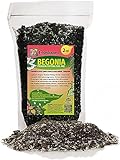
- 🌸 Begonia Brilliance: Elevate your Begonia plant care with Gardenera's meticulously crafted Begonia Potting Mix, tailored for optimal growth and vitality.
- 🌿 Premium Ingredients for Flourishing: Our potting mix is an exquisite blend of Canadian Peat Moss, nutrient-rich Worm Castings, Charcoal, Sand, and Vermiculite. This carefully balanced combination provides your Begonia plants with the essential elements for thriving.
- 💧 Hydration Harmony: Canadian Peat Moss and Vermiculite collaborate to maintain consistent moisture levels, offering an environment that keeps your Begonia's roots well-hydrated and vibrant.
- 🌱 Organic Nutrient Infusion: The inclusion of Worm Castings enriches the mix with organic nutrients, promoting robust foliage growth, blossoming flowers, and overall plant health.
- 🪴 Balanced Drainage and Aeration: Charcoal and Sand enhance the mix's structure, facilitating optimal drainage and root aeration. This dynamic duo ensures that water moves efficiently through the soil while providing roots with the necessary oxygen.
| Begonia group | Best feature | Typical growth and use | Light preference | Difficulty and seasonal note |
|---|---|---|---|---|
| Rex and rhizomatous | Striking leaf color, markings, texture, and shapes | Lower-growing or spreading; usually grown indoors in cool regions | Bright indirect or filtered light | Needs careful moisture and humidity management; some types slow down in winter |
| Cane or angel-wing | Upright foliage plus clusters of flowers | Taller, upright plants for bright indoor spaces or sheltered areas | Good filtered light; protect from direct sun | Moderate care; keep moist but well drained and reduce winter watering |
| Wax, or Semperflorens Cultorum Group | Reliable white, pink, red, or bicolored flowers | Compact bedding, container, window-box, and outdoor plants | Partial or dappled shade; bronze-leaved cultivars tolerate more sun | Often grown as annuals in colder regions |
| Tuberous | Large flowers in many colors, forms, and shapes | Seasonal containers, beds, and display plants | Bright light with protection from harsh heat and sun | More seasonal planning; many types form tubers and enter dormancy |
The American Begonia Society’s classification overview recognizes a broad range of horticultural groups, including cane-like, shrub-like, thick-stemmed, rhizomatous, rex, tuberous, and trailing-scandent begonias. The number of named begonias depends on whether a source is counting accepted species, hybrids, or cultivars, so a single headline species count can be misleading.
Rex and rhizomatous begonias: choose them for foliage
Rex-cultorum begonias are the strongest choice when leaf color and pattern matter more than flowers. Leaves may be streaked, spotted, bordered, spiraled, or heavily textured, and many plants develop from a rhizome or thickened stem structure.
What’s actually slowing this PC down?
Pick the symptom - the matching free tool is one click away.
Rex begonias suit growers who enjoy monitoring plants rather than seeking a completely hands-off houseplant. Provide bright indirect light, humidity, porous soil, and careful watering. Keep water off the leaves and crown, and allow the surface of the mix to dry somewhat between winter waterings. The University of Connecticut’s rex begonia guidance recommends allowing the top inch of potting mix to dry before watering.
Cane and angel-wing begonias: choose them for height, foliage, and flowers
Cane begonias produce upright stems, attractive leaves, and flower clusters, making them a useful middle ground between foliage plants and heavy bloomers. Angel-wing begonias are a familiar cane-type example: Clemson Extension information summarized in the research describes green leaves with white spots and red, pink, or white flowers.
Good light helps cane begonias develop sturdy stems and abundant flowers, but direct sun can damage foliage. RHS guidance places many cane-stemmed types in an approximate temperature range of 15–22°C (58–72°F). Give a cane begonia room to grow upward, keep its medium moist but well drained, reduce watering in winter, and maintain humidity without creating stagnant, wet conditions.
Wax begonias: choose them for dependable outdoor color
Wax begonias are compact, bushy, fibrous-rooted plants with waxy green or bronze leaves and clusters of white, pink, red, or bicolored flowers. They work well in beds, window boxes, and containers when the goal is a steady flowering display rather than unusual foliage.
Do these 3 things before closing this tab:
1Repair Windows errors before they cause bigger problems2Scan for outdated or missing drivers - takes under a minute3Clear out junk files and repair common Windows errorsAlso popular on Amazon

- 🌸 Begonia Brilliance: Elevate your Begonia plant care with Gardenera's meticulously crafted Begonia Potting Mix, tailored for optimal growth and vitality.
- 🌿 Premium Ingredients for Flourishing: Our potting mix is an exquisite blend of Canadian Peat Moss, nutrient-rich Worm Castings, Charcoal, Sand, and Vermiculite. This carefully balanced combination provides your Begonia plants with the essential elements for thriving.
- 💧 Hydration Harmony: Canadian Peat Moss and Vermiculite collaborate to maintain consistent moisture levels, offering an environment that keeps your Begonia's roots well-hydrated and vibrant.
- 🌱 Organic Nutrient Infusion: The inclusion of Worm Castings enriches the mix with organic nutrients, promoting robust foliage growth, blossoming flowers, and overall plant health.
- 🪴 Balanced Drainage and Aeration: Charcoal and Sand enhance the mix's structure, facilitating optimal drainage and root aeration. This dynamic duo ensures that water moves efficiently through the soil while providing roots with the necessary oxygen.
Bronze-leaved cultivars generally tolerate more sun than green-leaved cultivars, but hot climates can still require dappled or partial shade and consistent moisture. In colder regions, wax begonias are commonly treated as annuals or brought indoors for overwintering. The North Carolina State University Extension plant profile for Begonia provides further guidance on their growing conditions and common problems.
Tuberous begonias: choose them for dramatic flowers
Tuberous begonias are the best match for readers who prioritize large, conspicuous flowers. The group includes many flower colors, shapes, and forms, while tuberhybrida types are associated with large blooms and generally prefer cooler conditions than many tropical begonias.
Many tuberous begonias form tubers as the growing season ends and enter dormancy during a dry or winter period. That seasonal cycle means tuberous begonias require more planning than wax begonias. Protect them from excess moisture, learn the dormancy requirements of the specific cultivar, and do not apply the same winter routine to every begonia group. The American Begonia Society’s tuberous begonia resource explains the group’s seasonal behavior.
How do you care for a begonia indoors?
Indoor begonia care starts with bright indirect light, a loose potting medium, careful watering, moderate to high humidity, and enough air circulation to keep leaves from staying wet. Place the plant near a bright window with filtered light rather than against glass receiving intense afternoon sun.
Recommended Free Tools
How much light do begonias need?
Most begonias prefer filtered, dappled, or bright indirect light. Harsh direct sun can scorch leaves, especially on rex and other foliage types. Wax begonias with bronze leaves are more tolerant of sun, but hot conditions can still make partial shade and consistent moisture preferable.
If an indoor begonia receives too little natural light, supplemental lighting is an optional solution rather than a universal requirement. A grow light can be useful in a dim room, but the plant still needs suitable watering, drainage, and airflow.
Also popular on Amazon

- 🌸 Begonia Brilliance: Elevate your Begonia plant care with Gardenera's meticulously crafted Begonia Potting Mix, tailored for optimal growth and vitality.
- 🌿 Premium Ingredients for Flourishing: Our potting mix is an exquisite blend of Canadian Peat Moss, nutrient-rich Worm Castings, Charcoal, Sand, and Vermiculite. This carefully balanced combination provides your Begonia plants with the essential elements for thriving.
- 💧 Hydration Harmony: Canadian Peat Moss and Vermiculite collaborate to maintain consistent moisture levels, offering an environment that keeps your Begonia's roots well-hydrated and vibrant.
- 🌱 Organic Nutrient Infusion: The inclusion of Worm Castings enriches the mix with organic nutrients, promoting robust foliage growth, blossoming flowers, and overall plant health.
- 🪴 Balanced Drainage and Aeration: Charcoal and Sand enhance the mix's structure, facilitating optimal drainage and root aeration. This dynamic duo ensures that water moves efficiently through the soil while providing roots with the necessary oxygen.
How often should I water my begonia?
Water a begonia when the upper layer of its potting mix has begun to dry, then water thoroughly until excess runs from the drainage holes. Do not follow a rigid weekly calendar: pot size, season, temperature, humidity, light, and root growth all change how quickly the mix dries.
Rex begonias can be checked by feeling the top inch of mix before watering. The Royal Horticultural Society’s cane-stemmed begonia guidance gives the central rule clearly: “Do not allow compost to completely dry out but avoid overwatering.”
Water at the base when practical, keep the crown from remaining wet, and empty any saucer after watering. In winter, many begonias grow more slowly and need less water, but the correct interval still depends on how quickly the container dries.
What kind of soil is best for begonias?
The best soil for begonias is loose, moisture-retentive, and well drained. Choose a well-draining begonia potting mix rather than dense garden soil, and use a container with drainage holes. A suitable mix should hold enough moisture for the roots without remaining saturated after watering.
Do not leave the container standing in water. Repot when the mix has compacted, roots have filled the container, or the plant begins drying unusually fast. Move up only to a modestly larger pot; an oversized container can stay wet for too long.
How can you increase humidity without causing disease?
Increase humidity by grouping plants or placing the begonia on a pebble tray in which the water level remains below the pot. The pot must sit above the water, not in it. A humidifier can also help a dry indoor room, provided air continues to circulate around the foliage.
Free tools Windows power users keep installed
One-click scans. No signup required.
A constantly wet, stagnant environment is not healthy humidity. Avoid routinely misting begonia leaves, remove dead leaves and flowers, and leave enough space between plants for air movement. Wet foliage, crowding, and poor airflow can encourage fungal and bacterial problems.
Also popular on Amazon
- 🌸 Begonia Brilliance: Elevate your Begonia plant care with Gardenera's meticulously crafted Begonia Potting Mix, tailored for optimal growth and vitality.
- 🌿 Premium Ingredients for Flourishing: Our potting mix is an exquisite blend of Canadian Peat Moss, nutrient-rich Worm Castings, Charcoal, Sand, and Vermiculite. This carefully balanced combination provides your Begonia plants with the essential elements for thriving.
- 💧 Hydration Harmony: Canadian Peat Moss and Vermiculite collaborate to maintain consistent moisture levels, offering an environment that keeps your Begonia's roots well-hydrated and vibrant.
- 🌱 Organic Nutrient Infusion: The inclusion of Worm Castings enriches the mix with organic nutrients, promoting robust foliage growth, blossoming flowers, and overall plant health.
- 🪴 Balanced Drainage and Aeration: Charcoal and Sand enhance the mix's structure, facilitating optimal drainage and root aeration. This dynamic duo ensures that water moves efficiently through the soil while providing roots with the necessary oxygen.
Why are my begonia leaves turning brown?
Brown begonia leaf tips can result from low humidity, inconsistent watering, accumulated salts, direct-sun or temperature stress, or root damage from poorly drained soil. Brown edges do not identify one cause by themselves, so inspect the plant’s light, watering pattern, pot drainage, and roots before changing care.
| Symptom | Likely conditions to check | First response |
|---|---|---|
| Brown leaf tips or edges | Low humidity, irregular watering, salt buildup, direct sun, or environmental stress | Check moisture and drainage, move away from harsh sun, and review fertilizer and water quality practices |
| Soft stems, collapsing crown, or foul-smelling wet mix | Root or stem rot caused by excess moisture or poor drainage | Stop watering until the mix begins to dry, inspect roots, improve drainage, and remove severely damaged tissue |
| White powder on leaves or flowers | Powdery mildew | Improve airflow, avoid wetting foliage, remove badly affected debris, and follow locally labeled treatment guidance |
| Spots or gray fuzzy growth | Leaf-spot disease or gray mold favored by wet foliage and poor sanitation | Remove affected material, reduce overhead moisture, and increase air movement |
| Leaf drop | Watering stress, root problems, sudden environmental change, low light, cold, or pests | Check the roots and mix first, then inspect light, temperature, humidity, and the undersides of leaves |
| Sticky residue, stippling, or visible insects | Mealybugs, whiteflies, thrips, scale, spider mites, aphids, or other pests | Isolate the plant, inspect new plants carefully, and use an appropriately labeled control if needed |
Root and stem rot is especially important to rule out because begonias are vulnerable when soil remains saturated. The University of California Integrated Pest Management begonia guidance discusses drainage, disease symptoms, and pest concerns for home and landscape plants. For production-level disease information, consult the UC IPM floriculture and ornamental-nursery begonia guidelines.
Independent reader supportYour contribution helps us test, update, and keep practical guides available for everyone.Can you grow begonias from leaf cuttings?
Yes, many begonias can be propagated from leaf cuttings or leaf sections, while stem or tip cuttings are more broadly applicable across the genus. The American Begonia Society lists stem cuttings, leaf cuttings, and division as propagation methods, with leaf propagation particularly useful for rex, rhizomatous, tuberous, and some related types.
Quick wins for a faster PC:
Repair Windows errors before they cause bigger problemsFix Now →Scan for outdated or missing drivers - takes under a minuteDriver Scan →- Choose a healthy, disease-free leaf or stem and use clean cutting tools.
- Prepare a clean, lightly moist, well-drained propagation medium.
- Label each cutting with the plant name and date.
- Set the cutting in warm conditions with indirect light and high—but not stagnant—humidity.
- Keep the medium lightly moist rather than waterlogged and wait for new growth before transplanting.
Propagation results vary by group and by the condition of the cutting. Stem cuttings are the practical general-purpose method; leaf cuttings are the more interesting project for rex and rhizomatous begonias. The American Begonia Society’s vegetative propagation guide gives group-specific context.
Which begonias bloom all summer?
Wax begonias are the most dependable choice for a long-season flowering display when they receive suitable light, consistent moisture, and protection from extreme heat. Cane begonias can also flower repeatedly when given good filtered light, while tuberous begonias provide larger, more dramatic seasonal flowers but require more specific growing and dormancy management.
Rex begonias can flower, but their main attraction is foliage rather than a continuous summer flower show. Choose rex for leaves, wax for reliable compact color, cane for a balance of flowers and upright foliage, and tuberous begonias for large blooms.
Also popular on Amazon

- 🌸 Begonia Brilliance: Elevate your Begonia plant care with Gardenera's meticulously crafted Begonia Potting Mix, tailored for optimal growth and vitality.
- 🌿 Premium Ingredients for Flourishing: Our potting mix is an exquisite blend of Canadian Peat Moss, nutrient-rich Worm Castings, Charcoal, Sand, and Vermiculite. This carefully balanced combination provides your Begonia plants with the essential elements for thriving.
- 💧 Hydration Harmony: Canadian Peat Moss and Vermiculite collaborate to maintain consistent moisture levels, offering an environment that keeps your Begonia's roots well-hydrated and vibrant.
- 🌱 Organic Nutrient Infusion: The inclusion of Worm Castings enriches the mix with organic nutrients, promoting robust foliage growth, blossoming flowers, and overall plant health.
- 🪴 Balanced Drainage and Aeration: Charcoal and Sand enhance the mix's structure, facilitating optimal drainage and root aeration. This dynamic duo ensures that water moves efficiently through the soil while providing roots with the necessary oxygen.
Which begonia is easiest to grow?
Wax begonias are generally the easiest recommendation for a compact outdoor or container display because they are adaptable flowering plants and are commonly grown as seasonal bedding plants. No begonia is maintenance-free: wax begonias still need drainage, consistent moisture, and protection from conditions that are too hot, dry, or waterlogged.
For an indoor grower, a cane or angel-wing begonia may be a better choice than a rex begonia when upright growth and flowers are more important than perfect foliage. Rex begonias are rewarding but less forgiving of inconsistent humidity and watering, so they are best for growers willing to monitor conditions closely.
How should you choose a begonia?
Choose the begonia group by matching the plant to your space and priorities rather than buying by flower color alone.
| If you want… | Try… | Why | Watch out for… |
|---|---|---|---|
| Patterned, colorful foliage | Rex or rhizomatous begonia | Leaves provide the main visual interest | Overwatering, dry air, wet leaves, and direct sun |
| A tall indoor plant with flowers | Cane or angel-wing begonia | Upright stems combine foliage and flower clusters | Insufficient light, cramped space, and winter overwatering |
| Compact outdoor flowers | Wax begonia | Useful for beds, containers, and window boxes | Extreme heat, waterlogged soil, and cold-weather exposure |
| Large, dramatic seasonal blooms | Tuberous begonia | Offers varied flower forms, colors, and sizes | Dormancy, excess moisture, and the need for cooler conditions |
A specialty begonia nursery can be useful when you are looking for a particular rex cultivar, unusual species, or tuberous form, but verify current stock, shipping geography, plant-health guarantees, and return policies before ordering. Supplemental plant lighting is similarly optional: consider it only when an indoor location cannot provide adequate bright indirect light.
Frequently Asked Questions
How do you care for a rex begonia indoors?
Rex begonias need bright indirect light, careful watering, good drainage, and higher humidity. Let the top inch of potting mix dry before watering, keep water off the leaves and crown, and reduce watering during slower winter growth.
How often should I water my begonia?
Water a begonia when the upper layer of potting mix begins to dry, then water thoroughly and allow excess water to drain. Avoid a fixed calendar because pot size, season, temperature, light, and humidity change drying speed.
What is the easiest begonia variety to grow?
Wax begonias are usually the easiest choice for dependable outdoor or container color. Wax begonias still need drainage, consistent moisture, and protection from extreme heat, cold, and waterlogged soil.
Can you grow begonias from leaf cuttings?
Begonia leaf propagation is possible, especially for rex and rhizomatous types, while stem cuttings work for nearly all begonias. Use clean tools, a lightly moist well-drained medium, warmth, indirect light, and good—not stagnant—humidity.
The Bottom Line
Begonia care works best when it follows the plant group. Start with bright filtered or indirect light, a loose well-drained medium, and watering based on how dry the mix feels. Choose rex for foliage, cane begonias for foliage plus flowers, wax begonias for dependable compact color, and tuberous begonias for dramatic seasonal blooms.
Quick Recap
Product prices and availability are accurate as of the date/time indicated and are subject to change. Any price and availability information displayed on Amazon at the time of purchase will apply.

