Do these 3 things before closing this tab:
1Repair Windows errors before they cause bigger problems2Scan for outdated or missing drivers - takes under a minute3Clear out junk files and repair common Windows errorsYou usually cannot identify bathroom growth as “mold” or “mildew” reliably by looking at it. The terms overlap: the U.S. Environmental Protection Agency (EPA) says mildew refers to certain kinds of mold or fungus and is often used generically for mold growth with a flat habit. Color, darkness, smell, texture, or location does not establish the species or the health risk. For a visible patch, the useful questions are whether moisture is sustaining it, whether the surface can be cleaned and dried, and whether the growth is extensive, hidden, or recurring.
This guide explains the terminology, the limits of visual identification, a surface-by-surface cleanup method, and the moisture-control work that keeps growth from returning.
As an Amazon Associate I earn from qualifying purchases.
Mold and mildew are overlapping household terms
In everyday bathroom language, “mildew” is often treated as the harmless, flat counterpart to dangerous “mold.” That is not a dependable distinction. The EPA explains on its mold-and-mildew terminology page that “mildew refers to certain kinds of mold or fungus.” It also notes that people often use mildew generically for mold growth, usually with a flat growth habit.
That description explains why a thin film on a shower wall or windowsill may be called mildew while a thicker, spreading patch is called mold. It describes common usage, not an at-home diagnostic test. The same bathroom can contain growth that different people label differently, while the practical response remains the same: control moisture, remove visible growth where the material allows, and dry the area thoroughly.
#1 Best Overall
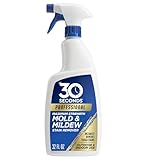
- BRIGHTER RESULTS INSTANTLY: Noticeably brightens indoor and outdoor surfaces, removing black mold and mildew stains as you watch, with no scrubbing or pressure washing required for fast, visible results
- NO SCRUBBING REQUIRED: Avoid the hassle and backbreaking work of scrubbing tough stains; the PRO formula lifts mold and mildew stains on contact so you simply apply, watch and rinse where needed
- 2X STRONGER FORMULA: The PRO formula is 2X stronger than the standard 30 SECONDS Outdoor Cleaner, made for your toughest black mold and mildew stains and messes on both indoor and outdoor surfaces
- OUTDOOR AND INDOOR USE: Use on siding, fences, decks, concrete floors, brick walls, drywall, wood, kitchen surfaces, bathroom tile and grout, bathtub soap scum and showers where mold and mildew can grow
- REMOVES BLACK MOLD STAINS & MORE: Targets stubborn black mold and mildew stains on a wide range of surfaces, giving a brighter, cleaner result indoors and outdoors without scrubbing or pressure washing
| Term or label | What the evidence supports | What it does not establish |
|---|---|---|
| Mildew | A term for certain kinds of mold or fungus; often used for a flat growth habit. | That the growth is harmless, a particular species, or safe to ignore. |
| Mold | A broad term for fungal growth that can appear in many forms and colors. | Its species, toxicity, or health effect from a photograph or color. |
| “Black mold” | An informal color-based label. | That a dark patch is one specific organism or poses a particular level of risk. |
The Centers for Disease Control and Prevention (CDC) states that people do not need to know the type of mold to remove it. In a bathroom, deciding how to respond based on the surface and the moisture problem is more useful than trying to win a terminology argument.
Why appearance cannot tell you which one it is
The CDC says, “Mold can look like spots of many different colors, and it can smell musty.” A dark, green, white, gray, or orange spot therefore does not identify a species. Nor does a musty odor prove that a patch is a particular type; it simply indicates that an odor is present.
Location is not a reliable test either. Growth commonly appears where warm, humid air meets a cool surface, including shower walls, ceilings, window trim, and areas around failed caulk or grout. The EPA specifically notes that mildew often lives on shower walls and windowsills, but that observation does not mean every growth in those locations is mildew rather than another mold growth.
Texture is similarly limited. A flat film, fuzzy colony, raised spot, or discoloration may reflect the organism, the material, its age, or how wet the surface has been. A camera image is even less informative because it cannot show what is inside a wall, under flooring, or behind a seal.
Why “black mold” is not a safe shortcut
Calling every dark bathroom mark “black mold” overstates what can be known from sight. Dark color does not prove a particular organism, and it does not by itself predict a person’s health response. The CDC’s advice is to clean mold and correct the moisture problem without first identifying the type. If a dark patch is on a hard, cleanable surface, follow the hard-surface procedure below; if it is hidden, extensive, or in an absorbent material, use the material and moisture criteria to decide whether qualified help is needed.
Health effects depend on exposure and the person
Mold exposure can cause effects in some people and none in others. The CDC describes possible irritation and respiratory symptoms and cautions that some people are more vulnerable. That variability is why it is inaccurate to promise that bathroom growth is always toxic or always harmless. The word “mildew” does not remove the need to address a damp patch, and the word “mold” does not tell you how an individual will react.
Reduce exposure while cleaning by keeping unnecessary people out of the room and ventilating it. If anyone develops persistent or concerning respiratory or irritation symptoms, obtain medical advice; a clinician can consider the person’s symptoms and history rather than trying to infer health risk from the patch’s color.
What’s actually slowing this PC down?
Pick the symptom - the matching free tool is one click away.
Rank #2

- Eliminates & Helps Prevent Mold: Targets existing mold at the source and leaves behind an invisible barrier that helps prevent future growth.
- EPA-Registered Solution: Registered with the U.S. Environmental Protection Agency for mold control when used as directed.
- Bleach-Free, Odorless, VOC-Free: Contains no bleach, ammonia, or volatile organic compounds, helping maintain healthy indoor air quality.
- Safe on Most Surfaces: Works on drywall, wood, tile, grout, concrete, fabric, and other common building materials.
- Versatile Use: Ideal for bathrooms, kitchens, basements, attics, laundry rooms, vehicles, and outdoor surfaces such as decks and patios.
People with greater sensitivity should make a conservative plan for cleanup and may prefer to have someone else perform the work. The key home action remains the same for everyone: remove visible growth safely where feasible and stop the moisture that allows it to return.
Decide what you are dealing with before touching the growth
Use four decision points instead of a visual mold-versus-mildew guess. First, identify the surface. Tile and glass are hard, nonporous materials; ceiling tiles, carpet, fabric, and some other absorbent products can hold growth below the visible surface. Second, look for the moisture source. Common bathroom causes include a plumbing leak, condensation, failed caulk or grout, damaged tile, or inadequate exhaust. Third, consider whether the growth is hidden or keeps returning. Fourth, judge whether the affected area or water damage is beyond a straightforward household cleanup.
| Situation | Initial response | Reason for escalation |
|---|---|---|
| Small visible patch on tile or glass | Clean with detergent and water, then dry completely; investigate why the surface stayed wet. | Growth returns, spreads, or a leak is present. |
| Growth on painted drywall, ceiling tile, carpet, or another absorbent material | Do not assume wiping the surface removes what is inside. Determine whether the material can be salvaged. | EPA says some moldy ceiling tiles and carpet may need to be discarded because growth can occupy spaces that are difficult or impossible to clean fully. |
| Persistent dampness, water damage, or growth behind finishes | Stop the water source if possible and arrange an assessment. | Hidden or continuing moisture can make a surface cleanup temporary and may require qualified local help. |
| Large or recurring growth with no obvious cause | Document where it appears and inspect ventilation, seals, plumbing, and condensation. | A professional can investigate concealed moisture; there is no universal square-foot rule in the guidance cited here. |
How to clean visible growth from hard bathroom surfaces
For hard, nonporous surfaces such as glazed tile or glass, EPA guidance supports detergent-and-water cleaning followed by complete drying. Health Canada likewise advises removing visible mould with unscented dishwashing detergent and water. The objective is physical removal and drying, not proving which label applies.
- Stop or reduce the moisture first. If a pipe is leaking, a seal is failing, or condensation is soaking the area, correct that condition or arrange its repair. Cleaning a continuously wet surface sets up a quick recurrence.
- Ventilate the room. Run the bathroom exhaust fan and provide fresh-air movement where practical. Follow the label of any cleaning product you choose, and never mix cleaners.
- Clear the work area. Remove toiletries and fabrics that could be contaminated or obstruct access. Keep people who do not need to be present out of the room during cleaning.
- Scrub with detergent and water. Work the solution over the visible growth on the hard surface, following the product label if you use a packaged cleaner. EPA’s basic method is to scrub mold off hard surfaces with detergent and water.
- Remove residue and inspect the edges. Pay attention to grout lines, caulk joints, corners, and the underside of fixtures where water can remain. A clean-looking face does not prove that a failed seal has stopped admitting moisture.
- Dry completely. Dry the surface and nearby areas rather than leaving a damp film. Complete drying is part of EPA’s recommendation, not an optional finishing step.
- Recheck the moisture cause. If the spot returns, stop repeating the same wipe-down and move to the recurrence troubleshooting section.
Bleach is not required by the cited EPA or Health Canada household guidance for this common hard-surface task. If you use another product, follow its label, ventilate the area, and never combine it with a different cleaner.
What changes when the material is porous or absorbent
Absorbent materials can hold fungal growth in cavities and fibers that a surface wipe cannot reach. The EPA cautions that moldy ceiling tiles and carpet may need to be discarded because mold can grow into spaces that are difficult or impossible to clean completely. A stained or soft section of bathroom drywall, insulation, ceiling material, or textile therefore needs a different decision from a spot on glass.
Do not cover a damp, contaminated material with paint or a new finish and assume the problem is solved. First determine whether the material is dry, structurally sound, and realistically cleanable. If water damage is ongoing, the material is hidden behind a finish, or the extent cannot be determined, seek qualified local help. Disposal, replacement, and cleanup requirements can vary by location and by the building materials involved.
Grout and caulk deserve special attention. They are part of the bathroom’s moisture-control system, and Health Canada recommends repairing damaged grout, caulking, and tiles. A dark line at a failed joint may be a sign that water is getting where it should not, even after the visible discoloration is removed.
Rank #3

- GET RID OF STUBBORN MOLD AND MILDEW STAINS: Our instant spray cleaner removes the stains left behind from black mold and mildew. They tend to leave behind ugly staining that can go deep below the surface; Our professional-strength spray is specifically formulated to eliminate discoloration caused by mold and mildew
- USING RMR-86: To safely and conveniently eliminate indoor mold and mildew stains and odors using RMR-86, proper ventilation and PPE should be used for each application
- SAFE TO USE ON MULTIPLE SURFACES: Easily remove stubborn stains from decks, wood, vinyl siding, drywall, concrete floors, brick walls, kitchen surfaces, and other areas where mold and mildew tend to grow
- FAST-ACTING SPRAY: Our powerful, fast-acting mold stain remover spray begins working instantly to target deeply embedded stains that linger on surfaces and hard-to-reach areas
- NO SCRUBBING NEEDED: Simply spray our ready-to-use formula on the affected area and watch the stains disappear right before your eyes!
Fix the moisture problem so growth does not return
CDC’s core instruction is concise: “If mold is growing in your home, you need to clean up the mold and fix the moisture problem.” In a bathroom, that usually means examining four sources.
Recommended Free Tools
Ventilation during and after bathing
Use the exhaust fan while showering or bathing and make sure it vents outside rather than into an attic, wall cavity, or another enclosed space. Health Canada recommends keeping the fan running for at least 30 minutes after a shower or bath. That post-bath period removes moisture that would otherwise condense on cooler walls, ceilings, mirrors, and trim.
Leaks and failed seals
Inspect supply and drain connections, shower valves, tubs, toilet bases, and the joints where tile meets a fixture. Repair plumbing leaks and replace damaged caulk, grout, or tile. A small recurring mark at one corner often points to a localized water path rather than a need for a stronger surface cleaner.
Condensation and wet surfaces
Wipe standing water from ledges and walls, keep shower curtains or doors positioned so water returns to the drain, and allow wet items to dry. Condensation is a moisture source even when no pipe is leaking. Cold surfaces, poor air movement, and long hot showers can combine to keep a bathroom damp.
Indoor humidity
Health Canada recommends indoor relative humidity between 30% and 50%. An inexpensive hygrometer can show whether the room is regularly outside that range; it measures humidity, not mold identity. Place it where it represents the room rather than directly in the shower’s spray, and use the reading to guide ventilation and moisture-control changes.
If the growth keeps coming back
Recurrence is useful information. It usually means either that moisture remains or that the material was not fully cleanable. Use the pattern to direct the inspection rather than applying the same product repeatedly.
| Recurrence pattern | What to inspect | Next action |
|---|---|---|
| Returns on the same grout or caulk line | Failed seal, water trapped behind the joint, or a leak at the fixture. | Repair the damaged joint or plumbing, then clean and dry the accessible surface. |
| Appears on ceiling after showers | Exhaust fan operation, whether it vents outdoors, and the 30-minute post-bath run time. | Improve exhaust and reduce condensation; investigate the ceiling material if it is absorbent or soft. |
| Spreads to adjacent wall or trim | Condensation, a concealed leak, or moisture migrating through the assembly. | Stop the source and arrange an assessment if the affected material is hidden or damaged. |
| Reappears despite a dry-looking surface | Moisture inside porous material or behind tile, caulk, or drywall. | Do not rely on another cosmetic cleaning; obtain qualified local help to locate concealed moisture. |
More frequent cleaning may be part of bathroom maintenance, but it cannot substitute for repairing a leak or controlling humidity. EPA’s home guide specifically connects recurring bathroom mold with ventilation and moisture management.
Rank #4

- KILLS MOLD: EPA-registered formula kills mold and helps control mold and mildew on hard, nonporous surfaces when used as directed
- CLEANS AND DISINFECTS: Ready-to-use disinfectant cleaner provides non-acid cleaning performance while disinfecting treated hard, nonporous surfaces
- INHIBITS MILDEW GROWTH: Helps inhibit the growth of mold and mildew and the odors they cause when applied according to label directions.
- BLEACH-FREE FORMULA: Bleach-free cleaner deodorizes treated surfaces and leaves behind a fresh scent
- READY-TO-USE SPRAY: 32 fl oz trigger bottle is designed for household, commercial and industrial cleaning applications
Home mold tests cannot answer the mold-versus-mildew question
The CDC does not recommend home mold testing and says the type of mold is not necessary to decide on safe cleanup. A swab, petri dish, or mail-in kit cannot turn a visible bathroom patch into a reliable “mildew” or “dangerous mold” diagnosis for household decision-making.
Testing also does not repair the source. Even a laboratory identification would not remove a wet wall, failed seal, or condensation problem. Use the money and effort first on moisture control and on determining whether the affected material is hard and cleanable or porous and potentially replaceable.
Quick wins for a faster PC:
Clear out junk files and repair common Windows errorsFree Scan →Fix the driver behind crashes, sound loss and screen glitchesFind Drivers →When to bring in qualified local help
Arrange qualified assistance when growth is extensive, hidden behind finishes, associated with persistent water damage, or repeatedly returns after the moisture source has been addressed. A professional assessment can help locate concealed dampness and determine whether absorbent materials can be cleaned or need replacement.
There is no universal square-foot cutoff established by the sources cited here. Cleanup thresholds, building requirements, and landlord or tenant obligations vary by jurisdiction, so obtain local advice when those legal or contractual questions matter. Do not delay addressing an active leak while waiting for a visual label or a test result.
Common mistakes that make bathroom growth harder to manage
- Assuming flat means harmless. “Mildew” is an overlapping household term, not a guarantee about health or cleanup needs.
- Calling a dark spot black mold. Color does not identify species or predict risk.
- Cleaning without drying. Residual moisture allows growth to return even after the visible mark is gone.
- Ignoring the seal or leak. Failed caulk, grout, tile, or plumbing can keep feeding a small patch.
- Wiping porous material as if it were glass. Growth can penetrate absorbent products; some may need disposal.
- Relying on a test kit. CDC says home testing is not recommended for deciding how to respond.
- Mixing cleaning chemicals. Follow each product label, ventilate the room, and never combine cleaners.
- Painting over a damp area. A new coating hides evidence while the moisture and contamination remain underneath.
A practical bathroom inspection and maintenance checklist
Use this sequence after cleaning and whenever the room develops a musty odor or recurring spot:
- Check that the exhaust fan operates and vents outside.
- Run the fan during bathing and for at least 30 minutes afterward, following Health Canada’s recommendation.
- Look for failed caulk, crumbling grout, cracked tile, loose fixtures, and plumbing leaks.
- Dry shower walls, ledges, and other surfaces that hold water.
- Use a hygrometer if you need to monitor whether indoor relative humidity stays within Health Canada’s 30%–50% recommendation.
- Classify any growth by the material it occupies: hard/nonporous or porous/absorbent.
- Clean hard surfaces with detergent and water and dry them completely.
- Escalate hidden, extensive, water-damaged, or recurring problems instead of repeatedly treating the visible symptom.
The lasting distinction is not between a harmless “mildew” patch and a dangerous “mold” patch. It is between a surface that can be cleaned and dried after its moisture source is corrected, and a moisture-damaged or hidden condition that needs further assessment.
Quick Recap
Product prices and availability are accurate as of the date/time indicated and are subject to change. Any price and availability information displayed on Amazon at the time of purchase will apply.

