Outdated Drivers Are Slowing You Down
One free scan finds every outdated or missing driver and matches the right update for your exact hardware.Free scan · exact hardware matchWindows Errors? Fix Them Before They Spread
Repair common Windows errors and clear accumulated junk for a smoother, more stable PC - no reinstall needed.Free scan · no reinstallBaking soda is not your garden’s secret superpower against pests. Ordinary sodium bicarbonate may have a limited role in preventing or slowing some fungal diseases—most notably early powdery mildew—but it is not a reliable treatment for insects. The right response depends on whether you have a fungal disease, an actual pest, or a harmless garden visitor.
Short answer: baking soda is not a secret weapon against garden pests. Ordinary sodium bicarbonate may offer limited, preventive help against some fungal diseases—especially powdery mildew—but it is not a reliable insecticide and should not be presented as a cure-all for aphids, caterpillars, beetles, spider mites, or spotted lanternflies.
As an Amazon Associate I earn from qualifying purchases.
The most important distinction is this: powdery mildew is a fungal disease, not a pest infestation. If you see insects, identify and manage the insects. If you see a white, powdery coating on leaves, improve growing conditions and consider a properly labeled fungicide before the disease becomes severe.
The Tool Desk
Outbyte PC Repair FREERepair Windows errors before they cause bigger problemsFix Now →Outbyte Driver Updater FREEScan for outdated or missing drivers - takes under a minuteDriver Scan →What baking soda may do in a garden
The active ingredient in baking soda is sodium bicarbonate. The U.S. Environmental Protection Agency recognizes sodium bicarbonate as a biochemical pesticide used against fungal diseases on food commodities, turf, flowers, and ornamental plants. Its federal tolerance exemption applies when it is used as a fungicide or post-harvest fungicide according to good agricultural practices. EPA’s registration decision does not mean that every homemade kitchen recipe is automatically legal, effective, or safe on every plant.
#1 Best Overall

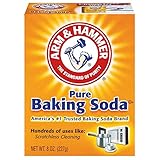
- A HOUSEHOLD CLASSIC: This 2.7 lb resealable bag of ARM & HAMMER Baking Soda unlocks 100+ uses across your home—from kitchens and laundry rooms to crafting tables and beyond
- PURE & NATURAL: America’s Most Trusted Baking Soda Brand is safe to use around kids and pets; no additives or chemicals, no cornstarch, and no fragrance
- FOOD-GRADE FOR BETTER RESULTS: USP-grade 1 crystals create fluffier cakes, muffins, cookies, and breads; use it in gluten free, kosher, vegan, paleo-friendly, and organic baking recipes
- DIY HOME HACKS: A multi-purpose essential to help freshen carpets, brighten laundry, freshen drains, scrub sinks, clean jewelry, craft kids’ sensory play & science experiments with one ingredient
- SUSTAINABLY MADE IN THE USA: Proudly made and packaged in Green River, Wyoming, using 100% certified renewable energy for a more sustainable, quality baking soda you can trust
Extension guidance is cautious. Baking soda may help prevent or slow certain fungal problems when used early and appropriately, but its control is limited. The University of Florida notes that sodium and potassium bicarbonate can provide some preventive protection, not a high level of disease control. The University of Minnesota likewise explains that fungicides are generally most useful on healthy tissue or at the earliest signs of disease; they do not restore leaves that are already heavily infected.
That makes baking soda a possible low-impact disease-management tool, not a broad-spectrum garden-pest killer.
Powdery mildew: the most plausible use case
Powdery mildew appears as white or gray, flour-like patches on leaves, stems, and flower buds. It can affect many ornamentals, vegetables, fruits, and herbs. In ordinary home gardens, it is often more unsightly than dangerous, although a severe infection can reduce growth and flowering. Minnesota Extension’s powdery mildew guidance recommends focusing first on prevention and cultural controls.
A bicarbonate treatment is most defensible when it is used:
- Preventively, before disease is widespread;
- At the first signs of powdery mildew, rather than on severely damaged foliage;
- As part of a larger plan that improves airflow and reduces favorable conditions for disease; and
- Only when the product label allows the use on the particular crop or ornamental and in the intended location.
It is more accurate to say that bicarbonate may slow or help prevent powdery mildew than to say that it cures it. Infected leaves will not become healthy again simply because a spray is applied.
Rank #2
Start with garden conditions, not a spray
For powdery mildew, the best first steps are usually free and more dependable than an improvised treatment:
- Choose resistant varieties. When buying seeds or plants, look for documented resistance to powdery mildew where it is available.
- Give plants room. Follow spacing recommendations so air can move through the foliage.
- Reduce humidity around leaves. Water the soil rather than repeatedly wetting the foliage, and irrigate early enough for surfaces to dry.
- Avoid excessive nitrogen. Very lush, soft growth can be more vulnerable to disease.
- Remove heavily infected material. Bag diseased leaves and stems rather than placing them in home compost. Oregon State University Extension also recommends reducing humidity, improving circulation, and avoiding composting infected debris.
- Monitor regularly. Catching the first patches is much easier than trying to rescue a plant covered in mildew.
Fungicides are rarely necessary for a typical home-garden powdery mildew problem. They become more reasonable when a high-value plant has a history of serious disease, when the plant is particularly difficult to replace, or when cultural controls have not been enough.
What’s actually slowing this PC down?
Pick the symptom - the matching free tool is one click away.
Baking soda will not reliably control aphids or other insects
Aphids, caterpillars, beetles, spider mites, and spotted lanternflies are animals, not fungal pathogens. The evidence and extension recommendations supplied for this topic do not support baking soda as a dependable general insecticide for them.
Use a different decision process for insects:
- Identify the insect first. Different pests require different responses, and some insects are harmless or beneficial.
- Inspect the whole plant. Look under leaves, along stems, and around new growth. Check for distorted leaves, webbing, holes, sticky honeydew, eggs, or sooty mold.
- Use physical control when practical. For aphids, a strong stream of water can dislodge many insects. Minnesota Extension’s aphid guidance discusses water sprays and, when appropriate, labeled plant-based pesticides such as neem or azadirachtin.
- Protect beneficial insects. Avoid spraying flowers indiscriminately, and do not treat a plant merely because you see a few non-damaging insects.
- Choose a product labeled for the identified pest and crop. The label should specify the pest, plant or site, application rate, timing, and precautions.
For spotted lanternfly and other high-profile pests, homemade remedies are particularly risky. Penn State Extension warns against untested household remedies because they may injure plants, fail to control the pest, lack reliable directions, or create legal problems when used as pesticides. That warning applies to improvised baking-soda mixtures even where baking soda itself seems harmless.
Sodium bicarbonate versus potassium bicarbonate
| Feature | Sodium bicarbonate | Potassium bicarbonate |
|---|---|---|
| Common name | Ordinary baking soda | A different bicarbonate compound |
| Typical garden discussion | Household ingredient sometimes discussed for limited fungal prevention | Active ingredient in some commercial garden fungicides |
| Interchangeable? | No. One should not be substituted for the other without appropriate directions. | |
| Main concern | Repeated applications can add sodium to soil or growing media; homemade concentrations may burn foliage | Still requires label compliance, correct application, and attention to crop and weather conditions |
The distinction matters. University of Minnesota Extension lists potassium bicarbonate among low-impact fungicide options for protecting healthy tissue against powdery mildew, but that recommendation does not turn an unlabeled household mixture into an equivalent commercial product.
Rank #3

- A HOUSEHOLD CLASSIC: This bulk 7 lb resealable bag of ARM & HAMMER Baking Soda unlocks 100+ uses across your home—from kitchens and laundry rooms to crafting tables and beyond
- PURE & NATURAL: America’s Most Trusted Baking Soda Brand is safe to use around kids and pets; no additives or chemicals, no cornstarch, and no fragrance
- FOOD-GRADE FOR BETTER RESULTS: USP-grade 1 crystals create fluffier cakes, muffins, cookies, and breads; use it in gluten free, kosher, vegan, paleo-friendly, and organic baking recipes
- NATURAL HOME HELPER: Freshen carpets, brighten laundry, scrub sinks, wash fruits and vegetables, refresh grills and cookware, and cut pet odors without harsh chemicals
- DIY HACKS: A multi-purpose essential for small spaces and apartments; create exfoliating scrubs, freshen drains, or clean jewelry with one versatile ingredient
If powdery mildew warrants treatment, a potassium bicarbonate fungicide is the more defensible product category to investigate because a commercial formulation comes with directions for use. Availability, permitted crops, and product registration vary by country and sometimes by state or region. Read the current label before buying or applying anything.
Recommended Free Tools
Do not assume that “natural,” “low impact,” or “food grade” means suitable for foliar spraying. A product’s intended use, formulation, and label are what determine how it should be applied.
Why homemade baking-soda recipes can damage plants
Online recipes often give a fixed amount of baking soda, water, and dish soap as though every garden were identical. It is not. Plant sensitivity, concentration, water chemistry, temperature, humidity, sunlight, surfactants, and spray frequency all affect the result.
Too much sodium bicarbonate, repeated applications, or spraying under stressful conditions can cause phytotoxicity—leaf spotting, marginal burn, discoloration, or damaged new growth. Surfactants can increase coverage but may also increase injury, especially on tender foliage. Accumulated sodium can be a problem in containers, raised beds, poorly drained soil, or areas already affected by salinity.
For that reason, this article does not provide a universal kitchen recipe. If a pesticide label specifically permits a sodium-bicarbonate product for your crop and problem, follow that label. If you are considering an unregistered homemade mixture, recognize that you are accepting uncertain efficacy and plant-safety risk.
If you use any labeled foliar treatment
- Confirm that the crop, ornamental, disease, and application site are listed.
- Follow the label’s rate, timing, re-entry instructions, harvest interval, and protective-equipment requirements.
- Test on a small, inconspicuous area first when the label permits and monitor for injury.
- Do not spray heat-stressed, drought-stressed, or wet foliage unless the label specifically directs it.
- Use a clean hand-pump garden sprayer when the label calls for a foliar application, and reserve it for compatible garden products.
Safety and legal cautions
EPA characterizes sodium and potassium bicarbonate as compounds expected to have low human and environmental risk when used as pesticide active ingredients under appropriate conditions. “Low risk” is not the same as risk-free. Concentrated dust may irritate the respiratory tract, and contact can irritate the eyes. Avoid breathing dust, protect your eyes and skin as directed, keep products away from children and pets, and wash produce according to applicable food-safety guidance.
Rank #4

- POP ONE IN, STOP ODOR: Pack of 12 x 14 oz ARM & HAMMER Fridge-n-Freezer Baking Soda Odor Absorbers helps food taste as it should by absorbing and deodorizing lingering odors without harsh chemicals
- SPILL-PROOF DESIGN: Built-in Flo-Thru technology lets air circulate through dual-panel vents for maximum odor control while preventing spills, a must-have for home or commercial kitchens
- SMALL SPACE SUPERSTAR: Works to neutralize odors, not just mask them, in enclosed spaces like the pantry, cabinets, closets, under bathroom sinks, pet areas, and beyond
- LONG-LASTING UP TO 30-DAYS: To use, remove perforated panels on the front and back; place upright to absorb unwanted odors, and replace every 30 days for best results
- UNSCENTED ODOR ABSORBER: No fragrance or essential oils added; made with ARM & HAMMER Pure & Natural Baking Soda, sustainably made in Green River, Wyoming
Pesticide labels are not optional suggestions. They define the approved crop or site, pest or disease, concentration, application method, protective measures, and other restrictions. Rules also vary geographically. A product available in one country, state, or province may not be registered for the same use elsewhere.
Never mix baking soda with bleach for use on plants. An EPA spill-decontamination document that happens to mention sodium bicarbonate describes a specific cleanup procedure; it is not gardening guidance and must not be repurposed as a plant spray.
Independent reader supportYour contribution helps us test, update, and keep practical guides available for everyone.A practical decision guide
| What you see | Best next step | Role for baking soda |
|---|---|---|
| White, powdery patches on leaves | Improve airflow, reduce humidity, remove badly infected material, and monitor early. | Possibly limited preventive or early disease suppression if legally and label-appropriately used. |
| Clusters of small insects on new growth | Identify them; try a strong water spray where suitable; preserve beneficial insects. | Not a proven general aphid treatment. |
| Chewed leaves or caterpillars | Inspect for larvae and eggs, hand-remove when practical, and select a labeled control if needed. | No reliable evidence here for a universal baking-soda solution. |
| Fine webbing and stippled leaves | Check for spider mites and consider the plant’s moisture and heat stress; use a treatment labeled for the pest. | Do not rely on baking soda. |
| Severe, recurring disease on a valuable plant | Use resistant varieties, sanitation, and a properly labeled fungicide program. | A kitchen mixture is a poor substitute for diagnosis and label-based treatment. |
The bottom line on baking soda in the garden
Baking soda has a narrow, plausible role in garden disease management, particularly as a preventive or early measure against some fungal diseases such as powdery mildew. It is not a dependable solution for insect pests, and it does not replace diagnosis, airflow, resistant varieties, sanitation, monitoring, biological controls, physical removal, or properly labeled pesticides.
Think of sodium bicarbonate as one limited tool—not a secret superpower. If you need a treatment, choose a product labeled for the exact plant and problem, and use the label rather than an internet recipe as your authority.
Frequently Asked Questions
Does baking soda kill garden pests?
No. Baking soda is not a proven broad-spectrum insecticide for aphids, caterpillars, beetles, spider mites, or spotted lanternflies. Identify the insect and use physical controls or a product labeled for that specific pest and plant.
Best Value

- One 4-pound resealable bag of Baking Soda
- Great for baking, cleaning & freshening
- Amazon Grocery has all the favorites you love for less. You’ll find everything you need for great-tasting meals in one shopping trip
- Feed your every day with Amazon Grocery
Can baking soda get rid of powdery mildew?
It may offer limited preventive or early suppression of some fungal diseases, especially powdery mildew, but it does not cure established infections. Extension guidance considers its disease-control level limited.
Is baking soda the same as potassium bicarbonate fungicide?
No. Sodium bicarbonate is ordinary baking soda; potassium bicarbonate is a different compound commonly used as the active ingredient in commercial fungicides. Do not substitute one for the other without appropriate label directions.
Is a homemade baking-soda spray safe for every plant?
Not necessarily. A kitchen product is not automatically a labeled pesticide, and homemade mixtures can injure plants or fail to work. Follow the current product label and confirm that your crop and disease are listed.
Can I mix baking soda and bleach for my plants?
Do not use a bleach-and-baking-soda mixture as a plant spray. References to sodium bicarbonate in EPA spill-cleanup procedures describe specific decontamination work, not gardening applications.
The Bottom Line
Baking soda may modestly help prevent or slow some fungal diseases, especially early powdery mildew, but it is not a general garden-pest killer. Improve airflow and sanitation first, identify insects before treating them, and use a labeled potassium-bicarbonate fungicide or other registered product when a treatment is genuinely warranted.
Quick Recap
Product prices and availability are accurate as of the date/time indicated and are subject to change. Any price and availability information displayed on Amazon at the time of purchase will apply.
Free tools Windows power users keep installed
One-click scans. No signup required.

