Free tools Windows power users keep installed
One-click scans. No signup required.
Some links on this page are affiliate links: if you buy through them we may earn a commission, at no extra cost to you.
A good privacy fence should do three things well: block the view, fit the house, and survive the weather without turning into a maintenance problem. The right choice depends on more than style. Height limits, wind exposure, drainage, soil, gate width, pool rules, property lines, and long-term upkeep all matter.
For 2026 budgeting, most standard residential fence installations fall somewhere around $10 to $60 per linear foot, depending on material, height, site conditions, gates, removals, and local labor. Six-foot privacy fencing usually costs more than open picket, rail, or chain-link fence. A typical 150-linear-foot backyard can land around $3,000 to $8,000+ for common wood or vinyl privacy designs, while premium metal privacy systems can push closer to $9,000 to $13,500+ before unusual site work.
As an Amazon Associate I earn from qualifying purchases.
Recommended Free Tools
On our job sites, the best projects usually start with a simple question: where do you actually need privacy? A full-height perimeter fence may be right for a tight urban lot, but many yards work better with 6-foot fencing along exposed sides, shorter sections near open views, and targeted screens around patios, hot tubs, outdoor kitchens, or seating areas.
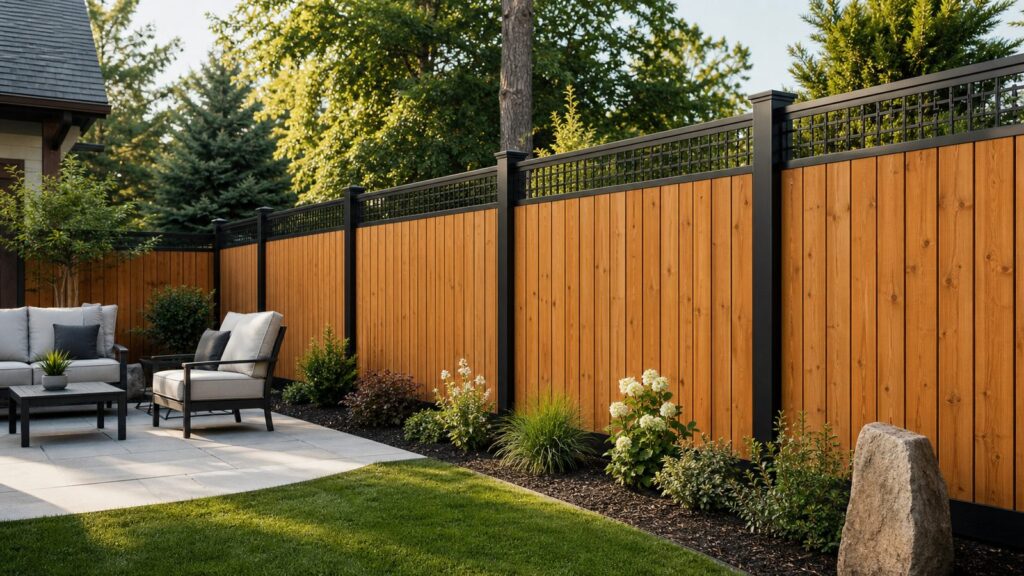
Quick Decision Matrix
| Goal | Best Fence Ideas | Typical 2026 Installed Cost | Builder Notes |
|---|---|---|---|
| Maximum privacy | Board-on-board wood, vinyl panel, composite, masonry | $25-$60+ per linear foot | Use tight layouts, strong posts, and proper gate framing. |
| Best budget | Pressure-treated wood, bamboo screen on existing frame | $18-$38 per linear foot for wood; less for add-on screens | Lower upfront cost usually means more maintenance. |
| Low maintenance | Vinyl, composite, aluminum or steel privacy panels | $25-$90 per linear foot | Check wall thickness, coatings, UV resistance, and hardware. |
| Modern look | Horizontal cedar, corrugated metal, slatted screen, mixed material | $25-$90 per linear foot | Straight lines expose poor layout, warped boards, and uneven posts. |
| Windy yard | Shadowbox, slatted, engineered metal panel systems | $20-$90 per linear foot | Avoid large uninterrupted solid panels unless engineered for the site. |
| Pool area | Code-compliant aluminum, vinyl, masonry, or vertical wood | Varies widely | Choose the pool barrier detail first, then the style. |
| Small yard | Slatted screens, trellis, lattice-top, planter-integrated panels | $15-$55+ per linear foot | Target views instead of boxing in the whole yard. |
Before You Pick a Fence Style
Most privacy fences fail in the planning stage, not at the lumberyard. Before pricing materials, check local fence rules, HOA requirements, easements, pool-barrier requirements, and property lines. Many U.S. cities commonly allow about 6 feet in rear yards and 4 feet in front yards, but that is not universal. Some cities allow 7- or 8-foot rear-yard fences. Others require permits above a certain height, near alleys, on corner lots, or beside retaining walls.
#1 Best Overall

- Upgrade iCover Privacy Screen For Fence: Our privacy screen is made of heavy-duty knitted net, measuring 4 ft high by 50 ft long. It is suitable for fences with a height of 4 ft or slightly higher. Please accurately measure your fence before purchase
- Fence Toppers for Privacy: The high-density knitting process provides the fence screen with excellent visibility blockage while allowing air and breeze to pass through freely. This design ensures that the area does not feel visually cramped
- Long-lasting Design: iCover privacy fence features a wide design with reinforced black bindings that are tear-resistant. Premium rust-resistant copper grommets are rust-proof. 3 grommets are arranged in triangle works well in sustaining more drug force. All of these helps to extend lifespan
- Easy to install: This fence privacy screen features brass grommets placed at intervals of 12.6 inches vertically and 24 inches horizontally, with three grommets provided at each corner. The shade cloth also includes 40 zip ties to securely fasten the fence screen in place. Compatible with wire fence, wooden palisade, chain link fence, railings and huddles
- Create a Private Area: Use iCover Fence Privacy Screen to create a private area for your backyard, outdoor space, swimming pool, apartment balconies, garden, car, pergola, construction site, or shielding plants. Our privacy fence also provides you with a good solution on balcony privacy screen or in any setting where a degree of privacy is desired. Effectively block surrounding dust, street views, and some animal invaders
Request an 811 utility locate a few business days before digging. Fence posts are often set 24 to 42 inches deep depending on height, soil, frost depth, and local practice, which is plenty deep enough to hit irrigation, gas, electric, communications, or drainage lines.
If the fence is close to a property line, do not rely on an old mowing line or where the previous owner “always thought” the boundary was. A survey or located pins can prevent a costly rebuild. For neighbor relations, talk early about finished-side orientation, shared costs, maintenance access, and who owns what. Put any shared agreement in writing.
15 Privacy Fence Ideas for a Better Backyard
1. Vertical Wood Board-on-Board Fence
A vertical board-on-board fence is one of the most reliable ways to get true privacy. Boards overlap on alternating sides or over a backing layer, so sightlines are blocked even as wood shrinks. For a 6-foot fence, common specs include 4×4 posts for standard residential runs, 6×6 posts for taller, heavier, or gate-heavy sections, pressure-treated posts, cedar or treated-pine pickets, two or three horizontal rails, and a cap rail for a more finished look.
Installed cost commonly runs about $20 to $45 per linear foot, with Homewyse’s May 2026 national estimate for wood privacy fence installation starting around $33.07 to $53.00 per linear foot. Pressure-treated pine is usually lower, around $18 to $38 per linear foot. Cedar often lands around $25 to $55 per linear foot.
We like this style when a homeowner wants a repairable fence that can be stained, modified, or partially rebuilt later. Add a rot board or kickboard at the bottom to keep pickets off wet soil and make future repairs easier.
2. Horizontal Cedar Fence
Horizontal cedar gives a backyard a clean, modern line. It works especially well behind patios, fire pits, outdoor kitchens, and contemporary homes. The catch is that horizontal fences are less forgiving than vertical ones. Perfectly straight lines reveal every uneven post, warped board, and layout mistake.
What’s actually slowing this PC down?
Pick the symptom - the matching free tool is one click away.
Use stable lumber, tight post spacing, proper rails or backing, and a layout that accounts for slopes. A 1/4-inch to 3/4-inch reveal between boards can look sharp, but wider gaps reduce privacy. Costs usually overlap with premium wood fencing, often around $30 to $55 per linear foot installed depending on cedar grade, post size, and trim details.
3. Shadowbox Fence
A shadowbox fence uses alternating pickets on both sides of the rails. From straight on, it feels mostly private; from an angle, it allows some light and air through. That makes it a strong choice for windy sites where a fully solid panel would take more pressure.
Expect pricing similar to mid-grade wood privacy fencing, often $20 to $45 per linear foot. It uses more pickets than a basic stockade fence but can be more neighbor-friendly because both sides look finished. Shadowbox is a practical compromise when privacy, airflow, and appearance all matter.
4. Vinyl Privacy Panel Fence
Vinyl privacy panels are popular because they do not need staining or painting. In 2026, vinyl privacy fencing commonly runs about $19 to $35 per linear foot in some national pricing data, with many real-world projects landing closer to $25 to $55 per linear foot depending on panel quality, height, color, texture, reinforcement, and gate hardware.
Do not buy vinyl by looks alone. Compare wall thickness, UV inhibitors, post spacing, internal reinforcement, wind rating, and gate hardware. Cheap vinyl can chalk, flex, crack, or sag at gates. Quality vinyl works best for homeowners who want clean privacy with lower routine maintenance.
Rank #2

- Premium Quality: The UPGRADE privacy screen for fences is made from 170 GSM non-recycled High-Density Polyethylene (HDPE). This ensures lasting durability, reliable privacy protection, and excellent weather resistance. A high-density composition makes it a dependable solution for outdoor privacy needs.
- Enhanced Privacy and Protection: UPGRADE Fence Privacy Screen offers up to 90% blackout, ensuring maximum privacy for your outdoor space. Shielded from harmful UV rays, enjoy complete seclusion while safeguarding your plants and flowers. Experience the perfect combination of privacy and protection with UPGRADE Fence Privacy Screen.
- Strong & Durable: The UPGRADE fence privacy screen boasts reinforced edges with double support on each side, complemented by anti-rust brass grommets. Count on long-lasting performance and tear resistance, ensuring your privacy solution stands the test of time. Enjoy peace of mind with the UPGRADE fence privacy screen's enhanced durability.
- Versatile Protection: The UPGRADE fence privacy screen excels in multiple applications. From safeguarding your yard and garden privacy to calming your pets and shielding plants from wind and animals, it's a perfect fit. It also serves construction sites, ensuring privacy and security throughout projects. Embrace the versatility of the UPGRADE fence privacy screen for various settings.
- Tailored to Your Needs: The UPGRADE fence privacy screen supports customization, allowing you to get the perfect fit for your unique requirements. Whether you need a specific size, color, or design, we've got you covered. Enjoy the freedom to personalize your privacy solution with UPGRADE fence privacy screen.
5. Composite Privacy Fence
Composite fencing gives a wood-like appearance with less staining and sealing. It is a good fit where homeowners want a more finished look than basic vinyl and less upkeep than wood. Installed costs commonly run about $25 to $55+ per linear foot.
Composite systems are heavier than many wood or vinyl designs, and they move with temperature. Follow the manufacturer’s post spacing, expansion gaps, fastener requirements, and gate details. This is not a material where we improvise the framing because the product warranty often depends on the installation method.
6. Aluminum or Steel Privacy Panel Fence
Metal privacy systems can look crisp and last a long time when coatings, posts, and fasteners are chosen correctly. Aluminum resists rust well, which helps in wet or coastal areas. Steel is strong, but the coating system and cut-edge protection matter.
Premium aluminum or steel privacy systems often run around $60 to $90 per linear foot. That price can make sense for high-visibility areas, modern homes, or low-maintenance projects where the fence is part of the architecture. For pool areas, metal can also work well if the design satisfies local barrier rules.
7. Corrugated Metal With Wood Posts
Corrugated metal panels framed with wood posts and rails create a durable, industrial-modern privacy fence. It can work well on long runs where homeowners want texture without maintaining hundreds of wood pickets. Panel gauge, coating, fasteners, and framing determine whether it looks sharp or flimsy.
Use compatible fasteners, isolate dissimilar metals when needed, and protect cut edges. Untreated cut edges can rust early, especially in wet climates or salt air. Corrugated metal can catch wind like a sail, so post depth, spacing, and panel orientation need real attention.
8. Lattice-Top Privacy Fence
A lattice-top fence uses a solid lower section with a decorative open section near the top. A common layout is 5 feet of solid privacy with 12 inches of lattice, creating a 6-foot fence that feels less heavy. It is useful where you want privacy at eye level but do not want the yard to feel walled off.
Outdated Drivers Are Slowing You Down
One free scan finds every outdated or missing driver and matches the right update for your exact hardware.Free scan · exact hardware matchPC Slower Than It Used to Be?
A free scan shows the junk files, broken settings and background clutter dragging Windows down - then fixes them in one click.Free scan · Windows 10 & 11Wood and vinyl versions are both common. Cost depends on the base material, but expect a modest upgrade over a plain panel because lattice and trim add labor. In small yards, this style gives enough enclosure without making the space feel smaller.
9. Slatted Privacy Screen
Slatted screens use evenly spaced boards or metal strips to block direct views while allowing air and light through. They are excellent around patios, hot tubs, outdoor showers, trash enclosures, and side-yard seating areas. A slatted screen does not always need to run the full property line.
Rank #3

- 𝗢𝘂𝘁𝗱𝗼𝗼𝗿 𝗣𝗿𝗶𝘃𝗮𝗰𝘆 𝗦𝗰𝗿𝗲𝗲𝗻 𝗳𝗼𝗿 𝗣𝗮𝘁𝗶𝗼, 𝗚𝗮𝗿𝗱𝗲𝗻 & 𝗕𝗮𝗹𝗰𝗼𝗻𝘆:Transform your outdoor area with this decorative metal privacy screen. The 72x44in freestanding panel creates a modern garden divider that shields unwanted views while adding a contemporary touch to your patio, balcony, or backyard.
- 𝗗𝗲𝗰𝗼𝗿𝗮𝘁𝗶𝘃𝗲 𝗟𝗮𝘀𝗲𝗿 𝗖𝘂𝘁 𝗧𝗿𝗼𝗽𝗶𝗰𝗮𝗹 𝗟𝗲𝗮𝗳 𝗗𝗲𝘀𝗶𝗴𝗻:Features an elegant laser-cut tropical leaf pattern that blends art and function. This modern outdoor décor screen adds visual interest and turns your patio or garden into a relaxing, stylish retreat.
- 𝗛𝗲𝗮𝘃𝘆-𝗗𝘂𝘁𝘆 𝗦𝘁𝗲𝗲𝗹 & 𝗥𝘂𝘀𝘁𝗽𝗿𝗼𝗼𝗳 𝗙𝗶𝗻𝗶𝘀𝗵:Built from thick, heavy-duty steel with a durable black powder-coated finish, this rust-resistant metal privacy fence stands strong against rain, sun, and wind — ensuring beauty and stability through every season.
- 𝗩𝗲𝗿𝘀𝗮𝘁𝗶𝗹𝗲 𝗙𝗿𝗲𝗲𝘀𝘁𝗮𝗻𝗱𝗶𝗻𝗴 𝗗𝗶𝘃𝗶𝗱𝗲𝗿 𝗣𝗮𝗻𝗲𝗹:Perfect as a garden privacy wall, patio divider, or balcony screen. Use one panel for a decorative accent or connect multiple panels for expanded coverage — a practical and elegant addition to any outdoor landscape.
- 𝗘𝗮𝘀𝘆 𝗗𝗜𝗬 𝗜𝗻𝘀𝘁𝗮𝗹𝗹𝗮𝘁𝗶𝗼𝗻 & 𝗦𝘁𝗮𝗯𝗹𝗲 𝗦𝘁𝗿𝘂𝗰𝘁𝘂𝗿𝗲:Includes base plates, hardware, and step-by-step instructions for a quick DIY setup. The freestanding design ensures flexible placement and reliable stability — ideal for renters or homeowners who want instant outdoor privacy.
For privacy, keep gaps tight and angle the screen to the main sightline. A 1/2-inch gap may feel private from one direction but open from another. On our projects, we often use slatted screens as targeted privacy instead of building 150 feet of full-height fence.
10. Bamboo or Rolled Reed Screen
Bamboo and reed screens are budget-friendly visual upgrades, especially when attached to an existing fence or built frame. They can soften a chain-link fence, cover a tired side-yard view, or create temporary privacy while landscaping grows.
Do these 3 things before closing this tab:
1Scan for outdated or missing drivers - takes under a minute2Clear out junk files and repair common Windows errors3Fix the driver behind crashes, sound loss and screen glitchesThis is not a structural fence. Lifespan and wind performance are much lower than wood, vinyl, composite, or metal. Use it where expectations are realistic: short-term screening, light-duty patio privacy, or rental-friendly improvements. Secure it well and keep it off wet soil where possible.
11. Living Hedge
A living hedge can be beautiful, code-friendly, and quieter-looking than a hard fence. It works best when there is enough depth for the mature plant width. Too many hedges are planted 18 inches from a property line and become a neighbor problem five years later.
Living screens are not instant. Many need irrigation, pruning, pest control, and several growing seasons before they provide full privacy. In humid regions, choose species with disease resistance and avoid dense plantings that trap moisture against wood structures. In wildfire-prone areas, local defensible-space rules may affect plant selection and spacing.
12. Trellis With Vines
A trellis with vines is a lighter privacy option for patios, garden rooms, and side-yard transitions. It can be freestanding or attached to a fence section, depending on the structure. It is especially useful where local rules restrict solid fence height but allow planting or open garden structures.
Plan for weight. Mature vines can be heavy, and wet foliage adds load. Use rot-resistant posts, corrosion-resistant fasteners, and a trellis pattern that can be maintained without dismantling the whole structure. Avoid aggressive vines near siding, gutters, and rooflines.
13. Gabion Wall
A gabion wall uses wire baskets filled with stone. It creates privacy, mass, sound reduction, and a strong landscape feature. Gabions can be excellent near slopes, patios, and modern landscapes, but they are heavy and need proper base preparation.
This is usually a professional project. The baskets, stone, drainage, foundation, and retaining conditions must be handled correctly. If the wall retains soil, local retaining wall rules may apply. Gabions look simple, but a poor base can lead to bulging, settlement, and uneven lines.
14. Masonry or Stucco Wall
Masonry, concrete block, stone, and stucco walls offer the most permanent privacy. They are common in some regions and can be excellent for sound reduction, security, and low day-to-day maintenance. They also cost more and usually involve permits, footings, drainage planning, and skilled labor.
The Tool Desk
Outbyte PC Repair FREEClear out junk files and repair common Windows errorsFree Scan →Outbyte Driver Updater FREEFix the driver behind crashes, sound loss and screen glitchesFind Drivers →A masonry wall may be the right call for a high-end courtyard, pool enclosure, street-facing backyard, or property exposed to strong wind. In cold climates, frost-depth footings matter. In wet areas, drainage and waterproofing details matter. In seismic or high-wind regions, reinforcement and engineering may be required.
Rank #4

- Backyard Privacy Enclosure: Our vinyl fence panel set includes 3 panels measuring 50 x 50 in, ideal for concealing outdoor items like trash bins, pool equipment, and air conditioners, keeping your backyard neat and attractive while meeting HOA guidelines
- Reinforced Wind-Resistant Structure: Upgraded 27.56 in / 70 cm galvanized metal ground stakes enhance overall stability. Insert at least 20 in into the ground for optimal wind and rain resistance. Suitable for soft soil, gravel, sand, and other surfaces
- Easy Installation: The vinyl fence features a slide-in grooved design with detailed instructions, allowing panels to be inserted and secured with screws—no extra drilling needed. Flexible layout options include 90° L-shape or 180° straight arrangements, and additional panels can be added to expand coverage for different needs
- Durable & Weather-Resistant: Made from premium PVC, these vinyl privacy fence are built for long-term outdoor use. Unlike iron or wooden fences, they are waterproof, corrosion-resistant, and rust-resistant for enhanced durability. The surface is easy to clean
- Thoughtful Security Details: All outdoor privacy screen edges come with anti-scratch accessories, including secure U-shaped Channels and protective caps to avoid injury to your family and pets. Caps also prevent dust buildup on the posts, making cleaning easier
15. Mixed-Material Fence With Planters or Retaining Transitions
Mixed-material fences combine wood, metal, masonry, planters, retaining walls, or short screens. This approach is useful when the yard changes grade, a patio needs privacy but the lawn does not, or the home’s architecture calls for more than one texture.
For example, a backyard may use a 6-foot board-on-board fence along the neighbor side, a 4-foot masonry seat wall near the patio, and a slatted cedar screen behind the grill station. The key is to keep transitions deliberate. Match post spacing, align top lines where practical, and manage drainage where planters or retaining elements meet fence posts.
Independent reader supportYour contribution helps us test, update, and keep practical guides available for everyone.Material Cost and Maintenance Comparison
| Material | Typical 2026 Installed Cost | Maintenance Level | Best Use |
|---|---|---|---|
| Pressure-treated wood | $18-$38 per linear foot | Medium to high | Budget privacy, repairable fences |
| Cedar wood | $25-$55 per linear foot | Medium | Warm natural appearance, custom layouts |
| Vinyl | $25-$55 per linear foot common range | Low | Clean full-panel privacy |
| Composite | $25-$55+ per linear foot | Low to medium | Wood look with less staining |
| Metal privacy systems | $60-$90 per linear foot for premium systems | Low if detailed well | Modern, durable, high-visibility areas |
| Bamboo or reed screen | Lower-cost add-on | Medium to high | Temporary or light-duty screening |
| Masonry or stucco | Varies widely; often premium | Low | Permanent privacy, sound reduction, courtyards |
These ranges are planning numbers, not bids. The final price depends heavily on footage, terrain, removals, old fence disposal, gates, soil, post depth, concrete volume, staining or painting, permit fees, and whether a survey is needed.
Quick wins for a faster PC:
Clear out junk files and repair common Windows errorsFree Scan →Fix the driver behind crashes, sound loss and screen glitchesFind Drivers →Design Details That Make a Privacy Fence Last
For wood fences, we focus on water management first. Keep pickets off grade, use a rot board where appropriate, crown or cap exposed horizontal surfaces, and stain or seal on the right schedule for the material and climate. Many wood fences should be stained after the lumber has dried enough to accept finish, then inspected at least annually for loose fasteners, failed boards, soil contact, and gate movement.
Posts are the backbone of the fence. A 6-foot privacy fence often needs posts set roughly one-third of the above-grade height into the ground, adjusted for frost depth, wind exposure, and soil conditions. In cold climates, footings may need to extend below frost depth. In sandy, wet, rocky, or expansive soils, standard assumptions may not hold.
Gates deserve extra budget. A wide gate with light hinges and undersized posts will sag. For driveway-width or equipment-access gates, use larger posts, proper bracing, quality hinges, and a latch that can handle seasonal movement.
Pool, Permit, and Property Line Considerations
If the fence is near a pool, treat it as a safety barrier first and a design feature second. Many jurisdictions use a 48-inch minimum barrier concept with self-closing and self-latching gates, limited gaps, and non-climbable details. Some states, cities, and HOAs require more. Horizontal rails, decorative cutouts, nearby planters, and climbable furniture can create problems even if the fence looks tall enough.
Permit rules vary by city. A 6-foot rear-yard privacy fence may be allowed in one city without a permit, while another may require review for height, corner visibility, retaining wall combinations, or location near an alley. Front yards are often more restricted, commonly around 4 feet, but the exact rule must be checked locally.
For property lines, the safest path is to confirm the boundary before construction. If the fence is shared, discuss the finished side, cost split, future repairs, and access before the crew starts digging. If you need to maintain both sides of the fence, leave enough access to do it.
Best Value

- STYLISH NATURAL WOOD: This FSC certified wood screen is made with real wood meaning no two boards have the same grain color, finish, or wood knots differing it from vinyl outdoor privacy fence screen panels.
- EASY TO INSTALL: Our wood privacy fence panel assembles in approximately 90 mins and installation is simple and easy. Using a mallet and the included ground stakes, tap your posts into the ground, securing your screen.
- NO DIGGING REQUIRED: Innovative no dig system saves you time and hassle.
- PRIVACY AND CHARM: Our no dig air conditioner fence is perfect for hiding unattractive backyard items such as AC units, trash cans, pool equipment, children's toys, and more.
- DIMENSIONS: Once assembled, your wood outdoor privacy screen will measure 60.5in H x 38.625in W. That's 5ft of height for extra privacy around your patio, deck, garden, or backyard.
When to DIY vs. When to Hire a Pro
A handy homeowner can often DIY a short privacy screen, bamboo cover, small trellis, or a simple straight fence run on flat ground. A realistic DIY pace for a small wood fence is often one weekend for layout and posts, then another for rails, pickets, and gates, assuming utilities are marked and materials are ready.
Hire a pro when the fence is long, tall, exposed to wind, near a pool, close to a property line, on a slope, tied into retaining walls, built with masonry or gabions, or includes large gates. Professional installation also makes sense when local permitting, HOA review, frost-depth requirements, or rocky soil could turn a simple project into a costly correction.
Recommended Free Tools
The labor is not just digging holes. A good crew manages layout, string lines, post spacing, grade changes, drainage, gate swing, hardware, concrete, and material movement. Those details determine whether the fence still looks straight after two summers and one hard winter.
How to Choose the Right Privacy Fence
Start with the problem view. If one neighbor’s second-story window overlooks your patio, a targeted slatted screen or trellis may solve the issue for far less than a full perimeter replacement. If the entire backyard borders a busy street, a full-height solid fence or wall may be worth the investment.
Next, match the material to your climate. In humid regions, prioritize termite and rot resistance, drainage, and ground clearance. In cold climates, plan for frost-depth posts and seasonal movement. Near the coast, use corrosion-resistant fasteners and coatings. In wildfire-prone western areas, check defensible-space requirements and consider noncombustible or ignition-resistant materials where rules or risk call for them.
Finally, budget for the full system: posts, panels or pickets, concrete, gates, hardware, old fence removal, permits, staining, and repairs. A privacy fence is not a decoration. It is an outdoor structure, and it should be designed like one.
The Tool Desk
Outbyte PC Repair FREEClear out junk files and repair common Windows errorsFree Scan →Outbyte Driver Updater FREEFix the driver behind crashes, sound loss and screen glitchesFind Drivers →Frequently Asked Questions
What is the cheapest privacy fence idea for a backyard?
Pressure-treated wood is usually the cheapest full structural privacy fence, often around $18-$38 per linear foot installed in 2026. Bamboo or reed screens can cost less, but they are better as add-on screening than as a long-term structural fence.
How much does a 6-foot privacy fence cost in 2026?
Most 6-foot privacy fences fall around $20-$60 per linear foot installed, depending on material, gates, terrain, removals, and local labor. A 150-linear-foot backyard commonly ranges from about $3,000-$8,000+ for wood or vinyl, with premium metal systems often higher.
Do I need a permit to build a privacy fence?
Possibly. Many cities allow common rear-yard fences without a permit up to a certain height, but rules vary by city, lot location, height, pool use, retaining walls, easements, and HOA requirements. Check local rules before buying materials.
How tall can a backyard privacy fence be?
Many U.S. cities commonly allow about 6 feet in rear yards and about 4 feet in front yards, but some allow 7 or 8 feet in certain rear-yard conditions. Always verify the local ordinance for your property.
Free tools Windows power users keep installed
One-click scans. No signup required.
What is the best low-maintenance privacy fence material?
Vinyl, composite, aluminum, and coated steel are usually lower maintenance than wood. Vinyl is common for full-panel privacy, composite gives a wood-like look, and metal systems are strong choices for modern designs when coatings and fasteners are specified correctly.
Can a privacy fence be used as a pool fence?
Yes, but only if it meets the pool barrier rules in your jurisdiction. Many areas require at least a 48-inch barrier, self-closing and self-latching gates, limited openings, and non-climbable details. Choose the pool barrier detail before choosing the fence style.
Quick Recap
Product prices and availability are accurate as of the date/time indicated and are subject to change. Any price and availability information displayed on Amazon at the time of purchase will apply.

