Do these 3 things before closing this tab:
1Repair Windows errors before they cause bigger problems2Scan for outdated or missing drivers - takes under a minute3Clear out junk files and repair common Windows errorsVerdict: The Anker SOLIX F3800 Plus is a wheeled, high-output battery-inverter system for demanding worksite loads, emergency backup and selected home circuits—not a lightweight camping power station. Its 3,840Wh LFP battery, 6,000W continuous output, 120/240V operation and up-to-3,200W solar input make it unusually capable. The catch is that the base unit is heavy, its battery can drain quickly under large loads, and circuit-level or automatic home backup requires additional hardware and electrical installation.
At the time of checking on August 18, 2026, Anker listed the U.S. base unit at $2,599.99. That is a meaningful price for a standalone power station, but not the cost of a complete whole-home system.
| # | Preview | Product | Price | |
|---|---|---|---|---|
| 1 |

|
Anker SOLIX F3800 Plus Portable Power Station, 3,840Wh, 3,200W Solar Input | $2,399.99 | Buy on Amazon |
| 2 |
|
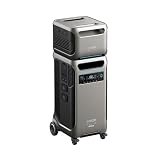
Anker SOLIX F3800 Plus Portable Power Station and BP3800 Expansion Battery | $3,998.99 | Buy on Amazon |
| 3 |
|
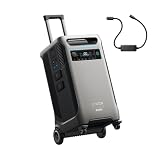
Anker SOLIX F3800 Plus Portable Power Station and 240V Generator Adapter | $2,498.99 | Buy on Amazon |
As an Amazon Associate I earn from qualifying purchases.
What is the Anker SOLIX F3800 Plus?
The F3800 Plus is best understood as a portable power station that sits between a conventional generator and a modular home-energy-storage system. It combines a 3.84kWh lithium-iron-phosphate (LFP) battery with a 6,000W inverter, wheels, a telescoping handle, direct appliance outlets, solar charging and connections for expansion batteries and home-backup equipment.
It is designed for North American power standards, so U.S. specifications should not be generalized to other regions. See the official product page for the current regional configuration.
#1 Best Overall
- 𝗘𝗻𝗹𝗮𝗿𝗴𝗲𝗱 𝗖𝗮𝗽𝗮𝗰𝗶𝘁𝘆 𝗳𝗿𝗼𝗺 𝟯.𝟴𝟰𝗸𝗪𝗵: F3800 Plus starts with 3.84kWh, enough power for your family for one day. If that's not enough, add up to 6 batteries for 26.9kWh. Or add 12 batteries and another F3800 for weeks of power.
- 𝗣𝗼𝘄𝗲𝗿 𝗠𝗼𝗿𝗲 𝗔𝗽𝗽𝗹𝗶𝗮𝗻𝗰𝗲𝘀 𝗦𝗶𝗺𝘂𝗹𝘁𝗮𝗻𝗲𝗼𝘂𝘀𝗹𝘆: F3800 Plus offers a massive 6,000W output, 58% more than other portable power stations at the same capacity. For more power, pair two for up to 12,000W max AC output.
- 𝗗𝘂𝗮𝗹-𝗩𝗼𝗹𝘁𝗮𝗴𝗲 𝗳𝗼𝗿 𝗔𝗻𝘆 𝗔𝗽𝗽𝗹𝗶𝗮𝗻𝗰𝗲: With 120V / 240V dual-voltage support, you can run everything at home without limitations, including your dryer.
- 𝟲𝟯 𝗠𝗶𝗻𝘂𝘁𝗲𝘀 𝗨𝗹𝘁𝗿𝗮𝗙𝗮𝘀𝘁 𝗥𝗲𝗰𝗵𝗮𝗿𝗴𝗶𝗻𝗴: Get outage-ready in just 63 minutes via solar and generator, and recharge flexibly in 4 ways—solar, generator, home power panel, or AC outlet.
- 𝗦𝘂𝗽𝗽𝗼𝗿𝘁𝘀 𝗦𝗼𝗹𝗮𝗿 𝗮𝗻𝗱 𝗚𝗲𝗻𝗲𝗿𝗮𝘁𝗼𝗿𝘀: Recharge efficiently via solar panels or gas generators. With 3,200W solar input and a 240V gas generator via a 6,000W bypass, outages don't stand a chance.
F3800 versus F3800 Plus
The F3800 Plus is the updated member of Anker’s F3800 platform. The “Plus” designation relates to expanded system and charging features, including newer configuration options for solar, generator, expansion and home integration. However, buyers should not assume that every original F3800 accessory works with the Plus model. Confirm compatibility for expansion batteries, the Home Power Panel, Double Power Hub, transfer equipment, generator adapters, solar connectors and app or firmware support using Anker’s F3800/F3800 Plus support information.
Key specifications
| Specification | Anker SOLIX F3800 Plus |
|---|---|
| Nominal battery capacity | 3,840Wh / 3.84kWh |
| Continuous AC output | 6,000W |
| Output voltage | 120V and 240V |
| Solar input | Up to 3,200W through two MPPT inputs |
| Battery chemistry | LFP |
| UPS transfer | Approximately 20ms in published specifications |
| Warranty | Five years |
| Advertised lifespan | 10-plus years, according to Anker |
The 6,000W figure describes the inverter’s continuous output; it does not describe how long the battery can sustain that load. A 3.84kWh battery running a 6,000W load would theoretically empty in about 38 minutes before losses, reserve capacity and other limits are considered.
What can it run?
For construction work, emergency response and property maintenance, the F3800 Plus has enough output for loads that overwhelm smaller power stations. Suitable equipment depends on running wattage, starting surge, connection method and voltage, but the system is well suited to:
The Tool Desk
Outbyte Driver Updater FREEScan for outdated or missing drivers - takes under a minuteDriver Scan →Outbyte PC Repair FREEClear out junk files and repair common Windows errorsFree Scan →- Refrigerators and freezers
- Lighting, routers, computers and chargers
- CPAP machines and many small medical or mobility devices, subject to the equipment maker’s requirements
- Most portable power tools
- Microwaves and induction cooktops within the available output
- Sump pumps, well pumps, compressors and other motor loads when their startup demand is compatible
- Some electric water heaters, central-air systems and EV-charging setups, provided the electrical requirements are compatible
Motors and compressors are the main uncertainty. A pump or HVAC unit that runs below 6,000W may still trip the power station during startup if its surge demand is too high. Anker markets the F3800 Plus for central air and EV/RV-related applications, but those are compatibility-dependent claims—not a guarantee that every air conditioner, charger or RV connection will work.
Runtime: capacity matters more than the headline wattage
Use this planning formula:
Estimated runtime = battery capacity × usable-efficiency factor ÷ load in watts.
Using an illustrative 80–90% efficiency range, the internal battery produces approximately these planning figures:
| Load | Theoretical runtime | Estimated planning range |
|---|---|---|
| 50W | 76.8 hours | About 61–69 hours |
| 100W | 38.4 hours | About 31–35 hours |
| 500W | 7.7 hours | About 6.1–6.9 hours |
| 1,000W | 3.8 hours | About 3.1–3.5 hours |
| 2,000W | 1.9 hours | About 1.5–1.7 hours |
| 4,000W | 58 minutes | About 46–52 minutes |
| 6,000W | 38 minutes | About 31–35 minutes |
These are estimates, not guarantees. Actual runtime changes with inverter overhead, AC or DC use, battery reserve settings, temperature, battery age, startup surges and appliances that cycle rather than draw continuously. Android Authority reported slightly more than three hours in a high-consumption real-world test, but that result should not be generalized to every load.
Free tools Windows power users keep installed
One-click scans. No signup required.
Construction-site practicality and portability
The F3800 Plus is portable in the sense that it rolls; it is not portable in the sense of being easy to lift. Published coverage places it at roughly 132 pounds, although buyers should confirm the current figure in Anker’s manual or product listing.
Rank #2
- The F3800 Plus Power Station and BP3800 Expansion Battery will be dispatched separately. If you receive one item before the others, please await the arrival of the remaining items.
- 𝗣𝗼𝘄𝗲𝗿 𝗬𝗼𝘂𝗿 𝗛𝗼𝗺𝗲 𝗳𝗼𝗿 𝗪𝗲𝗲𝗸𝘀: F3800 Plus starts at 3.84kWh, enough to power your home for a full day. Need more? Expand to 26.9kWh with 6 batteries, or double up to 53.8kWh with 12 for weeks of power.
- 𝗣𝗼𝘄𝗲𝗿 𝗠𝗼𝗿𝗲 𝗔𝗽𝗽𝗹𝗶𝗮𝗻𝗰𝗲𝘀 𝗦𝗶𝗺𝘂𝗹𝘁𝗮𝗻𝗲𝗼𝘂𝘀𝗹𝘆: F3800 Plus offers a massive 6,000W output, 58% more than other portable power stations at the same capacity. For more power, pair two for up to 12,000W max AC output.
- 𝗗𝘂𝗮𝗹-𝗩𝗼𝗹𝘁𝗮𝗴𝗲 𝗳𝗼𝗿 𝗔𝗻𝘆 𝗔𝗽𝗽𝗹𝗶𝗮𝗻𝗰𝗲: With 120V / 240V dual-voltage support, you can run everything at home without limitations, including your dryer.
- 𝟲𝟯 𝗠𝗶𝗻𝘂𝘁𝗲𝘀 𝗨𝗹𝘁𝗿𝗮𝗙𝗮𝘀𝘁 𝗥𝗲𝗰𝗵𝗮𝗿𝗴𝗶𝗻𝗴: Get outage-ready in just 63 minutes via solar and generator, and recharge flexibly in 4 ways—solar, generator, home power panel, or AC outlet.
The wheels and pull handle make it practical to relocate around a level property or worksite. Stairs, vehicle loading, thresholds, gravel and uneven ground are different matters. Treat it as wheeled and relocatable, not carry-anywhere equipment. Leave clearance around the ventilation openings, keep cables organized and avoid placing it where water, dust or construction debris can obstruct the air path.
Ports and electrical flexibility
The platform provides multiple 120V AC outlets along with 240V capability, NEMA 14-50 and NEMA L14-30 connections, RV-related output, USB-A and USB-C ports, car/DC output, two solar inputs, an expansion-battery connection and a home-panel connection. The exact port layout should be checked against the current Plus documentation before installation.
A 240V outlet does not make the unit a whole-home connection by itself. A residence must be isolated from the utility grid with an appropriate transfer mechanism. Never connect a power station to a home through an improvised cord or an ordinary wall outlet.
What’s actually slowing this PC down?
Pick the symptom - the matching free tool is one click away.
Charging options
Solar
Anker advertises up to 3,200W of solar input through two MPPT inputs, with an operating voltage range of approximately 11–165V per input and input-current limits that must be observed. Under ideal conditions, Anker claims a full recharge in under two hours.
That is a best-case ceiling, not a normal guarantee. Panels rarely deliver their nameplate output continuously. Cloud, shading, orientation, heat, wiring and battery state of charge all reduce charging power. Series-connected panels can exceed the voltage limit—especially in cold weather—while parallel wiring can exceed a current limit. Confirm the array’s voltage and current against the manual before connecting it.
AC and generator charging
Anker lists standard AC charging at approximately 1,800W, with faster 240V charging in compatible configurations. The system also supports generator charging and advertises a 6,000W 240V generator-bypass function. The generator adapter and associated bypass feature are stated for a single F3800 Plus in the specified configuration; one generator should not be assumed to charge multiple units in a larger system.
UPS performance
The F3800 Plus can operate as a UPS, with published transfer behavior of approximately 20ms. That is fast enough for many computers, networking devices and office electronics, but it is not the same as a zero-transfer online UPS. Servers, medical equipment, sensitive control systems and critical workstations should be tested for compatibility or protected with a dedicated UPS.
Home backup: three different setups
1. Direct appliance backup
- Charge the F3800 Plus.
- Move it near the appliances or equipment.
- Connect those loads directly to the appropriate outlets.
- Monitor output and battery state through the display or app.
This is the simplest and most portable arrangement, but it does not energize household circuits automatically.
Rank #3
- The F3800 Plus Power Station and 240V Generator Adapter will be dispatched separately. If you receive one item before the others, please await the arrival of the remaining items.
- Power Your Home for Weeks: F3800 Plus starts at 3.84kWh, enough to power your home for a full day. Need more? Expand to 26.9kWh with 6 batteries, or double up to 53.8kWh with 12 for weeks of power.
- Power More Appliances Simultaneously: F3800 Plus offers a massive 6,000W output, 58% more than other portable power stations at the same capacity. For more power, pair two for up to 12,000W max AC output.
- Dual-Voltage for Any Appliance: With 120V / 240V dual-voltage support, you can run everything at home without limitations, including your dryer.
- 63 Minutes UltraFast Recharging: Get outage-ready in just 63 minutes via solar and generator, and recharge flexibly in 4 ways—solar, generator, home power panel, or AC outlet.
2. Manual transfer switch or inlet box
A compatible inlet and transfer switch can feed selected circuits such as a refrigerator, furnace controls, sump pump or lighting circuit. The circuits must be chosen within the system’s output and energy limits, and the installation must prevent utility backfeed and comply with local electrical code. Anker offers bundles with a 10-circuit manual transfer switch.
3. Anker Home Power Panel
The Home Power Panel is the more integrated route, intended for automated backup, app control and broader energy management. It costs more and requires more planning and electrical work. In a Home Power Panel installation, some charging and operating behavior may be controlled through the panel rather than directly through the F3800; owner reports describe this as setup-dependent, not a universal defect.
The base F3800 Plus is therefore not a drop-in replacement for a permanently installed battery such as a Powerwall. It can become the core of a home-backup system, but the panel, transfer equipment, wiring, permits where required and installation cost all matter.
Expansion and total system cost
Anker advertises system configurations of up to 53.8kWh and 12,000W. Those are system-level figures, not the capacity or output of one standalone unit. Anker’s support material describes configurations using up to six expansion batteries in relevant arrangements, but the exact maximum depends on whether one or two F3800 Plus units and the required hubs are used.
Expansion increases runtime, but also cost, weight, floor space, cabling and installation complexity. It does not automatically increase the output of one inverter.
| Configuration | U.S. price observed Aug. 18, 2026 | What it provides |
|---|---|---|
| F3800 Plus base unit | $2,599.99 | Portable direct-use backup |
| F3800 Plus plus expansion battery | $4,298.99 | Approximately 7.68kWh nominal storage |
| F3800 Plus plus 10-circuit transfer switch | $3,148.99 | Selected-circuit backup path, with installation still required |
| Smart Home Power Kit | $3,499.99 | More integrated home-energy hardware |
| Home Power Panel plus installation | $5,599 | Turnkey-oriented installation package, subject to local eligibility |
Prices and promotions change. See Anker’s current F3800 Plus collection before treating any figure as a quote.
F3800 Plus versus the alternatives
| Alternative | Potentially better choice for | Trade-off versus the F3800 Plus |
|---|---|---|
| EcoFlow DELTA Pro Ultra | Larger native capacity and high-end whole-home positioning | Typically a larger financial commitment |
| EcoFlow DELTA Pro 3 | A lighter alternative and faster published UPS transfer | Different output, capacity and home-integration trade-offs |
| Bluetti AC500 plus B300S | Modular battery architecture | Compare complete voltage, output, battery and installation costs |
| Goal Zero Yeti 6000X | A large single battery | Lower output and no equivalent 240V/high-output positioning |
| Jackery Explorer 5000 Plus | Jackery’s ecosystem and availability | Compare output, solar input and expansion options carefully |
| Gasoline or propane generator | Multi-day outages and sustained high loads | Noise, exhaust and fuel storage, but generally longer runtime per refill |
Independent comparisons position the F3800 Plus as a high-output, expandable alternative rather than a universal winner. The Solar Lab has also reported that it is quieter than some large power stations but not as quiet as the DELTA Pro Ultra. Treat sale prices in third-party comparisons as time-specific.
Recommended Free Tools
Pros and cons
Pros
- 6,000W continuous output
- 120/240V operation
- High solar-input ceiling with dual MPPT inputs
- LFP battery chemistry
- Wheels and telescoping handle
- Expansion-battery and home-integration options
- Useful for direct appliance backup, worksites and selected home circuits
- Battery operation without generator exhaust
Cons
- Very heavy and difficult to lift
- 3.84kWh can disappear quickly under large electric loads
- Home integration adds substantial hardware and installation cost
- Large footprint and ventilation requirements
- Approximately 20ms UPS transfer is not zero interruption
- Maximum advertised capacity requires a more complex multi-unit configuration
- Noise should be judged from measured results, not the word “quiet” alone
Who should buy the F3800 Plus?
Buy it if you need unusually high continuous output, 240V capability, direct solar charging and a route from portable backup to a more permanent installation. It is especially compelling for homeowners, contractors and property owners who need to operate pumps, compressors, tools, refrigeration or selected high-demand circuits without running an engine continuously.
Choose something smaller if your real requirements are phones, laptops, lights, networking gear and occasional small appliances. Avoid it if you must carry the unit upstairs, have no suitable storage space, need genuinely silent operation near a bedroom, cannot install transfer equipment, or want the lowest-cost solution for prolonged outages. For multi-day emergencies, a battery-plus-generator strategy may be more practical: use the F3800 Plus for quiet nighttime operation, sensitive electronics and short outages, then use the generator for sustained high demand.
Quick Recap
Product prices and availability are accurate as of the date/time indicated and are subject to change. Any price and availability information displayed on Amazon at the time of purchase will apply.




