What’s actually slowing this PC down?
Pick the symptom - the matching free tool is one click away.
Lacquer is a fast-drying wood finish that forms a protective film as its solvent or water carrier evaporates. It is popular because it sprays smoothly, builds quickly, and—especially in solvent-based systems—can partially re-dissolve earlier coats so repairs blend into the surrounding finish. But “lacquer” is a product family, not one universal formula. Nitrocellulose, acrylic, CAB, water-based, pre-catalyzed, and post-catalyzed lacquers differ in durability, appearance, cleanup, application method, and safety requirements.
For woodworking and construction finishing, choose the exact product by its technical data sheet and label—not by the word lacquer alone. This guide explains the main types, when to use them, how to apply them, what can go wrong, and how to work safely.
As an Amazon Associate I earn from qualifying purchases.
What is lacquer?
In practical woodworking terms, lacquer is a liquid coating made from film-forming resins or polymers carried in a solvent or water-based vehicle. As the carrier leaves, the solids remain as a continuous protective film. The U.S. Environmental Protection Agency defines lacquer, for regulatory purposes, as a thermoplastic coating that dries primarily through solvent evaporation and can be re-dissolved in its original solvent. The EPA definition is useful, but it does not mean that every modern product labeled lacquer has identical chemistry.
PC Slower Than It Used to Be?
A free scan shows the junk files, broken settings and background clutter dragging Windows down - then fixes them in one click.Free scan · Windows 10 & 11Outdated Drivers Are Slowing You Down
One free scan finds every outdated or missing driver and matches the right update for your exact hardware.Free scan · exact hardware matchTraditional nitrocellulose lacquer uses chemically modified cellulose solids dissolved in lacquer thinner. A new coat can soften or partially dissolve the previous coat, allowing the layers to knit together into one film. This is why lacquer can be comparatively easy to blend and repair. Other products use acrylic, cellulose acetate butyrate (CAB), water-based acrylic, or a catalyzed resin system and may behave quite differently.
Before using any lacquer, check the product’s:
- resin or coating type;
- recommended substrates and existing finishes;
- application method;
- recoat time and cure information;
- cleanup solvent or water-cleanup instructions;
- reduction or thinning instructions;
- interior or exterior rating; and
- ventilation, fire, and personal-protection requirements.
Those details are more meaningful than the generic product name.
#1 Best Overall

- Ideal for use on interior/exterior surfaces including plaster, masonry, wood, metal and unglazed ceramic
- Acrylic formula offers an ultra-hard, high luster finish with fast cure and hardening time compared to regular paint
- Dries to the touch in 20 minutes, covers up to 7 sq. ft. per can
- Durable coating can sanded and recoated for a higher gloss finish
- Provides a smooth, ultra gloss coating for a professional, factory finish look
Why professionals use lacquer
Lacquer remains common in cabinet shops, furniture production, trim work, musical instruments, shelving, and other interior applications because it offers a useful combination of speed and finish quality.
- Rapid drying: Multiple coats can often be applied in a working day, although the exact recoat window depends on the formulation and conditions.
- Efficient spray application: Lacquer atomizes well and can produce a smooth, even film on appropriately prepared surfaces.
- Fast build: Several thin coats can create substantial film thickness without waiting as long between applications as some slower-curing finishes require.
- Repairability: Solvent-based lacquer can soften into earlier lacquer layers, helping a localized repair blend into the surrounding finish.
- Appearance: It is available in clear, satin, semi-gloss, and gloss versions, as well as pigmented colors.
These advantages do not make lacquer the best finish for every project. Traditional lacquer generally has less resistance than polyurethane varnish to standing water, alcohol, household chemicals, and heavy abrasion, though the actual performance varies by formulation. Polyurethane may provide greater durability but can be more difficult to repair invisibly. Shellac is also fast and repairable, but it performs poorly against heat and alcohol. Treat these as general directions, not universal rankings. WOOD Magazine’s finish-selection guidance provides further comparison.
Free tools Windows power users keep installed
One-click scans. No signup required.
The main types of lacquer
Solvent-based nitrocellulose lacquer
Nitrocellulose lacquer is the traditional furniture and instrument finish most people associate with lacquer. It dries as organic solvents evaporate, builds quickly, and is usually applied by spraying. Its ability to re-dissolve into previous coats makes blending and some repairs relatively straightforward.
Its limitations are equally important. Conventional nitrocellulose lacquer uses flammable organic solvents, produces strong vapors, and is normally best treated as an interior finish unless the specific product is expressly rated for another exposure. It may add an amber tone, yellow or darken with age, and can become brittle over time.
Acrylic, CAB, and other solvent-based lacquers
Acrylic and CAB lacquers are formulated to change characteristics such as clarity, flexibility, color retention, and application behavior. A particular acrylic lacquer may stay clearer than conventional nitrocellulose, while a CAB product may be selected for a different balance of flexibility and appearance. Neither resin is automatically superior: the complete formulation, solids content, substrate, film thickness, and expected exposure determine the result.
For example, Rust-Oleum’s technical information identifies an acrylic-polymer lacquer spray containing solvents including acetone, dimethyl carbonate, n-butyl acetate, naphtha, and xylene. That illustrates why a product’s safety data and technical data sheets matter: “acrylic lacquer” still tells you only part of the story. Read the manufacturer’s technical data for the specific spray product.
Water-based lacquer
Water-based acrylic lacquers aim to provide lacquer-like film behavior with less odor and generally lower VOC content than many solvent-borne products. They commonly dry clear rather than amber and may remain relatively flexible.
Water-based does not mean harmless or suitable for spraying in an occupied room. Atomized coating can still be an inhalation hazard, and occupational spray applications may require appropriate ventilation and controls. The first coat can also raise the wood grain, so the surface may need light sanding before subsequent coats. Cleanup is usually with water only when the manufacturer specifically says so.
For example, General Finishes describes its Enduro Pre-Cat Lacquer as an interior, water-based, spray-applied professional or OEM finish. That is a product-specific description—not proof that every water-based lacquer is interchangeable with it. Check the manufacturer’s substrate, preparation, and application instructions.
Pre-catalyzed lacquer
In a pre-catalyzed, or pre-cat, lacquer, the catalyst has already been incorporated by the manufacturer. Catalysis changes the curing behavior and can improve resistance to wear, water, or chemicals compared with a conventional lacquer system. However, pre-cat products still have a limited shelf life and must be used within the manufacturer’s stated conditions.
Rank #2

- Krylon COLORmaxx GLOSS CRYSTAL CLEAR
- Krylon COLORmaxx GLOSS CRYSTAL CLEAR
- Krylon COLORmaxx GLOSS CRYSTAL CLEAR
- Krylon COLORmaxx GLOSS CRYSTAL CLEAR
- Krylon COLORmaxx GLOSS CRYSTAL CLEAR
Pre-cat lacquer is often selected for professional cabinet and furniture work where better resistance is needed without moving to a different coating system. It still requires careful attention to spray equipment, film thickness, ventilation, and recoat instructions.
Post-catalyzed lacquer
With post-catalyzed lacquer, the user adds a separate catalyst before application. This can produce a more durable finish, but only when the components are mixed accurately and applied within the specified pot life. Incorrect ratios, poor mixing, or use after the pot life can cause adhesion, gloss, hardness, or curing problems.
Post-catalyzed systems are primarily professional or commercial products. They are not a casual substitute for ordinary spray lacquer. Follow the product’s mixing instructions, batch limits, induction time, reduction instructions, and disposal requirements exactly.
Lacquer versus shellac and polyurethane
| Finish | Typical strengths | Important limitations |
|---|---|---|
| Lacquer | Fast drying, efficient spraying, quick build, and good repairability in many solvent-based systems | Traditional types use flammable solvents and may have lower resistance to water, alcohol, chemicals, and abrasion than more durable systems |
| Shellac | Fast drying, attractive appearance, and relatively easy repair | Poor resistance to heat and alcohol |
| Polyurethane varnish | Generally stronger resistance to water, abrasion, and household use | Often slower to apply and potentially harder to blend during invisible repairs |
These are broad comparisons. A catalyzed lacquer may outperform a conventional lacquer in chemical and wear resistance, while a particular polyurethane may differ from another. Compare the product’s technical data with the actual demands of the project.
Quick wins for a faster PC:
Repair Windows errors before they cause bigger problemsFix Now →Fix the driver behind crashes, sound loss and screen glitchesFind Drivers →Clear out junk files and repair common Windows errorsFree Scan →How to choose the right lacquer
Start with the project rather than the finish name.
| Project question | Likely direction | What to verify |
|---|---|---|
| Is the work interior or exterior? | Lacquer is commonly used indoors. | Do not assume exterior suitability. Use only a product explicitly rated for the expected exposure. |
| Do you want the wood to remain visually clear? | Choose a clear lacquer. | Check whether the product adds amber color or changes with age. |
| Do you want a solid color? | Choose pigmented lacquer or lacquer spray paint. | Confirm substrate compatibility, sheen, primer requirements, and outdoor rating if relevant. |
| Are you spraying a small project? | An aerosol can be convenient. | Aerosols often contain fewer solids and may need more coats than a spray-gun application. |
| Are you finishing larger surfaces? | An HVLP spray system may offer better control and economy. | Verify gun setup, tip/nozzle, compressor or turbine requirements, reduction, and overspray control. |
| Do you need to brush? | Use a product specifically formulated as brushing lacquer. | Standard spray lacquer may dry too quickly for comfortable brush application. |
| Is the surface a tabletop, floor, wet-area component, or heavily handled object? | Compare catalyzed lacquer, polyurethane, conversion varnish, or another specifically rated finish. | Review chemical, water, abrasion, and heat-resistance data. |
| Is there an existing finish? | Proceed only after a compatibility test. | Unknown coatings can wrinkle, reject, soften, or delaminate under a new lacquer. |
Application methods
Aerosol lacquer spray paint
Aerosol lacquer spray paint is practical for small wood, metal, pottery, plaster, and accessory projects when the label approves the substrate. Apply several light, overlapping passes rather than trying to achieve full coverage in one wet coat. Keep the can moving and observe the stated recoat window.
Use aerosol lacquer only in a suitable spray area—not in an occupied room—and control overspray. Product pages may describe a coating as fast-drying, hard, or high-shine, but those descriptions belong to that product and should not be generalized to every aerosol lacquer. Confirm the surface preparation, primer, sheen, temperature, humidity, and recoat directions on the can and technical sheet.
For a small project, lacquer spray paint is the most direct product category to compare. Select by the substrate and intended exposure, not simply by color or gloss.
HVLP spraying
HVLP equipment can provide better control and more economical material use on cabinets, furniture, doors, and other larger surfaces than aerosols. It also introduces setup and safety responsibilities:
- Prepare and strain the coating if the manufacturer requires it.
- Use only the recommended reducer and reduction ratio.
- Set fluid flow and air pressure according to the coating and equipment instructions.
- Spray test panels before the finished work.
- Maintain a consistent gun distance, speed, and overlap.
- Allow adequate flash and recoat time between coats.
- Clean the gun promptly with the manufacturer-approved solvent.
An HVLP spray gun for lacquer is a task-enabling purchase, not a guarantee of a professional finish. The result depends at least as much on preparation, viscosity, spray technique, environmental conditions, and ventilation.
Brushing lacquer
Brushing lacquer is formulated with additives and solids intended to make brush application more manageable. Ordinary spray lacquer may flash off so quickly that it leaves brush marks, drag, or an uneven film.
Rank #3
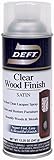
- Easy aerosol application
- Self-leveling formula requires no sanding between coats
- Dries clear and 4X faster than conventional oil-based polyurethane
- Clear finish enriched finishes or unfinished wood and resists yellowing over time
- Easy to touch-up and resist alcohol, water and other common household spills
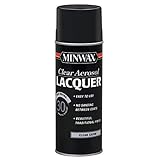
Prepare the surface carefully, use a suitable finishing brush, and apply thin, even coats in the direction of the grain. Do not keep brushing a section after it begins to tack. A product such as Minwax clear brushing lacquer is marketed for interior woodwork including furniture, cabinets, doors, and accessories. Its manufacturer states approximately 30 minutes to touch-dry and two hours before recoating, but those are product-specific claims, not universal lacquer timings. Review the clear brushing lacquer instructions before relying on those times.
Recommended Free Tools
For this method, a natural-bristle finishing brush and appropriate sanding sponge for wood finish can be more useful than buying spray equipment. Sand only as directed and remove all dust before recoating.
A reliable application sequence
- Identify the substrate. Determine whether you are coating solid wood, veneer, MDF, metal, plastic, pottery, plaster, or another material.
- Identify any existing coating. If its chemistry is unknown, assume compatibility is unproven.
- Prepare the surface. Sand and remove dust according to the product instructions. General Finishes recommends preparation sanding and testing on MDF, HDF, Masonite, or an existing finish before broad application. See its preparation guidance.
- Make a hidden-area test. Apply the complete proposed system, including primer, stain, sealer, and topcoat if applicable. Check adhesion, color, gloss, wrinkling, softening, and grain raising.
- Thin only when instructed. Use the manufacturer’s recommended reducer and ratio. Never assume that lacquer thinner is suitable for every product labeled lacquer.
- Apply thin coats. Flooding can cause runs, sags, solvent entrapment, and extended drying.
- Respect the recoat window. Temperature, humidity, airflow, coat thickness, and product chemistry all affect drying.
- Level or sand at the correct stage. A coating can be ready to recoat while still needing much longer to reach its final cure.
- Allow final cure. Do not place heavy objects on a newly finished surface merely because it feels dry.
Thinners, reduction, and cleanup
Lacquer thinner is commonly used with compatible solvent-based lacquer for reduction or equipment cleaning, but it is not a universal cleanup solvent. Rust-Oleum identifies lacquer thinner for thinning lacquer and cleaning paint equipment while instructing users to follow the coating manufacturer’s reduction ratio. Check the product information before choosing lacquer thinner.
Use only the reducer named or approved by the coating manufacturer. An incorrect solvent can cause blushing, poor flow, loss of gloss, slow drying, resin precipitation, or adhesion failure. Keep containers closed, label mixtures, and dispose of solvent-soaked materials according to local requirements.
Common lacquer defects and what they indicate
Runs and sags
Runs usually result from applying too much material, moving too slowly, spraying too close, or allowing the surface to become excessively wet. Let the coating reach the manufacturer’s recommended sanding stage, level the defect, remove dust, and apply lighter coats.
Dry spray
Dry spray feels rough because droplets partially dry before they reach the surface. Excessive gun distance, too much airflow, low material flow, high temperature, or poor reduction can contribute. Correct the setup according to the technical data rather than simply adding solvent.
Orange peel
Orange peel is a pebbled texture caused by poor flow and leveling. Possible contributors include incorrect viscosity, insufficient wetness, unsuitable air settings, cold conditions, or application that is too far from the surface. Test adjustments on scrap before changing the finished work.
Fisheyes
Fisheyes are small craters where the coating pulls away from contamination. Silicone, wax, oil, polish residue, and some cleaning products are common causes. Clean and prepare the surface carefully, isolate contamination where possible, and test the proposed repair system.
Blushing
Blushing is a cloudy or whitish appearance that can occur when moisture becomes trapped as solvent flashes off. High humidity, low temperature, poor airflow, excessive film thickness, or an unsuitable thinner can contribute. Controlled conditions and the manufacturer’s application range are the first remedies.
Compatibility and recoating
Never assume that two lacquer products can be layered simply because both labels say lacquer. Resin type, solvent strength, cure state, additives, and substrate all matter.
Water-based lacquer over a solvent-based lacquer may work in some systems, but only after a hidden-area test. Solvent-based material applied over a water-based finish can soften or wrinkle the underlying layer in some circumstances. Test for adhesion and solvent reaction before coating the visible surface.
Watch for:
- lifting or wrinkling;
- softening of the old coating;
- poor adhesion or easy scratching;
- fisheyes or cratering;
- unexpected gloss or color change; and
- delayed drying or persistent tack.
Safety: ventilation, fire, and PPE
Solvent-based lacquer presents both inhalation and fire hazards. Vapors can be flammable, and spraying creates airborne droplets as well as vapor. OSHA’s spray-finishing standard covers many methods of atomized application, including compressed-air, airless, hydraulic, electrostatic, and other systems within its scope. Professional work requires suitable spray-finishing controls, ventilation, ignition-source control, and applicable workplace procedures. Review OSHA’s spray-finishing requirements.
Rank #4

- Ideal for use on interior/exterior surfaces including plaster, masonry, wood, metal and unglazed ceramic
- Acrylic formula offers an ultra-hard, high luster finish with fast cure and hardening time compared to regular paint
- Dries to the touch in 20 minutes, covers up to 7 sq. ft. per can
- Durable coating can sanded and recoated for a higher gloss finish
- Provides a smooth, ultra gloss coating for a professional, factory finish look
Minimum safety principles
- Do not spray solvent lacquer in an occupied indoor room.
- Provide ventilation that removes vapors and overspray rather than merely recirculating them.
- Keep flames, sparks, heaters, pilot lights, and other ignition sources away from flammable vapors.
- Follow the product label and safety data sheet.
- Wear eye and skin protection appropriate to the product.
- Use respiratory protection selected for the actual hazard, with a proper fit and cartridge-change program.
- Do not rely on a simple disposable dust mask for solvent vapor.
3M identifies organic-vapor cartridges and particulate filters for certain paint-spray and solvent applications, but workplace respirator use requires a compliant respiratory-protection program and correct user instructions. An organic vapor respirator for paint spraying is not a substitute for ventilation, and a cartridge is not automatically suitable for every coating or concentration. Consult the relevant NIOSH guidance and the respirator manufacturer’s documentation.
The Tool Desk
Outbyte Driver Updater FREEFix the driver behind crashes, sound loss and screen glitchesFind Drivers →Outbyte PC Repair FREEClear out junk files and repair common Windows errorsFree Scan →Water-based lacquer generally reduces solvent content and odor compared with many solvent-borne products, but it is not hazard-free. OSHA notes that even nonflammable water-based spray materials can create inhalation hazards and may require spray-finishing ventilation in occupational settings. Read OSHA’s interpretation of water-based spray materials.
Independent reader supportYour contribution helps us test, update, and keep practical guides available for everyone.VOC and environmental considerations
Water-based products often have lower VOC content than traditional solvent-based lacquer, but the exact amount depends on the formulation. “Low odor,” “water-based,” and “low VOC” are not synonyms for non-toxic or safe to atomize without controls. Check the product’s safety data sheet and technical data sheet for the actual information.
Solvent waste, contaminated rags, empty containers, and leftover catalyzed material must be handled according to the label and local hazardous-waste rules. Never pour coating or solvent into a drain.
Cleaning and maintaining a lacquered surface
Clean lacquered wood conservatively. Start with a soft cloth lightly dampened with water, then dry the surface. Avoid aggressive household chemicals. WOOD Magazine warns that ammonia, bleach, alcohol, and acetone can damage lacquer and recommends a damp rag or a suitable furniture polish. See the cited maintenance guidance.
Do these 3 things before closing this tab:
1Fix the driver behind crashes, sound loss and screen glitches2Clear out junk files and repair common Windows errors3Scan for outdated or missing drivers - takes under a minuteUse coasters and promptly wipe standing water, alcohol, oils, and other spills. Do not assume that a cured lacquer film is resistant to every household chemical simply because it is hard or glossy.
Repairing lacquer
One of lacquer’s practical benefits is repairability. With many solvent-based systems, a compatible repair coat can partially soften the surrounding finish and blend a small damaged area. The repair still depends on matching the original chemistry, sheen, color, and degree of aging.
- Clean the area gently and determine whether the damage is in the film or extends into the wood.
- Test the proposed solvent and coating in an inconspicuous location.
- Remove loose material and level the defect only as far as necessary.
- Apply compatible repair coats lightly.
- Allow adequate cure time, then level or polish only if the product permits it.
Do not use a strong solvent as a diagnostic shortcut on an unknown finish. It may dissolve, wrinkle, or permanently mark the original coating.
What else does “lacquer” mean?
A practical buying guide
Buy the coating that matches the application method and exposure:
- Small decorative project: Compare a compatible lacquer spray paint, confirming the substrate, sheen, ventilation requirements, and label limitations.
- Interior furniture or cabinets without spray equipment: Look for clear brushing lacquer, not standard spray lacquer, and follow the product’s preparation and recoat instructions.
- Large furniture or cabinet work: Compare an HVLP setup, coating reduction requirements, spray-booth or extraction arrangements, and overspray control.
- Solvent-based equipment cleaning: Keep lacquer thinner available only when the coating and equipment manufacturers approve it.
- Heavy-use interior work: Investigate a compatible pre-catalyzed or post-catalyzed system, polyurethane, conversion varnish, or another finish rated for the required exposure.
- Spray safety: Select an appropriate organic-vapor respirator and cartridges only as part of a broader ventilation, fit, and respiratory-protection plan.
Do not buy a finish solely because it promises “high shine,” “fast drying,” or “hard protection.” Confirm the complete system: substrate, primer or sealer, topcoat, reducer, application equipment, environmental conditions, and maintenance expectations.
What’s actually slowing this PC down?
Pick the symptom - the matching free tool is one click away.
Frequently Asked Questions
Is lacquer a good finish for wood?
Lacquer can be an excellent choice for interior furniture, cabinets, trim, instruments, and decorative work when fast drying, sprayability, appearance, and repairability matter. It is not automatically the best choice for outdoor use, tabletops exposed to standing water, floors, or surfaces subject to heavy chemical and abrasion exposure.
Can lacquer be applied over polyurethane?
Do not assume it can. Existing polyurethane may resist adhesion, or the solvent in a new lacquer may affect the old coating. Test the complete system in a hidden area for adhesion, softening, wrinkling, and appearance before proceeding.
Is water-based lacquer safe to spray indoors?
No. Water-based lacquer may have lower odor and solvent content, but atomized coating can still be an inhalation hazard. Spray only with appropriate ventilation and controls, following the label and applicable workplace requirements.
Can I brush regular spray lacquer?
Usually this is a poor approach because spray lacquer may dry too quickly for comfortable brushing. Choose a product specifically formulated as brushing lacquer unless the manufacturer expressly permits brushing.
How long does lacquer take to cure?
Dry-to-touch and recoat times vary by product, temperature, humidity, airflow, coat thickness, and chemistry. A product may be ready to recoat long before it reaches final cure. Use the manufacturer’s technical data and avoid placing heavy objects on a newly finished surface until adequately cured.
What is lacquer thinner used for?
Compatible lacquer thinner may be used to reduce certain solvent-based lacquers or clean approved equipment. It is not a universal solvent for every lacquer product, so follow the coating and equipment manufacturers’ instructions.
The Bottom Line
The right lacquer is the one whose chemistry, application method, and resistance match the project. Use conventional solvent lacquer when speed, sprayability, and repairability justify the solvent and fire controls; choose water-based lacquer when lower odor and clearer color are priorities; and consider catalyzed systems when the project needs more resistance and you can manage their technical requirements. Test unknown surfaces, apply thin coats, follow product-specific timings, and treat ventilation and ignition control as essential—not optional.
Quick Recap
Product prices and availability are accurate as of the date/time indicated and are subject to change. Any price and availability information displayed on Amazon at the time of purchase will apply.
The Tool Desk
Outbyte PC Repair FREEClear out junk files and repair common Windows errorsFree Scan →Outbyte Driver Updater FREEScan for outdated or missing drivers - takes under a minuteDriver Scan →



