The Tool Desk
Outbyte PC Repair FREEClear out junk files and repair common Windows errorsFree Scan →Outbyte Driver Updater FREEFix the driver behind crashes, sound loss and screen glitchesFind Drivers →Construction insurance capacity is generally available in 2026, but not uniformly. Insurers are competing for many well-documented, lower-catastrophe projects, while high-hazard locations, complex builds and certain policy lines can still face limited limits, tighter terms or more demanding underwriting. The practical answer depends on the project, location, insurance line and coverage wording—not on a single market-wide capacity figure.
What “capacity” means for a construction project
Capacity is not one number. It can refer to insurers’ overall willingness to write a type of risk, the limit available for a particular project, or the amount of protection left after policy restrictions are applied.


- Market capacity: whether insurers are interested in writing that class of construction risk.
- Available limit: how much one insurer or a group of insurers can provide for the project.
- Usable coverage: how much protection the policy actually delivers after deductibles, sublimits, exclusions and wording terms.
A project may obtain a substantial headline limit but still have a practical capacity problem if, for example, a catastrophe sublimit or percentage deductible leaves a key exposure inadequately insured. Large or complex projects may need a quota-share arrangement, in which insurers share the risk, or a layered program with multiple insurers providing different bands of limit. Aon says capacity is generally available for construction projects globally, including large and complex projects, while warning that particular segments and geographies may face reduced availability or tighter terms because of catastrophe exposure, complexity or credit and counterparty risk. Aon’s 2026 global construction insurance and surety report is a broker market assessment, not a promise that a particular project can be placed.
Where capacity is tighter—and where competition is stronger
The clearest dividing line in current market commentary is catastrophe exposure. Insurers are scrutinizing secondary perils such as severe convective storms, tornadoes and wildfires, and high-hazard catastrophe capacity remains limited in both primary and excess layers. Some insurers are using catastrophe sublimits and percentage-based deductibles more frequently. These restrictions can matter as much as the headline limit.
#1 Best Overall
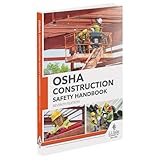
- 2024 OSHA Construction Safety Book is the seventh edition with the new OSHA HazCom final rule on 5/20/24. While the rule takes effect 7/19/24, the compliance dates don’t begin until 1/19/26 per 29 CFR 1910.1200(j).
- Construction Site Book offers quick access to essential OSHA regulations, jobsite hazards, and practical safety tips. It also helps employees identify hazards and prevent injuries and illnesses.
- Features easy-to-read format, full-color images, chapter quizzes with answer key, and comes in a compact size making it a convenient reference for employees.
- Critical topics include Confined Space Entry; Cranes & Derricks; Electrical Safety; Emergency Response; Ergonomics & Back Safety; Excavations; Fall Protection; First Aid & Bloodborne Pathogens; HazCom; Health & Wellness; Jobsite Exposures; Lockout/Tagout; Ladders & Stairways; Materials Handling/Storage; Motor Vehicles; PPE; Scaffolds; Site Safety & Security; Slips, Trips & Falls; Tool Safety; Welding, Cutting & Brazing; and Work Zone Safety.
- Specifications: 5 1/4” x 7 1/4", English, Soft bound. 7th Edition. Copyright 2024.
By contrast, several broker reports describe more competition for projects with lower catastrophe exposure. Amwins’ H1 2026 builders-risk update, published August 10, 2026, reports abundant capacity relative to project activity and strong competition in residential and commercial business. It says rate reductions of 15% to 30% are common for residential and habitational builders-risk placements, depending on project characteristics, geography and catastrophe exposure. That is Amwins’ market observation for those placements—not a reduction that applies to every project or to every construction-insurance line. Read Amwins’ H1 2026 builders-risk update.
CRC Group’s March 26, 2026 US property overview similarly describes broad softening and competition for non-catastrophe builders-risk projects, alongside selective capacity for catastrophe-exposed wood-frame projects. CRC Group’s US property market update reflects US conditions and should not be treated as a global picture.
Builders risk is not the whole construction-insurance market
Builders risk, general liability, excess liability, professional indemnity and workers’ compensation cover different exposures and can have different market conditions. A report about builders-risk capacity does not establish capacity for a liability or professional-indemnity placement.
For North American project-specific builders risk, WTW’s 2026 rate predictions, published in 2025, forecast rate changes of 0% to +5% for exposures it classifies as non-high-hazard natural-catastrophe risks, and +8% to +20% for high-hazard natural-catastrophe exposures. These are forecast ranges, not measured universal changes or individual quotes. They describe rates, not the amount of limit available. WTW’s 2026 North American construction rate predictions.
Do these 3 things before closing this tab:
1Repair Windows errors before they cause bigger problems2Scan for outdated or missing drivers - takes under a minute3Clear out junk files and repair common Windows errorsWTW describes builders risk as gradually stabilizing after several difficult years, with increased capacity and favorable treaty renewals contributing to a more stable environment and flatter rates. It also notes that quota-share arrangements remain common for larger and more complex risks, while high-hazard catastrophe capacity remains constrained. WTW’s 2026 builders-risk market discussion.
Conditions also vary by geography. Gallagher Specialty’s August 3, 2026 UK update describes softer construction-liability conditions and sustained capacity for construction professional indemnity, but also a disciplined approach and modest rather than indiscriminate reductions in some liability placements. Those observations are specific to the UK and should not be generalized to other markets. Gallagher Specialty’s UK construction market update. Marsh’s Q1 2026 update is organized around regional and subregional markets, underscoring the need to assess capacity locally; its overview does not establish comparable capacity levels for every region. Marsh’s Q1 2026 global insurance market update.
What to compare when reviewing capacity or quotes
Two programs with the same headline limit can provide materially different protection. Compare the insurance line, peril coverage and wording alongside price.
- Project and policy phase: Confirm whether the placement covers the construction period, the operational property after handover, liability, professional services or another exposure.
- Location and perils: Identify relevant hazards such as named windstorm, wildfire, flood or severe convective storm, and check how the policy treats each one.
- Limit structure: For a single insurer, quota-share or layered program, check each insurer’s share, each layer’s attachment point, aggregate limits and exclusions.
- Deductibles and sublimits: Review catastrophe sublimits and percentage-based deductibles as well as the headline policy limit; establish what the insured could have to pay after a loss.
- Policy wording: Review project-specific terms carefully. WTW says insurers are reassessing LEG3 coverage and policy language, with appetite and wording still unsettled; do not assume a term is available or interpreted identically by every insurer.
- Insurer execution: Consider claims performance, underwriting discipline and the working relationship with carriers, not price alone. Amwins discusses these considerations in its builders-risk claims and underwriting overview.
- Project information and controls: Provide accurate details on the project, contracts, schedule and construction methods. Document relevant mitigation, including fire and water controls, which WTW identifies as important in builders-risk placements.
How to improve the chance of a workable placement
- Define the requirement: State the insurance line, required limits, project dates, location and key exposures. Separate must-have coverage from terms that may be negotiable.
- Prepare consistent project information: Give insurers current details about construction methods, schedule, contract structure and risk controls so they can assess the same risk on a sound basis.
- Ask how the limit is assembled: If the program is shared or layered, request the attachment points, insurer shares, aggregates and exclusions for each part rather than relying only on the total limit.
- Test the protection against likely losses: Review catastrophe deductibles, sublimits and wording for the project’s important exposures. A lower price is not useful if a critical peril is restricted beyond what the project can accept.
- Check local conditions with a construction-insurance broker: Capacity and policy terms depend on jurisdiction and project details. A broker familiar with the relevant market can help structure and seek placement, but cannot guarantee a limit, price or wording.
What current market reports can—and cannot—tell you
Broker reports indicate a generally available but uneven market; they are not a regulator-published census of global construction-insurance capacity. Published forecasts and observations have defined scopes, and they cannot establish whether a named project will secure a particular insurer, limit, price or wording. Treat market commentary as a starting point for a project-specific assessment, not as a placement commitment.
Free tools Windows power users keep installed
One-click scans. No signup required.
Quick Recap
Best Value

- Function:This car driver's license holder effectively protects documents from wear and tear. This organizer features multiple transparent compartments, allowing documents to be clearly visible and securely stored inside. This enables quick access when needed or viewing without taking out these items
- Widely Used:The car wallet case size is 12.5 x 24.5 cm, which fits for most car models. Its interior is divided into 2 large compartments for storing coins, insurance policies etc., as well as 3 small compartments for storing driver licences, ID cards, and other documents, meeting your various needs
- Convenient to Use:This car glove box compartment organizer adopts a magnetic closure design, which opens and closes quickly, as well as ensures that the car document organizer is tightly closed. Even in case of jolts or emergency braking, there is no need to worry about the files falling out
- Material:The car registration holder is made of leather, which is sturdy, corrosion-resistant, not easy to deform and break. And our car document holder not only feels comfortable to the touch but also has excellent waterproof properties, maintaining its good condition even with long-term use
- Package Content:You will receive a car insurance holder. The surface features a 3D embossed design showcasing elegant car patterns, both beauty and practicality. And the car card holder is small in size and can be stored in the armrest box or car door, allowing you to use it conveniently at any time