If weeds and bare soil cover roughly 30–50% of the lawn, treat the problem as a lawn renovation—not a fertilizer shortage. First identify why the turf failed, then correct the soil or site problem, remove the unwanted vegetation, establish compatible grass in the right season, and protect the new stand while it fills in.
For a lawn damaged by construction, traffic, shade, poor grading, compaction, or drainage, simply spreading seed over the surface usually produces another short-lived result. Use the eight-step plan below to decide whether the area needs spot repair, overseeding, renovation, complete replacement, or conversion to a different landscape.
As an Amazon Associate I earn from qualifying purchases.
Choose the right repair before you buy anything
Start with the proportion of desirable turf that remains:
Windows Errors? Fix Them Before They Spread
Repair common Windows errors and clear accumulated junk for a smoother, more stable PC - no reinstall needed.Free scan · no reinstallCrashes, No Sound, or Screen Glitches?
Random freezes, missing sound and display glitches usually trace back to one bad driver. Find and replace yours safely.Free scan · under a minute| What you see | Best starting option | Why |
|---|---|---|
| A few isolated bare spots surrounded by healthy grass | Spot repair | The existing turf can usually fill or hide small repairs once the cause is corrected. |
| Desirable grass is still dominant but thin | Overseeding | Adding compatible seed can increase density without removing the whole lawn. |
| About 30–50% of the lawn is dead, sparse, or covered by weeds | Renovation | The remaining turf is unlikely to close the gaps on its own after weed removal. |
| Severe grading, drainage, shade, soil, or perennial-grass-weed problems | Replacement, professional renovation, or landscape conversion | Repeated seeding will not solve a site that cannot support the selected turf. |
The University of Minnesota Extension uses roughly 30–50% dead or sparse turf, or a similar proportion of weeds that the remaining grass cannot outcompete, as a useful point at which to consider full renovation. Pennsylvania State University’s guidance adds an important qualification: renovation is most suitable when a substantial amount of desirable turf remains, perennial grass weeds are not a serious problem, and thatch is not excessive.
#1 Best Overall

- WHEN TO APPLY : This lawn seed mix of Kentucky bluegrass seed, perennial ryegrass, and fine fescue grass seed germinates best when daytime temperatures are between 60°F and 80°F with no danger of frost
- PATCH & REPAIR: Scotts EZ Seed Patch & Repair Sun and Shade is a revolutionary grass seeding product that makes grass patch repair for lawns easy; it's designed to fill in bare spots and repair lawn damage
- COVERAGE: One 3.75 lb. jug of EZ Seed Patch & Repair lawn grass seed mix covers up to 85 sq. ft. in 3 easy steps: prep the area, evenly apply the seed and water until no more water is being absorbed
- WHERE TO USE: This sun and shade lawn repair grass seed mix is guaranteed to grow anywhere with proper care including in full sun, dense shade, high traffic areas and on slopes
- SUN AND SHADE GRASS: Contains a combination of high performance grass seed for lawns, mulch that expands to surround the seed, controlled release fertilizer, tackifier to help keep seed from washing away and a protectant to help keep seedlings safe
Those are decision aids, not rigid laws. If the lawn is fundamentally wrong for the site—for example, a grass that cannot tolerate the available shade—or if construction has left severe grade or drainage problems, replacement or converting the worst areas to beds may be more economical than reseeding repeatedly.
Step 1: Identify the grass, weeds, and failure pattern
Do not choose seed or herbicide until you know what you are trying to preserve and what is taking its place. Determine whether the lawn is primarily cool-season or warm-season, identify the major weeds, and map where the turf is failing.
The pattern often points to the cause:
- Thin everywhere: Consider unsuitable grass, drought, low fertility, repeated scalping, disease, insects, or general soil problems.
- Only under dense trees: The site may not receive enough light for the selected turf. More seed will not overcome permanent, heavy shade.
- A traffic lane or construction route: Compaction is a leading suspect, especially where equipment or repeated foot traffic has compressed the soil.
- Low spots or areas that stay wet: Investigate drainage and grading before planting.
- Recently disturbed areas: Look for compacted soil and uneven establishment rather than assuming the seed was defective.
- Pet-affected areas: Repeated urine, digging, and traffic can create a cycle of bare soil and weed invasion.
Warm-season grasses such as bermudagrass and zoysiagrass can spread through stolons and rhizomes. In those lawns, a bare area may sometimes be repaired by encouraging existing runners or installing plugs rather than sowing seed. Turf species, weed identity, and application timing determine which weed-control practices are safe; an herbicide that is acceptable on one turf type can injure another.
Step 2: Decide between spot repair, overseeding, renovation, and replacement
Use spot repair only when the surrounding lawn is healthy enough to compete with weeds and close the repaired area. Use overseeding when desirable turf remains the dominant plant and the main issue is low density.
Choose renovation when weeds or dead grass occupy a large share of the lawn, the remaining turf cannot fill bare areas after weed removal, or the soil needs to be reshaped or corrected. Renovation normally means controlling or removing the existing vegetation, preparing the surface, and establishing new turf over much of the area. It does not necessarily mean removing every inch of soil.
Consider complete replacement or a different landscape treatment when:
Rank #2
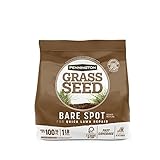
- Establishes quickly
- Only 3 easy steps to see results with lawn seed
- Turf grass that grows anywhere in the USA
- See results in 5 to 14 days with spring and fall grass seed
- This bag of fast growing grass seeds covers up to 100 sq ft
- the grade causes persistent runoff, ponding, or erosion;
- the soil is severely compacted or otherwise unsuitable and needs substantial reconstruction;
- perennial grass weeds are widespread;
- the lawn is too shaded for the chosen grass;
- the area receives more traffic than turf can tolerate; or
- the property would work better with planting beds, ground cover, or another lower-input surface.
Step 3: Test the soil and correct the site
Before applying lime, fertilizer, or large quantities of amendments, order a lawn soil test. A proper test can report pH, texture, organic matter, phosphorus, potassium, and other nutrient information needed for a recommendation. Local university Extension programs may provide instructions or laboratory referrals, and a residential soil-testing laboratory can be useful when local service is available.
Follow the test recommendation instead of automatically purchasing high-phosphorus starter fertilizer. Extra phosphorus is not a universal establishment aid and can contribute to water-quality problems. Likewise, lime is useful only when the soil test indicates a need.
Correct physical problems before planting:
- Fix grade and drainage: Fill or reshape low areas where appropriate, and determine why water is collecting before covering the symptom with seed.
- Relieve compaction: When compacted soil is limiting root growth, use a hollow-tine core aerator to remove plugs. Multiple passes in different directions are generally more effective than merely poking holes with solid tines.
- Wait for suitable soil moisture: Do not aerate saturated soil. Working wet soil can smear or compact it further.
- Evaluate thatch: Thatch is the layer of living and dead material between the green leaves and the soil. Measure or inspect it before dethatching automatically. Excessive thatch may interfere with water movement and rooting, but aeration or dethatching is not a universal cure for shade, poor drainage, or incompatible turf.
For a construction-damaged lawn, this step is often more important than the seed choice. If the soil remains compacted or water cannot move through the site, new grass may emerge and then fail again.
Step 4: Remove or control the existing weeds and unwanted turf
The control method depends on how much desirable grass is worth preserving:
The Tool Desk
Outbyte PC Repair FREEClear out junk files and repair common Windows errorsFree Scan →Outbyte Driver Updater FREEFix the driver behind crashes, sound loss and screen glitchesFind Drivers →- Small infestation: Hand-pull weeds when practical or spot-treat them with a product specifically labeled for the turf and weed involved.
- Heavy infestation during renovation: Mechanically remove the unwanted vegetation, or use a nonselective herbicide only in an area where a complete kill is intended.
- Desirable turf still worth saving: A selective herbicide may be appropriate, but only if the current label permits use on that exact grass, against that weed, at the planned rate and conditions.
The pesticide label is legally enforceable, according to the U.S. Environmental Protection Agency. Follow the current label for application rate, weather restrictions, protective equipment, re-entry instructions, and the interval before reseeding. Do not assume that a familiar active ingredient or brand is safe for every lawn.
Be especially careful with pre-emergent herbicides
Pre-emergent herbicides prevent seed germination. That can include the new turf seed you are trying to establish. If you plan to seed, skip or retime a pre-emergent unless the exact product label clearly allows the intended use and gives a compatible reseeding interval.
Rank #3
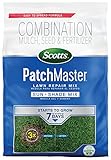
- LAWN BARE SPOT REPAIR: Scotts PatchMaster Lawn Repair Mix Sun + Shade Mix is a combination mulch, seed, and lawn fertilizer product specifically designed to provide all-in-one bare spot repair and grass patch repair for lawns
- MULCH: This sun and shade grass seed mix contains 100% recycled mulch that absorbs 3 times its weight in water to help keep the seed moist and in place during establishment
- READY-TO-GROW: Scotts PatchMaster Lawn Repair Mix Sun + Shade Mix has lawn seed that starts to grow in as few as 7 days and feeds for up to 6 weeks
- GRASS FERTILIZER FOR LAWNS: Includes controlled release nitrogen that seedlings need for fast growing and thick results
- GRASS SEED MIX: Premium lawn grass seed mixture of Kentucky Bluegrass seed, perennial ryegrass, and fine fescue grass seed specially selected to blend with your existing lawn
Reseeding intervals can vary by product, application rate, region, and turf species. A generic internet rule is not a substitute for the current label. If a pre-emergent has already been applied, check its label before buying seed; the waiting period may make immediate renovation impractical.
During establishment, nonchemical weed removal is often the least disruptive approach. For post-emergence herbicides, wait until the new turf meets the label’s establishment requirements. Some labels delay treatment until seedlings have been mowed multiple times or have developed a vigorous stand.
Recommended Free Tools
Step 5: Prepare a clean, level, firm seedbed
Mow low or scalp the existing turf only as appropriate for the grass, season, and renovation method. Remove excessive debris and expose enough soil for the new planting to contact it. Pennsylvania State University Extension identifies tools such as a power rake, verticutter, or core aerifier as possible preparation equipment.
The goal is not deeply pulverized soil. A good seedbed is:
- reasonably level, without depressions that will collect water;
- free of thick mats, loose dead vegetation, and large debris;
- lightly loosened at the surface where seed needs to enter; and
- firm enough that seed will not disappear into soft, fluffy soil.
After grading or raking, walk the surface or use an appropriate roller to settle it. Avoid creating a crust or compacting the soil so heavily that roots cannot penetrate. If compost or topsoil is used, apply it only when the site or soil recommendation supports it and keep the final surface compatible with the surrounding grade.
Step 6: Choose compatible grass, seed, sod, plugs, or runners
Select turf according to climate, elevation, sunlight, drainage, traffic, irrigation, and the maintenance level you can sustain. A regional recommendation is more reliable than a one-size-fits-all bag of seed. Compare region-specific lawn seed or a local turf supplier’s recommendations with guidance from a university Extension service before purchasing.
Do these 3 things before closing this tab:
1Clear out junk files and repair common Windows errors2Scan for outdated or missing drivers - takes under a minute3Repair Windows errors before they cause bigger problems| Lawn type | Typical establishment window | Practical options |
|---|---|---|
| Cool-season turf | Late summer to early fall is generally strongest. In Minnesota, the cited preferred renovation window is roughly mid-August to mid-September; early spring is usually second best. | Seed is commonly used, provided the species and blend match the site. |
| Warm-season turf | Active warm-weather growth, generally late spring through summer. Georgia guidance lists May through August as favorable for warm-season installation, but local conditions control. | Seed, sod, plugs, or runners. Bermudagrass and zoysiagrass may be better established vegetatively, depending on the cultivar. |
Do not treat those dates as universal. Local climate, elevation, turf species, soil temperature, and the product label determine the final window. Small spring bare-spot repairs can work after the soil warms, but spring seedings generally face more weed competition. Save a large cool-season renovation for late summer or early fall when possible.
Mixing warm-season and cool-season grasses without a deliberate plan can create a mismatched lawn with different growth cycles and maintenance requirements. Choose a compatible blend rather than combining whatever seed is available.
Rank #4
- The information below is per-pack only
- Fill bare spots and thin areas of your lawn with Pennington grass seed
- Establishes quickly
- Only 3 easy steps to see results with lawn seed
- Pennington Bare Spot Repair grass seed for grass patch repair for lawns is guaranteed to grow
Step 7: Seed correctly and manage moisture
If the prepared soil is dry, water it deeply before planting. Then spread the seed at the rate specified for the selected species and product. For more even coverage, apply half the calculated amount in one direction and the other half at a right angle to it.
- Distribute seed evenly: Use a calibrated broadcast or drop spreader when the area is more than a few small patches.
- Improve contact: Lightly rake or otherwise cover the seed only enough to settle it into the surface. University of Minnesota Extension recommends that only a small portion of seed remain visible after light raking.
- Firm the surface: Use a roller or cultipacker when appropriate so seed contacts the soil rather than sitting in loose debris.
- Start irrigation immediately: Keep the surface consistently moist with light, frequent watering until germination. Several light watering cycles per day may be needed for a seeded renovation, depending on weather, soil, slope, and irrigation output.
- Prevent runoff: Stop or shorten a cycle if water begins to puddle or carry seed downhill. Sloped areas may need shorter cycles, temporary erosion control, or a different establishment method.
- Reduce frequency gradually: As roots develop, allow the surface to dry slightly between cycles and transition toward deeper, less frequent irrigation suited to the grass and weather.
Do not bury seed deeply. Seed that disappears beneath a thick layer of soil or thatch may not emerge. If you use a seed spreader, lawn repair rake, or lawn sprinkler, choose equipment that matches the size and slope of the area; for a large renovation, renting an aerator or hiring the work may be more practical than buying every tool.
Do not apply a pre-emergent simply because weeds are visible. It may block the desired seed. If weeds appear among young seedlings, check the post-emergence product label for the required mowing history or establishment stage before treating.
Step 8: Maintain density after the grass emerges
New turf becomes a long-term weed-control tool only if it develops a dense, vigorous stand. Maintain it with the following practices:
- Mow high enough for the species: Keep the blade sharp and remove no more than one-third of the leaf tissue at a time. Mowing too short stresses turf and exposes soil and weed seeds to sunlight.
- Time the first cut carefully: Mow when the new grass is roughly one-third taller than the desired cutting height and can tolerate the mower’s weight without being flattened. For example, a lawn intended to be maintained at 3 inches may be ready around 4 inches if the soil is firm and the seedlings are rooted well.
- Fertilize from evidence: Use the soil-test recommendation, turf species, season, and product label. More nitrogen will not repair bad grading, chronic shade, compaction, or poor irrigation, and excessive fertilizer can produce weak growth and nutrient runoff.
- Water appropriately: Follow the grass’s needs, rainfall, soil type, and local water restrictions. Do not keep established turf constantly saturated.
- Limit traffic: Keep people, pets, vehicles, and equipment off new areas until the roots are anchored and the soil can tolerate use.
- Manage shade: Prune or thin vegetation only where appropriate, and accept that some heavily shaded areas may need a non-turf landscape treatment.
- Monitor pests and disease: Investigate recurring damage rather than applying pesticides automatically.
As the University of Minnesota Extension notes, vigorous, well-adapted turf helps minimize serious weed problems. Density comes from matching the grass to the site and maintaining it properly—not from repeatedly increasing fertilizer.
Independent reader supportYour contribution helps us test, update, and keep practical guides available for everyone.Timing guide: when to do the work
| Task | Best general timing | Important qualification |
|---|---|---|
| Major cool-season renovation or overseeding | Late summer to early fall | In Minnesota, mid-August to mid-September is a preferred window; other regions differ. |
| Small cool-season spring repair | After soil warms | It can work, but weed competition is usually greater than in the preferred fall window. |
| Warm-season establishment | Active growth in late spring and summer | Georgia guidance lists May through August; species and local conditions determine the exact schedule. |
| Herbicide application before reseeding | Only according to the current product label | Check turf tolerance, weather, rate, and the label’s reseeding interval. |
The correct date is the one that gives the selected turf enough suitable growing weather to germinate, root, and develop density before its next major stress period. Do not let a generic calendar recommendation override local conditions or a product label.
Quick wins for a faster PC:
Repair Windows errors before they cause bigger problemsFix Now →Scan for outdated or missing drivers - takes under a minuteDriver Scan →Common failure points and what to do next
| Problem | Likely issue | Correction |
|---|---|---|
| Seed collects in piles after watering | Runoff, excessive water volume, or an overly loose surface | Use shorter irrigation cycles, improve seed-to-soil contact, and correct slope or drainage where necessary. |
| Nothing emerges | Wrong season, buried seed, dried surface, poor contact, old seed, or a herbicide reseeding restriction | Check soil moisture, planting depth, label intervals, seed compatibility, and the actual planting date before reseeding. |
| Grass grows under the open sky but fails beneath trees | Insufficient light or root competition | Improve site conditions where practical or convert the most heavily shaded area instead of adding more seed. |
| New grass emerges, then weeds dominate | Thin stand, unsuitable timing, insufficient moisture, or weed seeds exposed during preparation | Improve establishment and mowing practices; use herbicides only after the new turf meets the product label’s requirements. |
| The lawn remains thin after aeration | The primary problem may be shade, drainage, fertility, grass selection, or disease rather than compaction | Return to diagnosis and soil/site correction instead of repeating aeration automatically. |
| Bare areas return in the same traffic lane | Repeated compaction or use beyond the turf’s tolerance | Reduce traffic, improve the base soil, choose more suitable turf, or use a hardscape or other durable surface. |
Renovation materials checklist
You may need only some of these items, not all of them:
Best Value

- Patch and Repair: Scotts EZ Seed Patch & Repair Sun and Shade is a revolutionary grass seeding product designed to fill in bare spots and repair lawn damage
- Sun and Shade Grass: Contains a combination of high performance grass seed, mulch that expands to surround the seed, controlled release fertilizer, tackifier to help keep seed from washing away and a protectant to help keep seedlings safe
- Usage: This sun and shade grass seed mix is guaranteed to grow anywhere with proper care including in full sun, dense shade, high traffic areas and on slopes
- Application: Grass seed germinates best when daytime temperatures are between 60°F and 80°F with no danger of frost
- Coverage: One 10 lb. bag of EZ Seed Patch & Repair covers up to 225 sq. ft. in 3 easy steps by preparing the area, evenly applying the seed and watering until no more water is being absorbed
- species- and region-compatible grass seed, or suitable sod, plugs, or runners;
- a soil-sampling kit or access to a soil-testing laboratory;
- a core aerator if compaction is confirmed;
- a power rake, verticutter, or lawn repair rake for seedbed preparation;
- a broadcast or drop seed spreader;
- a roller or cultipacker for firm seed-to-soil contact;
- an oscillating sprinkler or other irrigation method that applies water gently and evenly;
- soil-directed lime, fertilizer, or compost only when the test or site plan calls for it; and
- label-compliant weed-control products only when their turf, weed, timing, and reseeding restrictions fit the project.
For large areas, compare the cost of renting equipment or arranging core aeration, grading, irrigation, sod installation, or lawn renovation services with purchasing tools for a single project.
Frequently Asked Questions
Can fertilizer fix a lawn that is mostly weeds and bare soil?
Usually not. Fertilizer can correct a documented nutrient deficiency, but it will not solve compaction, poor drainage, excessive shade, incompatible grass, construction damage, or a severe weed infestation. Diagnose the site and renovate when a substantial share of the lawn is dead, sparse, or weedy.
Should I use pre-emergent herbicide before reseeding?
Not automatically. Pre-emergent herbicides can prevent desired grass seed from germinating. Check the current label for the exact product, rate, turf species, region, and reseeding interval before applying anything.
Is spring a good time to repair bare patches?
Small repairs can be attempted after the soil warms, but spring seedings generally face more weed competition. Large cool-season renovations are commonly more successful in late summer or early fall, while warm-season turf is normally established during active warm-weather growth.
Do I need to remove the entire lawn before starting over?
Not always. Renovation is reasonable when enough desirable turf remains, perennial grass weeds are not widespread, and thatch is not excessive. Severe grading, drainage, soil, shade, or perennial-weed problems may justify complete replacement or converting the area to another landscape treatment.
Should I seed bermudagrass or zoysiagrass bare spots?
It depends on the cultivar and region. Bermudagrass and zoysiagrass can spread through stolons and rhizomes, and some improved cultivars are commonly established with sod, plugs, or runners rather than generic seed. Match the repair method to the existing turf.
The Bottom Line
Bottom line: A lawn that is mostly weeds and bare patches needs a diagnosis and establishment plan. Correct compaction, grading, drainage, shade, and nutrient problems first; control existing vegetation according to the label; choose turf suited to the region and season; then protect the new stand with consistent moisture, proper mowing, and restrained fertilization.
What’s actually slowing this PC down?
Pick the symptom - the matching free tool is one click away.
Quick Recap
Product prices and availability are accurate as of the date/time indicated and are subject to change. Any price and availability information displayed on Amazon at the time of purchase will apply.




