The most reliable way to keep skunks out of a yard or garden is not a scent, ultrasonic gadget, or guaranteed “repellent.” It is a combination of removing food, reducing places to shelter, and physically blocking access. Skunks may temporarily avoid a disturbed area, but exclusion and attractant control provide the more dependable long-term solution.
The seven methods below are written for homeowners in the United States. Wildlife laws, pesticide registrations, trapping rules, and relocation requirements vary by state and locality. If a skunk appears sick, unusually aggressive, trapped, or has contacted a person or pet, do not approach it—contact animal control, public health officials, or a licensed wildlife-control professional.
As an Amazon Associate I earn from qualifying purchases.
1. Remove the food that is attracting skunks
Skunks are opportunistic nighttime feeders. A yard can become attractive because of pet food, fallen fruit, food waste, insects, rodents, or other animals using the property. Start by removing the easiest food sources before trying any deterrent.
- Bring pet food and water bowls indoors before dusk.
- Pick up fallen fruit, vegetables, and birdseed that has accumulated on the ground.
- Clean spilled food around poultry coops, garages, sheds, and feeding stations.
- Keep livestock and poultry feed in sealed containers.
- Remove brush, scrap materials, and debris that shelter rodents or other prey.
- Clean areas where rodents, grubs, or other pests are active.
This method may not make a skunk leave immediately, but it removes the reason to keep returning. It is also safer than placing chemicals or irritants around a garden.
#1 Best Overall

- Stop skunk damage under your home and around other areas of your backyard by using this granular formula.
- The smell and taste of the granules provides dual action protection to convince skunks that your yard is dangerous and quickly trains them to avoid the treated areas.
- Convenient 6-pound resealable bag contains enough product to cover up to 3,500 square feet for all season use. Can be applied as a protective border or evenly spread over the specific areas you'd like to protect.
- Shields your landscaping, gardens, patios and porches by discouraging skunks from your property.
- Easy to apply, no spraying or mixing needed. Each application is long lasting and should last around 30 days during normal rainfall and irrigation.
2. Make garbage, compost, and outdoor food inaccessible
Garbage and compost deserve their own check because they can provide a predictable nightly food source even after general yard cleanup. Use containers with tight-fitting or locking lids, and keep them in a shed, garage, or enclosed bin area when practical.
A locking garbage-can lid or animal-proof trash can can make access more difficult, but no container should be assumed to be universally skunk-proof. Check that the lid cannot be pried open, tipped over, or bypassed from underneath. Put refuse out as close to collection time as local rules allow, rather than leaving it outdoors for several nights.
For compost, use an enclosed system with a secure lid instead of an open pile. Do not add meat, bones, dairy products, or greasy cooked food where local composting guidance does not permit them. Clean spilled material immediately and keep pet-feeding areas indoors overnight.
Do these 3 things before closing this tab:
1Fix the driver behind crashes, sound loss and screen glitches2Clear out junk files and repair common Windows errors3Scan for outdated or missing drivers - takes under a minute3. Protect gardens, coops, and vulnerable areas with buried mesh
Skunks are strong diggers. A fence that stops at soil level may not protect a garden, chicken run, crawl-space vent, or other vulnerable area. Use sturdy welded wire or hardware cloth, secure it firmly to the existing structure, and create an underground barrier.
For exclusion beneath structures, wildlife-damage guidance commonly recommends approximately 1/2-inch mesh buried about 2 inches and extended outward at least 12 inches to form an apron. The outward extension makes it harder for an animal to dig directly beside the barrier. Sandy soil, loose fill, or persistent digging may require a deeper installation and a wider or better-anchored apron.
For a construction-quality repair, fasten the mesh to sound framing or masonry rather than relying on loose soil to hold it in place. Overlap seams, secure the lower edge with landscape staples or appropriate fasteners, and inspect the perimeter after heavy rain or frost. Avoid leaving sharp cut ends exposed where children, pets, or wildlife could be injured.
Rank #2

- STRONG REPELLER - This unique blend of ingredients causes mild irritation to animal's nasal passages. When an animal touches, tastes, or smells Repels-All Animal Repellent, it triggers the natural instinct to escape/avoid and the pest leaves.
- ANIMALS AFFECTED - Our granules repel species of squirrel, deer, rabbit, chipmunk, mouse, skunk, rat, beaver, raccoon, porcupine, bird, groundhog and more rodent species.
- DEFEND YOUR GARDEN AND HOME - Apply around homes, gardens, garbage cans, barns, swimming pools, sheds, woodpiles, decks, patios, and campsites to prevent grazing, chewing, gnawing, nibbling and browsing damage to plants and property.
- BIODEGRADABLE - Repels-All granules are biodegradable and will not harm animals, lawns, gardens, flowerbeds, or other desirable plants when used as directed.
When shopping for materials, 1/2-inch galvanized hardware cloth is the relevant type of mesh for many small-animal exclusion projects. Choose a durable gauge and fastening method suitable for the location; the mesh itself is only as effective as the installation.
Quick wins for a faster PC:
Repair Windows errors before they cause bigger problemsFix Now →Fix the driver behind crashes, sound loss and screen glitchesFind Drivers →Clear out junk files and repair common Windows errorsFree Scan →4. Close openings beneath decks, porches, sheds, and foundations—but only after confirming the den is empty
A skunk under a deck or shed is more than a nuisance: it may spray when cornered, and permanently sealing the opening while the animal is inside can trap it or separate a mother from young. Do not rush to cover an active opening.
First, inspect for signs of use such as tracks, fresh soil, nesting material, odor, or an opening that appears recently cleared. A wildlife professional can help determine whether the space is occupied. Once departure is confirmed, close ground-level openings with properly secured wire mesh, sheet metal, masonry, or concrete. Extend the barrier below grade or add an outward apron so the skunk cannot simply dig beneath it.
If the animal needs a way to leave, a one-way wildlife exclusion door can allow it to exit without allowing re-entry. This approach requires careful placement and monitoring. The opening should be permanently secured only after several days of suitable weather and clear evidence that the skunk is gone. Do not use a one-way door if young animals may be inside unless a qualified professional has assessed the situation.
5. Reduce lawn digging by addressing grubs and other prey
Small cone-shaped holes or patches of turned turf often mean skunks are searching for insects, grubs, or other soil-dwelling food. Treating the lawn without identifying the cause can waste money and expose beneficial organisms, pets, and other wildlife to unnecessary pesticides.
Recommended Free Tools
Inspect the damaged area and determine whether grubs or another pest are actually present. If treatment is justified, use only a product legally registered for the intended site and pest in your jurisdiction, and follow the current label exactly. The label controls where, how, and how often a pesticide may be applied. Keep children and pets away as directed.
Rank #3
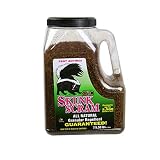
- Stop skunk damage under your home and around other areas of your backyard by using this granular formula.
- The smell and taste of the granules provides dual action protection to convince skunks that your yard is dangerous and quickly trains them to avoid the treated areas.
- Convenient 5.5 lb shaker jug contains enough product to for all season use. Can be applied as a protective border or evenly spread over the specific areas you'd like to protect.
- Shields your landscaping, gardens, patios and porches by discouraging skunks from your property.
- Easy to apply, no spraying or mixing needed. Each application is long lasting and should last around 30 days during normal rainfall and irrigation.
Insect control may reduce digging when grubs are the food source, but it is not a universal skunk repellent. Skunks can also dig for other insects, worms, or small prey, and lawn treatment can affect species other than the target pest. If the damage is extensive or the cause is unclear, consult a local lawn or wildlife professional before applying anything.
6. Consider a labeled animal-repellent product only after checking the current label
Some animal-repellent product labels have included skunks among their target animals and described odor or taste irritation in treated areas. That does not mean every product marketed as a wildlife repellent is registered for skunks, every formulation works the same way, or a historical label is a current nationwide recommendation.
If you decide to try a commercial product:
- Read the complete current EPA and state label before buying or applying it.
- Confirm that skunks are listed as a target animal and that your yard, garden, structure, or crop is an approved application site.
- Follow the labeled rate, application method, reapplication interval, storage instructions, and restrictions around children, pets, edible plants, and water.
- Do not apply more product than the label allows or combine it with household chemicals.
- Stop relying on the product if the skunk continues returning; move to exclusion and attractant removal.
Product registrations and labels can change by formulation, state, and date. Treat the label—not an old product description, online anecdote, or generic “natural” claim—as the controlling source.
Outdated Drivers Are Slowing You Down
One free scan finds every outdated or missing driver and matches the right update for your exact hardware.Free scan · exact hardware matchWindows Errors? Fix Them Before They Spread
Repair common Windows errors and clear accumulated junk for a smoother, more stable PC - no reinstall needed.Free scan · no reinstall7. Use temporary, non-contact disturbance only as a supplementary measure
Brief human presence, lights, or a short spray of water may sometimes encourage a skunk to move away from an exposed location. These measures are temporary and should never require approaching the animal. Current wildlife-damage guidance does not support frightening devices as a reliable general method for skunk control.
A motion-activated sprinkler may be useful as a supplementary, non-contact tool while you repair a barrier or remove food. Position it to protect a specific approach route, and remember that animals can become accustomed to repeated disturbances. It should not be aimed at roads, neighboring property, electrical equipment, or areas where people may slip.
Do not use lights, water, or noise to corner, chase, or provoke a skunk. If it is under a structure, appears ill, or cannot leave safely, stop the disturbance and call for professional help.
Rank #4
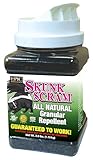
- REPELS BY NATURAL TASTE AND SMELL - This repellent contains a proprietary blend of natural biodegradable ingredients designed to repel skunks in 2 ways. It makes food in the area taste bad disrupting the digestive system. The granual also makes surrounding nests and environments become repellent by smell.
- DURABLE LONG LASTING APPLICATION - Our granule repellent is long lasting and won’t wash out in the rain. Effective during all seasons.
- EASY TO APPLY - Starting from the center portion of the damage, sprinkle by lightly shaking the repellent in a circular pattern away from the damage. You will notice in 3‐4 days no additional damage and may notice more activity outside the perimeter of the applied repellent. Repeat application towards the direction in which you want the skunks to exit the property.
- CHILD, PET AND ANIMAL SAFE - EPIC Repellents use all natural ingredients that do not harm animals or humans when used as instructed. The product is safe to use around pets and children. The products’ granules also completely disintegrate in the environment and are environmentally safe, making the product an eco-friendly option compared to other repellents or device that use plastics or non-natural ingredients.
- THE EPIC GRANUAL DIFFERENCE - There are alot of repellent products and devices out there. EPIC granual repellents offer unmatched application area precision compared to devices, pouches and liquids. Our founders role as a zoo keeper taught us that no two animals are the same. We have engineered our formulas to be laser targeted toward a specific pest by study of specific animal habit and preference.
What not to use for skunks
- Mothballs: Mothballs are pesticides, not general-purpose outdoor animal repellents. Using them in a yard, garden, crawl space, or along a fence may be an off-label or unlawful use when the site is not listed. They can also expose people, pets, and wildlife to toxic vapors. Do not scatter them outdoors.
- Ammonia, bleach, kerosene, gasoline, and similar chemicals: These improvised methods create toxicity, fire, respiratory, and environmental hazards. Never mix household chemicals or place them where wildlife, children, or pets can contact them.
- Ultrasonic and guaranteed scare devices: Claims of a permanent skunk solution are not supported by current wildlife-management guidance. These devices do not replace a physical barrier.
- Sealing an occupied den: Blocking an entrance without confirming that the skunk and any young have left can trap animals inside.
- Unplanned trapping or relocation: Trapping can result in spraying, bites, scratches, disease exposure, and legal problems. Transport and release rules vary by jurisdiction.
Skunk safety for people and pets
Keep children and pets away from skunks and give the animal a clear path to leave. Never handle a skunk, even if it appears dead or injured. Skunks are among the wildlife species associated with rabies, and unusual behavior—such as daytime activity by itself, staggering, paralysis, unexplained aggression, or failure to flee—requires extra caution.
The Tool Desk
Outbyte Driver Updater FREEFix the driver behind crashes, sound loss and screen glitchesFind Drivers →Outbyte PC Repair FREERepair Windows errors before they cause bigger problemsFix Now →If a person or pet is bitten or scratched, wash the wound immediately with soap and running water for 15 minutes. Then contact a healthcare professional or local public-health authority promptly for an exposure assessment. For a pet, contact a veterinarian as soon as possible. Do not wait to see whether the animal appears healthy.
Call animal control, public health officials, or a licensed wildlife-control professional when:
- a skunk is under an occupied deck, porch, shed, or foundation;
- the animal is trapped, injured, dead, or behaving abnormally;
- a person or pet has been bitten, scratched, sprayed at close range, or otherwise exposed;
- young may be present;
- the access point cannot be repaired without direct handling; or
- local law requires a permit or licensed operator for trapping or removal.
A professional cannot promise an odor-free or guaranteed result, but qualified help reduces the risk of sealing in an animal, violating wildlife rules, or attempting a dangerous capture.
Independent reader supportYour contribution helps us test, update, and keep practical guides available for everyone.A practical seasonal skunk-prevention checklist
Every evening
- Bring pet food indoors.
- Secure garbage, compost, poultry feed, and other food waste.
- Check that doors to sheds, garages, and outbuildings are closed.
Each week
- Remove fallen fruit and spilled birdseed.
- Look for new lawn digging, tracks, or disturbed soil.
- Inspect the perimeter of decks, porches, sheds, coops, and foundations.
After repairs or severe weather
- Check that mesh has not pulled loose or been undermined.
- Repair gaps, damaged gates, and openings around vents or utility penetrations.
- Recheck any suspected den before closing an access point.
For most properties, the best sequence is simple: remove food, identify why the skunk is visiting, repair the physical access route, and use temporary disturbance only while those lasting measures are being completed.
What’s actually slowing this PC down?
Pick the symptom - the matching free tool is one click away.
Frequently Asked Questions
What is the fastest way to get a skunk out of my yard?
Remove pet food and accessible garbage, give the skunk a clear path to leave, and avoid approaching or cornering it. Lights or a brief water spray may provide temporary non-contact disturbance, but physical exclusion is the dependable long-term fix.
Best Value

- REPELS COMMON YARD PESTS: Safer Brand Critter Ridder repels raccoons, skunks, dogs, cats, squirrels, groundhogs, and chipmunks
- NATURAL PEST CONTROL: Uses oil of black pepper, piperine, and capsaicin to keep critters away
- REPELS BY TASTE & SCENT: Dual-action formula repels animals by scent and taste
- 30 DAY PROTECTION: Long-lasting granules provide up to 30 days of protection from yard pests
- EASY TO USE: Apply Critter Ridder granules with lawn spreader or by hand
Will mothballs keep skunks away?
Mothballs should not be used as an outdoor skunk repellent. They are pesticides whose labels restrict where they may be used, and outdoor animal-repelling use may be unlawful when the site is not listed. They also pose toxic exposure risks.
How do I keep a skunk from digging under my fence?
Attach sturdy mesh to the fence and bury it or extend it outward along the ground to create an apron. A common exclusion design uses approximately 1/2-inch mesh buried about 2 inches and extending outward at least 12 inches, with deeper or wider protection where soil is loose or digging is persistent.
Can I seal a skunk out from under my deck?
Yes, but first confirm that the skunk and any young have left. A one-way exclusion door may allow an adult to exit, but the opening should be monitored and permanently secured only after several days of suitable weather and evidence that the den is empty.
Free tools Windows power users keep installed
One-click scans. No signup required.
When should I call a professional for a skunk?
Call animal control, public health officials, or a licensed wildlife-control professional if the skunk is trapped, injured, unusually aggressive or sick, under an occupied structure, associated with young, involved in contact with a person or pet, or inaccessible without direct handling.
The Bottom Line
For lasting results, treat “repelling” as a prevention and exclusion project: remove food, secure trash and compost, reduce insect and rodent incentives, bury sturdy mesh, and close empty den openings correctly. Avoid mothballs and improvised chemicals, and never trap, handle, or seal in a skunk without appropriate local guidance.
Quick Recap
Product prices and availability are accurate as of the date/time indicated and are subject to change. Any price and availability information displayed on Amazon at the time of purchase will apply.




