Windows Errors? Fix Them Before They Spread
Repair common Windows errors and clear accumulated junk for a smoother, more stable PC - no reinstall needed.Free scan · no reinstallCrashes, No Sound, or Screen Glitches?
Random freezes, missing sound and display glitches usually trace back to one bad driver. Find and replace yours safely.Free scan · under a minuteThe best patio is an outdoor room designed around how you actually live. These 68 ideas cover layouts, paving, shade, furniture, cooking, fire features, lighting, privacy, planting, drainage, accessibility, and climate-specific decisions—so you can choose an attractive concept without overlooking the construction details that make it work.
The best patio is not the one with the most features. It is the one that makes the activities you already enjoy—eating, relaxing, cooking, hosting, gardening, or watching the children—easy and comfortable outdoors.
As an Amazon Associate I earn from qualifying purchases.
Think of the patio as an outdoor room. Start with use, then plan zones, circulation, shade, weather protection, furniture, lighting, planting, drainage, and utilities. That sequence produces a patio that looks intentional and remains practical long after the photographs are taken.
The Tool Desk
Outbyte PC Repair FREEClear out junk files and repair common Windows errorsFree Scan →Outbyte Driver Updater FREEFix the driver behind crashes, sound loss and screen glitchesFind Drivers →The 68 ideas below cover movable decorating changes, light DIY projects, construction, and upgrades that may require licensed trades or local approval. Each idea includes a practical watch-out so you can separate visual inspiration from a project that needs detailed design.
#1 Best Overall

- COMFORTABLE & STYLISH DESIGN: This patio set has thick, high-density rebound sponge cushions for cozy seating. Its simple, stylish look suits patios, balconies, poolside, or gardens.
- DURABLE & WEATHER-RESISTANT: This 4-piece patio set features a rust-resistant steel frame and all-weather PE rattan for long-lasting durability. Includes a stylish, easy-to-clean glass-top table.
- EASY ASSEMBLY: This outdoor patio furniture set comes with all hardware and tools for quick setup. Assembling is easy just align the holes and tighten each side evenly. Great as balcony furniture.
- MODERN STYLE: The patio set includes a table made of high-quality tempered glass for drinks, food, or décor. This sleek rattan design brings modern elegance and style to your outdoor furniture space.
- SPACE-SAVING & VERSATILE: This patio conversation set fits small patios, balconies, and gardens. Compact and practical, this design saves space while providing easy storage for outdoor essentials.
Choose a patio direction before choosing a style
| If you want… | Start with… | Watch out for… |
|---|---|---|
| A small-space retreat | A banquette, folding furniture, vertical planting, and wall-mounted lighting | Overcrowding doors, walkways, or chair pull-back space |
| Frequent entertaining | Separate lounge, dining, and cooking zones with storage between them | Making guests cross the seating area to reach food or drinks |
| Hot-weather comfort | Deep shade, a fan, light-reflective planting, and heat-conscious paving | Unshaded dark surfaces that remain hot after sunset |
| Wet-weather use | Positive drainage, covered seating, quick-drying fabrics, and a protected route to the house | Sending roof or surface water toward the foundation |
| Low maintenance | A simple surface, durable furniture, fewer containers, and concealed storage | Assuming “low maintenance” means maintenance-free |
| A rental-friendly upgrade | An umbrella, outdoor rug, containers, portable lights, and a freestanding screen | Expecting movable décor to provide structural weather protection |
| Better accessibility | A firm, stable, slip-resistant route with generous clearances and minimal thresholds | Loose gravel, steps, abrupt level changes, or tightly packed furniture |
| A sloped-site solution | A carefully engineered terrace, retaining strategy, and defined drainage path | Building up soil or paving without resolving lateral pressure and runoff |
Current outdoor-living coverage repeatedly returns to the same successful pattern: a patio works as a connected sequence of living, dining, cooking, and gathering spaces, with the design related to the home’s interior and main sightlines. See examples from Architectural Digest, Grand Designs, and Houzz.
Layout and spatial-planning ideas
Use these ideas to decide how the patio should work before selecting pavers, furniture, or decorative accessories. Tape furniture footprints on the ground and test door swings, walking routes, grill access, and chair movement first.
1. Create an outdoor living room
Best for: Everyday lounging and relaxed conversation. What it changes: A sofa, chairs, coffee table, rug, and lighting give the patio the proportions and comfort of an interior room. Main watch-out: Keep the layout open enough for circulation and provide a dry place for cushions. Infrastructure: Movable to light DIY.
Image brief: A welcoming patio arranged like a living room, with a weather-rated sofa, two lounge chairs, a low table, rug, planting, and warm evening lighting. Caption: Treating the patio as an outdoor room creates a clear, comfortable place to relax.
2. Put the dining zone beside the kitchen door
Best for: Families and frequent meals outdoors. What it changes: The shortest route between the indoor kitchen and the table reduces carrying distance and makes outdoor dining more spontaneous. Main watch-out: Do not block the door or create a pinch point around chairs. Infrastructure: Movable unless the paving or door threshold changes.
Image brief: Outdoor dining table immediately beyond a kitchen or breakfast-room door, with a clear walking lane around pulled-out chairs. Caption: Positioning dining near the house makes serving and clearing far easier.
3. Separate lounge, dining, and cooking zones
Best for: Larger patios and entertaining. What it changes: Distinct zones let several activities happen at once without making the patio feel like one crowded furniture cluster. Main watch-out: Leave a logical route between the kitchen, grill, table, and seating without routing hot pans through the main conversation area. Infrastructure: Construction if new paving, utilities, or walls are involved.
Recommended Free Tools
Image brief: A spacious patio with visually connected but distinct lounge, dining, and cooking areas. Caption: Zoning keeps a busy patio usable when people are eating, cooking, and relaxing simultaneously.
4. Arrange a conversation circle around a low table
Best for: Smaller gatherings and evening conversation. What it changes: Chairs facing one another encourage interaction instead of orienting everyone toward a television or a single view. Main watch-out: A low table is not a substitute for a dining surface, and fire features require additional clearance and safety planning. Infrastructure: Movable.
Image brief: Four comfortable outdoor chairs arranged in a compact circle around a low coffee table. Caption: A conversation circle makes a compact patio feel social and intentional.
5. Use curved seating for intimacy
Best for: Softening a rectangular patio or framing a garden. What it changes: A curved banquette or group of rounded chairs creates a more enclosed, informal arrangement. Main watch-out: Curved built-ins are less easily rearranged and can be harder to cover with standard furniture protectors. Infrastructure: Movable if made with chairs; construction for a built-in banquette.
Image brief: A gently curved outdoor banquette wrapping around a planted edge, with loose cushions and a small round table. Caption: Curved seating turns the edge of a patio into a more intimate gathering place.
6. Make a central fire feature the focal point
Best for: Cooler evenings and patios organized around conversation. What it changes: A fire pit or approved gas feature gives the layout a natural center and extends evening use. Main watch-out: Fuel, wind, combustible surfaces, furniture, eaves, vegetation, supervision, and local rules all affect safe placement. Use manufacturer instructions and local fire guidance. Infrastructure: Movable for some listed fire bowls; construction or professional for built-in gas or masonry work.
Image brief: A patio seating group arranged around a code-conscious fire feature, with generous clear space and no overhanging branches. Caption: A fire feature can anchor a patio, but its clearances must shape the layout from the beginning.
7. Build an enclosed courtyard patio
Best for: Urban yards, privacy, and sheltered outdoor rooms. What it changes: Walls, fencing, or planting on several sides make a patio feel separate from neighboring properties and can reduce wind. Main watch-out: Enclosure can trap heat, smoke, or rainwater, so plan ventilation, shade, drainage, and access. Infrastructure: Construction.
Image brief: A small courtyard patio enclosed by textured walls and greenery, with a dining table and discreet wall lighting. Caption: Enclosure creates privacy and a strong sense of place in a compact yard.
8. Turn a narrow side yard into a patio
Best for: Long, underused strips beside a house. What it changes: A linear layout can place a bistro table at one end, lounge seating in the middle, and planting or storage at the far end. Main watch-out: Preserve required access to utilities, gates, vents, meters, and emergency routes. Infrastructure: Light DIY to construction.
Image brief: A narrow side-yard patio with long-format paving, slim furniture, vertical planting, and a clear central route. Caption: Long proportions can become an advantage when zones are arranged in sequence.
9. Create a front-yard café patio
Best for: Homes with limited back-yard space or a strong street-facing relationship. What it changes: A small table and chairs near the entry can create an informal porch-like sitting area. Main watch-out: Check zoning, setbacks, visibility, neighbor expectations, privacy, and whether the surface is on private property. Infrastructure: Movable to construction, depending on site work.
Do these 3 things before closing this tab:
1Fix the driver behind crashes, sound loss and screen glitches2Repair Windows errors before they cause bigger problems3Scan for outdated or missing drivers - takes under a minuteImage brief: A modest front-yard café arrangement with two chairs, a round table, planters, and a defined path to the front door. Caption: A front patio can add useful outdoor space without requiring a large backyard.
10. Use a split-level patio on a sloped site
Best for: Hillsides or yards where a single level would require excessive excavation. What it changes: Separate terraces can provide a dining level, a lounge level, and a garden connection while following the terrain. Main watch-out: Retaining walls, stairs, guard requirements, footings, erosion, and drainage may require engineering and permits. Infrastructure: Professional.
Image brief: Two or three connected patio terraces stepping down a landscaped slope, with retaining walls and safe, well-lit stairs. Caption: Terracing can make a slope usable, but the structure and water management are the real design.
11. Lead through a larger patio with stepping stones
Best for: Large yards and patios that connect several destinations. What it changes: A stepping-stone route can link the house, lawn, garden, grill, and seating areas while breaking up a broad hardscape. Main watch-out: Stones must be stable, level, and spaced for comfortable walking; loose or uneven stones are poor choices for mobility devices and trip-prone users. Infrastructure: Light DIY to construction.
What’s actually slowing this PC down?
Pick the symptom - the matching free tool is one click away.
Image brief: Large stable stepping stones crossing a planted patio edge toward a secondary seating area. Caption: A deliberate route gives a large patio movement and visual rhythm.
12. Align the patio with the home’s main sightline
Best for: Homes with a strong view from the kitchen, living room, or main entry. What it changes: Aligning paving edges, a table, a fire feature, or a tree with an interior axis makes the patio feel connected to the architecture. Main watch-out: Do not sacrifice drainage or comfortable circulation merely to preserve a visual line. Infrastructure: Planning and construction.
Image brief: A patio viewed through large doors, with paving lines and a feature tree continuing the interior’s visual axis. Caption: Sightline alignment makes indoor and outdoor spaces read as one composition.
Flooring and hardscape ideas
Surface choice affects appearance, heat, slip resistance, maintenance, drainage, freeze-thaw durability, and repairability. Concrete is highly customizable but may need sealing and can be difficult to patch invisibly. Natural stone can be durable and distinctive but is often more expensive. Pavers are replaceable, although joints can attract weeds. Gravel drains well but may shift underfoot. Compare options in the table after these ideas. General material guidance is available from Homebuilding.
Quick wins for a faster PC:
Fix the driver behind crashes, sound loss and screen glitchesFind Drivers →Repair Windows errors before they cause bigger problemsFix Now →Scan for outdated or missing drivers - takes under a minuteDriver Scan →13. Lay brick in a classic herringbone pattern
Best for: Traditional homes, courtyards, and visually active small patios. What it changes: The angled pattern adds movement and can make a simple surface feel crafted. Main watch-out: Brick quality, base preparation, edge restraint, and freeze-thaw exposure matter more than the pattern itself. Infrastructure: Construction.
Image brief: Warm reclaimed-looking brick in a clean herringbone pattern bordered by simple planting. Caption: Herringbone brick adds texture while remaining compatible with classic architecture.
14. Use large-format porcelain paving
Best for: Contemporary designs and a visually calm surface. What it changes: Large slabs reduce the number of visible joints and can echo interior tile. Main watch-out: Confirm the product is rated for exterior use, has suitable slip performance, and is installed on a properly prepared base; large slabs are unforgiving of movement. Infrastructure: Construction.
Image brief: Oversized exterior porcelain slabs in a restrained neutral tone with narrow, even joints. Caption: Large-format paving creates a clean architectural backdrop for furniture and planting.
15. Choose natural flagstone with irregular joints
Best for: Informal gardens and patios intended to blend into planting. What it changes: Irregular stone shapes give the surface a natural, site-specific character. Main watch-out: Select pieces with consistent thickness and stable seating; wide or uneven joints can make furniture and walking less comfortable. Infrastructure: Construction.
Image brief: Irregular natural flagstones fitted into a planted border with controlled joint widths and level furniture zones. Caption: Flagstone can feel organic without becoming difficult to walk across.
16. Use poured concrete with clean expansion lines
Best for: Modern patios, large entertaining areas, and simple maintenance routines. What it changes: A continuous slab gives furniture a stable surface and can be formed around planting beds or steps. Main watch-out: Concrete cracks, color varies, and water must be directed away from the house; joints should be planned rather than left entirely to chance. Infrastructure: Construction.
Rank #2

- All-Weather Durable Structure: Features premium PE rattan and heavy-duty metal frame, this 7-piece patio set is fade resistant, rustproof and weatherproof. It stands up to sun, rain and changing seasons perfectly for year-round outdoor living.
- Cozy Seating with Practical Table: Comes with soft removable washable cushions and sleek glass top coffee table. It creates a relaxed outdoor spot for sipping coffee, chatting with family or hanging out with neighbors.
- Freely Modular Combination: Modular design allows you to arrange each piece separately to fit your patio, backyard, balcony or porch layout. Easy assembly and flexible layout suit daily leisure and small party gatherings.
- Effortless Daily Maintenance: The water-resistant wicker surface can be cleaned easily with a damp cloth. Cushion covers are removable and machine washable, helping you save time on daily cleaning and upkeep.
- Classic Modern Outdoor Style: Timeless wicker appearance matches most outdoor home decor styles. Ideal for daily relaxation, family time, weekend gatherings, and also serves as a thoughtful housewarming gift.
Image brief: A broad poured-concrete patio divided by deliberate control joints, softened with timber furniture and greenery. Caption: Planned lines make concrete’s movement more predictable and visually intentional.
Free tools Windows power users keep installed
One-click scans. No signup required.
17. Add a pattern or stencil to concrete
Best for: Refreshing an existing slab without replacing it. What it changes: A stain, paint system, or stencil can introduce tile-like geometry or a border at a lower visual commitment than new paving. Main watch-out: Exterior coatings wear under sun, water, abrasion, and freeze-thaw cycles; surface preparation and product compatibility are essential. Infrastructure: Light DIY to construction.
Image brief: A restrained geometric stencil on an existing concrete patio, with subtle tone-on-tone color. Caption: A patterned finish can refresh sound concrete, but it is a coating—not a permanent new surface.
18. Border concrete pavers with a contrasting band
Best for: Defining edges, furniture zones, and transitions. What it changes: A darker or lighter border gives a simple paver field a finished architectural frame. Main watch-out: The border needs proper edge restraint and should not create a lip that catches water or feet. Infrastructure: Construction.
Image brief: Neutral concrete pavers framed by a contrasting charcoal border around a rectangular dining zone. Caption: A border gives the patio a visual edge and helps organize furniture placement.
19. Install permeable interlocking pavers
Best for: Suitable sites where stormwater management is a design priority. What it changes: Open joints and a designed base can allow water to infiltrate rather than run directly across the surface. Main watch-out: Permeable paving is not appropriate everywhere. Steep slopes, poorly infiltrating soils, or high water tables can make it unsuitable, and the system requires correct design and maintenance. Consult Virginia Cooperative Extension and the EPA. Infrastructure: Professional for complex sites.
Image brief: Permeable interlocking pavers with visible aggregate-filled joints beside a planted rain-management border. Caption: Permeable paving can manage runoff when the soil, slope, base, and maintenance plan support it.
20. Make a gravel patio with stable edging
Best for: Informal gardens, quick transformations, and sites where drainage is helpful. What it changes: Gravel creates a relaxed surface that can be installed around planting and adjusted more easily than a slab. Main watch-out: Loose stone moves, can enter lawns, is difficult for some mobility devices, and needs firm edging and occasional raking or replenishment. Infrastructure: Light DIY to construction.
Image brief: A compact pea-gravel patio contained by crisp metal edging, with stable stepping pads under chairs and a dining table. Caption: Edging and firm furniture pads make a gravel patio much more usable.
21. Combine gravel with paver pads
Best for: A lower-cost, textural surface with more stability at key locations. What it changes: Pavers under chairs, tables, and main walking routes prevent the entire patio from feeling loose while gravel handles the surrounding field. Main watch-out: Paver heights must be flush with the gravel and the transition must remain stable over time. Infrastructure: Light DIY to construction.
Image brief: A gravel patio with large square pavers forming a stable lounge and dining platform. Caption: A hybrid surface puts stability where people need it most.
22. Use reclaimed brick
Best for: Character-rich courtyards and renovation projects. What it changes: Varied tones and worn edges give the patio an established appearance from the first day. Main watch-out: Reclaimed brick may vary in strength, thickness, absorption, and contamination; inspect it for exterior suitability before installation. Infrastructure: Construction.
Image brief: A warm, varied reclaimed-brick patio with simple contemporary furniture and clipped planting. Caption: Reclaimed brick brings history and texture, but every piece should be checked for performance.
Quick wins for a faster PC:
Scan for outdated or missing drivers - takes under a minuteDriver Scan →Repair Windows errors before they cause bigger problemsFix Now →Fix the driver behind crashes, sound loss and screen glitchesFind Drivers →23. Mix stone with a wood platform
Best for: Breaking up a large patio or connecting hardscape to a garden. What it changes: A timber or composite platform can define a lounge or dining zone within a larger stone surface. Main watch-out: Wood needs weather-appropriate detailing, ventilation, maintenance, and separation from moisture; composite products also become hot in full sun. Infrastructure: Construction.
Image brief: A stone patio transitioning to a raised wood platform with a lounge arrangement and planted edge. Caption: Material changes can define zones without building full walls.
24. Build a raised patio terrace with retaining walls
Best for: Sites where the patio must meet a higher door or create a level outdoor room. What it changes: A raised terrace can reclaim uneven ground and improve the relationship between the house and garden. Main watch-out: Retaining walls need proper foundations, drainage, backfill, stability, and sometimes engineering approval. Infrastructure: Professional.
Image brief: A raised terrace with carefully detailed retaining walls, broad steps, planting pockets, and concealed drainage. Caption: A level terrace is valuable on a difficult site, but the retaining system carries the risk.
The Tool Desk
Outbyte PC Repair FREEClear out junk files and repair common Windows errorsFree Scan →Outbyte Driver Updater FREEFix the driver behind crashes, sound loss and screen glitchesFind Drivers →Shade and weather-protection ideas
Shade changes comfort, surface temperature, furniture life, and how long people stay outside. A shade structure must also account for local wind, snow, rain, attachment points, footings, height, and applicable building or planning rules. The Architectural Digest patio guide offers visual inspiration; the 2024 IRC patio-cover provisions show why model-code language must still be checked against the rules adopted in your jurisdiction.
25. Install a slatted pergola
Best for: Filtered shade and an architectural focal point. What it changes: Adjustable or carefully spaced slats can reduce direct sun while retaining brightness and airflow. Main watch-out: Slats do not automatically make a patio rainproof; posts, footings, connections, snow, and wind loads need proper design. Infrastructure: Construction or professional.
Image brief: A timber or metal slatted pergola casting patterned shade over a dining and lounge patio. Caption: A slatted pergola offers architectural shade without closing the sky completely.
26. Choose a retractable awning
Best for: Flexible shade beside the house. What it changes: The awning can extend during hot afternoons and retract when daylight or a clear sky is wanted. Main watch-out: Confirm wall structure, wind limits, water shedding, operating clearance, and whether it should be retracted during storms. Infrastructure: Light DIY to professional installation.
Free tools Windows power users keep installed
One-click scans. No signup required.
Image brief: A retractable awning extending over a compact patio beside wide doors, with the fabric partially open. Caption: Retractable shade adapts to changing sun and weather better than a fixed canopy.
27. Use one large cantilever umbrella
Best for: Dining or seating zones that need movable shade without posts in the middle. What it changes: The offset base leaves the table or chairs unobstructed and can be rotated as the sun moves. Main watch-out: The base must be heavy and stable, and the umbrella should be closed in strong wind. Infrastructure: Movable.
Image brief: A large cantilever umbrella shading an outdoor dining table, with the offset pole clear of the chairs. Caption: A cantilever umbrella provides flexible coverage while preserving the furniture layout.
28. Cluster matching umbrellas
Best for: Wide patios where one umbrella cannot cover every activity. What it changes: Several coordinated umbrellas create separate shade pockets over dining, lounge, and serving areas. Main watch-out: Multiple bases consume space and become wind hazards if not secured and closed appropriately. Infrastructure: Movable.
Recommended Free Tools
Image brief: Two or three coordinated umbrellas defining distinct outdoor zones across a broad patio. Caption: Matching umbrellas can provide zone-by-zone shade without a permanent roof.
29. Add a shade sail
Best for: Contemporary patios and irregular spaces. What it changes: A tensioned fabric plane gives strong visual identity and can cover an area with fewer posts. Main watch-out: Attachment points, drainage, wind, fabric UV exposure, and seasonal removal must be resolved; a shade sail is not automatically a rain canopy. Infrastructure: Construction or professional.
Image brief: Triangular shade sails stretched between purpose-designed posts over a modern patio. Caption: Shade sails create dramatic overhead geometry when their tension and drainage are properly designed.
30. Grow climbing plants over a pergola
Best for: Natural shade and garden-centered patios. What it changes: Vines add seasonal texture, cooling, and habitat while softening the structure. Main watch-out: Choose plants suited to the climate and structure, and plan pruning, irrigation, leaf litter, pests, and root or attachment behavior. Infrastructure: Construction plus planting.
Image brief: A pergola lightly covered by healthy climbing plants, with filtered sunlight over a dining table. Caption: Living shade becomes more effective and characterful as plants establish.
31. Extend the roof over the patio
Best for: High-use patios needing dependable rain and sun protection. What it changes: A covered roof extension can support fans, lights, screens, and more durable outdoor furniture. Main watch-out: It changes structure, roof drainage, foundations, daylight, and possibly the building’s permit status. Infrastructure: Professional.
Image brief: A house roof extended over a patio with integrated lighting, ceiling fan, dining area, and clear drainage details. Caption: A roof extension offers the most reliable protection, along with the greatest construction commitment.
32. Enclose the patio with screens
Best for: Insect-heavy climates and households wanting a more room-like outdoor space. What it changes: Mesh screens reduce insects while preserving airflow and daylight. Main watch-out: Screening can alter wind loads, views, cleaning needs, and local permit requirements; it also does not equal full weatherproofing. Infrastructure: Construction.
Image brief: A screened patio with comfortable seating, ceiling fan, and translucent evening light. Caption: Screens can make a patio more usable in insect season without making it fully enclosed.
Rank #3
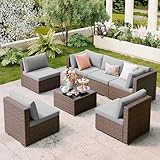
- Elegant Rattan Style: This outdoor patio furniture set features gray PE rattan and cushions, making it a perfect addition to patios, gardens, backyards, pools, and other indoor and outdoor spaces
- Modern and Comfortable: The design of our outdoor furniture set is simple, stylish and ergonomic. The waterproof patio furniture set is all weather resistant to prevent denting, cracking, fading, and being blown away
- Free Combination: This outdoor furniture offers countless configuration options, allowing you to mix and match pieces as needed to suit your space and preferences. Equipped with fasteners to prevent the outdoor sectional from moving
- All-Weather Resistant: This patio sectional furniture set is ideal for apartments, decks, patios, backyards, porches, balconies, and poolside areas. It is strong enough to withstand all-weather variations for long service life. The UV-resistant and water-resistant cushion covers are also better for outdoor weather
- Package Included (7-piece set) : This outdoor sectional furniture set is divided into 2 packages. The wicker furniture set includes: 2 corner chairs, 4 armless chairs, 1 glass coffee table
33. Add roll-down weather or insect screens
Best for: Existing covered patios needing seasonal flexibility. What it changes: Roll-down panels can block insects, wind-driven rain, or low evening sun when needed and disappear when conditions are pleasant. Main watch-out: Tracks, storage, cleaning, wind ratings, and attachment details determine whether the system performs well. Infrastructure: Construction or professional.
Image brief: Roll-down screens partially lowered along a covered patio, showing the transition between open and protected modes. Caption: Flexible screens let one patio respond to several seasons.
34. Use outdoor curtains for privacy and wind-softening
Best for: Rentals, sheltered patios, and quick privacy improvements. What it changes: Curtains add softness, block views, and reduce minor breezes around seating. Main watch-out: They are weather-resistant rather than weatherproof, may mildew, and should be secured or removed in strong wind. Infrastructure: Movable to light DIY.
Do these 3 things before closing this tab:
1Repair Windows errors before they cause bigger problems2Fix the driver behind crashes, sound loss and screen glitches3Clear out junk files and repair common Windows errorsImage brief: Pale outdoor curtains hung from a pergola, gathered to one side around a private seating area. Caption: Curtains create a room-like boundary without building a permanent wall.
35. Cover the patio and add a ceiling fan
Best for: Hot, still climates and covered dining or lounge areas. What it changes: Air movement can make a shaded patio feel more comfortable and discourage insects. Main watch-out: Use a fan rated for the location and have electrical work installed safely; a fan does not cool an unshaded, heat-soaked surface by itself. Infrastructure: Professional for new wiring or structural support.
Image brief: A covered patio with a properly scaled outdoor ceiling fan over a lounge arrangement. Caption: A fan improves comfort after the shade structure has done its primary work.
36. Use a seasonal canopy or freestanding gazebo
Best for: Flexible, lower-commitment shelter. What it changes: A freestanding canopy can create a dining or event area without altering the house. Main watch-out: Anchor it correctly, respect wind limits, manage rain runoff, and store the canopy when severe weather is forecast. Infrastructure: Movable to light DIY.
What’s actually slowing this PC down?
Pick the symptom - the matching free tool is one click away.
Image brief: A simple freestanding gazebo over an outdoor table, anchored on a defined patio surface with curtains tied back. Caption: A seasonal canopy provides shelter while keeping the layout reversible.
Furniture and comfort ideas
Select furniture for actual exposure: full sun, rain, salt air, snow, pets, children, and available storage. “Outdoor-rated” does not mean maintenance-free. Confirm cushion fabric, frame finish, hardware, drainage, replacement parts, and whether pieces can be moved before storms.
37. Combine a deep outdoor sofa with lounge chairs
Best for: Families and guests who stay outside for long periods. What it changes: Deep seating provides a relaxed living-room posture and enough variety for several people. Main watch-out: Deep sofas consume more space and need cushion storage or fast-drying construction. Infrastructure: Movable.
Image brief: A deep outdoor sofa paired with two lounge chairs and a durable coffee table under shade. Caption: Comfortable proportions matter more than filling every corner with furniture.
Outdated Drivers Are Slowing You Down
One free scan finds every outdated or missing driver and matches the right update for your exact hardware.Free scan · exact hardware matchWindows Errors? Fix Them Before They Spread
Repair common Windows errors and clear accumulated junk for a smoother, more stable PC - no reinstall needed.Free scan · no reinstall38. Build in a banquette
Best for: Small patios, boundary walls, and dining areas. What it changes: A banquette uses the edge efficiently and can seat more people than individual chairs in the same footprint. Main watch-out: Fixed seating reduces flexibility and needs a durable, drainable cushion strategy. Infrastructure: Construction.
Image brief: A wall-side banquette with weather-resistant cushions, a narrow dining table, and clear access at both ends. Caption: Built-in seating turns a boundary into useful capacity.
39. Add an outdoor daybed
Best for: Reading, naps, and quiet retreats. What it changes: A daybed introduces a dedicated lounging position rather than making every seat serve every activity. Main watch-out: It needs shade, dry storage, and enough clearance to walk around it. Infrastructure: Movable.
Image brief: A shaded outdoor daybed with washable cushions beside lush but climate-appropriate planting. Caption: A daybed makes the patio feel like a destination for unhurried use.
40. Install a swinging bed or hanging chair
Best for: Relaxed seating and a playful focal point. What it changes: Suspended furniture adds gentle movement and frees visual space beneath the seat. Main watch-out: The supporting structure, hardware, swing clearance, and user weight must be properly rated; do not improvise an attachment to an unverified pergola. Infrastructure: Professional when structural support is required.
Image brief: A hanging chair or swinging bed suspended from a robust covered structure, with clear movement space. Caption: Suspended seating is delightful when its support and clearance are treated as structural details.
41. Use a compact bistro set
Best for: Balconies, front patios, narrow side yards, and morning coffee. What it changes: Two small chairs and a table create a complete use without demanding a full dining zone. Main watch-out: Choose stable pieces that do not obstruct the route or become windborne. Infrastructure: Movable.
Image brief: A two-person bistro set in a compact patio corner with one planter and a wall-mounted light. Caption: A small patio only needs enough furniture for the use it must support.
42. Place a dining bench along a wall
Best for: Narrow patios and larger family tables. What it changes: A bench removes chair backs from one side of the circulation zone and can seat several people efficiently. Main watch-out: Provide comfortable seat depth, a place to enter, and enough clearance for people to stand and pass. Infrastructure: Movable to construction.
Image brief: A long dining bench tucked against a patio wall opposite a narrow table and loose chairs. Caption: Wall-side benches increase seating without consuming a chair’s full footprint.
43. Choose a modular sectional
Best for: Evolving households and patios that host different activities. What it changes: Sections can form an L, separate chairs, or a longer sofa as needs change. Main watch-out: Check connector strength, cushion storage, and whether the modules are light enough to move but heavy enough to remain stable. Infrastructure: Movable.
Image brief: Modular outdoor seating shown in an L-shaped arrangement with one spare section used as an ottoman. Caption: Modularity provides flexibility without redesigning the hardscape.
What’s actually slowing this PC down?
Pick the symptom - the matching free tool is one click away.
44. Aim swivel chairs toward a view
Best for: Patios overlooking gardens, water, or a landscape. What it changes: Swivel chairs let users face conversation, the view, or the house without moving the whole layout. Main watch-out: Select weather-suitable mechanisms and leave enough space for rotation. Infrastructure: Movable.
Image brief: Swivel lounge chairs positioned between a conversation area and a garden view. Caption: Rotating seats allow one patio to support social use and scenery.
45. Keep lightweight stackable chairs available
Best for: Occasional guests, small patios, and seasonal storage. What it changes: Spare chairs can appear when needed and disappear when the patio returns to everyday use. Main watch-out: Lightweight does not mean unstable; choose wind-resistant forms and store them securely. Infrastructure: Movable.
Image brief: Stackable outdoor chairs stored neatly beside a patio wall near a flexible dining area. Caption: Stackable seating supports gatherings without permanently crowding the patio.
46. Add movable ottomans and side tables
Best for: Flexible seating and small-space entertaining. What it changes: Ottomans can become footrests, extra seats, or temporary tables, while small side tables keep drinks within reach. Main watch-out: Too many small pieces create trip hazards and visual clutter. Infrastructure: Movable.
Image brief: Two weather-rated ottomans and compact side tables arranged around a sofa, with one piece pulled into the circulation edge. Caption: Small movable pieces let the patio change function quickly.
47. Define the lounge with a weather-rated outdoor rug
Best for: Making a patio feel finished and visually connected to the interior. What it changes: A rug groups furniture and introduces color or pattern without permanent construction. Main watch-out: Use a product designed for outdoor exposure, allow it to dry, and avoid trapping water against wood or painted surfaces. Infrastructure: Movable.
Image brief: A low-pile outdoor rug defining a lounge zone on porcelain or concrete paving. Caption: A rug can establish an outdoor room, provided it dries properly between wet periods.
Do these 3 things before closing this tab:
1Fix the driver behind crashes, sound loss and screen glitches2Clear out junk files and repair common Windows errors3Scan for outdated or missing drivers - takes under a minute48. Choose a bench with concealed storage
Best for: Small patios and households with cushions, toys, gardening tools, or pet supplies. What it changes: The seating performs double duty and keeps frequently used items close at hand. Main watch-out: Storage must ventilate and drain; never store fuel, electrical equipment, or heat-sensitive items in an unsuitable box. Infrastructure: Movable to construction.
Image brief: A storage bench along a patio wall with cushions inside and a clean, uncluttered seating area. Caption: Concealed storage protects comfort items and preserves the patio’s usable floor area.
Cooking and entertaining ideas
Cooking zones should be planned before paving is finalized. Outdoor kitchens may need electrical circuits, gas, water, drainage, appliance clearances, weather protection, ventilation, storage, and approved materials. A movable cart can provide much of the usefulness without committing to permanent infrastructure.
Rank #4

- Quality and Durable: delicate composite weaving with 3-stand all-weather HDPE wicker material handwoven over fully-welded powder-coated steel framing makes patio furniture with fire pit 7 PCS very durable and sturdy; breathable 250G polyester Anti-UV and water-repellent fabric are the complete performance standard, with long-lasting comfort, color retention, cleanability, and strength
- Comfortable and Non-slip: thickened seat cushions(4 inches) with high resilience sponge and bottom anti-slip dotted plastic fabric, anti-slip and practicality are wholly better than lacing, velcro or hook, match up filling back cushions, which is extraordinarily comfortable and everlasting with outdoor furniture sets
- Highly Adaptable: outdoor couch set includes patio chairs, outdoor sofa, ottoman, and gas fire pit table; a graceful, breezy style that doesn't compromise on comfort and durability; create your perfect configuration with easy options that are suitable for any decorative fashion and scene
- Propane Fire Pit: 60000 BTU outdoor gas fire pit equipped with 20 lbs propane tank(need purchased separately), a patio table after closing the fire lid and surrounding the one-piece woodgrain tile-effect tabletop, extend the use scenario and enjoy the great outdoors; steel embossed rattan look, fire pit wind guard, stainless steel burners, and blue crystal beads in which flame dances all of them ooze a cozy and intoxicated feel, creating a wild-joy resort on the outdoor sectional furniture ensemble
- Assembly and Maintain: the patio conversation sets are packed in 4 boxes, with clear instructions and all necessary hardware for speedy, smooth assembly, also Assembly Demo Video is available; with the waterproof covers, fearless dust, rain, and sun, superbly ensure to last a long time
49. Pair a grill with a dedicated prep counter
Best for: Frequent grilling. What it changes: A stable counter beside the grill provides a landing surface for food, tools, and hot cookware. Main watch-out: Preserve manufacturer clearances from combustible walls, roofs, furniture, and planting; plan a safe route for the person cooking. Infrastructure: Movable to construction.
Image brief: A freestanding grill beside a generous prep counter, with utensils, storage, and clear working space. Caption: A prep surface is one of the simplest ways to make grilling more comfortable.
50. Build a compact outdoor kitchen
Best for: Homes where outdoor cooking is a central activity. What it changes: Countertops, storage, refrigeration, a sink, and cooking appliances create a true second kitchen. Main watch-out: Resolve gas, electrical, water, drainage, appliance ventilation, weather exposure, and maintenance access before construction. Infrastructure: Professional.
Image brief: A compact outdoor kitchen integrated into a covered patio, with grill, prep counter, storage, and dining nearby. Caption: An outdoor kitchen works best when cooking, serving, and seating remain connected.
51. Make a pizza oven the gathering point
Best for: Social cooking and family entertaining. What it changes: Pizza preparation naturally creates a group activity around the oven rather than isolating the cook. Main watch-out: Follow the oven manufacturer’s clearances, foundation, chimney or ventilation requirements, fuel rules, and local fire regulations. Infrastructure: Construction or professional.
Free tools Windows power users keep installed
One-click scans. No signup required.
Image brief: A compact pizza oven on a heat-safe counter beside a patio dining area, with people gathered at a safe distance. Caption: A pizza oven turns preparation into part of the evening rather than a task hidden at the edge.
52. Add a bar-height serving counter
Best for: Informal meals, drinks, and conversation with the cook. What it changes: A raised counter can separate preparation from guests while still keeping the two activities visually connected. Main watch-out: Bar seating needs adequate legroom, stable stools, and careful consideration of children and older adults. Infrastructure: Construction for a built-in counter.
Image brief: A bar-height outdoor counter beside a grill, with two stable stools and a lounge beyond. Caption: A serving counter can organize food service without turning the cook away from guests.
53. Put a beverage station near seating
Best for: Entertaining and reducing traffic through the cooking zone. What it changes: A small cart, counter, or cooler near the lounge keeps water, glasses, and non-cooking drinks accessible. Main watch-out: Plan drainage for ice or condensation and keep electrical appliances protected from rain. Infrastructure: Movable to light DIY.
Windows Errors? Fix Them Before They Spread
Repair common Windows errors and clear accumulated junk for a smoother, more stable PC - no reinstall needed.Free scan · no reinstallCrashes, No Sound, or Screen Glitches?
Random freezes, missing sound and display glitches usually trace back to one bad driver. Find and replace yours safely.Free scan · under a minuteImage brief: A compact beverage cart between a lounge and dining area, stocked with glasses and a lidded cooler. Caption: A separate drinks station keeps the main kitchen area calmer.
54. Use an outdoor dining table with flexible leaves
Best for: Everyday family use with occasional larger meals. What it changes: An extendable table stays compact most days but grows when guests arrive. Main watch-out: Measure the fully extended footprint, including chair pull-back space, before buying. Infrastructure: Movable.
Image brief: An extendable outdoor table shown in compact and expanded configurations on a defined dining zone. Caption: Flexible table dimensions keep everyday circulation open while preserving capacity for guests.
55. Create a fire-pit conversation area
Best for: Evening gathering in cooler weather. What it changes: A fire pit extends the social day and gives the patio a strong focal point. Main watch-out: USFA guidance includes a 10-foot separation from the home or combustible items in its outdoor-fire guidance, while another USFA handout states 3 feet. Because the guidance differs, use the stricter distance, follow the manufacturer’s instructions, and check local rules. See the USFA outdoor fire guidance and USFA handout. Infrastructure: Movable to professional.
Recommended Free Tools
Image brief: A fire-pit seating circle positioned well away from the house, eaves, fencing, furniture, and dry planting. Caption: The safest fire-pit layout begins with clearance, wind awareness, supervision, and local rules.
56. Build an outdoor fireplace
Best for: A permanent architectural focal point. What it changes: A fireplace can define the end of a patio and provide a strong visual anchor. Main watch-out: Masonry, footing, chimney height, smoke, fuel, clearances, structural loads, and fire-code requirements make this a professional design item in many locations. Infrastructure: Professional.
Image brief: A professionally detailed outdoor fireplace at the edge of a patio, with a clear hearth and seating beyond the required safety zone. Caption: A fireplace is architecture and fire infrastructure, not merely a decorative wall.
57. Make a hot-tub retreat
Best for: Relaxation and shoulder-season use. What it changes: A hot tub can become the patio’s destination, especially when paired with privacy screens, a towel station, and nearby seating. Main watch-out: Confirm structural support, delivery access, electrical requirements, drainage, water management, privacy, and safe access. Infrastructure: Professional.
Image brief: A hot tub on a stable terrace with privacy planting, steps, towel storage, and a dry lounge area nearby. Caption: A hot tub needs a complete access, utility, drainage, and maintenance plan.
58. Add an outdoor shower
Best for: Pools, beaches, muddy pets, gardening, and hot climates. What it changes: A shower at the edge of the patio keeps dirt and water out of the house. Main watch-out: Plumbing, freeze protection, privacy, drainage, slip resistance, and local requirements must be addressed; never discharge uncontrolled water toward a foundation. Infrastructure: Professional.
Image brief: A discreet outdoor shower screened by slatted panels, with a textured non-slip floor and intentional drainage. Caption: The shower is successful when water management is as carefully designed as privacy.
59. Add an outdoor television or movie wall
Best for: Sports, family movie nights, and covered patios. What it changes: A screen creates a secondary entertainment focus and can organize seating in a new direction. Main watch-out: Use equipment rated for its exposure, protect wiring, control glare, and keep the screen away from direct rain, fire, and excessive heat unless specifically designed for it. Infrastructure: Light DIY to professional.
The Tool Desk
Outbyte PC Repair FREEClear out junk files and repair common Windows errorsFree Scan →Outbyte Driver Updater FREEScan for outdated or missing drivers - takes under a minuteDriver Scan →Image brief: A covered patio movie wall with a weather-rated screen, concealed wiring, lounge seating, and soft indirect lighting. Caption: A media wall works best under controlled exposure with glare and sound considered.
60. Reserve a games and activity zone
Best for: Children, guests, and multi-generational households. What it changes: A clear area for games, crafts, table tennis, or pet activity keeps movement from colliding with hot cooking and fragile décor. Main watch-out: Use stable, non-slip surfaces and keep play routes away from fire, grills, stairs, and sharp corners. Infrastructure: Planning to construction.
Image brief: A clear patio activity area beside, but separate from, dining and cooking zones, with safe storage for games. Caption: Designing for activity prevents the patio from working only when everyone sits still.
Independent reader supportYour contribution helps us test, update, and keep practical guides available for everyone.Lighting, privacy, planting, and sustainability ideas
Layer lighting the same way you would indoors: task lighting where work happens, ambient lighting for atmosphere, and path or step lighting for movement. Efficient exterior LEDs pair well with timers, dimmers, and motion sensors; the U.S. Department of Energy discusses efficient exterior lighting, while ESFI covers outdoor electrical safety.
61. Layer task, ambient, and path lighting
Best for: Patios used after dark. What it changes: Task lights illuminate cooking and dining, ambient fixtures make the space welcoming, and path or step lights support movement. Main watch-out: Avoid glare, dark trip points, exposed wiring, and lighting that shines directly into neighboring homes. Infrastructure: Light DIY to professional.
Image brief: A patio showing three lighting layers: low path lights, warm ambient wall or pendant light, and focused task lighting at the grill. Caption: Layered lighting makes nighttime use safer and more comfortable than one harsh floodlight.
62. String lights across a pergola or fence
Best for: Low-commitment atmosphere and entertaining. What it changes: A line or canopy of warm lights gives the patio a festive ceiling. Main watch-out: Use outdoor-rated products, secure the installation, protect connections, and use GFCI protection. Do not route cords under rugs or connect extension cords together; see ESFI’s outdoor electrical guidance. Infrastructure: Light DIY.
Image brief: Warm string lights suspended neatly across a pergola above a dining table at dusk. Caption: String lights add a soft ceiling effect when their wiring and support points are weather-appropriate.
Quick wins for a faster PC:
Repair Windows errors before they cause bigger problemsFix Now →Fix the driver behind crashes, sound loss and screen glitchesFind Drivers →63. Hang a pendant over the dining table
Best for: Covered patios designed as outdoor dining rooms. What it changes: A pendant centers attention over the table and provides useful task light without flooding the entire patio. Main watch-out: The fixture, junction box, wiring, and mounting structure must be rated for the location and installed according to local electrical rules. Infrastructure: Professional for new wiring.
Image brief: A weather-rated pendant centered over a long outdoor dining table beneath a covered patio roof. Caption: A pendant gives the dining zone the visual focus and usability of an indoor room.
64. Install low-voltage path and step lighting
Best for: Split levels, garden routes, older adults, children, and evening entertaining. What it changes: Low, controlled illumination helps reveal edges, steps, and route changes. Main watch-out: Light the walking surface without creating glare or confusing shadows; keep fixtures protected and wires properly buried or secured. Infrastructure: Light DIY to professional.
Image brief: Subtle low-voltage lights marking broad patio steps and the edge of a garden path. Caption: Step lighting should make changes in level legible without becoming a spotlight.
65. Use lanterns or flameless LED candles
Best for: Renters, temporary styling, and flexible ambience. What it changes: Portable lights can move between dining, lounge, and entry areas without new wiring. Main watch-out: Keep real flames away from curtains, cushions, dry vegetation, children, and pets; flameless LEDs avoid many of those risks but still need weather protection. Infrastructure: Movable.
Best Value

- 【VARIOUS COMBINATIONS】The furniture set consists of two single armchairs, a love seat and a coffee table, each of which can be moved easily, allowing you to arrange it according to the space of your home to improve space utilization
- 【SOFT & COMFORTABLE CUSHION】A sofa set comes with four thickened cushions and four soft pillows that can be removed with a zipper so you can clean the fabric cover; The surface of the cushion can protect it from water droplets, but it can't be exposed to rain for a long time; So the cushion must be promptly retracted in rainy days
- 【STURDY & DURABLE】Our four-piece sofa is crafted from a sturdy steel frame and delicate hand-woven rattan; It can withstand all kinds of weather; And can be quickly cleaned and put into use after a rainy day; Perfect for your living room, yard or poolside
- 【EASY TO CLEAN】Our outdoor four-piece set comes with a coffee table with a detachable tempered glass top, which is held in place by suction cups; You can put liquids like champagne on it and don’t worry about overturning it, as a glass tabletop can be restored with a simple wipe
Image brief: A group of outdoor lanterns and flameless candles placed on a side table and patio steps at dusk. Caption: Portable lighting is an easy way to test where illumination is actually needed.
66. Add a privacy screen, trellis, or living hedge
Best for: Urban yards, overlooked patios, and wind-softening. What it changes: A vertical layer can block direct views, define the patio edge, and support climbing plants. Main watch-out: Check setbacks, fence rules, mature plant size, root behavior, maintenance access, and whether the screen blocks required sightlines. Infrastructure: Movable to construction.
Image brief: A slatted privacy screen combined with a trellis and carefully spaced planting behind a lounge area. Caption: Layered privacy feels more natural than a solid wall and can provide some wind protection.
67. Grow container herbs and pollinator plants
Best for: Kitchens, renters, balconies, and gardeners who want planting close at hand. What it changes: Containers add scent, color, edible leaves, and habitat without altering the ground. Main watch-out: Containers dry quickly, become heavy when wet, and can stain or damage paving; choose plants for sun, heat reflected from hardscape, wind, water, salt, and local pests—not hardiness zone alone. The USDA hardiness map is primarily a winter-survival guide. Infrastructure: Movable to light DIY.
Image brief: A patio grouping of herbs, flowering native plants, and pollinator-friendly containers near a dining area. Caption: Containers bring useful planting close to the people who use the patio.
68. Add a rain garden, swale, or native planting border
Best for: Managing runoff while adding habitat and seasonal interest. What it changes: A planted depression, swale, or border can slow and direct water while softening the hardscape. Main watch-out: It must be graded and located so water does not remain against the foundation or move onto neighboring property; plant selection should suit both wet and dry periods. Infrastructure: Construction or professional, depending on grading.
Image brief: A patio edge flowing into a shallow planted rain garden with native grasses, flowering plants, stone, and a visible overflow route. Caption: A planted drainage feature can make stormwater management part of the landscape rather than an eyesore.
Material comparison at a glance
| Surface | Strengths | Trade-offs | Good questions to ask |
|---|---|---|---|
| Concrete | Flexible shapes, colors, textures, and stable furniture surface | Can crack; may need sealing; repairs may show | How will joints, slope, drainage, and freeze-thaw exposure be handled? |
| Concrete pavers | Replaceable individual units; many patterns and colors | Joints can collect weeds or require replenishment | Are edges restrained and can damaged units be replaced later? |
| Porcelain paving | Clean appearance and continuity with modern interiors | Requires exterior-rated product and precise base preparation | Is the surface suitable for outdoor slip exposure and local climate? |
| Natural stone | Distinctive appearance and potentially long service life | Higher material and installation cost; thickness and texture vary | Will the stone remain stable, slip-resistant, and comfortable for furniture? |
| Brick | Warm character and proven pattern options | Can weather, settle, or vary in quality, especially when reclaimed | Is the brick rated for the site’s moisture and freeze-thaw conditions? |
| Gravel | Good drainage and informal appearance; relatively adaptable | Shifts, spreads, and can be difficult for wheels or unstable furniture | What edging and firm pads will control movement? |
| Wood or composite platform | Warm contrast and useful for separating zones | Wood needs maintenance; composite can heat up and still needs cleaning | How will ventilation, drainage, fasteners, and transitions be detailed? |
Shade and weather-protection comparison
| Option | Best use | What it does well | Limitation |
|---|---|---|---|
| Umbrella | Flexible, lower-commitment shade | Moves with changing needs and can suit rentals | Must be secured and closed in strong wind |
| Retractable awning | Patios immediately beside the house | Provides adjustable shade without permanent posts | Has wind, attachment, and storm-use limits |
| Pergola | Architectural structure and filtered shade | Supports lights, fans, curtains, and vines | Usually needs structural design; open slats do not equal rain cover |
| Roof extension | High-use, weather-protected outdoor room | Best protection and most integration options | Changes structure, roof drainage, daylight, and approvals |
| Shade sail | Modern or irregular layouts | Strong visual impact with broad coverage | Needs engineered attachment and wind planning |
| Screens or curtains | Insects, privacy, minor wind, and seasonal adjustment | Can make a covered patio feel more like a room | Require cleaning, storage, and careful storm management |
Before you build: the patio planning checklist
1. Define the real use
Write down the three activities that matter most. A patio planned for everyday breakfast needs different proportions from one planned for large dinners, children’s play, or a hot tub. Do not size the space around a photograph; size it around the furniture and movement that your household requires.
2. Observe the site
Track sun at breakfast, afternoon, and evening. Note prevailing wind, views, neighboring windows, existing trees, roof runoff, hose bibs, utility lines, foundation walls, doors, steps, and the route from the house to the garden. A patio’s best location is often determined by access and drainage before aesthetics.
3. Tape out furniture footprints
Mark the sofa, table, chairs, grill, fire feature, storage, and shade supports with tape or temporary objects. Include the space required to pull out dining chairs, open doors, walk behind seated people, turn with a stroller or wheelchair, and carry food safely.
4. Resolve elevation and drainage first
Water should not be directed toward the foundation, door threshold, retaining wall, or neighboring property. If water pools, identify the low point and its intended discharge route before adding sealant or more paving. Potential solutions include regrading, a channel drain, a gully, a rain garden, a swale, or a professionally designed underdrain. Read the detailed Homebuilding drainage guidance.
A patio placed flush against a door can create a particularly difficult failure. Preserve the required threshold and flashing details, maintain drainage away from the house, and verify finished levels before the surface is installed.
5. Choose the surface for the climate and users
Compare slip resistance, heat underfoot, cleaning, sealing, freeze-thaw exposure, salt air, repairability, and accessibility. A surface that looks excellent in a dry showroom may be uncomfortable in a hot climate, slippery when wet, or difficult to navigate with wheels.
6. Plan utilities before construction
Decide where power, lighting, gas, water, drainage, speakers, television, fan wiring, refrigeration, and cooking appliances will go before concrete or paving is placed. Retrofitting a conduit or drain is usually more disruptive than planning a spare route during excavation.
7. Review permits and professional scope
Local requirements vary. A freestanding umbrella may need no approval, while a roof extension, attached pergola, retaining wall, outdoor fireplace, gas line, electrical circuit, plumbing connection, or significant grading may require permits, inspections, engineering, or licensed trades. Model-code provisions are not automatically law; the ICC’s 2024 IRC patio-cover appendix applies only where adopted by the relevant jurisdiction.
What’s actually slowing this PC down?
Pick the symptom - the matching free tool is one click away.
8. Treat fire features as safety infrastructure
Keep fire features away from the home, siding, eaves, furniture, fencing, dry planting, and overhead branches. Use the stricter available clearance when guidance differs, and follow local rules and the appliance instructions. Never assume a tabletop product is harmless because it is small: the CPSC has warned about pooled-alcohol and liquid-fuel fire pits, including a 2025 recall involving flame-jetting and fire-spreading hazards.
9. Make outdoor electricity genuinely outdoor-ready
Use equipment marked for outdoor use and GFCI-protected outlets. Avoid connecting extension cords together, do not route cords beneath rugs, and keep connections protected from water. For permanent fixtures, fans, appliances, and new circuits, use a qualified electrician and comply with local requirements. ESFI’s outdoor decoration guidance and outdoor electrical safety guidance provide useful reminders.
10. Design for accessibility and safety
For public accessible routes, the U.S. Access Board specifies a 36-inch minimum clear width, a running slope no steeper than 1:20, and a cross slope no steeper than 1:48 for walking surfaces. Those figures should not be presented as blanket legal requirements for every private residence, but they are useful inclusive-design targets. For a home, also consider handrails where appropriate, stable seating, visible step edges, smooth transitions, child-safe furniture, pet routes, and clear access to doors.
Solutions for difficult sites and climates
Small patios
Choose one primary use and make it excellent. Use a bistro set, wall-side banquette, folding chairs, nesting tables, vertical planting, a light-colored rug, and wall-mounted or overhead lighting. Keep the center of the patio open and avoid buying furniture that only fits when nobody is sitting down.
Free tools Windows power users keep installed
One-click scans. No signup required.
Narrow side yards
Use the length: put dining close to the house, a lounge or reading seat in the middle, and planting, storage, or a view at the far end. Use long-format paving or a repeated stepping pattern to reinforce the axis, but preserve access to meters, vents, gates, and service routes.
Rental or low-commitment patios
Layer reversible pieces: a weighted umbrella, outdoor rug, containers, lanterns, portable lighting, a storage bench, and a freestanding privacy screen. A movable kitchen cart may provide prep space without gas or plumbing work. These solutions improve comfort but cannot correct poor grading, foundation drainage, or structural instability.
Sloped sites
Do not simply add fill and pave over the problem. A split-level patio, raised terrace, or series of garden steps may work, but retaining walls, footings, erosion control, drainage, soil pressure, and safe level changes need a professional plan.
Hot climates
Prioritize shade before décor. Combine a roof, pergola, awning, umbrella, fan, and vegetation according to the site. Trees and plants cool through shade and evapotranspiration, but they need establishment water and maintenance; the EPA explains these cooling benefits. Also consider the heat of dark paving, reflected heat from walls, cushion temperature, and where people can sit after sunset.
Wet climates
Use positive drainage, covered seating, quick-dry cushions, protected storage, and a route that remains usable when rain is blowing toward the house. Permeable paving may help on a suitable site, but it is not a universal solution. Soil infiltration, slope, water table, base design, and maintenance determine whether it works.
Cold and snowy climates
Choose materials and installation systems suited to freeze-thaw exposure. Provide a place for cushions and portable furniture, avoid creating snow-storage problems beside doors, protect plumbing from freezing, and plan how snow-removal equipment will interact with edges, joints, steps, and lighting.
Coastal climates
Salt air accelerates corrosion and affects fabrics, fasteners, appliances, and lighting. Favor appropriate corrosion-resistant hardware, washable fabrics, protected storage, and finishes that can be rinsed and maintained. Confirm that every “outdoor” product is suitable for the level of exposure on your site.
Wildfire-prone sites
Fire features, wood structures, dry planting, mulch, stored cushions, and decorative screens need local wildfire guidance. The right answer is not always removing all vegetation: shade and evapotranspiration can reduce heat, but planting, spacing, irrigation, storage, and defensible-space decisions must be made for the local hazard. Seek advice from the relevant fire authority before installing an outdoor fireplace, fire pit, wood pergola, or dense planting near the house.
Recommended Free Tools
What to make movable, what to DIY, and what to professionalize
| Usually movable | Often light DIY | Usually construction or professional work |
|---|---|---|
| Furniture, rugs, containers, lanterns, umbrellas, portable screens, carts, modular seating | Furniture assembly, container planting, simple décor, some low-voltage lighting, stable gravel edging where site conditions are straightforward | Roof extensions, attached pergolas, retaining walls, major grading, drainage systems, gas, plumbing, new electrical circuits, fireplaces, hot tubs, structural platforms, complex paving |
“DIY-friendly” should describe a cosmetic or reversible upgrade, not a project involving structural loads, gas, plumbing, electrical work, retaining pressure, foundation drainage, or significant excavation. When in doubt, have the site and scope reviewed before work begins.
Maintenance to plan before choosing the look
- Weekly or as needed: Sweep debris, remove food residue, check for standing water, and inspect high-traffic routes for trip hazards.
- Monthly in the active season: Wash furniture, inspect cushions and covers, clear drains and grates, check lighting, and look for loose pavers or gravel migration.
- Seasonally: Prune plants, clean gutters and roof drainage, tighten hardware, check screens and awnings, inspect sealants, and test GFCI devices as directed.
- Before severe weather: Close or store umbrellas, curtains, canopies, loose furniture, lanterns, and cushions. Secure or remove anything that can become airborne.
- Before winter: Drain or protect outdoor plumbing, store cushions, follow hot-tub winterizing instructions, and confirm that snow-clearing routes will not damage edges or fixtures.
- For gravel and permeable paving: Rake displaced stone, keep joints or aggregate voids clear, control weeds without clogging the system, and follow the maintenance requirements of the installed base.
- For planting: Match irrigation, pruning, container size, soil, and pest care to the plants. Hardiness zone alone does not predict patio success.
Final chooser: start here
- If you want a cozy everyday retreat: start with ideas 1, 4, 37, 47, and 61.
- If you host dinners: start with ideas 2, 3, 42, 49, 54, and 63.
- If your patio is small: start with ideas 8, 38, 41, 43, 46, and 48.
- If privacy is the problem: start with ideas 7, 30, 34, and 66.
- If heat limits use: start with ideas 25, 26, 27, 30, 35, and 67.
- If rain limits use: start with ideas 31, 32, 33, 35, and 68—but resolve drainage first.
- If you want cooler evenings: start with ideas 6 or 55 only after checking fire clearances, or choose ideas 25, 35, and 61 for a lower-risk comfort upgrade.
- If you want the lowest-commitment refresh: start with ideas 27, 41, 47, 48, 62, and 65.
- If you are managing a slope: start with ideas 10, 24, and 68, with professional site planning.
- If accessibility is the priority: start with ideas 3, 16, 18, 21, 64, and a clear route designed around the people who will use it.
The most successful patio projects usually combine one spatial idea, one comfort upgrade, one practical utility or storage decision, and a surface-and-drainage plan suited to the site. That is enough to create an outdoor room people will actually use.
Frequently Asked Questions
What is the easiest patio to maintain?
A simple, well-drained surface with durable furniture, limited containers, concealed storage, and layered but uncomplicated lighting is usually easiest to maintain. Concrete, pavers, gravel, stone, wood, and planting all have different maintenance tasks, so “low maintenance” should be defined rather than treated as maintenance-free.
How do I make a small patio feel bigger?
Use a clear focal point, furniture scaled to the space, folding or modular pieces, a wall-side banquette, vertical planting, and lighting attached to walls or overhead structures. Keep the center open and measure chair pull-back space before buying anything.
The Tool Desk
Outbyte PC Repair FREERepair Windows errors before they cause bigger problemsFix Now →Outbyte Driver Updater FREEScan for outdated or missing drivers - takes under a minuteDriver Scan →Should a patio be covered?
A cover is worthwhile when sun, rain, or heat regularly prevents use. An umbrella or retractable awning offers flexibility; a pergola provides structure and filtered shade; a roof extension offers the most reliable protection but affects structure, drainage, daylight, and approvals.
Are permeable pavers right for every yard?
Not necessarily. Permeable pavers need suitable soil infiltration, slope, water-table conditions, base design, and ongoing maintenance. They can be unsuitable on steep slopes, poorly infiltrating soils, or sites with high water tables; complex installations should be professionally designed.
Do pergolas and patio covers need permits?
Possibly. Requirements vary by jurisdiction and by whether the structure is attached, covered, tall, enclosed, or supported by footings. Check local planning and building departments before installing a pergola, patio cover, roof extension, retaining wall, fireplace, or utility connection. Model-code provisions apply only where adopted.
How far should a fire pit be from the house?
Use the stricter available guidance: the U.S. Fire Administration recommends outdoor fire pits be at least 10 feet from the home or anything combustible in its outdoor-fire guidance, while another USFA handout gives 3 feet. Follow the manufacturer’s instructions and local fire rules, and account for wind, eaves, furniture, vegetation, and supervision.
Outdated Drivers Are Slowing You Down
One free scan finds every outdated or missing driver and matches the right update for your exact hardware.Free scan · exact hardware matchWindows Errors? Fix Them Before They Spread
Repair common Windows errors and clear accumulated junk for a smoother, more stable PC - no reinstall needed.Free scan · no reinstallWhat lighting is safe outdoors?
Use exterior-rated lighting and cords, GFCI-protected outlets, secure connections, and fixtures appropriate to the exposure. Do not connect extension cords together or route cords beneath rugs. Permanent wiring, fans, appliances, and new circuits should be installed by a qualified electrician under local requirements.
The Bottom Line
Choose the patio around your real routines, then solve circulation, shade, drainage, utilities, and safety before adding decorative detail. Movable furniture and lighting can transform a sound patio quickly; structural covers, retaining walls, fire features, gas, plumbing, electrical work, and complex drainage deserve professional design and local approval.
Quick Recap
Product prices and availability are accurate as of the date/time indicated and are subject to change. Any price and availability information displayed on Amazon at the time of purchase will apply.

