What’s actually slowing this PC down?
Pick the symptom - the matching free tool is one click away.
For many U.S. homes, Fraser fir is the best all-around Christmas tree: it has a balanced shape, pleasant fragrance, sturdy branches, good needle retention, and good shipping performance. But there is no universal winner. The right tree depends on your climate, room size, ornament weight, preferred scent, needle softness, display length, and how reliably you can keep the stand full of water.
This guide compares 17 real Christmas-tree types, including the 16 mainstream U.S. types listed by the National Christmas Tree Association and Nordmann fir, a widely used European choice with growing Pacific Northwest availability. Freshness and care can matter more than species.
As an Amazon Associate I earn from qualifying purchases.
Quick answer: which Christmas tree is best?
There is no single best Christmas tree for every home. For many U.S. shoppers, Fraser fir is the best all-around choice because it combines a pleasing shape, sturdy branches, soft-ish needles, pleasant fragrance, good needle retention, and the ability to travel well from grower to retailer. That is an editorial recommendation, not a scientific national ranking: a fresh, well-watered local tree will often outperform a supposedly superior species that was harvested too early or allowed to dry out.
Free tools Windows power users keep installed
One-click scans. No signup required.
Choose by your actual priority. Pick balsam fir for the classic Christmas-tree fragrance, noble fir or Scotch pine for heavy ornaments, white pine or Douglas-fir for softer needles, Colorado blue spruce or concolor fir for blue or silvery foliage, and Leyland cypress or Arizona cypress for warmer regions. The guide below covers 17 important choices, including the 16 mainstream U.S. types listed by the National Christmas Tree Association plus Nordmann fir, a common European choice that is also grown in parts of the Pacific Northwest.
#1 Best Overall

- CLASSIC PINE TREE: High-quality PVC needles recreate the dense foliage of the iconic pine tree to produce a simple yet elegant centerpiece for the holiday season
- DECORATE YOUR WAY: Grab the family and create your own holiday aesthetic as this tree provides a blank canvas for your favorite lights, garland, and ornaments to shine
- FULL APPEARANCE: Hundreds of tips create a full, yet tapered appearance with meticulously crafted branches that mimic the texture of an authentic pine tree; Number of Tips (4.5ft/6ft/7.5ft/9ft): 400/ 1,000/ 1,346/ 2,028
- EASY ASSEMBLY & FLUFFING: Put the tree together in just three steps: simply unfold the metal stand and stack each section from largest to smallest, then fluff and enjoy!
- HIGH-QUALITY DESIGN: Crafted with durable metal hinges and flame-retardant PVC branches that stand tall with the help of a sturdy metal base, so your tree is ready to look its best for the season ahead!; OVERALL DIMENSIONS: 44"(Dia) x 72"(H) (including stand)
Best Christmas tree types by household priority
| Priority | Best starting points | What to know |
|---|---|---|
| Best all-around | Fraser fir | Balanced shape, scent, branch strength, retention, and shipping performance. |
| Strongest classic fragrance | Balsam fir | Cool-climate tree with the familiar fir aroma; branches are less stiff than Fraser or noble fir. |
| Heavy ornaments | Noble fir, Fraser fir, Scotch pine, white spruce, Colorado blue spruce | Individual branch spacing and condition still matter more than the label alone. |
| Soft needles | Fraser fir, balsam fir, white pine, Douglas-fir | Spruces, especially Colorado blue spruce, can be sharp to handle. |
| Blue or silvery foliage | Colorado blue spruce, concolor fir, noble fir, white pine | Color varies by tree and cultivar; inspect the actual tree. |
| Longest likely display | Fraser, noble, concolor, Scotch, or Nordmann fir | These are comparative choices, not guarantees. Freshness and uninterrupted watering are decisive. |
| Warm or Southeastern climate | Leyland cypress, Arizona cypress, Virginia pine, eastern redcedar | Local farms may offer better-adapted choices than northern firs. |
| Small room | Virginia pine, a narrow fir, a tabletop conifer, or an artificial tree | Measure width as well as height; dense trees can consume more floor space than expected. |
| Minimal sap | Leyland cypress | It is sap-free in the conventional Christmas-tree sense, but that does not mean allergy-free. |
Fragrance descriptions are subjective; even Iowa State University Extension treats aroma ratings as average subjective ratings. Treat every “best” label as a useful starting point, then judge the tree’s freshness, shape, and branch strength in person.
How firs, pines, spruces, and cypresses differ
Family is a practical shopping shortcut:
- Firs generally offer the best blend of fragrance, attractive color, softer needles, and needle retention. The main exceptions are that fir branches differ considerably in stiffness and that warm climates may not suit many firs.
- Pines vary widely. Scotch pine has stiff branches and excellent retention; white pine has exceptionally soft, flexible needles but weak ornament support; Virginia pine is dense and stout.
- Spruces often provide stiff branches and unusual color, but their needles are commonly sharper and their retention is usually less forgiving than that of the better-performing firs.
- Cypresses are especially useful in warm regions. They may have little or no traditional fir or pine fragrance, and they are often sold through choose-and-cut farms rather than ordinary retail lots.
- Cedar is an everyday name rather than a precise botanical category here. Eastern redcedar is actually Juniperus virginiana, a juniper—not a true cedar.
Douglas-fir is also not a true fir. True firs belong to the genus Abies; Douglas-fir is Pseudotsuga menziesii. The Oregon State University Pacific Northwest guide explains the distinction and the production characteristics behind several popular western trees.
17 Christmas tree types, compared
The “best for” descriptions below are comparative recommendations based on commonly reported characteristics. They are not independently tested rankings. Harvest date, weather, handling, storage, farm practices, and watering can change the experience substantially.
1. Balsam fir (Abies balsamea)
Best for: the classic Christmas-tree scent and a traditional conical shape.
Balsam fir has dark-green foliage, a strong fragrance, and a familiar, symmetrical form. It is one of the most recognizable holiday trees and is especially associated with cooler, moist regions. Its needles can last well when the tree is fresh and watered, but its branches are not as stiff as those of Fraser, concolor, or Canaan fir. Choose it for lighter or moderately heavy ornaments, and avoid assuming that its strong aroma compensates for poor care. The NCTA profile and Wisconsin Extension comparison are useful references.
2. Fraser fir (Abies fraseri)
Best for: the strongest all-around balance for many U.S. homes.
Fraser fir has upward-facing branches, a tidy form, pleasant scent, good needle retention, and sturdy limbs that handle a broad range of ornaments. It also ships well, which helps explain its wide retail presence. It is most closely associated with cool Appalachian production and should not automatically be selected as a landscape tree in a warm, low-elevation setting. As a cut Christmas tree, however, it is often the easiest recommendation when a shopper wants one balanced answer. See the NCTA description.
3. Canaan fir (Abies balsamea var. phanerolepis)
Best for: a middle ground between balsam and Fraser fir.
Canaan fir is aromatic, attractive, and relatively strong-branched. It can provide some of the fragrance associated with balsam while offering a shape and branch structure closer to Fraser. Availability is more regional, and the name describes a variety of balsam fir rather than a currently accepted separate species. If a local grower offers a fresh Canaan fir, it can be an excellent compromise for shoppers who want scent and ornament support together. NCTA and Iowa State Extension discuss its status and characteristics.
4. Douglas-fir (Pseudotsuga menziesii)
Best for: soft needles, a dense traditional appearance, and a sweet scent when the foliage is crushed.
Douglas-fir is a major Pacific Northwest Christmas-tree crop. It has soft needles, a full shape, and a pleasant fragrance, but its branches are generally less stiff than those of noble or Fraser fir. It works especially well with lighter ornaments and households that value touch-friendly foliage. Do not let the common name confuse the taxonomy: Douglas-fir is not a true fir. It is also important to keep it well watered, because “soft needles” does not mean immunity from drying.
The Tool Desk
Outbyte Driver Updater FREEScan for outdated or missing drivers - takes under a minuteDriver Scan →Outbyte PC Repair FREEClear out junk files and repair common Windows errorsFree Scan →Rank #2

- ARTIFICIAL SPRUCE TREE: High-quality PVC needles recreate the dense foliage of the iconic Spruce tree to produce a simple yet elegant centerpiece for the holiday season
- DECORATE YOUR WAY: Grab the family and create your own holiday aesthetic as this tree provides a blank canvas for your favorite lights, garland, and ornaments to shine
- FULL APPEARANCE: Hundreds of tips create a full, yet tapered appearance with meticulously crafted branches that mimic the color and texture of an authentic Spruce tree; Number of Tips (4.5ft/6ft/7.5ft/9ft/12ft): 398 / 798 / 1,346 / 2,028 / 4,188
- EASY ASSEMBLY & FLUFFING: Put the tree together in just three steps: simply unfold the metal stand and stack each section from largest to smallest, then fluff and enjoy!
- HIGH-QUALITY MATERIALS: Crafted with strong metal hinges and flame-retardant PVC branches that stand tall with the help of a sturdy metal base, so your tree is ready to look its best for the season ahead!; Overall Dimensions: 52"(Dia) x 90"(H) (including stand)
5. Grand fir (Abies grandis)
Best for: particularly strong fragrance and thick foliage.
Grand fir is important in the inland Northwest and is known for a rich aroma and dense appearance. It is less consistently available across the country and is often shaped through shearing, so the actual tree may look more formally conical than a naturally grown specimen. It is a good regional choice when fragrance is the deciding factor, but shoppers outside its production area may need to check local farms rather than assume it will be stocked by a large retail lot. The NCTA profile provides the relevant production context.
6. Noble fir (Abies procera)
Best for: heavy ornaments, excellent retention, wreaths and garlands, and blue-green or silvery foliage.
Noble fir has stiff, well-spaced branches that make large ornaments easier to hang and display. Its foliage commonly has a blue-green or silvery cast, and the species is prized for keeping its needles when fresh and properly watered. Noble fir is primarily a Pacific Northwest tree; successful production depends on cool, wet, well-drained sites. It may be expensive or unavailable far from its growing region, and a local species in better condition can still be the better purchase. See NCTA and OSU Extension.
Crashes, No Sound, or Screen Glitches?
Random freezes, missing sound and display glitches usually trace back to one bad driver. Find and replace yours safely.Free scan · under a minuteWindows Errors? Fix Them Before They Spread
Repair common Windows errors and clear accumulated junk for a smoother, more stable PC - no reinstall needed.Free scan · no reinstall7. Concolor or white fir (Abies concolor)
Best for: long, blue-gray needles and a citrus-like fragrance.
Concolor fir has a natural shape, good retention, and long needles that can give the tree a softer, somewhat layered appearance. Its fragrance is often described as citrus-like rather than the classic balsam profile. Foliage may be lighter or grayer than the dark green expected from a traditional fir. It is primarily a western choice and can be especially appealing if color and distinctive scent matter more than a conventional deep-green appearance. The NCTA guide and Michigan State Extension offer comparison points.
8. Nordmann fir (Abies nordmanniana)
Best for: a dark-green European-style tree with strong overall keepability.
Nordmann fir is a popular European Christmas tree and is increasingly grown in the Pacific Northwest. It has dark-green foliage and a distinctive flat needle arrangement, with generally good retention when the tree is fresh and continuously watered. In the United States, availability is uneven, and Pacific Northwest production can be slower because the species takes time to reach market size. Individual trees vary, so inspect the actual specimen rather than relying only on the species name. The OSU guide and Royal Horticultural Society cover its regional context.
Quick wins for a faster PC:
Repair Windows errors before they cause bigger problemsFix Now →Fix the driver behind crashes, sound loss and screen glitchesFind Drivers →Clear out junk files and repair common Windows errorsFree Scan →9. Scotch or Scots pine (Pinus sylvestris)
Best for: stiff branches, excellent retention, adaptability, and heavy ornaments.
Scotch pine is widely available and is one of the stronger choices for substantial decorations. Its needles are not as soft as fir needles, but the tree is valued for holding them well, even under less-than-ideal conditions. That reputation must not be misunderstood: a dry tree is still a fire hazard, even if it appears to retain its needles. Keep the trunk base submerged and remove the tree when it becomes dry. The NCTA and NFPA safety sheet support these distinctions.
10. Eastern white pine (Pinus strobus)
Best for: very soft, flexible, long blue-green needles.
Rank #3
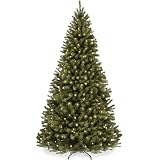
- ARTIFICIAL SPRUCE TREE: High-quality PVC needles recreate the dense foliage of the iconic Spruce tree to produce a simple yet elegant centerpiece for the holiday season
- TWINKLING LIGHT FUNCTIONS: Illuminate your holidays with 3 captivating light modes, including the viral twinkle effect, lighting up your home with holiday magic; Number of lights (4.5ft/6ft/7.5ft/9ft/12ft): 200/250/550/900/1,300/1,800
- FULL APPEARANCE: Hundreds of tips create a full, yet tapered appearance with meticulously crafted branches that mimic the color and texture of an authentic Spruce tree; Number of Tips (4.5ft/6ft/7.5ft/9ft/12ft): 763 / 798 / 1,346 / 2,028 / 4,188 / 5,476
- EASY ASSEMBLY & FLUFFING: Put the tree together in just three steps: simply unfold the metal stand and stack each section from largest to smallest, then fluff and enjoy!
- HIGH-QUALITY MATERIALS: Crafted with strong metal hinges and flame-retardant PVC branches that stand tall with the help of a sturdy metal base, so your tree is ready to look its best for the season ahead!; OVERALL DIMENSIONS: 52"(Dia) x 72"(H) (including stand)
Eastern white pine is a good choice for children or adults who dislike prickly foliage. Its long needles create a soft, airy appearance, but the branches are flexible and generally poor for heavy ornaments. It also has little aroma compared with balsam, grand, Douglas-fir, or Fraser. Choose it for lightweight décor, ribbon, and a gentler tactile experience rather than for a heavily ornamented formal tree. See NCTA and Iowa State Extension.
11. Virginia pine (Pinus virginiana)
Best for: a dense, stout small-to-medium tree in the South and for shoppers who like a compact form.
Virginia pine responds well to trimming and can produce a full, dense tree with sturdy branches. Its natural shape may be more twisted or compact than the highly symmetrical Fraser-fir look, which is either a benefit or a drawback depending on your decorating style. It is an important regional option in the South and can be easier to source, better adapted, and fresher there than a northern species transported a long distance. The NCTA profile is the best starting reference.
12. Colorado blue spruce (Picea pungens)
Best for: clearly blue foliage, a symmetrical shape, and stiff branches.
Colorado blue spruce offers a distinctive blue color and strong limbs that can support heavier ornaments. Its principal handling drawback is also unmistakable: the needles are sharp. That matters when carrying the tree, decorating with children, or placing it where pets can brush against it. Crushed foliage may have an unpleasant odor. Its retention can be relatively good for a spruce, but it still depends heavily on freshness and water. Consult the NCTA profile and Wisconsin Extension.
Recommended Free Tools
13. Norway spruce (Picea abies)
Best for: a traditional dark-green, European-style appearance and classic spruce scent.
Norway spruce has a familiar holiday look and attractive fragrance, but it is a high-maintenance cut tree because needle retention is poor unless the tree is very fresh and carefully watered. It is a good fit for shoppers who will buy close to display time, make the fresh cut promptly, and monitor the stand every day. It is a particularly poor choice for early setup when reliable watering is unlikely. Outdoors, it is shallow-rooted, which is relevant if you are considering a living tree. Sources include NCTA and the RHS.
14. White spruce (Picea glauca)
Best for: short, stiff, relatively blunt needles and a natural shape suitable for heavier décor.
White spruce has a good natural form, useful branch stiffness, and a traditional green color. Its needles are less aggressively sharp than Colorado blue spruce in some comparisons, but the foliage can still feel prickly, and crushed needles may smell unpleasant. Needle retention is generally moderate rather than exceptional compared with Fraser, noble, concolor, Canaan, Scotch, or Nordmann firs. Choose it when branch strength and shape matter more than maximum softness or scent.
Do these 3 things before closing this tab:
1Clear out junk files and repair common Windows errors2Scan for outdated or missing drivers - takes under a minute3Repair Windows errors before they cause bigger problems15. Eastern redcedar (Juniperus virginiana)
Best for: distinctive dense foliage and a native, regionally available choice in the East and South.
Eastern redcedar has dark-green to bronzy, scale-like foliage and tightly arranged branches. It is not a true cedar; it is a juniper. The dense structure can make decorating more difficult, and the branches are not the first choice for heavy ornaments. It suits shoppers who want a less standardized, strongly regional tree with a distinctive texture. Availability and shape vary considerably from farm to farm. See NCTA and Iowa State Extension.
Rank #4
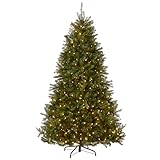
- This Dunhill Fir Full Pre-Lit Artificial Green Christmas Tree is 7.5 feet tall with a 59 inch base diameter. Featuring hundreds of individually crafted branch tips to create full bodied branches, this tree is designed to look and feel lifelike.
- Features PowerConnect system and 900 Dual Color LED bulbs that can switch between white and multicolor lights. This feature includes a switch to control ten different light functions, allowing the bulbs to twinkle, flash or fade on either color setting.
- This tree features pre-attached, hinged branches that drop down for a simple set-up and fold back in for quick and convenient storage. Set aside 45-60 minutes to properly shape the tree by peeling back the branches and pulling the tips apart.
- Constructed with sturdy, high quality materials, hypo-allergenic, fire-resistant needles, this tree is built to bring holiday cheer for years to come. Includes a durable metal base.
- At National Tree Company, we believe that special holiday memories don’t have to be far and few between. This Christmas season, let our decorations transform your home while you focus on creating more of those magical moments.
16. Arizona cypress (Cupressus arizonica)
Best for: warm regions, a narrow steeple shape, and pale green, gray-green, or blue foliage.
Arizona cypress can be a practical alternative where many northern firs are poorly adapted. It has a narrow form, pleasing aroma, and color that may range from pale green to gray-green or blue depending on the cultivar. It is more commonly encountered at choose-and-cut farms than at ordinary retail lots. Ask the grower about the specific cultivar and how recently it was harvested, because “Arizona cypress” does not guarantee one uniform color or shape. The NCTA profile covers its Christmas-tree use.
17. Leyland cypress (× Cupressocyparis leylandii)
Best for: a major Southeastern option with little aroma and no conventional sticky sap.
Leyland cypress is a cypress hybrid with dark green-gray foliage and little fragrance. It is important in the Southeast, where regional production can provide a fresher, better-adapted tree than a fir transported from a cooler climate. It is commonly sold through choose-and-cut farms. The term “sap-free” should be kept narrow: it means the tree does not produce the typical sticky pine or fir sap, not that it is free of every possible allergen or incapable of causing irritation. See NCTA.
How to choose a fresh Christmas tree
Species is only half the decision. Use this inspection before paying:
- Look at the exterior foliage. Choose green, flexible foliage. Exterior needles should not fall when you touch the tree lightly. Some brown needles deep inside the tree are normal seasonal shedding and do not automatically mean the tree is stale; the NCTA FAQ explains the difference.
- Check the actual trunk. It should be straight enough to fit your stand, with enough bare trunk below the lowest branches for the stand to grip. Do not buy based only on the tree’s wrapped outline.
- Measure before shopping. Account for the ceiling, stand, topper, floor clearance, furniture, doors, and walking paths. Width is just as important as height, particularly for noble fir, white pine, Douglas-fir, and dense Virginia pine.
- Inspect branch strength. Hang or estimate the weight of your largest ornaments. A flexible white pine or Douglas-fir may be perfect for lightweight décor but frustrating for large glass ornaments.
- Prefer freshness, not a sales category. A recently harvested choose-and-cut tree is often an excellent choice, but a retail-lot tree is not automatically inferior. Judge the actual tree and ask when it was harvested if the seller knows.
Correct setup and watering procedure
A good species can still become unsafe and shed early if the base dries out. Set it up as soon as practical:
- Make a fresh perpendicular cut. The NCTA recommends removing approximately ½ inch from the base immediately before putting the tree in water. The NFPA 2025 safety sheet specifies a 2-inch fresh cut. These are different published instructions, so follow the guidance of the organization, grower, or retailer you are using; the essential point is a fresh, straight cut before placement.
- Use a properly sized stand. NCTA’s care guidance calls for a stand holding roughly 1 quart of water per inch of trunk diameter. The stand must support the tree securely and keep the cut surface submerged.
- Use plain tap water. Do not add bleach, aspirin, fertilizer, sugar, soda, vodka, or homemade preservatives. NCTA and Oregon State Extension both advise against relying on additives.
- Check the water every day. Never allow the water level to fall below the trunk base. A tree can stop taking up water when the base is exposed or becomes sealed with resin, so checking the stand is more useful than guessing from the appearance of the needles.
- Place it carefully. Keep the tree away from fireplaces, radiators, heat vents, candles, and direct sunlight. Heat accelerates drying and may create a fire hazard.
Do not shave the sides of the trunk to force it into a too-small stand, drill holes in the base, or make an angled or V-shaped cut. Those shortcuts can weaken the fit or reduce the useful water-conducting surface.
Independent reader supportYour contribution helps us test, update, and keep practical guides available for everyone.What if the tree stops taking up water?
First confirm that the stand has not gone dry and that the trunk base is still below the water line. If the stand was dry for less than 24 hours, many Douglas-fir, noble, Nordmann, and Fraser trees should rehydrate after refilling. For grand fir, OSU Extension gives about 12 hours as a more cautious limit. These are practical recovery guidelines, not guarantees.
If the tree is dry, brittle, dropping large numbers of exterior needles, or no longer feels flexible, remove it rather than trying to revive it. A species with excellent retention can still become a dry, dangerous tree.
Children, pets, and fire safety
There is no universally “pet-safe Christmas tree.” Safety depends on the tree, the stand, the water, the lights, the ornaments, and whether an animal or child can reach them.
- Secure the tree so it cannot be pulled over. Use a stable stand and, where appropriate, an unobtrusive tether.
- Cover or block access to the stand water. Do not let pets drink it, especially if anything besides plain tap water has been added. Poison Control discusses risks associated with preservatives.
- Keep sharp spruce needles and fallen needles away from children and pets. Colorado blue spruce is particularly prickly. The Wisconsin Extension comparison is useful when tactile comfort matters.
- Keep breakable ornaments, tinsel, hooks, and electrical cords out of reach. The ASPCA holiday-safety guidance covers common pet hazards.
- Keep the tree at least 3 feet from fireplaces, radiators, heat vents, candles, and other heat sources. Never use lit candles on a tree.
- Use tested lights in good condition, and turn them off whenever you leave the house or go to sleep.
- Do not place the tree where it blocks an exit.
- Remove the tree after Christmas or as soon as it becomes dry, then recycle it through a local program.
NFPA estimated an average of 160 U.S. home structure fires per year involving Christmas trees during 2016–2020, with two deaths, 11 injuries, and $12 million in direct property damage annually. Electrical or lighting equipment was involved in 44% of those fires, while heat sources placed too close accounted for 20%. These figures are U.S. estimates for the stated period, not a prediction for an individual household. NFPA research and NIST testing show why moisture matters: under NIST’s test conditions, a watered tree was difficult to ignite, while one dry Douglas-fir ignited and reached a peak heat-release rate of 7,362 kW in 31 seconds. NIST used one dry and one watered tree, so this illustrates the importance of moisture rather than ranking all species in a universal fire test.
Living and potted Christmas trees are a separate decision
A rooted tree is not simply a cut tree with a longer warranty. Species, climate, soil, root-ball size, indoor time, and the transition back outdoors all matter. A tree that tolerates several weeks indoors may still fail after planting if it is not suited to your local conditions.
Potted versus balled-and-burlapped
A container-grown tree is already growing in a pot and is generally easier to handle, although the container can still be heavy. A balled-and-burlapped tree is dug with its roots and soil intact. NCTA notes that a 6-foot balled-and-burlapped tree can weigh up to 250 pounds, so plan the route, stand, and help before bringing one indoors.
Best Value

- Realistic Artificial Pine Tree Design — Features lush PVC branches with a full and natural look, creating a realistic mini Christmas tree display ideal for tabletops, desks, apartments, offices, and indoor holiday décor
- Compact 3FT Size for Small Spaces — The mini Christmas tree design fits perfectly on tabletops, corners, entryways, offices, apartments, classrooms, and other compact indoor spaces without taking up much room
- Stable 4-Leg Plastic Base Support — Equipped with an upgraded four-leg plastic stand for enhanced balance and stability, helping keep the tree upright during holiday decorating and daily display
- DIY Decoration Ready, Unlit Design — No pre-installed lights, allowing you to personalize with ornaments, string lights, ribbons, bows, tree toppers, and other Christmas decorations to create your own festive style
- Easy Assembly & Reusable Storage — Simple setup with detachable sections and foldable base for quick assembly, easy storage, and convenient reuse for Christmas parties and holiday seasons year after year
Keep the root ball slightly damp, not flooded. Store the tree in a cool, sheltered, unheated space before and after its indoor display. Avoid moving it abruptly from a warm room into freezing conditions, or the reverse. Keep its time indoors limited, then transition it gradually to outdoor conditions according to local extension guidance.
Quick wins for a faster PC:
Fix the driver behind crashes, sound loss and screen glitchesFind Drivers →Repair Windows errors before they cause bigger problemsFix Now →Climate fit is critical. NC State Extension specifically cautions that Fraser fir often performs poorly as a landscape tree at lower elevations and that the root ball must be large enough to support the crown. Ask a local nursery or extension service whether the species is appropriate for your planting site rather than choosing solely by holiday appearance.
Tabletop alternatives
For a small room, office, apartment, or secondary display, consider a dwarf Alberta spruce, Norfolk Island pine, Italian stone pine, false cypress, or rosemary. These are not interchangeable in outdoor hardiness or care. Confirm the plant’s light, temperature, watering, and eventual planting requirements before treating it as a permanent tree. See NC State Extension and the RHS.
A practical final decision guide
Use this sequence at the lot or farm:
- Measure the room first. Eliminate trees that are too tall or too wide for the ceiling, stand, topper, furniture, and exits.
- Choose cut or rooted. If you want a planted tree afterward, verify climate and soil suitability before buying. If you want the simplest holiday setup, choose a fresh cut tree.
- Set the ornament requirement. Heavy glass or metal décor points toward noble fir, Fraser fir, Scotch pine, white spruce, or Colorado blue spruce. Lightweight ornaments expand your options to balsam, Douglas-fir, and white pine.
- Set the needle requirement. For children or prickly-needle sensitivity, begin with Fraser, balsam, white pine, or Douglas-fir. If you choose a spruce, handle it with care.
- Set the scent requirement. Choose balsam or grand fir for strong traditional fragrance, Douglas-fir or Fraser for a pleasant sweet scent, and concolor fir for a citrus-like scent. Choose Leyland cypress if little aroma is preferred.
- Match the region. In warm or Southeastern areas, ask local growers about Leyland cypress, Arizona cypress, Virginia pine, and eastern redcedar before importing a northern species.
- Buy the freshest actual tree. Green, flexible exterior foliage, a sound trunk, and a secure stand fit matter more than a national “best tree” list.
- Commit to daily watering and safe placement. No species can be made fire-safe by reputation alone.
For the broadest combination of form, scent, branch strength, and retention, start with Fraser fir. Change that choice when your priorities point elsewhere: balsam for fragrance, noble or Scotch pine for heavy ornaments, white pine for soft needles, blue spruce or concolor for unusual color, and regional cypresses or pines for warm climates.
Frequently Asked Questions
What is the best all-around Christmas tree?
For many U.S. homes, Fraser fir is the best all-around choice because it combines attractive form, pleasant fragrance, sturdy branches, good needle retention, and good shipping performance. A fresh local tree may still be a better choice than a less-fresh Fraser fir.
Free tools Windows power users keep installed
One-click scans. No signup required.
Which Christmas tree smells the best?
Balsam fir is the classic choice for strong Christmas-tree fragrance. Grand fir is also especially fragrant, while Douglas-fir and Fraser fir provide pleasant alternatives. Aroma is subjective and varies by individual tree.
Which Christmas trees are best for heavy ornaments?
Noble fir, Fraser fir, Scotch pine, white spruce, and Colorado blue spruce are good starting points for heavy ornaments because their branches are relatively stiff. Inspect the actual tree, since branch spacing and freshness still matter.
Which Christmas tree has the softest needles?
Fraser fir, balsam fir, white pine, and Douglas-fir are generally more comfortable to handle than sharp-needled spruces. No tree should be called completely safe for children or pets; secure it and keep needles, decorations, and stand water out of reach.
What is the best Christmas tree for a warm climate?
Leyland cypress, Arizona cypress, Virginia pine, and eastern redcedar are useful warm-region choices. Local availability and the specific farm’s growing conditions matter, so ask growers what performs best in your area.
The Bottom Line
Bottom line: Fraser fir is the best all-around starting point for many U.S. homes, but the freshest tree that fits your room, climate, ornaments, and household is the better real-world choice. Keep its cut base underwater, use plain tap water, keep it at least 3 feet from heat, and remove it when it becomes dry.
Quick Recap
Product prices and availability are accurate as of the date/time indicated and are subject to change. Any price and availability information displayed on Amazon at the time of purchase will apply.

