Windows Errors? Fix Them Before They Spread
Repair common Windows errors and clear accumulated junk for a smoother, more stable PC - no reinstall needed.Free scan · no reinstallOutdated Drivers Are Slowing You Down
One free scan finds every outdated or missing driver and matches the right update for your exact hardware.Free scan · exact hardware matchTo grow a healthy camellia, plant it in acidic, well-drained soil where it receives bright filtered light or gentle morning sun, then keep the root zone evenly moist. Shelter it from drying wind and intense afternoon heat, feed modestly in spring, and prune after flowering. Correct planting depth and drainage prevent more camellia problems than any later treatment.
Camellias are easiest to grow when their roots stay cool and evenly moist while their foliage receives bright, filtered light. Plant them in acidic, well-drained soil, protect them from drying wind and intense afternoon sun, and prune only after flowering. Most problems—yellow leaves, bud drop, root decline and poor flowering—trace back to unsuitable light, drought, waterlogged soil, incorrect planting depth or excessive feeding.
As an Amazon Associate I earn from qualifying purchases.
Choose the right camellia
“Camellia” describes a large genus, but two groups are especially common in gardens:
| Group | Usual flowering period | Typical garden use |
|---|---|---|
| Camellia sasanqua and hybrids | Autumn through winter | Hedges, screens, smaller gardens and sunnier positions once established |
| Camellia japonica and hybrids | Late winter through spring | Specimen shrubs, woodland borders and sheltered foundation planting |
| Camellia × williamsii hybrids | Late winter through early spring | Reliable flowering in suitable temperate climates |
Flowering time, mature size, flower form and cold tolerance vary by cultivar. Check the plant label before buying and allow room for the shrub’s eventual width. The Royal Horticultural Society’s camellia growing guide lists C. sasanqua as an autumn and winter bloomer, while C. japonica and C. × williamsii generally flower from late winter into spring.
#1 Best Overall

- Supports Vibrant Blooms – Camellia plant food helps promote fuller flowers and improved bloom performance.
- Encourages Healthy Growth & Roots – Fertilizer for camellias supports strong root systems, lush foliage, and overall plant health.
- Liquid Fertilizer for Camellias – Fast-absorbing liquid fertilizer camellias formula for efficient nutrient delivery.
- Made in USA
Where to plant a camellia
Light
Choose bright filtered light, dappled shade, or morning sun followed by afternoon shade. A position beneath high tree branches or on the north or east side of a building is often suitable.
Camellia sasanqua usually tolerates more sun than C. japonica after its roots are established, but neither should be assumed to thrive in hot, reflected afternoon sun. Full exposure can cause scorched or bronzed foliage, particularly after moving a plant from shade into sun. Heavy shade can produce open growth and fewer flowers.
Shelter from wind and frost
Camellias are evergreen, so cold, dry wind can remove moisture from leaves during periods when the roots cannot replace it. Plant them in a sheltered position away from persistent wind. Flowers and developing buds may also be damaged by late frost or by cold early-morning sun thawing frozen tissue too quickly.
Free tools Windows power users keep installed
One-click scans. No signup required.
Cold tolerance depends on the species, cultivar, plant maturity and local exposure. Choose a cultivar recommended for your area rather than relying on a hardiness number alone. Container-grown plants need more winter protection because their roots are exposed above ground.
Prepare acidic, well-drained soil
Camellias prefer rich, moisture-retentive soil that drains freely and is slightly acidic. A practical target is approximately pH 5.5–6.5. Test the soil before planting, particularly near new construction, where mortar, plaster, concrete dust or limestone can make soil more alkaline. The University of Georgia’s planting guidance specifically identifies construction debris and compacted soil as potential causes of poor plant performance.
High pH can restrict nutrient availability even when nutrients are present. Pale new leaves with greener veins may indicate iron chlorosis, but the underlying problem may be alkaline soil, damaged roots or poor drainage rather than a simple lack of iron.
- Test pH and nutrient levels before applying lime, sulphur, iron or large amounts of fertiliser.
- Never add lime, wood ash or alkaline building waste around a camellia.
- Improve compacted soil across the planting area rather than creating a small pocket of radically different soil in the hole.
- If soil remains wet after rain, use a raised bed or container instead of trying to solve a drainage problem with extra watering.
Do not place a layer of gravel in the bottom of a planting hole. It does not correct poor drainage and can leave the root zone saturated. On very heavy soil, a raised bed with properly draining soil is more reliable.
Recommended Free Tools
How to plant a camellia
Autumn and spring are generally suitable planting seasons. In colder areas, spring planting gives a new shrub more time to establish before winter. Plant whenever the soil is workable, provided the plant can be watered during establishment.
- Water the camellia thoroughly while it is still in its nursery container.
- Dig a hole at least twice as wide as the root ball, but no deeper.
- Remove the container carefully. If the outer roots are tightly circling, loosen a few with your fingers or make shallow vertical cuts through the outer surface.
- Set the plant so the top of the root ball is level with the surrounding soil. In heavy soil, planting slightly high is safer than burying it.
- Backfill with the soil removed from the hole. Avoid burying the trunk or root flare.
- Water slowly and deeply to settle the soil and remove air pockets.
- Apply a 5–8 cm layer of mulch over the root zone, leaving a clear gap around the trunk.
Camellias have shallow roots and do not tolerate being planted deeply. The Clemson Cooperative Extension camellia guide also recommends shallow planting and a 5–8 cm mulch layer to conserve moisture.
Rank #2
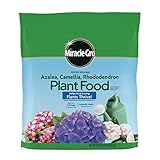
- Miracle-Gro Water Soluble Azalea, Camellia, Rhododendron Plant Food helps acid-loving plants and flowers thrive
- Plant food instantly feeds acid-loving plants, including azaleas, camellias, rhododendrons, gardenias, hibiscus, hollies, hydrangeas, and orchids
- Perfect to use on the indoor plants that decorate your bookshelf or side table, as well as the outdoor plants that live in your garden or planters
- Apply plant food every 7-14 days with a watering can or Miracle-Gro Garden Feeder
- Fertilizer won't harm other plants or burn foliage, when used as directed
Watering camellias
Keep newly planted camellias evenly moist while they establish—especially through their first summer—but never keep the soil saturated. Water deeply at the base of the plant when the upper soil begins to dry, then allow excess water to drain away.
The first 18 months are particularly important. Established shrubs are more resilient, but prolonged summer drought can reduce growth and cause flower buds to drop. Summer moisture matters because camellias develop the following season’s flower buds during this period.
Check the soil rather than following a fixed calendar. Push a trowel or finger about 10 cm into the soil; if it is dry at that depth, water thoroughly. The RHS recommends rainwater where possible in hard-water areas because prolonged use of alkaline tap water can gradually raise the growing medium’s pH.
| What you see | Likely possibilities | What to check first |
|---|---|---|
| Wilted leaves with dry soil | Drought, wind stress or damaged roots | Soil moisture below the surface and recent rainfall |
| Wilted or yellow leaves with wet soil | Waterlogging or root disease | Drainage, planting depth and root condition |
| Brown leaf edges | Drought, salt, fertiliser burn, heat or wind | Fertiliser history, exposure and watering consistency |
| Small corky patches on leaf undersides | Oedema caused by excessive root uptake in cool, wet conditions | Overwatering, poor drainage and air circulation |
Mulching
Use pine bark, pine straw, leaf mould or another suitable organic mulch. A 5–8 cm layer helps conserve moisture, moderate root temperature and suppress weeds. Keep mulch away from the trunk; contact with continuously damp mulch can encourage decay.
Refresh the layer as it breaks down, but do not pile fresh mulch over the root flare. Keep the area beneath the shrub free of weeds and, when disease is present, remove fallen flowers and leaves rather than leaving contaminated debris in place.
Feeding camellias
Camellias generally need modest feeding. Apply an acid-loving or ericaceous fertiliser in spring after flowering, following the product label exactly. Do not assume that more fertiliser will produce more flowers.
What’s actually slowing this PC down?
Pick the symptom - the matching free tool is one click away.
Avoid heavy or late-season feeding. Excess fertiliser can burn leaf edges, cause leaf drop and promote soft growth that is vulnerable to cold. The RHS advises not feeding camellias later than the end of July in its UK guidance; in other climates, use the same principle and avoid stimulating tender growth before the plant’s dormant or cold period.
Do not fertilise heavily at planting. Let the roots establish first, then use soil-test results and visible growth to decide whether feeding is necessary. If leaves remain pale, correct the cause rather than repeatedly applying nutrients.
Pruning and shaping
Most camellias need little pruning. Remove dead, diseased, damaged or crossing branches, and shorten shoots that spoil the plant’s shape. Perform routine shaping immediately after flowering, before the shrub has developed the next season’s flower buds.
Rank #3

- Enhanced Nutrient Formula: SouthernGRO Azaleas/Camelia/Gardenia Fertilizer 04-08-08 offers a unique blend of nutrients specifically designed to optimize growth and health in your plants, ensuring greener foliage and deep roots.
- Ideal Composition: The 4lb. bag of fertilizer provides a well-balanced 04-08-08 formula, great for replenishing essential nutrients and promoting overall plant health. Achieve impressive results in your lawn, garden, or food plot.
- Versatile Application: SouthernGRO's high-quality fertilizer is suitable for a variety of plants, including Azaleas, Camelias, Gardenias, and Evergreens. Experience the benefits of a healthier, more vibrant garden with this specialized blend.
- Easy To Use: Simply apply Azaleas/Camelia/Gardenia Fertilizer 04-08-08 to your plants' root systems for optimal results. The 4lb. bag ensures a convenient and efficient application for gardeners of all skill levels.
- Trusted Brand: SouthernGRO is committed to providing premium fertilizers that deliver outstanding results. Enhance the vitality and appearance of your plants with this expertly crafted, nutrient-rich formula.
- Start with dead and damaged wood.
- Remove weak or crossing branches at their point of origin.
- Shorten long shoots to an outward-facing bud or healthy side branch.
- Thin selected old branches if the centre is congested; avoid shearing the plant into a dense outer shell.
Hard renovation is possible on a healthy established plant, but it may take two or more years to return to heavy flowering. The RHS recommends hard pruning in March in its UK guidance; the correct month elsewhere depends on when the shrub finishes flowering and begins new growth. Never prune solely by the calendar if it would remove unopened flower buds.
Use clean, sharp secateurs or loppers. If you cut diseased wood, disinfect tools between cuts. Clemson Extension recommends a solution of one part household bleach to nine parts water for tool disinfection; rinse and dry tools afterward to reduce corrosion.
Why camellia buds drop
Some bud drop is natural: camellias often form more buds than the plant can open. A sudden increase in bud drop, however, usually signals stress.
- Summer drought or irregular watering while buds are developing
- Waterlogged soil or root damage
- Sudden temperature changes, late frost or drying wind
- Too much shade and insufficient energy for flowering
- Excessive or late fertilising
- A plant carrying more buds than it can mature
Keep moisture steady through summer, improve drainage, and avoid late feeding. On a young plant with an unusually heavy crop, removing a portion of the buds can produce larger, better-spaced flowers.
Growing camellias in containers
Camellias are well suited to containers if the pot has drainage holes and the growing medium is acidic, moisture-retentive and free-draining. Use a container only moderately larger than the root ball; an oversized pot can remain wet around a small root system.
The Tool Desk
Outbyte PC Repair FREEClear out junk files and repair common Windows errorsFree Scan →Outbyte Driver Updater FREEScan for outdated or missing drivers - takes under a minuteDriver Scan →- Check moisture more frequently than you would for a plant in the ground.
- Water until excess drains from the bottom, then empty any saucer.
- Use an ericaceous or acid-loving-plant potting mix.
- Repot when roots fill the container or the growing medium has broken down, preferably after flowering or before the main flush of growth.
- Move the pot to a sheltered position before severe cold. Protect the root system from prolonged freezing without placing the plant in a hot indoor room.
Common camellia pests and diseases
Scale insects and sooty mould
Tea scale and cottony camellia scale may appear as fixed bumps or waxy deposits on stems and leaf undersides. They suck sap and can cause yellowing and weak growth. Their honeydew supports black sooty mould, which is usually a secondary problem.
Inspect plants regularly, improve general growing conditions and remove small infestations where practical. Horticultural oil or insecticidal soap may help when the product is labelled for the pest and plant. Follow local regulations and label directions, and avoid spraying during unsuitable heat or when beneficial insects are active.
Camellia flower blight
Flower blight produces brown spots that expand across petals. Remove affected flowers and collect fallen blooms promptly; do not compost diseased flowers. Keep the area beneath the shrub clean and avoid overhead watering. Fungicides are generally preventive rather than curative and should be used only when correctly labelled for the disease in your area.
Root rot
Root rot is associated with poorly drained soil and overwatering. Affected plants may wilt even though the soil is wet, develop yellow leaves, lose vigour and eventually die. Correct the site’s drainage and planting depth; repeated replanting in the same saturated location is unlikely to succeed.
Rank #4

- VIBRANT BLOOMS & ROBUST GROWTH: Enriched with essential nutrients like magnesium, iron, and manganese, ASTEVORA 8-4-8 helps prevent chlorosis in acid-loving plants. Suitable for azaleas, camellias (camelia), rhododendrons, hydrangeas, and all acid-loving plants including magnolia trees, evergreens, and blueberries
- SOIL ACIDIFICATION FOR OPTIMAL GROWTH: This fertilizer acts as an effective soil acidifier. Suitable for azaleas, hydrangeas, and gardenias, often struggling in neutral or alkaline soils
- ENHANCES SOIL HEALTH WITH BENEFICIAL MICROBES: Bio-solid fertilizer derived from advanced wastewater treatment technology. Rich in live bacterial microbes, this meticulously refined bio-solid emerges through a rigorous process of heating, drying, and prilling, stripping away toxins and heavy metals. Naturally enriches your soil and supports microbial life for plant growth and vitality
- SIMPLE & STRAIGHTFORWARD APPLICATION: ASTEVORA 8-4-8 Fertilizer makes plant care easy for everyone. Just sprinkle the granules around the base of your plants, gently mix into the soil, and water. This no-fuss, clear method ensures that whether you are a first-time gardener or a seasoned green thumb, nourishing your plants is effortless and effective
- ECONOMICAL LONG-LASTING FORMULA: ASTEVORA 8-4-8 is cost-effective and incredibly efficient, requiring just three feedings per year. Its slow-release granules ensure sustained nutrition and long-lasting benefits for maintaining plant health and vibrancy throughout the year
Dieback and canker
Sudden yellowing and wilting on individual branches, followed by branch death or sunken lesions in the bark, may indicate dieback and canker. Prune several centimetres below affected tissue into healthy wood, disinfect tools between cuts and dispose of infected material. The Clemson disease and pest factsheet notes that fungicides may protect healthy tissue but do not cure existing infections.
Leaf gall and oedema
Leaf gall causes thickened, distorted new leaves, particularly on C. sasanqua. Remove galls early, rake up fallen material and avoid wetting foliage. Oedema produces raised, corky patches on leaf undersides when roots take up more water than leaves can release, often during cool, wet weather. Improve drainage and avoid overwatering; sprays do not correct oedema.
Propagation
Named cultivars are usually propagated from semi-ripe cuttings, hardwood cuttings, layering or grafting. Seed-grown camellias may not resemble the parent plant because the flowers can be cross-pollinated, and seedlings may take years to bloom.
Semi-ripe cuttings are taken from healthy current-season growth after the base begins to firm. They root best in a sterile, free-draining medium with high humidity, but success varies by cultivar. For a specific named variety, buying a nursery-propagated plant is usually faster and more predictable. The RHS provides guidance on semi-ripe cuttings, hardwood cuttings, layering and grafting.
Do these 3 things before closing this tab:
1Fix the driver behind crashes, sound loss and screen glitches2Clear out junk files and repair common Windows errors3Scan for outdated or missing drivers - takes under a minuteCamellia care calendar
| Season | Priority jobs |
|---|---|
| After flowering | Prune lightly if needed, remove damaged wood, deadhead for appearance, and feed if soil or plant performance indicates a need. |
| Spring and summer | Keep soil evenly moist, especially during dry weather; maintain mulch and inspect new growth for scale and other pests. |
| Late summer and autumn | Avoid heavy pruning and late high-nitrogen feeding. Maintain moisture as the next flowering season’s buds develop. |
| Flowering period | Protect buds from exceptional frost, remove diseased flowers and keep fallen infected debris out of compost. |
A quick troubleshooting checklist
- Check soil moisture 10 cm below the surface.
- Confirm that water drains away rather than collecting around the roots.
- Check that the root ball is not buried and that mulch is not touching the trunk.
- Inspect leaf undersides and stems for scale, aphids, honeydew or mites.
- Consider recent drought, frost, heat or wind before assuming disease.
- Test soil pH when leaves are pale or feeding has not improved growth.
- Prune only clearly dead, damaged or diseased wood unless the plant is being deliberately renovated after flowering.
Further reading
- Royal Horticultural Society: How to grow camellias
- Clemson Cooperative Extension: Camellia culture
- Clemson Cooperative Extension: Camellia diseases and insect pests
- University of Georgia Extension: Soil preparation and planting procedures
Frequently Asked Questions
What conditions do camellias need?
Plant camellias in acidic, well-drained soil with bright filtered light or morning sun and afternoon shade. Keep the soil evenly moist but never waterlogged, and protect the plant from drying wind.
When should camellias be pruned?
Prune immediately after flowering, before the next season’s flower buds develop. Camellias usually need only light shaping and the removal of dead, damaged or crossing branches.
Can camellias be grown in containers?
Yes. Use a pot with drainage holes and an acidic, free-draining potting mix. Container camellias dry out and freeze faster than in-ground plants, so check moisture often and protect the roots in severe cold.
Why are my camellia buds falling off?
Bud drop can result from natural excess bud production, summer drought, waterlogged roots, sudden temperature changes, frost, excessive shade or late feeding. Check moisture and drainage first.
The Bottom Line
Give a camellia the right site first: acidic, well-drained soil; bright filtered light; shelter from harsh wind; and reliable moisture. Plant it shallowly, feed sparingly, and prune after flowering. If the plant is struggling, investigate drainage, watering, exposure and soil pH before reaching for fertiliser or pesticides.
Quick Recap
Product prices and availability are accurate as of the date/time indicated and are subject to change. Any price and availability information displayed on Amazon at the time of purchase will apply.

