The best substitute for driveway salt is not another chemical—it is prompt snow and ice removal. Shovel before snow gets packed, scrape the remaining bond, and use sand or another abrasive when you need immediate traction. A few household liquids can loosen a thin patch of ice, but they can also refreeze and create a larger hazard.
The key distinction is simple: some alternatives melt ice, while others only help you avoid slipping. Use the six options below according to the problem you actually need to solve.
As an Amazon Associate I earn from qualifying purchases.
First, decide whether you need melting or traction
Salt works by lowering water’s freezing point, which helps melt or loosen ice under suitable conditions. Most items people keep around the house do not work that way.
Do these 3 things before closing this tab:
1Clear out junk files and repair common Windows errors2Fix the driver behind crashes, sound loss and screen glitches3Repair Windows errors before they cause bigger problems- Melting or loosening: pickle brine and warm water mixed with a small amount of table salt or water-conditioner salt may help with a thin or localized patch.
- Traction: sand, gravel, chicken grit, non-clumping kitty litter, and birdseed provide a rough surface for shoes and tires. They do not melt a driveway-wide sheet of ice.
- Removal: shoveling, scraping, and breaking the ice physically eliminate the hazard instead of covering it or adding dissolved solids.
If the surface is dangerous right now, keep people and vehicles off it while you work. Wear footwear with a firm tread, take short steps, and do not carry a heavy load across untreated ice.
#1 Best Overall
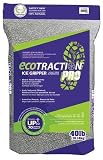
- Contains: Safe mineral for vegetation & concrete
- Package Type: Bag
- Size: 40 lb.
- Color: Light Green
- Effective Temp.: All
1. Shovel and scrape before the snow compacts
Physical removal is the most reliable first step and the only option on this list that removes snow and ice without adding a traction material or chemical. Shovel or snow-blow as soon as practical, then use an ice scraper or flat shovel to break the remaining bond.
Fresh snow is much easier to move than snow compressed by tires and footsteps. Once it is packed down, thaw-and-refreeze cycles can turn it into a hard, glazed layer that requires more effort to remove. Work in small sections rather than trying to attack the entire driveway at once.
- Clear loose snow down to the pavement or as close to it as safely possible.
- Hold an ice scraper or flat-edged tool at a shallow angle and work under the edge of bonded areas.
- Lift or push broken pieces away instead of leaving slush in a traffic path.
- Apply a traction material only after removal if the pavement remains slick.
Do not swing a heavy tool aggressively near vehicles, concrete edges, garage doors, or drains. If shoveling is unsafe because of age, injury, a steep drive, or a large storm, arrange help rather than risking a fall or overexertion.
A basic snow shovel and scraper are useful before a storm, not just after one. Choose a tool you can safely control; a larger blade is not automatically better if the added load makes lifting hazardous.
2. Spread sand, grit, or fine gravel for immediate traction
Sand is for traction, not melting. It creates rough contact points under shoes and tires, which can make a walkway or driveway safer even when the ice remains in place. It is especially useful when your immediate goal is to get a vehicle moving or give pedestrians a more secure route.
Use traction sand, masonry sand, or a clean coarse grit. Spread enough to create scattered areas of grip without burying the surface. On steep or heavily glazed ice, sand may improve footing but will not make the slope safe by itself.
Keep a container of traction sand or ice traction grit where it will stay dry and easy to reach. It is a practical category of supply for an icy driveway, but it should not be marketed or treated as a deicer.
When the weather improves, sweep up excess sand and dispose of it appropriately. Large amounts can be carried into storm drains or nearby waterways, where sediment can create its own maintenance and water-quality problem. Do not assume that because a product is chemical-free it can be spread without limit.
3. Use non-clumping kitty litter or chicken grit on narrow paths
Non-clumping kitty litter and chicken grit can provide localized traction on steps, a porch approach, a short walkway, or the area beside a parked vehicle. They are convenient when you already have one of them available.
Rank #2

- EFFECTIVE: Provides immediate traction upon application
- SAFE TO USE: Safe for pets, plants, concrete, bricks, pavers, etc.
- CLEAN: Non-staining, non-polluting, does not become muddy
- SALT & SAND ALTERNATIVE: Used to stabilize and add traction to snowy and icy surfaces
- NATURAL: Made of 100% quartzite stone, naturally mined
Choose non-clumping kitty litter if that is what you have. It can become messy underfoot and may not perform well as a melting agent—it generally does not melt a substantial ice layer. Clay-based litter can also create cleanup and drainage problems if it is spread near a storm drain and left there.
Quick wins for a faster PC:
Clear out junk files and repair common Windows errorsFree Scan →Fix the driver behind crashes, sound loss and screen glitchesFind Drivers →Chicken grit is another abrasive option for small areas. Apply either material sparingly, focusing on the route people actually need to use. Sweep up what remains after the ice clears so it is not tracked indoors or washed into drainage systems.
Neither material is automatically “pet-safe.” Check the ingredients and product label, keep pets from licking or ingesting scattered material, and wipe or rinse paws if a product is being tracked inside.
4. Use birdseed only as a limited emergency traction aid
Birdseed can provide temporary grip on a small walkway, porch approach, or doorstep when you need to use what is already in the house. Like sand and kitty litter, it is a traction aid—not an ice melter.
It is a poor choice for treating an entire driveway. Birdseed can attract birds, rodents, and other wildlife, and that may create a nuisance or safety problem around entrances, vehicles, or neighboring properties. It can also become wet and messy.
The Tool Desk
Outbyte Driver Updater FREEFix the driver behind crashes, sound loss and screen glitchesFind Drivers →Outbyte PC Repair FREERepair Windows errors before they cause bigger problemsFix Now →Rank #3

- PEOPLE, PLANT & PET SAFE - Gives instant traction on ice and snow. Safe on eyes, skin, paws and if ingested. It’s all-around safe!
- ALL NATURAL - Composed of all-natural minerals and safe ingredients. 100% free of harmful salts, chloride and chemicals
- WORKS AT ALL TEMPERATURES - Works at any temperature and any thickness of ice (even black ice); Superior Absorbency - Very absorbent and abrasive to help clean up messes from animal waste, bodily fluids, oils, paints, and many other viscous liquids.
- SURFACE SAFE - 100% safe on all surfaces including decking, new concrete, pavers, etc; Anti-skid - Creates an instant skid-free, slip-free surface on ice and snow for foot traffic, pet traffic, car traffic and more.
- EXCELLENT SPREAD RATE - Use sparingly while getting excellent traction on large areas for long winters; Non-corrosive and Non-conductive - No damage to delicate machinery and will not short circuit expensive equipment.
If you use it, limit the amount and location, then sweep it up when practical. Avoid placing it where attracting wildlife is undesirable or where runoff will carry it into a drain.
5. Apply pickle brine to thin ice—not deep snow
Pickle brine may help loosen a thin layer of ice because it contains salt dissolved in water. That makes it different from sand or litter, but it also means pickle brine is not a salt-free solution and should not be described as environmentally neutral.
Use it as a limited emergency treatment for a small icy patch. Apply only enough to begin loosening the bond, wait briefly, and then scrape away the softened slush. The goal is to make physical removal easier, not to flood the driveway until bare pavement appears.
Do not assume pickle brine is automatically safe for pets, plants, concrete, metal, or nearby waterways. Keep it away from landscaping where possible, prevent concentrated runoff from entering drains, and wipe up residue near entrances. Its effectiveness will also depend on the temperature, concentration, and thickness of the ice.
Free tools Windows power users keep installed
One-click scans. No signup required.
6. Treat a small patch with warm water and a little salt
For a small, thick patch, warm water mixed with a small amount of table salt or water-conditioner salt may initiate melting and help separate the ice from the pavement. This is a spot treatment, not a way to replace shoveling on an entire driveway.
Rank #4
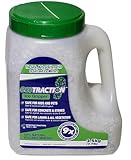
- HIGH TRACTION: Stay safe this winter by adding traction to your slippery driveway and paths, without the need for harmful salts
- HOW IT WORKS: Rather than melting, the eco-friendly granules grip into ice and snow, creating a non-slip surface
- NON-CORROSIVE: Safe for concrete, interlocking stones, bricks, wooden deck and metal
- PET FRIENDLY: Safe for pets, this natural product has no added chemicals
- PLANT FRIENDLY: After the winter, simply sweep any leftover granules onto the lawn/garden because it benefits soil & vegetation
- Remove loose snow first.
- Use warm water—not boiling water—and apply it to a limited area.
- Give the ice a short opportunity to loosen.
- Scrape away the resulting slush immediately.
- Use a small amount of traction material afterward if the pavement remains slick.
Never pour boiling water over a large driveway. Water can spread beyond the target area, refreeze, and create a larger sheet of ice when temperatures remain below freezing. Be particularly careful around garage thresholds, steps, drains, and low points where runoff can collect.
This method also adds salt or dissolved solids to the surface. It should not be presented as a salt-free or environmentally harmless alternative.
Use every substitute sparingly
“No driveway salt” does not mean “no environmental or surface-impact concerns.” Salt-containing liquids and dissolved products can move with runoff and affect soil, plants, concrete, metal, pets, and waterways. Abrasives can accumulate in gutters and drains, contribute sediment, and create cleanup work.
| Option | What it does | Best use | Main caution |
|---|---|---|---|
| Shovel and scraper | Physically removes snow and ice | First step on almost any surface | Fall and overexertion risk while clearing |
| Sand, grit, or gravel | Improves traction | Driveways, paths, and vehicle access | Does not melt; sweep up excess |
| Non-clumping litter or chicken grit | Improves localized traction | Steps and narrow pedestrian routes | Mess, drainage, and ingredient concerns |
| Birdseed | Provides temporary traction | Small emergency areas | May attract wildlife; clean up afterward |
| Pickle brine | May loosen thin ice | Small patches | Contains salt and can affect runoff or landscaping |
| Warm water plus a little salt | May initiate melting | Small patches that can be scraped immediately | Can spread and refreeze as a larger slick |
What not to substitute casually
Calcium chloride, magnesium chloride, calcium magnesium acetate, urea, beet-juice blends, and commercial products labeled “pet-friendly” are separate deicing-product categories. They are not interchangeable with household materials, and a “pet-friendly” label is not a universal guarantee that a product is harmless to animals, plants, concrete, metal, or waterways.
If you later buy a commercial deicer, read the active ingredients, application instructions, temperature range, and surface warnings. More product is not necessarily more effective; overapplication increases residue, runoff, and cleanup without guaranteeing bare pavement.
A simple no-salt response plan
- Block the area temporarily. Keep foot and vehicle traffic off the slickest section.
- Remove loose snow immediately. Do not allow traffic to compact it into ice.
- Scrape in small sections. Break the bond and move the pieces away.
- Add traction where needed. Use sand, grit, gravel, litter, or a very limited amount of birdseed.
- Use a liquid only for a small stubborn patch. Choose pickle brine or warm water with a little salt only when you can scrape promptly.
- Recheck the surface. Look for runoff that has refrozen near steps, drains, thresholds, and shaded edges.
- Clean up. Sweep abrasives and residue after the hazard has passed.
Before the next storm, keep a shovel, scraper, dry traction abrasive, and suitable winter footwear or ice cleats accessible. Preparation is more dependable than searching for a household liquid after the driveway has already frozen.
Best Value

- INSTANT ICE TRACTION: Skip the waiting — just spread Ice Traction for immediate grip on black ice, snow, and slick surfaces. No melting required.
- NON-CONDUCTIVE & ELECTRICALLY SAFE: Use around tracks, electrical equipment, or metal surfaces without risk of corrosion or short circuits — perfect for industrial environments.
- SUPERIOR TIRE TRACTION FOR SNOW: Designed for trucks, emergency vehicles, and machinery. Instantly improves tire grip in winter emergencies or slippery work zones.
- ALL-NATURAL, NON-TOXIC FORMULA: Made from volcanic minerals — safe for workers, pets, vegetation, and concrete. No harsh chemicals or runoff.
- HEAVY-DUTY DURABILITY: Won’t dissolve, blow away, or wash out. Stays in place through heavy snow, freeze-thaw cycles, and storms.
Frequently Asked Questions
What is the best substitute for driveway salt?
Start with shoveling and scraping, because physical removal eliminates the hazard without adding salt or abrasive material. Then use sand or another clean grit for traction. Pickle brine or warm water with a small amount of salt may help only on limited patches.
Recommended Free Tools
Does kitty litter melt driveway ice?
No. Non-clumping kitty litter mainly provides traction. It can help on steps and narrow paths, but it will not reliably melt a substantial layer of driveway ice.
Can I pour hot water on an icy driveway?
Use warm—not boiling—water only on a small patch that you can scrape immediately. Water can spread and refreeze, creating a larger slick area, especially near steps, drains, and garage thresholds.
Is pickle brine safe for pets and plants?
Do not assume it is. Pickle brine contains salt and can affect paws, plants, soil, concrete, metal, and waterways. Use it sparingly, keep it away from landscaping, and clean up residue.
The Bottom Line
When you run out of driveway salt, remove first and add traction second. Shovel and scrape before traffic compacts the snow; use sand, grit, litter, or another abrasive when you need immediate footing; and reserve pickle brine or warm salt water for small patches that can be scraped promptly. None of these choices makes careless walking, excessive runoff, or delayed cleanup safe.
What’s actually slowing this PC down?
Pick the symptom - the matching free tool is one click away.
Quick Recap
Product prices and availability are accurate as of the date/time indicated and are subject to change. Any price and availability information displayed on Amazon at the time of purchase will apply.

