These 56 window treatment ideas cover curtains, shades, blinds, shutters, film, and renter-friendly solutions for every budget and style. The best choice depends on the problem at each window: glare, privacy, darkness, insulation, appearance, moisture, child safety, or installation limits—not on one universally superior product.
Use the ideas by room, function, decorating style, window shape, and installation difficulty. Several treatments can be attractive in the same room, but their trade-offs differ: sheer fabric preserves daylight, blackout fabric blocks more light, cellular shades provide a compact profile, and shutters add architectural structure.
As an Amazon Associate I earn from qualifying purchases.
Key takeaways
- Choose a window treatment by the problem it must solve first—glare, privacy, darkness, heat, cold, appearance, safety, or installation limits.
- Layering a sheer or light-filtering treatment with a heavier curtain or shade gives more flexible daytime and nighttime control than either layer alone.
- Cellular shades use honeycomb cells to trap air, making them a strong compact-profile choice when insulation and light control matter.
- Mounting curtain hardware higher and wider can improve window proportions and let fabric clear the glass, but trim, radiators, furniture, and door swings must be checked first.
- The U.S. Consumer Product Safety Commission says, “The safest option when young children are present is to go cordless.”
- Blackout curtains are among the most versatile options for bedrooms, nurseries, media rooms, privacy, and glare control, but “blackout,” “room-darkening,” and “light-filtering” are not interchangeable terms.
How do you choose among these 56 window treatment ideas?
Start with the window’s main problem, then check the room, window shape, budget, mounting constraints, maintenance needs, and safety requirements. A sheer curtain may be attractive but inadequate for a street-facing bedroom; a blackout shade may solve sleep and glare problems but feel too visually heavy for a bright living room.
Free tools Windows power users keep installed
One-click scans. No signup required.
| Priority | Good starting options | Main trade-off |
|---|---|---|
| Daylight and an open view | Sheer curtains, light-filtering shades, solar shades | Less nighttime privacy and darkness when open |
| Privacy | Blinds, shutters, frosted film, closed layered curtains | Some options reduce the view or daylight |
| Bedroom darkness | Blackout curtains, blackout shades, layered treatments | Side gaps and installation quality still affect results |
| Insulation | Cellular shades, substantial curtains, layered treatments | Performance varies by product, fit, and window |
| Rental-friendly installation | Tension rods, temporary pleated shades, removable film | Usually less tailored and less durable than custom installation |
| Child safety | Cordless or inaccessible-cord products | Motorized and cordless controls may cost more |
| Architectural appearance | Shutters, full-height drapery, woven shades, Roman shades | More measurement, budget, or installation may be required |
What are the best budget-friendly and renter-friendly window treatment ideas?
Renters and budget-conscious homeowners can improve privacy and light control without committing to a major installation. Temporary products are especially useful in dorms, guest rooms, short-term rentals, and rooms where the final treatment has not yet been chosen.
#1 Best Overall

- SIZE & MATERIAL:Set includes 2 panels blackout curtains(52" Wide by 84" Long). Each panel has 8 grommets.The interior diameter of hole is 1.6 inch.It's easy to hang. Curtains are made by quality faux linen.
- BLACKOUT CURTAINS: Thermal insulated blackout curtains could block 100% light out to darken your room completely.Suitable for late sleepers, shift workers, seniors, parents, students and computer operators to enhance their quality of sleep well during the day.
- TRIPE WEAVE TECHNOLOGY:We adopt tripe weave technology to make material. With the help of this technology, curtains could insulate the room from the heat and cold all the year, so that it will save energy. Also,curtains could reduce the noise to keep your room quiet. Blackout curtains could provide you a comfortable environment with privacy.
- CLASSIC HOME DECOR:Quality linen curtains could decorate your room into a vintage, gorgeous and luxurious style. It is available in 8 sizes to accommodate your bedroom, living room, den,etc.
- EASY CARE: If there are wrinkles when opening the packaging. Warm iron or steam iron and tumble dry at low temperatures if necessary. Don't use sharp things scratching curtains.Due to different screen display, the color of actual item may vary slightly from images.
- Ready-made blackout curtains: Use blackout curtains in bedrooms, nurseries, and media rooms when darkness and privacy matter. Confirm the panel dimensions and hang the rod wide enough to limit uncovered edges.
- Sheer curtain panels: Sheers soften strong daylight and preserve an airy feeling while providing partial daytime privacy. They generally need a second layer for nighttime privacy.
- No-drill temporary pleated shades: These low-cost shades suit renters, dorms, guest rooms, and temporary spaces; some products can be cut to size. Follow the specific product’s sizing and removal instructions.
- Tension-rod café curtains: Cover the lower half of a kitchen or bathroom window without permanently installing a rod. The treatment preserves upper-window daylight but does not provide full-window privacy.
- Curtain panels over existing blinds: Add softness, color, and visual height without replacing functional blinds. Leave enough clearance for the blinds to operate.
- A single wide curtain panel: Place one wide panel on one side of a narrow window or window grouping for an asymmetrical look. This works best when the panel is decorative or when privacy is handled by an inner shade.
- Flat fabric panels on a track: A track creates a clean alternative to a conventional rod, particularly in compact or contemporary rooms. Check whether the track can support the fabric’s weight.
- Peel-and-stick frosted window film: Use removable-looking film for bathrooms, sidelights, and street-facing windows. Verify surface compatibility, cleaning requirements, and removal instructions before applying it.
- DIY café-curtain fabric: Repurpose tea towels, vintage textiles, or hemmed yardage for a small window. Choose washable material in kitchens and avoid placing fabric where it can contact a heat source.
- Curtain-wire display: Hang lightweight fabric or decorative textiles where a conventional rod would feel too heavy. Use properly rated hardware and do not use a lightweight wire for heavy curtains or child-accessible installations.
What layered window treatments work best?
Layered window treatments let one layer handle daytime light and another handle privacy, darkness, glare, or visual softness. Curtains and blinds guidance commonly distinguishes light-filtering layers from heavier light-blocking layers; the exact result depends on fabric opacity, fit, and side gaps.
- Sheer curtains plus blackout curtains: Keep the sheers closed during the day and draw the blackout layer at night. This is one of the most flexible bedroom and nursery arrangements.
- Roller shade plus side panels: Use the shade for daily privacy and glare control, then use the side panels for softness and visual height.
- Roman shade plus drapery: Pair a tailored fabric shade with full-height curtains for an upholstered, designer-style appearance.
- Cellular shade plus decorative panels: Let the cellular shade handle insulation and light filtering while the panels introduce color and texture. Cellular shade construction uses honeycomb cells that trap air, but do not assume every product produces the same measurable energy savings.
- Solar shade plus blackout drapery: Use the solar layer to reduce daytime glare and preserve a more open view, then close the drapery for evening darkness.
- Woven shade plus linen curtains: Combine natural texture with a soft, relaxed layer for coastal, organic, or modern-rustic rooms.
- Double curtain rod: Put sheers on the rear rod and decorative or blackout panels on the front rod. Confirm that the brackets and rod are rated for both layers.
- Double-track ceiling system: Use separate tracks for a sheer layer and an opaque layer when a rod would look visually bulky. Ceiling mounting is useful for wide openings but requires careful anchoring.
- Blind plus valance: Add a decorative topper when the blind provides necessary function but the room needs a traditional finish. Keep the valance clear of operating hardware.
- Top-down/bottom-up shade plus side panels: Lower the shade from the top for daylight while covering the lower glass at eye level. This is particularly useful for bedrooms, bathrooms, and street-facing rooms.
What are the best window treatments for a living room?
The best living-room window treatment balances view, glare, privacy, furniture placement, and the room’s visual scale. Curtains emphasize height and softness, while shades and blinds preserve a more compact wall profile; window-treatment style guidance compares these broad visual effects.
- Full-height neutral drapery: Mount curtains near the ceiling and let them extend toward the floor to make the window wall feel taller. Neutral fabric keeps the treatment flexible as furnishings change.
- Patterned statement curtains: Let the treatment establish the room’s color palette, then repeat one or two colors in pillows or art. Large patterns need sufficient wall and fabric width to read clearly.
- Textured linen-look panels: Add softness without the visual weight of velvet or heavy jacquard. Check care instructions because linen-look fabrics differ in fiber content and cleaning needs.
- Wood blinds with side panels: Combine adjustable light control with a warmer, more finished appearance. Wood tones should relate to nearby flooring, furniture, or trim rather than match every surface exactly.
- Woven wood shades: Natural texture complements rattan, wood furniture, plants, and organic materials. Add a privacy or blackout liner if the weave does not provide enough coverage.
- Roman shades in a contrast fabric: Make a small group of windows a focal point without using floor-length fabric. Measure each opening carefully when the windows are not identical.
- Solar shades for television glare: Reduce reflected light while retaining a more open view than blackout treatments. Openness and glare reduction vary by product, so review the manufacturer’s specifications.
- Layered media-room treatment: Pair a blackout shade or curtain with side panels to create a darker viewing environment. The treatment addresses glare directly; a streaming service is not a substitute for light control.
- Bay-window individual shades: Treat each bay section separately when the angles make one continuous curtain rod impractical. Individual shades usually simplify operation and clearance around the side returns.
- Decorative stationary panels: Use non-operating panels to frame a window when an inner shade handles privacy and light control. Keep stationary fabric away from radiators, heaters, and frequently opened doors.
How do I block light in a bedroom, nursery, or home office?
For bedroom darkness, combine an appropriately opaque treatment with good coverage at the top and sides. Blackout guidance distinguishes products intended to block light from lighter treatments that merely filter it; no generic curtain should be assumed to create total darkness.
Rank #2
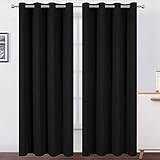
- Made of high quality durable 100% polyester fabric, our blackout curtains are super smooth, soft and free from chemical smell
- Package Includes: 2 black curtain panels, each blackout curtain measures 52 inch wide and 84 inch length constructed with 8 silver grommets measuring 1.6 inches inner diameter
- Blackout Curtains and Privacy Maximization: Curtains impede 85%-99% light and UV ray(Darker colors more better).The curtains are made using a triple weave innovative production method, and they help maximize privacy and reduce some noisy
- Energy Saving Curtains: These thermal insulated curtains help prevent energy loses by insulating hot summers and cold winters. Perfect thermal curtains for bedroom, living room, kids room and nursery room
- Care Instructions: Our room darkening blackout curtain machine washable, do not bleach, iron at low temperature settings
- Blackout curtain and roller-blind combination: Add a second layer when streetlights or early sun overwhelm a single treatment. Measure for enough width and overlap to reduce side light.
- Cordless blackout shade: Prioritize a cordless design in bedrooms and children’s rooms where cord safety matters. “Cordless” does not remove the need to keep furniture and sleeping spaces away from window coverings.
- Cellular blackout shade: Choose the compact honeycomb format when darkness and insulation are both priorities. Check whether the product is genuinely blackout or only room-darkening.
- Room-darkening Roman shade: Select this for a softer, more upholstered appearance than a roller shade. A room-darkening fabric may still allow more light than a blackout construction.
- Top-down/bottom-up bedroom shade: Keep the upper glass open for daylight while preserving lower-window privacy. This is useful when neighboring buildings or sidewalks look directly into the room.
- Quiet cordless roller shade: Use a clean-profile shade in a home office where fast glare control matters. Retain some daylight if the room needs comfortable ambient light for work.
- Motorized shade with schedule: Consider motorization for hard-to-reach windows, bedrooms, or a connected-home routine. Verify the exact product’s controls, power source, app, hub, and compatibility before buying.
- Blackout side channels or overlap panels: Reduce side light where near-dark conditions matter. Do not promise total darkness unless the specific product is designed and tested for that result.
- Layered nursery treatment: Use a cordless shade with decorative curtains and keep cribs, beds, furniture, and toys away from cords and loops. Decorative fabric should never create a reachable loop.
- Home-office light-filtering shade: Reduce monitor glare while retaining useful daylight instead of defaulting to full blackout. Repositioning the desk may also reduce glare without adding a second treatment.
What window treatments work in kitchens, bathrooms, and utility spaces?
Moisture, splashes, grease, heat, and cleaning determine whether a treatment is practical in a service area. Confirm the product’s care and room-rating guidance rather than assuming that every faux-wood, woven, or water-resistant material is suitable for every humid room.
- Moisture-tolerant faux-wood blind: Consider faux wood for kitchens or bathrooms where humidity makes some fabrics less practical. Confirm manufacturer care guidance and keep the blind clear of direct water.
- Short café curtain: Cover the lower portion of a kitchen window for privacy while leaving the upper portion open to daylight. Washable fabric is preferable near cooking areas.
- Inside-mount roller shade: Use a compact profile where counters, shelves, or tile limit outside-mount depth. Inside mounting requires adequate frame depth and can leave more visible light gaps.
- Bamboo-look shade: Add natural texture in a kitchen, breakfast nook, or laundry room while checking moisture exposure. A decorative bamboo look is not automatically moisture-resistant.
- Frosted film on a bathroom window: Provide privacy without blocking all daylight. Check that the film is compatible with the glass and can be removed without damaging the surface.
- Water-resistant woven-look shade: Use only when the product is specifically rated for the room’s humidity and cleaning conditions. Follow the manufacturer’s cleaning method.
- Half-shutter treatment: Cover the lower portion of a bathroom or street-facing window while leaving the upper glass bright. The fixed architectural look suits traditional and cottage interiors.
- Café curtain with a decorative rod: Make a small kitchen window feel intentional rather than purely utilitarian. Coordinate the rod finish with cabinet hardware or nearby lighting.
Which window treatment styles suit different decorating schemes?
Style should follow function, but the same functional category can look modern, traditional, relaxed, architectural, or dramatic depending on fabric, hardware, color, and fold.
- Modern roller shade: Choose a solid neutral or subtle texture for a simple, uncluttered profile. Roller shades work especially well where furniture or trim already provides visual detail.
- Traditional pinch-pleat drapery: Use fuller fabric and a visible rod or traverse system for a formal room. The structured pleats need adequate fullness and installation support.
- Relaxed Roman shade: Select a soft fold or natural fabric for cottage, transitional, or casual interiors. A Roman shade creates a tailored focal point without requiring floor-length fabric.
- Plantation shutters: Use architectural louvers for a durable, structured treatment with adjustable light and privacy. Shutters require accurate measurement and more substantial installation than a tension rod.
- Color-drenching curtains: Match curtain color closely to the wall for a calm, enveloping effect. Similar tones can make a treatment feel integrated rather than visually segmented.
- Contrasting trim or border: Add a narrow band of color to otherwise plain panels for a tailored custom look. Repeat the trim color sparingly elsewhere so the border feels intentional.
- Scandinavian light-filtering treatment: Combine simple curtains or blinds with pale colors and restrained hardware, keeping the focus on daylight and clean lines.
- Maximalist patterned drapery: Use a large-scale print as the room’s statement element, then balance it with quieter furniture and accessories.
What is the difference between shades and blinds?
Shades are generally continuous fabric or material panels that raise, lower, roll, or fold, while blinds use individual horizontal or vertical slats that tilt and often raise. Shades usually offer a softer appearance; blinds and shutters offer more direct slat-based adjustment of light and privacy.
Rank #3

- 100% Blackout Curtains: A full blackout white coating is attached to the back of our linen curtains, blocking 100% of sunlight and UV rays. Provide you a complete private and personal space for a sweet sleep or rest. Good choice for bedrooms, nursery, living rooms, offices, patio door. Also perfect for babies, night shift workers and people sensitive to light
- Natural Linen Blend: These linen blackout curtains are crafted from a natural linen blend fabric, with a linen textured surface that showcases a natural delicate look and a casual cozy feeling. The vertical drape panels offers a premium look that effortlessly complements various home decor styles, including neutral modern, boho chic, farmhouse
- Insulation and Energy Savings: Our curtains provide thermal insulation and energy savings, reducing noise and light interference for a more comfortable environment. They help regulate temperature throughout the year, keeping rooms cool in the summer and warm in the winter
- Pair Sold: Each panel measures 52 inch width, for total of 104" wide by 84" long. Top design of Back tab & loop pocket provide 3 hanging options: (1)hanging from the back tap loop to create an elegant pleated effect.(2) hanging with a classic rod pocket style.(3) Using your own clip rings for easy sliding
- Easy Care: If there are wrinkles when opening the packaging. Cool iron on front side as needed. Don't iron on the back side of 100% Blackout White Coating Layer. Machine washable in cold water and do not bleach, tumble dry low. Any questions please feel free to contact us
| Type | Light and privacy behavior | Appearance and practical note |
|---|---|---|
| Roller shade | Available in light-filtering, room-darkening, and blackout materials | Compact, clean profile; fit affects side light |
| Cellular shade | Can filter or block light depending on fabric and construction | Honeycomb cells provide a compact insulation-focused design |
| Roman shade | Fabric coverage varies from light filtering to blackout | Soft folds create an upholstered, decorative effect |
| Solar shade | Reduces glare while preserving more view than opaque products | Useful for bright rooms and screens; privacy changes after dark |
| Wood or faux-wood blind | Tilting slats adjust light and sightlines | Structured appearance; faux wood may be more practical in humidity |
| Shutter | Louver position adjusts light and privacy | Architectural and durable, but requires more installation and budget |
| Curtain | Opacity ranges from sheer to blackout | Adds softness and height; needs rod, fullness, and wall clearance |
How should you measure and install window treatments?
Measure before shopping, and use the exact measurement chart for the product you select. A generic width or height rule cannot replace the manufacturer’s instructions, especially for inside-mounted shades, blinds, shutters, and temporary products.
What’s actually slowing this PC down?
Pick the symptom - the matching free tool is one click away.
- For fabric curtains: IKEA’s window-treatment buying guide recommends adding at least 6 inches to each side of a window so curtains can cover the opening and open fully. Treat that as a starting point, then account for trim and the hardware’s actual return.
- Mount higher when appropriate: A rod closer to the ceiling can make ceilings appear taller. Do not mount so high that the curtain becomes difficult to operate or the bracket misses solid framing.
- Mount wider when possible: Extra width lets curtains clear the glass when open and can reduce the impression of a cramped window. Check walls, adjacent windows, switches, cabinets, and door swings.
- Check obstructions: Measure around trim, radiators, sills, plants, furniture, handles, and heating equipment before selecting rod length or shade depth.
- Choose fullness deliberately: More fabric creates deeper folds and a richer look; less fabric produces a flatter, more contemporary appearance. Fullness depends on the fabric, heading, finished width, and whether panels are meant to close.
- Understand inside mount: Inside-mounted shades and blinds sit within the frame and keep the wall profile compact, but they require sufficient depth and may show light gaps around the edges.
- Understand outside mount: Outside-mounted products cover more of the frame and can reduce visible light gaps, but they need clear wall space and accurate bracket placement.
- Measure unusual windows separately: Bay windows, tall windows, sliding doors, sidelights, shallow frames, and angled openings may need separate treatments or custom sizing. A custom window-treatment path is worth considering when standard sizes cannot provide proper clearance or coverage.
- Anchor securely: Use hardware appropriate for the wall type and treatment weight. Heavy drapery, ceiling tracks, shutters, and wide spans may require studs, blocking, or suitable anchors.
Are cordless blinds safer for children?
Yes. Cordless or inaccessible-cord window coverings should be prioritized where young children are present, but furniture placement and supervision still matter. The U.S. Consumer Product Safety Commission’s official guidance states: “The safest option when young children are present is to go cordless.”
The CPSC’s 2023 factsheet reports that, on average, about 8 children under age 5 die each year from strangulation involving cords on window blinds, shades, draperies, and other window coverings; the underlying data cover January 2009 through December 2021. Read the CPSC 2023 window-covering safety factsheet for the stated scope and warning details.
Rank #4

- 100% Blackout Curtains: Our Blackout Curtains ensure a completely dark room, isolate noise and protect privacy. These room darkening curtains can block 100% sunlight.Heavy duty curtains keep heat indoors in winter and discharge heat in summer, thereby reducing cooling and heating costs , While protecting your furniture, floors and artwork from the sun damage
- Curtains can be styled in muliple ways: Back Tab, Hook Belt, Rod pocket, Clip Ring(Hooks and Rings are NOT Included) and Track System. 8 back loops per panel, 3" rod pocket top fits rod with a diameter not exceeding 1.6" and makes the maximum coverage of windows, the belt sewn on the back for your own hooks allows for quick and easy installation
- Linen Look Fabric: These curtains&drapes are crafted from soft and draped textured linen look fabric with 100% blackout coating. Linen blackout curtains will bring more vintage and classic visual look, Softness and drape blackout curtains create a relaxed and fashionable home environment
- Packaging Includes: 2 pieces of heavy-duty blackout curtains are included.Each Drape measures width 50x84 length (Inches),total curtains width are 100 inches. Please check the Size Guide before purchasing, measure your window width and height in advance to achieve the desired decorative and functional effect
- Easy Care: Machine washable in cold water, use only non-chlorine bleach when needed, no color fading, wrinkle resistant, warm ironing or steam clean if necessary
- Choose cordless or inaccessible-cord products for rooms used by young children.
- Keep cribs, beds, furniture, and toys away from cords and loops.
- Do not assume a retrofit device eliminates every hazard; follow the product’s safety instructions and inspect the installation.
- Check operating controls, battery compartments, and mounting hardware regularly.
- Keep decorative curtain cords, tiebacks, and improvised wire systems out of children’s reach.
How can you match the treatment to the window and room?
Use the following decision path: identify the primary problem, select the operating style, check the window’s shape and available mounting depth, then choose the appearance and material. No single treatment is universally best.
| Window or room condition | Appropriate starting ideas | Check before committing |
|---|---|---|
| Small room | Roller shades, Roman shades, inside-mount blinds, flat panels | Choose whether visual height or a compact wall profile matters more |
| Bay window | Individual shades, separate Roman shades, tailored panels | Angles, returns, operation, and furniture clearance |
| Bedroom facing a street | Blackout curtain and blind, blackout cellular shade, top-down/bottom-up shade | Night privacy, side gaps, upper and lower sightlines |
| Window beside a screen | Solar shade, light-filtering shade, layered glare-control treatment | Day versus night privacy and screen reflections |
| Humid bathroom | Frosted film, faux-wood blind, specifically rated shade | Glass compatibility, moisture rating, and cleaning instructions |
| Rental or dorm | Tension rod, temporary pleated shade, removable film | Lease rules, surface damage, removal, and product size |
| Young children nearby | Cordless shade, cordless blind, inaccessible-cord treatment | Furniture placement and reachable loops or cords |
For a small room, a shade or blind keeps the wall more compact, while a curtain mounted high and wide can make the ceiling feel taller. For a bay window, separate treatments often operate more cleanly than one rod forced around multiple angles. For privacy, remember that coverage changes with viewing angle, fabric openness, and whether the treatment is closed.
Quick wins for a faster PC:
Repair Windows errors before they cause bigger problemsFix Now →Scan for outdated or missing drivers - takes under a minuteDriver Scan →Frequently Asked Questions
What are the best window treatments for a living room?
The best window treatments for a living room depend on the room’s glare, privacy, style, and window shape. Full-height neutral drapery adds softness and height, solar shades control television glare while preserving more view, and woven shades or wood blinds add texture and structure.
Best Value

- Premium & Easy-Care Fabric: These blackout curtains are crafted from high-quality, 100% Polyester microfiber. These curtains are durable, naturally wrinkle-resistant, and machine washable (recommended in a mesh bag). Avoid bleach for vibrant, long-lasting color.
- Superior Blackout & Energy Savings: Black out curtains feature triple-weave technology for professional-grade light blocking. Dark colors curtains block 80%+ of sunlight; light colors curtains block 60%+. Creates ideal darkness for sleep or naps. Thermal insulation helps regulate room temperature, reducing energy costs year-round.
- Versatile Size & Style Options: These window curtains are available in 20+ sizes (from 42" W x 63" L to 84" L, 52" W x 45" L to 120"L, 70" W x 90" L to 108" L) and 20+ stylish colors. Perfectly match any bedroom or living room decor. Includes sophisticated options like Burgundy Black.
- Effective Noise Reduction: Joydeco blackout curtains for bedroom have dense fabric construction, effectively absorbing over 35% of outside noise. Ideal for light sleepers, apartment living, and creating peaceful nurseries.
- Easy Installation & Ready to Hang: Our light blocking curtains feature 8 silver grommets per panel with a 1.6" inner diameter, compatible with most standard and decorative curtain rods. Arrives thread-trimmed and wrinkle-free for immediate use.
How do I cover a window without curtains?
You can cover a window without curtains using roller shades, blinds, cellular shades, Roman shades, shutters, frosted film, temporary pleated shades, or a café curtain. Choose based on whether you need privacy, darkness, insulation, or only decorative coverage.
What window treatments are best for privacy?
The best privacy treatments include blinds, shutters, frosted window film, and layered curtains or shades. Privacy varies by viewing angle, fabric openness, and whether the treatment is closed, so a bathroom or street-facing bedroom may need more coverage than a living room.
How can I make a small room look bigger?
Mounting curtains higher and wider can make a small room look bigger by emphasizing ceiling height and allowing fabric to clear the glass. If wall space is limited, an inside-mount roller shade or Roman shade keeps the window treatment’s profile compact.
Are cordless blinds safer for children?
Yes. Cordless blinds and shades are the safer choice around young children. The CPSC says, “The safest option when young children are present is to go cordless”; keep cribs, beds, furniture, and toys away from cords and loops as well.
The Bottom Line
The best window treatment is the one that solves the room’s primary problem without creating a larger installation, maintenance, privacy, or safety problem. Layer light-filtering and opaque treatments when flexibility matters, choose cellular shades when compact insulation is important, measure before ordering, and use cordless or inaccessible-cord products around young children.
Quick Recap
Product prices and availability are accurate as of the date/time indicated and are subject to change. Any price and availability information displayed on Amazon at the time of purchase will apply.

