Recommended Free Tools
Linear actuators do not replace your robot’s wheel or leg motors. They add controlled push-pull motion for opening hatches, lifting platforms, tilting arms, moving grippers, extending tools, steering linkages, and operating animatronic parts.
There is no universal best actuator. The right choice depends on your mechanism’s force, stroke, loaded speed, duty cycle, feedback, mounting space, side-load resistance, voltage, and controller. These five options cover different robot-building jobs rather than simply ranking products from strongest to weakest.
As an Amazon Associate I earn from qualifying purchases.
Quick comparison
| Actuator | Best use | Force | Stroke | Speed | Feedback | Duty cycle | Protection |
|---|---|---|---|---|---|---|---|
| Progressive Automations PA-07 | Tiny, lightweight mechanisms | 5 lb dynamic; 6.5 lb static | 0.5–12 in | 0.55 in/s at full load | None listed | 10–20% | IP66 |
| Actuonix L12 | Compact general-purpose mechanisms | Up to 80 N (about 18 lb) | 10–100 mm | Up to 25 mm/s | Configuration-dependent | 20% | IP54 |
| Actuonix L16 | Small robots needing more force | Up to 200 N (about 45 lb) | 30–140 mm | Up to 32 mm/s | Configuration-dependent | 20% | IP54 |
| Actuonix P16 | High-force miniature linkages | Up to 300 N (about 67 lb) | 50–200 mm | Up to 46 mm/s | Configuration-dependent | 20% | IP54 |
| FIRGELLI Classic Series | Larger and heavier mechanisms | 35–200 lb variants | 1–24 in | Configuration-dependent | Preset limits; feedback not standard | 20% | IP54 |
These are product-family ranges, not specifications for one universal configuration. Stroke, force, speed, voltage, gear ratio, feedback, and current can vary by exact model and suffix. Confirm the selected variant on the manufacturer’s buying page.
What is a linear actuator?
An electric linear actuator converts motor rotation into controlled straight-line movement. In most hobby and light-industrial designs, a brushed DC motor turns a threaded or ACME screw; a nut travels along the screw and moves a rod or carriage in and out.
#1 Best Overall

- 14MM/S High Speed: This 6 inch (150MM) length 12v linear actuator is equiped with a high speed motor to make the travel speed reach 14mm/s, and max push pull load reaches 220lb/1000N, which makes the linear motion actuator fast and heavy duty enough to meet a variety of demands
- Low Noise & Safe: The motor of this electric actuator 12v is upgraded design with low noise (≤50dB sound), large self-locking force and strong durability. The built-in limit switch makes it automatically cut off the power when the linear actuator 12v reaches top/bottom. In addition, there is also a built-in safety lock to make the stroke stop at any position, which makes it much safer when use
- Sturdy & Durable: The 12v actuator is made of high quality aluminum alloy, which is stable and sturdy for most cases use, makes this 12v electric actuator durable and long lasting for use
- IP54 Waterproof: This heavy duty linear actuator is IP54 waterproof protection, can withstand harsh working environments, enabling automation in home, outdoor, medical, agricultural and other fields. Could widely be applied to window opener, electric sofa, electric wheelchair, electric nursing bed, automatic door opener, industrial electric lifting system, solar tracker, etc
- Easy to Install: The box of this waterproof linear actuator will include a set of mounting brackets and a polarity reversing switch for use, makes it easy and convenient to install and connect this fast linear actuator
A rod-style actuator extends a shaft from its body and is straightforward to mount between two pivots. A track-style actuator moves a carriage along an integrated track and can be easier to package in some mechanisms. Neither type should be assumed to tolerate bending loads without checking its documentation and supporting the mechanism separately.
Common control arrangements include built-in end-limit switches, potentiometer feedback, Hall-effect feedback, and servo-style electronics. Basic two-wire models generally move when DC power is applied and reverse direction when motor polarity is reversed. More advanced versions let a controller estimate or command position.
Most inexpensive brushed actuators are intermittent-duty devices. A rating such as 20% duty cycle is a thermal limit, not a suggestion that the actuator can run continuously at one-fifth speed. For example, FIRGELLI describes its Classic Series rating as up to five minutes on followed by 18 minutes off. Actuonix’s miniature DC range is generally listed at a maximum 20% duty cycle.
Free tools Windows power users keep installed
One-click scans. No signup required.
What can a robot use one for?
- Opening a door, hatch, shield, or sensor cover.
- Raising a camera or sensor mast.
- Tilting an arm, platform, tool, or payload.
- Operating a gripper, clamp, jaw, or robotic finger.
- Extending a probe, scoop, antenna, or tool.
- Steering a linkage.
- Adjusting suspension height or wheel ground clearance.
- Moving an animatronic jaw, limb, panel, or head.
An actuator is only one part of the mechanism. It does not automatically create a complete joint, wheel drive, or stable load-bearing structure. Use pivots, bearings, guide rails, brackets, and mechanical stops to carry loads that are not purely axial.
How to choose the right actuator
1. Calculate force at the worst-case position
For a direct vertical lift, the ideal static force is:
Fideal = m × g
Here, m is the lifted mass in kilograms and g is approximately 9.81 m/s². The real requirement is higher because of friction, linkage inefficiency, off-axis loading, acceleration, uneven weight distribution, and safety margin.
For a hinged arm or lever, a simplified static relationship is:
The Tool Desk
Outbyte PC Repair FREEClear out junk files and repair common Windows errorsFree Scan →Outbyte Driver Updater FREEScan for outdated or missing drivers - takes under a minuteDriver Scan →Factuator × ractuator × sin(θ) ≥ Fload × rload
ractuatoris the actuator’s perpendicular moment arm.rloadis the load’s moment arm.θis the angle between the actuator and linkage.
Near a straight-line or dead-center position, the actuator’s effective mechanical advantage can become very poor. Calculate the force throughout the full travel and size for the hardest position, not the easiest one. Also check the manufacturer’s force-versus-speed information: dynamic lifting force and static holding force are not interchangeable.
Rank #2

- 1000N/220lbs Heavy Duty 100mm: Our linear motion actuator is equipped with a maximum push-pull load of 220lbs (1000N). The high-quality aluminum alloy construction of this linear actuator 12v 4 inch stroke offers exceptional durability for long-term use
- Powerful & Speedy Performance: This high speed linear actuator boasts a travel speed of 14mm/s, which make our heavy duty 12v linear actuator tackles demanding tasks with ease
- Quiet & Secure Operation: Upgraded low-noise design (under 50dB) ensures our 12v actuator's smooth operation. Built-in limit reverse polarity switches 12v and safety locks prevent overruns and guarantee users' safety
- Waterproof & Versatile: IP54-rated waterproof linear actuator allows use in various environments, from homes to farms. Our electric actuator is ideal for furniture, medical equipment, automation projects, and more
- Easy Installation: The electric actuator includes a mounting bracket and a polarity reversing switch for simple installation. This makes it easy and convenient to connect and set up your actuator 12v
Do not design around an advertised maximum. A 5 lb dynamic rating on the PA-07, for example, should not be treated as a recommended 5 lb working load without accounting for geometry, friction, shock, and margin.
2. Match the stroke and package dimensions
Stroke is the distance between fully retracted and fully extended positions. Measure the movement required by the mechanism, then check:
What’s actually slowing this PC down?
Pick the symptom - the matching free tool is one click away.
- Retracted hole-to-hole length.
- Extended hole-to-hole length.
- Available mounting space at both endpoints.
- Rod and body clearance throughout the motion.
- Required over-travel and mechanical stops.
A longer stroke is not automatically better. It can increase total length, weight, flex, and sensitivity to side loading. FIRGELLI’s Classic Series offers 1- to 24-inch stroke options, but every option has its own retracted and extended dimensions.
3. Compare loaded speed
Use loaded speed when comparing actuators. No-load speed can make a product appear much faster than it will be in a working robot. The usual trade-off is straightforward: more force generally means more gearing, and more gearing usually means lower speed.
For a simple cycle estimate:
time ≈ stroke ÷ loaded speed
This is only an estimate. Actual speed changes with load, voltage, starting conditions, temperature, and linkage geometry. A fast actuator may also be unsuitable for a mechanism that needs safe, repeatable positioning.
4. Check duty cycle and heat
Duty cycle describes allowed operating time relative to rest time. A 20% rating may suit a hatch that opens occasionally, but not a suspension system that continuously changes height or a limb that oscillates during most of a mission.
If the robot needs frequent or continuous motion, consider a continuous-duty stepper-based actuator, servo motor with a lead screw, ball-screw electric cylinder, active cooling, a lower load, or a redesigned mechanism. Actuonix lists the brushless NEMA8 stepper-based S20 as a continuous-operation option, but its maximum force is much lower than the L16 or P16.
5. Decide whether you need feedback
- No feedback: The controller supplies power and direction but does not know exact position.
- Limit switches: The actuator stops at preset endpoints but does not report continuous position.
- Potentiometer or Hall-effect feedback: A controller can estimate position and close the loop.
- Integrated servo control: Certain versions accept servo-style commands and manage positioning internally.
No-feedback or limit-switch versions can work well when the mechanism only needs fully open and fully closed positions with fixed mechanical stops. Feedback becomes more valuable when the robot needs intermediate positions, repeatability, coordinated joints, collision detection, or motion-failure detection.
Feedback does not automatically mean servo-grade precision. Backlash, structural flex, sensor resolution, wiring, controller quality, and side loading still affect the result.
Rank #3
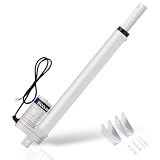
- 330lbs High Duty - All-steel shaft and metal gears deliver up to 330lbs of thrust. With a compatible controller, the actuator enables precise forward and reverse control, meeting heavy-duty industrial load requirements.
- Quiet Operation - Operates at noise levels below 55 dB for smooth and quiet performance, ideal for noise-sensitive environments. Built-in safety lock allows accurate and instant stopping during travel.
- 6-Point Safety Protection - Features over-current, over-load, over-voltage, over-discharge, short-circuit, and anti-shock protection. CE certified for enhanced safety, suitable for a wide range of automation applications.
- IP54 Weatherproof Durability - Aluminum alloy housing with IP54 protection resists dust, water, and corrosion. Built-in limit switches prevent motor idling and extend service life, perfect for outdoor and harsh environments.
- High Performance & Easy Installation - 10mm/s high-speed operation handles heavy-duty tasks efficiently. Equipped with mounting brackets and polarity reversal switch, powered by 12V for plug-and-play use, easy to install in furniture, medical, and automation projects.
6. Match voltage and controller
A 12 V actuator may suit many battery-powered robots, but the battery and driver must still handle startup and stall current. A 24 V model may reduce current for equivalent power, but it requires a compatible battery, converter, driver, and wiring system.
Do not connect a motor actuator directly to a microcontroller GPIO pin. The complete control chain normally looks like this:
Battery or DC supply
        |
      Fuse
        |
 H-bridge or actuator controller
        |
   Linear actuator
        |
 Microcontroller or switch
The H-bridge or controller must tolerate rated running current, startup current, stall current, voltage, heat, and direction reversals. For feedback models, confirm that your controller supports the specific analog, Hall-effect, PWM, serial, or servo interface.
The five picks
1. Progressive Automations PA-07: best for tiny, low-power mechanisms
The PA-07 is a genuinely small 12 V micro actuator for lightweight mechanisms where compact size and low current matter more than force or positioning capability.
Published specifications include:
- 12 VDC input.
- 5 lb dynamic force and 6.5 lb static force.
- 0.59 in/s no-load speed and 0.55 in/s full-load speed.
- 0.5- to 12-inch stroke range.
- IP66 rating.
- 10–20% duty cycle.
- No feedback and no limit switch listed.
- Overload protection listed at approximately 7 lb, with application-dependent variation.
- 18-month warranty.
It fits small doors, sensor covers, lightweight flaps, toy-scale limbs, and low-force latch mechanisms. The full-load speed figure is particularly useful because it is more representative of a working mechanism than the no-load number.
Windows Errors? Fix Them Before They Spread
Repair common Windows errors and clear accumulated junk for a smoother, more stable PC - no reinstall needed.Free scan · no reinstallCrashes, No Sound, or Screen Glitches?
Random freezes, missing sound and display glitches usually trace back to one bad driver. Find and replace yours safely.Free scan · under a minuteThe compromise is limited force and limited control information. It is a poor choice for lifting substantial robot mass, high-cycle operation, closed-loop positioning, or any design that needs built-in endpoint switches. Plan to add external stops and a suitable reversing driver.
2. Actuonix L12: best compact general-purpose actuator
View L12 models and configurations
The L12 is a compact rod actuator family with multiple gear, voltage, and control options. That makes it a practical starting point for small grippers, robot fingers, camera positioning, lightweight linkages, and educational robots.
The current comparison data lists:
- 10- to 100-mm stroke options.
- Maximum force up to 80 N, approximately 18 lb.
- Maximum speed up to 25 mm/s, approximately 1 in/s.
- 6 V and 12 V options.
- Limit-switch, potentiometer-feedback, RC-servo, and other variants depending on model.
- 20% maximum duty cycle.
- IP54 rating.
- Operating temperature of approximately −10 °C to 50 °C.
“L12” is a family designation, not one complete specification. Force, speed, voltage, stroke, and feedback depend on the exact gear ratio and suffix. Select the variant first, then size the electronics around that variant.
The L12 is not intended for heavy mechanisms, long travel, large external side loads, or continuous cycling. If the force calculation is close to its limit, move up to the L16 rather than relying on the maximum rating.
Do these 3 things before closing this tab:
1Scan for outdated or missing drivers - takes under a minute2Repair Windows errors before they cause bigger problems3Fix the driver behind crashes, sound loss and screen glitchesRank #4
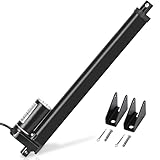
- Specification: stroke length: 12 inches(305mm); travel speed: 0.55in/sec(14mm/sec); retracted length: 370mm(15"); extended length: 620mm(25"); current draw: 3amps.
- Material: aluminum alloy housing, IP54-rated protection sealed against dust, water, and corrosion suitable for outdoor use. The internal limit switch automatically switches off when it reaches in case of the motor idling.
- Low noise: the low noise design, noise level below 50 dB; with reliable performance, stable running, the same characteristics of push and pull, and good environment adaptability, etc.
- Application: widely used in many industries, such as electric power, machinery, metallurgy, mining, petroleum, chemical industry, transportation, lifting, construction, food and feed processing, and so on.
- Professional team: DC HOUSE has been manufacturing linear actuators for many years, passing several technical tests.
3. Actuonix L16: best when a compact robot needs more force
View the L16 · Read the L16 datasheet
The L16 keeps a miniature form factor while extending the force and stroke range beyond the L12. It is a good fit for medium-size grippers, small robotic arms, tilting mechanisms, and compact lifting linkages.
Published comparison data lists:
- 30- to 140-mm stroke options.
- Maximum force up to 200 N, approximately 45 lb.
- Maximum speed up to 32 mm/s, approximately 1.25 in/s.
- Primarily 12 V operation, with certain 6 V configurations.
- Feedback and control variants.
- 20% maximum duty cycle.
- IP54 rating.
- Operating temperature of approximately −10 °C to 50 °C.
A feedback version can serve as a linear servo when paired with suitable control electronics, which is more useful for repeatable robotic positioning than a basic limit-switch version.
The L16 remains an intermittent-duty miniature actuator. It is not a substitute for an industrial cylinder in continuous operation, harsh exposure, long-stroke lifting, or severe side-loading applications. Use separate guides and pivots to keep bending forces off the rod.
4. Actuonix P16: best high-force miniature actuator
The P16 is the strongest compact Actuonix rod-style option in the comparison data and bridges the gap between miniature actuators and larger industrial units. It suits stronger grippers, larger robot arms, tool deployment, and moderate-load lifting where a full-size actuator would be unnecessarily bulky.
Published comparison data lists:
- 50- to 200-mm stroke options.
- Maximum force up to 300 N, approximately 67 lb.
- Maximum speed up to 46 mm/s, approximately 1.8 in/s.
- 12 V input.
- Limit-switch, potentiometer-feedback, and RC-servo variants.
- 20% maximum duty cycle.
- IP54 rating.
- Operating temperature of approximately −10 °C to 50 °C.
Its main advantage is force in a relatively compact package. Its compromises are larger size, higher electrical and mechanical demands, intermittent duty, and the need for external support against lateral loads. Do not size a mechanism at the absolute maximum force if a jam, impact, or misalignment is possible.
5. FIRGELLI Classic Series: best for larger, heavier mechanisms
View the FIRGELLI Classic Series
The Classic Series is the large-robot choice in this group. Its broad force and stroke range suits heavy hatches, tilting platforms, larger robot arms, suspension or deployment mechanisms, and full-size animatronics.
Published specifications include:
- 1- to 24-inch stroke options.
- Force variants from approximately 35 to 200 lb.
- 12 V or 24 V DC options depending on configuration.
- Built-in factory-preset limit switches.
- IP54 rating.
- ACME screw.
- 20% maximum duty cycle, described as up to five minutes on and 18 minutes off.
- Current requirements that vary by voltage and force/speed configuration.
- No standard position feedback on the listed Classic configuration.
It offers substantially more force and stroke than miniature robotics actuators, but its body, current draw, and retracted length can dominate a small robot’s design. It is also unsuitable for continuous-duty motion or applications requiring built-in closed-loop positioning. FIRGELLI sells other families with different force, ingress-protection, feedback, and packaging characteristics, so the Classic should be treated as the general-purpose large option—not the company’s strongest or most advanced actuator.
Independent reader supportYour contribution helps us test, update, and keep practical guides available for everyone.Rod-style or track-style?
Rod actuators are familiar and easy to install between two clevis mounts, but they usually need external guides when the mechanism can apply side loads. Track actuators move a carriage along a body and can be easier to integrate into certain layouts.
Actuonix lists the T16 as a sliding-track alternative to the P16, with greater side-loading capacity and a longer available stroke range. The comparison data lists the T16 at IP44 rather than the P16’s IP54, so the packaging advantage does not automatically make it better for outdoor exposure.
Best Value

- All-in-One Electric Actuator Kit: VEVOR linear actuator kit includes everything you need for setup without additional purchases, providing powerful 220lbs/1000N torque for reliable performance in both residential and industrial applications, like lifting platforms and motorized doors and windows
- Extended Motion Capability: With a generous 30-inch (760mm) stroke, our electric linear actuator kit provides a longer range of motion, making it suitable for tasks requiring extensive movement.
- Low-Noise, High Versatility: With a noise level below 60db, our linear motion actuator seamlessly fits into various applications, from furniture to automation systems, mechanical equipment, transportation and more. It's versatile and ready for various tasks.
- Low-Noise, High Versatility: With a noise level below 60db, our linear motion actuator seamlessly fits into various applications, from furniture to automation systems, mechanical equipment, transportation and more. It's versatile and ready for various tasks.
- Key Specifications: Stroke Length: 30 inch (760mm); Travel Speed: 0.35 in/s (9mm/s); Retracted Length: 34.84" (885mm); Extended Length: 64.84" (1645mm); Input Voltage: AC100-240V; Duty Cycle: 25%. Efficiency is at its highest when the actuation force is approximately 75% of its maximum value.
Regardless of type, the robot’s frame should carry bending and guide loads. Keep the actuator aligned with the intended push-pull axis.
What else you need
- Mounting brackets and clevis pins.
- A battery or DC power supply with adequate peak-current capability.
- A fuse or current-protection device.
- An H-bridge or compatible actuator controller.
- Suitable connectors and wiring.
- External mechanical stops where needed.
- A feedback interface or controller for feedback-equipped models.
- An emergency-stop or hard power-cutoff method for hazardous mechanisms.
Actuonix’s LAC control board is intended for compatible feedback-equipped L12, L16, P16, and T16 variants. Progressive Automations offers packaged control boxes with some of its larger actuator families. Neither should be selected solely because it appears on the same product page: verify voltage, feedback type, current rating, connector pinout, and the number of actuators supported.
Prices and stock vary by stroke, force, voltage, feedback, quantity, and geography. The FIRGELLI Classic Series has been displayed from approximately $129.99 USD, while Progressive Automations’ PA-14 has been displayed at $119.99 USD for a particular configuration. These are starting or configuration-specific signals, not universal prices; check the official product page before buying.
Quick wins for a faster PC:
Scan for outdated or missing drivers - takes under a minuteDriver Scan →Clear out junk files and repair common Windows errorsFree Scan →Installation, control, and troubleshooting
Basic direction control
A two-wire brushed DC actuator normally reverses direction when its polarity is reversed. Use an H-bridge or a controller designed for reversing DC motors. The microcontroller should command the driver; it should not carry motor current itself.
For feedback-equipped models, connect the feedback output to the appropriate analog, Hall-effect, PWM, serial, or servo input and implement position limits in software. The exact interface varies by product.
If the actuator stalls
- Cut power using a timeout or fault response.
- Check for dead-center linkage geometry.
- Inspect the mechanism for binding or side loading.
- Measure current if possible; a stall can produce high current and heat.
- Confirm that the driver, battery, fuse, and wiring support peak demand.
- Do not repeatedly reset into the same obstruction.
If the motor runs but the rod does not move
Disconnect power before inspection. Check for a stripped transmission, damaged screw or nut, loose coupling, overloaded mechanism, or an actuator that has reached a preset limit. Do not assume that motor noise proves the actuator is mechanically healthy.
If motion is jerky
Look for insufficient supply voltage under load, a driver entering thermal protection, misalignment, side loading, loose pivots, a bent guide, or a feedback signal with electrical noise. Brushed motors can inject noise into a robot’s electronics, so separate high-current motor wiring from sensitive signal wiring and use appropriate suppression and grounding practices.
PC Slower Than It Used to Be?
A free scan shows the junk files, broken settings and background clutter dragging Windows down - then fixes them in one click.Free scan · Windows 10 & 11Outdated Drivers Are Slowing You Down
One free scan finds every outdated or missing driver and matches the right update for your exact hardware.Free scan · exact hardware matchIf two actuators go out of sync
Two nominally identical DC actuators may not move at exactly the same speed. Open-loop parallel operation can rack or bind a structure. Prefer one correctly sized actuator where possible; otherwise use mechanical synchronization, feedback on both actuators, independent fault detection, and a controller designed for coordinated motion.
If the actuator moves the wrong way
For a basic two-wire DC model, remove power and reverse the motor leads or change direction in the H-bridge. For servo-style or feedback-equipped products, follow the specific wiring and command convention rather than changing wires blindly.
If a limit switch does not stop motion
Confirm that the selected variant actually includes a limit switch. The PA-07 is listed without one, while FIRGELLI Classic models list factory-preset built-in limits. Also check whether the switch is designed only for the internal endpoint and whether an external mechanical stop or independent power cutoff is required.
Safety checklist
- Guard pinch, crush, shear, and strike points.
- Install mechanical stops and limit software travel.
- Use a fuse and a physical emergency stop.
- Support raised loads with latches, brakes, counterbalances, gas springs, or redundant supports where failure could cause injury or damage.
- Do not treat screw resistance to backdriving as a certified brake or safe human-load support.
- Test first at reduced speed, reduced voltage where appropriate, or with the load restrained.
- Keep people clear during initial testing.
- Do not rely only on software to prevent injury.
- For outdoor robots, distinguish an IP rating from complete weatherproofing. Protect connectors and cables from water, mud, salt, impact, and corrosion.
FIRGELLI’s safety guidance also recommends guarding, mechanical stops, load support, emergency stopping, and an engineering safety review where actuator movement could injure people or damage equipment.
Do these 3 things before closing this tab:
1Repair Windows errors before they cause bigger problems2Fix the driver behind crashes, sound loss and screen glitches3Clear out junk files and repair common Windows errorsWhich one should you buy?
- Choose the PA-07 for a tiny hatch, flap, latch, or other lightweight mechanism needing only a few pounds of dynamic force.
- Choose an L12 when compact size matters and the mechanism benefits from a miniature feedback or servo-style configuration.
- Choose an L16 when the L12 is too weak but the robot still needs a compact actuator.
- Choose a P16 for the highest force in a miniature rod-style package among these picks.
- Choose the FIRGELLI Classic when the robot needs substantially greater force or a 1- to 24-inch stroke and can accommodate a larger, intermittent-duty actuator.
Before placing an order, verify the exact force-versus-speed curve, stroke, retracted length, voltage, current, duty cycle, feedback, limit-switch arrangement, mounting hardware, and environmental rating. The best actuator is the one that survives the complete mechanism—not the one with the largest number in a product headline.
Quick Recap
Product prices and availability are accurate as of the date/time indicated and are subject to change. Any price and availability information displayed on Amazon at the time of purchase will apply.




