This is a historical 2022 buying guide. The five strongest choices for a U.S. low-voltage HVAC home were the Ecobee Smart Thermostat Premium, third-generation Google Nest Learning Thermostat, Amazon Smart Thermostat, Honeywell Home T9, and Google Nest Thermostat. Ecobee was the best all-around choice for room sensors and Apple HomeKit; Nest Learning was best at automatic schedule learning; Amazon was the budget pick for Alexa homes; Honeywell T9 offered a strong sensor alternative; and Nest Thermostat was the lower-cost Google option.
Prices, stock and product generations have changed since 2022. Google’s former third-generation product URL now points to the fourth-generation model, so do not treat this list as a 2026 product ranking. Before buying any generation, verify your HVAC wiring, smart-home platform and exact model number.
As an Amazon Associate I earn from qualifying purchases.
Quick comparison of the 2022 choices
| Model | Best for | 2022 price information | Remote sensor | Automatic learning | Apple HomeKit | Alexa | Google Home | C-wire note | Main drawback |
|---|---|---|---|---|---|---|---|---|---|
| Ecobee Smart Thermostat Premium | Whole-home comfort and Apple households | Not stated in the cited 2022 roundup | One SmartSensor included | Automation and occupancy features, not Nest-style schedule learning | Yes | Built in | Yes | Generally presented as C-wire required; verify the power extender kit | Highest 2022-tier cost and more features than a small home may need |
| Google Nest Learning Thermostat (3rd generation) | Automatic schedule learning | Not stated in the cited 2022 roundup | Optional | Yes | No native support in the 2022 comparison | Supported, but less compelling for Alexa-first homes | Yes | Often works without a C-wire, depending on the system | Older model; learning can require correction |
| Amazon Smart Thermostat | Alexa homes on a budget | About $60 without adapter or $75 with adapter in July 2022 | No | No; uses Alexa Hunches | No | Yes | No platform-neutral Google experience | Versions were sold with or without a C-wire adapter | Limited ecosystem and no room-sensor system |
| Honeywell Home T9 | Room sensors with broad platform support | Not stated in the cited 2022 roundup | Supported; bundles vary | Not the primary selling point | Yes | Yes | Yes | Check the exact kit and HVAC configuration | Model and sensor-bundle differences complicate shopping |
| Google Nest Thermostat | Lower-cost Google Home setup | Not stated in the cited 2022 roundup | No in the cited comparison | No | Not established for the cited generation | Supported through integrations | Yes | Some no-C-wire installations work; use Google’s checker | Less automation and no remote sensors |
The product mix and the Amazon price figures come from the July 2022 roundup at Phandroid. Feature and buying guidance is cross-checked against NBC Select’s thermostat comparison.
Do these 3 things before closing this tab:
1Scan for outdated or missing drivers - takes under a minute2Clear out junk files and repair common Windows errors3Fix the driver behind crashes, sound loss and screen glitchesCheck your HVAC system before comparing features
These products are intended for conventional 24-volt, low-voltage HVAC systems. A thermostat for that equipment should not be connected to 120- or 240-volt electric baseboard heating. Wyze’s specifications, for example, explicitly exclude high-voltage baseboard systems and illustrate the distinction (Wyze compatibility information).
#1 Best Overall
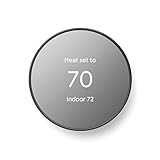
- ENERGY STAR certified smart thermostat for home that helps you save energy and stay comfortable.Connectivity : Wi-Fi - 802.11b/g/n 2.4 GHz, 802.11a/n 5 GHz Wi-Fi., Wireless interconnect : Bluetooth Low Energy Please refer to the product description section below for all applicable legal disclaimers.Product note: You can also check your system’s compatibility before purchasing a Nest thermostat with our online Nest Compatibility Checker on the Google Nest support page
- The Nest Thermostat is designed to work without a C wire in most homes, but for some systems, including heating only, cooling only, zone controlled, and heat pump systems, you’ll need a C wire or other compatible power accessory
- Nest Thermostat turns itself down when you leave, so you don’t waste energy heating or cooling an empty home. Lock feature: No
- Programmable thermostat that lets you create an energy efficient schedule in the Google Home app on your Android or iPhone
- Remote control lets family members change the thermostat temperature from anywhere on a phone, laptop, or tablet[1]
- Identify whether you have a furnace and air conditioner, heat pump with auxiliary or emergency heat, boiler, dual-fuel system or another configuration.
- Record single-stage or multi-stage heating and cooling, and whether humidifiers, dehumidifiers, ventilators or zoning controls are connected.
- Look for a C (common) wire, but do not assume its presence or absence decides compatibility by itself.
- Check the exact terminal labels and photograph the old thermostat before removing wires.
- For multi-zone systems, confirm that the thermostat is compatible with the zone controller; one thermostat cannot create independent zones.
C-wire requirements are model- and system-dependent
| Model | 2022 installation consideration |
|---|---|
| Ecobee Smart Thermostat Premium | Generally presented as requiring a C-wire; verify whether the included power extender kit supports your equipment. |
| Nest Learning Thermostat, 3rd generation | Often supports no-C-wire installations, but power-sharing behavior depends on the HVAC system. |
| Amazon Smart Thermostat | Sold in versions with or without a C-wire adapter; confirm which package you are buying. |
| Honeywell Home T9 | Requirements vary by kit and HVAC configuration; do not assume every T9 package is identical. |
| Nest Thermostat | Some systems work without a C-wire; Google’s compatibility checker is essential. |
“No C-wire required” means only that certain compatible systems can power the thermostat another way. Heat pumps, boilers and accessory equipment can behave differently. Use the manufacturer’s checker and stop if your wiring does not match its instructions.
1. Ecobee Smart Thermostat Premium: best for sensors and whole-home comfort
Why buy it
The Premium includes a remote SmartSensor and measures temperature, humidity, occupancy and indoor-air quality. That makes it particularly useful when the wall thermostat is in a hallway, near a draft or on a different floor from the rooms you occupy. It supports Amazon Alexa, Apple HomeKit, Google Assistant and Samsung SmartThings, with Alexa built in and Siri support on compatible setups. See the official Ecobee Premium page.
Limitations and fit
It was one of the most expensive choices in the 2022 group. Additional sensors add cost, and the speaker or voice assistant is unnecessary if you already use a separate smart speaker. Sensors select or average temperature readings; they do not create separate HVAC zones. Choose it for a large or multi-level home, uneven room temperatures or an Apple HomeKit household. Skip it for a small apartment that needs only basic scheduling.
The Tool Desk
Outbyte PC Repair FREEClear out junk files and repair common Windows errorsFree Scan →Outbyte Driver Updater FREEFix the driver behind crashes, sound loss and screen glitchesFind Drivers →Ecobee’s current comparison page lists a $329.99 Premium price and current features, but those are 2026 product-line facts, not 2022 pricing: Ecobee comparison page.
Rank #2

- An Alexa thermostat - Amazon Smart Thermostat is an easy way to switch from a traditional thermostats for homes and help reduce energy usage.
- Create comfort zones throughout your home by connecting to select Alexa devices to automatically adjust heating and cooling based on temperature readings or presence detection.
- Save money and energy - After purchase, Amazon will send you an email with details about home thermostat rebates that may be available from energy providers in your area.
- Save energy - According to EPA estimates, ENERGY STAR certified thermostats save an average of $90 on yearly energy bills.
- Programmable thermostat and automatic control - Create your own home, away and sleep schedules, or have Alexa automatically control the temperature with Alexa+ advanced features.
2. Google Nest Learning Thermostat (3rd generation): best for automatic learning
Why buy it
The third-generation Learning Thermostat observes temperature changes and routines, then builds an automatic schedule after an initial learning period described in contemporary coverage as roughly a week. It also offers occupancy-based away detection, energy reports, a dial-style interface and Google Home control.
Limitations and fit
It lacked native Apple HomeKit support in the 2022 comparison, and remote sensors were optional. Automatic changes can surprise households that prefer a fixed schedule, while heat-pump and C-wire behavior still depend on the system. It suits Google Home users who want minimal programming and a polished control, but not Apple-first buyers or homes needing inexpensive room-by-room balancing.
Google’s former third-generation URL now redirects to the current fourth-generation product, so label any 3rd-generation listing as historical: Google’s former 3rd-generation page.
3. Amazon Smart Thermostat: best budget choice for Alexa homes
Why buy it
The 2022 price was approximately $60 without a C-wire adapter or $75 with one. It provides app control, schedules and Alexa Hunches, making it a sensible low-cost upgrade for a home already organized around Echo devices and Alexa routines.
Rank #3

- Save up to 23% every year on heating and cooling costs, adjusts to your set schedule to save energy when you’re gone and optimize comfort when you’re home. Compared to a hold of 72
- Compatible with 85% of systems, check your system’s compatibility with our online ecobee Compatibility Checker on the ecobee support page
- Change your temperature by easily tapping the color touchscreen or using the ecobee app. Plus, free software upgrades ensure you get the best out of your Smart Thermostat Essential, for years to come
- Automatically adjusts to your set schedule to save energy when you’re gone and optimize comfort when you’re home. Keep track of your energy consumption when you're on the go on the ecobee app
- Easy DIY install. No C Wire, no problem. Get the ecobee Power Extender Kit (PEK) for homes without a C-Wire and keep your walls looking nice with our trim kit – both sold separately
Limitations and fit
It was described as Alexa-only in contemporary coverage. It does not include a room-sensor system or Nest-style automatic schedule learning, and voice control normally comes through an Alexa-enabled speaker or display rather than a built-in smart speaker. Choose it for a small home and straightforward scheduling; avoid it if you use Apple HomeKit or Google Home exclusively, need room balancing or have unusual HVAC accessories.
4. Honeywell Home T9: best sensor alternative
Why buy it
The T9 supports remote sensors and, in the 2022 comparison, Alexa, Google Assistant, Apple HomeKit and limited IFTTT integration. It is a strong option when bedrooms or offices are consistently warmer or colder than the thermostat location and you prefer Honeywell Home/Resideo’s HVAC heritage.
Limitations and fit
Exact model numbers, sensor bundles and wiring provisions vary. T9 and T9 Pro are not interchangeable names, and utility-qualified lists show multiple configurations (Bonneville Power Administration qualified-products list). Verify the precise package before buying. It fits multi-room homes wanting broad platform support, but is less attractive to buyers seeking the cheapest or simplest installation.
5. Google Nest Thermostat: best lower-cost Google option
Why buy it
The Nest Thermostat keeps Google Home app control, routines, scheduling and energy monitoring while omitting the Learning model’s automatic schedule creation and the cited comparison’s remote-sensor support. It is a reasonable fit for a small or medium home where manual schedules are acceptable.
Rank #4

- EASY DIY INSTALLATION: Do it yourself fast with a built-in level and simple step-by-step instructions. Works with the HVAC equipment found in most homes
- COMMON WIRE REQUIREMENTS: Common wire(C-Wire) required for heat pump and heat/cool only systems. C-wire not required on most systems
- SAVE ABOUT 23% ON HVAC ENERGY: ENERGY STAR-certified and packed with features that help you save money, including flexible scheduling, geofencing, remote access and usage reports
- PRIVACY PROTECTION: Sensi won’t sell your personal information to third parties or leverage your thermostat activity data for targeting or advertising purposes
- CONTROL FROM ANYWHERE: The top-rated mobile app for Android and iOS devices makes it easy to control your comfort from a smartphone or tablet
Limitations and fit
It cannot match the Learning model’s automation or solve major hot and cold spots with remote sensors. C-wire behavior varies by system, and the exact generation should be checked before purchase. Choose it for a lower-cost Google setup; skip it when automatic learning or room balancing is the primary reason to upgrade.
Choose by ecosystem, sensors and control style
Smart-home platform
- Apple HomeKit: Ecobee Premium is the clearest 2022 choice; Honeywell T9 is another option.
- Google Home: Nest Learning or Nest Thermostat provide the most integrated experience.
- Alexa: Amazon Smart Thermostat is the natural budget fit; Ecobee Premium and Honeywell T9 are broader alternatives.
- Mixed platforms: Ecobee Premium or Honeywell T9 generally offered broader 2022 compatibility than Amazon’s model.
Remote sensors versus true zoning
Use sensors when the thermostat’s location misrepresents occupied rooms, such as a sunny hallway or a cooler upstairs bedroom. They can prioritize, average or use occupancy readings, but they do not independently heat or cool each room. True room-by-room control requires compatible ductwork and zoning equipment.
Learning, schedules and occupancy
- Learning: reduces programming but may need corrections.
- Manual schedules: predictable, but you must maintain them.
- Occupancy and geofencing: convenient, yet pets, guests, remote workers or a forgotten phone can produce the wrong “away” decision.
Energy savings, rebates and privacy
Do not treat “up to” savings claims as guarantees. Results depend on climate, insulation, HVAC efficiency, fuel, setback settings, occupancy and utility rates. Energy Star certification and utility rebates are useful filters, but programs can require enrollment, data sharing or demand-response temperature changes. Check your utility’s official program and the Energy Star product finder.
Free tools Windows power users keep installed
One-click scans. No signup required.
Also review account, voice, occupancy and location-data settings. Ask whether schedules remain available during an internet outage and whether manual controls still work. Cloud services and app features can change after purchase.
Quick Recap
Installation checklist
- Turn off HVAC power at the service switch or breaker.
- Photograph the existing thermostat and label wires by terminal, not by color.
- Run the manufacturer compatibility check using the exact system type and terminal labels.
- Mount the new base plate, using a trim plate if the old thermostat left visible wall marks.
- Connect wires exactly as the product instructions specify; do not use a universal terminal diagram.
- Restore power and complete app setup, Wi-Fi and ecosystem permissions.
- Test heating, cooling and fan operation. Test auxiliary or emergency heat if your heat pump has it.
- Stop and call an HVAC professional if the wiring, accessory controls or system behavior does not match the instructions.
Verdict by household
- Best overall 2022 choice: Ecobee Smart Thermostat Premium for sensor-heavy homes and Apple HomeKit.
- Best learning experience: third-generation Nest Learning Thermostat.
- Best budget Alexa choice: Amazon Smart Thermostat.
- Best sensor alternative: Honeywell Home T9.
- Best affordable Google option: Nest Thermostat.
- Best for a large or multi-level home: Ecobee Premium or Honeywell T9.
- Best for a small apartment: Amazon Smart Thermostat or Nest Thermostat, provided the HVAC check passes.
Product prices and availability are accurate as of the date/time indicated and are subject to change. Any price and availability information displayed on Amazon at the time of purchase will apply.

