The best exterior paint colors for a brick home depend on the brick’s undertones and the roof, stone, landscaping, and other fixed materials around it. These four adaptable palettes—warm neutral, cool gray or blue-gray, muted green, and khaki with a deep blue accent—offer starting points, not guaranteed matches. Test samples on your home before choosing.
Four paint palettes to consider with exterior brick
Think of each option as a body, trim, and accent direction. The named colors come from manufacturer guidance; they are not a set of combinations tested against every kind of brick. Compare them with the brick and other durable materials already on your house.
As an Amazon Associate I earn from qualifying purchases.
1. Warm, light neutral to keep brick in focus
A warm, light neutral can let exposed brick remain the visual centerpiece while tying it to the rest of the exterior. Benjamin Moore suggests Swiss Coffee OC-45 when exterior accents lean warm, and identifies White Dove OC-17 and Revere Pewter HC-172 among popular neutrals. Treat these as colors to sample, not guaranteed matches for your brick.
The Tool Desk
Outbyte Driver Updater FREEScan for outdated or missing drivers - takes under a minuteDriver Scan →Outbyte PC Repair FREEClear out junk files and repair common Windows errorsFree Scan →2. Cool gray or blue-gray for a cooler exterior
If the brick, roof, and surroundings support a cooler palette, consider Benjamin Moore Gray Owl OC-52, November Skies 2128-50, or Silver Lake 1598. A cool paint can feel out of place beside strongly warm brick or other warm fixed materials, so judge the combination on the house rather than by a color chip alone.
#1 Best Overall

- Permanent, all-in-one kit to change the color of your masonry.
- Chemically bonds with masonry materials, does not add a layer like paint, and will not peel, chip or flake like a paint.
- Works with all absorbent masonry including brick, block, mortar, limestone, cast and natural stone
- Utilizes color theory - essentially any color can be achieved through mixing different levels of colors.
- Includes six pigment colors, two brushes, Elixir solution, measuring spoons, mixing-storage cup and instructions.
3. Muted green with soft neutral trim
Sherwin-Williams’ traditional exterior palette pairs Green Earth SW 7748 for the body with Nacre SW 6154 trim and Fiery Brown SW 6055 as an accent. It offers a restrained green-and-neutral direction with a darker detail color. Check all three against the specific brick with physical samples.
4. Khaki body, light trim, and deep blue accent
For a warmer neutral alternative with a stronger accent, Sherwin-Williams lists Universal Khaki SW 6150 for the body, Moderate White SW 6140 for trim, and Naval SW 6244 for the accent. Use the khaki and trim to relate the painted surfaces to the brick; reserve the deeper blue for a selected detail such as a door or shutters.
Rank #2
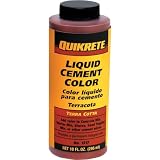
- Made in United States. Can be used in concrete, mortar, sand, stucco, and other cement mixes
- Mix into concrete to create colored surface It will not fade, chip, peel or wear out.
- Mix with water and add to dry concrete mix for adding color to Walk Maker projects, or any concrete, mortar, sand topping or stucco project.
- Concrete Coatings Vivid Acid Stain is a budget-friendly option, and there’s no need to hire a professional and spend a ton of money on beautifying your home.
- Unlike regular paint, Concrete Coatings Vivid Acid Stain penetrates deep into the surface, making it long-lasting and durable.
How to choose a direction for your home
Start with materials that are expensive or impractical to change. Benjamin Moore recommends considering fixed elements such as roofing, stone, brick, and landscaping before choosing exterior paint. Then plan the house as a coordinated palette: body color, trim, and accents for features such as a garage door, shutters, or front door. Benjamin Moore says homeowners typically use about three to four exterior colors.
Compare the four directions against the actual conditions on your home:
Rank #3

- JUST ADD WATER: Mix this concentrated formula with water to prepare the amount needed for your project. The water-based pigment penetrates clean, porous concrete instead of sitting like opaque paint, supporting semi-transparent color on an indoor floor or outdoor surface.
- LAYER CUSTOM COLORS: Apply one shade or several colors while wet to create marbling, mottling and variegated patterns. The blendable formula gives each decorative cement project a distinct finish across patios, walkways, pool decks and driveways.
- FOR INTERIOR AND EXTERIOR PROJECTS: Refresh prepared concrete floors, feature walls, patio areas, pool decks, driveways and walkway surfaces. This versatile stain is suited for indoor and outdoor applications where a translucent, decorative color finish is desired.
- PREP FOR DIRECT APPLICATION: Clean the surface and clear away existing paint, sealer, dirt, oil and other surface residue before use. Concrete should be open, porous and dry so the pigment can enter the surface; mask nearby brick, mortar and stone before spraying.
- LOW-ODOR WATERBORNE FORMULA: Designed for DIY users and contractors, this penetrating waterborne cement stain applies by sprayer, sponge, rag or brush. Build the color with additional coats, allow it to dry, then finish with a compatible clear sealer as directed.
- Brick: Decide whether it reads warmer or cooler outdoors and whether it has several tones. If the brick is visually varied, use it as the anchor rather than choosing paint from one isolated fleck.
- Roof and other fixed materials: Check whether their colors support the same warm or cool direction. Roof, stone, and landscaping can shift how a paint color appears beside the brick.
- Contrast: A light neutral can keep attention on the brick; a deeper accent can add definition to selected details. Consider how much contrast suits the house and its architecture.
- Surroundings and climate: Sherwin-Williams advises weighing architecture, surroundings, roof, stone, landscaping, climate, and undertones. No single exterior color works best for every home.
Test paint colors in outdoor light
Order samples after narrowing the palette, then view them outdoors at different times of day. Benjamin Moore cautions, “On-screen and printer color representations may vary from actual paint colors.” An online visualizer can help preview a direction, but physical samples give a more realistic check against your brick and changing light.
- Choose a short list of body, trim, and accent colors that relate to the fixed materials.
- Apply or place physical samples where you can compare them directly with the brick and nearby roof or stone.
- Look at the samples at different times of day before settling on the combination.
Coordinating paint with brick is not the same as painting brick
These palettes are for paint colors used around existing exposed brick; they do not imply that the brick itself should be coated. If you decide to paint the brick, treat that as a separate project. Sherwin-Williams’ brick-painting guidance calls for cleaning and drying the surface, inspecting and repairing damage, applying a masonry primer, and then using appropriate paint. Its project guide specifically recommends LOXON Concrete & Masonry Primer.
Rank #4

- JUST ADD WATER: Mix this concentrated formula with water to prepare the amount needed for your project. The water-based pigment penetrates clean, porous concrete instead of sitting like opaque paint, supporting semi-transparent color on an indoor floor or outdoor surface.
- LAYER CUSTOM COLORS: Apply one shade or several colors while wet to create marbling, mottling and variegated patterns. The blendable formula gives each decorative cement project a distinct finish across patios, walkways, pool decks and driveways.
- FOR INTERIOR AND EXTERIOR PROJECTS: Refresh prepared concrete floors, feature walls, patio areas, pool decks, driveways and walkway surfaces. This versatile stain is suited for indoor and outdoor applications where a translucent, decorative color finish is desired.
- PREP FOR DIRECT APPLICATION: Clean the surface and clear away existing paint, sealer, dirt, oil and other surface residue before use. Concrete should be open, porous and dry so the pigment can enter the surface; mask nearby brick, mortar and stone before spraying.
- LOW-ODOR WATERBORNE FORMULA: Designed for DIY users and contractors, this penetrating waterborne cement stain applies by sprayer, sponge, rag or brush. Build the color with additional coats, allow it to dry, then finish with a compatible clear sealer as directed.
Frequently Asked Questions
What paint colors go with brick?
Warm neutrals, cool grays or blue-grays, muted greens, and khakis can all be starting points. The right direction depends on the brick’s undertones and the roof, stone, landscaping, and surrounding light; sample colors on the home before deciding.
Quick wins for a faster PC:
Scan for outdated or missing drivers - takes under a minuteDriver Scan →Repair Windows errors before they cause bigger problemsFix Now →Quick Recap
Product prices and availability are accurate as of the date/time indicated and are subject to change. Any price and availability information displayed on Amazon at the time of purchase will apply.

