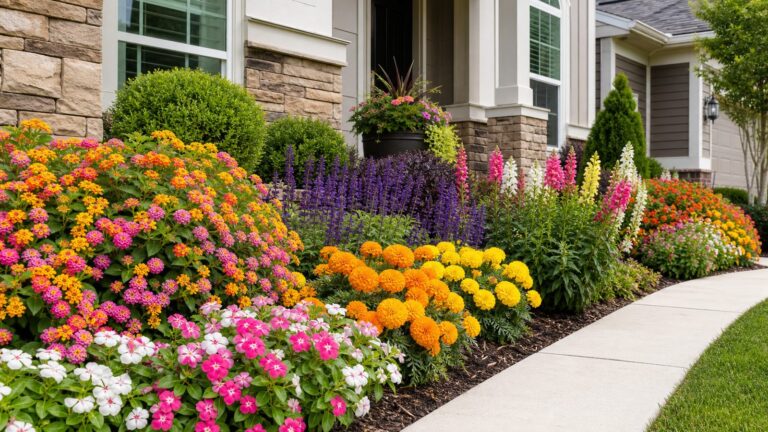
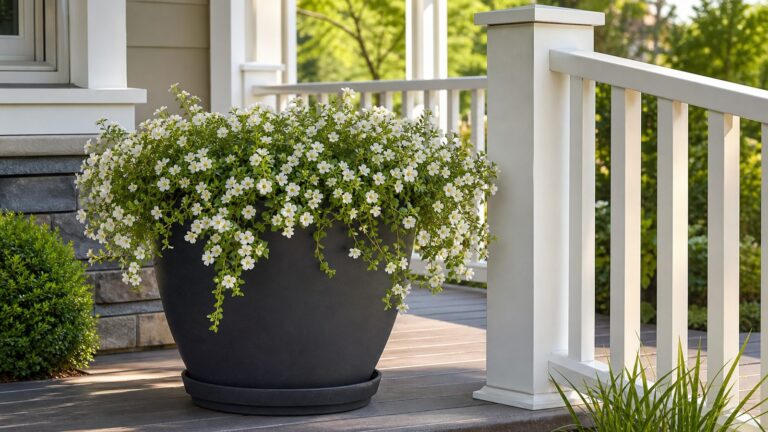
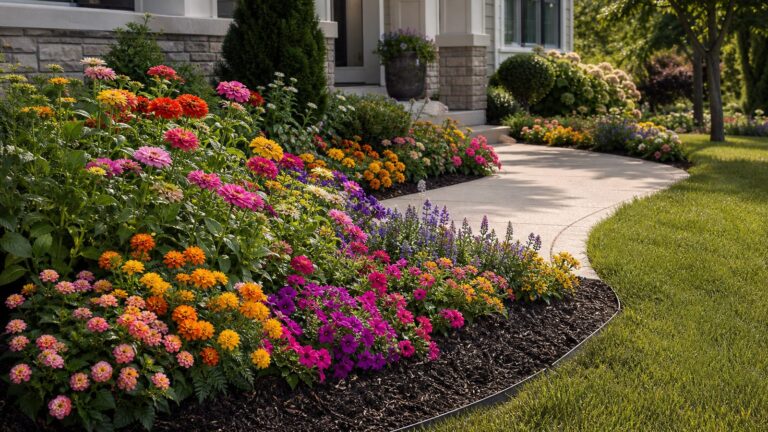
Yes—there are plenty of plants that can keep a sunny garden colorful through intense summer weather, but “full sun” and “heat tolerant” are not the same thing. Full sun generally means at least six hours of direct sunlight; some plants flower best with eight or more. A plant can tolerate that much light and still fail beside hot paving, a south-facing wall, dry wind, humid air, wet clay, or an under-watered container.
This U.S.-focused list includes annuals, tender perennials, hardy perennials, a tropical vine, and a flowering shrub. Use the water, drainage, size, and winter notes—not just the flower color—to narrow your choices. The 2023 USDA Plant Hardiness Zone Map helps estimate winter survival, but it does not measure summer heat, humidity, reflected heat, drought, or irrigation needs.
As an Amazon Associate I earn from qualifying purchases.
At a glance: 35 colorful plants for sun and heat
Sizes below are approximate mature ranges for commonly sold garden forms. Cultivars can be substantially shorter, taller, wider, or more compact, so check the plant label before placing a shrub, vine, or large perennial.
| Plant | Type | Colors | Approximate size | Water | Best use | Main caveat |
|---|---|---|---|---|---|---|
| Angelonia | Tender perennial; annual in cold climates | Blue, purple, pink, white | 12–24 in. tall | Moderate to low once established | Vertical accent, containers | Needs drainage; usually does not overwinter in cold areas |
| Celosia | Annual | Red, orange, yellow, pink, burgundy | 8–36 in. tall | Moderate | Sunny borders, dried flowers | Dislikes chronically wet soil |
| Cosmos | Annual | Pink, white, red, yellow, orange | 2–6 ft. tall | Low to moderate | Cottage gardens, cut flowers | Rich soil and excess water can reduce bloom |
| Gazania | Annual; tender perennial in warm climates | Yellow, orange, red, bronze, pink | 6–15 in. tall | Low | Rock gardens, edging, containers | Flowers may close in cloudy weather |
| Gomphrena | Annual; tender perennial in warm climates | Pink, purple, red, white | 1–3 ft. tall | Low to moderate | Borders, bouquets, dried arrangements | Needs sun and drainage |
| Lantana | Tender perennial or shrub; annual in cold climates | Yellow, orange, red, pink, white, purple | 1–6 ft. tall and wide | Low to moderate once established | Pollinator beds, containers | Unripe berries are mildly toxic; foliage may irritate skin |
| Marigold | Annual | Yellow, orange, red, mahogany | 6–36 in. tall | Moderate | Edging, massing, vegetable gardens | Spider mites may increase in hot, dry weather |
| Melampodium | Annual | Golden yellow | 10–24 in. tall and wide | Moderate to low | Low-maintenance mass planting | Can become crowded without spacing |
| Pentas | Tender perennial; annual in cold climates | Pink, red, lavender, purple, white | 1–3 ft. tall and wide | Moderate | Butterfly and hummingbird gardens | Needs regular moisture in hot weather |
| Petunia | Tender perennial; usually annual | Nearly every major color | 6–18 in. tall; trailing forms 12–36 in. wide | Moderate to high in containers | Hanging baskets, containers, walls | Can wilt quickly when potting mix dries |
| Portulaca | Tender perennial; usually annual | Pink, red, orange, yellow, white | 4–8 in. tall; 12–24 in. wide | Low | Rock gardens, dry beds, containers | Root rot is likely in wet soil |
| Annual salvia | Annual or tender perennial, depending on species | Red, blue, purple, pink, white | 1–3 ft. tall | Moderate | Vertical accents, pollinator beds | Heat performance varies by species and cultivar |
| Sunflower | Annual | Yellow, gold, bronze, red, bicolor | 2–12 ft. tall | Moderate | Focal point, bird garden, cut flowers | Tall forms may need wind protection or support |
| Mexican sunflower | Annual | Orange to orange-red | 4–8 ft. tall | Low to moderate | Back of border, pollinator planting | Needs considerable room |
| Verbena | Annual, tender perennial, or perennial by species | Pink, red, purple, lavender, blue, white | 6–24 in. tall; spreading forms wider | Low to moderate | Containers, edging, airy borders | Overwatering and poor airflow encourage disease |
| Annual vinca | Tender perennial; annual in cold climates | Pink, red, white, lavender, purple | 6–18 in. tall and wide | Low to moderate | Hot, sunny mass bedding | Toxic to dogs, cats, and horses |
| Zinnia | Annual | Pink, red, orange, yellow, white, green, bicolor | 6–48 in. tall | Moderate | Borders, containers, cut flowers | Powdery mildew is common in crowded, damp plantings |
| Canna | Tender perennial from rhizomes | Red, orange, pink, yellow, cream | 3–8 ft. tall | Moderate to high | Tropical-style beds and containers | Lift rhizomes in cold zones; wet soil can rot them |
| Mandevilla | Tropical vine; annual in cold climates | Pink, red, white | 6–20+ ft. with support | Moderate | Trellises, railings, containers | Needs winter protection below warm-climate conditions |
| Strawflower | Annual | Yellow, orange, red, pink, white | 1–3 ft. tall | Low to moderate | Dried and fresh arrangements | Excess rain and humidity can reduce performance |
| Agastache | Hardy or semi-hardy perennial, depending on species | Orange, coral, pink, lavender, blue | 1½–4 ft. tall | Low once established | Dry borders, pollinator gardens | Wet clay and winter moisture are serious risks |
| Black-eyed Susan | Short-lived perennial or biennial | Yellow, gold, orange, mahogany | 1–3 ft. tall | Low to moderate once established | Pollinator beds, naturalistic borders | May reseed and may not be long-lived |
| Blanket flower | Perennial; sometimes grown as an annual | Red, orange, yellow, red-yellow | 1–3 ft. tall | Low once established | Hot, dry borders and cutting gardens | Requires drainage and may reseed |
| Coreopsis | Perennial or annual, depending on species | Yellow, gold, red, pink, bicolor | 1–3 ft. tall | Low to moderate | Dry borders, pollinator gardens | Overfertilization can cause flopping |
| Coneflower | Hardy perennial | Purple, pink, white, yellow, orange, green | 1½–4 ft. tall | Moderate during establishment; lower later | Perennial borders and pollinator gardens | Does not mean “never water” |
| Daylily | Hardy perennial | Yellow, orange, red, pink, purple, cream | 1–4 ft. tall | Moderate | Reliable masses and slopes | Flowers suffer when roots compete with trees |
| Gaura | Perennial; sometimes short-lived | White, pink, rosy | 1–3 ft. tall | Low once established | Loose, airy borders | Can flop in rich soil or excessive moisture |
| Blazing star | Hardy perennial | Purple, pink, white | 2–5 ft. tall | Low to moderate | Vertical accents, pollinator beds | Wet winter soil can cause decline |
| Red hot poker | Hardy perennial | Red, coral, orange, yellow, cream | 2–5 ft. tall | Low once established | Architectural borders | Dislikes wet, poorly drained soil |
| Russian sage | Hardy perennial or subshrub | Lavender-blue | 2–4 ft. tall and wide | Low | Back of dry borders | Heavy, wet soil can kill it |
| Sedum | Hardy perennial; species range widely | White, pink, red, copper, deep rose | 4–24 in. tall | Low | Rock gardens, edging, containers | Choose the right species and provide drainage |
| Stokes’ aster | Hardy perennial | Blue, violet, lavender, pink, white | 1–2 ft. tall | Low to moderate once established | Borders and cut flowers | Winter-wet soil can kill it |
| Yarrow | Hardy perennial | Yellow, gold, pink, red, peach, white | 1–3 ft. tall and wide | Low | Dry gardens and cutting beds | Some forms spread vigorously or reseed |
| Bearded iris | Hardy perennial | Blue, purple, yellow, white, pink, bronze, bicolor | 1–4 ft. tall | Low to moderate | Formal borders and cut flowers | Rhizomes rot in poorly drained soil |
| Rose of Sharon | Woody perennial shrub | White, pink, red, lavender, blue, bicolor | 8–12 ft. tall and wide | Moderate | Permanent summer structure | Much larger and more permanent than bedding plants |
Annuals and tender perennials for intense summer color
1. Angelonia or summer snapdragon (Angelonia angustifolia)
Angelonia produces upright spikes of blue, purple, pink, white, and bicolored flowers, making it one of the best choices when a sunny bed or container needs vertical structure. Oklahoma State Extension identifies it as a strong performer in full sun, summer heat, drought, and well-drained soil.
#1 Best Overall

- PREMIUM VARIETY: 24 perennial wildflowers seeds; High germination rate with non-GMO wild flower seeds; Creates stunning garden flowers with bold colors and textures; Perfect for butterfly garden seeds and pollinator seed mix
- EASY GROWING SUCCESS: Plant seeds directly in your outdoor gardening spaces; Includes spring flower seeds through fall flower varieties; Perennial flower seeds packets designed for beginners; Creates continuous blooms year after year
- BULK VALUE PACKAGE: Contains 90,000+ seeds (3oz) of wild flowers seeds mix; Perfect for meadows or cottage-style beds; Economical bulk wildflower seeds for large and small projects; Drought tolerant wildflower seeds for natural growth
- BIODIVERSITY BOOST: Attracts bees, butterflies, and birds to your garden; Improves soil health naturally; Features popular varieties like Purple Coneflower, Black Eyed Susan, and California Poppy; Creates a thriving pollinator garden
- COMPLETE GROWING GUIDE: Detailed instructions for successful germination; Transform gardens, meadows, or containers with these flower seeds; Includes perennial seeds for planting outdoors; Creates a continuous display of wildflower beauty
Most gardeners outside frost-free regions grow angelonia as an annual. Give it drainage and avoid assuming that drought tolerance eliminates the need for water while it is establishing. Its upright habit works well behind low portulaca, petunias, or spreading verbena. Plant profile.
2. Celosia (Celosia spp.)
Celosia brings intense red, orange, yellow, pink, and burgundy to a sunny border through plume-shaped or cockscomb flowers. It also earns a place in a cutting garden because the flowers can be dried. Compact forms suit containers, while taller forms add a stronger middle- or back-border accent.
Use it in a sunny site with soil that drains freely. Celosia is a warm-season annual in ordinary U.S. garden use and is a poor candidate for a bed that stays saturated after rain. Oklahoma State includes it among drought-tolerant plant selections for its region. Regional plant list.
3. Cosmos (Cosmos bipinnatus and C. sulphureus)
Cosmos creates an airy, informal effect with pink, white, red, yellow, or orange flowers held above finely divided foliage. It is especially useful in cottage gardens, meadow-style plantings, and cut-flower beds. Most forms are annuals and are easy to grow from seed.
Choose full sun, good drainage, and relatively lean soil. Overwatering and overfertilizing can produce more foliage and fewer flowers. Taller plants may need a sheltered position or light support. Illinois Extension growing guidance.
4. Gazania (Gazania spp.)
Gazania offers bold daisy-like flowers in yellow, orange, red, bronze, pink, and bicolored combinations. Its low, spreading habit makes it useful along a hot path, in a rock garden, or at the edge of a container.
This is a particularly useful hot, dry-site annual when drainage is excellent. The flowers may close during cloudy conditions, so it is not the best choice if you want open blooms on overcast days. Humid-climate performance can vary by cultivar. Missouri Extension annual-flower guidance.
The Tool Desk
Outbyte PC Repair FREERepair Windows errors before they cause bigger problemsFix Now →Outbyte Driver Updater FREEScan for outdated or missing drivers - takes under a minuteDriver Scan →5. Gomphrena or globe amaranth (Gomphrena globosa)
Gomphrena’s round, papery flower heads come in pink, purple, red, and white. The blooms hold their color well in dried arrangements, and the plants provide a tidy, durable accent in beds and containers.
It handles heat, humidity, rain, and dry periods better than many bedding plants, provided it receives full sun and the soil does not remain waterlogged. It is normally grown as an annual outside warm climates. Illinois Extension growing guidance.
6. Lantana (Lantana spp.)
Lantana produces clusters that often combine yellow, orange, red, pink, white, or purple flowers on the same plant. It is a high-value choice for butterflies and other pollinators and performs particularly well in hot, humid conditions. Trailing forms are excellent in containers; larger forms can become shrubs in warm regions.
In cold climates lantana is an annual; in warm climates it may behave as a perennial or woody shrub. It prefers full sun and well-drained soil and needs less water after establishment, but it is not a no-water plant. Unripe berries are mildly toxic, and the foliage may irritate skin. University of Minnesota plant guidance.
PC Slower Than It Used to Be?
A free scan shows the junk files, broken settings and background clutter dragging Windows down - then fixes them in one click.Free scan · Windows 10 & 11Outdated Drivers Are Slowing You Down
One free scan finds every outdated or missing driver and matches the right update for your exact hardware.Free scan · exact hardware match7. Marigold (Tagetes spp.)
Marigolds provide bright yellow, orange, red, and mahogany flowers for edging, mass planting, containers, and vegetable-garden borders. They are dependable warm-season annuals and a practical choice for beginners who want strong color without committing to a permanent perennial.
Full sun and ordinary garden moisture suit them well. In very hot, dry weather, inspect plants for spider mites, which can become more troublesome when plants are stressed. Removing spent flowers can help maintain the display. Texas A&M seasonal-color guidance.
8. Melampodium or butter daisy (Melampodium paludosum)
Melampodium forms rounded plants covered with small golden-yellow flowers. It is a useful low-maintenance massing plant when you want a broad block of summer color rather than tall flower spikes.
University of Minnesota trials describe it as prolific and suitable for summer-long interest. Give plants enough room for air movement, particularly in humid areas. It is generally grown as a warm-season annual. University of Minnesota annual-flower guidance.
What’s actually slowing this PC down?
Pick the symptom - the matching free tool is one click away.
9. Pentas (Pentas lanceolata)
Pentas carries clusters of star-shaped flowers in pink, red, lavender, purple, or white. It is especially useful in butterfly and hummingbird gardens and combines well with lantana, angelonia, and ornamental foliage in containers.
Pentas likes full sun and heat but needs regular moisture to maintain strong growth and flowering. It is normally an annual outside frost-free climates. Gardeners in cold areas can sometimes overwinter plants from cuttings, but this requires indoor space and suitable light. Oklahoma State plant selections.
10. Petunia (Petunia hybrids)
Few annuals offer a wider color range than petunias: pink, purple, red, blue, white, yellow, peach, and numerous bicolors. Mounding types suit beds, while spreading types spill over container edges, walls, and hanging baskets.
Petunias need roughly five to six hours of sun and flower best in full sun, but container plants can dry quickly and require frequent checking. Use a pot with drainage holes and a well-drained potting mix. Regular moisture is more important than simply placing the plant in the brightest possible location. University of Minnesota petunia guidance.
11. Portulaca or moss rose (Portulaca grandiflora)
Portulaca is one of the strongest choices for extreme heat, poor soil, and low-water conditions. Its saturated pink, red, orange, yellow, white, and bicolored flowers work especially well in rock gardens, gravel beds, edging, and containers.
The essential qualification is drainage. Portulaca can tolerate dry soil but is vulnerable to root problems in heavy, wet ground or a container without a drainage hole. It is usually grown as an annual in cold regions and may persist as a tender perennial in warm ones. Texas A&M seasonal-color guidance.
12. Annual salvia (Salvia coccinea, S. farinacea, and related cultivars)
Annual salvias add red, blue, purple, pink, lavender, or white flower spikes. They provide vertical repetition in a border and attract pollinators. Different salvias behave differently, so the species and cultivar on the label matter more than the word “salvia” alone.
Rank #2

- 524 PREMIUM SEEDS – BRILLIANT COLOR, FAST GROWTH: This large pack includes 524 USA-packed, high-germination Zinnia Dahlia seeds that bloom into stunning double flowers in red, pink, orange, white, and more. Easy to grow, beginner-friendly, and perfect for bouquets, borders, and containers. Blooms in just weeks and lasts all summer!
- A TRUE GARDEN ARISTOCRAT WITH STRIKING FORM: Zinnia Dahlia is a radiant floral showstopper, beloved for its uniquely bold shape and opulent floral structure. Each bloom evokes a sense of floral nobility with plush, layered petals arranged in a near-geometric sphere. This variety of zinnia has earned its place among the top ten most cherished garden flowers, widely appreciated across the United States and beyond.
- RED FOR EXCEPTIONAL COLOR, SHAPE, AND VARIETY: Decades of horticultural development have resulted in this magnificent line of Zinnia Dahlia seeds. Carefully selected to represent the best of modern breeding, this variety offers a visual spectacle of rich tones and impressive structure. The blooms are large and fully double, featuring countless tightly arranged petals that radiate with saturated color. Each flower opens like a celebration—vivid, elegant, and unforgettable.
- EXPLOSION OF COLOR IN EVERY PLANT: This seed mix produces a stunning range of shades including snow white, coral, salmon pink, lavender, purple, bright orange, cream-yellow, cherry red, scarlet, deep crimson, and plum. Two-toned blooms with dramatic edging offer even more visual interest. Whether planted in clusters or as a standout specimen, Zinnia Dahlia puts on a breathtaking display all summer long.
- LARGE PACK FOR FULL GARDEN COVERAGE: Each seed pack includes approximately 524 premium Zinnia Dahlia seeds, giving you enough to plant a wide area—ideal for garden borders, flower beds, or large landscape designs. Enjoy continuous blooms and a high return on planting. This makes them an ideal value choice for mass planting or sharing with friends and family.
Many perform well in heat and full sun, but some appreciate relief from the most severe afternoon exposure and need consistent moisture. Avoid placing them in stagnant, wet soil. UGA perennial guidance and UMN annual-flower guidance.
Quick wins for a faster PC:
Fix the driver behind crashes, sound loss and screen glitchesFind Drivers →Repair Windows errors before they cause bigger problemsFix Now →13. Sunflower (Helianthus annuus)
Sunflowers provide an unmistakable focal point in yellow, gold, bronze, red, and bicolored forms. They can supply height, bird seed, and cut flowers in the same planting. Branching cultivars generally provide more flowers over a longer period than single-stem types.
Direct sowing in full sun is usually simple. Tall forms need room and may require shelter from strong wind or support. Choose a dwarf cultivar for a container or small yard, and place taller types where they will not shade shorter sun-loving plants. University of Minnesota pollinator-plant guidance.
14. Mexican sunflower (Tithonia rotundifolia)
Mexican sunflower produces large orange to orange-red flowers on tall, vigorous plants. It is an excellent back-of-border annual and a strong pollinator choice when a planting needs height and a tropical-looking splash of color.
Give it full sun and substantial room; it can become much taller and wider than ordinary bedding plants. It is particularly useful in hot conditions, but neighboring plants may be shaded as it matures. Oklahoma State plant selections.
Free tools Windows power users keep installed
One-click scans. No signup required.
15. Verbena (Verbena hybrids, V. canadensis, and V. bonariensis)
Verbena is available in trailing, spreading, and upright forms, with pink, red, purple, lavender, blue, and white flowers. Compact types work in containers; Brazilian verbena, V. bonariensis, creates airy vertical color that lets neighboring plants show through.
Full sun and heat suit many forms, but overwatering and poor air circulation can encourage disease. Allow space between plants and water at the soil line. Lifecycle and mature size depend heavily on species and climate. Oklahoma State Brazilian verbena profile.
16. Annual vinca or Madagascar periwinkle (Catharanthus roseus)
Annual vinca is a dependable mass-bedding plant for hot, sunny, relatively dry sites and even poorer soils. Flowers come in pink, red, white, lavender, and purple, and the plants maintain a neat, low-to-medium mound.
It is a tender perennial in warm climates but an annual in cold areas. Do not confuse it with true Vinca groundcovers, which are different plants with different landscape behavior. Annual vinca is toxic to dogs, cats, and horses according to the ASPCA; keep it away from animals that chew plants.
17. Zinnia (Zinnia spp.)
Zinnias are premier warm-weather annuals, offering nearly every major flower color, including pink, red, orange, yellow, white, green, and bicolors. Compact cultivars fit containers, while tall forms are excellent for cut flowers. Direct sowing is easy once soil and weather are warm.
Give zinnias full sun, adequate spacing, and water at the soil line. Powdery mildew is a common failure mode when foliage stays damp or plants are crowded. Remove badly affected leaves and improve airflow rather than increasing fertilizer. University of Minnesota zinnia guidance.
18. Canna (Canna × generalis)
Cannas combine red, orange, pink, yellow, or cream flowers with dramatic green, bronze, burgundy, striped, or variegated foliage. Their large scale makes them ideal for a tropical-style border, foundation bed, or substantial container.
Cannas grow best in full sun with heat, moisture, and fertile soil. They are tender perennials grown from rhizomes. In colder zones, dig and store the rhizomes after frost or grow cannas as seasonal plants. Moisture is useful, but poorly drained soil can still cause rhizome rot. University of Minnesota canna guidance.
Do these 3 things before closing this tab:
1Clear out junk files and repair common Windows errors2Scan for outdated or missing drivers - takes under a minute3Repair Windows errors before they cause bigger problems19. Mandevilla (Mandevilla spp.)
Mandevilla is a heat-loving tropical vine with large trumpet flowers, usually in pink, red, or white. Train it on a trellis, railing, obelisk, or other support for immediate vertical color in a sunny container or patio garden.
In cold climates, treat mandevilla as an annual or bring it indoors before damaging cold. Missouri Extension notes that tropical plants can suffer chill injury when nights regularly fall below about 45°F. Check plants for pests before moving them inside, and expect indoor growth to be slower. Missouri Extension tropical-plant guidance.
20. Strawflower (Helichrysum bracteatum / Xerochrysum bracteatum)
Strawflower has papery flowers in yellow, orange, red, pink, white, and mixed tones. It is especially valuable for dried arrangements because the flower texture remains attractive after cutting and drying.
Plant it in full sun and well-drained soil. Excessive rain, high humidity, and overwatering can reduce performance, so it is better suited to an open site than a damp, enclosed courtyard. It is generally grown as an annual. Oklahoma State plant selections.
Recommended Free Tools
Hardy perennials for repeat color
Perennials are not maintenance-free during their first season. Water newly planted perennials deeply at the root zone while they establish, then reduce irrigation according to their mature moisture needs. A plant described as drought tolerant generally earns that description after establishment, not immediately after installation.
21. Agastache or hyssop (Agastache spp.)
Agastache produces upright spikes in orange, coral, pink, lavender, blue, or rose. Its flowers are valuable to hummingbirds and butterflies, and its upright shape works well among lower mounding plants.
Choose full sun, excellent drainage, and a hot, relatively dry position. Agastache is a poor match for heavy clay that stays wet, particularly through winter. Species and hardiness vary, so select a form suited to the local climate rather than assuming every agastache is equally durable. Colorado State xeriscape guidance.
22. Black-eyed Susan (Rudbeckia hirta and cultivars)
Black-eyed Susan supplies golden-yellow, orange, and mahogany daisies with dark centers. It is easy to grow in full sun and useful in pollinator beds, naturalistic borders, and cutting gardens.
Quick wins for a faster PC:
Fix the driver behind crashes, sound loss and screen glitchesFind Drivers →Clear out junk files and repair common Windows errorsFree Scan →Rudbeckia hirta is often a short-lived perennial or biennial rather than a plant that reliably forms the same clump for decades. It may persist by reseeding, depending on the site and cultivar. Leave some seed heads in place if birds and winter interest are priorities. Illinois Extension pollinator-garden guidance.
Rank #3

- Fragrant Blooms: English Lavender seeds to plant of Lavandula angustifolia produce purple flower spikes on slender green stems; late spring–summer color with vigorous growth—ideal for fragrant flowers and classic herbs borders. Common name: English Lavender; Scientific name: Lavandula angustifolia
- Simple Sowing: For best results, cold stratify, then sow 1/4 inch deep; growth shows in 14–30 days at 65+°F—great english lavender seeds for planting with reliable starts for your Outdoor & Indoor herb garden
- Hardy Perennial: Common lavender heirloom seeds forms upright, shrub-like plants 20–24 inches tall; space 18 inches; dependable in USDA zones 3–9—perfect english lavender perennial seeds and perennials seeds for long-term gardens.
- Low-Maintenance Care: Thrives in full sun and light, dry, sandy, well-drained soil; low watering—avoid water-logging; resilient, non-GMO english lavender plant for drought tolerant plants and low-effort landscapes.
- Versatile Uses: Aromatic herb for sachets, potpourri, essential oils, and soothing aromatherapy; traditional medicinal qualities — english lavender seeds heirloom suited to lavender herb, fresh herbs or dried herbs and medicinal herb seeds projects.
23. Blanket flower (Gaillardia spp.)
Blanket flower is one of the strongest perennial choices for a hot, dry, poor-soil location. Its red, orange, yellow, and red-yellow blooms provide a long hot-season display and work well in borders and cutting gardens.
Drainage is essential, particularly in heavy soil or wet-winter regions. Water during establishment, then allow the soil to dry somewhat between irrigation. Some forms reseed, which can be useful in an informal garden but less desirable in a tightly controlled border. Oklahoma State blanket-flower profile.
24. Coreopsis or tickseed (Coreopsis spp.)
Coreopsis is best known for yellow and gold flowers, although red, pink, and bicolored cultivars are available. Many species tolerate full sun, heat, and relatively dry soil, making them useful for low-water borders and pollinator plantings.
Do not overfertilize. Excess nutrients can produce lush, weak growth and flopping rather than a sturdy flowering mound. Species differ in lifespan and size, so confirm whether the selected plant is an annual, biennial, or perennial in your climate. UGA wildflower guidance.
25. Coneflower (Echinacea purpurea and related species)
Coneflowers offer purple, pink, white, yellow, orange, and green cultivars, with strong structure for perennial borders and pollinator gardens. They tolerate heat after establishment and provide seed heads that can remain attractive into fall and winter.
Use full sun and well-drained soil. Newly planted coneflowers still need regular, deep watering while roots develop; “drought tolerant” does not mean “never water.” Single or open flower forms are generally easier for insects to access than highly modified double forms. UGA flowering-perennial guidance.
26. Daylily (Hemerocallis spp.)
Daylilies provide one of the broadest perennial color ranges, from yellow and orange to red, pink, purple, cream, and bicolors. They are rugged, adaptable, and useful for mass planting, slopes, and long-lived borders.
Recommended Free Tools
Full sun supports the best flowering, although some sites benefit from relief during the hottest part of the afternoon. Daylilies need moisture during establishment and can perform poorly where tree roots compete aggressively for water. University of Minnesota daylily guidance.
27. Gaura or bee blossom (Gaura lindheimeri)
Gaura adds movement rather than a dense mound. Delicate white, pink, or rosy flowers appear on wiry stems that sway above the foliage, making the plant useful in a loose, airy hot border.
It is drought tolerant once established and prefers full sun with good drainage. Excessively rich soil or too much moisture can encourage flopping. Give it room to move and combine it with sturdier plants such as sedum, coreopsis, or blanket flower. Oklahoma State plant selections.
28. Blazing star (Liatris spp.)
Blazing star produces upright purple, pink, or white flower spikes and is useful wherever a sunny border needs vertical repetition. It is also a strong pollinator plant and a good companion for coneflower, black-eyed Susan, and ornamental grasses.
The Tool Desk
Outbyte Driver Updater FREEFix the driver behind crashes, sound loss and screen glitchesFind Drivers →Outbyte PC Repair FREERepair Windows errors before they cause bigger problemsFix Now →Full sun and heat are manageable when drainage is good. Wet winter soil is a major risk for many species, so amend the planting design with a raised bed or better-drained location rather than trying to compensate with more fertilizer. Oklahoma State plant selections.
29. Red hot poker (Kniphofia spp.)
Red hot poker makes a dramatic statement with tall flower spikes that transition from red or coral to orange, yellow, or cream. Its architectural form suits the back of a border and gives a tropical impression without being a tropical plant.
It tolerates drought and summer heat after establishment but does not tolerate wet, poorly drained soil. Place it where water moves away from the crown, especially in regions with wet winters. Oklahoma State plant selections.
30. Russian sage (Perovskia atriplicifolia / Salvia yangii)
Russian sage forms clouds of lavender-blue flowers above silvery gray foliage. It is one of the most useful choices for the back or middle of a hot, dry border and pairs especially well with yellow coreopsis, orange blanket flower, or pink gaura.
What’s actually slowing this PC down?
Pick the symptom - the matching free tool is one click away.
Full sun, heat, drought, and well-drained soil suit it. Heavy, wet soil is a more serious threat than summer heat. Mature plants can become broad, so allow space rather than crowding them into a narrow bed. Oklahoma State plant selections.
31. Sedum or stonecrop (Sedum and Hylotelephium spp.)
Sedums contribute both foliage texture and flowers. Depending on the species, they may be low groundcovers or upright perennials with white, pink, red, copper, or deep rose blooms. Succulent leaves add interest before and after flowering.
Full sun and drought suit most forms, but excellent drainage is essential. Low sedums are good for rock gardens and containers; upright forms work in perennial borders. Select by mature habit because “sedum” covers a wide range of sizes. Illinois Extension sedum guidance.
32. Stokes’ aster (Stokesia laevis)
Stokes’ aster produces cornflower-like blooms in blue, violet, lavender, pink, or white. It is a useful border and cut-flower plant, particularly where a smaller perennial with strong flower color is needed.
It tolerates full sun, heat, and drought once established, but winter-wet soil can kill it. A raised or naturally well-drained location is safer than a low spot that stays saturated after rain. UGA perennial care cards.
33. Yarrow (Achillea spp.)
Yarrow provides flat flower clusters in yellow, gold, pink, red, peach, white, and pastel blends. It is excellent for hot, dry gardens and cutting beds, and its flat flower heads offer an accessible landing area for many insects.
Give it full sun and well-drained soil. Some forms spread vigorously or reseed, so yarrow is better in a border where it has room than in a tiny bed beside delicate plants. Check local guidance if the plant has a history of aggressive spread in your area. Colorado State xeriscape guidance.
Rank #4

- Easy-Growing Wildflowers: This Early-Blooming, Carefree Wildflower Seeds Mix Includes 14 Of North America’s Most Beautiful Wildflower Varieties; This Gorgeous Blend Will Quickly Delight Pollinators And People Alike
- Pollinator-Friendly: Bees And Butterflies Will Flock To The Colorful Buffet Of Flowers; Good For Your Garden And For The Environment; The Bulk Seed Bag Contains Over A Dozen Wildflower Favorites In One: Cornflower, Zinnia Elegans, And More
- 25,000 NON-GMO Seeds: Easy-To-Sow Perennial Flower Seeds Mix Covers Up To 1,000 Square Feet And Is Ideal For Most Soil Types; Select A Sunny Area To Scatter The Seed Outdoors For Planting After Danger Of Heavy Frost
- Burpee Seeds Grow: Burpee Offers The Highest Quality, NON-GMO Seeds Hand-Picked By Expert Horticulturalists For Growing In The Home Garden; Burpee Has Been Loved By Gardens And Trusted By Gardeners For Over 140 Years
- Since 1876: Generations Of Customers Have Trusted Burpee To Deliver The Highest Quality Products And Service; Gardeners Rely On Burpee For Accurate Plant Information And How-To Tips That Make Gardening Easier And More Successful; Let’s Grow Together
34. Bearded iris (Iris germanica hybrids)
Bearded iris offers an exceptional color range, including blue, purple, yellow, white, pink, bronze, and bicolors. The swordlike foliage and structured flowers suit formal borders, and the blooms are useful for cutting.
Free tools Windows power users keep installed
One-click scans. No signup required.
Full sun and sharply drained soil are essential. Plant the rhizomes so they are not buried deeply, and avoid sites that remain wet after rain; rhizome rot is the major failure mode. Illinois Extension iris guidance.
Independent reader supportYour contribution helps us test, update, and keep practical guides available for everyone.35. Rose of Sharon: a permanent flowering shrub
Rose of Sharon (Hibiscus syriacus)
Rose of Sharon brings large white, pink, red, lavender, blue, or bicolored flowers to a sunny landscape in summer. Unlike bedding annuals, it provides woody structure and can become an important permanent feature of a foundation planting, privacy screen, or mixed border.
Expect a mature shrub rather than a small seasonal flower—commonly around 8–12 feet tall and wide, although cultivar size varies. It tolerates summer heat and needs room for its mature spread. Research the selected cultivar and check your state’s invasive-plant information before planting; self-seeding and legal status can vary by region. Oklahoma State plant profile and UGA guidance.
Choose by garden condition
Best for extreme heat and little water
Start with portulaca, blanket flower, yarrow, agastache, sedum, Russian sage, gaura, and coreopsis. These are the most natural fit for hot, relatively dry sites, but all still need watering during establishment. Drainage matters just as much as rainfall: a drought-tolerant plant can die in soil that stays saturated.
Outdated Drivers Are Slowing You Down
One free scan finds every outdated or missing driver and matches the right update for your exact hardware.Free scan · exact hardware matchPC Slower Than It Used to Be?
A free scan shows the junk files, broken settings and background clutter dragging Windows down - then fixes them in one click.Free scan · Windows 10 & 11Oklahoma State’s heat- and drought-tolerant list was developed for conditions around Oklahoma City. Treat it as useful regional evidence, not a universal national ranking. Cultivar, soil, humidity, irrigation, and winter conditions can change the result.
Best for hot, humid summers
Prioritize angelonia, celosia, lantana, marigold, pentas, heat-tolerant salvias, canna, zinnia, melampodium, and verbena with good airflow. Humidity changes the problem: a plant may tolerate high temperatures but decline when foliage stays wet, air is stagnant, or roots sit in water.
Best for containers
Use petunia, lantana, portulaca, verbena, gomphrena, angelonia, pentas, mandevilla, compact zinnias, or compact canna. Containers dry faster than in-ground beds, especially on patios, balconies, and beside masonry. Every container needs drainage holes and a well-drained potting mix. Check moisture more often than you would in a landscape bed.
Best choices for beginners
- Zinnia: easy from seed and available in many colors.
- Marigold: compact, bright, and useful for edging.
- Gomphrena: durable flowers for fresh or dried arrangements.
- Portulaca: forgiving in hot, dry, well-drained locations.
- Blanket flower: a strong perennial for heat and poor soil.
- Coreopsis: bright, adaptable, and useful in pollinator beds.
- Black-eyed Susan: easy and naturalistic, though not always long-lived.
- Daylily: rugged and available in a huge color range.
Best for a tropical look
Combine canna, mandevilla, lantana, pentas, Rose of Sharon, tall sunflowers, and Mexican sunflower. The trade-off is winter management: mandevilla, pentas, and lantana are tender in cold climates, while canna rhizomes may need to be lifted and stored.
Best for pollinators
Good choices include lantana, pentas, zinnia, sunflower, Mexican sunflower, salvia, agastache, black-eyed Susan, coneflower, blanket flower, coreopsis, blazing star, yarrow, and Rose of Sharon. Whenever possible, select single or open flowers; highly doubled flowers can make nectar and pollen less accessible. The University of Georgia butterfly-garden guidance lists many of these plants as useful nectar sources.
Best for cut flowers
Plant zinnia, sunflower, cosmos, celosia, gomphrena, strawflower, blanket flower, black-eyed Susan, yarrow, and bearded iris. Remove flowers early in the day when stems are hydrated, and harvest regularly to encourage additional flowering on plants that respond to cutting. Illinois Extension cut-flower guidance.
Best for a small yard
Choose compact cultivars of portulaca, gazania, petunia, melampodium, gomphrena, annual vinca, compact zinnia, sedum, or Stokes’ aster. Be cautious with Mexican sunflower, tall sunflowers, canna, mandevilla, and Rose of Sharon unless you have measured the mature height and spread. A plant that looks small in a nursery pot can quickly overwhelm a narrow bed.
Best for a permanent perennial border
Use bearded iris for early structure, then repeat vertical accents with salvia, blazing star, or red hot poker. Fill the middle with daylily, coneflower, blanket flower, coreopsis, yarrow, or sedum, and use Rose of Sharon as a larger background shrub. Repeat fewer plant types in groups rather than buying one of every color; repetition usually creates a more coherent border.
How to keep full-sun plants blooming through heat
1. Measure the site instead of trusting a label
Observe the planting area on a clear day and count direct-sun hours. A south-facing location is not automatically suitable: buildings, trees, fences, and seasonal shadows change the exposure. Also look for reflected or trapped heat from concrete, asphalt, gravel, dark walls, and enclosed courtyards.
Check the soil after heavy rain. If water remains for long periods, improve drainage or choose plants that tolerate moisture rather than placing drought plants in the wettest part of the yard. Measure mature width before planting shrubs, vines, and tall perennials. The University of Georgia site-assessment guidance explains why full sun also means greater heat and drying and why some plants may prefer afternoon protection in very hot climates.
2. Match the plant to moisture, not just light
Think in three practical groups:
- Heat and drought tolerant: portulaca, blanket flower, yarrow, agastache, sedum, Russian sage, coreopsis, and gaura.
- Heat tolerant but moisture dependent: canna, daylily, pentas, some salvias, petunia, and Rose of Sharon.
- Heat tolerant after establishment but needing establishment irrigation: coneflower, black-eyed Susan, blazing star, and most other new perennials.
Deep watering at the root zone is generally more useful than frequent shallow sprinkling. Drip irrigation or a soaker hose keeps water near the roots and avoids wetting foliage. Apply mulch to slow evaporation, but keep it away from crowns and stems.
3. Plant warm-season annuals at the right time
Plant tender annuals after local frost danger has passed and the soil has warmed. Calendar dates copied from another state can be misleading. Greenhouse-grown plants also need acclimation: expose them to outdoor conditions gradually when possible rather than moving a sheltered plant directly into all-day afternoon sun.
Warm-season plants such as vinca, salvia, zinnia, and lantana grow poorly when planted into cold soil or exposed to lingering cold nights. The Illinois Extension annuals guide explains why soil and air temperature matter.
4. Water early and deeply
Water newly planted plants thoroughly at the root zone, then allow the moisture requirement of the individual plant to determine the next irrigation. The University of Minnesota identifies approximately 5–9 a.m. as a useful morning watering window: plants receive hydration before the hottest part of the day and leaves have time to dry.
Container plants may need water more often than plants in the ground. During a heat wave, check the potting mix with a finger rather than relying on a fixed schedule. Do not let a water-dependent petunia or pentas wilt repeatedly and expect the same performance as a well-watered plant.
For additional heat-stress advice, see University of Minnesota heat guidance and UGA perennial care guidance.
Do these 3 things before closing this tab:
1Scan for outdated or missing drivers - takes under a minute2Clear out junk files and repair common Windows errors3Fix the driver behind crashes, sound loss and screen glitches5. Deadhead selectively
Removing spent flowers can prolong color on zinnias, marigolds, salvias, cosmos, daylilies, yarrow, coneflowers, and coreopsis. Annuals such as marigold, salvia, and cosmos often respond particularly well to regular deadheading.
Best Value

- Freshest Wildflower Seeds: Our hummingbird and butterfly wildflower mix includes 24 beautiful annual, perennial and biennial plants. We offer the freshest seeds to enhance the quality of your garden, we ensure a high germination rate, 99% pure live seed, no filler
- Attract Pollinators: These flowers will attract pollinators to the garden, such as many beautiful butterflies, bumblebees, bees, ladybugs etc. It can beautify the environment and keep your garden alive!
- High Germination Rate: We meticulously test the germination rates of our seeds to ensure that a high proportion of the seeds you plant will successfully sprout and grow. These wildflowers grow well in spring and summer. They grow to an average height of 12 to 48 inches, covering 194 SQ.FT, about 5-10 days to germination, 35-75 days to flower
- High Quality Packaging: Our seed packs are resealable and provide optimal storage conditions to keeps seeds fresh. Our packaging material is aluminum foil, waterproof and moisture resistant. The planting instructions are displayed on the back of each package, You can also use our online guide to Learn how to grow wildflowers like a professional gardener
- Great Gift Choice: Groundio wildflower seeds make an ideal holiday gift. Perfect for Birthdays, Mothers' and Fathers' Days, Weddings, Thanksgiving Day, Valentine's Day and so on. You can also make the perfect combination of wildflower seeds for kids. Planting hummingbird and butterfly garden seeds is an easy and educational way to do it
However, do not remove every seed head automatically. Sunflowers, coneflowers, and black-eyed Susans can provide food for birds and winter structure. Leave selected seed heads if wildlife value matters more than a perfectly tidy appearance.
6. Do not overfertilize
More fertilizer does not automatically mean more flowers. Excess nitrogen can produce soft foliage and reduce flowering in plants such as cosmos, angelonia, and lantana. Use a soil test where possible, follow the product label, and avoid applying fertilizer on an arbitrary weekly schedule.
7. Protect airflow and support tall plants
Space zinnias, verbena, melampodium, and other dense plants so air can move through the foliage. Water at the soil line, especially in humid weather. Zinnias are particularly prone to powdery mildew when crowded or repeatedly wetted; remove badly infected leaves and improve spacing rather than keeping foliage damp.
Stake or shelter tall sunflowers, Mexican sunflowers, cosmos, and some salvias if strong wind is common. A plant that is heat tolerant can still snap or lean when exposed to wind from an open site.
8. Plan for winter before buying
Annuals such as celosia, cosmos, marigold, melampodium, sunflower, Mexican sunflower, and zinnia are normally replanted each year. Angelonia, lantana, pentas, petunia, portulaca, verbena, vinca, canna, mandevilla, and many tropical plants are tender perennials that may survive only in warm climates or with indoor storage.
For cold-climate gardeners, canna rhizomes may need to be lifted after frost, while mandevilla can be overwintered indoors if space, light, and pest inspection permit. Treat the USDA map as a winter-cold guide, not a guarantee of summer performance or a promise that a tender plant will return.
When a “full-sun” plant fails: heat, drought, or drainage?
- Heat stress: leaves wilt during the hottest part of the day but recover in the evening; flowers may scorch beside paving or a reflective wall. Try afternoon protection, shade cloth, a less heat-reflective location, or more consistent root-zone moisture.
- Drought stress: leaves remain wilted into the morning, potting mix pulls from the sides of the container, or newer growth becomes small and dry. Water deeply and assess whether the plant’s water needs match the site.
- Poor drainage: leaves yellow, stems collapse, roots smell sour, or the plant declines despite wet soil. Move or raise the planting area and stop adding water. Portulaca, sedum, iris, agastache, red hot poker, and Stokes’ aster are particularly poor choices for persistently wet locations.
- Humidity and poor airflow: foliage develops powdery or spotted disease, especially in dense plantings. Increase spacing, water early at the soil line, and remove badly affected tissue.
- Cold injury: tropical plants develop blackened or limp foliage after chilly nights. Bring tender plants indoors before cold damage rather than waiting for frost.
Safety, pets, and reseeding
Commonly sold does not mean pet-safe. Annual vinca is toxic to dogs, cats, and horses according to the ASPCA. Lantana’s unripe berries are mildly toxic, and its foliage may irritate skin. If children or pets chew plants, identify plants by their scientific names and check a current database such as the ASPCA toxic and non-toxic plant database before planting.
The Tool Desk
Outbyte Driver Updater FREEFix the driver behind crashes, sound loss and screen glitchesFind Drivers →Outbyte PC Repair FREERepair Windows errors before they cause bigger problemsFix Now →Self-seeding is not automatically the same as legal or ecological invasiveness. Cosmos, black-eyed Susan, yarrow, Brazilian verbena, and other plants may reseed where conditions are favorable. State lists and regulations differ, and no single national list covers every local situation. Check the National Invasive Species Information Center state-list guidance and your state’s current resources before planting a vigorous reseeder.
Bottom line
For the toughest hot, dry conditions, start with portulaca, blanket flower, yarrow, agastache, sedum, Russian sage, coreopsis, or gaura. For hot, humid summer color, look first at angelonia, lantana, pentas, salvia, zinnia, melampodium, celosia, and canna. For containers, choose petunia, verbena, portulaca, gomphrena, lantana, mandevilla, or compact zinnias—but plan to water more often.
The best plant is the one whose light, moisture, drainage, mature size, winter status, and safety profile match the actual site. Six hours of sun is only the starting point; successful summer color comes from matching the plant to the entire microclimate.
Frequently Asked Questions
What counts as full sun for garden plants?
Full sun generally means at least six hours of direct sunlight per day. Some plants flower best with eight or more hours. Count actual direct-sun hours and also consider reflected heat from pavement, walls, gravel, or other hard surfaces.
Quick wins for a faster PC:
Repair Windows errors before they cause bigger problemsFix Now →Scan for outdated or missing drivers - takes under a minuteDriver Scan →Clear out junk files and repair common Windows errorsFree Scan →Are heat-tolerant plants automatically drought tolerant?
No. Canna, daylily, pentas, some salvias, petunia, and Rose of Sharon can tolerate heat but still need regular moisture. Drought-tolerant plants also need regular watering during establishment and perform best in well-drained soil.
What are the best flowers for full sun in a container?
Petunia, lantana, portulaca, verbena, gomphrena, angelonia, pentas, mandevilla, compact zinnias, and compact cannas are strong options. Use a pot with drainage holes and expect containers to dry faster than in-ground beds.
Which plants can bloom for much of the summer?
Zinnia, lantana, angelonia, pentas, verbena, annual vinca, gomphrena, marigold, melampodium, daylily, blanket flower, coneflower, black-eyed Susan, and Rose of Sharon can provide a long display under suitable conditions. Bloom length depends on cultivar, moisture, fertility, deadheading, disease pressure, and weather.
Which plants survive full sun in hot, humid weather?
Angelonia, celosia, lantana, marigold, pentas, many annual salvias, canna, zinnia, melampodium, and some verbena are useful choices. Give them airflow, avoid wet foliage, and do not confuse tolerance of heat with tolerance of waterlogged soil.
Recommended Free Tools
Which of these plants are annuals in cold climates?
Celosia, cosmos, marigold, melampodium, sunflower, Mexican sunflower, and zinnia are commonly grown as annuals. Angelonia, lantana, pentas, petunia, portulaca, verbena, annual vinca, canna, mandevilla, and strawflower are tender plants that may need replanting or winter protection outside warm climates.
Which full-sun plants attract butterflies and hummingbirds?
Lantana, pentas, zinnia, sunflower, Mexican sunflower, salvia, agastache, black-eyed Susan, coneflower, blanket flower, coreopsis, blazing star, yarrow, and Rose of Sharon can support pollinators. Single or open flowers are generally easier for insects to access than highly doubled blooms.
Which plants on this list are toxic to pets?
Annual vinca is toxic to dogs, cats, and horses according to the ASPCA. Lantana’s unripe berries are mildly toxic and its foliage may irritate skin. Because toxicity can vary by plant and animal, check the exact scientific name in a current database before planting.
How can I tell whether a plant is failing from heat, drought, or poor drainage?
Heat-stressed plants often wilt during the hottest hours and recover in the evening, while drought-stressed plants remain wilted into the morning and have dry root-zone soil. Poor drainage produces decline despite wet soil, yellowing, collapsing stems, or root rot. Test the soil and inspect drainage before adding more water.
Do USDA hardiness zones tell me whether a plant can tolerate summer heat?
No. The 2023 USDA Plant Hardiness Zone Map is based on average annual extreme minimum winter temperatures. It helps estimate cold survival but does not measure summer heat, humidity, reflected heat, drought, soil drainage, or irrigation needs.
The Bottom Line
For intense heat and low water, choose portulaca, blanket flower, yarrow, agastache, sedum, Russian sage, coreopsis, or gaura. For hot, humid color, choose angelonia, lantana, pentas, salvia, zinnia, melampodium, celosia, or canna. Before planting, check direct-sun hours, drainage, mature size, winter hardiness, water needs, and pet safety. “Full sun” is a light requirement—not a guarantee that a plant will tolerate every hot microclimate.
Quick Recap
Product prices and availability are accurate as of the date/time indicated and are subject to change. Any price and availability information displayed on Amazon at the time of purchase will apply.