Do these 3 things before closing this tab:
1Fix the driver behind crashes, sound loss and screen glitches2Repair Windows errors before they cause bigger problems3Scan for outdated or missing drivers - takes under a minuteThe best raised garden bed design is the one that fits your sun, space, reach, and watering plan. These 32 ideas cover practical rectangles, decorative geometric layouts, accessible planters, rental-friendly containers, crop-specific beds, and season-extending structures. Use the gallery to choose a form before you buy materials or fill the bed.
Raised garden beds work best when their shape, height, materials, and access match the site and the crops. A four-foot-wide rectangular bed is a dependable starting point, but a narrow border bed, elevated planter, terraced layout, metal kit, or unframed mound may be a better construction choice for a particular yard. Use the ideas below as a design gallery, then check sunlight, reach, drainage, soil, irrigation, and material safety before building.
As an Amazon Associate I earn from qualifying purchases.
Raised-bed planning rules to settle first
Raised beds give you control over the growing medium, reduce foot traffic and soil compaction, improve access, and can make a poorly drained or poor-soil site more manageable. They also warm earlier in spring. The trade-off is that the relatively small volume of soil can dry faster than surrounding ground, so reliable watering and mulch matter.
- Sunlight: Position most vegetable beds where they receive at least six to eight hours of direct sun daily. Observe the site through the day before deciding on a permanent layout.
- Reach: Keep a bed accessed from both sides to about four feet wide. Make one-sided beds narrower—often two to three feet—so you do not need to step into the soil.
- Paths: Leave about three feet between beds when possible. Increase that width for a wheelchair, garden cart, mower, wheelbarrow, or other equipment.
- Soil: Start with clean, reputable soil and compost. A practical starting blend is approximately 70% soil and 30% compost, then adjust based on the crop and local soil guidance.
- Water: Plan irrigation before filling the bed. Drip lines and soaker hoses distribute water near the root zone and are particularly useful in densely planted beds.
- Drainage: Set framed beds on reasonably level, stable ground, but do not assume every raised bed drains better. A compacted site, impermeable base, or badly chosen location can still hold water.
- Materials: Do not use railroad ties or old wood treated with creosote or other potentially harmful preservatives around edible crops. Recommendations about modern pressure-treated lumber vary by extension source; identify the product and follow current local guidance rather than treating all treated wood as identical.
- Questionable native soil: A bed filled with tested, clean soil can reduce contact with contaminated ground, but it does not make a contaminated site irrelevant. Test where appropriate, avoid moving questionable soil into clean areas, and use a barrier or site-specific remediation plan when advised.
- Season extension: Hoops covered with suitable plastic or frost cloth can protect crops. Vent or remove covers in warm weather so plants do not overheat.
Choose your shape: 14 raised garden bed layout ideas
1. Classic 4-by-8 rectangular bed
The familiar 4-by-8-foot bed provides a generous planting surface while keeping construction straightforward. It suits vegetables, flowers, and mixed plantings, and standard lumber lengths can simplify cutting. Place it where both long sides are accessible and establish a rule that nobody steps inside; compacted soil is difficult to repair once crops are growing.
#1 Best Overall

- Large capacity: Provide enough growth space for deep-rooted plants like potatoes, tomatoes, broccoli, etc. Tall enough to keep pets away from the garden planter and give you easy access!
- Stable and Solid Construction: Double card frames on the two sides of the sheet make the raised garden kits more durable and stable, and 4 reinforcing rods make the whole raised garden bed more stable. Never worry about its distortion or collapse and it presents a much more beautiful design.
- Open bottom: Sits on the ground garden bed, provide good drainage, keep weeds away from soil, defense against pests, and protect your plants. An open base design supports soil drainage, It is more conducive to the healthy growth of plants and balances soil moisture. Planter raised beds will be the best choice for your garden planting.
- Environment-Friendly: Built with an open bottom so it keeps the plants away from root rotting and water built up.
- Easy to assemble: We come with nuts, bolts, washers and instructions so that you can easily assemble without any experience.
2. Beginner 4-by-4 square bed
A 4-by-4 bed is a manageable first project and requires less initial soil, edging, and irrigation than a larger layout. Divide it into smaller planting blocks for organized crop rotation or square-foot-style planting. It is also easy to duplicate later if the first bed proves useful.
3. Narrow one-sided bed
Build a two- to three-foot-wide bed along a fence, wall, shed, or property edge. Every plant remains reachable from the open side, making this one of the most practical choices for a narrow side yard. Leave enough clearance from the structure for maintenance, drainage, and mature plant growth.
4. Unframed mounded bed
Shape soil into raised, gently sloping rows without installing a permanent border. This minimizes construction and makes it easy to alter the layout, but the shoulders can erode and the paths can become compacted. Use mulch, keep slopes gradual, and define walking routes clearly.
Windows Errors? Fix Them Before They Spread
Repair common Windows errors and clear accumulated junk for a smoother, more stable PC - no reinstall needed.Free scan · no reinstallOutdated Drivers Are Slowing You Down
One free scan finds every outdated or missing driver and matches the right update for your exact hardware.Free scan · exact hardware match5. Long border bed
Run a continuous bed alongside a walkway, fence, patio, or lawn edge. A long border can visually organize the property while providing a linear space for herbs, flowers, or vegetables. Break it into reachable sections rather than making one wide, inaccessible strip.
6. Two-bed kitchen garden
Pair two rectangular beds with a central path. One bed might hold vegetables while the other holds herbs and flowers, or the beds can be divided by season, watering needs, or crop family. Block-style planting makes efficient use of the layout without requiring long rows.
7. L-shaped corner bed
An L-shaped bed fits around a patio, shed, or house corner and uses space that a freestanding rectangle might waste. Keep each arm narrow enough to reach from its outside edge. Avoid making the inside corner so deep that it becomes a pocket of inaccessible soil.
8. U-shaped garden
A U-shaped arrangement surrounds a central working area with three connected beds. It offers abundant edge access and can create an efficient kitchen garden, but the opening must remain wide enough for comfortable movement, equipment, and turning. Measure the user and tools—not just the bed footprint—before building.
Recommended Free Tools
9. C-shaped courtyard bed
Use three connected sides to frame a seating area, patio, or focal point. A C-shaped bed can combine food crops with ornamental plants and make a garden feel intentional rather than purely utilitarian. Keep the interior opening clear and allow room for pruning, harvesting, and furniture movement.
Rank #2
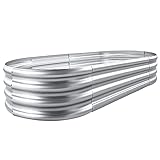
- Each raised metal garden bed size: 4×2×1ft ,7.14Cu
- Upgraded quality and structure: raised garden beds outdoor are made of Q195 galvanized metal sheet, double-layer anti-corrosion galvanizing and oval structure design, which is more beautiful, can withstand greater pressure at the interface, is not easy to loose, and the interface will not Deformed and can be reused for many years.
- Easy to set up, this galvanized stock tank only takes about 5 minutes to easily assemble and continue planting plants.
- Open base: This planter raised garden bed metal galvanized is designed with an open base, which can effectively avoid water accumulation and decay, protect the roots of plants, and allow the roots to better absorb nutrients
- Double thickness: The average thickness of this galvanized planter galvanized sheet reaches 0.78mm, and the thickest part can reach 1.56mm, which is extremely stable. Compared with the ordinary rectangular elevated garden bed with a thickness of 0.3mm, it will be the right choice for you. buy it! ! !
10. Keyhole-style bed
A roughly circular bed with a notch or narrow access lane creates an efficient central reach pattern. The access opening should be large enough to enter comfortably, and the surrounding planting areas must remain narrow enough to reach without stepping into the bed. This design is useful where a single compact growing zone is preferred.
11. Circular metal bed
A circular modular kit or curved panel system creates a strong visual focal point. It works especially well for herbs, flowers, pollinator plants, or a mixed display near an entrance or patio. Check the kit’s actual diameter, wall height, drainage arrangement, and connection method before choosing the planting area.
12. Concentric-ring garden
Arrange circular or polygonal beds around a water barrel, sculpture, trellis, or other central feature. Several narrow rings can be more maintainable than one broad circle. Reserve enough space between rings for weeding, harvesting, and moving a hose or cart.
What’s actually slowing this PC down?
Pick the symptom - the matching free tool is one click away.
13. Zigzag or serpentine bed
Linked short sections can follow a curved path or soften the lines of a formal yard. This layout is attractive along a boundary, but tight bends can create hidden interior corners. Use broad curves and short, accessible sections instead of maximizing the length at the expense of maintenance.
14. Terraced hillside beds
On a slope, step several beds across the grade rather than forcing one frame to sit out of level. Terracing can create usable flat planting areas, but each level needs stable support, a controlled overflow route, and drainage planning. The retaining details depend on slope, soil, rainfall, and the size of the proposed beds; obtain site-specific advice for a substantial or steep installation.
Accessible, elevated, and vertical designs
15. Waist-height accessible planter
A tall, open-bottom or containerized bed reduces bending and can make gardening more practical for people with mobility limitations. Design the height, width, knee clearance, and working side around the actual gardener. A taller wall also holds more soil, so confirm that the frame and base can carry the wet load.
16. Tabletop planter
A planting box on legs is suited to herbs, salad greens, and flowers close to a door or seating area. It is not automatically suitable for deep-rooted crops. Provide drainage holes, protect the supporting surface, and choose a soil depth that matches the plants rather than filling the container indiscriminately.
Free tools Windows power users keep installed
One-click scans. No signup required.
17. Wheelchair-accessible perimeter bed
Combine elevated planting sections with a firm, unobstructed path and adequate turning space. Avoid treating the path as leftover space after the bed is designed. Check approach width, surface stability, reach from the seated position, and the location of valves, tools, and storage.
Rank #3

- Multifunctional Design: This garden planter is separated into two growing areas for different plants or planting methods. The baffle can be removed to form a bigger growing area.
- Practical Use: With this plants box, you can cultivate plants like vegetable, flower, or herbs in your patio, yard, garden, and greenhouse, making it more convenient to manage.
- Simple Assembly: This divisible garden bed is built in a simple yet stable structure by heavy-duty screws and tight connection piece by piece. It is very easy and quick to put them together.
- Flexible DIY: The corner posts have been upgraded that the number of slotting on the posts is increased from 2 on the opposite 2 faces into 4 on 4 faces. Such a change enables users to combine two or more such planting beds more flexibly and fixedly.
- Stable Construction: Our planting raised bed has a piece of complete side plate at each side of the garden bed. It is fixed firmly without leakage of soil. The whole structure is very stable, and the installation is very easy.
18. Bench-edge bed
Add a broad, stable ledge to one side of a taller bed so the gardener can sit while planting or harvesting. The ledge must be structurally supported and comfortable, but it does not replace bracing, safe access, or a properly engineered frame. Keep the seating edge clear of sharp fasteners and splintering material.
19. Tiered staircase planter
Stack or step shallow beds so every level remains visible and reachable. Use upper tiers for herbs and flowers, and reserve lower or deeper sections for crops that need more root room. Secure the tiers against shifting and prevent runoff from washing soil from one level into the next.
20. Raised bed with built-in trellis wall
Attach a vertical panel to the north or back side of the bed for peas, beans, cucumbers, or supported tomatoes. Vertical growing saves horizontal space and can improve harvest access. Anchor the trellis independently or reinforce the bed so wind and crop weight do not pull the frame out of alignment.
Quick wins for a faster PC:
Clear out junk files and repair common Windows errorsFree Scan →Scan for outdated or missing drivers - takes under a minuteDriver Scan →Repair Windows errors before they cause bigger problemsFix Now →For climbing crops, a raised-bed garden trellis is useful when its height, mesh opening, and anchoring match the crop. Lightweight support may suit peas, while heavy cucumbers or fruiting vines need a stronger structure.
Small-space, rental, and patio ideas
21. Galvanized-metal modular bed
A galvanized-metal modular bed can be expanded or reconfigured into different shapes, making it useful for renters and gardeners who expect their layout to change. Compare the kit’s dimensions, wall height, edge treatment, connection hardware, and drainage plan. Flexibility is a design feature, not proof that every kit has the same service life.
If you want a configurable system, compare a galvanized raised garden bed with framed wood, fabric, or masonry based on the desired height, appearance, soil volume, and ability to move it later.
22. fabric raised bed
A fabric container is temporary, portable, and usually simpler to place than a permanent frame. Set it on a level, protected surface and expect it to need more frequent watering than a large in-ground planting area. Check that the fabric is intended for outdoor use and that the filled container will not obstruct drainage.
A fabric raised bed is particularly suitable when you rent, are testing a garden location, or do not want to commit to a fixed border. Its portability does not make a full container light once it is filled with wet soil.
23. Balcony or deck planter
Use a compact contained planter rather than a full ground-contact bed. Wet soil is extremely heavy, so verify the balcony or deck’s allowable load with the property owner, building manager, or qualified professional before installation. Include controlled drainage that will not stain, rot, or damage the surface below.
24. Vertical pocket-and-bed combination
Pair a shallow raised bed with a trellis, wall planter, or vertical panel. Use the lower bed for crops that need more root volume and the vertical component for herbs, compact greens, or vines. Keep wall-mounted pockets light enough for their support and provide a watering method that does not soak the building.
Rank #4

- 2 feet height: Compared with the ordinary 1-foot garden bed, this raised garden box has been improved in all aspects in terms of aesthetics, stable performance, and soil volume. It is time to replace the previous small planter box with a large raised planter box Now, it must be your better choice! ! !
- Large volume: Our large metal raised garden boxes of several specifications have a planting volume of 8×4×2ft=64 cubic meters Feet = 396 gallons. The box with 24 inches deep is very suitable for planting beans, broccoli and other medium to deep root plants
- Durable high-quality material: Galvanized steel raised garden bed is made of upgraded coated steel plate, which has strong anti-rust and corrosion resistance. It can be exposed to the sun, rain and snow for a long time, Reinforced cross bars and fixed piles have been added to help the metal panel maintain its shape and prevent warping and soil leakage over time. Environmentally friendly paint is used on all parts, which does not pollute the soil and provides a healthy environment for plants.
- Open base: This Galvanized planter raised beds uses a bottomless design that allows crops with developed rhizomes to grow without restriction, allowing excess water to be easily drained, and maintaining soil and nutrients.
- Easy to assemble: We provide detailed installation instructions, you can complete the assembly in a short time and start your planting immediately
25. Portable caster planter
A contained planter on locking casters can be repositioned for sun, cleaning, or seasonal protection. Use it only on a stable, level surface and choose casters and a frame rated for the fully saturated weight. Lock the wheels during use; a rolling planter is not an accessibility improvement if it moves while someone leans on it.
26. Window-side herb bed
A narrow bed near a sunny kitchen entrance or window keeps herbs and salad greens convenient to harvest. Prioritize access, drainage, and a clear walking route over maximum soil volume. Make sure the location receives enough direct light and that mature plants will not block the window or obstruct the doorway.
Special-purpose raised beds
27. Square-foot grid bed
Divide a compact bed into one-foot planting squares and assign each square to a crop. The grid makes dense, organized planting easier to plan, but it does not override crop-specific spacing. Large plants, sprawling crops, and trellised varieties may need more than one square.
28. Salad-greens succession bed
Reserve several shallow blocks for lettuce, spinach, arugula, and other quick crops. Replant sections at intervals rather than sowing the entire bed on one day, creating a continuing harvest. Easy access and consistent irrigation are more valuable here than excessive height.
29. Root-crop deep bed
Build depth for carrots, parsnips, potatoes, and other crops that need additional vertical rooting room. Match the soil depth to the crop and variety; the height of the frame alone does not guarantee adequate root space. Remove large stones and clods from the growing medium, and avoid a shallow bed over compacted ground when long roots are the goal.
The Tool Desk
Outbyte Driver Updater FREEFix the driver behind crashes, sound loss and screen glitchesFind Drivers →Outbyte PC Repair FREERepair Windows errors before they cause bigger problemsFix Now →30. Pollinator and cut-flower bed
Use a decorative bed for flowers selected for staggered bloom times, pollinator value, or cutting. Vary plant height without blocking access to shorter plants, and leave a clear maintenance path. Place it near vegetable beds if useful, but keep aggressive spreaders contained and account for mature size.
31. Berry or perennial bed
Dedicate a contained bed to strawberries, herbs, or perennial flowers so long-term growth is easier to manage. Plan for winter exposure: soil in raised beds can freeze more quickly than surrounding ground. Select plants suited to the local climate and consider how the bed will be reached for pruning, division, and replacement.
32. Hoop-house or cold-frame bed
Add hoops covered with clear plastic, frost cloth, or a hinged cover to a standard bed for early spring and late-season crops. Secure the covering against wind and provide a way to open it quickly. Vent or remove the cover in warm weather; a protected bed can overheat even when the surrounding air feels moderate.
Best Value
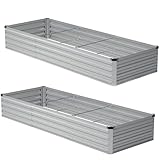
- Specialized in Garden Bed: Size:10x2x1ft.Ideal choice for your gardens,yards and patio to grow vegetables,flowers,fruits and other plants.
- Upgraded Structure and Extra Thickness: The garden bed is made of galvanized metal steel, which can be used for many years without getting rust and deformed.
- Open Bottom Design: The transparent structure at the bottom can prevent water accumulation and protect the roots of plants.At the same time,it can be planted in any position as needed.
- Four Plastic Caps: The garden bed come with 4 protective caps, which install in the 30 corners of the garden bed. Compared with the ordinary rectangular raised garden bed with none components, the caps can protect you from injuring and better looking!
- Quick Setup: With lesser screws and better structure, you just need few minutes to setup your new raised garden bed!
A practical raised-bed starter checklist
Buy or build in this order so the accessories solve a defined construction or maintenance problem:
- Choose the structure: Decide whether the site calls for a wood frame, metal kit, masonry border, fabric container, elevated planter, or unframed mound. Compare height, access, permanence, drainage, and soil volume rather than choosing material by appearance alone.
- Prepare the location: Remove invasive vegetation, establish a level base where appropriate, and identify the walking routes before assembling the bed.
- Plan the soil volume: Calculate the bed’s length, width, and fill depth. Buy clean soil and compost from a reputable source; do not use unknown fill in an edible garden.
- Control weeds thoughtfully: Permeable landscape fabric can help separate a bed from a weedy surface when appropriate, but it cannot correct poor drainage and should not replace site preparation. Do not install an impermeable barrier that traps water beneath the bed.
- Install irrigation: A raised-bed drip irrigation kit or soaker hose for raised beds can make watering more consistent, especially for multiple beds or dense plantings. Lay it out before plants become established and check that every section receives water.
- Add supports: Use a trellis for vining crops and anchor it for the expected wind and plant weight. Keep supports on the side that will not shade sun-loving crops unnecessarily.
- Protect the season: Keep frost cloth for garden beds or another suitable cover available if extending the season. Vent covers promptly in warm weather.
- Keep maintenance practical: A small set of raised-bed hand tools—such as a hand cultivator, trowel, pruners, and harvest knife—should be stored near the bed rather than left where they become a trip hazard.
For filling a new bed, compare raised-bed soil and compost by its stated ingredients, drainage characteristics, and suitability for food gardening. Avoid assuming that a bag labeled “garden soil” is interchangeable with compost or potting mix; each performs a different job, and the blend should suit whether the bed is open to the ground or a fully contained planter.
How to select the right design
| Your main constraint | Good starting designs | Important check |
|---|---|---|
| First garden or limited budget | 4-by-4, 4-by-8, unframed mound | Keep all planting areas reachable and budget for soil and irrigation, not only the frame. |
| Fence, wall, or narrow side yard | One-sided bed, long border bed, window-side herb bed | Limit width and preserve drainage and maintenance clearance. |
| Mobility or seated gardening | Waist-height planter, tabletop planter, accessible perimeter bed, bench-edge bed | Design the path, turning space, height, and reach together. |
| Slope | Terraced hillside beds | Engineer support and drainage for the actual site. |
| Rental or temporary garden | Fabric bed, modular metal bed, caster planter | Account for wet weight, surface protection, and relocation access. |
| Climbing crops or limited floor area | Trellis-wall bed, vertical combination | Match support strength to mature crop weight and wind exposure. |
| Early or late growing season | Hoop-house or cold-frame bed | Provide secure covers and reliable ventilation. |
| Deep-rooted crops | Root-crop deep bed | Set soil depth according to the crop, not a universal bed-height rule. |
Common design mistakes to avoid
- Making the bed too wide: A large footprint is not useful if the center cannot be reached without stepping on the soil.
- Ignoring the path: A beautiful layout can fail if a wheelbarrow, wheelchair, hose, or mower cannot pass.
- Filling before planning irrigation: Retrofitting lines around established roots is harder and often less uniform.
- Assuming height solves every soil problem: Raised soil can reduce contact with questionable native soil, but testing and responsible handling may still be necessary.
- Using questionable reclaimed wood: Avoid old railroad ties and wood with unknown preservatives around edible crops.
- Overlooking wet weight: Elevated, tabletop, balcony, deck, and caster designs need particular attention to structural capacity.
- Forgetting summer heat: Metal, shallow containers, and covered beds can heat or dry quickly. Monitor moisture and temperature instead of relying on the material label.
- Leaving frost covers closed: Covers protect against cold but can overheat crops when the weather changes.
The strongest design is the one you can reach, water, repair, and maintain. Start with the site’s sun and circulation pattern, select a bed width that does not require stepping into the soil, then choose the construction material and accessories that solve the remaining problems.
Frequently Asked Questions
How wide should a raised garden bed be?
A four-foot width is a useful maximum for a bed that can be reached from both sides. Along a fence or wall, make the bed narrower—often two to three feet—so all plants remain accessible from the open side.
What soil should I use in a raised garden bed?
A practical starting blend is approximately 70% clean soil and 30% compost. The ideal depth and blend depend on whether the bed is open to the ground or fully contained and on the crops being grown.
What materials should I avoid for an edible raised bed?
Yes, but do not assume a raised bed is automatically safe. Avoid railroad ties and old wood with creosote or unknown preservatives. For modern pressure-treated lumber, identify the product and follow current local or extension guidance.
What is the best way to water raised beds?
Drip irrigation and soaker hoses are both suitable options. They deliver water near the root zone and are especially helpful for densely planted beds, which can dry quickly.
How can I protect a raised bed from frost?
Use a bed with hoops, clear plastic, frost cloth, or a hinged cover. Open or remove the cover during warm weather to prevent overheating, and secure it against wind.
The Bottom Line
For most first gardens, begin with a reachable 4-by-4 or 4-by-8 bed, a clear three-foot-or-wider path, clean soil, and planned drip or soaker irrigation. Adapt the shape and height for the site, gardener, and crops rather than treating one bed style as universally best.
The Tool Desk
Outbyte Driver Updater FREEScan for outdated or missing drivers - takes under a minuteDriver Scan →Outbyte PC Repair FREERepair Windows errors before they cause bigger problemsFix Now →Quick Recap
Product prices and availability are accurate as of the date/time indicated and are subject to change. Any price and availability information displayed on Amazon at the time of purchase will apply.

