Windows Errors? Fix Them Before They Spread
Repair common Windows errors and clear accumulated junk for a smoother, more stable PC - no reinstall needed.Free scan · no reinstallCrashes, No Sound, or Screen Glitches?
Random freezes, missing sound and display glitches usually trace back to one bad driver. Find and replace yours safely.Free scan · under a minuteThe best beginner houseplant is the one that fits your room and routine. Start with the light you actually have, decide whether you tend to underwater or overwater, and check plant safety if pets or children may reach it. The 30 options below are a curated shortlist—not a ranked test—and their care needs vary.
Choose a plant by the conditions you can provide
Start with light
“Low light” means less light, not darkness. Plants in dim rooms generally grow more slowly; too little light can also lead to stretched growth, pale leaves, or leaf drop. For dimmer spots, consider cast iron plant, ZZ plant, snake plant, or heartleaf philodendron. East- or west-facing windows offer options such as African violet, begonia, Christmas cactus, and hoya. Bright sunny windows suit many succulents, including aloe and jade. See UNH Extension’s light-based suggestions and Illinois Extension’s guidance on low light.



As an Amazon Associate I earn from qualifying purchases.
Match watering to your habits
If you often forget to water, choose plants that tolerate drying between waterings, such as snake plant, ZZ plant, or pothos. If you can keep a closer eye on soil moisture, peace lily and bamboo palm prefer more consistently moist soil. Water according to the plant and the soil, not a fixed weekly calendar: UNH Extension advises watering when soil is dry and not leaving plants standing in water. Use a pot with drainage, a soilless potting mix, and empty the saucer promptly. Iowa State Extension’s houseplant care notes cover practical choices including pothos and peace lily.
Free tools Windows power users keep installed
One-click scans. No signup required.
Check household safety and space
Easy care does not mean pet-safe. UF/IFAS identifies pothos, ZZ plant, peace lily, and aglaonema as plants with calcium oxalate crystals that can cause painful mouth and throat irritation if eaten. NCSU reports medium toxicity of ZZ plant to cats and dogs. Check the ASPCA toxic and non-toxic plant list for the specific plant before bringing it home, and keep plants beyond reach where appropriate. Trailing pothos and heartleaf philodendron need room to hang or spread; upright snake plants and ZZ plants have a different footprint.
#1 Best Overall
30 beginner houseplants, grouped by growing conditions
University extension sources do not rank these plants against one another. This curated selection reflects plants profiled or recommended by Iowa State, UNH, Illinois, UF/IFAS, and NCSU; the level of detail available differs by plant. Check the label for the exact species or cultivar, especially when light and safety are important.
For dimmer rooms or indirect light
- Cast iron plant (Aspidistra elatior): tolerates low light and neglect; keep its well-drained soil evenly moist. Low-light tolerance does not mean it will thrive in a dark room.
- ZZ plant (Zamioculcas zamiifolia): tolerates low light and dry conditions; let soil dry between waterings. It is a consumption hazard for pets and children.
- Snake plant (Dracaena trifasciata, also called Sansevieria): tolerates varied light and should dry between waterings.
- Heartleaf philodendron (Philodendron hederaceum): a trailing option that tolerates low to indirect light; keep the soil evenly moist. Screen for household safety.
- Chinese evergreen (Aglaonema): keep it out of direct sun and allow soil to dry slightly before watering. UF/IFAS flags aglaonema for calcium oxalate crystals.
- Dragon tree (Dracaena marginata): prefers moderate to indirect light; low light may cause stretched growth.
- Bamboo palm (Chamaedorea seifrizii): Illinois Extension suggests it for low-light areas, but it needs warm conditions, humidity, and consistently moist soil. It is less suited to someone who routinely misses watering.
- English ivy (Hedera helix): UNH lists it as a possibility for dim spaces. Check its safety for your household before choosing it.
For indirect light and moderate watering
- Pothos (Epipremnum aureum): a forgiving trailing plant for low to moderate light; let the soil dry moderately between waterings. Check household safety before purchase.
- Spider plant (Chlorophytum comosum): adaptable, with indirect light and average moisture preferred. Its plantlets can be removed and potted.
- Peperomia (Peperomia obtusifolia): allow moderate drying and avoid overwatering.
- Peace lily (Spathiphyllum): tolerates low light but flowers best in indirect light; prefers moist soil. UF/IFAS flags it for calcium oxalate crystals.
- African violet (Saintpaulia ionantha): UNH lists it for east- or west-facing windows; Iowa State includes it among plants that are easy to propagate.
- Christmas cactus (Schlumbergera): an east- or west-window option that UF/IFAS describes as easy to care for.
- Begonia: UNH lists begonias among east- or west-facing window options. Light and care needs vary by type.
- Hoya: UNH lists hoya among east- or west-facing window options. Confirm the species’ needs before choosing a spot.
- Schefflera: UNH includes it among east- or west-facing window options.
- Chinese money plant (Pilea peperomioides): Iowa State includes it among plants that are easy to propagate.
- Inch plant (Tradescantia spp.): Iowa State lists it among easy-to-propagate plants.
- Arrowhead plant (Syngonium podophyllum): Iowa State lists it among easy-to-propagate plants; check species-specific safety before choosing it for a home with pets or children.
- Coleus (Coleus scutellarioides): UF/IFAS says it grows indoors in bright light and propagates from stem cuttings in water.
- Polka-dot plant (Hypoestes phyllostachya): UF/IFAS describes its foliage and warns against planting it outdoors in Florida because of invasive-risk concerns. That warning is geographically specific.
For a bright window
- Ponytail palm (Beaucarnea recurvata): prefers direct light but tolerates lower light. Its water-storing form makes overwatering a particular risk.
- Aloe (Aloe vera): a bright-window succulent and an Iowa State-listed easy propagation choice.
- Jade plant (Crassula ovata): choose a bright location; Iowa State lists it among plants that are easy to propagate.
- Kalanchoe: a bright-window succulent option.
- Haworthia: a bright-window succulent option.
- Sempervivum: a bright-window succulent option.
- Rhipsalis: included by UNH among possibilities for bright windows, but do not assume every succulent has the same setup; check the particular species’ needs.
- Agave: UNH includes it among hardier succulents for a bright, sunny window. Consider its space needs and leaf form before placing it in a home.
Set up a plant to succeed
- Identify the spot: note how much natural light it receives and whether direct sun reaches the leaves. A plant that tolerates lower light may still grow slowly there.
- Choose a suitable pot: use a container with drainage and a saucer you can empty. Standing water can undermine otherwise careful watering.
- Use appropriate mix: UNH Extension recommends soilless potting mix for houseplants.
- Learn the plant’s soil cue: check the soil and follow that plant’s preference for drying or staying moist instead of watering on a fixed weekly schedule.
- Recheck safety: verify the exact plant against a reliable pet-safety list and place it where curious pets or children cannot reach it.
Which plants are easiest to propagate?
If you want to make more plants after your first one settles in, several beginner choices offer straightforward propagation routes. Pothos roots from stem cuttings, spider plant plantlets can be removed and potted, and Iowa State Extension lists English ivy, Christmas cactus, African violet, aloe, jade, Chinese money plant, inch plant, and arrowhead plant among easy-to-propagate options. UF/IFAS also describes coleus stem cuttings rooting in water. Propagation ease does not make a plant suitable for every light level or household.
Rank #2
Do houseplants purify indoor air?
Do not rely on a houseplant as a substitute for ventilation or air filtration. Illinois Extension discusses studies involving snake plant, but the available guidance does not establish a practical household-level effect size or show that plants replace those measures.
Quick Recap
Best Value
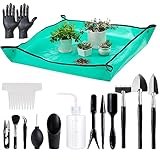
- Comprehensive Small Garden Tools: Our indoor garden kit Not only for succulents, but also suitable for bonsai plants, cactus and most of indoor small plants. The mini garden tools set meets your various gardening needs like potting mat, digging, watering, loosening soil, transplanting, cleaning, pruning, weeding, etc. Lightweight, Easy carry and wash after every use. Just pat dry.
- Extra Thick Large Gardening Mat 39.4 in and 39.4 in: Waterproof sturdy coating PE plant mats for repotting, stain resistant can be used repeatedly. Copper buckle design, two copper buckles at each four corners which are very useful to prevent soil or water from splashing easily and avoid soiling the ground. Easy to scrub and clean, and be folded when used up. Very convenient for storage and doesn’t take up space.
- Accurate Succulent Watering Bottle and Marking Plant Tags: Fairy garden watering can with bending mouth squeezes out water flow smoothly and easily, can help you water the root of small potted mini plants. Small water yield, not easy to water to leaf center. Sturdy plastic plant labels garden tags which have enough room to write stick in soil solidly. Great for marking exactly when you watering and it’s grow situation
- Perfect Size Rustless Shovel Rake Spade Set: Mini trowel tiny shovel, made of stainless steel, the heads provide the shovel rake spade good using sense, and no rust,no scratch like other iron one after repeated use. Handles of the indoor gardening tool set made of premium ABS material which is easy to clean after use is convenient, enjoyable and cozy for gardening, and no crack and dent like some other wooden dirty little digger garden tool.
- Multifunctional Transplanting Tools Set: Combined with a fork shape seedling planter tool, a digging tool, a paving small spoon and a wide thick bucket shovel, make you loosen soil, seeding, paving and transplanting safely and easily properly without hurting your delicate succulents. The lightweight handles reduces wrist pain and fatigue, which makes indoor gardening easier and quicker.
Product prices and availability are accurate as of the date/time indicated and are subject to change. Any price and availability information displayed on Amazon at the time of purchase will apply.




