The Tool Desk
Outbyte Driver Updater FREEScan for outdated or missing drivers - takes under a minuteDriver Scan →Outbyte PC Repair FREEClear out junk files and repair common Windows errorsFree Scan →For a homemade window cleaner, start with equal parts distilled vinegar and water, or choose one of the two mixtures below for a different cleaning approach. No recipe guarantees streak-free glass in every condition: clean out of direct sunlight, work from the top down, and dry with a clean, lint-free cloth to reduce streaks.
Choose a DIY window cleaner recipe
These three formulas come from university extension guidance. Use the one that suits the ingredients and application method you prefer; the sources do not establish that one works best on every window.
As an Amazon Associate I earn from qualifying purchases.
1. Vinegar and water
- Ingredients: 1 cup distilled vinegar and 1 cup water.
- How to use it: Apply to the glass, then dry with a paper towel or clean cloth.
This equal-parts recipe is published by New Mexico State University Cooperative Extension. Kansas State University Research and Extension gives a separate, more diluted version for removing hard-water deposits: 1/4 cup vinegar in 2 quarts warm water. These are distinct formulas; use one rather than combining their proportions. Kansas State’s spring-cleaning guidance also discusses an ammonia mixture for soil and grease, but ammonia is not part of the recipes here and must never be mixed with vinegar.
2. Vinegar, rubbing alcohol, and cornstarch
- Ingredients: 1/4 cup rubbing alcohol, 1/4 cup white vinegar, 1 tablespoon cornstarch, and 2 cups warm water.
- How to use it: Combine the ingredients in a spray bottle and shake. Shake again if cornstarch settles at the bottom.
This formula is from UF/IFAS Extension. The need to shake again is specific to the cornstarch mixture.
#1 Best Overall

- Can be used on all glass surfaces
- Removes fingerprints, dust, dirt and smoke film
- Streakless with fresh fragrance
- Foaming action
- Ammonia free
3. Vinegar, dish soap, and water
- Ingredients: 1/2 teaspoon liquid dish soap, 1/4 cup distilled vinegar, and 2 cups water.
- How to use it: Wet a sponge or small cloth with the solution and wring out excess liquid. Wipe spots and smears, then dry with a paper towel or clean cloth.
New Mexico State University Cooperative Extension lists this as another homemade glass-cleaning option. It is applied with a damp sponge or cloth rather than sprayed directly.
How to clean windows without streaks
- Choose the right time. Work out of direct sunlight. Kansas State University Research and Extension advises this because sunlight can make the solution dry too quickly.
- Start at the top. Clean from the top of the window down so dirty solution does not run over glass you have already cleaned.
- Use different stroke directions. Wipe vertically on one side of the window and horizontally on the other. If a streak remains, the stroke direction helps you identify which side needs more polishing.
- Dry with a suitable cloth. Use a lint-free cloth, paper towels, or crumpled newspaper. Choose a clean, soft cloth without buttons or zippers that could scratch the glass.
These technique recommendations come from Kansas State University Research and Extension and UF/IFAS Extension. A spray bottle is convenient for the recipes that call for spraying, but it is optional.
Rank #2

- Can be used on all glass surfaces
- Removes fingerprints, dust, dirt and smoke film
- Streakless with fresh fragrance
- Foaming action
- Ammonia free
Mix and store homemade cleaner safely
- Never mix bleach with these cleaners. Do not mix bleach with vinegar, ammonia, rubbing alcohol, or other household cleaners. UF/IFAS warns that these combinations can cause chemical reactions that affect lung function.
- Avoid contaminated containers. Do not reuse a cleaner bottle if residue from its previous product could react with the new mixture. Do not combine homemade cleaner with bleach residue.
- Make only what you need. UF/IFAS recommends preparing only the amount needed, labeling homemade mixtures, and keeping them out of children’s reach.
- Keep cleaner out of food containers. Store it only in a clearly labeled, appropriate container—not a bottle or jar used for food.
For additional household-cleaner safety guidance, see UF/IFAS Extension’s cleaning guidance and Kansas State University Research and Extension’s spring-cleaning advice.
Recommended Free Tools
Quick Recap
Best Value

- Ready-to-use glass cleaner wipes out smudges, fingerprints, and more
- Effective on mirrors, windows, and other glass surfaces
- Leaves glass clean, streak-free, with a sparkling shine
- If you like Windex Original glass cleaner, we invite you to try Amazon Basics Glass Cleaner
Rank #4
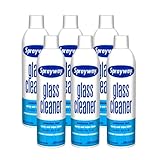
- Excellent for windows, mirrors, windshields and other glass surfaces
- Heavy-duty foam clings to vertical surfaces
- Contains perfume-grade alcohol for best performance
- Ammonia-free with a clean fresh fragrance
Rank #3

- What You'll Get: One 23 oz spray bottles of Windex Original Blue Glass and Window Cleaner
- Surface Cleaner: leaves an amazing streak-free shine leaving your home surfaces sparkling clean
- Works On: removing dirt, smudges, fingerprints, and other messes from your home glass surfaces
- Glass Cleaner: glass surfaces, windows, glass stovetop, shower glass, glass shower doors, aquarium glass cleaner, and more
- Windex Commitment: spray bottles made from 100% recovered coastal plastic in partnership with Plastic Bank, is post-consumer recycled plastic collected on land within 31 miles of an ocean so that it does not reach oceans or landfills.
Product prices and availability are accurate as of the date/time indicated and are subject to change. Any price and availability information displayed on Amazon at the time of purchase will apply.