The Tool Desk
Outbyte Driver Updater FREEScan for outdated or missing drivers - takes under a minuteDriver Scan →Outbyte PC Repair FREEClear out junk files and repair common Windows errorsFree Scan →The most effective way to get more usable storage from a small closet is to edit the contents first, then use vertical space and assign each category to the right storage method. A second hanging rod can greatly increase capacity for short garments, while shelves, door storage, bins, and a planned shoe zone reclaim otherwise wasted space. But a dense closet is not necessarily an efficient closet: every item still needs to be visible, reachable, and supported safely.
Before buying an organizer, measure the space, account for the door and trim, identify long garments, and decide what belongs in the closet at all. The 27 ideas below are organized from free changes to renter-friendly additions and more permanent construction options.
As an Amazon Associate I earn from qualifying purchases.
Start with a closet audit—not a shopping cart
Closet organizers are not interchangeable. A shelf, rod, bin, or hanging unit that fits one closet system may block the door or waste space in another. The five-minute audit below prevents the most common expensive mistake: buying storage before understanding the room.
Do these 3 things before closing this tab:
1Clear out junk files and repair common Windows errors2Scan for outdated or missing drivers - takes under a minute3Repair Windows errors before they cause bigger problemsWhat to measure
| Measure | Record | Why it matters |
|---|---|---|
| Width | The interior width at both the back and the front | Walls are not always parallel, and trim can reduce the usable opening. |
| Depth | The back wall to the door, door hardware, or nearest obstruction | A typical reach-in closet is often designed around approximately 24 inches deep, but the usable depth can be less. |
| Height | Floor to ceiling, plus the height of any soffit | This determines whether you can add a top shelf, double hang, or full-height system. |
| Existing hardware | Rod length, rod height, shelf height, shelf depth, and bracket positions | Existing components may be reusable, but they may also limit the new layout. |
| Openings | Door type, swing path, folding or sliding movement, and clearance | Door-mounted storage and deep shelves can prevent the door from closing. |
| Obstructions | Baseboards, outlets, vents, windows, pipes, ductwork, and attic access | These determine where a track, standard, shelf, or cabinet can go. |
| Wall structure | Stud locations and wall material | Heavy rods and shelves need appropriate structural attachment. |
Measure the empty space rather than measuring around clothing and boxes. Sketch the closet on paper, including the door path, then mark where a hanger, shelf, or bin could physically project. If the closet is shallower than a normal reach-in, test an actual hanger in the opening before purchasing a standard-depth tower.
#1 Best Overall

- Magic Hangers: Size: 16x3.6 inches. 6Pcs per set. Each magic hanger can hang 5 clothes and one set can hang up to 60 clothes. Make your closet neat and space saving. Hangers for closet organizer, small closet, dorm and apartment essentials
- Heavy Duty Space Saving Hangers: Strengthen hook bearing capacity so that AMKUFO magic hangers hook won't be stretched easily like other brand hangers do. Sturdier plastic magic hangers with no sharp edges or burrs will protect your value clothes. Thicken cross bar prevent it sagging. Durable AMKUFO hangers are great for heavy coats, pants, shirts and dresses
- Closet Space Saver Organizer: These magic hangers can be used horizontally to neat your closet or vertically to quadruple closet capacity. Ideal for small closets, wardrobe, apartments, dorms and limited space. With these cascading hangers, your clothes are organized well. Get rid of chaos and enjoy wrinkle free
- Smart Black Hanger Design: Each cascading hanger has 5 closed holes that prevent your coat hangers from falling off when hanging straight down, different from other metal space saving hangers with open slots. When hanging clothes all-across, the holes prevent hangers from sliding. Ideal for bedroom, closet storage and organization
- The 6-pack comes pre-assembled — no assembly needed. AMKUFO Smart Hangers is a good choice, making full use of the closet space. Hangers Space Saving, Your College Dorm Room Essentials, Aparment Essentials, Bedroom Essentials, and Home Essentials
For a wall-mounted system, use a stud finder as a starting point, but do not assume it identifies every wire or pipe. The Elfa installation guide specifically instructs installers to avoid electrical wires, ductwork, plumbing, and other components that could be damaged. If you cannot confidently identify the wall construction or utilities, ask a qualified professional before drilling.
The 27 ways to organize a small closet
Free or nearly free changes
1. Measure the empty closet before buying organizers
Record the width, depth, ceiling height, existing rod and shelf locations, door clearances, trim, and wall obstructions. A reach-in closet is commonly described as about 24 inches deep, but the door, casing, rod, hangers, and baseboards may make the practical storage depth smaller. The Organized Living design guide provides general reach-in design categories, while HUD accessibility guidance discusses lower and adjustable storage for people with limited reach. Neither replaces measurements of your particular closet.
Do not use a product’s advertised closet width as a substitute for measuring. For example, a Rubbermaid expandable system is marketed for closets between 4 and 8 feet wide and at least 14 inches deep; those dimensions apply to that product, not to every adjustable system. Check the product’s installation instructions against your measurements.
2. Empty, clean, and inspect the closet
Remove every item, vacuum the floor and corners, wipe the shelves, and inspect the walls and ceiling. Look for sagging shelves, loose brackets, water staining, mold, insects, damaged drywall, and crumbling fasteners before adding more weight. A manufacturer installation guide from The Container Store recommends removing contents and old shelving before installation.
Do not cover a damp or deteriorating closet with bins. Moisture can encourage mold and insects and damage textiles. The National Archives recommends cool, dry, dark storage for textiles and warns against damp storage areas.
3. Reduce the inventory before maximizing the hardware
Create four groups:
- Keep in this closet.
- Store elsewhere.
- Repair or decide later.
- Donate, sell, recycle, or discard.
Do not design a closet around clothing that does not fit, is never worn, is damaged beyond repair, or belongs to another household member. Put a donation bag or basket near the closet so unwanted items do not drift back onto the rod. Decluttering before purchasing organizers is also the first recommendation in current coverage from Architectural Digest and Martha Stewart.
4. Decide what the closet is responsible for
A small closet may not be able to hold every garment, shoe, suitcase, blanket, keepsake, and accessory while remaining usable. Give it a defined job: everyday clothes only, all-season clothing, clothing plus shoes, or clothing plus accessories.
Move low-frequency items to a dresser, hall closet, wardrobe, under-bed container, or another clean, dry indoor location. If shoes are taking over the rod and floor, relocating formal or seasonal pairs may create more usable capacity than buying another organizer. Martha Stewart’s closet guidance similarly recommends moving bulky categories elsewhere when they crowd out frequently used items.
5. Divide the closet into frequency and category zones
Give each category a defined home and put the most frequently used items in the easiest-to-reach locations. Possible zones include:
- Daily tops and workwear.
- Casual clothing.
- Long garments.
- Folded clothing.
- Shoes.
- Bags and accessories.
- Seasonal storage.
- A hook or valet area for clothing that is worn but not ready for laundry.
Group like items together instead of filling every empty gap. A closet that looks slightly less dense but lets you find every category quickly has more usable capacity than one packed from floor to ceiling.
6. Fold flexible clothing vertically
In drawers or open bins, fold T-shirts, workout clothing, underwear, pajamas, and similar flexible items into a vertical file so each piece is visible. This reduces the need to remove an entire stack to reach the item underneath.
PC Slower Than It Used to Be?
A free scan shows the junk files, broken settings and background clutter dragging Windows down - then fixes them in one click.Free scan · Windows 10 & 11Crashes, No Sound, or Screen Glitches?
Random freezes, missing sound and display glitches usually trace back to one bad driver. Find and replace yours safely.Free scan · under a minuteVertical folding is primarily an accessibility and retrieval strategy; it does not guarantee more volume. Bulky sweaters, delicate knits, and structured garments may need to be folded flat or stored loosely to prevent distortion.
Highest-capacity changes
7. Install a double-hang section for short garments
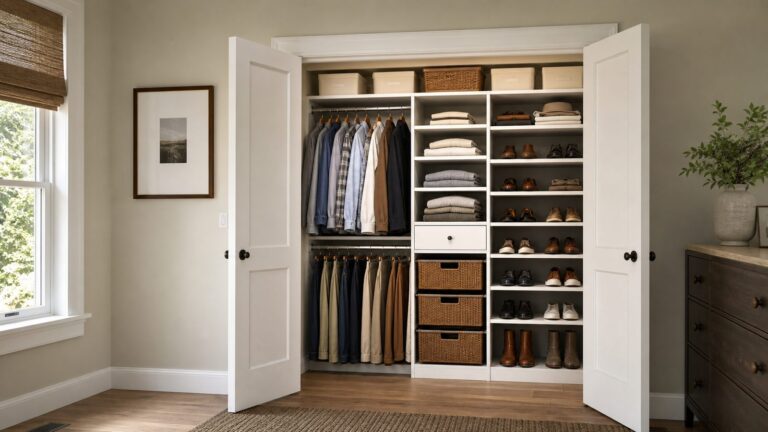
A second rod is usually the highest-impact hardware change when the wardrobe consists mostly of shirts, blouses, jackets, skirts, and shorter pants. It turns unused vertical space into a second hanging zone.
Do not interpret a manufacturer’s double-hang claim as doubling the entire closet. It can approximately double the hanging capacity of the short-garment section, but it does not create more shelf, shoe, or long-garment space. ClosetMaid gives example layout points of approximately 85.5 inches and 42 inches, while Organized Living gives approximately 84 inches and 42 inches. These are system-specific reference dimensions, and the cited measurement may refer to a shelf height or layout point rather than the exact top of a rod. Confirm the installation instructions for the system you buy:
Before installing, hang your actual garments and confirm that the lower rod leaves enough room to remove clothes without hitting the floor, shelf, or furniture.
Recommended Free Tools
8. Keep a dedicated long-hang section
Reserve space for dresses, robes, trench coats, jumpsuits, formalwear, long skirts, and other garments that cannot share a short-hang bay. A closet with many long items may need more long hang and less double hang than a closet dominated by shirts.
ClosetMaid lists approximately 71.5 inches as an example long-hang shelf height, and Organized Living gives approximately 70 inches as a general reference. These are starting points for particular systems, not universal measurements. Measure the longest garments in your own wardrobe and leave enough clearance for the hem.
A practical layout for many reach-in closets is one narrow long-hang section beside a wider double-hang section. Do not double-hang the entire closet simply because it maximizes a capacity number.
Rank #2

- HIGH QUALITY: This hanging closet organizer is made of sturdy and thick non-woven, built to last. Unlike some similar product, this one has 2 pcs sturdy bamboo inserts at each shelf and MDF board at top & bottom, which can avoid the compartments bending.
- SPACE SAVE: The design allows for easy hanging with cubby spaces as well as side pockets for smaller items that are often hard to find. It makes organizing so easy but does not take up much space at the same time.
- CONVENIENCE: Six compartments to set out your clothes ahead of time. Check the ten-day weather forecast, and set out your clothes for the week in this terrific hanging sorter. Saves you lots of time in the morning.
- SUITABLE: The closet hanging storage allows you to have more space in your closet. It has six shelves units. This shelf organizer is suit for people who need more storage, but they do not have space in their closet. Also, it is for people who want to use their space more efficiently.
- WARM TIPS: Before buying, measure the distance between your closet rod and the floor to see which model would be best for you.
9. Use an adjustable full-height closet system
An adjustable track-and-standard system or modular kit can use more wall height than a builder-grade single shelf and rod. Shelves and rods can also be moved when a wardrobe changes from children’s clothing to adult clothing, or from mostly hanging items to mostly folded items.
What’s actually slowing this PC down?
Pick the symptom - the matching free tool is one click away.
Wall-mounted systems require careful attachment to the wall type. Use the manufacturer’s track, standard, bracket, and anchor specifications rather than combining parts from unrelated systems. The Rubbermaid expandable closet kit is one current example of an adjustable system, but its dimensions and load limits are not universal.
For renters who cannot drill, choose freestanding or removable options instead, or obtain written landlord approval before installing a wall system.
10. Add a continuous top shelf
Use the high space above the main rod for luggage, seasonal clothing, spare bedding, and other low-frequency items. A shelf across the width of a reach-in closet is often more useful than several isolated high shelves.
Organized Living recommends approximately 14 to 16 inches of top-shelf depth when the closet geometry permits it. Treat that as a design starting point, not a requirement. A deep shelf can become an inaccessible black hole, so use lightweight, labeled containers rather than loose piles. Never overload a shelf beyond the product’s stated capacity.
11. Add shallow shelves for folded clothes
Not every shelf should be as deep as the closet. Shallow shelves keep folded clothing near the front, reduce buried stacks, and make categories easier to see. Architectural Digest cites approximately 16 inches as enough for folded shirts and pants, with 18 inches as a practical example; ClosetMaid offers system components in several depths, including 12, 16, and 20 inches.
Measure the actual footprint of the clothing or bin before selecting a shelf. A shelf that is too shallow wastes the item’s depth, while one that is too deep encourages inaccessible back rows. See the Architectural Digest examples and ClosetMaid wire-shelving specifications for system-specific options.
12. Add shelf risers
Risers divide a tall shelf compartment into two levels for shoes, folded jeans, handbags, or small bins. They are especially useful on existing fixed shelves where there is unused vertical clearance.
Risers do not increase the closet’s total volume; they divide wasted height. Measure the vertical opening and make sure each level has enough clearance to remove an item without collapsing the one above it. Martha Stewart’s organization ideas include stackable risers and shelf dividers for this purpose.
13. Install shelf dividers
Dividers keep sweaters, jeans, handbags, linens, and soft-sided items upright instead of letting them spread across a shelf. They are useful when one wide shelf must hold several categories but there is not enough width for separate bins.
Dividers organize existing capacity rather than adding much new capacity. Leave enough room to remove an item without pulling down the adjacent stack. Apartment Therapy’s closet guidance also recommends dividers for controlling shelf stacks.
Clothing and accessory organization
14. Choose square or rectangular bins that fit the shelf
Match each container to the shelf’s width, depth, and height. Square or rectangular bins generally waste less shelf area than round baskets, but the fit matters more than the shape.
Measure the inside dimensions of both the shelf and the container, including handles and lid overhangs. As an example of why this matters, IKEA’s current U.S. SKUBB storage-case listing gives dimensions of approximately 17 by 20.75 by 7.5 inches, while its SKUBB shoe boxes are approximately 8.75 by 13.5 by 6.25 inches. These are product examples, not universal standards; model dimensions, stock, and availability can change. See the SKUBB storage case listing and IKEA PAX planning material before designing around a specific system.
Free tools Windows power users keep installed
One-click scans. No signup required.
15. Replace bulky hangers with slim, consistent hangers
Slim hangers can free horizontal rod space and make the contents easier to scan. Use the same style where practical so garments hang at a consistent depth.
Do not use a delicate or weak hanger for heavy coats, suits, structured jackets, or wet garments. Do not pack the rod so tightly that clothing cannot be removed without disturbing everything beside it. The space gained depends on the actual width and strength of the hanger and the type of clothing, not on the label slim alone.
16. Use cascading hangers selectively
Hanger connectors, cascading hooks, or chain-style systems let several lightweight garments occupy a vertical footprint. They may work for a small group of shirts or coordinated outfits, but they are not a replacement for a properly supported rod.
Concentrated weight can stress one rod point, lower garments can become difficult to browse, and improvised parts may have no reliable load rating. Some idea pages show chain or soda-tab methods, including Bob Vila’s small-closet suggestions; treat such hacks as light-duty experiments only. Use rated commercial hardware for anything heavy or permanent.
17. Use hanging shelves or drawers only for lightweight categories
A hanging fabric organizer can add compartments without drilling. Use it for lightweight folded clothing, scarves, hats, accessories, or small bags. IKEA’s SKUBB six-compartment organizer is one example, listed at approximately 13.75 by 17.75 by 49.25 inches and designed to attach to a rod or freestanding rack.
Hanging organizers consume rod space and can sag or obstruct adjacent clothing. They are usually a poor choice for shoes, books, dense bins, or stacks of jeans unless the manufacturer explicitly rates the unit for that load. Check the manufacturer’s product dimensions and instructions.
18. Use the back of the door
An over-door organizer can hold belts, scarves, ties, jewelry, hats, small bags, or shoes and reclaim otherwise unused vertical space.
Measure the door thickness and the clearance between the door, frame, and closet contents before buying. Check whether the door is hinged, sliding, bifold, louvered, or flush. A door organizer that works on a hinged flat door may not work on a bifold or sliding door. Confirm that the door still closes, that the organizer does not rub the frame, and that its weight does not create a hinge problem. Home Depot’s closet guidance covers over-door and hanging storage options.
Quick wins for a faster PC:
Repair Windows errors before they cause bigger problemsFix Now →Scan for outdated or missing drivers - takes under a minuteDriver Scan →Clear out junk files and repair common Windows errorsFree Scan →Rank #3

- Unique Trapezoid Design: Our closet bins feature a unique trapezoid design with a lower front for easier visibility and access. The Homsorout shelf organizers now come in 10 new colours, offering more options for your space
- Sturdy Baskets Reinforced with thick cardboard for the sidewalls and bottom, these storage bins are sturdy and resistant to deformation. Delicate stitches enhance their sturdiness, preventing tears
- Sturdy Handle: Designed with two delicately stitched handles, these closet baskets are easy to carry and remove from shelves. They can be easily folded and stored when not in use, saving valuable space
- Premium Material: All our storage baskets for organizing are made of high-quality non-woven fabric, which is sturdy, and easy to clean. Homsorout cube organizer bins are an excellent choice to keep your space tidy
- Multipurpose Cubes: Measuring 16.53" L x 11" W x 7.87" H, these decorative storage boxes are ideal for storing clothes,towels, books, yarn, etc. Our fabric storage bins suitable for living room, bedroom, office, closets
19. Add hooks or a narrow peg system to side walls
Side walls and the short return walls at the closet opening can hold robes, frequently used bags, belts, hats, and tomorrow’s outfit. Use the easiest-to-reach positions for daily items and higher hooks for occasional accessories.
Test the idea before drilling by taping a piece of cardboard to the proposed wall at the organizer’s full depth. Open and close the door, slide hangers past it, and check that the closet opening does not become a tunnel. In a rental, use adhesive hooks only within the product’s surface and load limitations. Adhesive hooks are not structural support for a rod, shelf, or heavy bag collection.
20. Store shoes vertically—or move them out
Shoes consume valuable floor depth, so use a vertical shoe shelf, narrow shoe tower, properly fitted hanging shoe organizer, or a separate entryway zone. Keep the pairs worn most often at eye or waist level and move formal, seasonal, or rarely worn shoes to less valuable space.
Avoid forcing a shoe rack into the door path. Measure the shoe length and the shelf depth, and allow enough room to remove a pair without knocking over the row. Home Depot’s small-closet recommendations include vertical shoe storage and hanging organizers.
The Tool Desk
Outbyte PC Repair FREERepair Windows errors before they cause bigger problemsFix Now →Outbyte Driver Updater FREEScan for outdated or missing drivers - takes under a minuteDriver Scan →21. Create a deliberate floor zone
The floor should have one or two planned jobs rather than becoming a general dumping area. Appropriate options include a low shoe rack, drawer unit, hamper, suitcase, boot tray, or narrow rolling cart.
Measure the door swing and the clearance beneath hanging garments before adding floor furniture. Tall or top-heavy units must be stable and anchored according to the manufacturer’s instructions. If children use the room, take tip-over prevention especially seriously.
Overflow and garment care
22. Use under-bed or nearby overflow storage
Under-bed containers are useful for out-of-season clothing, spare bedding, luggage, and occasional accessories when the closet cannot hold them accessibly. Flat containers are easier to slide out and less likely to consume closet depth than large loose bins.
Keep clothing clean and completely dry before packing it. Store textiles indoors in a clean, dry location rather than in a damp basement, garage, or hot attic. Apartment Therapy identifies flat under-bed storage as an option for seasonal clothing and shoes, while the National Archives explains the environmental risks to stored textiles.
Free tools Windows power users keep installed
One-click scans. No signup required.
23. Store seasonal clothing in ventilated, labeled cases
Rotate seasonal clothing so prime closet space is reserved for what you wear now. Pack only clean, fully dry garments in breathable or ventilated cases, label the case on at least two sides, and record its contents in a phone note or simple inventory.
Ventilation features are product-specific. For example, IKEA describes ventilation nets on its SKUBB storage cases and markets them for seasonal clothing and bedding. That does not mean every fabric box ventilates equally. Avoid overcompressing delicate garments and do not use unmarked opaque containers that require repeated searching.
24. Give delicate, antique, or collectible clothing special treatment
Everyday T-shirts do not need museum-level storage, but fragile, antique, collectible, or historically valuable garments should not be treated like ordinary wardrobe pieces. The National Archives recommends cool, dry, dark storage for textiles, advises flat storage for antique textiles, and specifically warns against hanging antique garments.
Use appropriate archival materials and seek textile-conservation advice when the item has significant financial, family, or historic value. A crowded rod can stretch fragile fabric even when it appears to create efficient storage. Read the National Archives textile-preservation guidance for the distinction between everyday organization and preservation storage.
25. Label upper and opaque storage
Labels turn high shelves and closed bins into usable storage rather than forgotten inventory. Label at least two visible sides of a container, use broad categories such as winter accessories or spare bedding, and keep a simple inventory for items stored above eye level.
Use clear bins only when light exposure will not damage the contents. For collectible or light-sensitive textiles, a labeled opaque container in a cool, dry, dark location may be preferable. Keep heavy containers low and lightweight items high.
Visibility and safety
26. Improve lighting safely
Good lighting makes upper shelves, labels, and dark corners easier to use, but do not place an ordinary lamp or exposed bulb among clothing. Closet lighting has specific clearance and fixture requirements. The cited NFPA 70 material includes restrictions on open or partially enclosed incandescent fixtures and pendant lampholders in clothes closets.
Choose a listed fixture suitable for closet use and install it according to the product instructions and locally adopted electrical code. A battery-operated light is not automatically safe merely because it is cordless; it should be specifically suitable for the location, securely mounted, and kept clear of clothing. Have a qualified electrician handle new hardwired lighting or any work involving existing wiring.
Recommended Free Tools
27. Anchor the system and build a maintenance routine
A successful closet is not just a one-day rearrangement. Anchor tall freestanding drawer units, wardrobes, and shelving according to the manufacturer’s instructions, especially in children’s rooms. The CPSC’s Anchor It campaign provides furniture tip-over guidance, and the CPSC has addressed clothing-storage-unit tip-over hazards.
Then make the layout easy to maintain:
- Keep a donation bin in or near the closet.
- Use a one-in, one-out rule when a category is full.
- Set maximum fill lines for shelves and bins.
- Schedule a five-minute monthly reset.
- Set a seasonal rotation date.
- Create a designated hook for clothing that is worn but not dirty.
An organizer quoted by Architectural Digest uses an 80% full rule as a practical retrieval heuristic. It is not a building standard or scientifically validated limit; use it as a reminder to leave enough room to see and remove items without compressing the system.
Independent reader supportYour contribution helps us test, update, and keep practical guides available for everyone.Layout examples for different small closets
Standard reach-in closet
TOP SHELF:     labeled seasonal cases across the usable width
LONG HANG:     dresses, robes, coats       DOUBLE HANG: tops and short garments
SIDE RETURN:   hooks for bags and belts     FLOOR: low shoe rack or hamper
Give the long garments their own narrow bay and use the remaining rod width for double hanging. Keep the most-used clothing near the center of the opening and place infrequently used items on the top shelf.
Rank #4
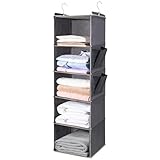
- Maximized Storage: This 5-tier hanging closet organizer provides ample storage space for clothes, accessories, and more.
- Durable Construction: Made with sturdy, breathable fabric and a reinforced steel frame for long-lasting use.
- Space-Saving Design: Compact and hanging design helps maximize closet space and keep items organized.
- Versatile Use: Suitable for closets, bedrooms, laundry rooms, or any area needing extra storage.
- Easy Assembly: Simple setup with no tools required, allowing for quick installation and use.
Shallow closet or shallow wardrobe
DOOR/RETURN:   hooks or compatible door organizer
WALL:          shallow shelves and narrow bins
ROD:           only if a real hanger clears the door
OUTSIDE:       freestanding wardrobe for formal or bulky garments
Do not force a full-depth closet tower into a space where it blocks the door or makes hangers hit the front. If a standard hanger cannot sit without interference, fold more clothing, use shallow shelving, or move hanging garments to a narrow wardrobe outside the closet.
Renter’s closet
EXISTING SHELF: risers, dividers, fitted bins
ROD:           slim hangers and light-duty hanging organizer
DOOR:          correctly fitted over-door accessory storage
FLOOR:         freestanding, stable shoe rack or drawer unit
Prioritize reversible changes. Freestanding drawers, removable bins, shelf risers, dividers, properly fitted over-door organizers, and lightweight adhesive hooks are generally easier to remove than a wall track. Tension rods can be renter-friendly, but use them only for light loads and only within the manufacturer’s stated rating. They can slip, bow, or fall when overloaded and should not be treated as structural closet hardware.
Shared closet
Divide the rod by person or by clearly marked sections. Give each person a defined shelf or bin footprint, keep frequently used clothing at the front and eye level, and use a separate accessory zone for shared items. Identical containers can improve fit, but do not force visual symmetry if one person needs more folded storage and another needs more long hang.
Child’s closet or limited-reach user
Place everyday clothing on lower rods and shelves. HUD guidance identifies approximately 20 to 44 inches above the floor as a useful reach zone for many users who have difficulty stooping, reaching, or bending, but the appropriate height depends on the individual. Adjustable rods and lower shelves make the closet adaptable as the user grows or needs change.
Reserve high shelves for adult access or seasonal items, anchor furniture, avoid climbable stacks, and do not use a chair or unstable box as a step stool.
Installation and buying checklist
- Empty, clean, and inspect the closet.
- Measure width at the front and back, usable depth, ceiling height, shelf depth, and door clearance.
- Measure the longest garments and count short garments by category.
- Sketch the proposed rods, shelves, bins, door storage, and floor furniture.
- Identify studs, wall material, and possible plumbing, electrical wiring, ductwork, vents, and outlets.
- Choose a system designed for the measured depth and wall type.
- Check the manufacturer’s load ratings, bracket spacing, anchor requirements, and compatibility.
- Measure bins and organizers individually; do not assume products from different systems will fit together.
- Install tracks, standards, brackets, shelves, and rods exactly as instructed.
- Load the system gradually and put dense or heavy items near supported points.
- Test the door, drawers, rods, and hanger movement before returning all clothing.
- Anchor freestanding tall furniture and drawer units.
For context, one ClosetMaid specification calls for supports no more than 24 inches apart and no more than 4 inches from shelf ends, while its guidance for heavier loads uses a 24-to-36-inch support range depending on the component and installation. Those figures apply to the cited ClosetMaid wire-shelving system; they are not universal rules for every shelf. Follow the exact ClosetMaid installation guidance and specifications for that product.
Common storage failures and how to avoid them
| Solution | What goes wrong | Better approach |
|---|---|---|
| Double rods | Long garments have nowhere to hang, or the lower rod is too low. | Reserve a long-hang bay and set rod heights around the actual wardrobe. |
| Tension rods | The rod slips or bows under concentrated weight. | Use only for light loads within the product rating; use anchored hardware for heavy garments. |
| Hanging shelves | They consume rod space, sag, and become difficult to browse. | Limit them to lightweight clothing and accessories. |
| Over-door organizers | The door will not close, the organizer hits the frame, or the hinges are stressed. | Measure door thickness and clearances; keep heavy items elsewhere. |
| Deep bins | Clothing disappears at the bottom. | Use shallow labeled bins for daily items and deep containers only for low-frequency storage. |
| Shelf risers | The new compartments are too cramped or stacks become unstable. | Measure vertical clearance and leave enough room to remove each item. |
| Slim hangers | Weak hangers deform under coats or suits. | Use sturdy, properly sized hangers for structured and heavy clothing. |
| Top shelves | They become inaccessible, overloaded, or unsafe to reach. | Store lightweight seasonal items in labeled cases and use a stable step stool. |
| Freestanding drawers | The unit consumes floor space or tips over. | Choose a stable unit and follow the manufacturer’s anti-tip and anchoring instructions. |
When to use a modular system, custom work, or a professional
A low-cost reorganization is usually enough when the closet has a sound shelf and rod, the inventory is modest, and the main problem is poor grouping. Add shelf risers, dividers, fitted bins, slim hangers, and door storage before replacing working hardware.
A modular adjustable system makes more sense when the closet has substantial unused height, the wardrobe needs both double hang and long hang, or the layout will need to change. A custom closet or construction project may be justified when the space has unusual angles, a sloped ceiling, damaged walls, inadequate framing, a nonstandard depth, or a need for integrated drawers and lighting.
Get professional help when you need new electrical wiring, cannot determine where utilities run, need to attach a heavily loaded system to masonry or damaged drywall, are modifying framing, or are unsure whether the existing wall can support the proposed load. Manufacturer instructions are specific to each system; ClosetMaid, Rubbermaid, IKEA, and Elfa components should not be assumed to be interchangeable.
Quick wins for a faster PC:
Clear out junk files and repair common Windows errorsFree Scan →Fix the driver behind crashes, sound loss and screen glitchesFind Drivers →Repair Windows errors before they cause bigger problemsFix Now →A practical seven-day action plan
- Day 1: Empty, clean, inspect, and measure the closet.
- Day 2: Sort the contents into keep, elsewhere, repair or decide later, and remove.
- Day 3: Measure long garments, identify short-garment volume, and choose the closet’s primary job.
- Day 4: Install or assemble the highest-impact change: usually a double-hang section, a top shelf, or a vertical shelf zone.
- Day 5: Move shoes, seasonal items, and low-frequency belongings out of prime space.
- Day 6: Add labels, hooks, dividers, bins, or door storage only where the measurements show a genuine fit.
- Day 7: Use the closet normally, then adjust any zone that is hard to reach, blocks a door, or repeatedly becomes messy.
After the first week, the best test is not whether every inch is occupied. It is whether you can put away a clean item, find what you need, reach the upper storage safely, and close the door without moving a pile.
Frequently Asked Questions
Can a second closet rod really double storage?
It can approximately double the hanging capacity of a section devoted to short garments, but it does not double the entire closet. Dresses, robes, coats, jumpsuits, and other long garments still need a dedicated long-hang section, and the rod must be properly supported.
What is the best storage solution for a closet less than 24 inches deep?
Measure the actual clearance with a hanger and the door closed before buying anything. Shallow shelves, side-wall hooks, compatible door storage, narrow bins, and a freestanding wardrobe outside the closet are often better than forcing a standard-depth tower into the opening.
What closet organizers can renters use without drilling?
Start with existing-shelf risers and dividers, removable bins, slim hangers, properly fitted over-door organizers, freestanding racks or drawers, and lightweight adhesive hooks used within their stated limits. Tension rods are suitable only for light-duty loads and are not equivalent to anchored structural hardware.
Outdated Drivers Are Slowing You Down
One free scan finds every outdated or missing driver and matches the right update for your exact hardware.Free scan · exact hardware matchPC Slower Than It Used to Be?
A free scan shows the junk files, broken settings and background clutter dragging Windows down - then fixes them in one click.Free scan · Windows 10 & 11How should antique or collectible clothing be stored?
Do not hang fragile antique garments on an ordinary crowded rod. The National Archives recommends cool, dry, dark storage and flat storage for antique textiles. Use appropriate archival materials and consult a textile-conservation professional when the item has substantial value.
Is any LED light safe to install in a closet?
No. Use a fixture listed and designed for closet use, follow its installation instructions, and comply with locally adopted electrical code. Do not place exposed bulbs or ordinary lamps among clothing. Have a qualified electrician perform new hardwired work.
How do I keep a newly organized closet from becoming cluttered again?
Keep a donation bin nearby, set a one-in, one-out rule for overfull categories, label upper containers, leave enough room to retrieve items, and schedule a short monthly reset plus a seasonal rotation.
The Bottom Line
For most small closets, the best sequence is simple: remove what does not belong, measure the real space, add double hanging only where short garments fit, preserve long hang, use the top and side surfaces carefully, and move shoes or seasonal items out of prime space. Choose organizers that match the closet’s depth and wall construction, anchor heavy or tall units, and leave enough clearance for people and doors. Maximum storage is useful only when it remains accessible, safe, and easy to maintain.
What’s actually slowing this PC down?
Pick the symptom - the matching free tool is one click away.
Quick Recap
Product prices and availability are accurate as of the date/time indicated and are subject to change. Any price and availability information displayed on Amazon at the time of purchase will apply.