There is no single best climbing perennial vine for every arbor or trellis. The right choice depends first on winter hardiness, available sunlight, the vine’s climbing method, mature weight, and how much pruning and containment you are willing to provide.
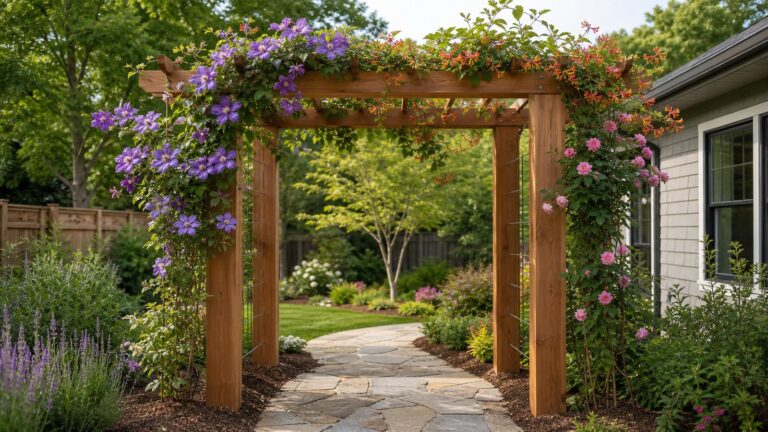
For construction and landscape projects, support strength matters as much as flowers. A lightweight decorative arch may be suitable for clematis or perennial sweet pea but fail under mature wisteria, grape, kiwi, climbing hydrangea, or Virginia creeper. Install and anchor the structure before planting, and choose a vine whose mature growth will not overwhelm the arbor, siding, roof, gutters, wiring, or masonry.
As an Amazon Associate I earn from qualifying purchases.
This curated list covers 19 strong options for flowers, fragrance, screening, wildlife, fall color, and edible harvests. Hardiness references are approximate and cultivar-dependent. Check the current plant label and your local extension service before purchasing.
Quick wins for a faster PC:
Fix the driver behind crashes, sound loss and screen glitchesFind Drivers →Clear out junk files and repair common Windows errorsFree Scan →Quick comparison: 19 climbing perennial vines
The support categories below are practical planning labels, not structural load ratings. A heavy-duty vine still needs a properly anchored structure designed for mature woody growth, wet foliage, fruit, wind, and potentially snow or ice.
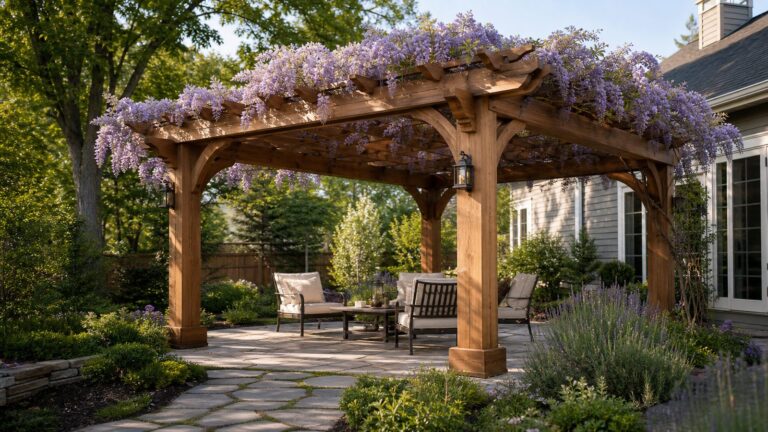
#1 Best Overall

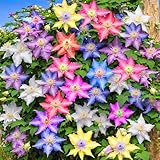
- Plant Habit:Climbing
- Wonderful Spring Flowering Vine - Attracts Butterflies and Hummingbirds
- Beautiful Climbing Vine with vibrant multi colored flowers. An excellent addition to any garden or outdoor space.
- Flowering Genus:Clematis.
- Expected blooming period: Spring to Fall
| Vine | Approximate hardiness or climate note | Light | Mature size | How it climbs | Best support | Main feature | Primary caution |
|---|---|---|---|---|---|---|---|
| Clematis hybrids Clematis hybrids |
Cultivar-dependent | Sun to partial shade | About 10–15 ft for Jackman’s clematis | Leaf-stalk tendrils | Light trellis, obelisk, fence, or light arbor | Large summer flowers | Pruning group and skin irritation |
| Virgin’s-bower Clematis virginiana |
Verify locally | Partial shade to sun | About 15–20 ft | Leaf-stalk tendrils | Medium trellis or arbor | Fragrant late-season white flowers; wildlife value | Self-seeding and vigorous spread |
| Climbing roses Rosa spp. and cultivars |
Varies substantially by cultivar | Full sun | Varies | Scrambles; canes must be tied | Medium or sturdy arbor | Flowers and classic arbor form | Disease, pruning, and training |
| Coral honeysuckle Lonicera sempervirens |
Approximately Zones 4a–9b | Sun to partial shade | Commonly 10–20 ft | Twining stems | Medium arbor or trellis | Tubular flowers for hummingbirds | Needs a grippable, sturdy support |
| Crossvine Bignonia capreolata |
Verify local hardiness | Sun to shade; flowers best with more sun | Vigorous; verify mature spread | Tendrils with adhesive pads | Large trellis, fence, or arbor | Trumpet flowers and glossy foliage | Suckers, spread, and high flammability rating |
| Trumpet vine Campsis radicans |
Verify locally | Sun to partial shade | Large and vigorous | Aerial rootlets | Heavy-duty arbor or pergola | Hummingbird flowers and fast coverage | Very aggressive suckering and growth |
| American wisteria Wisteria frutescens |
Verify cultivar locally | Full sun preferred | Large woody vine | Twining stems | Heavy-duty arbor or pergola | Fragrant hanging flower clusters | Weight, pruning, and toxic seeds |
| Climbing hydrangea Hydrangea petiolaris |
Verify locally | Sun to shade | Eventually very large | Clinging and twining | Substantial arbor or sound masonry | White flowers, fall color, exfoliating bark | Slow establishment and heavy mature growth |
| Dutchman’s pipe Aristolochia macrophylla |
Verify locally | Partial shade to shade | About 15–40 ft | Twining stems | Heavy-duty structure | Dense heart-shaped foliage; swallowtail host | All parts are toxic if eaten |
| Maypop passionflower Passiflora incarnata |
Herbaceous perennial in suitable regions | Full sun to partial shade | Rapid and spreading | Tendrils | Fence or trellis | Unusual flowers and edible fruit | Root suckers and poor-drainage problems |
| Carolina jessamine Gelsemium sempervirens |
Approximately Zones 6a–10b | Full sun preferred | Commonly 12–20 ft | Twining stems | Medium arbor or trellis | Fragrant yellow flowers; evergreen to semi-evergreen | All parts are poisonous |
| Star jasmine Trachelospermum jasminoides |
Approximately Zones 8a–10b | Sun to partial shade | About 20 ft with support | Twining stems | Medium trellis or warm-climate patio structure | Fragrant white flowers; evergreen in its range | Tender outside warm climates |
| Hardy kiwi Actinidia arguta and A. kolomikta |
Species and cultivar-dependent | Full sun | Extremely vigorous | Twining stems | Heavy-duty T-bar trellis or pergola | Edible kiwiberries | Separate sexes, long wait, and intensive pruning |
| Table grapes Vitis spp. |
Cultivar-dependent | Full sun | Large woody vine | Twining tendrils | Strong arbor, pergola, or vineyard trellis | Edible fruit and summer shade | Regular fruiting-wood pruning required |
| Common hops Humulus lupulus |
Herbaceous perennial in suitable regions | Sun to partial shade | About 15–20 ft | Twining stems | Trellis, fence, or pergola | Fast seasonal coverage and brewing cones | Spreading habit, dermatitis, and dog toxicity |
| Virginia creeper Parthenocissus quinquefolia |
Verify locally | Sun to shade | About 30–50 ft or more | Adhesive holdfasts | Sturdy arbor or appropriate masonry | Bright red fall color and bird fruit | Can damage or obscure building components |
| Boston ivy Parthenocissus tricuspidata |
Reported hardy to approximately 15°F; verify exposure | Sun to shade | Large woody vine | Adhesive sucker discs | Masonry only when appropriate | Burgundy fall foliage | Do not use on wood or shingle walls |
| American bittersweet Celastrus scandens |
Verify locally | Sun to partial shade | About 10–20 ft or more | Twining stems | Sturdy fence or trellis | Orange-red fall and winter fruit | Male and female plants; avoid Oriental bittersweet |
| Perennial sweet pea Lathyrus latifolius |
Verify locally | Sun to partial shade | About 6–10 ft | Tendrils | Small trellis or informal fence | Summer flowers | Rhizomes, self-seeding, and inedible seeds |
For current zone terminology, use the 2023 USDA Plant Hardiness Zone Map. It is based on average annual extreme minimum temperatures over a 30-year period, not the lowest temperature ever recorded. A local microclimate, winter wind, drainage, snow cover, and the difference between an in-ground plant and a container can change the result.
How to choose the right perennial vine
1. Start with hardiness, not flower color
Perennial has several meanings in the nursery trade. A woody perennial keeps permanent stems. An herbaceous perennial may die to the ground each winter and return from its roots. An evergreen perennial retains foliage only where winter conditions allow it. A tender perennial may survive outdoors only in warm regions or require indoor overwintering.
Check the exact species and cultivar rather than assuming that a plant sold as perennial will return in your garden. This distinction is especially important for star jasmine, Carolina jessamine, crossvine, maypop, hops, and other vines whose foliage or stems may be damaged by cold even when the roots survive. Illinois Extension explains why hardiness should be checked for the gardener’s specific zone.
Recommended Free Tools
2. Measure the actual light
Observe the planting location through the day and record how many hours receive direct sun. A vine described as shade-tolerant may survive in deep shade without producing many flowers. Climbing hydrangea, Dutchman’s pipe, Boston ivy, and Virginia creeper are useful where foliage is more important than abundant bloom. Coral honeysuckle and crossvine tolerate less sun but generally flower better when they receive more light. Star jasmine also flowers more reliably with sun.
3. Match the climbing mechanism to the framework
Vine is a growth habit, not a single way of attaching to a structure. The four practical categories are:
- Twining vines wrap their stems around wires, rails, or narrow posts. Examples include coral honeysuckle, wisteria, Carolina jessamine, star jasmine, hops, and American bittersweet.
- Tendril climbers use thin tendrils to grip wires, lattice, and relatively narrow framework. Clematis, grapes, maypop, and perennial sweet pea need a framework their tendrils can actually reach and hold.
- Clinging vines attach with aerial rootlets or adhesive discs. Climbing hydrangea, trumpet vine, Virginia creeper, and Boston ivy can cover broad surfaces, but that does not make them suitable for every wall or building material.
- Scrambling or rambling plants produce long canes that must be tied into position. Climbing roses are the main example in this list; they do not self-climb like ivy.
A smooth, oversized post may be too wide for clematis or a tendril climber. Add mesh, lattice, or horizontal wires instead of expecting the plant to grip a bare structural member. The basic climbing mechanisms are summarized by Gertens, while Garden Design discusses matching vine growth to arbor construction.
4. Estimate mature weight, not nursery-container weight
A one-gallon vine may look harmless when installed. Years later, woody stems, wet leaves, fruit, wind, and winter ice can impose a very different load. Wisteria, hardy kiwi, grapes, climbing hydrangea, Dutchman’s pipe, Virginia creeper, and trumpet vine belong on substantial supports. A decorative arch designed for clematis is not automatically adequate for a fruiting kiwi or mature wisteria.
If an existing arbor is bending, pulling away from its footings, rotting, or showing loose fasteners, repair or replace it before adding a vine. A landscape plant should not be used to conceal a structural problem. For a pergola attached to a building or carrying a significant overhead load, have the structure evaluated by an appropriately qualified construction professional.
5. Decide what kind of maintenance you will accept
Fast coverage is rarely free. Trumpet vine, crossvine, hops, Virginia creeper, maypop, grapes, and hardy kiwi can fill space quickly, but they also demand more pruning, sucker removal, training, or structural inspection. A slower vine such as climbing hydrangea may be easier to live with after establishment but can take years to flower.
The 19 best climbing perennial vines
1. Clematis hybrids: best for flowers on a smaller support
Clematis hybrids, including Clematis × jackmanii and many C. viticella types, are among the most versatile choices for trellises, obelisks, fences, and light arbors. Jackman’s clematis grows roughly 10–15 feet, tolerates full sun to partial shade, and produces large summer flowers. See the NC State plant profile.
These are tendril climbers: their leaf stalks wrap around narrow supports. Provide lattice, mesh, or wires rather than a single massive smooth post, and guide the young stems onto the framework early. The stems are brittle, so support them promptly and avoid pulling established growth sharply away from the trellis.
Pruning is cultivar-specific. Type 1 clematis blooms on old wood and generally needs only damaged-stem removal after flowering. Type 2 blooms on old and new wood and receives light late-winter or early-spring pruning. Type 3 blooms on new wood and can be cut back hard in late winter or early spring. Large-flowered hybrids such as C. × jackmanii are generally treated as Type 2, but identify the cultivar before cutting. Sap can irritate skin and ingestion can be dangerous, so gloves are sensible during pruning.
2. Virgin’s-bower: a native late-season option
Virgin’s-bower, Clematis virginiana, is a native perennial vine for wildlife gardens, part-shade trellises, and informal arbors. It can reach approximately 15–20 feet and produces fragrant white flowers in late summer and fall. It tolerates more shade than many showy flowering vines. Read the NC State profile of virgin’s-bower.
It uses leaf-stalk tendrils and therefore needs a relatively narrow, grippable framework. Bees, flies, wasps, hummingbirds, and other wildlife may use its flowers or the habitat it creates. However, native does not mean small or maintenance-free. Virgin’s-bower can self-seed, spread into nearby shrubs, and overwhelm a small planting. Trim it after flowering or remove unwanted seedlings before they establish.
Do not confuse it with sweet autumn clematis, Clematis terniflora. That look-alike is fragrant and attractive but has escaped cultivation and is considered aggressive or invasive in parts of the United States. Regional cautions are discussed by University of Minnesota Extension.
Windows Errors? Fix Them Before They Spread
Repair common Windows errors and clear accumulated junk for a smoother, more stable PC - no reinstall needed.Free scan · no reinstallCrashes, No Sound, or Screen Glitches?
Random freezes, missing sound and display glitches usually trace back to one bad driver. Find and replace yours safely.Free scan · under a minute3. Climbing roses: best for a traditional arbor
Climbing roses, Rosa species and cultivars, are a strong choice for gateways, romantic arbors, fences, and cottage-style landscapes. They are not true self-climbing vines. Long canes must be tied or trained to the support, making them easier to direct than a plant that attaches permanently to a wall.
Choose a cultivar for your local climate rather than relying on a generic climbing-rose hardiness claim. Climbing roses need full sun, good airflow, regular pruning, and disease monitoring. Black spot, powdery mildew, rust, and rose rosette disease can all affect roses; Penn State Extension outlines common outdoor rose diseases.
Do not simply tie every cane straight upward. Bend long flexible canes outward and as horizontally as practical across the arbor. This encourages more flowering points along the cane. Remove dead or diseased wood, keep the center open enough for airflow, and inspect ties so they do not girdle expanding stems. Winter protection requirements vary by cultivar and climate; Penn State’s rose-winter guidance illustrates why local conditions matter.
Rank #2
- Flower Size:4-6" flowers
- Light Requirements:Full Sun, Half Sun / Half Shade
- Good For Cut Flowers
- Zones:4, 5, 6, 7, 8, 9
4. Coral honeysuckle: best for hummingbirds
Coral honeysuckle, Lonicera sempervirens, is a twining native or regionally native vine for medium-size arbors, fences, and hummingbird gardens. Its tubular flowers range from yellow and orange to red and burgundy depending on the plant. Penn State lists it as comfortable across approximately Zones 4a–9b, with common mature heights of 10–20 feet. See Penn State’s honeysuckle guidance.
It needs a support that its stems can wrap around, such as horizontal wires, lattice, or rails. It is more restrained than trumpet vine, but it still needs occasional redirection and pruning when it reaches gutters, roofs, or neighboring shrubs. Use L. sempervirens or a clearly identified noninvasive cultivar; Japanese honeysuckle, Lonicera japonica, is a different plant and is listed in federal invasive-species resources.
5. Crossvine: fast coverage with attractive foliage
Crossvine, Bignonia capreolata, is a vigorous native vine with trumpet-shaped flowers, glossy leaves, and foliage that may remain evergreen or turn reddish-purple in winter in favorable climates. It tolerates shade, although flowering generally improves with more sun. It is well suited to a large trellis, fence, or arbor and can provide faster coverage than many ornamental vines. Consult the NC State crossvine profile.
Crossvine climbs with tendrils equipped with adhesive pads. It can spread by seed and root suckers, so inspect the base and remove runners that leave the intended planting zone. NC State gives it a high flammability rating; do not place it immediately against a home in a defensible-space area or where local fire guidance discourages dense climbing vegetation.
6. Trumpet vine: best only where aggressive growth is acceptable
Trumpet vine, Campsis radicans, is a vigorous native woody vine with tubular flowers that attract hummingbirds. It climbs by aerial rootlets and can cover a large, sturdy arbor or pergola rapidly. Its visual appeal and wildlife value are real, but it is one of the riskiest choices for a small residential garden.
The Tool Desk
Outbyte PC Repair FREEClear out junk files and repair common Windows errorsFree Scan →Outbyte Driver Updater FREEFix the driver behind crashes, sound loss and screen glitchesFind Drivers →Trumpet vine can sucker far from the original plant, spread into lawns and beds, cover structures, and become difficult to remove. Its rootlets can also attach to surfaces where growth is unwanted. Use it only when you have a strong support, room for root spread, and a realistic plan for repeated sucker removal. NC State’s profile and Illinois Extension’s vine guidance both support treating it as an aggressive plant rather than a carefree cover.
7. American wisteria: the responsible wisteria choice
American wisteria, Wisteria frutescens, is a woody twining vine with fragrant, hanging flower clusters. It is generally less aggressive than Chinese wisteria, Wisteria sinensis, or Japanese wisteria, Wisteria floribunda, making it the better default recommendation where ecological restraint matters. Use the exact species name when buying; a label that says only wisteria is not specific enough. See the American wisteria profile.
Wisteria becomes heavy and can pry apart or deform a weak arbor. It belongs on a properly anchored, heavy-duty structure with a framework that allows regular access for pruning. After flowering in midsummer, shorten long, whippy shoots to about five or six leaves. In January or February, shorten those shoots again to two or three buds, while removing dead wood and missed runners. NC State’s wisteria guidance also recommends grafted plants or plants already flowering when early bloom is important. Seeds and other plant parts can cause poisoning, particularly if eaten by pets or children.
8. Climbing hydrangea: best for shade and substantial structures
Climbing hydrangea, Hydrangea petiolaris, is one of the best perennial choices for shade, woodland gardens, gazebos, sound masonry, and large arbors. It climbs by a combination of clinging structures and twining growth. White flower clusters appear in early summer, leaves can turn yellow in fall, and mature stems develop attractive exfoliating bark.
It tolerates sun or shade, but it is slow to establish and may take time to flower after transplanting. The eventual vine can become very large and heavy, so do not place it on a flimsy decorative trellis. Use a sound support installed before planting and allow access for pruning. The NC State profile provides additional identification and culture information.
Japanese hydrangea vine, Hydrangea hydrangeoides, is another shade-tolerant option in appropriate regions. It can tolerate heavy shade but may take as long as seven years to flower, so it is better for patient gardeners who value foliage and structure. See the NC State profile.
9. Dutchman’s pipe: dense shade screening and swallowtail habitat
Dutchman’s pipe, Aristolochia macrophylla, produces enormous heart-shaped leaves that create a dense screen on a large arbor, pergola, or trellis. It typically reaches approximately 15–40 feet and uses twining stems. Its unusual flowers are less conventionally showy than trumpet flowers or roses, but it is an important host plant for pipevine swallowtail caterpillars. Read the NC State profile.
This is a large, coarse vine that needs substantial support. All parts are toxic if eaten, so place it carefully around children, pets, and animals likely to browse. It is a poor match for a narrow balcony trellis or any support that cannot accommodate considerable mature weight.
What’s actually slowing this PC down?
Pick the symptom - the matching free tool is one click away.
10. Maypop passionflower: unusual flowers and edible fruit
Maypop, Passiflora incarnata, is a rapidly growing herbaceous perennial vine that climbs with tendrils. It produces elaborate flowers and edible fruit and may return from the roots after the stems die back in winter. It suits fences and trellises where a seasonal display and wildlife value are more important than permanent woody coverage. Confirm the identity with the NC State maypop profile.
Maypop can spread by root suckers and cover a large area, so it is not automatically a small-garden plant. Remove unwanted runners or install a root-control strategy where appropriate. Good drainage is important because poorly drained soil can lead to root rot. The edible-fruit claim applies to correctly identified P. incarnata; passionflower is a broad common name covering many species with different hardiness and fruit characteristics.
11. Carolina jessamine: fragrant evergreen coverage in warm regions
Carolina jessamine, Gelsemium sempervirens, is a twining evergreen to semi-evergreen vine with fragrant yellow flowers. It commonly reaches 12–20 feet after establishment, flowers best in full sun, and is listed by NC State for approximately Zones 6a–10b. In colder or exposed locations it may lose foliage or suffer winter damage. See the NC State profile.
It is attractive for southern arbors and warm-climate screening, but it is not a safe edible landscape plant. All parts are poisonous, and NC State gives it a high flammability rating. Keep it away from children, pets, grazing animals, and high-risk defensible-space locations. Do not promise year-round screening in Zones 5 or 6 without accounting for the specific exposure and winter.
Do these 3 things before closing this tab:
1Scan for outdated or missing drivers - takes under a minute2Clear out junk files and repair common Windows errors3Fix the driver behind crashes, sound loss and screen glitchesRank #3

- White Evening Blooming Seeds - Up To 15' Climbing Vine for Zones 8-11 or Annual Elsewhere
- Wonderful Spring Flowering Vine - Blooms at Night with Wonderful Fragrance
- They have a beautiful heart shaped leaves and romantic tendrils that lend old-fashioned charm.
- Score and Soak Seeds Before Planting 1/2 " Deep. Approx. 20+ Large Seeds. Non GMO and Neonicotinoid Seed
- Marde Ross & Company has been a licensed California Nursery since 1985
12. Star jasmine: fragrant and evergreen where hardy
Star jasmine, Trachelospermum jasminoides, is an evergreen twining perennial with highly fragrant white flowers. It can reach about 20 feet with support and is listed by NC State for approximately Zones 8a–10b. It is an excellent warm-climate choice for patios, trellises, and screens but is not a reliably hardy outdoor perennial across most of the United States.
In colder climates, grow it as an annual or in a container that can be overwintered indoors. It is also not a true Jasminum species; the common name refers to its jasmine-like fragrance. Use the botanical name when comparing plants or ordering from a nursery. The NC State profile covers its climate range and habit. NC State also lists it as poisonous, so prevent ingestion by children and pets.
13. Hardy kiwi: an edible vine for a serious support system
Hardy kiwi or kiwiberry, Actinidia arguta and Actinidia kolomikta, produces smooth-skinned, grape-sized fruit on extremely vigorous perennial vines. It is suited to strong T-bar trellises, large arbors, and pergolas—not lightweight decorative arches.
Most hardy kiwi plants are dioecious, meaning separate male and female vines are needed. Penn State recommends approximately one male for six females, although exact pollination needs vary by cultivar. Fruit production may take five to nine years. The vines need dormant pruning and several rounds of summer pruning, and productive wood is associated with one-year-old canes. Late spring frost can damage new shoots and flowers. Review Penn State’s hardy kiwi guidance and Oregon State’s support and pruning discussion before planning an edible pergola.
Free tools Windows power users keep installed
One-click scans. No signup required.
14. Table grapes: productive shade for a pergola
Table grapes, Vitis species and cultivars, are woody perennial vines well suited to arbor and pergola training. They provide edible fruit and can create seasonal overhead shade, but they need full sun for dependable ripening and a strong trellis or arbor.
Grapes require pruning to establish trunks, cordons, canes, or spurs and to maintain productive fruiting wood. Leaving a grapevine to grow indefinitely produces tangled foliage, weak fruiting, poor airflow, and excessive structural weight. Disease management and cultivar selection also matter. See University of Minnesota Extension’s home-garden grape guidance, Oregon State’s table-grape publication, and Penn State’s stepwise grape training guide.
15. Common hops: fast seasonal coverage
Common hops, Humulus lupulus, is a fast-growing herbaceous perennial twining vine that dies back to the ground each year. It commonly reaches about 15–20 feet and produces the cones used in brewing. It works well on a seasonal screen, fence, pergola, or brewing garden where rapid summer growth is desired.
Hops can spread aggressively and need a support from the start. The foliage or flowers may cause contact dermatitis. Hops are also problematic for dogs if ingested, so avoid planting them where pets may chew the vines or cones. Plan to cut back the dead top growth and control new shoots each season. See NC State’s hops profile and Penn State’s home-growing guidance.
16. Virginia creeper: native fall color on a strong support
Virginia creeper, Parthenocissus quinquefolia, is a native deciduous vine valued for five-part leaves, brilliant red fall color, blue fruit for birds, and fast screening. It can reach approximately 30–50 feet or more and attaches with adhesive holdfasts. See the NC State profile.
Its mature size and attachment method make it unsuitable for many residential walls. Do not place it against wood siding or shingle walls, and keep it away from gutters, shutters, wiring, windows, and roof edges. Holdfasts can damage painted surfaces or make maintenance difficult, and the vine needs regular trimming to stay in bounds. It is better suited to a sturdy freestanding arbor, a carefully selected masonry surface, or a robust wildlife planting with room to spread.
17. Boston ivy: dramatic fall color for masonry
Boston ivy, Parthenocissus tricuspidata, is a deciduous woody vine that climbs by adhesive sucker discs and tolerates sun or shade. Its foliage turns burgundy in fall, making it a strong choice for appropriate brick or masonry structures. NC State reports cold hardiness to approximately 15°F, but local exposure and winter conditions still matter.
Do not grow Boston ivy on wood or shingle walls. Its holdfasts can creep under shingles and contribute to damage involving paint, gutters, shutters, and wiring. If removal becomes necessary, NC State recommends first severing the vine from its roots and allowing the discs to deteriorate before attempting to remove the remaining growth. Consult the NC State Boston ivy profile.
Quick wins for a faster PC:
Fix the driver behind crashes, sound loss and screen glitchesFind Drivers →Repair Windows errors before they cause bigger problemsFix Now →Scan for outdated or missing drivers - takes under a minuteDriver Scan →18. American bittersweet: fall fruit for wildlife
American bittersweet, Celastrus scandens, is a vigorous native twining vine with yellow-orange capsules that open to reveal red-orange berries in fall and winter. It can grow approximately 10–20 feet or more when supported and suits sturdy fences and trellises.
Plants are usually male or female. Only female plants produce the ornamental fruit, but a nearby male is needed for pollination; a commonly cited planning ratio is approximately one male for six to nine females. The berries are ornamental, not an edible human fruit. Buy by the scientific name and avoid Oriental bittersweet, Celastrus orbiculatus, which is invasive and can be confused with the native species. Compare Illinois Extension’s American bittersweet guidance with the U.S. Forest Service comparison.
19. Perennial sweet pea: flowers for a smaller trellis
Perennial sweet pea or everlasting pea, Lathyrus latifolius, is a herbaceous perennial that climbs with tendrils, reaches roughly 6–10 feet, and blooms in summer. It is a useful choice for a smaller trellis, informal fence, or seasonal flower display and tolerates some drought after establishment.
It spreads by rhizomes and self-seeds, so it can become weedy if allowed to escape. It is not the same plant as annual fragrant sweet pea, Lathyrus odoratus. Do not eat the seeds in quantity. Give it a narrow framework it can grip and remove unwanted stems before they seed. See NC State’s plant profile and Illinois Extension’s perennial sweet pea guidance.
Do these 3 things before closing this tab:
1Scan for outdated or missing drivers - takes under a minute2Clear out junk files and repair common Windows errors3Fix the driver behind crashes, sound loss and screen glitchesBest vines by garden goal
Best for a small trellis
Choose clematis hybrids, perennial sweet pea, a restrained climbing rose, or a moderate coral honeysuckle cultivar. Star jasmine can work in a warm-climate container or on a compact patio trellis. Maypop is visually suitable for a trellis but needs root-sucker control, so it is not necessarily low maintenance in a small garden.
Avoid wisteria, trumpet vine, Dutchman’s pipe, hardy kiwi, grapes, climbing hydrangea, Virginia creeper, and common hops where the framework is lightweight or the planting area is narrow.
Rank #4

- 20PCS Corkscrew Vine Seeds – Boasts unique twisting, spiral-shaped blooms with a rich sweet fragrance, delivering striking visual charm and sensory delight
- Vigorous Climbing Growth – Fast-growing vines reach 20-25 feet at maturity, quickly covering trellises, fences, or arbors to form lush vertical garden displays
- Pollinator-Attracting Blooms – Vibrant flowers draw bees, butterflies, and other beneficial pollinators, fostering a thriving and balanced garden ecosystem
- Heat Tolerant & Sun-Loving – Thrives in warm climates and tolerates high temperatures, performing exceptionally well in sunny, well-lit outdoor locations
- Versatile Ornamental Value – Ideal for garden landscaping or container planting; grows as a tropical perennial in warm regions and an annual in cooler areas
Best for a sturdy arbor or pergola
American wisteria, grapes, hardy kiwi, climbing roses, coral honeysuckle, crossvine, climbing hydrangea, Dutchman’s pipe, and—only where its spread is acceptable—trumpet vine can all suit substantial structures. The structure should be installed and anchored first, with access preserved for annual pruning and inspection.
Best for shade
Climbing hydrangea is a leading choice for patient gardeners who want flowers, fall color, and mature bark. Dutchman’s pipe provides dense foliage and wildlife value. Virgin’s-bower, Boston ivy, and Virginia creeper tolerate shade as well. Coral honeysuckle can grow with less sun, but flowering generally improves with more direct light.
Recommended Free Tools
Best for fragrance
Star jasmine is the strongest warm-climate fragrance choice. Carolina jessamine, American wisteria, coral honeysuckle, climbing hydrangea, and maypop provide additional fragrant or distinctive flowers. American bittersweet is chosen primarily for its fall fruit rather than conspicuous floral fragrance.
Best for hummingbirds and other wildlife
- Coral honeysuckle: tubular flowers for hummingbirds, butterflies, moths, and other wildlife.
- Crossvine: trumpet flowers that can provide early-season hummingbird food.
- Trumpet vine: especially attractive to hummingbirds, but aggressive.
- Virgin’s-bower: late flowers and dense nesting habitat.
- Dutchman’s pipe: host plant for pipevine swallowtail caterpillars.
- Maypop: pollinator value and edible fruit.
- American wisteria: host value for some butterflies and skippers.
- Virginia creeper: blue fruit used by birds and mammals.
- American bittersweet: fruit and cover for wildlife.
- Hops: host plant for several butterfly species.
Wildlife value does not cancel out invasive or aggressive behavior. A plant can provide nectar, fruit, or larval habitat and still be the wrong choice for a small lot or a region where it escapes readily.
Best for edible harvests
Grapes and hardy kiwi are the principal fruiting choices for a pergola or large arbor. Maypop produces edible fruit on a faster, more herbaceous vine where its spreading habit can be managed. Hops produce brewing cones rather than a conventional fruit crop. American bittersweet berries are ornamental and should not be treated as edible.
Best evergreen or semi-evergreen options
Star jasmine is evergreen within its hardy range. Carolina jessamine is evergreen to semi-evergreen, while crossvine and coral honeysuckle may retain foliage in warmer climates and lose it after severe cold. Do not promise year-round screening in a cold Zone 5 or 6 location from these plants. Clematis, roses, grapes, wisteria, Virginia creeper, Boston ivy, and most climbing hydrangea are generally deciduous.
Best native choices
Coral honeysuckle, crossvine, trumpet vine, American wisteria, virgin’s-bower, maypop, Carolina jessamine, Dutchman’s pipe, Virginia creeper, and American bittersweet can all contribute to a native or wildlife-oriented planting, depending on geography. Native does not mean compact, non-suckering, or low maintenance. Trumpet vine, virgin’s-bower, Virginia creeper, and American bittersweet can become substantial or difficult to contain.
Independent reader supportYour contribution helps us test, update, and keep practical guides available for everyone.How to train a vine on an arbor or trellis
- Install the support first. Anchor the arbor, pergola, trellis, or wire system before planting. Confirm that it can tolerate mature vine weight, wet foliage, fruit, wind, and winter loading.
- Match the framework to the vine. Use narrow wires, mesh, or lattice for clematis, grapes, passionflower, and perennial sweet pea. Provide wraparound rails or wires for twining vines. Do not expect a tendril climber to grip a massive smooth post.
- Plant with access for inspection. Follow the nursery’s spacing guidance and leave room to reach the base, ties, fasteners, gutters, and adjacent building components.
- Guide flexible growth early. Direct young stems toward the intended framework before they become woody or tangled.
- Use soft ties. Ties should hold the stem without cutting into it as the vine expands. Inspect them during the growing season.
- Remove misplaced growth promptly. Cut or redirect shoots before they reach roofs, gutters, wiring, windows, siding, shingles, or neighboring trees.
- Inspect the structure annually. Look for bending, loose connections, corrosion, rot, cracked masonry, trapped stems, and growth entering concealed spaces.
- Keep overhead growth managed. A thick unmanaged roof of vine can add substantial weight. For patio shade, keep most growth on the sides and use a properly designed lattice or wire framework overhead.
These steps are particularly important for wisteria, hardy kiwi, grapes, climbing hydrangea, Dutchman’s pipe, trumpet vine, Virginia creeper, and Boston ivy. Illinois Extension and Garden Design both emphasize installing adequate support and accounting for mature growth rather than choosing a structure based on the size of a newly purchased plant.
Pruning guide for perennial vines
| Vine | Pruning and training principle |
|---|---|
| Clematis | Identify Type 1, 2, or 3 before pruning. The wrong timing can remove the stems that carry the next flowers. |
| Climbing roses | Tie long canes outward and horizontally where possible; remove dead and diseased wood and preserve airflow. |
| Wisteria | Shorten long shoots to about five or six leaves after flowering, then to two or three buds in January or February. |
| Grapes | Establish trunks and fruiting wood over the first seasons, then prune during dormancy to maintain productive canes or spurs. |
| Hardy kiwi | Use dormant pruning plus repeated summer pruning; control the vigorous one-year canes and protect new growth from late frost. |
| Trumpet vine, hops, and maypop | Remove suckers, runners, and unwanted shoots repeatedly before they spread into beds, lawns, or structures. |
| Virginia creeper and Boston ivy | Cut back growth before it reaches gutters, roof edges, wiring, shutters, siding, or other components that will be difficult to inspect. |
| Climbing hydrangea and Dutchman’s pipe | Prune for clearance and structural control, but do not place mature growth on a weak trellis in the first place. |
For clematis, consult the NC State pruning-group guidance. For wisteria, use the NC State recommendations. For roses, grapes, and kiwi, follow the more detailed extension guidance linked in their individual sections.
Vines to plant with caution
Separate aggressive from invasive
Aggressive usually means a plant spreads rapidly within a garden and needs repeated cutting, sucker removal, or redirection. Invasive means a plant spreads into natural areas and can disrupt native ecosystems. The terms are related but not interchangeable, and status varies by state and region.
Free tools Windows power users keep installed
One-click scans. No signup required.
Trumpet vine and hops are examples of garden-aggressive plants that may spread by suckers or vigorous runners. English ivy, Japanese honeysuckle, Oriental bittersweet, and sweet autumn clematis raise broader regional or ecological concerns in many areas. Check your state or county invasive-plant list before planting any vine that spreads by seed, bird-dispersed fruit, root suckers, or stem fragments.
Species names matter
- American wisteria: Prefer Wisteria frutescens or a clearly identified cultivar. Chinese and Japanese wisterias can be more aggressive and may escape cultivation.
- Coral honeysuckle: Use Lonicera sempervirens, not Japanese honeysuckle, Lonicera japonica.
- American bittersweet: Use Celastrus scandens, not Oriental bittersweet, Celastrus orbiculatus.
- Maypop: Confirm Passiflora incarnata before discussing edible fruit; not every passionflower species has the same fruit or hardiness.
- Perennial sweet pea: Lathyrus latifolius is different from annual fragrant sweet pea, Lathyrus odoratus.
- Star jasmine: Trachelospermum jasminoides is not a true Jasminum species, and its hardiness is different from many plants sold under the name jasmine.
Popular vines excluded from the main 19
Chocolate vine, Akebia quinata: Attractive, fragrant, fast-growing, and sometimes semi-evergreen, but NC State identifies it as invasive in North Carolina and warns that it can overtake shrubs. Treat it as a regional option only after checking local restrictions. See the NC State profile.
English ivy, Hedera helix: Evergreen and shade-tolerant, but invasive in many regions and capable of climbing trees or obscuring and damaging structures. Check the Illinois Extension discussion and the National Invasive Species Information Center.
Japanese honeysuckle: Do not substitute it for coral honeysuckle. It is listed in invasive-species resources, including the federal species profile.
The Tool Desk
Outbyte PC Repair FREEClear out junk files and repair common Windows errorsFree Scan →Outbyte Driver Updater FREEFix the driver behind crashes, sound loss and screen glitchesFind Drivers →Asian wisterias: Chinese and Japanese wisteria are not interchangeable with American wisteria. Their vigor and escape potential require a separate regional assessment.
Safety and building-protection checklist
- Toxic or irritating plants: Carolina jessamine is poisonous in all parts; Dutchman’s pipe is toxic if eaten; wisteria seeds and other parts can cause poisoning; Virginia creeper berries and plant material are poisonous if eaten; clematis sap can irritate skin; star jasmine is listed as poisonous; perennial sweet pea seeds can cause toxicity when eaten in quantity.
- Pet concern: Hops are problematic for dogs if ingested. For any suspected ingestion, contact a veterinarian or an appropriate poison-control service rather than relying on a general internet list.
- Use exact identification: Common names often cover several species with different toxicity, hardiness, invasiveness, and edible-fruit characteristics.
- Protect the building: Do not let clinging vines grow over wood siding, shingles, gutters, wiring, shutters, windows, or deteriorating masonry. Keep vines accessible for inspection and maintenance.
- Do not conceal defects: A vine should never be used to hide rot, loose connections, cracked masonry, or an under-anchored arbor.
- Check local restrictions: Invasive status and planting rules can differ by state, county, or municipality.
For ingestion questions, treat the plant as a species-specific safety issue. Ordinary garden contact is not the same as poisoning, but gloves are prudent when pruning plants known to irritate skin.
Troubleshooting common vine problems
My vine grows leaves but does not flower
- It may not receive enough direct sun.
- Excess nitrogen may be encouraging foliage instead of flowers.
- The plant may be immature; wisteria can take years to bloom, particularly from seed.
- Pruning may have removed old wood or flower-bearing canes.
- Late frost may have damaged buds.
- A dioecious plant may lack the compatible sex needed for pollination. Hardy kiwi normally needs male and female plants; American bittersweet needs a male pollinator for female fruit production.
- Grapes may need better fruiting-wood training and adequate sunlight rather than simply more fertilizer.
The plant was labeled perennial, but it died in winter
It may have been perennial only in a warmer zone, an herbaceous perennial whose top died back naturally, or an evergreen that became deciduous after a severe freeze. Container roots are also more exposed to cold than in-ground roots. Check whether the roots or crown survived before removing the plant, and compare the actual plant label with the 2023 USDA zone map and local microclimate.
Best Value

- PACKAGE CONTENTS: 230 premium mixed color climbing rose seeds for creating a stunning vertical garden display on fences, trellises, and arches
- GROWTH HABIT: Perennial climbing vine that can reach heights of 8-12 feet when fully mature, perfect for vertical gardening
- BLOOMING SEASON: Long-blooming roses produce waves of colorful flowers throughout the growing season, adding vibrant beauty to your garden
- VERSATILE DESIGN: Ideal for decorating garden structures, creating privacy screens, or adding romantic charm to outdoor living spaces
- PLANTING GUIDE: Seeds should be started indoors 6-8 weeks before last frost or directly sown in spring when soil temperatures reach 65°F
The vine is taking over
Stop seed production, remove suckers and runners at the source, redirect young growth, and cut back stems before they become woody. Do not assume that one hard pruning will solve a spreading vine. Trumpet vine, hops, maypop, virgin’s-bower, Virginia creeper, and American bittersweet may require repeated seasonal control.
What’s actually slowing this PC down?
Pick the symptom - the matching free tool is one click away.
The arbor is bending or failing
Common causes include underestimated mature weight, inadequate anchoring, wet foliage, fruit, ice or snow, stems expanding around structural members, or an unmanaged vine spreading across the roof of the arbor. Cut back growth only if doing so can be done safely, and have a questionable structure evaluated before adding more plant material.
I want quick patio shade
Grapes, wisteria, kiwi, climbing hydrangea, Dutchman’s pipe, and trumpet vine can eventually create significant shade, but they also create substantial pruning and load-management needs. A seasonal herbaceous vine such as hops or maypop can provide faster coverage without permanent woody stems, although both can spread. Keep heavy growth supported on the sides and use a properly designed overhead framework rather than letting an unmanaged vine become a dense roof.
Do not confuse perennial vines with annual or tender climbers
Many garden articles use climbing plant as a broad category and mix hardy vines with seasonal plants. Morning glory, black-eyed Susan vine, moonflower, mandevilla, bougainvillea, annual sweet pea, hyacinth bean, canary bird vine, and scarlet runner bean can all be useful for temporary color, but they are not equivalent to hardy perennial vines across the United States.
If a project requires permanent coverage, label the plant as a hardy perennial, herbaceous perennial, evergreen perennial, tender perennial, or annual outside its warm range. This prevents a seasonal plant from being specified where the owner expects a returning structural landscape feature.
Outdated Drivers Are Slowing You Down
One free scan finds every outdated or missing driver and matches the right update for your exact hardware.Free scan · exact hardware matchPC Slower Than It Used to Be?
A free scan shows the junk files, broken settings and background clutter dragging Windows down - then fixes them in one click.Free scan · Windows 10 & 11Frequently Asked Questions
What is the fastest-growing perennial vine for an arbor?
Trumpet vine, crossvine, hops, passionflower, grapes, hardy kiwi, and Virginia creeper can provide fast coverage, but rapid growth usually means more pruning, heavier mature growth, suckers, or spread. For a small arbor, fast is not automatically better; clematis or coral honeysuckle is often easier to manage.
Which perennial vines grow in shade?
Climbing hydrangea, Dutchman’s pipe, virgin’s-bower, Boston ivy, and Virginia creeper are among the stronger shade choices. Coral honeysuckle and star jasmine can tolerate some shade, but flowering generally improves with more sun. Shade tolerance does not guarantee abundant flowers in deep shade.
What is the best evergreen vine for a trellis?
Star jasmine is evergreen within approximately Zones 8a–10b and is a strong warm-climate choice. Carolina jessamine is evergreen to semi-evergreen in approximately Zones 6a–10b, while crossvine and coral honeysuckle may retain foliage in warmer areas. Do not promise year-round coverage in colder climates without checking the exact cultivar and exposure.
Which vines are least likely to damage a house?
A vine trained on a freestanding trellis is generally easier to inspect and control than one attached directly to a building. Clematis, coral honeysuckle, and a properly trained climbing rose are better candidates for a separate support. Avoid placing Virginia creeper or Boston ivy on wood or shingle walls, and keep all vines away from gutters, wiring, roofs, and deteriorating masonry.
Can climbing roses climb without a trellis?
No. Climbing roses produce long canes but do not self-attach like ivy. They need a trellis, arbor, wires, or other support and should be tied into position. Training the canes horizontally or diagonally encourages more flowering points.
Does wisteria damage arbors?
It can. American wisteria becomes a heavy woody vine, and weak or poorly anchored structures may bend, separate, or fail under the mature load. Use a substantial arbor or pergola, install it before planting, and maintain the wisteria with regular summer and winter pruning.
Do grapevines need pruning?
Yes, especially if you want reliable fruit, manageable growth, airflow, and a safe arbor. Extension guidance emphasizes establishing trunks and fruiting wood, then pruning mature vines during dormancy to maintain productive canes or spurs.
Do hardy kiwi vines need male and female plants?
Usually. Hardy kiwi is generally dioecious, with separate male and female vines. A commonly recommended planning ratio is approximately one male to six females, although cultivar-specific pollination information should control the final planting plan. Fruit may not appear for five to nine years.
Is trumpet vine invasive?
Trumpet vine is widely treated as an aggressive garden spreader because it can sucker, run beyond the planting area, cover structures, and become difficult to remove. Whether it is formally classified as invasive depends on the region. Check local invasive-plant guidance before planting it.
Are clematis poisonous to pets?
Clematis contains irritating compounds and its sap can cause contact dermatitis; ingestion can also be dangerous. Identify the exact species, keep plant material away from children and pets, and contact a veterinary or poison-control professional for an ingestion concern.
The Bottom Line
Choose the vine only after choosing the conditions it must survive and the structure it must occupy. Check the 2023 USDA hardiness zone and local restrictions, measure the light, identify the climbing method, estimate mature weight, and decide how much pruning and sucker removal you will tolerate. In most small residential projects, a properly supported clematis, coral honeysuckle, perennial sweet pea, or climbing rose is a safer starting point than wisteria, trumpet vine, kiwi, grapes, or a clinging wall vine. For shade, consider climbing hydrangea or Dutchman’s pipe on a substantial support; for edible production, plan the structure and pruning system before planting grapes or hardy kiwi.
Quick Recap
Product prices and availability are accurate as of the date/time indicated and are subject to change. Any price and availability information displayed on Amazon at the time of purchase will apply.