Free tools Windows power users keep installed
One-click scans. No signup required.
The best native plant for a desert backyard depends on the exact desert, elevation, winter low, soil, drainage, and available water. For an extremely dry, sunny site, start with plants such as creosote bush, foothill palo verde, jojoba, fourwing saltbush, pink fairy duster, or ocotillo. For shade and habitat, consider velvet mesquite, blue palo verde, desert ironwood, or netleaf hackberry. For an irrigated wash, drainage corridor, or naturally moist part of the property, desert willow, Arizona sycamore, and Arizona walnut are better candidates—but they are not ultra-xeric choices.
That distinction matters because Sonoran, Mojave, and Chihuahuan Desert yards do not have identical conditions. A low-elevation Phoenix-area planting, a high-elevation Arizona yard, and a Chihuahuan Desert property may require different plant selections. The University of Arizona specifically cautions that plants suited to low-elevation desert are not automatically suitable above 6,000 feet, and that microclimate can determine success even within one region. Use the list below as a regional starting point, then confirm each species with a local extension office or reputable native-plant nursery.
As an Amazon Associate I earn from qualifying purchases.
Choose for the site before choosing for the plant label
Native does not mean universally suitable. In this article, native means native to at least part of the broader Southwest range—not that every plant will thrive in every desert city. Before buying, identify four conditions:
- Regional climate and elevation: Determine whether your property is primarily Sonoran, Mojave, or Chihuahuan Desert, and check the site’s typical winter minimum temperatures. Elevation can change which plants survive.
- Water pattern: Separate a dry upland yard from a low spot, wash, drainage corridor, or irrigated garden. Riparian natives need a different water plan from creosote or ocotillo.
- Soil and drainage: Check whether the soil is compacted, gravelly, sandy, alkaline, saline-prone, or slow to drain. A plant adapted to dry conditions can still fail in a constantly wet planting hole.
- Space and conflicts: Assess mature canopy, trunk, roots, thorns, litter, utility lines, walls, paving, walkways, and sight lines before planting. This is especially important when a backyard is being rebuilt with patios, retaining walls, pools, or new utility trenches.
For regional climate guidance, see the University of Arizona’s Arizona climate zones and their application to growing plants. The same principle applies outside Arizona: use local winter-temperature and elevation information rather than relying on the common name desert plant.
#1 Best Overall

- 【Complete Drip Irrigation System Kit – Ready to Use】This drip irrigation system kit includes 1/2" 26FT main tubing, 1/4" 75FT distribution tubing, adjustable drip emitters (vortex & spray), connectors, couplers, end plugs, and a faucet adapter—everything needed to build a customized garden watering system right out of the box.
- 【Easy DIY Setup for Garden Layouts】Create your own drip irrigation system with ease using the included step-by-step instruction guide. Use the 5/16" tubing as the main line and branch off with 1/4" tubing to connect multiple emitters. Simply place the stakes into the soil and adjust the water flow to suit different plants, making it ideal for beginners and experienced gardeners alike.
- 【Recommended Water Pressure Note】If your water pressure is low, misters may stream and sprayers will have a shorter projection distance.Please check your water source or split the line. Recommended water pressure is 30-65 PSI
- 【Adjustable & Easy-to-Clean Drip Emitters】Equipped with adjustable spray and vortex emitters, this irrigation system allows precise control of water flow for different plant needs. The detachable emitter heads are easy to clean, helping reduce clogging and ensuring consistent performance over time.
- 【Durable Tubing for Long-Term Use】Made from flexible and durable materials, the irrigation tubing is suitable for both above-ground and underground use. Designed to deliver water directly to plant roots, helping reduce water waste from evaporation while maintaining efficient watering performance.
Quick comparison: 18 Southwest native choices
The water categories below describe the plant after establishment, not the first weeks or months after planting. Every container-grown tree or shrub needs follow-up irrigation while its roots expand. None of these categories is a substitute for checking the species against the site.
| Plant | Mature form or scale | Best site | Water category | Wildlife, design, or caution |
|---|---|---|---|---|
| Chilopsis linearis Desert willow |
Moderate tree or large shrub; deciduous | Hot desert or Chihuahuan settings; washes and seasonally moist areas | Low to moderate after establishment; benefits from better moisture | Orchid-like flowers; do not treat as a zero-water tree |
| Prosopis velutina / Neltuma velutina Velvet mesquite |
Large, spreading tree where water is available | Sonoran Desert yards with adequate clearance | Low after establishment, with establishment irrigation | Shade, habitat, nitrogen-fixing benefits; thorns, surface roots, litter, and size require planning |
| Parkinsonia florida Blue palo verde |
Signature desert tree with filtered shade | Open, sunny Sonoran landscapes | Low after establishment | Green bark and spring color; mature spread and branching need clearance |
| Parkinsonia microphylla Foothill or yellow palo verde |
Smaller, slow-growing tree | Very dry, open sites in its native range | Very low after establishment | Good where a smaller native palo verde is wanted; do not overwater |
| Olneya tesota Desert ironwood |
Long-lived, eventually substantial tree | Sonoran Desert landscapes with long-term room | Low after establishment | Dense wood, shade, and major wildlife value; slow establishment and thorny branches |
| Celtis reticulata Netleaf hackberry |
Irregular native tree; allow natural form | Desert or upland yards with room | Low after establishment | Food, nesting, and cover for birds; not ideal for a tiny foundation bed |
| Vauquelinia californica Arizona rosewood |
Evergreen shrub or small tree; about 10–15 feet under landscape conditions | Suitable low- or mid-elevation desert sites | Drought tolerant after establishment | Privacy and informal screening; do not shear into a formal hedge |
| Simmondsia chinensis Jojoba |
Evergreen desert shrub | Hot, dry, low-elevation sites | Very low after establishment | Male and female plants are separate; seed production needs the appropriate combination |
| Rhus virens Evergreen sumac |
Evergreen or nearly evergreen shrub | Suitable low- and mid-elevation desert climates | Low after establishment | Screening, structure, and wildlife value; verify local form and hardiness |
| Dermatophyllum secundiflorum Texas mountain laurel |
Evergreen shrub or small tree | Chihuahuan Desert and adjacent suitable regions | Low after establishment in a suitable site | Fragrant flowers; consider cold, drainage, mature size, and toxic seeds |
| Larrea tridentata Creosote bush |
Defining desert shrub | Extremely dry, sunny, well-drained sites | Very low after establishment | Excellent xeric focal plant; may suppress nearby plant establishment and dislikes crowded irrigation beds |
| Atriplex canescens Fourwing saltbush |
Mound-forming shrub; roughly 8 feet high and wide | Sandy, gravelly, alkaline, saline-prone, or erosion-prone soil | Very low after establishment | Silvery foliage and deep roots; male and female plants are separate |
| Calliandra eriophylla Pink fairy duster |
Compact desert shrub | Sunny, well-drained beds and pollinator gardens | Low after establishment | Pink flowers and hummingbird appeal; useful beneath larger desert trees |
| Fallugia paradoxa Apache plume |
Airy, multi-stemmed shrub | Naturalistic, informal landscapes | Low after establishment | White flowers and feathery seed heads; do not force it into a tight hedge |
| Vachellia constricta Whitethorn acacia |
Thorny shrub or small tree | Habitat-focused, naturalistic Sonoran landscapes | Low after establishment | Heat and drought tolerant; keep away from busy paths and play areas |
| Fouquieria splendens Ocotillo |
Distinctive, semi-succulent, seasonally leafed shrub | Hot, sunny desert landscapes | Low after establishment; transplant establishment is important | Strong visual and wildlife value; not an instant, maintenance-free hedge |
| Platanus wrightii Arizona sycamore |
Large riparian tree | Large properties, drainage corridors, or reliably watered sites | Higher moisture requirement than xeric shrubs | Valuable shade; mature size and root-zone needs rule it out for many dry front yards |
| Juglans major Arizona walnut |
Large wash- or riparian-associated tree | Moist washes or sites with dependable supplemental water | Higher moisture requirement than ultra-xeric plants | Shade, food, and habitat; not a dry-bed shrub substitute |
Native trees and large woody plants
1. Desert willow (Chilopsis linearis)
Desert willow is a deciduous, moderate-sized tree or large shrub for hot desert and Chihuahuan Desert settings. Its orchid-like flowers make it a strong choice near a patio, wildlife garden, or view where seasonal interest is welcome. It is associated with washes and riparian or seasonally moist sites, however, so it performs best with establishment irrigation and generally better moisture than the most extreme-desert shrubs.
Use it where you can deliver supplemental water during establishment and where leaf drop is acceptable. Do not place it in the same water category as creosote or foothill palo verde simply because all are Southwest natives. In Arizona, desert willow is also among the desert trees covered by salvage or harvest restrictions; verify the rules before moving or collecting a specimen. See the University of Arizona’s summary of Arizona native-plant law.
2. Velvet mesquite (Prosopis velutina, often treated as Neltuma velutina)
Velvet mesquite is one of the foundational trees of the Sonoran Desert. It can provide shade, habitat, and nitrogen-fixing benefits, and it can become a major landscape tree where water is available. That potential size is an asset on a large property and a liability in a narrow side yard.
Plan generous clearance from buildings, utilities, paving, and high-traffic routes. Thorny branches, surface roots, and litter can affect where it belongs and how much maintenance it creates. A mesquite beside a broad naturalistic yard is a different decision from a mesquite squeezed between a wall and a walkway. The National Park Service describes its ecological importance and growth in the Sonoran Desert trees and shrubs guide. Arizona’s salvage and harvest restrictions also apply to mesquite.
3. Blue palo verde (Parkinsonia florida)
Blue palo verde is a signature Sonoran Desert tree. Its green bark can continue photosynthesis when leaves are reduced or absent, and its filtered shade and spring color make it useful as a shade tree without creating the dense canopy of a conventional lawn tree.
Give the branching structure and mature spread room. A tree that looks appropriately small at the nursery can become a poor choice if its branches eventually interfere with a narrow walkway, roof edge, overhead service, or a planned outdoor room. Blue palo verde is one of Arizona’s recognized state-tree species and is included in the University of Arizona’s urban mesquite and palo verde guidance. It is also subject to Arizona salvage or harvest restrictions.
4. Foothill or yellow palo verde (Parkinsonia microphylla)
Foothill palo verde is a smaller, slower-growing palo verde for a very dry, open site. It is a useful alternative when a homeowner wants the character of a native Sonoran tree without selecting a potentially larger mesquite or a more expansive tree form.
Its slow growth rewards patience and makes careful initial placement especially important: moving a stressed, established tree later is not a substitute for choosing the right location now. Keep irrigation conservative after establishment. Overwatering can undermine the very dry-site advantage that makes this species attractive. The species is listed among the characteristic woody plants of Sonoran scrub by the National Park Service.
Rank #2

- Quick Connect Design: Newly Upgraded Quick Connect Irrigation System Say Goodbye to Complicated Settings! Our upgraded 4-way connectors, tees, and nozzles can now be easily connected directly to 1/4 "irrigation pipes. No more trouble with heating or softening - just plug and play!
- A brand new drip irrigation kit: ABAKUKU drip irrigation system, equipped with multiple components to meet all your garden watering needs. Including basic components such as 197 foot 1/4 inch irrigation pipe, 33 foot 1/2 inch irrigation pipe, 1/2 inch locking barbed tee connector, drip emitter flow, vortex emitter, blue mist nozzle, quick connect tee, faucet connector, etc.
- Multifunctional Applicability: Whether it is a small home garden or a large plantation, this drip irrigation system can provide even moisture distribution and is suitable for a variety of plants such as vegetables, flowers, fruit trees, etc., ensuring the healthy growth of plants.
- Four kinds of irrigation systems: the irrigation device includes four kinds of drip emitters, which can adjust different irrigation modes, such as micro drop, spray, watering, etc. A precise watering system can solve the watering problem of plants in different locations, and the amount of water sprayed can be adjusted separately according to the settings and needs.
- Easy to install and use: The set contains all the necessary components, and is easy to install without professional tools. Users can freely adjust the location of the drip irrigation tubes according to the garden layout to meet the irrigation needs of different plants.
5. Desert ironwood (Olneya tesota)
Desert ironwood is a long-lived Sonoran Desert tree with dense wood, shade value, and major wildlife significance. It can eventually become substantial, even though a nursery specimen may take years to establish. Treat it as a long-term structural planting rather than a quick screen.
Set it where future thorny branches will not conflict with circulation, play, walls, or outdoor seating. Its slow establishment is not a reason to compensate with excessive water or fertilizer. Choose healthy nursery-propagated material and allow the tree to develop at its natural pace. Arizona ironwood is covered by the state’s native-plant salvage and harvest restrictions; consult the Arizona native-plant law guidance before acquiring or relocating one.
Quick wins for a faster PC:
Clear out junk files and repair common Windows errorsFree Scan →Fix the driver behind crashes, sound loss and screen glitchesFind Drivers →6. Netleaf hackberry (Celtis reticulata)
Netleaf hackberry is a drought-tolerant native desert and upland tree that provides food and cover for birds. Its naturally irregular canopy fits a wildlife garden, open yard, or naturalistic landscape better than a tightly controlled foundation bed.
Use it where the irregular form can remain visible and where there is enough room for the canopy and root zone. It is particularly valuable when the goal is habitat rather than a perfectly uniform row of plants. The University of Arizona’s wildlife landscaping plant lists identify netleaf hackberry as a drought-tolerant native providing food, nesting, and cover.
Evergreen structure and screening
7. Arizona rosewood (Vauquelinia californica)
Arizona rosewood is one of the strongest choices in this list when an evergreen screen is more important than a flowering display. Under landscape conditions, the University of Arizona describes it as typically reaching about 10 to 15 feet. It can be trained as a multi-stemmed shrub or a single-stemmed small tree, making it useful beside a property edge or for informal privacy.
Its slow growth means a new screen will not appear instantly. Let the plant keep its natural form rather than shearing it into a formal hedge, which creates a maintenance burden and works against its informal character. Confirm the local climate and available space before purchase, particularly at higher elevations.
What’s actually slowing this PC down?
Pick the symptom - the matching free tool is one click away.
8. Jojoba (Simmondsia chinensis)
Jojoba is an evergreen shrub for hot, dry, low-elevation desert landscapes. It is among the low-pruning shrubs recommended by the University of Arizona for low- and mid-elevation Arizona deserts, making it useful where year-round structure is wanted without constant shaping.
Jojoba is dioecious: male and female flowers occur on separate plants. Therefore, do not promise fruit or seed production from every specimen. If that outcome matters, ask the nursery about the sex combination and select plants accordingly. Jojoba is a poor choice for a cold or high-elevation site simply because it is labeled drought tolerant.
9. Evergreen sumac (Rhus virens)
Evergreen sumac, including regionally recognized varieties, provides evergreen or nearly evergreen structure, screening, and wildlife value in suitable low- and mid-elevation desert climates. It is included among University of Arizona shrubs that generally require little or no regular pruning.
Rank #3
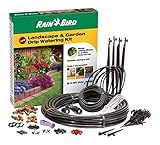
- Comprehensive 108-piece kit for flower beds, gardens and landscaped areas; eliminates hand watering, saves time and money
- Ultimate watering efficiency for all plants, shrubs and trees; up to 80% water savings
- Simple 3-step installation: connect to faucet, insert fittings into tubing, attach watering devices
- Includes 3 differnet types of watering devices: drippers, micro-bubblers and micro sprays
- Pressure-compensating technology ensures all plants receive same amount of water
Before buying, check the exact form being sold, its local hardiness, and the mature dimensions. Common names and regional varieties can create confusion, so use the botanical name when comparing nursery inventory. Plant it as an informal screen or structural mass rather than designing a rigid, frequently sheared hedge.
The Tool Desk
Outbyte Driver Updater FREEFix the driver behind crashes, sound loss and screen glitchesFind Drivers →Outbyte PC Repair FREERepair Windows errors before they cause bigger problemsFix Now →10. Texas mountain laurel (Dermatophyllum secundiflorum)
Texas mountain laurel is an evergreen shrub or small tree native to portions of the Chihuahuan Desert and adjacent Southwest. Its fragrant flowers make it appealing near an entry, patio, or outdoor living area, but it is a regional choice—not a universal Sonoran Desert recommendation.
Confirm winter exposure, drainage, mature size, and local availability before committing to it. Its seeds are toxic, so placement deserves additional care around children and pets. The University of Arizona lists Texas mountain laurel among low-pruning shrubs for suitable low- and mid-elevation desert landscapes.
Flowering, habitat, and naturalistic shrubs
11. Creosote bush (Larrea tridentata)
Creosote bush is one of the defining shrubs of the Sonoran and Mojave deserts and one of the clearest choices for an extremely dry, sunny, well-drained site. Its natural form can make a convincing focal point in a sparse xeric planting where the goal is to reflect the surrounding desert rather than create a lush irrigated bed.
Use it deliberately rather than packing it into a densely watered mixed border. Creosote may become deciduous during drought, and its root and leaf chemistry can inhibit the establishment of nearby plants. Give it its own visual and irrigation space instead of expecting it to behave like a conventional foundation shrub. The National Park Service lists creosote among the characteristic plants of Mojave Desert communities in its plant community information.
12. Fourwing saltbush (Atriplex canescens)
Fourwing saltbush is the best fit in this group for sandy, gravelly, alkaline, or saline-prone soil. It forms a silvery mound that can reach roughly 8 feet in height and width, and its deep roots can help with erosion control.
Do not interpret salt tolerance as universal tolerance of poor drainage. Check the soil and drainage before planting, especially in a compacted construction site or a low area that stays wet after irrigation. Fourwing saltbush is also dioecious. If seed production is important, plan for appropriate male and female plants rather than assuming every nursery specimen will produce seed. A desert garden soil test and drainage assessment can be worthwhile when soil chemistry or standing water is uncertain.
13. Pink fairy duster (Calliandra eriophylla)
Pink fairy duster is a compact, drought-tolerant Sonoran Desert shrub with showy pink stamens and strong wildlife appeal. It fits smaller yards, pollinator gardens, and the open spaces beneath larger desert trees, provided the soil drains well.
Give it establishment irrigation, then reduce watering as roots develop rather than maintaining a lush, high-water regime. Its flowers can support hummingbirds and other wildlife. The University of Arizona includes pink fairy duster among native, low-water plants for wildlife-friendly gardens.
Do these 3 things before closing this tab:
1Repair Windows errors before they cause bigger problems2Fix the driver behind crashes, sound loss and screen glitches3Clear out junk files and repair common Windows errorsRank #4

- Be a Gardening Master with the help of our superior and complete Drip Irrigation Kit: 50ft flexible & durable PVC 5/16" Irrigation Tubing + 50ft 1/4" Drip Distribution Tubing + 2 x Female Thread Water Connectors for 5/16" Mainline + 20 Barbed Drip Emitters Stream + 10 Barbed Drip Emitters Vortex + 4 x 1-Way, 6 x 2-Way and 2 x 4-Way Barbed Splitters from 5/16" to 1/4" + 5 x 1/4" Tubing Tee Splitters + 2 x 5/16" Mainline End Plugs + 5 x 1/4" Distribution Tubing End Plugs
- Make your own garden irrigation system kit easier than ever: run a 3/4 connection from your water source to the watering area. Use the 5/16 irrigation tubing as the mainline. Branch off with the 1/4 drip irrigation tubing and connect a maximum of 30 drip irrigation emitters. Stick the dripper stake into the soil, adjust the desired irrigation spray, and feed your plants with your own drip irrigation system. Designed to work with between 20 - 45 PSI and a maximum output of 60 gallons/hour/emitter
- Enjoy taking care of your garden with high quality adjustable spray emitters and forget about broken irrigation sprayer stakes and clogged drip heads. With a length of 7.5 inch and a sharp bottom, the irrigation bubbler stake can be easily fixed into the ground and stays still even in loose soil. Perfect for long time application, the drip irrigation emitter heads are detachable and easy to clean so you don’t worry about clogging. Make gardening less of a chore!
- Spend less, get more - UV resistant and designed for underground or above-ground installation, the Carpathen 1/4 inch drip irrigation tubing will last year-round in any weather. Use the 4 ways/2 ways/1 way couplers to create the perfect branch for your plants. Season after season the distribution tubing part of the irrigation drip system will keep your plants hydrated with minimal waste from evaporation. Choose to cut down your water bills!
- Save Your Time with Carpathen Garden Irrigation System. Our automatic drip watering system minimizes water loss by directly hydrating the roots of your plants. Easily adjust the drip emitters by rotating the cap for precise hydration. Designed for up to 3 raised garden beds, this irrigation system for the garden is ideal as a garden starter kit for healthy vegetables, an automatic watering system for potted plants, a raised garden bed watering system, or a reliable garden grid watering system
14. Apache plume (Fallugia paradoxa)
Apache plume is a multi-stemmed native shrub with white flowers and feathery seed heads. Its airy silhouette suits an informal, naturalistic yard, a transition planting, or a desert garden where movement and seasonal texture are more important than geometric uniformity.
Leave enough room for its natural shape. The University of Arizona lists it among low- and mid-elevation shrubs requiring little regular pruning. That does not mean it should be forced into a formal hedge; its value is largely in the relaxed form and seed-head display.
15. Whitethorn acacia (Vachellia constricta)
Whitethorn acacia is a thorny Sonoran Desert shrub or small tree that tolerates heat and drought and supports desert habitat. It is a better choice for a habitat-focused or naturalistic yard than for a route used by children, pets, guests, or maintenance crews.
Keep it away from narrow walkways, play areas, outdoor seating, and locations where branches could interfere with access. The National Park Service identifies whitethorn acacia among common Sonoran scrub trees and shrubs. Its habitat value does not eliminate the need for practical placement.
16. Ocotillo (Fouquieria splendens)
Ocotillo is a distinctive semi-succulent, seasonally leafed shrub for hot, sunny desert landscapes. Its tall, spiny stems provide a strong architectural accent and wildlife value, but it should not be treated as an instant, maintenance-free hedge.
Transplanting success depends on healthy nursery stock, correct planting, and carefully managed establishment irrigation. Avoid the temptation to solve early leaflessness or transplant stress with constant watering. Once established, irrigation should reflect the plant’s desert adaptation. The National Park Service describes ocotillo as a characteristic Sonoran Desert shrub and documents its response to drought and heat.
Independent reader supportYour contribution helps us test, update, and keep practical guides available for everyone.Moist-site desert natives for washes and irrigated areas
17. Arizona sycamore (Platanus wrightii)
Arizona sycamore is a large native riparian tree for substantial properties, drainage corridors, or sites with dependable supplemental water. It can provide valuable shade, but it is not a low-water choice for a typical dry front yard.
Before planting, account for mature size, root-zone requirements, leaf litter, and the long-term water supply. It may be an excellent fit beside a naturally moist wash or designed drainage feature, but it is a mismatch for a shallow, isolated planting pocket beside a foundation. Saguaro National Park identifies Arizona sycamore among the dominant trees of riparian areas in its trees and shrubs reference.
Crashes, No Sound, or Screen Glitches?
Random freezes, missing sound and display glitches usually trace back to one bad driver. Find and replace yours safely.Free scan · under a minutePC Slower Than It Used to Be?
A free scan shows the junk files, broken settings and background clutter dragging Windows down - then fixes them in one click.Free scan · Windows 10 & 1118. Arizona walnut (Juglans major)
Arizona walnut is another wash- or riparian-associated native that can provide shade, wildlife food, and habitat where water is available. It may be drought tolerant after establishment in the right regional setting, but its natural association with moist areas is the more important design clue.
Best Value
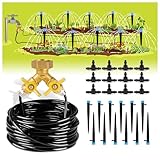
- Adjustable Water Flow: The drip emitter can be adjusted to stop, micro-drip, and spray so that you can use the water drip system to water many kinds of plants in your garden. Moreover, the drip emitters have a support stake for easy placement in the soil
- No-leaking Brass Splitter: The splitter has a solid brass construction and no rust. It not only separates the two drip lines but also controls each line individually with a butterfly-shaped switch. US standard 3/4" thread size
- Easy To Assemble and Use: Simple installation, simply insert the fittings and droppers, and you can begin watering your plants instantly. The drip system kit includes the User Manual to get the installation video
- Wide Applications: The irrigation system kit is great for lawns, patio vegetable gardens, plant greenhouses, flower beds, and raised beds
- The Whole Kit to Make The Drip System: This automatic drip irrigation kit includes all the accessories to make a drip irrigation system. 50 FT 1/4'' black tubing, brass splitter adapter * 1, Tee-connectors * 12, blue drip emitters * 12
Reserve it for a site with dependable supplemental water, a wash, or a sufficiently large drainage corridor. Do not place it in the same ultra-xeric bed as creosote, jojoba, or foothill palo verde and expect identical irrigation needs.
Match the plant to the job
For extreme drought and full sun
Begin with creosote bush, foothill palo verde, jojoba, fourwing saltbush, pink fairy duster, and ocotillo, provided each species is within its local native range and can tolerate the site’s winter temperatures. These are not interchangeable: fourwing saltbush is especially relevant to alkaline or saline-prone soil, while creosote wants a deliberate, very dry, well-drained setting.
For shade
Velvet mesquite, blue palo verde, desert ironwood, netleaf hackberry, and desert willow can contribute shade or filtered shade. Arizona sycamore and Arizona walnut can also provide substantial shade, but only where moisture and space are adequate. The National Park Service’s Sonoran Desert tree and shrub information is useful for distinguishing upland trees from riparian species.
Recommended Free Tools
For evergreen structure or screening
Arizona rosewood, evergreen sumac, jojoba, and Texas mountain laurel are the most relevant choices where they are locally hardy. Rosewood is particularly useful for an informal screen, while jojoba and evergreen sumac suit dry structural planting. Confirm the exact regional form before purchasing Texas mountain laurel or evergreen sumac.
For pollinators and birds
Pink fairy duster, desert willow, velvet mesquite, desert ironwood, palo verde, netleaf hackberry, and evergreen sumac offer the strongest habitat angle in the researched group. Combine plants with different forms and flowering periods where the site allows, while keeping irrigation zones compatible.
For salty or alkaline soil
Fourwing saltbush is the clearest candidate. Still, test the soil and assess drainage instead of treating the plant as a cure for every difficult site. The University of Arizona fourwing saltbush profile provides additional regional information.
Planting and establishment: drought tolerant does not mean water free
The most common design mistake is confusing a plant’s mature water use with its establishment needs. A newly planted desert tree or shrub has a limited root system and needs regular follow-up irrigation until it expands into surrounding soil. After establishment, irrigation should be adjusted downward and coordinated with the species, season, soil, and site.
Use this planting sequence
- Lay out the mature footprint first. Mark the future canopy, trunk position, thorns, root zone, and maintenance access—not just the size of the nursery container. Keep large trees away from structures, utilities, narrow walkways, and conflicts with planned hardscape.
- Confirm soil and drainage. A drainage or soil assessment is especially useful before selecting fourwing saltbush for a saline-prone site or a riparian tree for a low area. Correct the site-design problem rather than trying to force a mismatched species to survive.
- Buy healthy, nursery-grown plants. Prefer nursery-propagated material and ask for local provenance where available. Do not collect wild plants casually. In Arizona, several desert trees—including desert willow, palo verde, ironwood, and mesquite—are subject to salvage or harvest restrictions.
- Dig to the root ball, not deeper. University of Arizona planting guidance advises that the hole should be no deeper than the root ball. Set the plant at the correct level, then follow the species and local extension recommendations for the remainder of the installation.
- Water deeply during establishment. Use a method that delivers water to the root zone, then adjust the frequency and volume over time as roots expand. Keep riparian trees in a different irrigation plan from ultra-xeric shrubs.
- Mulch and keep the root zone weed free. These practices help establishment and reduce competition. Do not compensate for poor placement or drainage with constant irrigation.
- Limit fertilizer, shearing, and unnecessary pruning. Excessive water and fertilizer can produce weak or oversized growth, while unnecessary shearing removes the natural form that makes many desert natives useful.
For the complete container-tree and shrub sequence, consult the University of Arizona’s planting guidelines. For irrigation planning, a micro-drip irrigation kit for the establishment period can help deliver controlled water to newly planted trees and shrubs, but no single kit or emitter arrangement fits every yard. Size and divide the system according to plant water needs, soil, pressure, and layout.
If you are assembling or upgrading a system, a micro-drip pressure reducer may be one item to evaluate along with tubing, emitters, filters, valves, and zone controls. The correct components depend on the system and water source; avoid assuming that a retail kit’s included parts are automatically appropriate for a large yard or mixed planting.
Do not plant these natives blindly
A local sourcing checklist
Take this information to a local native-plant nursery or county extension office before finalizing the design. Ask for:
- the botanical name, including the correct species and any relevant regional variety;
- the plant’s local climate, elevation, and winter-temperature suitability;
- nursery propagation rather than wild collection;
- local provenance where available;
- mature height, width, canopy behavior, thorn characteristics, and root-zone expectations;
- water needs during establishment and after establishment;
- soil, salinity, and drainage tolerances; and
- legal requirements that apply to the place where the plant will be obtained or installed.
For a larger yard, an HOA conversion, a steep site, a lawn replacement, or a property with poor drainage, consider a water-wise irrigation installer or irrigation designer before planting. Professional layout can keep riparian trees, shade trees, and ultra-xeric shrubs from being placed on one incompatible watering zone.
The Tool Desk
Outbyte Driver Updater FREEFix the driver behind crashes, sound loss and screen glitchesFind Drivers →Outbyte PC Repair FREEClear out junk files and repair common Windows errorsFree Scan →How to build a durable desert backyard planting plan
Start with the plants that solve the site’s primary problem, then add smaller plants around them. For example, a large Sonoran property might use a palo verde or mesquite for filtered shade, desert ironwood or hackberry for habitat, and fairy duster or fourwing saltbush for lower layers. A tiny, very dry yard may be better served by one carefully placed foothill palo verde with creosote, jojoba, or fairy duster than by a crowded collection of trees.
Keep naturally moist areas visually and hydraulically distinct. Desert willow, Arizona sycamore, and Arizona walnut can be excellent around a wash or irrigated drainage feature, while creosote, ocotillo, and foothill palo verde belong in drier, better-drained zones. The goal is not to make every part of the backyard equally green; it is to match each plant’s ecological conditions to the part of the site where it can remain healthy without wasteful irrigation.
The Bottom Line
Bottom line: Choose the native that matches your exact desert conditions, not simply the plant with the most familiar name. Use ultra-xeric shrubs and small trees for hot, dry uplands; reserve riparian natives for sites with reliable moisture; allow mature space for trees and thorny plants; and provide careful establishment irrigation before reducing water for mature growth.
Quick Recap
Product prices and availability are accurate as of the date/time indicated and are subject to change. Any price and availability information displayed on Amazon at the time of purchase will apply.
Free tools Windows power users keep installed
One-click scans. No signup required.

