The Tool Desk
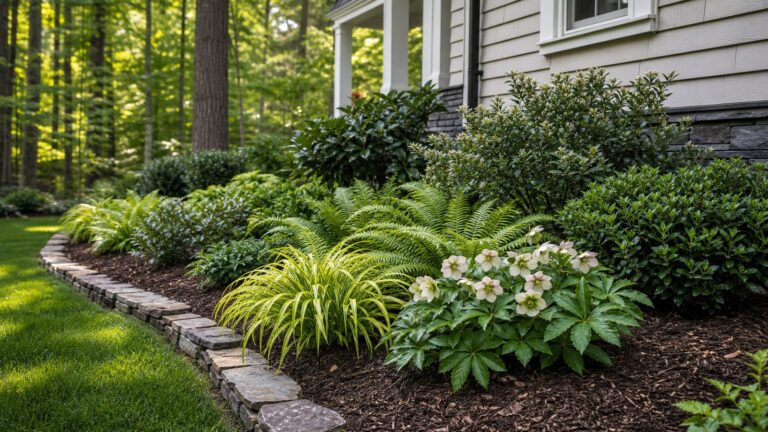
Outbyte Driver Updater FREEScan for outdated or missing drivers - takes under a minuteDriver Scan →Outbyte PC Repair FREEClear out junk files and repair common Windows errorsFree Scan →The best deer-resistant shade plants combine lower browsing appeal with the right light and moisture conditions. For flowers, try wild columbine, bleeding heart, wax begonia, daffodils, and wreath goldenrod. For dependable shade texture, use Christmas fern, wild ginger, evergreen wood fern, or maidenhair fern. Shrubs and small trees such as spicebush, mountain laurel, witch hazel, and pawpaw add height and structure.
“Deer-resistant” does not mean deer-proof. Deer may browse almost any plant when populations are high or natural food is scarce. Use these plants as one layer of a broader plan that can include fencing, small exclosures, repellents, and motion-triggered deterrents.

As an Amazon Associate I earn from qualifying purchases.
First, match the plant to the kind of shade you actually have
Shade is not one uniform condition. Dense shade beneath an evergreen is usually darker and drier than dappled shade beneath a deciduous tree. A bed that receives morning sun and afternoon shade is different again.
- Full shade: little or no direct sun, although reflected or filtered light may still reach the bed.
- Part shade: several hours of direct sun or bright, shifting light during the day.
- Bright or filtered shade: enough light for many flowers, but protected from intense afternoon sun.
Some plants in this list tolerate shade but flower, fruit, or develop their best color with filtered light or a little morning sun. Moisture matters just as much. Wild ginger and sensitive fern prefer moisture-retentive soil, while wild columbine and some woodland ferns are better candidates for drier shade once established.
#1 Best Overall

- REPELS DEER AND RABBITS: Deer and rabbits don’t have to eat vegetation for the repellent to be effective—they have a natural aversion to the scent
- SPRAY ON PLANTS: Use to treat landscaped ornamental gardens, flowers, shrubs, trees and vines
- RAIN RESISTANT: Ready-to-use liquid formula starts to work immediately
- HARMLESS TO PLANTS AND ANIMALS: Won’t harm plants and animals when used and stored as directed
- APPLY YEAR-ROUND: For best results, shake well before each use
Quick-reference guide
| Plant | Best light | Moisture and site | Size or role | What brightens the garden |
|---|---|---|---|---|
| Wild columbine | Part shade | Dry to moist, well-drained soil | Flowering perennial | Red-and-yellow flowers |
| Old-fashioned bleeding heart | Full to part shade | Rich, consistently moist, well-drained soil | Clumping perennial | Pink or white heart-shaped flowers |
| Wild ginger | Full to part shade | Moist, organic, well-drained soil | Low ground cover | Heart-shaped foliage |
| Christmas fern | Shade | Woodland conditions | Evergreen fern | Winter texture |
| Maidenhair fern | Moist shade | Moisture-retentive soil | Delicate woodland fern | Fine, airy foliage |
| Sensitive fern | Moist shade | Low or damp areas, rain-garden margins | Spreading fern | Fresh green foliage |
| Evergreen wood fern | Shade to part shade | Dry to moist soil | Durable fern | Evergreen texture |
| Wax begonia | Bright or filtered shade | Bed, edging, or container conditions | Annual or tender bedding plant | White, pink, or red flowers |
| Daffodil | Dappled or part shade | Under deciduous trees and woodland edges | Spring bulb | Early-season flowers |
| Spicebush | Part shade | Dry to moist understory conditions | Native shrub | Yellow flowers, red berries, fragrance |
| Pawpaw | Shade when young; more light improves fruiting | Moist woodland or streamside conditions | Small native tree | Large leaves and tropical-looking fruit |
| Chokeberry | Shade to part shade | Choose species and cultivar for the site | Native shrub | Flowers, berries, and fall color |
| Mountain laurel | Shade to part shade | Dry to wet conditions, depending on site | Larger evergreen shrub | Glossy foliage and late-spring flowers |
| Witch hazel | Shade to sun | Dry to wet conditions | Shrub or small tree | Late-season flowers and fall color |
| Mapleleaf viburnum | Shade to part shade | Dry to moist soil | Understory shrub | Flowers, berries, and fall color |
| Yellowroot | Shade to sun | Dry to moist soil | Low, spreading shrub | Fine foliage and yellow fall color |
| Wreath goldenrod | Filtered shade to sun | Dry to moist soil | Flowering perennial | Late-season yellow flowers |
“Native” here refers to the species described in the research, primarily useful for gardens and restoration settings in parts of North America. Confirm hardiness, native status, local availability, and any regional planting restrictions before buying.
17 deer-resistant shade plants
1. Wild columbine (Aquilegia canadensis)
Wild columbine brightens a woodland edge with nodding red-and-yellow flowers. It is a strong choice for part-shade beds with dry-to-moist, well-drained soil, especially where a formal, permanently dense planting is not required.
This North American native can self-seed and is relatively short-lived. Those traits are advantages in a naturalistic garden: new seedlings can refresh the planting as older plants decline. In a tightly designed bed, however, allow for seedlings in nearby spaces and remove extras if they appear where they are not wanted.
Do these 3 things before closing this tab:
1Fix the driver behind crashes, sound loss and screen glitches2Repair Windows errors before they cause bigger problems3Scan for outdated or missing drivers - takes under a minute2. Old-fashioned bleeding heart (Lamprocapnos spectabilis)
Formerly known as Dicentra spectabilis, old-fashioned bleeding heart is one of the most recognizable shade-garden plants. Its arching stems carry pink or white, heart-shaped flowers and stand out against darker foliage.
It suits full shade or partial shade and performs best in rich, consistently moist, well-drained soil. Do not treat its summer dieback as a sign that the plant has failed. Bleeding heart commonly goes dormant after flowering, so place it among ferns or other later-season foliage that can cover the empty space.
3. Wild ginger (Asarum canadense)
Wild ginger is a low native ground cover for full shade to part shade. Its heart-shaped leaves create a broad, quiet carpet beneath shrubs and trees, while its flowers remain mostly hidden beneath the foliage. It is therefore more useful for brightening a garden through leaf shape and texture than through a conspicuous floral display.
Give it moist, organic, well-drained soil. It is generally not bothered by deer, but slugs and snails may damage its spring foliage. That makes pest monitoring worthwhile even when deer pressure is low.
4. Christmas fern (Polystichum acrostichoides)
Christmas fern is an evergreen native fern that supplies structure after many perennials have disappeared for the season. Its dependable foliage is especially valuable in a shady bed that otherwise looks bare in winter.
It is a good choice when the goal is reliable texture rather than a large flower display. Group it with deciduous woodland plants for contrast, and give it enough room to function as a persistent foliage anchor rather than treating it like a short-lived filler.
5. Maidenhair fern (Adiantum pedatum)
Maidenhair fern has delicate, airy foliage but needs a site that can maintain moisture. It belongs in moist, shaded woodland conditions rather than in exposed dry shade beside a hot wall or paved surface.
Its fine texture can soften large stones, dark retaining edges, and the coarse foliage of larger plants. Because the fronds are visually delicate, consistent soil moisture is more important than simply labeling the site “shady.”
Quick wins for a faster PC:
Fix the driver behind crashes, sound loss and screen glitchesFind Drivers →Repair Windows errors before they cause bigger problemsFix Now →Scan for outdated or missing drivers - takes under a minuteDriver Scan →Rank #2

- Over 100,000 Repeat Customers - For over 20 years Deer Out is the trusted brand for professional gardeners, landscapers and farmers alike. Works Great!
- Minty Fresh Scent - Smells Great to Humans but Deer, Elk and Moose are naturally repelled by our Deer Out patented formula.
- Wont Wash Off - Two Natural Stickers keeps Deer Out on your plants! Deer Out is Rain resistant.
- All Natural ingredients - Deer Out is environmentally friendly using only natural ingredients. Safe for use around children and pets.
- Year-Round Formula - Can be used in all Seasons: Spring, Summer, Winter & Fall
6. Sensitive fern (Onoclea sensibilis)
Sensitive fern is a useful native for moist shade, low areas, rain-garden margins, and other locations where ordinary bedding plants may struggle. It brings fresh green foliage to damp ground and is included among deer-resistant native plant options.
It can spread more readily than clumping ferns when conditions are favorable. Use it where that natural expansion is welcome, or define its planting area and thin it periodically if it begins moving into paths or neighboring beds.
7. Evergreen wood fern (Dryopteris marginalis)
Evergreen wood fern is a durable choice for shade to part shade and dry-to-moist soil. It bridges the gap between plants for dry woodland beds and those that require nearly constant moisture.
Use it for year-round texture beneath shrubs, along a shaded walkway, or in a mixed fern planting. Its value is consistency: it does not depend on a short flowering window to make the bed look finished.
Outdated Drivers Are Slowing You Down
One free scan finds every outdated or missing driver and matches the right update for your exact hardware.Free scan · exact hardware matchPC Slower Than It Used to Be?
A free scan shows the junk files, broken settings and background clutter dragging Windows down - then fixes them in one click.Free scan · Windows 10 & 118. Wax begonia (Begonia semperflorens and hybrids)
Wax begonia is a practical annual or tender bedding plant for bright shade. White, pink, and red flowers can brighten containers, edging, and filtered-light beds where a gardener wants color during the growing season.
It is shade tolerant, but dense darkness is not the same as bright shade. Place it where light is filtered through trees or arrives from an open northern or eastern exposure. Because it is not reliably hardy everywhere, treat it as an annual or overwinter it only where local conditions and the specific hybrid allow.
9. Daffodil (Narcissus species)
Daffodils are among the most useful plants for early color beneath deciduous trees. They flower before the canopy fully develops, making them a natural fit for woodland borders and spring-brightened shade.
University extension guidance lists daffodils as poisonous to squirrels and deer and specifically recommends them for planting under trees. Many parts are toxic if eaten, so handle and place the bulbs with normal gardening safety in mind, particularly around children and pets.
10. Spicebush (Lindera benzoin)
Spicebush is a native understory shrub that contributes more than one season of interest. It has fragrant foliage, yellow spring flowers, and red berries on female plants when a suitable male pollinator is nearby. Its spicy fragrance also helps make it less attractive to browsing deer.
Use it in part shade as a background shrub or woodland-edge transition. Plan for its mature size before planting; it needs more room than a fern, ground cover, or small perennial. If berries are important to your design, confirm that both compatible male and female plants are available.
11. Pawpaw (Asimina triloba)
Pawpaw is a native understory tree that tolerates shade when young and has large, tropical-looking leaves. In suitable climates it can produce edible fruit, adding an unusual seasonal feature to a woodland planting.
Rank #3

- TRUSTED BY PROFESSIONALS: For over 20 years, I Must Garden has been the preferred brand of professional gardeners for use in public gardens and resorts. Trusted for its reliability, durability, and pleasant spice scent
- NATURALLY STRONGER: Combines natural ingredients that make plants inedible to deer AND powerful botanical oils that are highly irritating to their sense of smell. Contains triple the number of active ingredients than other repellents for ultimate plant protection
- SAFE FOR PLANTS: Safe to spray directly on any plants that are being damaged by deer. Protects Perennials (hostas, daylilies, roses, tulips, oriental lilies), Annuals (pansies, impatiens), Shrubs (roses, azaleas, rhododendron, hawthorn), and Vegetables
- FORMULATED TO LAST LONGER: Contains strong natural sticking agents that make the repellent adhere to the leaves of your plant. Provides long-lasting protection and does not need to be re-applied after average rainfall
- SAFE FOR PETS & POLLINATORS: Made from natural ingredients and botanical oils that are safe for pets, people, and the environment. Contains NO harmful chemicals or glues that threaten nearby wildlife
Fruit production generally requires more than one genetically distinct tree, and a single specimen may therefore provide foliage without a reliable crop. Pawpaw is best suited to a spacious woodland, streamside, or restoration-style setting rather than a small foundation bed. Moisture-retentive soil will usually give it a better start than a dry, compacted site.
12. Chokeberry (Aronia species)
Chokeberry is a hardy native shrub with spring flowers, colorful fall foliage, and berries that support wildlife. It can tolerate shade and is included among shade-tolerant, deer-resistant choices for woodland and riparian plantings.
“Chokeberry” covers more than one species, and mature size and moisture preference vary by species and cultivar. Check the plant label before buying so the selected form fits the available space and soil. Use it where you want a shrub that continues contributing after its spring flowers fade.
13. Mountain laurel (Kalmia latifolia)
Mountain laurel is an evergreen native shrub with glossy foliage and showy late-spring flowers. It handles shade or part shade and is listed for a broad range of dry-to-wet conditions, although the actual planting site still needs to drain appropriately for the plant and local climate.
Because it becomes a substantial woody plant, mountain laurel belongs in a woodland edge, large bed, or naturalistic foundation planting rather than a narrow strip beside a walkway. Its evergreen leaves provide structure when herbaceous shade plants have gone dormant.
Recommended Free Tools
14. Witch hazel (Hamamelis virginiana)
Witch hazel is a shade-tolerant native shrub or small tree valued for late-season yellow flowers and fall color. It can grow in shade to sun and in dry-to-wet conditions, making it adaptable where a smaller perennial would not provide enough structure.
Use it as a focal plant or upper layer in a woodland planting. Its late bloom is particularly helpful for extending seasonal interest after many shade-garden flowers have finished. Confirm the eventual size and placement before planting near a building, utility line, or narrow path.
15. Mapleleaf viburnum (Viburnum acerifolium)
Mapleleaf viburnum is a native understory shrub with maple-like leaves, summer flowers, berries, and fall color. It suits shade or part shade and dry-to-moist soil, giving it a useful role in naturalistic beds and woodland margins.
Verify the exact viburnum species rather than assuming every viburnum has the same deer resistance. Deer preference varies across the genus. The plant’s layered seasonal interest makes it more valuable than a shrub selected only for a brief bloom period.
16. Yellowroot (Xanthorhiza simplicissima)
Yellowroot is a low, spreading native shrub with finely textured foliage and yellow fall color. Penn State lists it for shade to sun and dry-to-moist soils, so it can fill a woodland-edge role where a gardener wants foliage interest instead of a large floral display.
Its low, spreading habit makes it useful beneath taller shrubs or along the front of a naturalistic planting. Give it space to develop rather than crowding it between rigidly spaced foundation plants.
17. Wreath goldenrod (Solidago caesia)
Wreath goldenrod adds late-season brightness with yellow flowers carried along arching stems. It is shade tolerant but performs best where some filtered light is available, making it especially useful beneath a deciduous canopy or at a woodland edge.
Goldenrods are hardy and are described in native-plant guidance as deer-resistant choices. Allow room for natural spread, and combine wreath goldenrod with ferns or shrubs so the planting has structure before its late-season bloom.
Free tools Windows power users keep installed
One-click scans. No signup required.
Choose the best plants by site
For dry shade beneath trees
Start with wild columbine, evergreen wood fern, mountain laurel, witch hazel, yellowroot, or Christmas fern. Dry shade is often caused by tree roots and canopy interception rather than a lack of rainfall alone. Improve the bed with organic matter where appropriate, avoid damaging established tree roots, and water new plants until they are established.
Do not place moisture-dependent maidenhair fern or sensitive fern in the driest part of this type of bed. A plant can be deer resistant and still fail because its soil conditions are wrong.
For moist, cool shade
Wild ginger, maidenhair fern, sensitive fern, bleeding heart, spicebush, and pawpaw are good candidates for moisture-retentive woodland conditions. Wild ginger works low to the ground, ferns provide texture, and the shrubs or small tree add height.
Good drainage still matters. Moist soil should not automatically mean stagnant, waterlogged soil unless the selected plant is specifically suited to that condition. Sensitive fern is the best fit here for low or damp areas; maidenhair fern needs moisture-retentive soil but benefits from a suitable woodland setting rather than standing water.
What’s actually slowing this PC down?
Pick the symptom - the matching free tool is one click away.
For dappled shade and morning sun
Use wild columbine, bleeding heart, daffodils, wax begonia, wreath goldenrod, mapleleaf viburnum, or chokeberry. Filtered light gives flowering plants more opportunity to show color than dense, all-day darkness.
Wax begonia is particularly useful for containers and seasonal edging, while daffodils take advantage of the bright spring window before deciduous trees leaf out. Wreath goldenrod extends that display into late season.
For a woodland edge or large bed
Build layers with a low plant such as wild ginger or yellowroot, a middle layer of ferns or perennials, and one or more shrubs such as spicebush, chokeberry, mountain laurel, mapleleaf viburnum, or witch hazel. Pawpaw can occupy the upper layer where there is enough room and a suitable climate.
Measure the planting area before buying. Mountain laurel, witch hazel, chokeberry, spicebush, and pawpaw need substantially more room than a fern or ground cover. A plant that fits its mature location is less likely to require severe pruning or removal later.
How to protect even “deer-resistant” plants
Plant selection is only one part of deer management. Extension guidance commonly recommends combining methods and notes that reducing browsing by about 50 percent can be a successful result. In areas with heavy pressure, complete elimination is unrealistic without a physical barrier.
Best Value
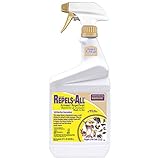
- Keep animals out of your yard and garden with Repels-All Animal Repellent from Bonide! This special formula naturally deters a wide variety of garden pests including deer, mice, chipmunks, squirrels and more!
- Natural ingredients act as a deterrent that will not cause harm to critters. The strong scent will cause animals to naturally avoid your garden and go elsewhere.
- When used as directed, this product is safe for use around people and pets. Biodegradable ingredients will not harm ornamentals, edibles or other desirable plants in your yard and garden.
- Apply animal repellent concentrate wherever you need protection. This product can be safely applied to structures, plants and more. Use as a perimeter around your yard to prevent new pests from arriving.
- This product arrives conveniently ready-to-use in a spray nozzle bottle! Apply directly to foliage, bulbs, seeds or hard surfaces of structures to protect and control. For best results, follow the detailed instructions on the product label.
1. Use fencing or small exclosures for dependable protection
A properly designed tall fence or a small exclosure around a new bed is generally more dependable than relying on plant lists alone. Protect especially valuable specimens, newly planted shrubs, and young pawpaws while they establish.
Inspect the barrier regularly for gaps, lifted edges, damaged sections, and places where deer can push through. A barrier that is only partly closed may protect one side of a planting while directing browsing to the other.
2. Treat repellents as supplemental protection
A deer repellent spray can help reduce browsing on a shade bed, but it does not make any plant deer-proof. Use only a product labeled for the intended plants and site, follow its application directions, and reapply as required—especially after rain. Repellent performance varies with deer pressure, weather, plant growth, and how consistently the product is used.
3. Add a motion-triggered deterrent where it makes sense
A motion-activated sprinkler can provide a nonchemical supplement by startling animals that enter its detection area. It works best when the sensor has a clear view and the device can cover the vulnerable part of the garden. It should be treated as an additional layer, not a replacement for fencing in a high-pressure location.
4. Monitor the planting instead of waiting for severe damage
Check new plants frequently, particularly during seasonal periods when natural forage is limited. Look for clipped stems, ragged foliage, tracks, and repeated browsing routes. Early action—temporary protection, a repellent applied according to its label, or a small barrier—can prevent one attractive new plant from becoming a repeated target.
Do not assume that a folklore remedy will work consistently. Deer behavior changes with population, weather, available forage, and the individual landscape. A layered plan is more realistic than searching for one magic plant or one permanent deterrent.
Before you buy or plant
- Confirm the light: observe the bed through the day and distinguish dense shade from bright, filtered shade.
- Test the moisture pattern: note whether the soil dries quickly, stays evenly moist, or remains damp after rain.
- Check mature scale: reserve larger spaces for shrubs and pawpaw rather than squeezing them into narrow borders.
- Verify the exact plant: species and cultivar differences matter for viburnum, chokeberry, wax begonia, and other variable groups.
- Check regional suitability: hardiness, native status, availability, and invasive-plant rules vary by location.
- Plan for seasonal gaps: combine spring bulbs, summer foliage, late-season flowers, berries, and evergreen texture.
- Protect establishment: even less-preferred plants may need temporary protection while young or during periods of heavy browsing.
Frequently Asked Questions
Are any shade plants completely deer-proof?
No. Deer may eat almost any plant when populations are high or food is scarce. The plants in this list are better described as deer resistant, less preferred, or often avoided. Fencing and exclosures are more dependable than plant selection alone.
Which deer-resistant plants work in deep shade?
Wild ginger, Christmas fern, evergreen wood fern, maidenhair fern in moist soil, sensitive fern in damp soil, and bleeding heart are useful options. Flowering is usually stronger in bright or filtered shade than in dense darkness.
Which plants are best for dry shade?
Wild columbine, Christmas fern, evergreen wood fern, mountain laurel, witch hazel, and yellowroot are candidates for dry-to-moist woodland conditions. Water new plants while they establish, since tree roots can make shade unusually dry.
Will pawpaw produce fruit in shade?
Pawpaw tolerates shade when young, but fruit production generally requires suitable growing conditions and more than one genetically distinct tree. It also needs enough space to develop as a small native tree.
Do daffodils need special handling?
Daffodils are useful beneath deciduous trees and are generally avoided by deer, but many parts are toxic if eaten. Handle and place the bulbs with normal gardening safety in mind, especially around children and pets.
Crashes, No Sound, or Screen Glitches?
Random freezes, missing sound and display glitches usually trace back to one bad driver. Find and replace yours safely.Free scan · under a minuteWindows Errors? Fix Them Before They Spread
Repair common Windows errors and clear accumulated junk for a smoother, more stable PC - no reinstall needed.Free scan · no reinstallThe Bottom Line
For the most dependable combination of color and lower deer appeal, start with wild columbine, bleeding heart, daffodils, or wax begonia where filtered light reaches the bed, then add ferns and wild ginger for shade texture. Use spicebush, chokeberry, mountain laurel, witch hazel, or pawpaw when you need structure. Match every choice to its moisture, mature size, and regional suitability—and use fencing or other layered protection when deer pressure is high.
Quick Recap
Product prices and availability are accurate as of the date/time indicated and are subject to change. Any price and availability information displayed on Amazon at the time of purchase will apply.