Quick wins for a faster PC:
Clear out junk files and repair common Windows errorsFree Scan →Scan for outdated or missing drivers - takes under a minuteDriver Scan →The lowest-cost raised garden bed is usually the one that uses suitable materials you already have and needs the least purchased fill—not necessarily the one with the cheapest frame. Compare the full project cost, including lumber or blocks, fasteners, soil, delivery, and your time. These 15 ideas range from simple board builds to no-frame mounds, so you can choose what fits your site, crops, skills, and budget.
How to choose a low-cost raised bed
Before choosing a material, decide what the bed needs to do. Compare options by total cost, expected durability, labor and tools, growing area, fill volume, access, drainage, and suitability for the crops. A taller or longer bed uses more siding and soil. A frame around suitable native soil, amended with compost, may cost less to fill than a deep box filled entirely with purchased mix. The University of Georgia Cooperative Extension’s DeKalb County budget guide recommends considering native soil, compost, and some topsoil rather than assuming all fill must be bagged raised-bed mix.
As an Amazon Associate I earn from qualifying purchases.
Choose dimensions for reach and roots
Width depends on whether you can reach the center from one side or both. UGA DeKalb says many gardeners prefer a maximum width of 3 feet for access from the side; the University of Delaware Cooperative Extension says 4 feet is convenient when both sides are accessible. Treat these as design guidance, not fixed rules: account for your reach, mobility, available space, and how you will tend the bed.
Depth should suit the crops. UGA DeKalb says many vegetables need about 10 inches of planting depth, while crops such as potatoes may need more. A smaller or shallower bed can reduce both frame and fill costs, but only if it provides enough root room for what you plan to grow.
#1 Best Overall

- Large capacity: Provide enough growth space for deep-rooted plants like potatoes, tomatoes, broccoli, etc. Tall enough to keep pets away from the garden planter and give you easy access!
- Stable and Solid Construction: Double card frames on the two sides of the sheet make the raised garden kits more durable and stable, and 4 reinforcing rods make the whole raised garden bed more stable. Never worry about its distortion or collapse and it presents a much more beautiful design.
- Open bottom: Sits on the ground garden bed, provide good drainage, keep weeds away from soil, defense against pests, and protect your plants. An open base design supports soil drainage, It is more conducive to the healthy growth of plants and balances soil moisture. Planter raised beds will be the best choice for your garden planting.
- Environment-Friendly: Built with an open bottom so it keeps the plants away from root rotting and water built up.
- Easy to assemble: We come with nuts, bolts, washers and instructions so that you can easily assemble without any experience.
Check the site and the fill
Test the site soil and follow local guidance before using it in the bed. For a bed over suspected or confirmed contaminated ground, Delaware Extension recommends geotextile fabric between the bed soil and the ground. Raised beds can dry faster than in-ground gardens and may heat or cool more quickly, so place yours near a water source and consider local climate and crop needs, as advised by the University of Arkansas Cooperative Extension.
15 DIY and inexpensive raised garden bed ideas
1. Build a basic bed from standard-length untreated boards
Plan the rectangle around the board lengths available where you live. Matching the dimensions to standard stock can reduce offcuts, extra cuts, and waste. In its demonstration, Arkansas Extension selected an 8-foot bed length to use purchased lumber efficiently. Use untreated boards for this approach, and budget for the fasteners and any supports your design needs.
2. Reuse suitable salvaged lumber
Salvaged boards can lower the material bill if they are in usable condition and their history is known. Inspect them and avoid lumber treated with creosote or pentachlorophenol; Delaware Extension specifically advises against these materials for raised beds. The University of Maryland Extension’s raised-bed guide includes a bed made with salvaged lumber.
The Tool Desk
Outbyte PC Repair FREERepair Windows errors before they cause bigger problemsFix Now →Outbyte Driver Updater FREEFix the driver behind crashes, sound loss and screen glitchesFind Drivers →3. Use recycled lumber with known provenance
Recycled lumber is another reuse option. Delaware Extension says it can last about as long as cedar and cypress, but that is guidance about the material category—not a guarantee for every reused board. Its condition, prior treatment, and exposure matter, so use boards whose history and intended use are clear.
Rank #2
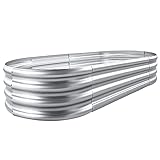
- Each raised metal garden bed size: 4×2×1ft ,7.14Cu
- Upgraded quality and structure: raised garden beds outdoor are made of Q195 galvanized metal sheet, double-layer anti-corrosion galvanizing and oval structure design, which is more beautiful, can withstand greater pressure at the interface, is not easy to loose, and the interface will not Deformed and can be reused for many years.
- Easy to set up, this galvanized stock tank only takes about 5 minutes to easily assemble and continue planting plants.
- Open base: This planter raised garden bed metal galvanized is designed with an open base, which can effectively avoid water accumulation and decay, protect the roots of plants, and allow the roots to better absorb nutrients
- Double thickness: The average thickness of this galvanized planter galvanized sheet reaches 0.78mm, and the thickest part can reach 1.56mm, which is extremely stable. Compared with the ordinary rectangular elevated garden bed with a thickness of 0.3mm, it will be the right choice for you. buy it! ! !
4. Choose Douglas fir for a lower-cost wood build
UGA DeKalb identifies Douglas fir as a favored affordable choice and documents a simple bed built from it. Local prices vary, so compare the cost of boards and hardware with other suitable lumber in your area. Metal corner brackets can add support to a board build, as shown in the UGA example; include them only if your design calls for them.
5. Choose cedar or cypress when service life matters
Cedar and cypress are naturally resistant to insects and decay, according to Delaware Extension, and may be worth considering if you value longer service life over the lowest initial outlay. Arkansas Extension estimates that untreated lumber exposed to the elements may last 3 to 5 years, while a cedar bed may last well past 10 years. These are the guide’s estimates, not warranties; the Arkansas page does not display a publication date, and actual life depends on conditions and materials.
6. Arrange cinder blocks in a rectangle
Blocks can make a straightforward bed wall, especially if you already have them. Set them on a level base; heavy blocks can be awkward to move, may need leveling, and take up some interior growing area. Price them locally rather than relying on old examples. Virginia Tech’s comparison gives a historical total of $154.80 for a standard 4-by-8-by-12-inch cinder-block bed, based on average prices from three searches in 2022; it is not a current estimate.
Food-garden safety is not established as an absolute either way. Maryland Extension considers intact concrete blocks generally safe while noting uncertainty about specific aggregate content. Virginia Tech likewise says conclusive research on cinder-block leaching and toxicity is unavailable. Gardeners concerned about that uncertainty can choose another material.
Rank #3

- Multifunctional Design: This garden planter is separated into two growing areas for different plants or planting methods. The baffle can be removed to form a bigger growing area.
- Practical Use: With this plants box, you can cultivate plants like vegetable, flower, or herbs in your patio, yard, garden, and greenhouse, making it more convenient to manage.
- Simple Assembly: This divisible garden bed is built in a simple yet stable structure by heavy-duty screws and tight connection piece by piece. It is very easy and quick to put them together.
- Flexible DIY: The corner posts have been upgraded that the number of slotting on the posts is increased from 2 on the opposite 2 faces into 4 on 4 faces. Such a change enables users to combine two or more such planting beds more flexibly and fixedly.
- Stable Construction: Our planting raised bed has a piece of complete side plate at each side of the garden bed. It is fixed firmly without leakage of soil. The whole structure is very stable, and the installation is very easy.
7. Make a low wall from reclaimed or new bricks
Brick is a recognized raised-bed material, but its affordability depends on whether you already have suitable bricks and what they cost locally. Reclaimed brick may reduce purchases; new brick can be more expensive than a simple board frame. Check that the pieces can form a stable low wall on your site.
8. Border the bed with rocks or boulders
UC Master Gardeners of San Diego County lists rocks and boulders among possible bed materials. This is most practical when suitable stones are already available nearby; sourcing and moving heavy stones can make the approach labor-intensive. Arrange them to define the bed without obstructing access or creating an unstable edge.
9. Skip the frame and mound the soil
A raised mound avoids enclosure materials and assembly. Shape the sides with a gentle slope or round them to help reduce erosion. Maryland Extension notes that maintaining this shape is harder in sandy soil, where the mound may not hold together as readily.
Do these 3 things before closing this tab:
1Scan for outdated or missing drivers - takes under a minute2Repair Windows errors before they cause bigger problems3Fix the driver behind crashes, sound loss and screen glitches10. Repurpose a galvanized stock tank
UC Master Gardeners lists stock tanks as an option for a raised bed. A tank is not automatically cheaper than a DIY frame, especially if it must be purchased or moved. Before planting, check that the tank is suitable for gardening, has enough depth for the crops, and can drain properly.
Rank #4

- 2 feet height: Compared with the ordinary 1-foot garden bed, this raised garden box has been improved in all aspects in terms of aesthetics, stable performance, and soil volume. It is time to replace the previous small planter box with a large raised planter box Now, it must be your better choice! ! !
- Large volume: Our large metal raised garden boxes of several specifications have a planting volume of 8×4×2ft=64 cubic meters Feet = 396 gallons. The box with 24 inches deep is very suitable for planting beans, broccoli and other medium to deep root plants
- Durable high-quality material: Galvanized steel raised garden bed is made of upgraded coated steel plate, which has strong anti-rust and corrosion resistance. It can be exposed to the sun, rain and snow for a long time, Reinforced cross bars and fixed piles have been added to help the metal panel maintain its shape and prevent warping and soil leakage over time. Environmentally friendly paint is used on all parts, which does not pollute the soil and provides a healthy environment for plants.
- Open base: This Galvanized planter raised beds uses a bottomless design that allows crops with developed rhizomes to grow without restriction, allowing excess water to be easily drained, and maintaining soil and nutrients.
- Easy to assemble: We provide detailed installation instructions, you can complete the assembly in a short time and start your planting immediately
11. Build a corrugated-metal bed
Galvanized steel is another recognized bed material in Maryland Extension and UC Master Gardeners’ guidance. Compare the price of metal, framing or supports, and assembly with local alternatives. Follow current local guidance on material suitability, and plan for drainage and safe edges in the finished structure.
12. Use retaining-wall blocks
Retaining-wall blocks can form durable low walls, but they are heavy, require a level base, and may settle. Virginia Tech also identifies leveling effort and reduced growing area as tradeoffs. Its cost comparisons are based on searches conducted in 2022, so use them as historical examples rather than current local quotes.
13. Make a supported fabric or felt bed
Maryland Extension lists permeable garden fabric or felt supported by a frame as an option. It may suit a gardener who can obtain the frame and fabric inexpensively. The extension guidance does not establish a comparative lifespan or current price, so inspect the materials and compare their likely replacement needs locally.
Crashes, No Sound, or Screen Glitches?
Random freezes, missing sound and display glitches usually trace back to one bad driver. Find and replace yours safely.Free scan · under a minuteWindows Errors? Fix Them Before They Spread
Repair common Windows errors and clear accumulated junk for a smoother, more stable PC - no reinstall needed.Free scan · no reinstall14. Build with useful materials already on hand
UGA encourages creative use of recycled materials, which can reduce the amount you need to buy. Reuse is only a good value when the material is suitable for a food-growing space and is sound enough for the intended use. Confirm its prior treatment and provenance; avoid creosote- or pentachlorophenol-treated lumber.
Best Value
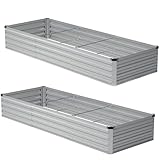
- Specialized in Garden Bed: Size:10x2x1ft.Ideal choice for your gardens,yards and patio to grow vegetables,flowers,fruits and other plants.
- Upgraded Structure and Extra Thickness: The garden bed is made of galvanized metal steel, which can be used for many years without getting rust and deformed.
- Open Bottom Design: The transparent structure at the bottom can prevent water accumulation and protect the roots of plants.At the same time,it can be planted in any position as needed.
- Four Plastic Caps: The garden bed come with 4 protective caps, which install in the 30 corners of the garden bed. Compared with the ordinary rectangular raised garden bed with none components, the caps can protect you from injuring and better looking!
- Quick Setup: With lesser screws and better structure, you just need few minutes to setup your new raised garden bed!
15. Scale the bed to your crops and budget
Reducing a bed’s length, width, or depth can cut siding and fill requirements. Choose dimensions only after accounting for access and root depth: many vegetables need about 10 inches of planting depth, while potatoes may require more, according to UGA DeKalb. A compact bed that suits your crops can be less costly to build and fill than a larger one that offers growing area you do not need.
Independent reader supportYour contribution helps us test, update, and keep practical guides available for everyone.Estimate the whole project, not just the frame
List the costs before choosing a design. Include the bed material, fasteners or supports, site preparation, fill, delivery, and any tools you do not already own. A low-cost frame can still become an expensive project if it is large or deep and needs substantial purchased soil.
- Frame: price all required boards, blocks, bricks, metal, or fabric supports at local suppliers.
- Fill: estimate volume from the bed’s dimensions and check whether suitable native soil can be amended with compost and some topsoil.
- Labor and access: account for moving heavy materials, leveling the base, cutting lumber, and reaching the bed comfortably.
- Durability: weigh likely replacement or repair needs against initial cost; material life varies with the material and site conditions.
- Local resources: check nearby extension or municipal programs, but verify availability. UGA’s article mentions free compost at specified DeKalb County locations, a local offering that may change.
The same UGA DeKalb article says, “The cheapest ones are often recycled,” referring to raised-bed siding in its local context. It is a useful reminder to look at suitable materials on hand, not a promise that recycled materials are cheapest everywhere. The article also lists routine soil tests at $10 per sample through the cited DeKalb County Extension office in 2025; confirm current local fees before relying on that figure.
Recommended Free Tools
Choose the build that fits your garden
Start with your site, crop depth, and comfortable reach, then compare local costs for the complete project. Reuse suitable materials where their history is known, avoid materials specifically cautioned against for food gardens, and leave room in the budget for fill and delivery. The most economical bed is the one that meets your growing needs without paying for excess structure or soil.
Quick Recap
Product prices and availability are accurate as of the date/time indicated and are subject to change. Any price and availability information displayed on Amazon at the time of purchase will apply.

