Recommended Free Tools
The best climber is one that suits both your climate and its support: clematis needs narrow wires or mesh to grip, twining vines need slender supports, and climbing roses must be tied in. For a sunny pergola or a wooden fence, compare mature size and pruning needs before choosing—and check local invasive-plant guidance. No single plant is a reliable fit for every region.
How to choose a climber for a fence or pergola
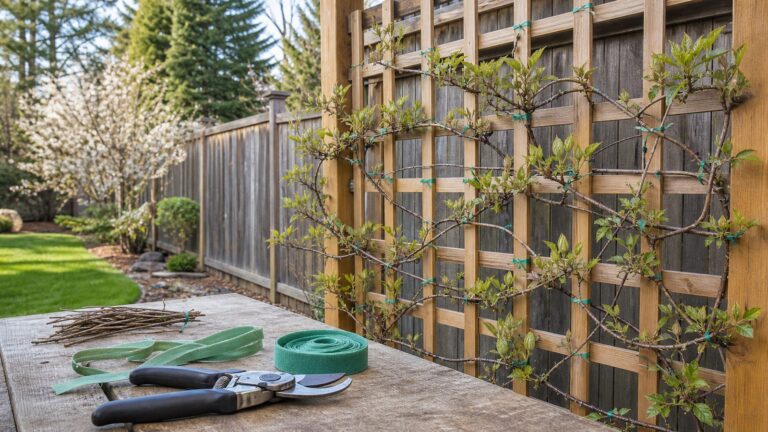
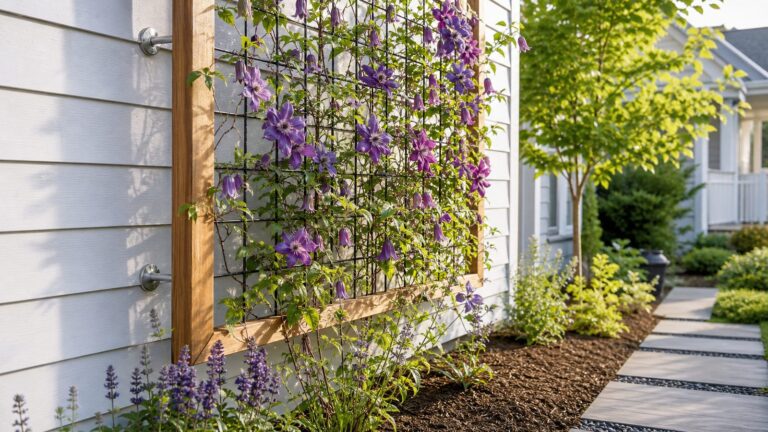
Start with the structure, then match the plant’s climbing method to it. A solid fence does not give every vine something to grab: clematis leaf stalks wrap around narrow objects, while twining vines also need slender supports. Add wires or mesh anchored slightly away from the fence so shoots can reach and grow around them. The University of Maryland Extension describes this approach in its Vining plants response.
As an Amazon Associate I earn from qualifying purchases.
For a pergola, check that posts and beams can bear the plant’s eventual weight. Vigorous woody vines can become heavy and difficult to manage; North Carolina State University Extension warns that Asian wisterias can strain pergolas and damage nearby building features. On pillars, the Royal Horticultural Society recommends vertical wires or mesh and tying in shoots as they grow. Training them straight up helps cover the canopy faster; spiralling them around posts helps cover the pillars.
- Check your conditions: Match the plant to your regional climate, sun exposure, soil drainage and available space.
- Check the mature scale: A plant that fits a small fence panel may overwhelm a pergola or spread beyond its intended area.
- Check local guidance: Invasive status and suitability vary by region. Consult a local extension service or invasive-plant list before buying.
- Plan for upkeep: Young vines need watering in summer, and many need shoots guided or tied to their support. Pruning timing depends on the plant.
- Consider pets and children: Some entries below have toxicity cautions. Do not assume an unmentioned plant is safe.
Which flowering vine can cover a fence without taking over?
There is no universally non-invasive flowering vine: local climate and plant guidance matter. Coral honeysuckle and appropriately sized clematis are options to investigate, but their growth and regional suitability still need checking. For a wooden fence, install wires or mesh first; both clematis and twining honeysuckle need slender supports rather than a bare, solid surface.
#1 Best Overall
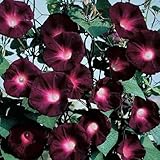
- Grow vibrant and captivating morning glory plants with our premium morning glory seeds.
- These Non GMO seeds are perfect for enhancing your butterfly garden or honey bee garden with beautiful blooms in shades of purple, pink, blue, and white.
- Whether you're planting for a cottage garden look or adding charm to your trellis, these flower seeds are perfect for any gardening enthusiast.
1. Clematis cultivars
Botanical group: Clematis cultivars. Climbing method: Leaf stalks wrap around slender objects. Support: Wires, mesh or another narrow-lattice support secured to the fence or pergola. Scale and care: Mature size and bloom season vary by cultivar; the University of Maryland Extension says many market varieties reach roughly 8–12 feet, but that is not a rule for every clematis. Choose a cultivar by its stated ultimate height and prune according to its type. Interest: Flowers, with timing dependent on cultivar. Regional check: Check the specific cultivar locally; do not treat the genus as uniformly manageable or invasive. Sweet Autumn Clematis is a notable exception discussed below. Safety: No general pet-safety claim is established here.
2. Italian clematis (Clematis viticella)
Climbing method: Leaf stalks wrap around slender supports. Support: Wires or mesh on a fence, or a suitable pergola lattice. Scale: North Carolina State University Extension gives a mature height of 10–15 feet and width of 3–5 feet. Light and soil: Full sun with shaded roots; moist, well-drained soil. Interest: Flowers from summer into fall. Pruning: It blooms on new wood, so the NCSU account recommends hard pruning to about one foot in late winter or early spring. Regional check and safety: Confirm local suitability; NCSU flags poisonous characteristics, so consult an authoritative plant-toxicity source or veterinarian about exposure risk.
3. Coral or trumpet honeysuckle (Lonicera sempervirens)
Climbing method: Twining stems. Support: Slender wires, mesh or pergola lattice; provide something shoots can wind around. Scale and care: Confirm mature size for the variety and region, and guide young stems onto the support. Light, soil and pruning: Check regional growing guidance for the chosen plant; the cited extension responses do not establish a universal light, soil or pruning prescription. Interest: Coral trumpet-shaped flowers; extension responses identify it as an eastern North American native option with hummingbird appeal. Regional check: Native status and suitability are not universal—verify locally. Safety: No pet-safety claim is established here.
Do these 3 things before closing this tab:
1Fix the driver behind crashes, sound loss and screen glitches2Repair Windows errors before they cause bigger problems3Scan for outdated or missing drivers - takes under a minute4. Climbing roses
Botanical group: Climbing rose varieties. Climbing method: Roses scramble; they do not wrap themselves around a support. Support: A sturdy fence or pergola with shoots tied in as they grow. Scale and care: Mature size, flowering pattern and pruning needs depend on the variety; choose for the structure and keep ties and pruning in your maintenance plan. Interest: Flowers, with characteristics depending on the cultivar. Regional check: Check local hardiness and disease guidance. Safety: Thorniness varies. The Maryland Extension response names Rosa banksiae and ‘Zephirine Drouhin’ as examples of essentially thornless roses; verify the selected plant before placing it beside a path or play area.
Rank #2
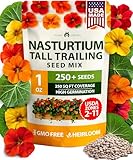
- TOP-RATED TALL TRAILING MIX: Experience a versatile and original decorative mix of Nasturtiums. These high-ranking trailing vines are designed to create a "wow" factor for every garden visitor. A stunning blend of beauty and vigorous growth.
- 250 PREMIUM HEIRLOOM SEEDS: This packet contains 250 fresh, Non-GMO, open-pollinated American seeds. With a high germination standard, these premium seeds offer a beautiful variety of climbing plants that are unparalleled in quality and freshness.
- ULTRA-MODERN GARDEN MASTERPIECE: This energetic variety quickly fills your garden with exotic, colorful blooms. Enjoy a mix of single, double, and ruffled flowers in a breathtaking range of saturated tones—from delicate creams to fiery oranges and scarlet reds.
- BEST MIXED VINE DISPLAY: Admire the power and speed of these growing shoots. Brilliant flowers stand out against a mass of unique ivy-shaped emerald leaves. The sprawling vines grow from 6 to 10 feet, creating a colorful kaleidoscope of lush umbrella-like foliage.
- CONTINUOUS CASCADING BLOOMS: Once it starts, this carefree Nasturtium blooms continuously. The thick carpet of shield-shaped leaves and cascading flowers offers a perfect combination of elegant style and vibrant colors for a flawless garden look.
5. Virginia creeper (Parthenocissus quinquefolia)
Climbing method: Adhesive pads allow it to cling to surfaces. Support: It can attach on its own, but avoid directing it onto surfaces where that attachment or its mature spread would be unwanted. Scale and care: It matures large; it can be cut back, so allow for regular control where space is limited. Light, soil and pruning: Check regional advice for your site; the cited sources do not establish one universal prescription. Interest: Autumn foliage. Regional check: Confirm suitability and local status before planting. Safety: No specific pet caveat is established in the cited material.
6. Passionflower vine
Botanical group: Passionflower vines. Climbing method and support: Check the selected species’ growing instructions and provide a compatible support. Scale and care: The Michigan pergola response says it may grow there but can die back in a hard winter; fruit is uncertain in that setting. Interest: Ornamental flowers are the main draw in that regional example. Light, soil, pruning and regional check: Verify the particular species’ requirements for your climate rather than transferring the Michigan observation elsewhere. Safety: No pet-safety claim is established here.
Which flowering vine suits a sunny pergola?
For a sunny pergola, choose by the strength and size of the structure as well as by flowers. Italian clematis is one documented option for full sun with shaded roots and well-drained soil, provided it has narrow supports and receives its scheduled hard pruning. Wisteria may suit only a sufficiently strong structure and a gardener prepared for its vigor. Whatever you plant, add vertical wires or mesh to pillars and tie shoots in as they grow.
The Tool Desk
Outbyte PC Repair FREEClear out junk files and repair common Windows errorsFree Scan →Outbyte Driver Updater FREEScan for outdated or missing drivers - takes under a minuteDriver Scan →7. American wisteria (Wisteria frutescens)
Climbing method: Twining stems. Support: A substantial pergola or other strong structure; install slender elements for the vine to twine around. Scale and care: Wisteria needs room and training. NCSU describes American wisteria as less aggressive and requiring less pruning than Asian wisterias, but it still requires a structure suited to a vigorous woody vine. Light, soil and pruning: Follow regional guidance for the species and site; no universal schedule is established here. Interest: Flowers. Regional check: Check local suitability before planting. Safety: NCSU notes wisteria toxicity concerns for dogs, cats and horses.
Rank #3
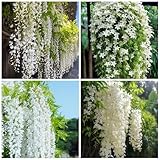
- Jasmine seeds for planting, suitable for home gardens to grow perennial garden plants bonsai.
- Planting method: After soaking the seeds for 4 hours, sow the seeds into the soil. Keep the soil moist and cover it with vegetation ash to increase nutrients. Water with a watering can or garden hose to saturate the soil without flooding it.
- Long flowering period: Gardenias have a fairly long flowering period, starting in July and lasting until the last few days of October. If the flower is well cared for, buds will appear on its buds and a large number of flowers will bloom.
- Fragrance: Jasmine has a light fragrance, white romantic flowers, your garden will be the center of attention. Jasmine plants typically grow as sprawling vines that are trained to climb, or are pruned into neat, beautiful mounds of leaves.
- USES: Flowers are long-lasting and fragrant. Garden decoration, flowers are a favorite at weddings and used in bridal bouquets, boutonnieres and centerpieces. Water with a watering can or garden hose to saturate the soil without flooding it.
8. Annual climbers for one-season coverage
Annuals can provide seasonal screening without committing to a long-lived woody vine, but the listed candidates are not interchangeable and still require suitable supports. The Michigan extension response lists the following possibilities for its setting; check seed-specific instructions and local suitability before planting.
- Moonflower: Annual option; verify local growing instructions and support needs.
- Hyacinth bean: Annual option; verify local growing instructions and support needs.
- Scarlet runner bean: Annual option; verify local growing instructions and support needs.
- Mina lobata: Annual option; verify local growing instructions and support needs.
- Black-eyed Susan vine: Annual option; verify local growing instructions and support needs.
- Pole beans: Annual option; use instructions for the selected seed and support.
- Gourds: Annual option; verify the selected type’s growing instructions and provide an appropriate structure.
Vines to treat with caution
9. Sweet Autumn Clematis (Clematis terniflora)
This is a caution, not a recommended fence or pergola choice. NCSU describes it as an aggressive, self-seeding vine that can reach 15–30 feet high and wide, invade natural areas and is not recommended for gardens. Maryland Extension also warns against it as invasive or overly vigorous. Do not infer that other clematis cultivars share these traits; check local invasive-plant guidance for this species.
10. Asian wisterias (Wisteria sinensis and W. floribunda)
These species are attractive but demanding choices, not carefree pergola plants. NCSU warns that they can become aggressive, escape cultivation, outcompete host trees, grow heavy enough to strain pergolas and damage building features. If considering either, verify local status and whether the structure can support a vigorous woody vine. NCSU also notes toxicity concerns for wisteria to dogs, cats and horses.
Free tools Windows power users keep installed
One-click scans. No signup required.
11. Japanese honeysuckle
The Michigan extension response advises against Japanese honeysuckle in its setting because of invasiveness or excessive spread. That is a regional caution, not a universal assessment for every location; consult local invasive-plant guidance before considering it.
Rank #4

- Colorful - Thunbergia alata (Black Eyed Susan Vine) produces 1.5 inch blooms in shades of yellow and orange.
- Natural Privacy - Grow a natural privacy fence with vines and climbers. Thunbergia will grow up to 20 feet in length and produce a lot of green foliage with colorful blooms. This can create natural privacy.
- Annual Flowers - Grown as an annual flower, Thunbergia will develop quickly from seed, bloom through the Summer months, and later wilt with the first frost. Collecting seeds from spent blooms is possible.
- Butterfly Garden - Like many flowering plants, Black Eyed Susan vines will attract all sorts of beneficial pollinators to the garden, such as bumblebees, honeybees, ladybugs and butterflies.
- Freshness - All Thunbergia seeds are packaged in tear resistant and moisture resistant packaging. This keeps the seeds a whole lot fresher than the competitions selection!
12. Trumpet vine
The Michigan response also advises against trumpet vine in its setting because of invasiveness or excessive spread. Check your region’s guidance rather than assuming the same status everywhere.
13. Chocolate vine
Chocolate vine is another plant the Michigan response advises against for its setting because of invasiveness or excessive spread. Verify local status before planting.
14. Morning glory
The Michigan response advises against morning glory in its setting due to invasiveness or excessive spread. The name can cover different plants; identify the exact species and check local guidance before buying seed or plants.
Outdated Drivers Are Slowing You Down
One free scan finds every outdated or missing driver and matches the right update for your exact hardware.Free scan · exact hardware matchWindows Errors? Fix Them Before They Spread
Repair common Windows errors and clear accumulated junk for a smoother, more stable PC - no reinstall needed.Free scan · no reinstall15. Other vigorous vines: judge by the exact plant
The fifteenth slot is not a blanket recommendation: the available sources do not establish another species with enough comparable detail to present it responsibly as a universal choice. Treat any additional candidate as a local decision—identify it to species or cultivar, confirm its mature size and climbing method, and check invasive status and toxicity guidance before planting.
Best Value

- Red Blooms - Cardinal Climber (Ipomoea x multifida) will produce 1.5 inch flowers, surrounded by lush green foliage. The blooms are trumpet shaped, much like Morning Glories.
- Annual Flowers - Cardinal Climbers will grow quickly from fresh seeds. They will start flowering in the Summer months until Fall. The foliage and blooms will wilt with the cooler weather.
- Natural Privacy - Vines & climbers can make for a great privacy fencing. Provide them with something to grow on and you will have lush green foliage in a matter of weeks. The vines grow very quickly.
- Butterfly Garden - Cardinal Climbers will attract all sorts of pollinators to the garden, such as butterflies, bumblebees, honeybees, lady bugs, and especially hummingbirds.
- Quality - All Cardinal Climber seeds packaged by Seed Needs are intended for the current and the following growing seasons. All seeds are stored in a temperature controlled facility that is free of significant amounts of moisture.
Setting up the support and maintaining the vine
On a solid fence
For clematis and other plants that wrap around slender supports, add wires or mesh rather than expecting shoots to grip bare boards. Maryland Extension suggests anchoring guy wires a little away from the fence surface. This leaves room for growth to reach and wind around the support.
On a pergola
Fit vertical wires or mesh up the pillars and tie shoots in as they grow. Train shoots vertically for quicker canopy coverage, or spiral them around posts when pillar coverage is the priority. The RHS notes that on larger pergolas, gardeners sometimes plant two climbers near each pillar—for example, a strong-growing climbing rose with a less vigorous clematis or honeysuckle, with the rose providing extra support. That combination requires enough room and ongoing training so one plant does not overwhelm the other.
Watering, soil and pruning
The RHS advises improving soil with garden compost or well-rotted manure, watering young climbers in summer, and renovating overgrown pergola plants in early spring. Treat this as general establishment and renovation guidance, not a substitute for species-specific pruning instructions. Italian clematis, for example, is pruned hard in late winter or early spring; other plants may need a different season or approach. Guide and tie new growth before it becomes tangled.
Quick Recap
Sources for checking plant-specific details
- University of Maryland Extension Home and Garden Information Center, “Vining plants,” answered March 17, 2026: https://ask.extension.org/kb/faq.php?id=926120
- Ask Extension, “Vining Plant for Pergola,” response by Lindsey K. Kerr, MS, MHP, July 15, 2025: https://ask.extension.org/kb/faq.php?id=909602
- Royal Horticultural Society, “Pergolas: Design and Garden Uses”: https://www.rhs.org.uk/garden-features/pergolas
- North Carolina State University Extension, “Wisteria”: https://plants.ces.ncsu.edu/plants/wisteria/
- North Carolina State University Extension, “Italian Clematis (Clematis viticella)”: https://plants.ces.ncsu.edu/plants/clematis-viticella/common-name/italian-clematis/
- North Carolina State University Extension, “Clematis terniflora”: https://plants.ces.ncsu.edu/plants/clematis-terniflora/
- UBC Botanical Garden, “Climbers”: https://botanicalgarden.ubc.ca/our-collections/climbers/
Product prices and availability are accurate as of the date/time indicated and are subject to change. Any price and availability information displayed on Amazon at the time of purchase will apply.