Choose a 12V drill for light assembly, shelf installation, small fasteners and work in confined spaces. Choose an 18V drill when you regularly drill larger holes, drive larger screws or work in tougher materials. Voltage is a useful starting point, not a complete performance rating. The exact model’s torque, chuck, speed range, battery and handling matter just as much.
For large-diameter holes or hard masonry such as concrete, brick or stone, neither voltage label should replace the correct tool: Bosch DIY recommends an SDS drill for those jobs.
As an Amazon Associate I earn from qualifying purchases.
What the 12V and 18V labels actually tell you
A cordless drill’s voltage describes the battery system’s nominal electrical class. In broad product categories, a higher-voltage platform gives manufacturers more headroom for torque and sustained drilling, while a lower-voltage platform can be made smaller and lighter. That is why 12V tools are commonly aimed at installation and assembly, and 18V tools at heavier drilling and construction work.
Voltage does not, by itself, tell you the drill’s maximum torque, no-load speed, clutch range, gearbox design, battery capacity or weight. Two drills with the same voltage can feel and perform very differently. Treat the label as a screening tool, then verify the specifications for the actual model you plan to buy.
#1 Best Overall
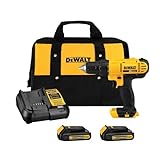
- Lightweight design fits into tight areas
- High performance motor delivers 300 unit watts out (UWO) of power ability completing a wide range of applications
- High speed transmission delivers two speeds (0-450 & 1,500 rpm) for a range of fastening and drilling applications
- 1/2' single sleeve ratcheting chuck provides tight bit gripping strength. Ergonomic handle delivers comfort and control
Bosch’s current US professional category describes 12V Max drills as compact and lightweight for furniture assembly, shelf installation and confined spaces, while it positions 18V models for higher power and more demanding drilling, construction and carpentry work. That is manufacturer guidance rather than an independent matched-model test. See Bosch’s professional drill and driver range.
12V vs. 18V at a glance
| Decision factor | 12V class | 18V class |
|---|---|---|
| Best fit | Light assembly, cabinetry, shelving, trim and confined spaces | Larger fasteners, larger holes, construction and tougher drilling |
| Handling | Usually the more compact option; still assess the complete tool with its battery | Often more powerful but potentially bulkier; battery size can materially change balance |
| Chuck examples | Product lines may include 1/4-inch hex or 3/8-inch chucks | Product lines may include 1/2-inch chucks |
| Bosch example screw range | Up to 6 mm on the cited DIY example | Up to 10 mm on the cited DIY example |
| Bosch example drilling range | Up to 20 mm on the cited DIY example | Up to 40 mm on the cited DIY example |
| Battery compatibility | Within the manufacturer’s specified 12V platform only | Within the manufacturer’s specified 18V platform only |
| Hard masonry | Use the tool type recommended for the material and hole size; Bosch DIY points to SDS for larger holes and hard concrete, brick or stone | |
The screw and drilling figures in this table are Bosch DIY product-selection examples, not universal limits for every 12V or 18V drill. Read the Bosch DIY selection guidance before applying those numbers to a different model.
When a 12V drill is the better choice
Light assembly and installation
A 12V drill is well suited to assembling furniture, installing handles and hinges, fastening light-duty brackets, and drilling pilot holes in timber or sheet goods. The smaller body is easier to position accurately when the work is close to a wall, inside a cabinet or between joists.
Windows Errors? Fix Them Before They Spread
Repair common Windows errors and clear accumulated junk for a smoother, more stable PC - no reinstall needed.Free scan · no reinstallCrashes, No Sound, or Screen Glitches?
Random freezes, missing sound and display glitches usually trace back to one bad driver. Find and replace yours safely.Free scan · under a minuteFor repetitive fit-out work, reduced bulk can matter more than peak torque. A compact drill is easier to hold at shoulder height and less tiring when you are constantly switching between drilling and driving. It also leaves more room around the bit when access is restricted.
Small screws and holes
Bosch’s DIY examples describe a 12V drill/driver as sufficient for screws up to 6 mm and drilling up to 20 mm. Use those values as a starting point for that manufacturer’s tools, then check the model’s manual for the material, bit type and operating conditions. A large hole in soft timber is a different load from a small hole in hardwood or metal.
Confined or overhead work
Choose 12V when the drill must fit between studs, inside service cupboards or behind installed equipment. For overhead work, compare the complete tool with the battery attached. The lightest bare-tool specification can be misleading if the kit uses a large battery.
Rank #2

- Powerful 20 V Motor and 2 x 1.5 Ah Battery: Equipped with a robust 20 V motor and 2 Li-ion battery, this cordless drill delivers smooth power for various drilling and driving tasks;Its rechargeable battery ensures you're always ready for next project
- 2 Variable Speed Settings for Versatility: With two speed options (0-400, 0-1500 RPM ), this drill provides ultimate control over your applications; Perfect for both delicate tasks and heavy-duty jobs, you can easily adjust the speed to match your needs
- Robust 266 In-lb (30 N.m) Torque and 21+1 Settings: With a maximum torque of 266 In-lb (30 N.m) and 21+1 adjustable settings, this drill excels in precision and ease; It prevents over-tightening and protects your materials with its precise torque control
- Comprehensive 34-Piece Drill Kit: You’ll get a 20 V cordless drill with battery and charger, 4 wood bits, 4 twist bits, extension bar, flexible shaft, 10 short screwdriver bits, 10 long screwdriver bits, and a screw anchor set- all essentials in one set
- Effortless Precision with LED Illumination: Lightweight and user-friendly, this electric drill features an LED light to illuminate your workspace for precise drilling in dark or tight areas; Its effortless operation and intuitive controls make it perfect for both beginners and pros
When an 18V drill is worth the extra size
Larger fasteners and holes
An 18V drill is the safer category choice when your regular work includes structural screws, long timber fixings, larger pilot holes or hole saws. Bosch’s DIY examples place 18V tools at up to 10 mm screws and up to 40 mm drilling, subject to the specific product and material.
Higher voltage does not guarantee that every 18V drill can handle every large bit. Check the manufacturer’s maximum bit diameter, clutch settings, gearbox and duty guidance. A compact 18V model may be intended for lighter work than a full-size hammer drill on the same platform.
Construction and carpentry
Framing, decking, roof work and site carpentry often involve longer fasteners and repeated drilling. The additional power reserve of an 18V drill can reduce stalls and keep the tool working at a useful speed under load. It also gives you more flexibility if your tasks expand after purchase.
Torque figures need context
Bosch’s US professional category lists torque values in its range up to 1,330 in-lbs. That is the highest listed value among the products on that page, not a representative 18V specification or a direct comparison with a 12V model. Torque may be quoted as soft, hard or maximum torque, and test methods differ. Compare like-for-like figures from the exact models you are considering.
Match the drill to the workpiece and bit
Wood and sheet materials
For timber, choose a drill whose stated capacity covers the largest auger, spade or hole-saw size you will use. Start with a pilot hole for large fasteners, keep the bit aligned and clear chips regularly. A 12V drill can be entirely adequate for routine small holes; an 18V model is preferable when diameter, hardwood density or drilling frequency increases.
What’s actually slowing this PC down?
Pick the symptom - the matching free tool is one click away.
Metal
Metal drilling demands control as well as power. Use the correct cutting speed, cutting lubricant where appropriate and sharp bits. A drill with a stable low-speed setting and a clutch can be more useful than a higher headline voltage. Secure the workpiece, start with a pilot hole and avoid forcing the bit when it begins to bind.
Rank #3

- Ergonomically Designed: Work in tight areas with a compact design that gets into tough spots
- Both tools are designed to fit into difficult to reach spaces
- Complete a wide range of applications with a high-performance motor that delivers up to 300 UWO, and an impact driver delivering up to 1,400 in-lbs of torque
- Both the DEWALT impact driver and drill driver feature integrated LED work lights with a convenient 20-second delay, ensuring enhanced visibility in dimly lit or challenging work areas
- One-Handed Loading - Keep one hand free with a 1/4 in. hex chuck that accepts 1 in. bit tips
Masonry and concrete
A standard drill/driver is not automatically the right choice for masonry. Bosch DIY’s guidance lists example combi-drill rawl-plug holes up to 6 mm for a 12V example and up to 13 mm for an 18V example, then recommends an SDS drill for larger diameters and harder materials such as concrete, brick or stone. Check the material and hole-size guidance for the tool type you need.
If your work is mostly anchor holes in masonry, select a purpose-built hammer or SDS tool rather than buying an 18V drill solely for its voltage label. A combi drill may cover occasional small holes, but its capacity and impact mechanism are still model-specific.
Chuck type determines which bits you can use
Check the chuck before ordering accessories. Bosch lists 1/4-inch hex and 3/8-inch chucks among 12V Max products and 1/2-inch chucks among 18V products, but those are category examples rather than a rule for every tool.
The Tool Desk
Outbyte PC Repair FREERepair Windows errors before they cause bigger problemsFix Now →Outbyte Driver Updater FREEScan for outdated or missing drivers - takes under a minuteDriver Scan →| Chuck or holder | What it accepts | What to verify |
|---|---|---|
| 1/4-inch hex | Hex-shank driver bits and compatible hex drill bits | Whether your existing drill bits have a hex shank and whether keyless locking is provided |
| 3/8-inch chuck | A broad range of round- and hex-shank bits within the chuck’s stated capacity | Minimum and maximum clamping diameter |
| 1/2-inch chuck | Larger bit shanks and many high-load drilling accessories | Actual capacity, keyless or keyed design, and the drill’s maximum bit diameter |
A larger chuck does not automatically mean a stronger drill. It simply gives you a different accessory range. Confirm the chuck size and capacity on the exact product page, then buy a bit set rated for your work material and shank type.
Handling, balance and fatigue
Consumer Reports notes that 18- or 20-volt drills can offer more power but may be bulkier than 12-volt models, and recommends trying the drill with its battery installed. Use its cordless-drill buying guidance as a handling check, not as a substitute for the manufacturer’s specifications.
Hold each candidate in your normal working position and check:
Rank #4
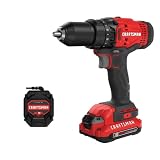
- 1/2inch Cordless drill/driver with high performance motor produces 280 unit watts out for completing a variety of applications
- 2speed gearbox with speeds of 0350/01, 500 for speed of fastening
- 1/2inches Keyless chuck for fast and easy bit changes
- Led light improves visibility in dark work areas
- Included 20V max Lithium battery with high performance cells provides ample runtime and increased performance
- Whether the grip allows your index finger to reach the trigger without stretching.
- Whether the battery causes the tool to tip forward or strike your wrist.
- Whether the clutch collar and speed selector can be changed while wearing the gloves you use on site.
- Whether the drill fits between the surfaces where you routinely work.
- Whether you can control the tool at low speed without excessive trigger sensitivity.
For a day of overhead installation, a compact 12V kit may reduce fatigue even if an 18V drill would complete each individual hole faster. For repeated large-diameter drilling, the opposite trade-off can apply: the heavier tool may save time and prevent stalls.
Battery capacity, runtime and platform choice
Why runtime cannot be inferred from voltage
No controlled, matched-model runtime figure establishes that 12V or 18V always lasts longer per charge. Runtime depends on the drill’s efficiency, battery amp-hour capacity, bit size, material, pressure, speed, temperature and the operator’s technique. Compare runtime only when the drills, batteries and test conditions are genuinely comparable.
A higher-voltage battery can store more energy, but a larger tool may also draw more power under load. Look for the battery’s amp-hour rating, charge time and the kit’s included batteries. If the listing gives only bare-tool weight, ask for the weight with the supplied battery attached.
Stay inside one manufacturer’s rules
Battery rails and electronics are platform-specific. Bosch Professional states that its 12V and 18V tools use batteries and chargers within the same voltage class in that system. See Bosch Professional’s compatibility statement. Do not generalize that rule to other manufacturers, even when the voltage number looks similar.
If you already own cordless tools, list the exact platform, voltage class and battery connector before choosing the drill. Staying on that platform can reduce the number of chargers and spare batteries you need, but only when the manufacturer explicitly confirms compatibility.
Do these 3 things before closing this tab:
1Repair Windows errors before they cause bigger problems2Fix the driver behind crashes, sound loss and screen glitches3Clear out junk files and repair common Windows errorsA practical decision process
- List your largest regular task. Write down the largest screw, hole diameter and material you expect to handle every month, not an exceptional job you will do once.
- Separate drilling from masonry work. If the job involves frequent hard concrete, brick or stone drilling, evaluate an SDS tool before choosing between 12V and 18V.
- Check the chuck. Match the holder to your existing bits and confirm its stated capacity.
- Set a handling priority. If you spend long periods overhead or in cabinets, place battery-installed weight and balance near the top of the list.
- Compare exact torque and speed data. Use the same measurement type across models; do not compare a maximum figure with a soft-torque figure.
- Confirm battery compatibility. Verify the manufacturer’s platform rules and whether the kit includes a battery and charger.
- Choose the smallest tool that covers your real workload. Select 12V when it covers your regular tasks comfortably; move to 18V when the 12V limits would be encountered routinely.
Buying checklist for a construction crew or serious DIY user
- Exact voltage class and tool type: drill/driver, combi drill, hammer drill or SDS.
- Maximum torque, with the manufacturer’s definition of the figure.
- Two-speed gearbox and useful low-speed range.
- Clutch settings for repeatable screw depth.
- Chuck or holder type and maximum shank diameter.
- Manufacturer-stated maximum bit sizes in wood, metal and masonry.
- Tool weight with the battery installed, not just bare-tool weight.
- Battery amp-hour capacity, charging time and number of batteries in the kit.
- Compatibility with batteries and chargers you already own.
- Availability of replacement batteries, chargers and service for the platform.
- Grip, trigger and control layout while wearing your normal gloves.
- Protection features such as an electronic brake, overload control and a side handle where the model provides them.
Common mistakes and how to avoid them
Buying by voltage alone
An 18V label cannot tell you whether a drill has the chuck, bit capacity or ergonomics you need. Read the complete specification and compare the actual model with the task list.
Best Value

- Brushless motor delivers more run time over brushed
- Lightweight design fits into tight areas
- Ergonomic comfort grip handle provides ideal balance and tool control
- LED light with 20-second trigger release delay provides increased visibility in dimly lit spaces
- 3 Year Limited Warranty
Assuming a bigger battery is always better
A high-capacity battery can extend working time, but it adds weight and may change balance. For repetitive installation, a smaller battery may be easier to control; for heavy drilling, the additional capacity may be worthwhile. Choose based on the work cycle rather than the largest number on the battery.
Using the wrong chuck or bit
Forcing a round-shank bit into a hex-only holder, or using a bit larger than the chuck and drill are rated for, can cause slipping, overheating or loss of control. Confirm the holder before buying an accessory set.
Expecting a drill/driver to replace an SDS drill
Occasional small anchor holes may fall within a combi drill’s stated range, but larger diameters and hard masonry require the impact mechanism and tooling intended for that work. Follow the manufacturer’s material and diameter guidance.
Comparing unqualified torque numbers
Maximum torque values are not automatically comparable. Check whether each manufacturer reports hard, soft or maximum torque and whether the test conditions are stated.
Bottom-line recommendation by job type
| Your normal work | Starting point | Why |
|---|---|---|
| Furniture, cabinets, shelving and light fixtures | 12V drill/driver | Compact handling and adequate capacity for light fasteners and holes |
| Trim, service work and confined installation | 12V, unless your fasteners or holes exceed its ratings | Smaller form factor can improve access and reduce fatigue |
| Framing, decking, carpentry and larger fixings | 18V drill/driver | More power headroom and broader capacity for demanding work |
| Frequent large holes in timber or metal | 18V model selected by its bit and torque ratings | Voltage helps, but the exact capacity and gearbox decide suitability |
| Regular hard concrete, brick or stone drilling | SDS drill matched to hole size | Tool type and impact system matter more than choosing 12V versus 18V |
If your work spans both light installation and heavy drilling, owning one compact 12V drill and one capable 18V or SDS tool can be more practical than forcing one drill to cover incompatible jobs. If you can buy only one, choose the platform that covers your largest routine task while remaining comfortable for the smallest work you do.
Quick Recap
Product prices and availability are accurate as of the date/time indicated and are subject to change. Any price and availability information displayed on Amazon at the time of purchase will apply.

