Free tools Windows power users keep installed
One-click scans. No signup required.
Some links on this page are affiliate links: if you buy through them we may earn a commission, at no extra cost to you.
The fastest way to keep winter heat indoors is to stop uncontrolled air movement before adding insulation. Start with a smoke or incense draft check, then match the repair to the joint: caulk for fixed cracks, weatherstripping for moving windows and doors, and low-expansion foam or approved gap filler for larger penetrations. Seal the attic hatch, door bottoms, outlets, and utility openings, while preserving required combustion and ventilation air. The Australian Government, citing CSIRO (2015), says draught proofing can reduce heat loss by 15% to 25% in some homes; actual savings depend on climate, construction, and how leaky the house is.
How do I find where my house is losing heat?
Locate leaks before buying materials. A smoke pencil or incense stick makes moving air visible at many joints, and a professional air-leakage analysis can help when the source remains unclear.
As an Amazon Associate I earn from qualifying purchases.
- Close exterior windows and doors, and turn off anything that changes indoor pressure, such as exhaust fans.
- Move the smoke slowly around window and door edges, baseboards, floor-to-wall joints, electrical outlets, plumbing and wiring penetrations, vents, and the attic access.
- Mark places where the smoke plume bends or is pulled through a gap. Check both the warm and cold sides of the building envelope where accessible.
- Prioritize the largest or most numerous leaks, especially at the top and bottom of the house.
Bonneville Power Administration (BPA) notes that air leakage and improperly installed insulation can waste 20% or more of heating or cooling energy in some homes. That is a statement about possible waste, not a universal household average.
Which sealant should I use for each gap?
Choose by whether the joint moves and by the size of the opening. Using the wrong product can leave a gap, restrict a door or window, or create a safety hazard.
Popular on Amazon
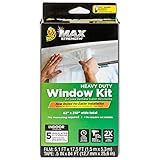
- Save on energy costs during cold weather months. Duck Max Strength shrink window film is puncture-resistant and two times thicker than standard window kits to create an airtight seal inside your home to block drafts and cold weather
- Easy-to-install roll of shrink film means no measuring needed - once applied, cut film to size
- Tools needed: scissors and hair dryer. For best results apply window films indoors on clean and dry surfaces, including painted or finished wood, aluminum or vinyl
- After installation, crystal clear and transparent window film is easy to see through. Once season is over, the window kit removes easily
- Window Kit includes 1, 62" x 210" roll of shrink film and 1, 0.5" x 84' foot roll of tape; Can insulate up to 5 standard sized 3' x 5' windows
| Location or joint | Suitable first choice | Key limitation |
|---|---|---|
| Fixed crack at a frame, trim, baseboard, or floor joint | Interior or exterior caulk rated for the material | Cannot accommodate regular movement |
| Operable window or door jamb | Flexible foam, V-strip, tubular, or compression weatherstripping | Must compress without preventing operation or latching |
| Large hole around pipes, wires, ducts, or vents | Low-expansion spray foam or approved gap filler | Follow the label; keep foam away from heat sources |
| Door bottom | Screw-on sweep or removable draft stopper | Must clear the threshold and floor covering |
| Attic hatch perimeter | Weatherstripping plus a rigid, insulated hatch or dam | Hatch needs a latch or other positive closure |
How do I seal stationary cracks with caulk?
Caulk is for interfaces that do not move against each other. Apply it around fixed window and door frames, trim, baseboards, and floor-to-wall joints after removing loose material and ensuring the surface is clean and dry.
Cut the nozzle to a bead size that matches the gap, tool the bead so it contacts both sides, and allow the product to cure as directed. Use an exterior-rated formulation where it will face weather. The U.S. Department of Energy describes caulking and weatherstripping as quick-return air-sealing measures that often pay for themselves in one year or less, although payback varies by home and energy prices.
How do I weatherstrip windows that open?
Weatherstripping must flex as a sash moves. Select foam, V-strip, tubular, or compression material according to the gap, expected durability, and cold-weather flexibility.
- Clean the contact surfaces and measure the perimeter of the moving sash.
- Choose a profile that closes the gap without binding the sash.
- Install it continuously along the meeting rails and jambs, following the product’s orientation instructions.
- Open and close the window several times. If it sticks, does not latch, or leaves a visible gap, refit the strip rather than forcing the hardware.
How do I stop drafts around exterior door jambs?
Fit a continuous seal along the head and both jambs so the closed door compresses it evenly. Replace hardened, split, or permanently flattened material. A seal that keeps the door from latching is fitted incorrectly; adjust the profile or position until the latch engages without excessive force.
Also popular on Amazon

- Save on energy costs during cold weather months. Duck Max Strength shrink window film is puncture-resistant and two times thicker than standard window kits to create an airtight seal inside your home to block drafts and cold weather
- Easy-to-install roll of shrink film means no measuring needed - once applied, cut film to size
- Tools needed: scissors and hair dryer. For best results apply window films indoors on clean and dry surfaces, including painted or finished wood, aluminum or vinyl
- After installation, crystal clear and transparent window film is easy to see through. Once season is over, the window kit removes easily
- Window Kit includes 2, 62" x 210" roll of shrink film and 2, 0.5" x 54' foot rolls of tape; Can insulate up to 10 standard sized 3' x 5' windows
What is the cheapest way to stop cold air under a door?
A door sweep or draft stopper is usually the simplest low-cost fix for an exterior door bottom. Screw a sweep to the door so its flexible edge seals against the threshold, or use a removable stopper when you need a seasonal, no-drill option. BPA says sweeps provide a tight seal against drafts, cold, and moisture. Check that the door still swings freely and that the sweep does not drag heavily on the floor.
Do window film and thermal curtains really help?
They can reduce heat transfer at glass as inexpensive, reversible measures, particularly when replacing windows is not practical. Heat-shrink film kits create a temporary interior air layer; thermal curtains or blinds add a reusable insulating layer.
Recommended Free Tools
Removable film
Apply it to a clean, dry frame and shrink it evenly with warm air. Film is seasonal and must be removed or replaced if it loosens, clouds, or traps moisture.
Thermal coverings
Close curtains or blinds after sunset and open them for useful winter sun when practical. Keep coverings clear of heaters and combustion appliances, and leave enough clearance for safe operation.
Also popular on Amazon

- Designed for interior use on windows
- Accommodates up to 4 standard sized windows
- Shrinks with hair dryer and applies with included double-faced tape
- Each sheet measures 62 in. L x 42 in. W
- Helps R-value increase up to 90%
Can outlet gaskets reduce drafts?
Yes. Receptacles and switches on exterior walls can leak into wall cavities. Turn off power at the circuit breaker, verify the circuit is de-energized, and install foam sealing gaskets behind the cover plates. Do not use a gasket to correct loose wiring or damaged boxes; those conditions require an electrician.
How should I seal plumbing, wiring, and duct penetrations?
Use caulk for small, stationary gaps and low-expansion foam or an approved gap filler for larger openings where pipes, cables, ducts, and vents cross the building envelope. Read the label for compatible materials and curing conditions, and keep foam away from hot surfaces, flues, and other heat sources. Around rated assemblies, use only products approved for that application.
How do I stop leaks at an attic hatch or pull-down stairs?
An attic access is a large opening in the ceiling plane. A tight, insulated hatch limits both air movement and heat loss.
- Build or retain a rigid dam around the opening so loose-fill insulation cannot fall into the stair cavity.
- Attach insulation to the hatch or use an insulated hatch assembly appropriate to its weight.
- Apply continuous weatherstripping around the perimeter.
- Add a latch or other positive closure so the gasket compresses uniformly.
- Check the closed hatch with a smoke pencil; correct visible bypasses before covering the area with insulation.
Should I air-seal before adding attic insulation?
Yes. Seal bypasses first, then insulate. Otherwise insulation can hide leaks at top plates, dropped soffits, recessed-light perimeters, rim joists, and other ceiling penetrations, making them difficult to find and leaving warm air routes intact.
Also popular on Amazon

- Save on energy costs during cold weather months. This rolled window kit creates an airtight seal inside your home to block drafts and cold weather
- Easy-to-install roll of shrink film means no measuring needed - once applied, cut film to size
- Tools needed: scissors and hair dryer. For best results apply window films indoors on clean and dry surfaces, including painted or finished wood, aluminum or vinyl
- After installation, crystal clear and transparent window film is easy to see through. Once season is over, the window kit removes easily
- Window Kit includes 3, 62" x 210" rolls of shrink film and 3, 0.5" x 54' foot rolls of tape; Can insulate up to 15 standard sized 3' x 5' windows
The Department of Energy and BPA treat air sealing and insulation as complementary envelope measures. More insulation does not compensate for a large open bypass. Plan the work so insulation remains clear of fixtures and access paths that require service.
How do I seal vents, flues, and recessed lights safely?
Air sealing must not remove air needed for combustion or required ventilation. Use backflow-preventing dampers on exhaust fans where appropriate, and use high-temperature caulk only where a rated product is suitable around chimneys or flues.
What’s actually slowing this PC down?
Pick the symptom - the matching free tool is one click away.
- Do not seal or block a combustion-air opening required by an appliance or local code.
- Keep insulation and foam outside the clearance zones specified for chimneys, flues, and recessed lights.
- Use recessed-light enclosures and sealants that match the fixture’s rating and clearance requirements.
- If you cannot identify an appliance’s air-supply or clearance requirements, stop and consult a qualified contractor.
What equipment upgrades complement air sealing?
Two small maintenance tasks can reduce related losses but do not replace envelope work. An eligible uninsulated storage water heater may benefit from an insulation blanket installed according to the manufacturer’s safety instructions. Replace furnace filters on the schedule specified by the manufacturer; a clogged filter increases resistance and can impair equipment performance.
Independent reader supportYour contribution helps us test, update, and keep practical guides available for everyone.Which winter sealing projects should I do first?
Use a staged approach that starts with inexpensive, obvious leaks and escalates to work requiring access, diagnostics, or safety expertise.
Also popular on Amazon
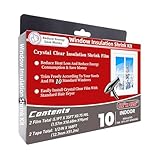
- Window insulation kit Contains 62"x 420" Of Window Clear Shrink Film And 1/2 Inch By 168 Feet Roll of Double Sided Tape
- Clear Insulation Shrink Film To Keep Out The Wind And Cold, Dust Prevention
- By Insulating Your Window Save Energy Costs And Reduce Heat Loss
- Crystal Clear Shrink Film Without Blocking Sunlight
- Easy And Quick Installation
- Audit: map leaks with smoke or incense and inspect the attic hatch, door bottoms, outlets, and utility penetrations.
- Low-cost fixes: install door sweeps, outlet gaskets, temporary film, and draft stoppers.
- Durable joint repairs: caulk fixed cracks and weatherstrip windows and door jambs.
- Penetration repairs: use suitable gap filler around plumbing, wiring, ducts, and vents.
- Top-of-house work: air-seal bypasses and improve the attic hatch before adding insulation.
- Professional review: hire a trained contractor for whole-home leakage analysis, difficult attic or wall access, combustion safety, or work around rated assemblies.
Natural Resources Canada calls air-leakage control the single most important retrofit activity and says it should be considered first in an upgrade strategy. Rebates and audit programs differ by location, so check your utility or government program before committing to a larger project.
Frequently Asked Questions
How can I tell whether a draft is from the window or the wall cavity?
Test with the window fully closed, then repeat with the trim edge and nearby outlet checked separately. Smoke that moves at the sash meeting rail points to weatherstripping; movement at trim, an outlet, or a baseboard points to a stationary or concealed bypass.
Is expanding foam safe around every pipe and cable?
No. Foam products differ in expansion, temperature rating, and approved uses. Use low-expansion foam only where the label permits it, keep it away from heat sources, and use a rated material where the penetration is part of a fire- or smoke-resistance assembly.
Why did sealing drafts make my home feel stuffy?
Sealing reduces uncontrolled fresh-air entry. Continue using designed ventilation, and have combustion appliances checked if symptoms such as backdrafting, unusual odors, or carbon-monoxide alarms occur. Never block a required combustion-air opening to solve a comfort problem.
When is a professional energy audit worth paying for?
Consider one when smoke testing cannot identify the source, rooms remain cold after obvious repairs, or attic, wall, and appliance interactions are involved. A professional can diagnose distributed leakage and address combustion-safety issues that are not suitable for routine DIY sealing.
Quick Recap
Product prices and availability are accurate as of the date/time indicated and are subject to change. Any price and availability information displayed on Amazon at the time of purchase will apply.

