For most gardeners, the appeal of hostas is their foliage—not their flowers. The genus includes compact plants for containers and edging, as well as giant specimens that can anchor a shady border. Their leaves may be blue-green, gold, chartreuse, white-centered, white-margined, or a combination of several colors.
Hosta color is seasonal rather than permanently fixed. A blue hosta gets its cool appearance from a waxy coating on the leaf surface, and that effect can soften as the season progresses. Variegated hostas may also open with bright spring coloring before becoming greener, creamier, or paler in summer. The 12 cultivars below are organized by their most useful foliage characteristics, with size and placement included so you can choose a plant that fits your garden rather than simply choosing the brightest photograph.
As an Amazon Associate I earn from qualifying purchases.
Quick comparison: 12 colorful hostas
| Hosta | Primary foliage color | Size category | Good use |
|---|---|---|---|
| ‘June’ | Blue-green leaves with chartreuse to light-green centers | Medium | Two-tone shade borders |
| ‘Halcyon’ | Blue-green | Medium | Cool-colored groupings |
| ‘Blue Mouse Ears’ | Rounded blue-green | Small | Containers, edging, and front borders |
| ‘Sum and Substance’ | Glossy golden-green | Giant | Large specimen plantings |
| ‘Gold Standard’ | Yellow center with green margins | Large | Brightening a shade border |
| ‘Guacamole’ | Chartreuse-gold center with green margins | Large | Contrasting with blue hostas and ferns |
| ‘Fire and Ice’ | White center with dark-green margins | Medium | High-contrast foliage displays |
| ‘Patriot’ | Green leaves with white margins | Medium | Bright edges in darker plantings |
| ‘Orange Marmalade’ | Golden-tangerine center with green margins, fading lighter | Medium | Seasonal warm color |
| ‘Fire Island’ | Yellow to chartreuse | Medium | Warm accents and mixed hosta groups |
| ‘Ripple Effect’ | Blue-green with golden-yellow center | Medium | Mixed cool-and-warm plantings |
| ‘Twist of Lime’ | Yellow-gold with thin green margins | Small | Containers and narrow borders |
Size labels are practical categories rather than a substitute for the nursery’s mature-width information. Cultivars can vary by growing conditions, and a large or giant hosta may eventually crowd a path, tree base, or neighboring perennial.
Free tools Windows power users keep installed
One-click scans. No signup required.
12 colorful hosta types to consider
1. Hosta ‘June’
‘June’ is a refined choice for gardeners who want color without an overly loud pattern. Its blue-green leaves carry lighter green to chartreuse centers, creating a cool outer frame around a warm middle. The two-tone effect is particularly useful in a shade bed that already contains solid green foliage.
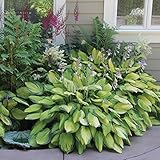
#1 Best Overall

- SHADE PLANTS: Hosta 'So Sweet' is a wonderfully fragrant hosta, hence its name. It is a rapid grower with very shiny, dark green leaves and yellow margins in Spring.
- GROWTH: This hosta grows to be about 12 inches tall and 22 inches wide.
- CARE: All hostas need some shade and few, if any, will do well in strong direct sunlight. Water regularly. They will fully mature in four to eight years. For the best care of hostas, plant them in rich organic soil with a slightly acidic pH.
- FUN FACT: Hosta, also known as plantain lily, is a genus of about 40 plants native to Eastern Asia.
- LIVE PLANTS: Our plants are grown exclusively for Deep Roots and The Three Company, shipped fresh directly from our greenhouse to you!
Use this medium-sized hosta in a border or grouped with darker ferns and blue-green hostas. It offers more visual variation than a solid-color cultivar while remaining relatively restrained.
2. Hosta ‘Halcyon’
‘Halcyon’ is a classic blue-green hosta with substantial foliage and lavender-blue flowers. Its thick leaves give it a composed, dependable appearance, making it a useful foundation plant for a cool-colored shade scheme.
The blue effect is strongest when the foliage retains its surface wax. As the season advances, weather and handling can soften the blue appearance, so choose it for its overall blue-green character rather than expecting exactly the same color from spring through fall.
3. Hosta ‘Blue Mouse Ears’
‘Blue Mouse Ears’ is a compact hosta with rounded, slightly cupped blue-green leaves. Its small scale makes it a better fit than a giant cultivar for containers, edging, a front-of-border position, or a small shaded courtyard.
It can also be used to repeat blue foliage near the front of a planting while larger hostas occupy the middle or background. Give it enough room to develop its clump, but do not place it where a large plant will quickly hide it.
4. Hosta ‘Sum and Substance’
‘Sum and Substance’ is a giant hosta with large, corrugated, glossy golden-green leaves. It is a statement plant rather than a filler, and its scale can make a substantial contribution beneath mature trees or at the back of a broad shade border.
Allow room for its mature spread before planting. Beside a narrow walkway or under a small tree, it may eventually overwhelm nearby plants. In a spacious garden, however, it can serve as the foliage equivalent of a large architectural shrub.
5. Hosta ‘Gold Standard’
‘Gold Standard’ combines a yellow medial area with green leaf margins. The bright center-and-edge pattern gives a large hosta a luminous appearance, especially when it is planted near deep green foliage.
Use it to bring light into a shade border, but avoid judging its eventual color from a newly emerging leaf alone. Seasonal development and available light influence how strongly the yellow center is displayed.
Rank #2
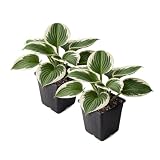
- SHADE PLANTS: This Patriot hosta has ovate leaves that have dark green centers and outstanding, crisp white, streaked margins. The margins are creamy-yellow in Spring.
- GROWTH: Patriot hostas can grow up to 20 inches tall and 30 inches wide.
- CARE: All hostas need some shade and few, if any, will do well in strong direct sunlight. Water regularly. They will fully mature in four to eight years. For the best care of hostas, plant them in rich organic soil with a slightly acidic pH.
- FUN FACT: Hosta, also known as plantain lily, is a genus of about 40 plants native to Eastern Asia.
- LIVE PLANTS: Our plants are grown exclusively for Deep Roots and The Three Company, shipped fresh directly from our greenhouse to you!
6. Hosta ‘Guacamole’
‘Guacamole’ has shiny chartreuse-gold leaves surrounded by green margins. Its warm coloration makes it a natural partner for blue hostas, dark-leaved ferns, and other plants with cool or deep green foliage.
This is a large hosta, so it works best where its broad clump can become a focal point. A position with bright shade or gentle filtered light can help show off its foliage without exposing it to the harshest direct sun.
The Tool Desk
Outbyte Driver Updater FREEFix the driver behind crashes, sound loss and screen glitchesFind Drivers →Outbyte PC Repair FREERepair Windows errors before they cause bigger problemsFix Now →7. Hosta ‘Fire and Ice’
‘Fire and Ice’ is one of the clearest high-contrast choices in this group. Its dark green leaves have white center variegation, producing a bright interior surrounded by a strong dark edge.
Plant it where the leaf pattern can be seen from a path, patio, or nearby window. The white center can brighten a dark planting, while the green margin keeps the plant connected to surrounding foliage.
8. Hosta ‘Patriot’
‘Patriot’ has green leaves edged with bright white marginal variegation. Unlike yellow-centered hostas, it brightens a border with a crisp white edge, making it useful when you want contrast without adding a warm gold tone.
It is a medium-sized choice for a mixed shade planting. Combine it with solid green or blue-green hostas so the white margins remain visually distinct rather than competing with several other variegated patterns.
9. Hosta ‘Orange Marmalade’
‘Orange Marmalade’ provides some of the most noticeable seasonal color in this selection. In spring, its leaves have deep green margins and golden-tangerine centers. As the season progresses, those centers lighten and may become nearly white by late summer.
That change is part of the cultivar’s appeal, but it means the plant will not look identical throughout the growing season. It is listed for USDA Zones 3–9 and is suited to filtered sun, full shade, partial sun, or partial shade when grown in evenly moist, well-drained, humus-rich soil. Protect it from harsh sun, which can scorch or fade the foliage.
10. Hosta ‘Fire Island’
‘Fire Island’ has yellow-to-chartreuse, rippled leaves that bring a vivid warm note to the shade garden. It pairs effectively with blue-green hostas, dark-leaved plants, or plain green foliage.
Rank #3

- SHADE PLANTS: The bedazzled hosta has beautiful, blue-green leaves with creamy pale margins. It will make a superb addition to your outdoor displays. In midsummer, when the bell-shaped, lavender blooms appear, it provides even more interest and impact to the area.
- GROWTH: Bedazzled hostas are small growing clump hostas, growing up to 8" tall and 21" wide.
- CARE: All hostas need some shade and few, if any, will do well in strong direct sunlight. Water regularly. They will fully mature in four to eight years. For the best care of hostas, plant them in rich organic soil with a slightly acidic pH.
- FUN FACT: Hosta, also known as plantain lily, is a genus of about 40 plants native to Eastern Asia.
- LIVE PLANTS: Our plants are grown exclusively for Deep Roots and The Three Company, shipped fresh directly from our greenhouse to you!
Use it as an accent within a larger planting rather than surrounding it with several equally bright cultivars. The combination of warm color and rippled texture gives the plant interest even when flowers are not in bloom.
Recommended Free Tools
11. Hosta ‘Ripple Effect’
‘Ripple Effect’ combines blue-green foliage with golden-yellow medial variegation. The result is a useful balance of cool outer color and warm inner color, making this medium hosta an easy bridge between blue and gold plantings.
It works particularly well in a grouped display where the neighboring plants repeat either the blue-green margin or the yellow center. Leave enough visual space around it for the variegation to be read clearly.
12. Hosta ‘Twist of Lime’
‘Twist of Lime’ is a small hosta with yellow-gold leaves and thin green margins. Its compact size and high-contrast foliage suit containers, narrow borders, rock-garden edges, and the front of a shade bed.
Because it is small, place it where taller hostas or companion plants will not cover it. It is also a practical way to add a bright gold accent without committing the space required by a large cultivar.
How to keep colorful hosta foliage strong
Match light to the cultivar and climate
Most hostas perform well in partial to full shade, but “shade” is not one uniform condition. Filtered light beneath a high tree canopy, bright shade beside a north-facing wall, and deep shade beneath dense evergreens can produce different results.
Some variegated hostas develop stronger color with a little gentle light. Morning sun or filtered light can help highlight a yellow or white center, while harsh afternoon exposure may scorch leaf margins, bleach color, or cause the plant to wilt. When in doubt, start with bright shade or morning sun and watch the foliage through the hottest part of the day.
Provide moisture without waterlogging
Hostas prefer consistent moisture, especially while establishing and during hot weather. Their soil should remain evenly moist but drain adequately; permanently saturated soil can damage roots and create conditions for rot.
Water deeply when the soil begins to dry rather than relying on frequent, shallow sprinkling. A mulch layer can moderate soil temperature and slow evaporation, but keep mulch away from direct contact with the crown.
Outdated Drivers Are Slowing You Down
One free scan finds every outdated or missing driver and matches the right update for your exact hardware.Free scan · exact hardware matchPC Slower Than It Used to Be?
A free scan shows the junk files, broken settings and background clutter dragging Windows down - then fixes them in one click.Free scan · Windows 10 & 11Improve the soil before planting
Humus-rich, well-drained soil supports the large foliage that makes hostas valuable. Incorporate organic matter into poor or compacted soil before planting, and avoid creating a water-holding pocket in heavy clay.
Slightly acidic soil is suitable for hostas, including ‘Orange Marmalade’. A soil test is more useful than adding amendments by guesswork, particularly if other shade plants will share the bed.
Expect seasonal color changes
Do not treat a cultivar name such as “blue,” “gold,” or “orange” as a promise of a permanent leaf color. Blue hostas can lose some of their waxy bloom as the season progresses. Gold and chartreuse hostas may become greener under different light conditions, and variegated plants can shift toward cream, pale green, or white.
Photographs taken in spring often show a plant at its most intense stage. This is especially important with ‘Orange Marmalade’, whose tangerine centers gradually lighten, and with blue cultivars whose surface coating can fade.
Quick wins for a faster PC:
Repair Windows errors before they cause bigger problemsFix Now →Fix the driver behind crashes, sound loss and screen glitchesFind Drivers →Clear out junk files and repair common Windows errorsFree Scan →Give each plant enough space
Check the seller’s mature width before planting. A small cultivar such as ‘Blue Mouse Ears’ or ‘Twist of Lime’ may be suited to a container or narrow edge, while ‘Guacamole’, ‘Gold Standard’, and ‘Sum and Substance’ require considerably more room.
Spacing affects more than appearance. Crowded foliage dries slowly after rain, becomes harder to inspect, and can hide smaller plants. Plan for the mature clump rather than the size of the division or pot you receive.
Independent reader supportYour contribution helps us test, update, and keep practical guides available for everyone.Choosing by garden size
For containers and small spaces
Choose ‘Blue Mouse Ears’ or ‘Twist of Lime’ when space is limited. Both provide strong foliage color without the eventual footprint of a large or giant hosta. Use a container with drainage holes and check moisture more often than you would in an in-ground bed.
For the front of a border
‘Blue Mouse Ears’ and ‘Twist of Lime’ are natural front-edge choices. A medium plant such as ‘Fire and Ice’, ‘Patriot’, or ‘Ripple Effect’ can also work at the front if the bed is deep enough and the mature width will not block paths.
What’s actually slowing this PC down?
Pick the symptom - the matching free tool is one click away.
For a medium-sized shade bed
Consider ‘June’, ‘Halcyon’, ‘Fire and Ice’, ‘Patriot’, ‘Orange Marmalade’, ‘Fire Island’, or ‘Ripple Effect’. Choose one or two foliage themes—such as blue with gold, or green with white—rather than mixing every pattern in one small area.
Best Value
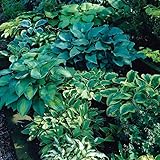
- 6 Fresh, Healthy Bare Root Starts
- 100% Grow Guarantee
- Blooms Summer Through Fall
- Perennializing Hostas
- Low Maintenance & Grows To About 18" Diameter
For a large border or specimen planting
‘Guacamole’, ‘Gold Standard’, and ‘Sum and Substance’ need room to show their scale. They can anchor the back or center of a broad shade bed, with smaller hostas and other perennials placed in front. Avoid planting a giant hosta directly beside a narrow path unless you are prepared for the leaves to eventually extend into the walkway.
Buying colorful hostas: potted plants versus bare-root divisions
Live hostas may be sold as established potted plants or as dormant bare-root divisions. A potted plant gives you a visible crown and leaves when purchased during the growing season, while a dormant division may arrive with little or no top growth. A bare-root plant is not necessarily dead; it may simply be shipped during dormancy and need time to establish after planting.
If you are shopping for live hosta plants, confirm the cultivar name, expected plant size, shipping season, and the seller’s live-plant policy before ordering. Retail inventory, pricing, seller quality, and shipping restrictions vary by season, weather, and destination, so availability should be checked at the time of purchase rather than assumed from a photograph or older listing.
Do these 3 things before closing this tab:
1Repair Windows errors before they cause bigger problems2Scan for outdated or missing drivers - takes under a minute3Clear out junk files and repair common Windows errorsBare-root hostas can be a practical option when planting several cultivars, but inspect the division on arrival, keep it from drying out, and follow the seller’s planting instructions. An assortment or mixed-color hosta pack may provide variety at once, but it may not contain the exact named cultivars listed above. Gardeners seeking a specific cultivar should order by its full registered name from a reputable nursery or garden retailer.
Hostas are herbaceous perennials: the foliage dies back in fall and returns from the crown in spring. Do not discard a dormant plant simply because it arrives without leaves. Plant promptly according to the supplier’s instructions, keep the soil appropriately moist, and mark the location so the emerging shoots are not disturbed.
Other practical considerations
Hostas are generally grown for foliage, although their flowers may be white, pink, lavender, or purple, and some cultivars are fragrant. Their flowers are a useful bonus, but flower color should not be the main selection criterion if your goal is a colorful foliage display.
Finally, named hostas are cultivars, not reliably seed-reproducing forms. Most hosta seed does not come true to the parent variety, so a seedling may not retain the precise color, margin, center, or growth habit of the plant that produced it. To reproduce a named cultivar accurately, gardeners generally purchase or divide the established plant rather than relying on seedlings.
Do these 3 things before closing this tab:
1Clear out junk files and repair common Windows errors2Fix the driver behind crashes, sound loss and screen glitches3Repair Windows errors before they cause bigger problemsFrequently Asked Questions
Do hostas have to be planted in deep shade?
No. Most hostas prefer partial to full shade, but some variegated cultivars can show stronger color with gentle morning sun or filtered light. Harsh afternoon sun may scorch or fade the leaves, so bright shade is usually a safer starting point.
Which colorful hostas are best for containers?
‘Blue Mouse Ears’ and ‘Twist of Lime’ are the most compact choices in this list. Their small size suits containers and narrow borders, although container plants need more frequent moisture checks than hostas planted in the ground.
Will a blue hosta stay blue all season?
Not necessarily. Blue hostas appear blue partly because of a waxy coating on the leaves. That coating can weaken with weather and as the season progresses, causing the foliage to look more blue-green.
Do hostas return every year?
Yes. Hostas are herbaceous perennials. Their leaves normally die back in fall, and new shoots emerge from the crown in spring.
Quick wins for a faster PC:
Clear out junk files and repair common Windows errorsFree Scan →Scan for outdated or missing drivers - takes under a minuteDriver Scan →Can I grow the exact same hosta from its seeds?
Usually not. Most hosta seeds do not reproduce a named cultivar true to its parent. Buy or divide the named plant if you want to preserve its distinctive foliage pattern.
The Bottom Line
The best colorful hosta depends on the space and the kind of contrast you want. Choose ‘Blue Mouse Ears’ or ‘Twist of Lime’ for a small area, ‘June’, ‘Patriot’, or ‘Fire and Ice’ for medium borders, and ‘Guacamole’, ‘Gold Standard’, or ‘Sum and Substance’ where a large specimen can mature fully. Provide filtered or gentle light, humus-rich soil, and consistent moisture, then expect the exact color to evolve with the season.
Quick Recap
Product prices and availability are accurate as of the date/time indicated and are subject to change. Any price and availability information displayed on Amazon at the time of purchase will apply.

