Free tools Windows power users keep installed
One-click scans. No signup required.
Some links on this page are affiliate links: if you buy through them we may earn a commission, at no extra cost to you.
The most useful farm hacks make a specific job easier without adding a cleaning, repair, or safety problem. These 11 ideas cover feeding, watering, pasture, storage, drainage, and handling. Each has limits: match the design to the animals, site, and maintenance you can provide, and get local advice for structural, electrical, water-quality, or animal-health questions.
Feeding and water hacks
1. Make a round-bale feeder for sheep from a livestock panel
For sheep, a livestock or feedlot panel can be shaped into a ring and its ends joined with snap-ring hooks. Ulf Kintzel’s December 2022 sheep-feeder guide describes cutting openings to suit the feeding setup. Design those openings for the animals using the feeder, and carefully smooth or cover every cut end and edge: exposed metal can cause serious injury. Check that the panel is stable, connections stay closed, and sheep cannot get heads or legs trapped. The guide reported about $20 for a panel and about $30 for the described DIY feeder at the time; these are historical example prices, not current quotes.
As an Amazon Associate I earn from qualifying purchases.
Outdated Drivers Are Slowing You Down
One free scan finds every outdated or missing driver and matches the right update for your exact hardware.Free scan · exact hardware matchWindows Errors? Fix Them Before They Spread
Repair common Windows errors and clear accumulated junk for a smoother, more stable PC - no reinstall needed.Free scan · no reinstall2. Reuse only a safe, cleanable container as a trough
A barrel, tractor tire, or bathtub may serve as a water trough if it is structurally sound, accessible for cleaning, and safe for the species. Oregon State University Extension says reused containers must be thoroughly cleaned before use and regularly during use, and must never have held chemicals or hazardous materials. Avoid vessels with residues, sharp edges, cracks that collect contamination, or shapes animals can become stuck in. See OSU Extension’s small-farm beef overview for its water-trough guidance.
3. Add a float valve to a compatible vessel
A float valve connected to a running hose or pipe can replenish water as the level drops. Alabama Cooperative Extension describes this approach for livestock water systems. Use components suitable for the water source and pressure, secure the connection, and confirm the valve shuts off reliably rather than overflowing or leaving animals without water. A float valve does not replace routine vessel cleaning or checking that animals can reach the water. See Alabama Extension’s property-preparation guidance for dairy goats and sheep.
Popular on Amazon

- Complete 8 Pack Fence Repair Kit: Includes 8 heavy duty fence repair stakes, mounting screws, socket adapter, and work gloves. Everything needed to reinforce damaged fence posts and restore fence stability
- Strong Support for Damaged Fence Posts: Designed to strengthen leaning, cracked, damaged, or weakened wooden fence posts. Helps extend fence life without the cost and labor of replacing entire fence sections
- Heavy Duty Steel Construction: Made from thick steel with reinforced construction for reliable support. Built to withstand outdoor conditions and provide long-lasting fence post reinforcement
- Heavy Duty Powder Coated Finish: Finished with a durable black powder coating that provides exceptional strength and withstands all weather conditions. Suitable for year-round outdoor use
- Easy Ground Installation: Simply position the fence repair stake beside the damaged post and secure with the included hardware. Ideal for wood fences, privacy fences, garden fences, livestock fences, and property boundary fences
4. Put portable troughs in temporary paddocks
Portable troughs can move with a grazing rotation instead of requiring a permanent water point in every subdivision. Virginia Cooperative Extension describes feeding them from a pressurized source through polyethylene pipe; pipe can be routed under division fences to protect it from damage. Plan the route to avoid vehicle traffic, livestock pressure, and trip hazards, and make sure connections remain accessible for inspection. The right setup depends on water demand, distance, terrain, and available pressure. See Virginia Cooperative Extension’s temporary watering and fencing guide, published August 8, 2025.
5. Use valves or quick couplers to relocate water access
Valves or quick couplers can make it easier to disconnect and move a portable trough as paddocks change. Match the fittings and pipe to the source and site, and place connections where they can be inspected without creating a hazard for animals or people. This is a practical extension of the portable-water layout described by Virginia Cooperative Extension; the source does not prescribe one universal fitting or layout.
Pasture, fencing, and drainage
6. Divide pasture with temporary electric fencing
Temporary electric fencing can create grazing subdivisions without building a permanent fence along every internal boundary. Virginia Tech identifies high-tensile electric fencing as an option for dividing pasture, while Virginia Cooperative Extension discusses temporary fencing within rotational grazing systems. Choose a design that contains the animals involved and suits the terrain; install and maintain the energizer, grounding, conductors, and gates according to safe electrical practices and local requirements. Permanent perimeter fencing and temporary interior divisions serve different jobs: Virginia Tech notes that permanent perimeter fencing is relatively expensive, but containment needs may make it necessary. Start with Virginia Tech’s permanent grazing infrastructure guide and the temporary watering and fencing guide.
7. Insulate electric-fence lead-out cable near hazards
Where an electric-fence trunk line passes near a building, waterer, or other hazard, Virginia Tech specifically advises using insulated lead-out cable to reduce the risk of electrical shorts or stray voltage. Route and protect the cable so it cannot be damaged, and have uncertain electrical work reviewed by someone qualified. This is a targeted safety detail, not a substitute for correct fence design and installation. See Virginia Tech’s fencing guidance.
8. Use roof gutters to direct clean water away from muddy areas
In high-rainfall areas, gutters can capture clean roof runoff and direct it away from livestock lots, buildings, and feeding areas where mud creates difficult footing and maintenance. Keep the discharge point from simply shifting the problem to another muddy spot, and maintain gutters and drainage routes so water does not back up. OSU Extension discusses this approach in its beef production overview for small farms.
Also popular on Amazon
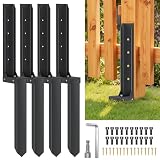
- H-Shaped Design for Maximum Stability: The H-shaped double-layer steel bracket wraps around your wood post on both sides, locking it in place with 5 assembly screws. Widened side flanges resist twisting from high winds and soil movement, keeping leaning or sagging fence posts straight without digging them up
- Heavy-Duty Steel Build That Lasts: Constructed from thickened double-layer steel with a black powder-coated finish that resists rust, corrosion, and daily wear. The reinforced frame handles repeated force from wind and gate use without bending, so your fence stays straight season after season
- Quick Fix Without Digging Up Old Posts: No need to remove and replace the entire post. Simply connect the two bracket halves, drive the pointed stake into the ground with a hammer, then secure it to your wood post using the pre-drilled holes and included screws. Most repairs take under 15 minutes
- Complete Kit with Everything You Need: Each pack includes 4 sets of unassembled 32-inch repair stakes, 16 galvanized assembly screws, 20 galvanized fixing screws, and 1 small wrench. Bracket size: 1.8" x 29.67" (W x H); buried depth: 15.1 inches
- Works for Garden, Farm, and Yard Fences: Ideal for reinforcing leaning, sagging, or rotting wood fence posts around your yard, garden, farm, greenhouse, or property line. Also works for metal posts, road signs, and gate supports. Confirm your post size before installation
Feed storage and handling
9. Store hay dry and away from heat and electricity
Choose a dry storage location for hay, away from heat and electrical sources; where possible, Rutgers recommends a separate building. Keep access and surroundings managed so stored hay is not exposed to avoidable ignition hazards. The specific building and fire-safety requirements depend on the site, so consult local fire and extension guidance when planning a storage structure. See Rutgers NJAES’s safety recommendations for barns and livestock structures. Texas A&M AgriLife also covers hay making, storing, and feeding in its hay guidance.
Recommended Free Tools
10. Protect bagged feed and grain from moisture and rodents
Keep bagged feed dry and separated from fuels and pesticides. For bulk grain, NC State Extension recommends specialized bins; include rodent exclusion and management in the storage plan rather than relying on a container alone. Choose storage that can be inspected and cleaned, and keep feed from becoming contaminated by pests or nearby materials. See NC State Extension’s farm layout and infrastructure guidance.
11. Improve the route through a cattle handling area
For beef cattle, a corral leading into a narrow alley and squeeze chute is a proven working-facility arrangement described by OSU Extension. NC State Extension emphasizes convenient, durable handling space, with animal and handler safety paramount. A DIY improvement might be to clear and maintain the approach, reduce distractions along the route, or improve access to a properly designed facility—not to improvise a restraint device. Restraint structures bear substantial forces and need a species-appropriate design; ask a local extension educator or qualified livestock-facility professional before building or modifying one. See OSU Extension and NC State Extension.
Choose a hack that fits the farm
Before building or adapting equipment, compare the practical trade-offs. A temporary setup may suit a changing grazing layout, while a permanent structure may be needed for containment or regular use. DIY materials can be economical, but only if the result remains safe, cleanable, durable, and maintainable.
| Decision | Check before choosing |
|---|---|
| Temporary or permanent fencing and water | Expected duration, animal containment needs, terrain, water access and demand, maintenance, electrical safety, and initial material cost. |
| DIY or purchased feeder or water vessel | Species fit, cleaning access, stability, injury risk, material safety, durability, and the labor required to maintain it. |
Virginia Cooperative Extension’s 2025 guide gives a low-demand solar-pumping example of under 2,000 gallons per day with a lift requirement of 15 feet or less; those figures describe that guide’s example, not a universal sizing rule. Have a local extension educator, conservation professional, or qualified installer assess water demand and site conditions before selecting a system. The sources cited here are primarily U.S.-based, and applicable rules and conditions vary by region.
What’s actually slowing this PC down?
Pick the symptom - the matching free tool is one click away.
Quick Recap
Product prices and availability are accurate as of the date/time indicated and are subject to change. Any price and availability information displayed on Amazon at the time of purchase will apply.

