Quick wins for a faster PC:
Repair Windows errors before they cause bigger problemsFix Now →Fix the driver behind crashes, sound loss and screen glitchesFind Drivers →Clear out junk files and repair common Windows errorsFree Scan →Plants can help remove, transform, or contain some soil contaminants, but no plant makes contaminated ground safe by itself. Phytoremediation is an engineered, site-specific approach: the right species must match the contaminant, its depth and availability in the soil, the local climate, and a plan for managing the plants afterward. EPA’s May 2025 phytotechnology profile lists the ten plants below for particular contaminants or applications—not as universal cleanup solutions.
What plants can—and cannot—do
EPA defines phytoremediation as “the use of green plants to clean soils.” Depending on the plant and site, the approach may take up contaminants into roots or shoots, transform some organic chemicals, encourage microbial breakdown around roots, volatilize certain compounds, or slow groundwater movement through water uptake. These mechanisms do different jobs: a plant that stabilizes soil or helps control groundwater is not necessarily removing contaminants from the site.

As an Amazon Associate I earn from qualifying purchases.
EPA’s plant-selection rule is to consider whether a species can grow in the regional climate, its rooting depth and spread, and the nature of the contamination. Demonstrated performance, the applicable treatment mechanism, water use, growth rate, and supporting evidence also matter. The depths and contaminant lists below come from EPA’s May 2025 phytotechnology table. They indicate listed research or field applications, not guaranteed results for every variety or site.
Abbreviations in the table: As, arsenic; Cd, cadmium; Cr, chromium; Cu, copper; Hg, mercury; Mn, manganese; Ni, nickel; Pb, lead; Zn, zinc. Rooting depths are approximate.
#1 Best Overall
Ten plants listed for phytoremediation uses
| Plant | Type and approximate rooting depth | Contaminants or uses listed by EPA | Where it may fit—and an important qualification |
|---|---|---|---|
| Indian mustard (Brassica juncea) | Flowering plant; 3–4 ft, with a taproot reaching about 6 ft | Cd, Cr, Cu, Mn, Ni, Pb, Zn; pesticides and cesium | A candidate for controlled metal-uptake work. Lead uptake is not proof that soil is safe, and plants grown on suspect ground are not food. |
| Sedges (Carex spp.) | Wetland plants; about 6 ft | Pb and wetland phytoremediation applications | Consider for wet sites or constructed-wetland designs using locally appropriate species. |
| Vetiver (Chrysopogon zizanioides) | Grass; about 10–12 ft | Cu, iron, Mn, Pb, Zn | Deep roots may suit stabilization and erosion-control roles; they do not eliminate the need for site-specific testing. |
| Bermuda grass (Cynodon dactylon) | Grass; roughly 6 in–6 ft | Cd, Cr, Pb, Zn | Dense cover can limit erosion and support treatment in the root zone; turf is not a stand-alone hazardous-site remedy. |
| Tall fescue (Festuca spp.) | Grass; about 1–5 ft | Species-dependent: Cd, Cu, iron, Hg, Mn, Ni, Pb, Zn, and PBDEs | Useful as an example of why the exact species and site conditions matter; the broad genus-level listing is not a performance guarantee. |
| Sunflower (Helianthus annuus) | Flowering plant; about 4 ft | Cd, Cr, Ni, Zn, radioactive isotopes, TNT and metabolites | Research supports contaminant-specific applications. EPA says sunflower removal of lead is not a proven technology. |
| Alfalfa (Medicago sativa) | Ground cover; 3–6 ft, with a taproot reaching about 20 ft | Chromium and root-zone applications | Its deep taproot is relevant to plant selection, but climate, the contaminant, and biomass management still govern suitability. |
| Poplar (Populus spp.) | Tree; about 6 ft deep with large lateral spread | VOCs, SVOCs, metals, petroleum, PCBs, 1,4-dioxane; Cd, Cu, Pb, Zn | May suit some deeper-soil or groundwater applications and hydraulic control. EPA describes hybrid-poplar pilot work at a Superfund site. |
| Chinese brake fern (Pteris vittata) | Fern; about 1 ft | As, Cd, Cr, Cu, Ni, Zn, fluoride, and diphenylarinic acid | A prominent arsenic hyperaccumulator example. Fronds containing contaminants must be harvested and managed so the material does not return to the site. |
| Willow (Salix spp.) | Tree; about 3 ft deep with large lateral spread | Silver, Cd, Cu, Hg, Pb, selenium, Zn, and tritium | May suit selected metal sites or hydraulic-control work; it is not a backyard lead cure. |
How to choose a plant for a contaminated site
Start with the contaminant and its form
Identify what is present, at what concentration and depth, and how much is available for plants to take up or act on. EPA notes that total or chemically extractable soil measurements can differ substantially from the bioavailable portion. A plant listed for a contaminant may therefore perform poorly if the contaminant’s chemical form or site conditions do not support the relevant treatment mechanism.
Match roots and growth to the problem
Compare root depth and spread with the contamination’s location, then consider regional climate, water use, growth rate, and the species’ demonstrated performance. Shallow-rooted plants such as Chinese brake fern cannot be assumed to reach deeper contamination. Trees such as poplars and willows may reach deeper soil or groundwater, but actual feasibility depends on roots and groundwater hydraulics. Where possible, EPA prefers native plants because they are better adapted to local conditions and less likely to attract nuisance animals or pests.
Rank #2
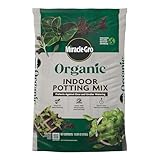
- HELPS REGULATE SOIL MOISTURE: Miracle-Gro Organic Indoor Potting Soil Mix is an organic potting soil that protects indoor plants against over and under watering
- INDOOR PLANT SOIL: This organic container mix for indoor gardening is made with responsibly sourced sphagnum peat moss (one hundred percent of peat sourced from certified producers), coir, and quick-start natural fertilizer
- WHERE TO USE: Use this indoor potting soil mix with all types of indoor container plants, including houseplants and herbs; also great for seed starting
- HOW TO USE: To plant seeds, fill container with organic soil for indoor plants, follow seed package directions and water; to use with transplants, partially fill container, place plant after loosening root ball, cover with more mix pressing lightly, water thoroughly and let drain
- COVERAGE: One 16 qt. bag of Miracle-Gro Organic Indoor Potting Mix fills one 12-inch container with potting soil for indoor plants (amounts may vary based on the size of the root ball)
Choose the intended outcome
Decide whether the aim is contaminant uptake and removal, transformation, support for root-zone breakdown, erosion control, or hydraulic control. These are not interchangeable outcomes. In particular, a cover that reduces erosion or exposure does not establish that the underlying soil has been cleaned to a safe level.
The Tool Desk
Outbyte PC Repair FREERepair Windows errors before they cause bigger problemsFix Now →Outbyte Driver Updater FREEFix the driver behind crashes, sound loss and screen glitchesFind Drivers →What evidence says about performance
EPA says phytoremediation is generally best suited to low-to-moderate contaminant concentrations. High concentrations may stress or kill plants, and the approach may not reach contamination deeper than about 15 ft. The amount removed can depend on total plant biomass as well as uptake efficiency: EPA notes that large, fast-growing plants may remove more contaminant mass than small hyperaccumulators because they produce more biomass.
Rank #3

- Feed the soil not the plants - stimulate microbial activity in your soil and boost probability of success with all types of plants… like composting but faster
- For best results, apply monthly throughout the growing season, especially in the fall and spring
- No synthetic chemicals - main ingredient in this product is activated humics derived from organic sources (OMRI certified organic)
- Concentrated formula - simply dilute at a ratio of 1 oz to 1 gallon and spray/pour on your soil
- Farmer’s Secret products are made with pride in Kentucky and puts the know-how of award-winning farmers into your hands. Get in on the Secret!
Examples from USDA Agricultural Research Service work show both the potential and the limits of the evidence:
- A 2007 USDA ARS report said alpine pennycress (Thlaspi caerulescens) concentrated up to about 8,000 parts per million of cadmium in its leaves. For the specific contaminated soils considered, the report estimated annual harvest could reduce cadmium to safe levels in three to 10 years. It also estimated phytoextraction at $250–$1,000 per acre per year, compared with about $1 million per acre for removing and replacing soil. These are 2007 research estimates for particular conditions, not a current price list or a forecast for another site.
- A peer-reviewed USDA ARS study published in 2007 screened 22 plant species for arsenic uptake in controlled tests. Under its highest potting-mix exposure, it reported 660.6 mg arsenic/kg dry weight in Rudbeckia hirta, 333.3 mg/kg in Lupinus perennis, and 297.5 mg/kg in Echinacea purpurea. The study identified candidates for further field testing; those controlled-test results do not prove field-scale cleanup.
Cleanup can take several years. EPA identifies high concentrations, large or deep areas, long-growing plants, and short growing seasons as factors that can extend the schedule. Long-term operation, monitoring, and reporting may be needed.
Rank #4

- OUTDOOR POTTING SOIL: Miracle-Gro Organic Outdoor Potting Mix contains a quick-release natural plant fertilizer and also feeds plants for up to 2 months
- PEAT MOSS: This organic potting soil mix is made with responsibly sourced peat (one hundred percent of peat sourced from certified producers)
- OUTDOOR CONTAINER USE: Use this organic potting mix with all types of outdoor container plants, including flowers, vegetables, herbs, annuals, and perennials
- HOW TO USE: To plant in pots, fill the container partially full with this potting soil for outdoor plants, place the plant in the pot after loosening the root ball, cover with more mix and water thoroughly
- COVERAGE: One 16 qt. bag of Miracle-Gro Organic Outdoor Potting Mix fills one 12-inch pot with garden soil for containers (amounts may vary based on the size of the root ball)
Why lead requires particular caution
Lead is a common source of confusion in lists of “soil-cleaning” plants. EPA’s FAQ says close to forty years of research found limited value for phytoremediation to remove lead; it also identifies soil lead, rather than plant uptake, as the primary exposure concern. Some lead-tolerant plants may have a role in stabilization or erosion control where appropriate, but planting them does not show that the soil is safe for children, pets, food growing, or construction work.
Sunflowers, Indian mustard, grasses, and other plants may appear in lists of species associated with lead. That listing should not be read as proof of effective lead removal at a particular property. Test the site and have the result interpreted by qualified professionals before deciding on exposure controls or a remedy.
Best Value

- Kindly NOTE: This soil tester can not be applied to test pH value of any other liquid. If the soil is too dry the indicator will not move, and water it before testing.
- 3 METERS IN ONE: Soil moisture level, Soil pH value and Sunlight level could be tested easily according to your need by switching the function button of this soil meter.
- NO BATTERY NEEDED: Simply insert the meter into soil, wait few minutes, accurate test results will be displayed on the readout panel. No battery is needed.
- STURDY AND SCIENTIFIC DESIGN: Reliable materials and upgraded technology used for this soil meter make it advanced and high-quality for long-term use.
- MULTIPURPOSE SOIL TEST KIT: Portable and compact design enables you to use this soil meter for house garden, farm, lawn and any other soil & plant analysis. Ideal for indoor and outdoor use.
Before planting: a practical site-planning sequence
- Keep people away from suspect soil. Do not eat plants grown there or let contaminated vegetation become forage for wildlife. Limit disturbance until the site has been assessed.
- Characterize the site professionally. Establish the contaminants, concentrations, depth, and bioavailable fraction with appropriate soil testing. A consumer heavy-metal kit may be a screening aid, but it is not a substitute for laboratory characterization or professional decisions about regulatory requirements.
- Set a defined treatment goal. Decide whether the project is intended to remove or transform contaminants, support root-zone treatment, stabilize soil, or manage groundwater. Select a plant only if its documented use, rooting pattern, and growing conditions match that goal.
- Plan for contaminated biomass. Specify how plants or plant parts will be harvested, stored, transported, and disposed of. EPA warns that contaminant-accumulating plants may need removal at the end of a growing season or project; otherwise decomposition can return contaminants to the environment.
- Monitor the work and the exposure pathways. Use a site-specific plan for long-term monitoring and reporting. Where phytovolatilization could release vapors, EPA advises monitoring air as well as the soil and plants.
EPA describes amendments such as biochar as possible ways to enhance the root zone, but site-specific treatability testing is likely to be needed. An amendment or planting choice should therefore be evaluated as part of the site plan, not assumed to work on its own.
Quick Recap
Product prices and availability are accurate as of the date/time indicated and are subject to change. Any price and availability information displayed on Amazon at the time of purchase will apply.

