No—not necessarily. For a second-generation Nest Protect, Google lists a seven-year carbon-monoxide sensor life, but its official replacement guidance says to replace the alarm 10 years after its manufacture date. A seven-year-old Protect is not automatically dead. However, a persistent sensor-failure warning, repeated chirping, or the alarm’s 10-year manufacture-date deadline means you should replace it rather than keep relying on it.
The seven-year claim confuses two different dates
Google’s technical specifications list the second-generation Nest Protect’s carbon-monoxide sensor life as seven years from the manufacture date. That is different from the complete alarm’s stated replacement period.
As an Amazon Associate I earn from qualifying purchases.
Google’s replacement guidance says a second-generation Nest Protect should be replaced 10 years after manufacture to meet certification standards. The date is not calculated from the day you bought or installed the alarm.
Free tools Windows power users keep installed
One-click scans. No signup required.
So a Protect that is seven years old is not automatically expired. First identify whether it is a second-generation model, then check the manufacture information on the alarm or its documentation. A sensor-failure warning should be treated as an immediate problem even if the unit is younger than 10 years.
#1 Best Overall

- Double the Detection: Alerts you to both smoke and carbon monoxide (CO)
- Real-Time Ring App Notifications: Home or away, get smoke, CO or low battery warnings (no subscription required)
- Over 25% faster smoke detection (based on internal testing vs a leading competitor)
- Optional Ring subscription (sold separately) with 24/7 smoke and CO monitoring for $5/month
- No Wiring Needed: Operates on 2-AA alkaline batteries (included) for simple use throughout your home
Google’s technical specifications explain the seven-year CO-sensor specification, while Google’s replacement guidance gives the 10-year replacement rule for second-generation Protect.
What happens when Nest Protect reaches its limit?
A Nest Protect with an expired or failed sensor is designed to warn you rather than fail silently. Depending on the condition, you may see:
- A warning in the Nest or Google Home app
- A yellow light ring
- A recurring chirp, potentially once per minute or continuously depending on the fault
- A spoken message such as, “The sensors have failed in the [name of room]. Replace Nest Protect now.”
Google says expiration reminders may arrive three months and seven days before the stated expiration date. App and email reminders require the Protect to be set up and connected to Wi-Fi. The unit can still chirp without Wi-Fi.
What’s actually slowing this PC down?
Pick the symptom - the matching free tool is one click away.
Do not assume it will simply switch off at the deadline. Google’s documentation says the alarm is required to chirp after its sensors expire or fail; it does not guarantee identical behavior for every generation or every fault condition. More importantly, Google says you are no longer protected if you continue relying on an expired Protect.
See Google’s guidance on when to replace Nest Protect.
First identify what the chirp means
Not every chirp indicates a seven-year sensor issue. Check the device status before buying a replacement.
Rank #2
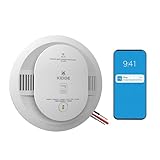
- Double the Detection: Alerts you to both smoke and carbon monoxide (CO)
- Real-Time Ring App Notifications: Home or away, get smoke, CO or low battery warnings (no subscription required)
- Over 25% faster smoke detection (based on internal testing vs a leading competitor)
- Optional Ring subscription (sold separately) with 24/7 smoke and CO monitoring for $5/month
- Whole Home Smart Connectivity: Get mobile alerts for every hardwired alarm in your home by adding just one Kidde smart detector; check the user guide for more information
Low battery
A low-battery warning may appear in the app, through the yellow light ring, during the Nightly Promise check, or as a periodic chirp.
A battery-powered second-generation Nest Protect uses six Energizer Ultimate Lithium AA batteries, model L91. A wired Protect uses three L91 lithium AAs as backup batteries.
Google says not to use alkaline or rechargeable batteries, mix old and new cells, or substitute other battery types. Install the specified batteries and run a test. If the warning disappears, the problem was likely power-related—not sensor expiration.
Use the status screen in the Nest app by selecting the Protect. In Google Home, the current path is generally Home → Smoke & CO → Nest Protect, although labels can vary by app version. The Google battery instructions cover the approved battery types and warning behavior.
Dust in the smoke chamber
Dust can cause a smoke-sensor problem or false alarm. If there has not been a fire or other major incident, Google says you can try cleaning the Protect according to its instructions.
The Tool Desk
Outbyte Driver Updater FREEScan for outdated or missing drivers - takes under a minuteDriver Scan →Outbyte PC Repair FREEClear out junk files and repair common Windows errorsFree Scan →If the notification stops after cleaning, the unit may continue to be used normally. If the notification remains, replace the alarm. Cleaning may address dust contamination; it cannot restore an expired carbon-monoxide sensor.
Rank #3

- Real-Time Ring App Notifications: Home or away, get smoke or low battery warnings (no subscription required)
- Over 25% faster smoke detection (based on internal testing vs a leading competitor)
- Optional Ring subscription (sold separately) with 24/7 smoke monitoring for $5/month
- No Wiring Needed: Operates on 2-AA alkaline batteries (included) for simple use throughout your home
- Whole Home Smart Connectivity: Get mobile alerts for every Kidde alarm in your home through wire-free interconnectivity — when one alarm sounds, they all do. (Check the user guide for more information)
Do not remove the alarm from service without a working replacement already installed.
Sensor failure or expiration
New batteries will not fix a genuine sensor-failure or expiration warning. If the app or spoken message says the sensors have failed, or the warning continues after approved batteries and appropriate cleaning, treat it as a replacement event.
How to check the replacement date
- Confirm the alarm’s generation and whether it is battery-powered or wired.
- Inspect the physical label and any included documentation for the manufacture or expiration information.
- Check the device details in the Nest or Google Home app, recognizing that menu names vary by version.
- For a second-generation Protect, calculate the official replacement point as 10 years from manufacture.
- Replace the alarm sooner if it reports a sensor failure that does not clear.
Do not use the purchase date as a substitute for the manufacture date. Also, do not assume that one working alarm covers the room where another networked alarm has expired.
Do these 3 things before closing this tab:
1Scan for outdated or missing drivers - takes under a minute2Repair Windows errors before they cause bigger problems3Fix the driver behind crashes, sound loss and screen glitchesWhat if the Protect is offline?
An offline Protect is not automatically an expired Protect. Without Wi-Fi, Nest Protect can still detect smoke and carbon monoxide locally and can continue communicating with other Protects through its local wireless interconnect.
What you lose is app connectivity, remote notifications, and some history information. Restore Wi-Fi when practical, but do not confuse an offline status with a sensor-failure warning.
See Google’s explanation of offline Nest Protect behavior.
Rank #4

- Real-Time Ring App Notifications: Home or away, get smoke or low battery warnings (no subscription required)
- Over 25% faster smoke detection (based on internal testing vs a leading competitor)
- Optional Ring subscription (sold separately) with 24/7 smoke monitoring for $5/month
- Whole Home Smart Connectivity: Get mobile alerts for every hardwired alarm in your home by adding just one Kidde smart detector; check the user guide for more information
- Reduced Nuisance Alarms: Enhanced sensing technology reduces false alarms often caused by cooking when compared to prior Kidde generations of smoke alarms
What to do now
- Check the warning. Open the Nest or Google Home app and listen to the spoken diagnostic.
- Respond to a low-battery warning. Install the correct L91 lithium batteries and test the alarm.
- Clean only when appropriate. If Google identifies a possible dusty smoke chamber and there has been no fire, clean the unit as directed.
- Replace persistent failures. Do not silence, ignore, or repeatedly reset a sensor-failure warning.
- Install the replacement before removing the old alarm. This preserves coverage during the changeover.
- Follow local requirements. Smoke-alarm rules vary by state and locality, particularly for hardwired and interconnected alarms.
- Remove the old Protect from your account and dispose of or recycle it according to local guidance.
Replacing a battery-powered Nest Protect
Google’s basic removal procedure is to turn the Protect counterclockwise to remove it from the backplate, then unscrew the backplate. Install the replacement alarm according to its own manual.
Recommended Free Tools
Do not assume that a replacement alarm is interchangeable merely because it fits the wall or ceiling. Confirm its power type, listing, interconnect behavior, mounting compatibility, and local-code requirements.
Replacing a wired Nest Protect
Hardwired replacement requires more care:
- Turn off the correct circuit at the breaker panel.
- Verify that power is off before handling the alarm or connector.
- Turn the Protect counterclockwise to remove it from the backplate.
- Unplug the 120-volt connector.
- Unscrew the backplate.
- Install the new alarm according to its instructions.
There is a real shock hazard when working on mains wiring. If you cannot positively identify the circuit, understand the wiring, or confirm the replacement’s compatibility, use a qualified electrician. Landlords and tenants should also check with the property owner, building manager, or local authority before changing hardwired or interconnected alarms.
Google provides additional installation guidance.
Independent reader supportYour contribution helps us test, update, and keep practical guides available for everyone.What replaces Nest Protect?
Nest Protect is no longer sold by Google, although Google says it remains supported. For U.S. customers, Google and First Alert identify the First Alert SC5 Smart Smoke & Carbon Monoxide Alarm as the compatible replacement for second-generation Nest Protect.
Choose the version that matches your installation:
- SC5 battery model: intended for a battery-powered Nest Protect.
- SC5 hardwire model: intended for a wired Nest Protect.
First Alert says the SC5 is designed to use the existing Nest Protect mounting bracket, and that its hardwired replacement includes a quick-connect adapter plug. Confirm compatibility for the exact alarm and installation before relying on the existing bracket or wiring.
Crashes, No Sound, or Screen Glitches?
Random freezes, missing sound and display glitches usually trace back to one bad driver. Find and replace yours safely.Free scan · under a minutePC Slower Than It Used to Be?
A free scan shows the junk files, broken settings and background clutter dragging Windows down - then fixes them in one click.Free scan · Windows 10 & 11The SC5’s Nest Protect compatibility is specifically tied to the Google Home app and a Google Account. It should not be presented as an identical replacement for every Nest app feature, historical behavior, or user experience.
Best Value

- 2-in-1 Protection: The smoke and carbon monoxide detector is equipped with both photoelectric smoke sensor and electrochemical CO sensor that both detect smoke and dangerous CO levels
- ETL Listed: The smoke and carbon monoxide alarm meets the UL 217 & UL 2034 safety standards for your peace of mind and absolute confidence in our product
- Simple Installation: Requires no rewiring; easy to mount this fire and CO alarm on any wall or ceiling with the included mounting bracket, screws and anchor plugs
- Combination Alarm with CO Readings: the large LCD display clearly indicates real-time carbon monoxide (CO) levels in the surrounding air, as well as its battery level and working status
First Alert’s collection showed a price of $129.99 for both SC5 variants when the page was checked, but the models were marked unavailable. Price and stock can change, so verify current availability before purchasing. A reader who does not need Google Home alerts may reasonably compare the SC5 with a listed standalone smoke-and-CO alarm rather than paying for smart-home integration.
See First Alert’s Nest Protect replacement information and compatibility list.
Important replacement checks
- Power: Match battery-powered and hardwired installations.
- Interconnect: Confirm how the new alarm will work with remaining Nest Protects.
- App: Verify that Google Home integration meets your needs.
- Mounting and wiring: Confirm bracket and connector compatibility rather than assuming they are universal.
- Local code: Requirements differ by state and municipality.
- Support: Review the replacement manufacturer’s app, cloud, firmware, warranty, and interconnect policies.
First Alert markets the SC5’s “Precision Detection” technology as intended to reduce nuisance alarms. That is a manufacturer claim, not independent proof that it will perform better in every home.
The bottom line
A seven-year-old second-generation Nest Protect is not automatically expired. The seven-year number refers to the listed carbon-monoxide sensor life, while Google’s official replacement guidance says to replace the second-generation alarm 10 years after its manufacture date.
Still, a persistent sensor-failure warning is not a battery problem to postpone. Check the app, install only the specified batteries if the warning is about power, clean the unit only when dust is a plausible cause, and replace it if the warning remains or the 10-year manufacture-date deadline has arrived. For a U.S. smart-home replacement, match the SC5 battery or hardwire model to your existing installation and verify current availability, Google Home requirements, wiring, and local code.
Quick Recap
Product prices and availability are accurate as of the date/time indicated and are subject to change. Any price and availability information displayed on Amazon at the time of purchase will apply.




