Free tools Windows power users keep installed
One-click scans. No signup required.
Some links on this page are affiliate links: if you buy through them we may earn a commission, at no extra cost to you.
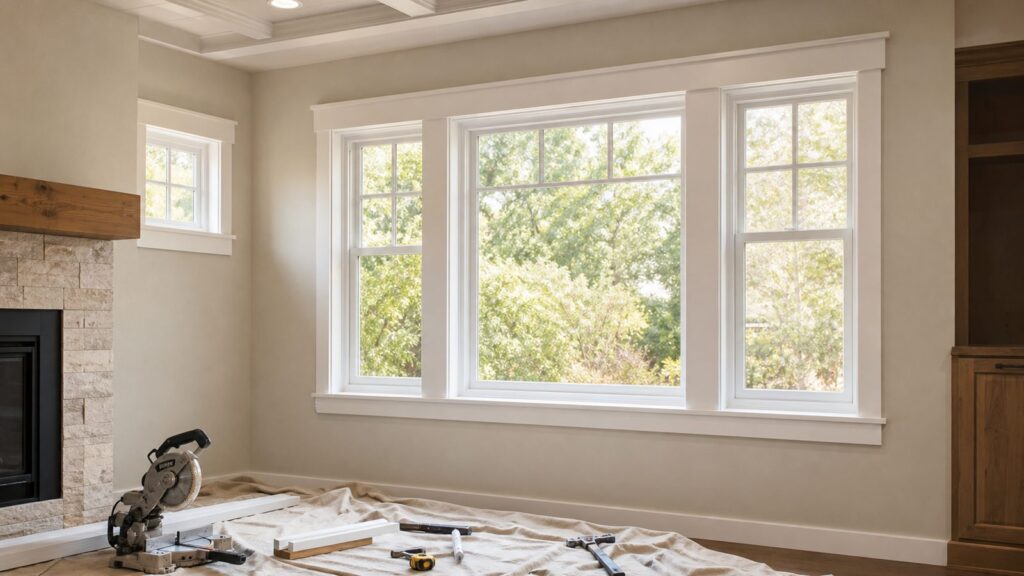
Window trim is one of those finish details homeowners notice immediately, even if they cannot name every part of it. A clean casing line hides the rough opening, protects drywall edges, gives the window better proportion, and connects the window to the rest of the room’s millwork. Done well, it makes the room look intentional. Done poorly, it draws the eye to every uneven reveal, bad miter, swollen MDF edge, and caulk line.
For most homes, the best window trim idea is not the most ornate one. It is the one that fits the room, the window depth, the existing baseboards and door casing, the moisture exposure, and the budget. A simple paint-grade interior trim refresh may be a few hundred dollars per window. Custom stain-grade work, arched casing, bay windows, exterior trim, or openings with water damage can move into the high hundreds or more per opening.
As an Amazon Associate I earn from qualifying purchases.
On our job sites, we treat window trim as both design work and construction detailing. Interior trim is mostly a finish carpentry decision. Exterior trim is also a water-management decision, which means flashing, drainage, siding transitions, and rot resistance matter as much as appearance. The ideas below are practical options a homeowner can actually discuss with a contractor, carpenter, or remodeler.
Start With the Parts of a Window Trim Package
Before choosing a style, it helps to know the language. Window casing is the trim that surrounds the window opening on the wall surface. The stool is the horizontal ledge at the bottom on the interior side. Many homeowners call it a sill, but technically the sill is part of the window assembly and slopes to shed water on many exterior units. The apron is the trim board installed below the stool. Jamb extensions are the boards that bridge the depth between the window frame and the finished wall surface.
Popular on Amazon

- 【Exact Fit】Direct-fit A-pillar windshield trim replacement for 2011–2019 Ford Explorer; includes left driver and right passenger side outer applique as a matched pair.
- 【Dual-Layer Material】Flexible PP+TPE inner core prevents A-pillar clip breakage, while the glossy PMMA outer layer resists UV fading, scratching, and chalky wear.
- 【Secure Clips】Upgraded windshield molding retention clips lock firmly into factory mounts, staying put at highway speed with no flapping, rattling, or loose trim.
- 【Easy Install】Align the applique with existing A-pillar mounting points and press until each clip clicks; both sides install in about 15 minutes, no drilling needed.
- 【36-Month Warranty】Each driver and passenger side A-pillar trim is foam-wrapped to prevent shipping damage, backed by a 36-month hassle-free replacement guarantee.
A typical interior casing reveal is about 3/16 inch from the inside edge of the jamb to the casing. The exact reveal can vary, but consistency matters. If the reveal is 3/16 inch on the left, 1/8 inch at the head, and 1/4 inch on the right, even expensive trim will look careless. We usually mark reveals before cutting casing, then check the window for square before assuming the same measurement will work on all four sides.
Also check projection. If you plan to use inside-mount blinds, shutters, Roman shades, or drapery hardware, the casing thickness and stool projection can interfere. A stool commonly projects 3/4 inch to 1-1/2 inches past the casing face, but that can change depending on the style and window treatment.
What Window Trim Costs in 2026
Installed window trim cost varies widely because the visible boards are only part of the job. Removal, drywall repair, jamb extensions, paint or stain, high ceilings, bay windows, arched openings, exterior access, and rot repair all change the number.
For 2026 US pricing, national sources show a broad range. Angi and HomeAdvisor report installed window trim commonly ranging from about $350 to $1,600 per window, with typical project ranges around $500 to $1,200 and roughly $900 as a common average depending on scope and market. Linear-foot pricing is also useful: Angi cites about $4 to $12 per linear foot, while Handoff AI lists roughly $5.73 to $13.10 per linear foot installed for window casing. Narrow replacement jobs can come in lower. Fixr reports about $164 to $187 per window for limited trim installation, while CountBricks cites roughly $120 to $350 per window for wood casing replacement in 2026, with basic MDF near the low end and custom profiles above $350.
| Trim Scope | Typical 2026 Budget | Best Fit |
|---|---|---|
| Basic paint-grade interior casing | $120-$350 per window for limited replacement; often a few hundred dollars per opening installed | Bedrooms, hallways, simple refreshes |
| Standard installed casing by linear foot | About $4-$12 per linear foot, or $5.73-$13.10 per linear foot in some estimating data | Budgeting several similar windows |
| Typical broader project/opening | About $350-$1,600 per window depending on scope | Trim plus prep, repairs, finish work, or more detail |
| Custom, stain-grade, exterior, arched, bay, or damaged openings | High hundreds or more per opening | Historic homes, premium rooms, water-damage correction |
Material is a major driver. MDF is usually the cheapest for dry, painted interiors. Finger-jointed pine and poplar are common midrange paint-grade choices. Oak, maple, cherry, and other stain-grade hardwoods cost more and demand tighter carpentry because stain does not hide gaps the way paint and caulk can. PVC and composite cost more than MDF, but they are better choices in bathrooms, laundry rooms, basements, exteriors, and rot-prone locations.
21 Window Trim Ideas That Work in Real Homes
1. Picture-Frame Casing
Picture-frame casing uses trim on all four sides of the window, usually with mitered corners. It is clean, familiar, and works in many homes where the goal is a finished look without a stool and apron. It is a good choice for bedrooms, hallways, and rooms where furniture sits close below the window.
The risk is sloppy miters. A 45-degree joint that is open by even 1/16 inch will show, especially with semi-gloss paint or stained wood. For paint-grade work, a carpenter can glue, pin, fill, sand, prime, and paint the joint. For stain-grade casing, the cuts need to be cleaner from the start.
2. Craftsman 1×4 Casing
Craftsman-style flat-stock trim is one of the most buildable upgrades for a plain room. It often uses 1×4 side casing, a wider head casing, and a stool with an apron below. Because most cuts are square rather than mitered, it is easier to install and repair than ornate profiles.
This style works especially well in small or builder-basic rooms because the wider boards give the window more presence. A common approach is 3-1/2 inch side casing with a 4-1/2 to 5-1/2 inch head assembly, depending on ceiling height and nearby door trim.
3. Stool-and-Apron Detail
If your room already has simple casing but looks unfinished at the bottom of the window, adding or upgrading the stool and apron can help. The stool gives the window a grounded, traditional look, while the apron visually connects it to the wall below.
Quick wins for a faster PC:
Scan for outdated or missing drivers - takes under a minuteDriver Scan →Repair Windows errors before they cause bigger problemsFix Now →Fix the driver behind crashes, sound loss and screen glitchesFind Drivers →On many projects, we size the stool to extend beyond the side casing by roughly 3/4 inch to 1 inch per side. The apron typically aligns with the outside edges of the casing or sits slightly inside, depending on the profile. This is a small detail, but when it is wrong, the window can look top-heavy or improvised.
4. Colonial Profile Casing
Colonial casing has curved profiles and shadow lines that suit traditional homes. It is common in many US houses, which makes it easy to match when you are replacing damaged pieces or trimming a new window in an existing room.
The key is to match the room, not just the window. Photograph and measure existing door casing, baseboards, chair rail, and crown before buying trim. A 2-1/4 inch colonial casing beside a much larger baseboard may look undersized; a bulky new profile in a modest room can look equally wrong.
5. Flat-Stock Modern Trim
Flat-stock modern trim uses simple square-edged boards, often in slimmer widths than Craftsman trim. It suits contemporary interiors, offices, finished basements, and rooms with minimal cabinet or door profiles.
The Tool Desk
Outbyte Driver Updater FREEScan for outdated or missing drivers - takes under a minuteDriver Scan →Outbyte PC Repair FREERepair Windows errors before they cause bigger problemsFix Now →For modern trim, the wall condition matters. Simple lines expose imperfections. If the drywall return is wavy or the jamb is not flush, flat casing will not hide it. A clean installation often requires careful jamb extension work and a consistent reveal before the casing is installed.
6. Drywall Returns With a Wood Stool
A drywall return means the drywall wraps into the window opening instead of using casing on the sides and top. Adding a wood stool at the bottom gives warmth and durability without making the window feel heavily framed.
This works well in modern homes and rooms where you want a quiet wall plane. It is also useful when windows are grouped closely and full casing would feel crowded. The drywall edges need to be straight and well-finished because there is no casing to hide waviness.
Also popular on Amazon

- Compatible - The stainless steel window trim blackout kit is customized for 9th Gen Honda Accord Sedan 2013 2014 2015 2016 2017.
- Material - The black window trim for Accord 2013 2014 is made of stainless steel, scratch-resistant, aging-resistance.
- Function - The black window trim chrome delete for Accord 2015 2016 can delete the chrome frame, make your car an excellent looking. And also can cover existing scratches.
- Easy Installation - Equipped with double-sided tape,quick and easy installation. Just need to heat the tape by hair dryer for better adhesion, and press it almost 1 minute.
- 90 Days - Provide chrome delete wimdow trim black for Accord 2017 90 days for return or replacement without reason. If there is any bending, dent or scratch, please send a message to me, we will send the replacement asap.
7. Trimless Reveal
A trimless reveal uses a crisp shadow line instead of traditional casing. It can look sharp in modern construction, but it is not a shortcut. The framing, drywall, corner bead, jamb depth, and paint finish all have to be clean.
Do these 3 things before closing this tab:
1Clear out junk files and repair common Windows errors2Scan for outdated or missing drivers - takes under a minute3Repair Windows errors before they cause bigger problemsTrimless work is usually better planned during construction or a larger remodel. Retrofitting it into an older opening can require more labor than installing conventional casing, especially if the window is out of square or the drywall edge is damaged.
8. Black Painted Casing
Black window trim can sharpen a room, especially when paired with black window frames, white walls, or natural wood floors. It works well in kitchens, offices, dining rooms, and modern farmhouse interiors.
Mock up one window before committing to the whole house. Dark trim highlights uneven reveals, nail holes, caulk ridges, dust, and wavy drywall more than white trim. Use a durable enamel or trim paint and expect more prep time if the existing casing is rough.
9. Stained Wood Casing
Stained casing brings natural warmth and works well in studies, living rooms, mountain homes, historic homes, and spaces with visible wood beams or floors. Oak, maple, cherry, walnut, and clear pine can all work depending on the home.
Windows Errors? Fix Them Before They Spread
Repair common Windows errors and clear accumulated junk for a smoother, more stable PC - no reinstall needed.Free scan · no reinstallOutdated Drivers Are Slowing You Down
One free scan finds every outdated or missing driver and matches the right update for your exact hardware.Free scan · exact hardware matchStain-grade trim costs more because the material is more expensive and the carpentry has less forgiveness. You cannot rely on caulk to hide bad cuts. Boards need good grain selection, tight joints, careful sanding, and a controlled finish schedule.
10. Two-Tone Trim
Two-tone trim uses one color for the window sash or frame and another for the casing. A common version is black window frames with white casing. Another is stained wood stools with painted casing.
This is useful when you want contrast but do not want the entire opening to feel heavy. Keep the palette tied to other fixed elements, such as cabinets, doors, floors, or stair parts. Random contrast at the window can make the room feel pieced together.
11. Wide Farmhouse Casing
Wide farmhouse casing usually means flat boards, broad side casing, a substantial head piece, and a pronounced stool. It can make a small window look larger and more grounded.
Use proportion carefully. In an 8-foot-ceiling room, very tall head trim can crowd the ceiling or conflict with crown molding. In many rooms, 3-1/2 inch side casing and a 5-1/2 inch head board are enough. Larger rooms or taller ceilings can handle more.
12. Layered Build-Up Casing
Layered casing combines several pieces: flat stock, back band, cap molding, and sometimes a separate sill or apron profile. It is a good way to create depth around large windows or formal rooms without ordering custom millwork.
The tradeoff is labor. Every added piece means more measuring, cutting, fastening, filling, sanding, and painting. It can look excellent in dining rooms and primary living spaces, but it may be overkill for small bedrooms or utility spaces.
13. Bullnose-Return Trim
Homes with rounded drywall corners often need a different trim approach. Bullnose-return trim uses small return pieces or compatible blocks to transition neatly from the casing to the rounded wall edge.
What’s actually slowing this PC down?
Pick the symptom - the matching free tool is one click away.
This is not usually expensive material, but it takes patience. If the return pieces are inconsistent, the casing looks patched. Paint-grade work is forgiving, while stain-grade bullnose returns are more demanding.
14. Arched Window Casing
Arched windows need trim that respects the curve. Flexible molding, custom curved casing, or segmented trim can all work. The right choice depends on the radius, profile, material, and whether the trim will be painted or stained.
This is usually finish-carpenter territory. Field-built segmented trim can look rough if the pieces are too short or the joints are not planned. Custom arched casing costs more, but it often looks better in formal or historic rooms.
15. Bay and Bow Window Trim
Bay and bow windows require more than casing around a flat opening. You may have multiple jamb angles, a seat board, head trim, side returns, and sometimes paneling below. Small layout errors multiply across the assembly.
Also popular on Amazon

- A-PILLAR MOLDING TRIM SET:2011 2012 2013 2014 2015 2016 2017 2018 2019 replacement for ford explorer 4 Door Utility front windshield.Color: Gloss Black.
- PART NUMBER:926-451 926-450 BB5Z7803136AA BB5Z-7803136-AB BB5Z7803136BA BB5Z7803144AA BB5Z7803137AA BB5Z-7803137-AB BB5Z7803137BA BB5Z7803145AA.
- SUGGESTION:This front passenger & Driver side windshield Outer & Inner pillar trim strip has side tape.But just as an extra precaution, it is strongly recommended to use urethane.
- EASY TO INSTALL:Easy to install, no special tools required.Durable and manufactured in accordance with strict ABS quality control standards.
- Package Inclubing:1*Right Passenger Side Windshield Trim Molding set,1*Left Driver Side Windshield Trim Molding set.
Budget more time and labor here. A bay window with out-of-square framing, old water staining, or a poorly insulated seat can become a repair project before it becomes a trim project. This is a place where measuring twice is not enough; dry fitting matters.
16. Deep Jamb Extensions
Deep jamb extensions are needed when the window frame sits back from the interior wall surface. This happens often in older homes, thick walls, basement remodels, and window replacements where the new unit does not align perfectly with the finished wall.
Do not cover a large depth problem with oversized casing. The jamb extension should bridge the opening cleanly, be insulated and air sealed where appropriate, and land flush enough for the casing to sit flat. Deep returns can be painted to match trim or stained to create a more furniture-like opening.
17. Window Seat Integration
When a window has enough height and depth, trim can integrate into a window seat. The casing, stool, side panels, seat deck, and apron or base should read as one built-in assembly.
Recommended Free Tools
For comfort, many window seats finish around 18 to 20 inches high, similar to chair height. Seat depth often needs at least 18 inches to feel usable. If the window is low, tempered safety glass may be required depending on location and code conditions, so this is not only a trim decision.
18. Wainscot-to-Window Alignment
In dining rooms, powder rooms, stair halls, and mudrooms, window trim often looks best when it aligns with wainscot rails or panel molding. The stool may sit on top of the wainscot cap, or the side casing may interrupt the wall paneling in a deliberate way.
The mistake is treating the window and wall paneling as separate projects. Lay out the room elevations first. Aligning a chair rail, apron, casing edge, and panel spacing can save the wall from awkward 2-inch filler panels or trim collisions.
19. Floor-to-Ceiling Curtain-Friendly Trim
If the room will use draperies, the trim should leave enough room for rods, brackets, returns, and fabric stack. Slimmer casing can be better than bulky casing near the ceiling or inside a tight corner.
For full-height curtains, many designers mount rods several inches above the window and extend them beyond the casing so the fabric clears more glass when open. That means casing projection, crown molding, and nearby walls all need to be considered before trim is finalized.
20. PVC Exterior Surrounds
For exterior trim in rot-prone areas, PVC or cellular PVC is often a better choice than wood. It resists moisture, holds paint well when prepped correctly, and is useful around windows exposed to splashback, shade, or poor drying conditions.
Exterior PVC still needs proper installation. Cut edges, fastener spacing, expansion gaps, compatible adhesives, and paint color limits matter. Dark paint on some PVC products can create heat-related movement unless the manufacturer allows it.
21. Exterior Trim With Drip Cap and Head Flashing
Exterior trim is not just decoration. It must work with the weather-resistive barrier, flashing, siding, and window installation. A head flashing or drip cap helps direct water away from the top of the opening. Flat horizontal ledges that hold water are a common cause of premature rot.
Quick wins for a faster PC:
Clear out junk files and repair common Windows errorsFree Scan →Fix the driver behind crashes, sound loss and screen glitchesFind Drivers →Repair Windows errors before they cause bigger problemsFix Now →When replacing exterior trim, we look for soft wood, failed caulk, missing flashing, open end grain, and siding details that trap water. If the work disturbs cladding or exposes the window installation, the scope may need to include flashing correction, not just new boards and paint.
How to Choose the Right Material
Match the trim material to the exposure and finish. MDF is economical, smooth, and good for painted dry interiors. It is not a good choice for damp bathrooms, laundry rooms, basements, or windows with condensation. Once MDF swells, the paint film usually fails and the edge becomes hard to repair cleanly.
Finger-jointed pine is a common paint-grade option because it is stable and affordable. Poplar is another good paint-grade wood where a smoother finish is desired. For stain-grade work, hardwoods such as oak, maple, and cherry are better choices, but they increase both material and labor cost.
For wet rooms and exterior openings, PVC, cellular PVC, or composite trim can be worth the higher upfront cost. In kitchens and bathrooms, fully sealed wood can work, but every cut end and joint needs attention. Condensation at windows is hard on trim because moisture repeatedly sits at the stool, lower casing, and inside corners.
When to DIY and When to Hire a Pro
A careful DIYer can often handle simple interior paint-grade trim. The most forgiving projects use flat stock, square cuts, consistent reveals, and caulked joints. Plan on basic tools: tape measure, pencil, combination square, level, miter saw or fine-finish saw, nailer or finish nails, wood glue, shims, caulk, filler, sanding blocks, primer, and trim paint.
Also popular on Amazon

- 【Vehicle Compatibility】6PCS Weather Strip Kit. Compatible with 1987-1996 Ford F150 | 1987-1997 Ford F250 | 1987-1997 Ford F350 | 1987-1996 Ford Bronco|1997 Ford F250 HD. Replacement Part Number:E7TZ1521452A E7TZ1521453A F2TZ1521456A F2TZ1521457A E9TZ1521563A
- 【Seal Kit Includes】 (4PCS)Driver & Passenger Side Inner & Outer Window Felt Seal Belt,(2PCS)Driver & Passenger Side Window Glass Run Channel Rubber Seals,(2PCS)Front Door to Body Weather stripping Seals on the Driver & Passenger Side .
- 【High Quality】Made of high-quality materials, the weather stripping provides excellent wear and impact resistance, ensuring a long service life. The built-in metal layer enhances the felt’s strength, allowing for cleaner window sweep,when the window moves up and down.
- 【Easy To Install】Install the trim seal belt easily with its metal buckle design—just align and insert for a secure fit. It offers strong waterproof, dustproof, and rainproof protection, and can be warped without distortion to improve sealing and reduce noise from bumps. Note: For curved parts, use a rubber hammer or towel-wrapped wooden stick for adjustments.
- 【Support】If you have concerns about the window trim, contact us,we will deal with it as soon as possible! We offer 12-month warranty for a hassle-free experience.
For one straightforward window, a skilled DIYer might spend half a day to a full day including removal, cutting, installation, filling, sanding, caulking, and primer. Paint drying and finish coats add time. A first-timer should expect the first window to take longer because layout and reveal control are the real work.
Hire a finish carpenter or remodeler for stain-grade trim, arched windows, bay or bow windows, historic profile matching, large multi-window rooms, exterior trim, visible water damage, out-of-square openings, or any project that requires jamb extensions and drywall correction. Also hire help when window replacement, air sealing, insulation, flashing, or siding work is happening at the same time. Those details affect performance, not just appearance.
Safety, Code, and Permit Notes
Replacing interior casing alone usually does not require a permit in many jurisdictions, but replacing windows, changing openings, altering egress, modifying structural framing, or disturbing exterior water-management layers can trigger permit requirements. Local rules control, so verify before work begins.
Do not let trim reduce required egress clear openings. Bedroom emergency escape and rescue openings have minimum size and operational requirements under residential codes, and deep returns, interior stops, shutters, security grilles, or trim details can interfere if poorly planned. Safety glazing can also be required near doors, floors, tubs, showers, stairs, and other hazardous locations. If your trim project is part of a window replacement near those areas, glass type and code compliance need to be reviewed.
Exterior trim must maintain drainage. The International Residential Code includes requirements for exterior wall coverings, flashing, and water-resistive detailing. In practical terms, that means head flashing, lapped weather-resistive barrier, sloped or protected horizontal surfaces, sealed end grain where wood is used, and no caulk-only strategy where water needs a drainage path.
Common Window Trim Mistakes to Avoid
The first mistake is choosing from inspiration photos without measuring the real opening. Window depth, wall texture, reveal, casing width, stool projection, and window treatment clearance all affect the final result. A trim detail that looks balanced on a tall, wide window may overwhelm a small bathroom window.
The second mistake is using the wrong material. MDF is fine in dry bedrooms and living rooms, but it is a poor choice where condensation or splash exposure is likely. In damp rooms, PVC, composite, or carefully sealed wood is usually a better call.
Do these 3 things before closing this tab:
1Scan for outdated or missing drivers - takes under a minute2Repair Windows errors before they cause bigger problems3Fix the driver behind crashes, sound loss and screen glitchesThe third mistake is hiding construction problems with wider trim. Oversized casing should not be used to cover missing jamb extensions, large air gaps, damaged drywall, or failed flashing. Those issues should be corrected before finish trim goes on.
Finally, plan the paint sequence. Fill nail holes, sand, caulk paint-grade joints, prime bare and cut edges, then apply finish coats. Skipping primer often causes flashing, dull patches, and visible repairs. Dark colors and glossy sheens require even better prep because they show defects quickly.
Bottom Line
The best window trim idea is the one that makes the room look finished while respecting how the window is built. For a simple interior update, flat-stock casing, Craftsman trim, or a stool-and-apron detail can deliver a lot of value. For formal rooms, historic homes, arched windows, and stain-grade work, custom profiles and experienced finish carpentry are usually worth the cost. For bathrooms, kitchens, basements, and exteriors, material choice and moisture detailing matter more than style trends.
If you are replacing windows and trim together, coordinate the full package: flashing, insulation, air sealing, jamb depth, casing profile, stool projection, paint or stain, and window treatments. That is how a trim upgrade becomes more than decoration. It becomes a cleaner, longer-lasting part of the house.
Frequently Asked Questions
How much does it cost to install window trim in 2026?
A simple paint-grade interior trim replacement may cost about $120-$350 per window when the scope is limited. Broader installed projects commonly range from about $350-$1,600 per window depending on material, labor, repairs, finish, and market. Linear-foot estimates often fall around $4-$12 per linear foot, with some 2026 estimating data showing about $5.73-$13.10 per linear foot installed.
What is the difference between window casing, trim, stool, sill, and apron?
Casing is the trim around the window on the wall surface. Trim is the broader category for all decorative and protective millwork. The stool is the interior ledge at the bottom of the window. Many people call it a sill, though the sill is technically part of the window assembly. The apron is the trim board below the stool.
What is the best material for interior window trim?
For dry, painted interiors, MDF is economical and smooth. Finger-jointed pine and poplar are durable paint-grade upgrades. For stained trim, hardwoods such as oak, maple, and cherry are better choices. In bathrooms, kitchens, basements, laundry rooms, and condensation-prone windows, PVC, composite, or fully sealed wood is usually safer than MDF.
Can I install window trim myself?
Yes, if the project is simple paint-grade trim with square cuts, flat stock, and no major drywall or jamb issues. Hire a pro for stain-grade work, arched windows, bay or bow windows, historic profile matching, exterior trim, water damage, or openings that need jamb extensions, air sealing, or flashing corrections.
What’s actually slowing this PC down?
Pick the symptom - the matching free tool is one click away.
Does replacing window trim require a permit?
Interior casing replacement alone often does not require a permit, but local rules vary. A permit may be required if you replace the window, change the opening size, alter framing, affect egress, disturb exterior cladding, or modify flashing and weatherproofing.
Should window trim match baseboards and door casing?
In most homes, yes. Window trim does not need to be identical, but it should feel related in width, profile, color, and level of detail. Before choosing new casing, measure the existing door casing and baseboards so the room reads as one coordinated millwork system.
Quick Recap
Product prices and availability are accurate as of the date/time indicated and are subject to change. Any price and availability information displayed on Amazon at the time of purchase will apply.

