Do these 3 things before closing this tab:
1Fix the driver behind crashes, sound loss and screen glitches2Repair Windows errors before they cause bigger problems3Scan for outdated or missing drivers - takes under a minutePeppermint oil is not a dependable all-winter mouse barrier. It may repel some mice briefly, but the scent fades and does not close the 1/4-inch gaps through which mice enter homes. For lasting winter prevention, focus on exclusion, sanitation, and properly placed snap traps.
Short answer: Peppermint oil is the natural mouse repellent most often promoted for winter, but it will not reliably keep mice out of a house all season. Its odor may bother some mice briefly, yet volatile oils dissipate and extension experts do not regard peppermint as a dependable method of mouse prevention. The measures that hold up better are sealing openings of about 1/4 inch (6 mm) or larger, removing food and nesting opportunities, and using snap traps when mice are already active.
As an Amazon Associate I earn from qualifying purchases.
That matters especially in a construction or home-maintenance context: a strong-smelling spray cannot compensate for a gap around a utility line, a poorly fitted door, an unsealed crawl-space vent, or food stored in an accessible garage. Treat peppermint oil as an optional scent experiment—not as a winter barrier.
What is the “natural repellent”?
The claim usually refers to peppermint essential oil, either applied to cotton balls or mixed into a homemade spray. Some experimental and extension-reviewed evidence suggests that mice may avoid certain strong odors for a limited time. That is much narrower than proving that a homeowner can apply peppermint oil once and prevent mouse entry throughout winter.
#1 Best Overall
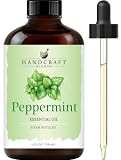
- PEPPERMINT OIL: Handcraft Blends Peppermint Oil is carefully crafted and packaged. Every bottle is backed by our Quality Guarantee.
- PREMIUM GRADE: Handcraft Blends Peppermint Essential Oil is ideal for aromatherapy, soap making, skincare, massage, and a variety of DIY projects.
- HIGH QUALITY GLASS BOTTLE AND DROPPER: Our essential oil comes in an amber glass bottle to keep out UV rays and protect the oil against sunlight. We also provide a glass dropper, so you get the exact amount of oil without any waste.
- VERSATILE FOR DIY PROJECTS: Perfect for aromatherapy, massage, skin care, and DIY soap making. Essential oil is a popular ingredient in homemade soaps, body oils, and scrubs.
- BOTTLED IN THE USA: Our oils are sourced from the best regions all over the world to bring you the best and finest.
NC State Extension lists peppermint oil and other odor-based products among substances that may repel mice under some conditions, but warns that they are not reliable for mouse management or prevention. Oregon State University Extension likewise reports that it could not find research establishing that peppermint spray keeps mice out of structures. The practical problem is that essential oils are highly volatile: the odor fades, coverage is uneven, and a mouse still has a strong incentive to enter a warm building for food and shelter.
Strong scents may also interfere with nearby traps or bait by changing the odor environment around them. There is no established household application schedule, coverage standard, or controlled long-duration residential study showing that peppermint oil prevents mouse entry for an entire winter.
Why peppermint oil fails the “all winter” test
- It evaporates. A scent that is noticeable when applied may be much weaker days or weeks later.
- It does not close the entry route. A mouse can continue using a gap behind siding, under a door, or around a pipe once the odor becomes tolerable.
- Winter creates a strong incentive to enter. Warmth, food, water, and protected nesting areas can outweigh temporary odor avoidance.
- It does not remove established mice. A repellent cannot reliably drive mice from wall voids, attics, basements, or crawl spaces.
- Household conditions vary. Air movement, moisture, dust, temperature, competing odors, and the location of the application all affect how long the smell remains noticeable.
So the accurate claim is: peppermint oil may smell unpleasant to some mice, but it is not a proven or dependable way to keep mice out all winter. Be skeptical of any claim that attributes a guaranteed seasonal barrier to “pest pros” without identifying a controlled study or a specific, tested product label.
The Tool Desk
Outbyte PC Repair FREEClear out junk files and repair common Windows errorsFree Scan →Outbyte Driver Updater FREEFix the driver behind crashes, sound loss and screen glitchesFind Drivers →The 1/4-inch problem: inspect before winter
Adult house mice can enter openings approximately 1/4 inch wide—about the width of a pencil, or roughly 6 millimeters. That small dimension makes exclusion a building-detail problem rather than an air-freshener problem.
Walk the outside of the building in daylight and inspect these locations:
Rank #2

- 100% PURE & NATURAL PEPPERMINT OIL - Majestic Pure Blends oils are exactly that! Many oils being sold make that claim but are in fact made of natural isolates and mixtures. Each essential oil is tested by an independent lab which is why every bottle comes with a Quality Guaranty.
- PREMIUM GRADE & QUALITY – All Majestic Pure Blends Essential Oils are tested by an independent lab to test the efficacy of each oil. Each oil is tested for its constituents as well as to have no fillers, additives and to be undiluted.
- HIGH QUALITY GLASS BOTTLE – Our Essential Oil comes in an amber glass bottle to keep out UV rays and protect the oil against sunlight. It has a built-in dropper to control the flow and get the exact amount of oil without any waste.
- PEPPERMINT OIL BLENDS WELL WITH – Basil, Coriander, Eucalyptus, Geranium, Lavender, Lemon, Palmarosa, Pepper, Rosemary, Spearmint, Spruce, Vanilla, Wintergreen, Ylang Ylang.
- BOTTLED – Our oils are sourced from the best regions all over the world to bring you the best and finest.
- Gaps at the foundation, sill plate, and transitions between masonry and siding
- Openings around electrical cables, gas lines, plumbing, hose bibs, and HVAC penetrations
- Garage-door edges, corners, thresholds, and worn or missing door seals
- Door sweeps and weatherstripping on exterior doors
- Crawl-space, attic, soffit, roof, and foundation vents
- Openings around chimneys, roof penetrations, eaves, and utility boxes
- Gaps under sinks and behind appliances where pipes and wires enter walls
- Damaged screens, loose flashing, construction gaps, and openings hidden by vegetation
Use a flashlight and photograph questionable openings before repairing them. Inside, look for droppings, rub marks, gnawing, nesting material, greasy marks along walls, and the sound of movement. These signs help distinguish a potential entry point from an active route.
How to seal mouse entry points correctly
Exclusion is widely identified by extension and integrated pest-management guidance as the most successful and lasting form of house-mouse control. Choose a material that mice cannot readily chew and that suits the location.
| Opening or task | More durable approach | Important limitation |
|---|---|---|
| Small gaps and penetrations | Metal mesh, copper or stainless-steel mesh, or another rodent-resistant metal barrier secured in place | Do not leave a loose plug that can be pulled out. |
| Larger holes or foundation defects | Hardware cloth or metal mesh combined with mortar, concrete, or another durable building repair | Match the repair to movement, drainage, and the surrounding construction. |
| Vent openings | Properly fitted metal screening or hardware cloth that preserves ventilation | Do not block required airflow or create a moisture problem. |
| Exterior doors | A close-fitting door sweep and intact weatherstripping | Check the full threshold and both bottom corners; a partial seal is still an entry route. |
| Temporary small plug | Steel wool may be used as a temporary measure | It can rust and should not be treated as a universal permanent repair. |
Plastic screening, rubber, vinyl, expanding foam alone, and other easily gnawed materials are not dependable mouse plugs. Foam can help fill a void as part of a properly protected repair, but it should not be the only barrier where mice can reach it.
Do not seal blindly if mice may already be inside. Closing every visible hole while animals remain in a wall, attic, or ceiling can trap them in an inaccessible space. Dead rodents may produce persistent odors and attract flies. First determine whether the opening is an active route and whether animals are inside; use trapping and professional advice where necessary, then complete the exclusion work.
For a pre-winter repair, 1/4-inch hardware cloth, mouse-proof metal mesh, and a properly fitted door sweep for mouse gaps are more relevant purchases than a large supply of peppermint spray. The exact material depends on the opening and the building assembly, so do not cover a vent, drain, or required clearance without understanding its function.
Rank #3

- PEPPERMINT OIL: Brooklyn Botany essential oils provide their maximum benefits and are extremely potent.
- AROMATHERAPY ESSENTIAL OIL: Our essential oils are highly beneficial for use in aromatherapy and skin care.
- GLASS BOTTLE WITH DROPPER FOR ESSENTIAL OILS: Our Essential Oil is bottled in an amber glass bottle to protect the oil against UV rays. A glass dropper is also included so you can avoid waste of the oil and get the exact amount you desire.
- ESSENTIAL OIL FOR DIFFUSER: Our Peppermint Oil blends well with other oils like Bergamot, Rose, Geranium, Frankincense, Grapefruit, Vetiver, Pine, Lemon, Tangerine, Patchouli, Sweet Orange, Cedarwood, Neroli, Rosemary and Clary Sage.
- BOTTLED IN THE USA: We want to serve you with the finest oils and therefore we source them from the best regions all over the world. Each oil is brought to the USA, is tested for its potency and is then bottled with care for you to enjoy.
Remove the food and shelter that make a building attractive
Sealing gaps is the priority, but sanitation makes the structure less rewarding to enter. CDC guidance recommends:
- Store human food, pet food, birdseed, and animal feed in thick plastic, metal, or glass containers with tight-fitting lids.
- Clean crumbs and spills promptly, including under appliances and workbenches.
- Put away pet food and water overnight.
- Use covered garbage containers and keep their lids closed.
- Reduce brush, weeds, debris, and concealed nesting material near the building.
- Move woodpiles away from the structure and raise them off the ground.
- Keep sheds, garages, basements, and utility rooms as uncluttered as practical.
Rodent-proof food containers can be useful in kitchens, garages, sheds, and feed-storage areas, but they are not a substitute for sealing the building. A mouse that cannot reach a bag of birdseed may still enter through a foundation gap; the two controls work together.
A better winter mouse-prevention sequence
- Inspect early. Before sustained cold weather, examine the exterior, attic, crawl space, garage, basement, and utility penetrations. Photograph and measure gaps rather than relying on a general spray.
- Identify activity. Map droppings, rub marks, gnawing, tracks, and sounds. If there may be mice inside wall voids or ceilings, plan the control step before closing openings.
- Seal openings of about 1/4 inch or larger. Use metal mesh, hardware cloth, concrete, mortar, properly fitted screens, and door repairs suited to the location.
- Remove attractants. Secure food, pet supplies, birdseed, feed, garbage, and nesting materials. Correct leaks and reduce clutter.
- Trap active indoor mice. Set spring-loaded snap traps along walls and other observed runways, with the trigger area facing the wall where appropriate. Peanut butter or honey can help secure bait to the trigger.
- Protect people and animals. Keep traps inaccessible to children, pets, and wildlife. Follow the product instructions and inspect traps regularly.
- Monitor and maintain. Recheck repaired penetrations, door sweeps, vents, and new droppings after storms, temperature changes, remodeling, or landscaping work. Prevention is a maintenance task, not a one-time fragrance application.
Why snap traps are usually preferable indoors
For a small indoor house-mouse problem, UC Integrated Pest Management, NC State Extension, and the CDC identify spring-loaded or snap traps as a practical control method. Trapping avoids the hidden-carcass odor that can result when a mouse dies inside a wall after consuming indoor poison, and it reduces the risk of poisoning children, pets, wildlife, or other nontarget animals.
Place mouse snap traps where activity is visible—typically along walls, behind appliances, or on established runways—not randomly in the middle of a room. Use enough traps for the active area, bait them according to the manufacturer’s directions, and check them frequently. Traps must be inaccessible to children and pets, and they should not be placed where normal household activity could cause injury.
The CDC does not recommend glue traps or live traps for typical household mouse control. Live traps can also leave the homeowner with the problem of handling and releasing a stressed animal, while glue traps create significant welfare and handling concerns.
Rank #4

- Packaging May Vary - New look, same great product.
- Certified Organic Peppermint Oil - Cliganic organic essential oils are proudly USDA organic certified to ensure ultimate quality and integrity.
- 100% Pure, Single Ingredient Oil - Cliganic organic essential oils are a single-ingredient product. No synthetic additives, ever.
- Multipurpose Essential Oil – Cliganic essential oils are suitable for aromatherapy diffuser and have many other great uses and benefits.
- 3rd Party Tested for Purity - Each batch is being tested for purity by a 3rd Party Independent Lab.
What about poison, mothballs, and other “natural” fixes?
Rodenticide is not the natural alternative to peppermint oil, and it should not be the default indoor recommendation. Baits can expose children, pets, wildlife, and other nontarget animals. If bait is necessary, use only a legally marketed product exactly as its label directs. In the United States, consumer rodenticide bait products are subject to EPA requirements, including approved bait-station formats; some more toxic second-generation anticoagulants are not available for unrestricted consumer use.
Do not use homemade poison, mix household chemicals, or place mothballs around a home as a mouse repellent. Mothballs are pesticides intended for specific labeled uses, not an open-air rodent barrier, and extension guidance reports little evidence that they provide safe, long-term mouse control. “Natural” also does not automatically mean safe: concentrated essential oils can create exposure concerns for children and animals. Follow the product label and ask a veterinarian about animal-specific risks.
Independent reader supportYour contribution helps us test, update, and keep practical guides available for everyone.Clean mouse droppings safely
Rodent droppings, urine, saliva, and nesting materials can carry pathogens. Do not dry-sweep or vacuum contaminated material before following current public-health guidance, because those actions can put contaminated particles into the air.
For a substantial infestation, an enclosed attic or crawl space, heavy contamination, or suspected contamination of food or water, use the CDC’s current rodent-cleanup instructions or contact a qualified professional. Discard food or water that may have been contaminated. Dead rodents and nesting material should be handled with appropriate protective measures and double-bagged for disposal according to local requirements.
Free tools Windows power users keep installed
One-click scans. No signup required.
When to call a professional
DIY exclusion and trapping are reasonable for a limited, accessible problem. Seek a licensed pest-control or building professional when:
Best Value

- Peppermint Oil for Home & Cleaning Applications: Add a few drops to cotton balls, sprays, or cleaning solutions near doorways, windowsills, and outdoor spaces. Features a naturally sharp, refreshing aroma. Steam-distilled 100% pure peppermint oil with no synthetics or additives. GCMS tested for purity.
- Peppermint Oil for Cleaning & Home Fragrance: Add to cleaning water, sprays, and surface solutions for a refreshing finish. Crisp, sharp peppermint aroma helps neutralize odors. Compatible with lavender, eucalyptus, and lemon for blended home scents.
- Peppermint Oil for Diffuser Use: Add 3–5 drops to your diffuser for a crisp, refreshing aroma. Pairs well with lavender, frankincense, and eucalyptus oils for blended scents.
- Peppermint Oil for Topical Use: Dilute with a carrier oil before applying to temples, forehead, neck, or wrists. Provides a cooling, refreshing sensation on skin. For external use only. Keep away from eyes and children.
- Multiple Uses – Hair, Beard, Home & Candle Making: Mix into shampoo, conditioner, or scalp serum. Suitable for beard care. Compatible with candle and soap making, bath bombs, and home sprays. Steam-distilled from US peppermint leaves. No fillers or additives.
- Droppings continue after sealing and trapping
- You hear activity in walls, ceilings, ductwork, or inaccessible insulation
- The infestation is extensive or has affected multiple rooms
- Entry points involve the roof, foundation, crawl space, or difficult structural repairs
- Children, pets, livestock, or wildlife could reach traps or bait
- Rodenticide may be necessary, or you cannot safely clean the contaminated area
A qualified provider should explain how mice are entering, which openings will be repaired, how active animals will be handled, and how follow-up monitoring will work. “Spray and leave” is not a substitute for a documented exclusion plan.
Verdict
Peppermint oil may be purchased as a scent experiment, but it is not the product that will reliably keep mice out of a house all winter. The durable answer is construction-focused: close every accessible gap of about 1/4 inch or larger with suitable materials, secure food and feed, reduce shelter around the building, and use protected snap traps when there is evidence of indoor activity. For lasting winter prevention, fix the route rather than trying to overpower it with fragrance.
Frequently Asked Questions
Does peppermint oil keep mice out of a house all winter?
No. Peppermint oil may bother some mice temporarily, but its odor dissipates and there is no reliable evidence that it prevents house-mouse entry throughout an entire winter.
Recommended Free Tools
What is the most effective way to keep mice out in winter?
Seal openings about 1/4 inch (6 mm) or larger using durable materials such as metal mesh, hardware cloth, mortar, or concrete, depending on the location. Repair door sweeps, screens, vents, and utility penetrations as well.
What should I use if mice are already inside?
Use spring-loaded snap traps along walls and active mouse runways, keeping them inaccessible to children and pets. Avoid relying on indoor poison, glue traps, or live traps for typical household control.
How should mouse droppings be cleaned safely?
Do not dry-sweep or vacuum droppings or nesting material. Follow current CDC cleanup guidance, particularly for heavy contamination, enclosed spaces, or suspected food and water contamination.
The Bottom Line
Bottom line: Peppermint oil is not a proven all-winter mouse barrier. Seal 1/4-inch openings with durable materials, remove food and shelter, and use safely placed snap traps for active indoor mice.
What’s actually slowing this PC down?
Pick the symptom - the matching free tool is one click away.
Quick Recap
Product prices and availability are accurate as of the date/time indicated and are subject to change. Any price and availability information displayed on Amazon at the time of purchase will apply.




