Recommended Free Tools
Wildlife crossings are engineered passages that let animals cross roads more safely. They include landscape bridges, overpasses, underpasses, modified culverts, canopy routes, and small-animal tunnels. The right design depends on the target species, habitat, terrain, traffic conditions, and available space. Fencing is normally installed with a crossing to keep animals off the roadway and guide them toward the passage, but fences require continuing inspection and repair.
This guide follows U.S. Federal Highway Administration (FHWA) and U.S. Fish and Wildlife Service (USFWS) guidance. Their recommendations are planning principles, not guarantees that a particular species will use a structure at every location.
As an Amazon Associate I earn from qualifying purchases.
What is a wildlife crossing?
A wildlife crossing is a structure or route that allows animals to move across a road, railway, canal, or other transport corridor while avoiding traffic. Crossings are part of a larger movement corridor: the passage, its approaches, fencing, nearby vegetation, drainage, and surrounding habitat all influence whether animals find and use it.
FHWA’s handbook describes 11 broad crossing types:
#1 Best Overall
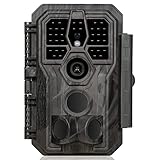
- 64MP Photos & 1296P HD Videos: Equipped with a high-quality optical lens and advanced image sensor, the E5S captures ultra-sharp 64MP photos and smooth 1296P HD videos.
- Low-Power, Eco-Friendly Wildlife Viewing: Simply retrieve the SD card to see what your camera has captured—each visit could bring a new surprise. Non-Cellular and Non-WiFi operation ensures minimal power use, fewer battery changes, and zero disturbances.
- Rugged & Weather-Resistant: Built to withstand harsh outdoor conditions with an IP66 waterproof rating. Features a 1/4"-20 mounting thread for secure placement on trees, posts, or fences. Ideal for use as a durable trail camera.
- Fast 0.1s Trigger Speed with 3 PIR Sensors: Never miss fast-moving deer wildlife. Three PIR sensors enable a lightning-fast 0.1s trigger speed motion activation, perfect for hunting purposes.
- Extended Power Options & Efficient Design: Powered by 8×AA batteries (not included). For continuous outdoor use, the E5S supports the GardePro SP350 Solar Panel (sold separately), ensuring reliable power even in remote areas.
- Landscape bridges
- Wildlife overpasses
- Multi-use overpasses
- Canopy crossings
- Viaducts or flyovers
- Large-mammal underpasses
- Multi-use underpasses
- Waterflow underpasses
- Small- to medium-sized mammal underpasses
- Modified culverts
- Amphibian or reptile tunnels
These categories are not interchangeable. A broad vegetated overpass may suit animals that prefer open, elevated routes, while an amphibian tunnel, culvert, or canopy connection serves a very different movement pattern. The handbook provides suitability guidance for six species groups and 20 North American species, but that guidance must be adapted to local conditions.
Why location and habitat matter
Designers look for existing movement routes, habitat continuity, topography, drainage, and places where animals already approach the road. A crossing that interrupts a familiar route may be less useful than one aligned with the landscape. Retained riparian vegetation or other cover can be important around waterflow structures. Small mammals and other cover-associated species may need refuge features rather than a bare, exposed passage.
Human disturbance also matters. Lighting, pedestrians, cyclists, maintenance vehicles, noise, and frequent human presence can change how and when animals approach. Multi-use structures therefore require an explicit decision about acceptable human activity instead of assuming that people and wildlife will always share the space successfully.
Why are fences built with wildlife crossings?
Fencing and a crossing perform different but connected jobs. The fence reduces the chance that an animal will enter the traffic lanes, while the crossing provides a route to the other side. FHWA describes fencing and crossing structures as a linked mitigation strategy and states that “Wildlife fencing is the most effective and preferred method to guide wildlife to the structure and prevent intrusions onto the right-of-way.”
A fence that stops at the crossing can funnel animals to the opening. A gap, low spot, damaged panel, or poorly designed end can instead create a new collision point. Fence placement must therefore be planned together with the crossing, not added as an unrelated roadside improvement.
Rank #2

- 𝐍𝐎𝐓𝐄: 𝐢𝐭 𝐢𝐬 𝐍𝐎𝐓 𝐜𝐨𝐦𝐩𝐚𝐭𝐢𝐛𝐥𝐞 𝐰𝐢𝐭𝐡 𝐡𝐨𝐦𝐞 𝐖𝐢𝐅𝐢, 𝐝𝐨𝐞𝐬 𝐍𝐎𝐓 𝐬𝐮𝐩𝐩𝐨𝐫𝐭 𝐜𝐞𝐥𝐥𝐮𝐥𝐚𝐫/𝟒𝐆/𝟓𝐆 𝐧𝐞𝐭𝐰𝐨𝐫𝐤𝐬, and 𝐝𝐨𝐞𝐬 𝐍𝐎𝐓 capable of real-time motion alerts or push notifications. The camera creates its own short-range Wi-Fi hotspot (𝐍𝐨𝐧-𝐂𝐞𝐥𝐥𝐮𝐥𝐚𝐫) for setup, and downloading files only. Wi-Fi range is up to 33–50 ft in open areas. The camera records automatically even when your phone is not connected. No subscription or monthly fees
- Upgraded Split Solar Panel Design: This trail camera features a Allows flexible placement design. Its angle can be manually adjusted to efficiently face the sun, regardless of seasonal changes or terrain. This greatly improves charging efficiency and minimizes sunlight blockage, making it suitable for all kinds of outdoor environments (32GB SD card included (pre-installed). No extra charge)
- Non-Stop Solar Power: Equipped with a high-capacity 6000mAh rechargeable power, this trail camera supports three charging modes: solar charging, Type-C charging, and rechargeable power. It allows for long-term continuous use. No more wasting money or climbing. It is the truly energy saving, and long-lasting solution for 24/7 backyard, farm, and deep-woods surveillance
- Easy & Smart App Control : This wifi trail camera pairs instantly via WiFi + Bluetooth with the user friendly “TrailCamGO” app, with a maximum connection range of 55FT (recommended within 10FT). Photos and videos can be send directly to your phone without removing the SD card. (As the wireless trail camera creates its own hotspot to connect with the phone, it does not support home Wi-Fi networks.)
- 4K & 64MP Ultra-Clear Imaging: With a high-resolution sensor and excellent low-light performance, this solar trail camera minimizes image and video blur or noise, enabling quick wildlife recognition and capturing every detail clearly.Ideal for birdwatching, spotting wildlife, and keeping an eye on your garden/home
Why fencing alone can be harmful
Continuous fencing without suitable passages can block normal movement, isolate groups, and prevent animals from reaching food, water, shelter, or seasonal range. FHWA cautions that fencing alone can restrict movement and isolate wildlife populations. The objective is not simply to build a longer barrier; it is to keep animals away from traffic while preserving a safe route through the corridor.
Fence ends and trapped animals
Fence ends have safety implications. USFWS roadway guidance recommends expert input when deciding how a fence terminates. Where continuous fencing is used, escape structures such as jump-outs can allow an animal that has entered the road side of the fence to leave the corridor. Their location, construction, and maintenance should be included in the project design rather than treated as an afterthought.
How do you choose between an overpass, underpass, culvert, or tunnel?
Start with the species and movement problem, then test the design against the site. FHWA’s comparison factors include target-species behavior, habitat and corridor location, topography, available dimensions, vegetation and cover, human disturbance, fence connections, maintenance, and monitoring.
| Crossing type | Primary planning focus | Questions to resolve |
|---|---|---|
| Landscape bridge or wildlife overpass | Open, continuous habitat above the roadway | Can the structure support suitable soil, vegetation, approaches, and drainage while limiting disturbance? |
| Multi-use overpass | Wildlife movement alongside a human route | What level of pedestrian, bicycle, maintenance, or service use is compatible with the target species? |
| Canopy crossing | Movement above the road for tree- or canopy-associated animals | Can vegetation, anchor points, and safe clearances be maintained across the road? |
| Viaduct or flyover | Maintaining a broad passage beneath an elevated roadway | Will the retained ground-level habitat remain connected and sufficiently undisturbed? |
| Large-mammal underpass | Passage for large terrestrial animals below the road | Are dimensions, approach visibility, drainage, fencing, and human activity appropriate? |
| Multi-use underpass | Wildlife movement combined with another route or function | Can co-use be managed without discouraging the target animals? |
| Waterflow underpass | Movement along a drainage or riparian corridor | Can water, banks, vegetation, and cover remain usable during normal and high-flow conditions? |
| Small- to medium-sized mammal underpass | Passage for animals that use smaller, sheltered routes | Are cover, refuge, entrances, and fencing details matched to the species? |
| Modified culvert | Adapting existing drainage infrastructure | Can the culvert provide a dry, passable route as well as its required drainage function? |
| Amphibian or reptile tunnel | Short, specialized crossings for small-bodied species | Are entrances, moisture, guidance fencing, and seasonal movement patterns addressed? |
The table identifies planning questions, not universal performance rankings. A structure that works for one population may be unsuitable for another because habitat, disturbance, weather, and learning time differ.
Which animals use wildlife crossings?
Use depends on the species, structure, surrounding habitat, vegetation, disturbance, and time available for animals to learn the route. FHWA’s 2008 report gives several tendencies rather than fixed rules:
Rank #3
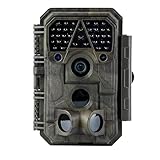
- Crystal-Clear 64MP Photos & 1296p HD Video – Stunning detail day or night, thanks to advanced image tech and a high-performance f/1.6 aperture lens.
- Lightning-Fast 0.1s Trigger Speed – Never miss a moment! Side sensors detect motion instantly, even for fast-moving wildlife, deer.
- Bright 100ft No-Glow Night Vision – Invisible 940nm LEDs and enhanced light capture deliver sharp nighttime footage without spooking animals.
- Smaller Files, Faster Playback – H.264 tech compresses videos (MP4/MOV) for quick downloads and seamless viewing on any device.
- 2.4" Color Display + User-Friendly Controls – Review footage on the spot with an intuitive menu and easy-access buttons.
- Grizzly bears, deer, and elk tend to use overpasses more than underpasses.
- Black bears and mountain lions use underpasses more frequently than overpasses.
Those observations should not be read as a guarantee for every herd, bear population, or mountain-lion range. An underpass with poor habitat connections may be ignored by a species that commonly uses underpasses elsewhere. Conversely, a carefully located overpass can be useful to animals whose general tendency is toward another structure type.
Free tools Windows power users keep installed
One-click scans. No signup required.
Species groups addressed in federal guidance
FHWA’s handbook discusses design considerations for ungulates, carnivores, low-mobility medium-sized mammals, small mammals, reptiles, amphibians, and semi-arboreal mammals. The groups have different needs:
- Ungulates: Deer and elk may need a wide, visible route with fencing that prevents roadside access.
- Carnivores: Bears and mountain lions may respond differently to the openness, cover, and dimensions of an underpass or overpass.
- Small and medium-sized mammals: Cover, refuge, and protection from exposure can be decisive.
- Reptiles and amphibians: Specialized tunnels and guidance fencing may be needed for seasonal movements and small body sizes.
- Semi-arboreal mammals: Canopy connections or other elevated routes may be more appropriate than ground-level passages.
Do not infer that detections of one species mean the structure serves every species in the area. A project should name its target species and evaluate whether each design feature addresses that species’ movement behavior.
How often do wildlife crossing fences need maintenance?
FHWA handbook guidance recommends walking large-mammal fence lines every six months to find gaps, breaks, and other defects. Six months is a baseline inspection interval, not a substitute for additional checks after events that can damage a site.
Depending on the crossing and local conditions, inspections may also be needed after heavy rain, flooding, erosion, falling trees, vehicle impacts, vandalism, or reports of animals getting through. New vegetation may require watering during dry periods, and structures may need more frequent attention while plantings establish.
What’s actually slowing this PC down?
Pick the symptom - the matching free tool is one click away.
Rank #4

- 【Ultra-clear Photos and Videos】36MP Still Images & 2.7K Videos. Thanks to premium optical lens and an advanced image sensor, and built-in 22Pcs 850nm low glow LEDs, this trail camera provides crystal clear images and amazing smooth 2.7K videos with sound in the daytime, low light or nighttime, combined with noise reduction speaker and 2.0” HD TFT Color Screen, which takes you into the world of wildlife.(This camera does not include an SD card.)
- 【Super Night Vision & Low Glow Infrared LEDs】The trail camera is equipped with powerful low glow infrared LEDs, features upgraded 850nm infrared technology, makes this game camera more stealth, which can show the night behavior of animals without disturbing them, encompasses adaptive illumination technology to avoid overexposure or over-dimmed, which can provide clear night images and videos in total darkness, delivers brilliant night vision up to 75ft.
- 【Fast 0.1s Trigger Time &130°Wide Angle】Once movements are detected, the lightning-fast trigger speed of less than 0.1s with 1 to 3 shots choice guarantees fast and accurate capture of each detected motion exposed to the field, never miss any animals that wander by this camera. 130° detection range to give you an expansive field view, indispensable for hunting, wildlife observation, farm monitoring, home backyard, plant growth observation, property security and surveillance.
- 【Easier Setup Than Ever】This hunting camera features a built-in 2.0-inch color screen and TV remote-style control buttons. No Wi-Fi or app is needed; the intuitive and easy-to-use interface allows for quick setup and instant playback, making it suitable for users of all ages. The included mounting strap and stand allow you to stabilize the camera in various scenes and at any angle. A comprehensive user guide helps you quickly get started using this hunting camera.
- 【IP66 Waterproof】KJK201 is designed to withstand extreme environments, thanks to the tightly integrated design of the camera body and high-quality rubber ring, ensuring that works normally from -22 °F to 158 °F, excellent quality can be used in deserts, rainforests, etc. The efficient PIR design works to reduce false triggers, boasting an impressive 17,000-image battery life! The smaller size makes them easier to conceal from theft/vandalism, and also much easier to carry out into the field.
What to check during a fence-line inspection
- Walk the complete fence line, including transitions into the crossing and both fence ends.
- Record holes, lifted mesh, broken wires, bent panels, loose posts, and places where animals have dug beneath the fence.
- Look for erosion, washouts, sediment, fallen trees, debris, and flood damage that could create a gap or block a passage.
- Check gates, access points, jump-outs, and other escape features for operation and damage.
- Inspect the crossing itself for obstacles, damaged walls or guiding materials, standing water where a dry route is required, and blocked entrances.
- Repair defects promptly, then recheck the repaired section to confirm that the barrier and the route connect continuously.
- Keep dated records, photographs, locations, observed species, and the corrective work completed.
Maintenance is a design obligation as well as an operations task. USFWS guidance says successful projects account for maintenance needs and budgets during design. A crossing that cannot be inspected, repaired, drained, or kept clear is less likely to deliver its intended safety benefit.
What can damage a wildlife fence or crossing?
FHWA identifies vehicle impacts, falling trees, vandalism, erosion, animal digging, and flooding as common causes of damage or loosened posts. Weather and vegetation can create less obvious failures: a washout may open a gap under the fence, while fallen branches can block an entrance or make an approach look unsafe to animals.
Inspectors should check both sides of the barrier and the connection between fence and structure. A fence can appear intact from the road while an animal-sized opening exists behind vegetation or at a drainage feature. Repairs should restore the intended species-specific height, buried edge, overlap, and continuity rather than merely closing the most visible hole.
Independent reader supportYour contribution helps us test, update, and keep practical guides available for everyone.How should a project monitor whether a crossing is working?
Monitoring begins with a stated objective. A project may be trying to document use, reduce road mortality, maintain movement between habitats, or improve population connectivity. Those are different questions and require different evidence.
Quick wins for a faster PC:
Fix the driver behind crashes, sound loss and screen glitchesFind Drivers →Repair Windows errors before they cause bigger problemsFix Now →Scan for outdated or missing drivers - takes under a minuteDriver Scan →What remote cameras can show
Remote cameras are a practical way to detect animals entering and leaving a crossing. Images can help identify species, timing, direction of travel, and apparent reactions to vegetation or human activity. A trail camera is therefore useful for documenting use and finding maintenance problems such as a blocked entrance.
Best Value
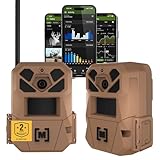
- HARVEST MORE BUCKS THIS SEASON - EDGE 3 delivers real-time deer activity, movement patterns, and location intelligence—so you know when and where mature bucks are moving instead of hunting on hope.
- AI BUCK DETECTION + INSTANT ALERTS - Moultrie AI identifies bucks and immediately delivers high-resolution photos or HD video—reducing false alerts and helping you act fast when it matters most.
- NATIONWIDE 4-CARRIER AUTO-CONNECT - Automatically connects to the strongest of four major U.S. networks. No SIM cards. No manual setup. Reliable photo and video delivery—even in remote hunting properties.
- 40MP PHOTOS + 1080p HD VIDEO - Capture crisp, detailed images and lifelike HD video. Low-glow infrared flash keeps nighttime shots clear without spooking deer.
- 0.5-SECOND TRIGGER + 100FT RANGE - Fast trigger speed and long detection range ensure moving deer are captured cleanly—no blur, no missed opportunities.
What cameras cannot prove by themselves
FHWA’s monitoring guidance cautions that camera records cannot reliably establish distinct individuals, sex, or genetic relationships. A series of images supports the conclusion that animals used the structure. It does not, by itself, prove that the crossing restored population-level connectivity, reduced mortality across the wider road network, or improved long-term population status.
Broader claims require a monitoring plan matched to the objective. Depending on the question, that may involve road-kill records, movement tracking, demographic data, or genetic methods in addition to cameras. The method should be chosen before construction so that baseline information and post-construction comparisons are possible.
What should be included in a wildlife-crossing construction plan?
- Define the target species and objective. State whether the priority is a particular herd, carnivore, amphibian movement, habitat connection, collision reduction, or another measurable outcome.
- Map the movement corridor. Review habitat, drainage, topography, existing animal paths, road geometry, and locations where fencing can connect continuously.
- Select the structure type. Compare overpass, underpass, culvert, canopy, and specialized-tunnel options against species behavior and available dimensions.
- Design approaches and fencing together. Avoid gaps at transitions, plan fence ends and escape structures, and account for gates and maintenance access.
- Protect habitat functions. Retain or restore vegetation, cover, riparian continuity, and drainage features that the target species needs.
- Budget inspections and repairs. Include the six-month fence-line walk, event-based checks, vegetation care, obstacle removal, and replacement of damaged materials.
- Set a monitoring protocol. Decide what cameras and other methods will measure, how often data will be reviewed, and what result would trigger design or maintenance changes.
Are wildlife crossings guaranteed to work?
No. Federal guidance supports evidence-based design, but no crossing type guarantees use by every species or proves population recovery. Animals may need time to learn a new structure. Vegetation, cover, human co-use, seasonal conditions, and changes in the surrounding landscape can all affect results.
Windows Errors? Fix Them Before They Spread
Repair common Windows errors and clear accumulated junk for a smoother, more stable PC - no reinstall needed.Free scan · no reinstallOutdated Drivers Are Slowing You Down
One free scan finds every outdated or missing driver and matches the right update for your exact hardware.Free scan · exact hardware matchThere is also no single, general-purpose success rate that can honestly be applied to wildlife crossings as a whole. A defensible evaluation compares the project’s stated objective with monitoring evidence collected at that site and for its target species.
Quick Recap
Key takeaways for owners and builders
- Treat the crossing, fencing, habitat connections, and maintenance plan as one system.
- Choose the structure for named species and local terrain, not because one design is fashionable or familiar.
- Walk large-mammal fence lines at least every six months and inspect after damaging events.
- Budget for repairs, vegetation establishment, drainage, obstacle removal, and escape features.
- Use cameras to document animal use, but do not claim population-level connectivity from camera detections alone.
- Have qualified wildlife, transportation, and engineering professionals review fence ends, dimensions, drainage, and monitoring methods.
Product prices and availability are accurate as of the date/time indicated and are subject to change. Any price and availability information displayed on Amazon at the time of purchase will apply.

