Do these 3 things before closing this tab:
1Clear out junk files and repair common Windows errors2Fix the driver behind crashes, sound loss and screen glitches3Repair Windows errors before they cause bigger problemsWater leaking through a concrete terrace is usually a water-management and building-envelope failure, not simply a bad grout joint. The visible stain below may be several metres from the entry point. Rain or wash water can travel through ponded areas, blocked drains, failed thresholds, wall junctions, penetrations, cracks, finishes or a defective waterproofing layer before appearing underneath. The reliable fix is to trace that path, correct drainage and detailing, then specify a compatible repair system. Regrouting, a coating or a new membrane can all be the wrong treatment when the underlying cause has not been established.
Why a concrete terrace leaks
A terrace works as a coordinated assembly. The concrete slab and substrate provide support; falls direct water; drains and overflows remove it; thresholds and upstands protect openings; penetrations are sealed; the waterproofing system limits entry; and toppings or finishes protect the system while allowing intended movement. The Victorian Building and Plumbing Commission (BPC) says balcony performance must be considered holistically across the substrate, site characteristics, falls, drainage, membranes, toppings and finishes. Its guidance warns that relying heavily on a membrane as the primary protection measure can contribute to water-related defects when the rest of the assembly is poorly designed or installed.
As an Amazon Associate I earn from qualifying purchases.
In its practice note SD 02 Balcony Design and Stormwater Drainage, the BPC states: “Poor balcony design and inadequate drainage provision are the most common cause of water ingress in buildings.” That is guidance from the Commission, not a quantified probability for every property. It is also why replacing a membrane without correcting ponding, outlet capacity or junction details often produces a short-lived result.
Water can enter at several points
- Slab and surface: porous or cracked concrete, damaged toppings and open joints can admit water, especially where water remains ponded.
- Drains and overflows: blocked outlets, undersized or badly located drains, inadequate overflow provision and defective leak-control flange details can allow water levels to rise against vulnerable surfaces.
- Thresholds and wall junctions: a door sill, parapet, wall base or edge upstand can be too low, discontinuous or poorly sealed.
- Penetrations: posts, pipes, fixings and other penetrations interrupt the waterproofing and need compatible detailing.
- Cracks and movement: a crack may pass through a finish, topping or slab and provide a route into the assembly. Its width, movement, moisture and structural significance determine the appropriate repair.
- Waterproofing layer: a membrane may be missing, punctured, poorly bonded, incorrectly turned up at edges or incompatible with the substrate and finish.
Water does not necessarily travel vertically. It can move laterally through toppings, along reinforcement, beneath tiles or toward a wall before dropping through a joint or weak point. Consequently, the ceiling mark directly below a terrace is a symptom, not proof that the leak is immediately above it.
#1 Best Overall
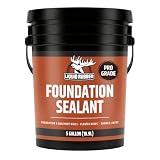
- SUPERIOR FLEXIBLE SEALANT: Liquid Rubber's foundation sealer creates a permanent waterproof membrane for basement waterproofing, foundation leak repair, shower liners, and planter boxes. This professional-grade sealer delivers unmatched protection with 900% elongation, preventing leaks and water damage more effectively than traditional sealants
- COMPLETE BASEMENT WATERPROOFING SYSTEM: Surpassing basic concrete paint, concrete sealers, and standard waterproof agents, this waterproofing membrane is designed to seal and protect against active leaks and moisture, making it perfect for basement leak and foundation repair. Seamlessly compatible with self leveling concrete applications
- VERSATILE CONCRETE CRACK FILLER: The professional-grade rubber coating and rubber waterproofing technology maintains flexibility in all temperatures, preventing future cracks and damage. This liquid rubber waterproof sealant provides superior adhesion to concrete, masonry, wood, metal, and foundation surfaces, making it an ideal choice for your DIY projects
- MAXIMUM COVERAGE & PERFORMANCE: This high-build basement sealer goes on like waterproof paint - Interior basement surfaces: 50 sq ft/gallon (requires: 2-3 coats), Exterior concrete sealer outdoor surfaces: 20 sq ft/gallon (requires: 3-4 coats). Apply between 50°F-90°F. For complete protection, use the rubber sealant with Liquid Rubber Geo-Textile on joints and transitions
- IMPORTANT USAGE GUIDELINES: Product goes on BROWN but dries Black; The water-based foundation sealer formula contains zero VOCs for safe indoor application. No mixing required! Apply by brush, roller, or professional sprayer as part of your basement waterproofing system. Not suitable for walking surfaces due to tackiness when cured
What the warning signs mean
Document symptoms before anyone removes tiles, coatings or waterproofing. The BPC lists ponding, water marks, efflorescence, cracked or discoloured concrete, rust, peeling finishes, mould, musty odours, loose or tented tiles and damage under or beside a balcony as reasons to investigate. Photograph each area from several angles and record when it appears.
- Ponding after rain: suggests insufficient falls, settlement, a blocked outlet or an obstruction. It identifies a drainage concern, but not necessarily the exact entry point.
- White deposits (efflorescence): indicate moisture has carried soluble salts through masonry or concrete. They confirm moisture movement, not the original breach.
- Rust-coloured runoff or exposed steel: can indicate reinforcement corrosion and loss of concrete cover. Arrange qualified assessment rather than treating it as a cosmetic stain.
- Peeling paint, mould or a musty smell below: shows repeated dampness. Check the terrace above and adjacent walls, penetrations and plumbing before assuming a single source.
- Loose, tented or cracked tiles: may reflect water beneath the finish, movement, poor adhesion or substrate failure. Regrouting the visible joints does not establish which of these is occurring.
- Wobbling barriers, movement, through-slab cracks or widespread spalling: raise a potential stability issue, not merely a waterproofing issue.
New Zealand Building Performance advises owners to stop using a balcony that may be unsafe until it has been checked by a suitably qualified expert. Its safety guidance identifies deterioration, movement and drainage-related warning signs at Decks, balconies and balustrades of leaky homes and Decks and balconies – playing it safe. French government advice also highlights structural deterioration and drainage warning signs at Balcons: points de vigilance et conseils aux particuliers.
Safety comes before leak testing
Do not load or continue using the terrace if the slab visibly moves, a balustrade or barrier wobbles, a crack crosses the slab, reinforcement is exposed, concrete is spalling, rust-coloured water is emerging from cracks, or damage is extensive. Keep people away from the area and obtain advice from a registered builder, structural engineer or other suitably qualified professional. A leaking terrace can conceal corrosion or loss of concrete section; a waterproofing contractor alone may not be qualified to assess that risk.
Do not drill, chase, grind or remove a membrane merely to find a leak. Such work can create a new path and invalidate an otherwise serviceable system. If water is reaching occupied rooms, protect electrical equipment and finishes from secondary damage while arranging an inspection.
How to establish the water path
A useful inspection separates observations from conclusions. A damp patch is an observation; “the grout failed” is a conclusion that requires evidence.
- Record timing and conditions. Note whether water appears after heavy rain, light rain, terrace washing, drain overflow or use of a nearby fixture. Record how long it takes to appear and whether it stops when the surface dries. Photograph ponding, stains, efflorescence, cracking, rust, mould and damage below.
- Inspect visible drainage safely. Look for leaves, silt, debris or coverings over drains and overflows. After rainfall, observe whether water discharges freely and whether it remains against a wall or threshold. Do not stand on an unsafe surface or remove a drain grate that is not designed for owner access.
- Arrange plumbing help for a slow outlet. Victorian guidance recommends a licensed plumber when an outlet drains slowly or incompletely. A plumber can distinguish a blocked downstream connection from a surface-fall problem.
- Map junctions and penetrations. Inspect door thresholds, parapets, wall bases, edge details, posts, pipe penetrations, outlets and overflow openings. Check whether finishes terminate cleanly and whether sealants are split, debonded or missing. A surface sealant is not proof that the waterproofing behind it is continuous.
- Have the whole build-up assessed. The qualified assessor should consider the slab and substrate, falls, drain and overflow capacity, threshold and wall junctions, penetrations, finish, membrane and cracks as one system. Hidden or persistent ingress may justify a leak-detection company using non-invasive technology, a service category the BPC identifies for owners seeking further advice.
Testing should be controlled and documented by the practitioner. A hose test or flood test performed without regard to the building design can drive water into areas that normally remain dry, so the method, duration and acceptance criteria should be agreed in advance.
Regrouting, a membrane or another repair?
The practical choice is determined by the failed component and the condition of the surrounding assembly. Product labels do not identify the failure mode.
Rank #2

- Ames Maximum-Stretch is a white, elastomeric, acrylic, rubberized roof coating & sealant with 650% elongation to resist cracking & peeling. With 88% light reflectivity, the bright white finish reduces surface temperatures resulting in lowered cooling costs.
- Ames Maximum-Stretch adheres to metal roofing, tar, rolled roofs and more. Use as a RV roof sealant, waterproof sealant, rubber roofing material and more. Designed for low-slope roof maintenance.
- 650% elongation - does not flake, chip or peel - elastomeric and rubberized coating and sealant. Rubber roofing material is 88% light reflective resulting in lowered cooling costs. Brush, roll or spray on!
- Non-toxic, eco-friendly, low VOC & made in the USA
- 4.6 Gallon - Tintable White - Our waterproof roof sealant is packaged in 5 gallon Pail. Designed for low-slope roof maintenance on metal roofing, built-up roofing, rolled roofing and more.
| Intervention | When it may be relevant | What it cannot establish or fix by itself |
|---|---|---|
| Regrouting or joint repair | A finish joint is demonstrably open or deteriorated, and the substrate, movement joints, drainage and waterproofing remain suitable. | It does not prove that water is entering through that joint, repair a moving or structural crack, correct ponding, or restore a failed membrane beneath the finish. |
| Waterproofing membrane renewal | The designed waterproofing system is defective or absent and the substrate, edge details, penetrations, thresholds and finish can be prepared and rebuilt compatibly. | A new membrane alone does not correct inadequate falls, blocked or badly located drainage, defective overflow details or structural deterioration. |
| Crack grouting | An appropriate water-leakage crack has been identified and the selected grout meets the crack’s condition and performance requirements. | It is not a generic structural repair, does not explain why the crack formed, and is not intended by ISO/TR 16475:2020 for dry-crack repair. |
| Drainage or junction reconstruction | Water is ponding, an outlet or overflow is inadequate, or a threshold, wall junction or penetration is allowing entry. | It may require removal and reinstatement of finishes and waterproofing; cleaning alone is insufficient where the design or detail is wrong. |
| Structural concrete repair | There is exposed reinforcement, corrosion, spalling, significant cracking or movement identified by a qualified professional. | A coating, sealant or cosmetic patch cannot substitute for structural assessment and a specified repair design. |
For water-leakage cracks in concrete, ISO/TR 16475:2020 addresses grout selection and quality control. It considers crack conditions and required repair performance, but it does not cover dry-crack repair or explain the causes of cracking. That distinction matters: a crack may need movement accommodation, structural remediation or drainage correction rather than simply being filled.
What a properly specified repair includes
Correct the source conditions first
Remove the cause of prolonged wetting where the inspection identifies one: clear or repair the outlet, correct falls, rebuild a defective overflow, improve a threshold or upstand, or detail a penetration correctly. The BPC’s guidance calls for appropriate falls, drains, overflow, membrane installation, thresholds and upstands, with rainfall considered in the design.
Coordinate the waterproofing system
A membrane is one part of a system. The specification should state substrate preparation, moisture condition, primer, membrane type, thickness or application requirements, laps, upstands, movement joints, penetrations, outlets, protection layers and the compatible topping or finish. The Australian Building Codes Board’s NCC 2022 Part F1 sets provisions for external waterproofing within its scope. The locally adopted edition, planning rules, permits and licensing requirements still govern an individual project.
Use compatible materials
Compatibility includes adhesion, movement, exposure, drainage, traffic and the finish installed above the membrane. A product marketed as a balcony coating may be unsuitable over a damp substrate, beneath tiles, at a movement joint or around a drain. Follow the complete manufacturer system instructions and have the practitioner confirm that the proposed repair matches the existing or replacement build-up.
Inspect before covering the work
Agree on hold points before the membrane or drainage details are concealed. Inspection should cover substrate condition, falls, corners, upstands, penetrations, outlets, overflow paths and the continuity of the waterproofing. Keep photographs, product batch information, installation records and any test results with the property records.
Verify performance realistically
Ask the qualified practitioner how the repaired area will be checked and what limitations apply to the verification. A controlled test can provide evidence for that project; it is not a permanent guarantee against every future source of water. Do not describe a terrace as proven watertight unless the project has documented evidence supporting that statement.
Independent reader supportYour contribution helps us test, update, and keep practical guides available for everyone.Falls, drains and overflows: the design details that matter
Victorian BPC practice guidance states a minimum fall of 1:80 toward the drainage system. This figure belongs to that Victorian guidance and should not be treated as a universal rule: confirm the locally adopted code and the requirements for the particular construction. Falls must work across the finished surface, not merely across an inaccessible structural slab.
Rank #3

- ELASTICITY & EXTENSIBILITY: Waterproof coating sealant can smoothly cover small gaps and cracks, effectively resisting deformation of the substrate. Rubber sealant Initial film formation occurs in 2-4 hours, forming a flexible rubber coating that provides lasting waterproof protection
- LONG-LASTING WEATHER RESISTANCE: Professional rubber sealant waterproof membrane remains stable in high and low temperatures (-40 °C to 80 °C/-40 °F to 176 °F). Waterproof coating has good adhesion on multiple surfaces, not easy to crack and effectively resists aging
- ROOF SEALANT WATERPROOF LEAK REPAIR: Waterproof sealant is suitable for metal roofs, sheds, concrete basements, walls, gutters, wooden skylights, flower pots, low-pressure small swimming pools, bird baths, and fountains. Not suitable for walking surfaces due to tackiness when cured
- MAXIMUM COVERAGE AREA AND PERFORMANCE: Concrete foundation vertical surfaces: 0.6 mm thickness covers 2 m² (21.4 ft²), flat/low-slope roofs and standing water surfaces: 1 mm thickness covers 1 m² (10.7 ft²), use polyester fabric at joints and obvious cracks to enhance waterproofing performance
- FLEXIBLE WATERPROOF SEALANT: Foundation sealant waterproof has self-leveling properties and can be applied with a brush, roller, scraper, or poured. It cures quickly to form a dense rubber waterproof membrane, effectively sealing water, gases, and moisture indoors and outdoors to prevent leaks
The same practice note discusses overflow design for a 1% annual exceedance probability, citing clause 3.8 of AS/NZS 3500.3. It explains that overflow outlet size, location, height and configuration matter, not only the diameter of the primary outlet pipe. Check the current standard and local code before applying that criterion to a project. An overflow that discharges into a wall cavity, under a door or onto a vulnerable façade is not performing its intended protective function.
Free tools Windows power users keep installed
One-click scans. No signup required.
Drainage problems can be intermittent. A terrace may cope with light rain but surcharge during a storm, or a leaf can cover an outlet only when water is already flowing. Record conditions after different rain events and ask the designer to consider the catchment, outlet location, overflow route and maintenance access together.
Owner maintenance that reduces repeat leaks
- Inspect the terrace, visible outlets and overflows at least yearly and after severe weather.
- Keep leaves, silt, soil, furniture and stored items away from outlets and overflow openings.
- Observe whether water discharges freely after rain; report slow or incomplete drainage to a licensed plumber.
- Look for new cracks, tented tiles, efflorescence, rust staining, peeling finishes, mould or damp marks below.
- Do not puncture, screw into or cut through a waterproofed surface without a detail approved by the responsible professional.
- Keep records of repairs, inspections, products and changes to tiles, planters, screens or balustrades. Added loads and penetrations can alter drainage and waterproofing performance.
Maintenance cannot compensate for a defective design. It can, however, prevent a blocked outlet from becoming a flooded threshold and can reveal deterioration before corrosion or saturation becomes extensive.
When to call which professional
- Licensed plumber: a drain or overflow is slow, incomplete or suspected to be blocked, or a plumbing connection may be contributing water.
- Registered builder or waterproofing specialist: the membrane, finish, threshold, wall junction or penetration needs inspection and reconstruction.
- Structural engineer or suitably qualified building professional: there is movement, a through-slab crack, exposed reinforcement, spalling, a wobbly barrier or substantial damage.
- Leak-detection company: the entry path remains hidden or intermittent after visible drainage and junction checks; ask what non-invasive method will be used and what the result can prove.
In many cases these roles need to coordinate. A plumber can restore outlet flow, but cannot by that fact certify the membrane. A waterproofing contractor can install a membrane, but should not dismiss structural movement. The final scope should assign responsibility for drainage, structure, waterproofing, finishes and inspection rather than treating “the leak” as one isolated trade item.
Jurisdiction and evidence limits
The Australian and Victorian documents cited here are examples of design and practice guidance, not universal requirements. Requirements vary with country, state or territory, building class, adopted code, existing approvals and the date of construction. Confirm the locally adopted code, permit pathway and licensing rules before work begins. The NCC 2022 provision linked above applies within its stated scope, while ISO/TR 16475:2020 is guidance for grout selection and quality control rather than a diagnosis of a particular terrace.
The Tool Desk
Outbyte PC Repair FREERepair Windows errors before they cause bigger problemsFix Now →Outbyte Driver Updater FREEFix the driver behind crashes, sound loss and screen glitchesFind Drivers →No description or photograph can determine the exact cause at a particular property. The same ceiling mark may result from a drain, threshold, wall, penetration, crack, membrane or plumbing source. A qualified inspection that follows the water path is the step that turns symptoms into a repairable scope.
A practical decision sequence
- Make the area safe. Restrict use if there is movement, unstable railing, exposed steel, spalling or major cracking.
- Record the event. Photograph and date every symptom; note rain, washing, overflow and delay before water appears.
- Check drainage without disturbing finishes. Look for visible blockage and observe discharge where safe.
- Refer the right trade. Use a licensed plumber for slow outlets and registered or structural professionals for ingress or safety signs.
- Inspect the complete assembly. Include substrate, falls, drains, overflows, thresholds, walls, penetrations, membrane, toppings, finishes and cracks.
- Specify the failed component and compatible system. Select regrouting, crack treatment, membrane renewal, drainage reconstruction or structural repair only after the failure is established.
- Inspect and document the completed work. Check concealed details before covering, retain records and agree how performance will be verified.
Stopping a concrete terrace leak is therefore less about finding the strongest sealant and more about restoring the route water was designed to take. Diagnose the system, make structural risks safe, correct drainage and junctions, then install a compatible waterproofing or crack-repair system under the applicable local requirements.
Quick Recap
Product prices and availability are accurate as of the date/time indicated and are subject to change. Any price and availability information displayed on Amazon at the time of purchase will apply.

