Crashes, No Sound, or Screen Glitches?
Random freezes, missing sound and display glitches usually trace back to one bad driver. Find and replace yours safely.Free scan · under a minuteWindows Errors? Fix Them Before They Spread
Repair common Windows errors and clear accumulated junk for a smoother, more stable PC - no reinstall needed.Free scan · no reinstallAn air conditioner normally produces water as it removes humidity from indoor air. In a central or ductless system, moisture condenses on the indoor evaporator coil, falls into a drain pan, and leaves through a condensate drain. Water inside the home usually means that drainage path is blocked, damaged, improperly installed, overwhelmed by melting ice, or unable to operate because a condensate pump has failed. The U.S. Department of Energy explains how condensate forms and why it must be drained.
Do this first
- Set the thermostat to Off so the system stops producing more condensate.
- If water is near wiring, outlets, controls, or the air handler, do not touch the water or equipment. Shut off power at the disconnect or breaker only if you can do so safely without entering standing water.
- Move furniture and belongings, place a container under the drip, and remove standing water from safe areas.
- Look for visible ice, a full drain pan, a disconnected pipe, or a condensate pump that is not running.
- Do not restart the air conditioner while ice remains, the pan is overflowing, or water is reaching electrical components.
- Call an HVAC professional promptly if water is coming through a ceiling or wall, the leak is substantial, the pan is inaccessible, or the system repeatedly freezes or leaks.
Is water from an air conditioner normal?
Sometimes. Water leaving a designated condensate outlet while a central air conditioner is cooling is usually normal. Water dripping from the outdoor side of many window air conditioners can also be normal, and water around the outdoor unit of a heat pump during winter defrost may be expected.
As an Amazon Associate I earn from qualifying purchases.
Water inside the building is different. A puddle around an indoor air handler, water through an attic ceiling, or a stream running down the wall below a ductless mini-split is not normal. It usually indicates a clogged drain, frozen coil, damaged pan, failed pump, disconnected pipe, installation defect, or condensation on an inadequately insulated surface.
Before troubleshooting, identify both where the water is appearing and what type of equipment you have. A central AC drain-line procedure does not apply to a portable air conditioner, and outdoor water from a heat pump may be part of normal operation.
#1 Best Overall
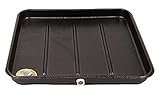
- PLASTIC DRAIN PAN: Ideal for collecting condensate from cooling and evaporator coils, designed to safeguard indoor environments from potential damage caused by overflow from HVAC equipment drain pans
- SEAMLESS DESIGN: Our plastic drip tray is meticulously crafted without seams, ensuring not only durability but also protection against leakage or rust, even with continuous and prolonged use
- DURABLE CONSTRUCTION: Vacuum-formed from non-toxic ABS plastic with rolled edges, reinforced corners, and a ribbed bottom ensuring unparalleled strength, rigidity, and durability
- PVC FITTING INCLUDED: For added convenience, the 26 inch drip pan comes equipped with a 3/4" diameter PVC discharge fitting ensuring effortless installation
- DIMENSIONS: The air conditioner drip pan measures 26" x 26" inches, ensuring ample capacity to effectively collect condensate; tailored to fit a wide range of HVAC systems and components
Find the leak by location and timing
| Where or when you see water | More likely explanations | What to do now |
|---|---|---|
| Water leaves a central system through its designated condensate outlet while cooling | Often normal condensate discharge | Confirm that it is the intended outlet and that no water is leaking indoors. |
| Water is around the indoor air handler | Clogged drain, damaged pan, frozen-coil thaw, disconnected pipe, or pump failure | Turn the AC off and inspect only accessible, dry, non-electrical components. |
| Water comes through a ceiling below an attic unit | Overflowing primary or secondary pan, blocked drain, failed float switch, or failed pump | Turn the system off, protect the area, and call promptly. Ceiling and insulation damage can continue after the AC stops. |
| Water runs down the wall below a mini-split | Clogged hose, poor slope, unit out of level, pan problem, dirty filter, frozen coil, or poor installation | Turn cooling off, clean the accessible filter, and inspect the visible hose for kinks or disconnection. |
| Water drips from a window AC into the room | Incorrect tilt, blocked drainage channel, dirty or frozen coil, or damaged pan | Turn the unit off and unplug it before inspection. Follow the model manual; do not drill holes or remove drain components without instructions. |
| Water comes from a portable AC | Full internal tank, loose drain plug, disconnected hose, or model-specific pump or drainage issue | Turn it off, unplug it, and drain it through the designated port according to the manual. |
| Water appears around a heat pump outdoor unit during winter heating | Condensate released during a defrost cycle can be normal | Investigate if thick ice remains, continues growing, fails to clear, or water enters the building. |
| The leak is worst after the AC shuts off | Ice on the evaporator coil may be melting and overwhelming the pan | Leave cooling off until the coil fully thaws. Replace a dirty filter and arrange professional diagnosis if freezing returns. |
For a typical ducted split system, the indoor condensate path is evaporator coil → drain pan → drain line → approved discharge point. The indoor coil is where cooling-related moisture normally forms; the outdoor condenser is not normally the source of indoor condensate. DOE’s Home Cooling 101 guide describes the indoor and outdoor components of a split system.
The seven main causes of an AC water leak
These are the seven causes most relevant to homeowner troubleshooting. The sequence is practical rather than a verified national failure-rate ranking. Manufacturers commonly identify clogged drains, frozen coils, dirty filters, and damaged pans, but there is no authoritative nationwide dataset establishing the exact percentage caused by each problem.
1. A clogged condensate drain line
Dust, algae, mold, sludge, dander, and other debris can block the condensate line. Water then backs up in the drain pan until it spills around the air handler or into an attic overflow pan. A musty smell, standing water, ceiling staining, or a float switch that shuts the system off can accompany the blockage. Carrier’s drain-line guidance covers common symptoms and a limited wet-vacuum cleaning method.
The Tool Desk
Outbyte Driver Updater FREEScan for outdated or missing drivers - takes under a minuteDriver Scan →Outbyte PC Repair FREERepair Windows errors before they cause bigger problemsFix Now →Safe checks:
- Find the visible outdoor drain termination or an accessible indoor cleanout.
- Look for standing water in the pan.
- Check whether the drain outlet is blocked, disconnected, kinked, or submerged.
- Look for a condensate safety switch or thermostat message indicating a full pan.
No water at the outdoor drain is only a clue, not a diagnosis. The coil may be frozen, the system may not have run long enough, indoor humidity may be low, the pipe may be disconnected, or condensate may be routed to another location.
Limited DIY procedure:
- Turn the thermostat off and de-energize the equipment if the drain or pan is close to electrical components.
- At an accessible outdoor termination, use a wet/dry vacuum to pull debris out of the line. Do not use an ordinary household vacuum.
- If there is a designated cleanout and the equipment instructions permit it, add a small amount of clean water or distilled vinegar as a maintenance treatment.
- Confirm that the line drains freely and that water is not escaping at a joint or backing up into the pan.
- Do not restore cooling while the pan is overflowing, ice remains, or an electrical hazard is present.
Vinegar is not a universal clog remover. Drain layouts, traps, pipe materials, access points, warranties, and manufacturer instructions vary. Bleach, chlorine, commercial drain cleaner, hot water, drain tablets, compressed air, and drain snakes should not be treated as default solutions. Carrier notes that vinegar or bleach may not remove blockages caused by nonorganic debris.
Call a professional if the line is concealed, the clog returns, water has reached a ceiling, the pan cannot be accessed safely, or wet-vacuum suction does not restore drainage.
2. A dirty filter or restricted airflow froze the evaporator coil
A dirty filter is only one possible airflow restriction. A blocked return grille, closed supply registers, dirty evaporator coil, dirty blower, crushed duct, or other duct restriction can reduce airflow across the indoor coil. The coil can become too cold, moisture freezes to it, and the eventual thaw overwhelms the drain pan.
The usual causal chain is:
restricted airflow → excessively cold coil → ice formation → melting ice → overwhelmed pan or drain → water leak
Clues include:
- Ice or frost on the indoor coil or refrigerant tubing.
- Weak airflow from supply registers.
- Poor cooling or unusually long run times.
- Water appearing after the system shuts off.
- Higher electricity use or persistent indoor humidity.
Turn cooling off and allow the coil to thaw completely. Replace or clean the filter as the equipment manual directs, make sure return grilles are not blocked, and open supply registers. Never chip ice from the coil or tubing with a knife, screwdriver, or other tool.
ENERGY STAR recommends inspecting, cleaning, or changing HVAC filters monthly, but there is no universal 30-day replacement rule. The correct interval depends on the filter, equipment, dust load, pets, occupancy, and manufacturer instructions.
A new filter may solve a one-time airflow problem, but a coil that freezes again has another issue until proven otherwise. Recurring ice can indicate low refrigerant, a dirty coil, blower trouble, duct restrictions, or a control problem. Stop operating the system and call an HVAC professional if freezing returns.
Do these 3 things before closing this tab:
1Clear out junk files and repair common Windows errors2Scan for outdated or missing drivers - takes under a minute3Repair Windows errors before they cause bigger problemsRank #2

- 【High Efficiency Capacity】Mini Fridge Drip Pan with a large capacity of 22.8 x 21.6 x 1.2 inches, can hold up to 2 gallons of oil or liquid, suitable for various uses.
- 【Multi-purpose Design】The drip tray is versatile and practical for a variety of needs. It is suitable for mini fridge, portable AC, small washing machine, dishwasher and so on!
- 【Spill Protection】This heavy-duty construction drip pan protects carpets, floors, and garage floors from liquid drips.
- 【Professional Material】Made of chemical-resistant polypropylene plastic, it not only ensures the durability of the product but also ensures safety and environmental protection.
- 【Please Note】Please first confirm whether the size is suitable or not before buying, any questions please contact us.
3. Low refrigerant caused the coil to freeze
Low refrigerant can lower the evaporator coil temperature enough to create ice. When the ice melts, the resulting water may look like an ordinary drain leak. The puddle is generally condensate or melted ice; refrigerant itself is not normally appearing as a puddle of water.
Possible clues include weak cooling, unusually long run times, high indoor humidity, recurring frost after the filter is replaced, or hissing and bubbling sounds. These clues are suggestive, not conclusive. A technician must use system-specific temperature and pressure measurements, leak testing, and charging procedures to confirm low charge.
The durable repair is not simply adding more refrigerant. A qualified technician should:
- Confirm that the system is actually undercharged.
- Locate the refrigerant leak.
- Repair or replace the leaking component where practical.
- Recover, evacuate, pressure-test, and recharge the system to the equipment specification.
- Verify that the coil no longer freezes and that airflow is correct.
Do not use DIY refrigerant cans, attach gauges, open the refrigerant circuit, substitute a different refrigerant, or repeatedly pay for a top-off without leak diagnosis. In the United States, EPA Section 608 rules require certification for technicians who add or remove refrigerant from covered stationary equipment. The EPA also advises repairing leaks rather than repeatedly topping off a leaking system. See the EPA’s homeowner guidance on refrigerant leaks and servicing.
Quick wins for a faster PC:
Clear out junk files and repair common Windows errorsFree Scan →Fix the driver behind crashes, sound loss and screen glitchesFind Drivers →Repair Windows errors before they cause bigger problemsFix Now →4. The drain pan is cracked, rusted, warped, or overflowing
The drain pan catches moisture falling from the evaporator coil. Corrosion, age, freeze damage, physical impact, poor support, accumulated debris, or distortion can cause the pan to leak or prevent it from draining correctly.
Clues include:
- Water continues after the drain line has been cleared.
- The pan has visible rust, cracks, holes, or warping.
- Water appears directly beneath the pan rather than at a pipe connection.
- An attic or secondary pan contains water.
- The leak is worse during long cooling cycles or when a frozen coil thaws.
With power off and only where access is safe, a homeowner may remove loose debris from an accessible pan. A cracked, corroded, inaccessible, or poorly supported pan generally needs professional replacement or repair. Tape, epoxy, and sealant are not reliable universal fixes because the underlying problem may involve pan slope, structural support, corrosion, or missing overflow protection.
For an air handler above finished space, the secondary pan and float protection are important safeguards, not optional decorations. DOE residential HVAC specifications describe secondary pans and float switches where an overflow could damage finished surfaces.
5. The drain piping is disconnected, cracked, kinked, or improperly sloped
A sound pan and an open pipe can still leak if the piping is badly configured. Look for separated joints, cracks, kinks, sags, an uphill section, a missing connection, a blocked or incorrectly installed trap, a submerged termination, or a failed primary-to-secondary arrangement.
Water may escape at the air handler, inside an attic, through a wall, or from an emergency drain outlet. A newly installed system that has leaked from the beginning deserves an installation review before anyone assumes the problem is ordinary maintenance.
Inspect visible piping only. Look for loose joints, standing water, sags, and obvious disconnections. Do not modify a trap or reroute a concealed line without understanding the blower pressure and the manufacturer’s design. Drain systems need watertight connections, appropriate slope, proper trapping and venting where required, and a suitable termination.
DOE residential work specifications use a minimum horizontal slope example of 1/8 inch per 12 inches, or approximately 1%. That is an example from those specifications, not a universal rule for every system. The equipment instructions and local plumbing and mechanical codes control the installation.
Rank #3
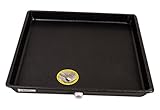
- PLASTIC DRAIN PAN: Ideal for collecting condensate from cooling and evaporator coils, designed to safeguard indoor environments from potential damage caused by overflow from HVAC equipment drain pans
- SEAMLESS DESIGN: Our plastic drip tray is meticulously crafted without seams, ensuring not only durability but also protection against leakage or rust, even with continuous and prolonged use
- DURABLE CONSTRUCTION: Crafted from high-quality ABS plastic with rolled edges, reinforced corners, and a ribbed bottom ensuring unparalleled strength, rigidity, and durability
- PVC FITTING INCLUDED: For added convenience, the 24 x 24 drip pan comes equipped with a 3/4" diameter PVC discharge fitting ensuring effortless installation
- DIMENSIONS: The air conditioner drip pan measures 26.25 x 26.25 x 2.25 inches, ensuring ample capacity to effectively collect condensate and weighs 1.56 pounds; tailored to fit 24” x 24” air handler units seamlessly
Ductless mini-splits are especially sensitive to installation details. The indoor head must be mounted at the correct level, and the drain hose generally needs a continuous downward path. A wall unit that is tilted incorrectly or a hose that rises and traps water can overflow even when the hose is not clogged. Carrier identifies level, slope, drainage, pan, filter, and installation problems as mini-split leak causes.
What’s actually slowing this PC down?
Pick the symptom - the matching free tool is one click away.
6. The condensate pump, float switch, or pump power has failed
Some indoor units cannot drain by gravity. A pump lifts condensate to a discharge point when the air handler is in a basement, attic, closet, or other location below the available drain. A small reservoir fills with water, and a float activates the pump. If the pump loses power, the sensor sticks, sludge fills the reservoir, or the discharge hose disconnects, water can overflow.
Common clues include:
- A leak near a small pump reservoir.
- The pump does not run as water rises.
- The system shuts down intermittently through a safety switch.
- A discharge hose is loose, kinked, or disconnected.
- The pump runs continuously, makes unusual noises, or never clears the reservoir.
- A mini-split or ceiling cassette leaks even though the visible drain hose appears open.
If the pump is accessible and the area is dry, a homeowner may check an obvious power connection and visible hose connection after safely de-energizing the equipment. Do not bypass the float switch. Pump replacement, wiring diagnosis, float-switch repair, and concealed pump work should be handled by a professional.
DOE specifications call for a condensate pump when gravity drainage is not possible and include verification of pump power, operation, and drainage. Manufacturer troubleshooting guidance also commonly directs homeowners to check the pump’s power, hose, installation, and water sensor before contacting the service company. LG provides an example of those pump checks.
7. Improper installation, insulation failure, or surface sweating
Not every wet spot below an AC comes from the drain pan. Installation and insulation problems can create water in several ways.
The indoor unit or mini-split head is not level
A tilted unit can direct condensate away from the pan outlet. A drain hose without continuous downward slope can also retain water until it backs up into the unit. Re-leveling or remounting a wall-mounted mini-split is usually an installation job, especially when the refrigerant and electrical lines pass through the wall.
A drain line or cold surface is sweating
A condensate line routed through a hot, humid area can sweat. A cold refrigerant line or supply duct can also collect moisture when its insulation is missing, compressed, damaged, or poorly sealed. Water from duct sweating may appear at a duct joint, along a length of duct, or away from the pan rather than directly below the air handler.
DOE specifications call for insulating condensate lines where condensation or freezing is possible. Lennox describes duct sweating as an insulation and air-leakage problem that requires correction of the cold surface and the surrounding humid-air path.
High humidity or oversized equipment is exposing a weak drainage system
Hot, humid weather can produce a substantial amount of condensate. High humidity does not by itself mean the AC is defective, and a properly installed drainage system should handle normal condensate. However, a marginal drain, poor dehumidification, or an oversized unit can make the problem more noticeable. EPA guidance notes that oversized air conditioners can cycle frequently and remove humidity less effectively.
Recommended Free Tools
How to troubleshoot an indoor AC leak safely
Use the least invasive checks first. Stop as soon as you find an electrical hazard, an inaccessible component, a ceiling leak, or a problem involving refrigerant.
- Identify the equipment. Determine whether it is a central ducted AC, heat pump, ductless mini-split, window unit, portable unit, or packaged system.
- Locate and photograph the water. Note whether it is above, below, or beside the unit; whether it comes from a pipe, pan, vent, wall-mounted head, ceiling, or hose; and whether it occurs only during cooling, after shutdown, or during heat-pump heating.
- Look for ice. If you see frost or ice, turn off cooling and wait for complete thawing. Do not chip it off and do not keep restarting the system.
- Inspect the filter and airflow. Replace or clean the accessible filter according to the model instructions. Make sure return grilles and supply registers are not blocked.
- Inspect accessible drainage. Look for standing water, an obvious disconnected pipe, a kinked hose, or a blocked outlet. On a central system, use a wet/dry vacuum only at an accessible drain termination and only with the system off.
- Check a pump only from the outside. If there is an accessible pump, look for a disconnected hose or obvious loss of power after safely de-energizing the equipment. Do not open electrical compartments or bypass a safety switch.
- Test only after the hazard is corrected. Do not run the AC if ice remains, the pan is overflowing, water is near energized components, the ceiling is bulging, there is a burning smell, or the drain problem was not corrected. If a brief test is safe, monitor the pan, drain outlet, pump, and leak location rather than leaving the system unattended.
What is safe to do yourself?
| Task | Homeowner-safe? | Conditions |
|---|---|---|
| Turn the thermostat off | Yes | Do this first for an indoor leak. |
| Mop up water and protect flooring | Yes | Only where water is not near energized electrical equipment. |
| Replace an accessible filter | Yes | Follow the filter and equipment instructions. |
| Inspect a visible drain outlet or hose | Yes | Do not dismantle concealed piping. |
| Use a wet/dry vacuum at an accessible condensate outlet | Sometimes | Turn the system off and follow the equipment layout and instructions. |
| Pour vinegar into a designated cleanout | Sometimes | Only when the manufacturer permits it; it will not clear every type of blockage. |
| Clean a ductless mini-split washable filter | Yes | Use the model’s cleaning and drying instructions. |
| Re-level a mounted mini-split | Usually no | This is generally an installation adjustment. |
| Replace a drain pan | Usually no | Access, support, slope, and overflow protection may be involved. |
| Repair a condensate pump or float switch | Usually no | Electrical, plumbing, and water-damage risks are involved. |
| Diagnose or recharge refrigerant | No | Requires specialized equipment, leak diagnosis, and appropriate EPA certification. |
| Repair electrical controls or bypass a float switch | No | Shock, fire, equipment, and flooding risks make this professional work. |
| Remove ice with a tool | No | A sharp object can damage the coil or refrigerant tubing. |
Equipment-specific guidance
Central air conditioner
Focus on the indoor evaporator coil, primary drain pan, primary and secondary drain lines, air filter, float switch, and condensate pump. Attic units deserve particular attention because a blocked drain may first appear as a ceiling stain rather than a puddle beside the equipment. If the secondary pan contains water or an emergency drain is discharging, shut the system down and arrange service quickly.
Rank #4

- PLASTIC DRAIN PAN: Ideal for collecting condensate from cooling and evaporator coils, designed to safeguard indoor environments from potential damage caused by overflow from HVAC equipment drain pans
- SEAMLESS DESIGN: Our plastic drip tray is meticulously crafted without seams, ensuring not only durability but also protection against leakage or rust, even with continuous and prolonged use
- DURABLE CONSTRUCTION: Vacuum-formed from non-toxic ABS plastic with rolled edges, reinforced corners, and a ribbed bottom ensuring unparalleled strength, rigidity, and durability
- PVC FITTING INCLUDED: For added convenience, the 48 inch drip tray comes equipped with a 3/4" diameter PVC discharge fitting ensuring effortless installation
- DIMENSIONS: The air conditioner drip pan measures 27" x 48" inches, ensuring ample capacity to effectively collect condensate; tailored to fit a wide range of HVAC systems and components
Heat pump
During winter heating, a heat pump periodically enters defrost mode. Frost melts from the outdoor coil and water or vapor may appear around the outdoor unit. That can be normal. It is concerning when thick ice continues to grow, does not clear, the fan or coil remains obstructed, or water enters the building. Trane explains the difference between normal heat-pump defrost water and an indoor or persistent leak.
Indoor water from a heat pump still points toward familiar cooling-side problems: a clogged drain, damaged pan, dirty or frozen indoor coil, or an installation or pump issue.
Free tools Windows power users keep installed
One-click scans. No signup required.
Ductless mini-split
Start with the washable filter, visible drain hose, unit level, and hose slope. A clogged hose, dirty filter, damaged pan, failed pump, low refrigerant, or poor installation can all cause a wall-mounted head to drip. Do not remove the indoor cover beyond what the manual permits; hidden electrical and refrigerant components may be nearby.
Window air conditioner
Water dripping outside is often normal because the unit collects indoor humidity and discharges it outdoors. Water dripping into the room is not normal. The unit should generally be level or slightly tilted outward, but the exact installation requirement is model-specific. GE guidance, for example, cites approximately a quarter-inch outward tilt for its room units and warns against drilling holes or removing drainage components because that can reduce efficiency. Check the manufacturer’s window-unit guidance and the installation manual for your model.
Portable air conditioner
Portable units may evaporate condensate automatically, store it in an internal tank, or require a drain hose depending on the model and indoor humidity. Error codes and drain-plug procedures are not universal. For example, some LG models use model-dependent full-tank indicators and direct the owner to power off, unplug, drain through the designated port, and reinstall the cap securely. Use the exact portable-unit manual and error-code instructions rather than applying central-AC drain procedures.
Independent reader supportYour contribution helps us test, update, and keep practical guides available for everyone.When an AC leak requires a professional
Call an HVAC professional when:
- Ice returns after the filter is replaced and the coil has thawed.
- You suspect low refrigerant or the system needs a recharge.
- The leak continues after an accessible drain is cleared.
- The drain pan is cracked, rusted, inaccessible, or located above finished space.
- A condensate pump does not operate or repeatedly overflows.
- Water is near wiring, controls, the blower, outlets, or other electrical components.
- Water is coming through a ceiling, wall, or finished floor.
- The system repeatedly trips a float switch or breaker.
- The unit has leaked since a recent installation or replacement.
- The drain is concealed, incorrectly trapped, poorly sloped, or routed through a wall or ceiling.
- You smell burning, chemicals, or an unusual electrical odor.
- You cannot determine whether the water is condensate, melted ice, plumbing water, roof water, or duct condensation.
Do not open the refrigerant circuit, attach gauges, add refrigerant, repair electrical controls, or bypass a float switch as a homeowner. If the source may be plumbing, a water heater, humidifier, roof, or building envelope rather than the AC, the appropriate plumber, roofer, or building professional may also be needed.
Could the water be coming from somewhere other than the AC?
Yes. Particularly around attic or closet equipment, water can travel along framing, insulation, drywall, or ductwork before it becomes visible. Check whether there is:
- A roof or attic leak above the unit.
- A plumbing pipe leaking beside or above the air handler.
- A leaking water heater, furnace humidifier, or condensate appliance.
- Condensation on an uninsulated refrigerant line or duct.
- Rain entering around a window unit, wall sleeve, roof penetration, or line-set opening.
- Water from a heat-pump outdoor defrost cycle that is being mistaken for an equipment leak.
Dry the area and photograph the source, stain, pan, pipe, and surrounding materials before repairs where possible. If drywall, insulation, flooring, or framing is wet, begin safe water removal promptly and have concealed moisture assessed rather than covering the stain.
How to prevent another AC water leak
Monthly homeowner checks
- Inspect, clean, or replace the filter according to its instructions and inspect it at least monthly during heavy use.
- Check accessible condensate outlets for expected water flow and obstructions.
- Look for standing water, rust, musty odors, loose pipe joints, kinked hoses, or ceiling stains.
- Keep return grilles and supply registers unobstructed.
- Keep leaves, grass, and debris away from the outdoor condenser.
- Check visible drain hoses and pump discharge tubing for kinks or disconnections.
Annual professional maintenance
Arrange a cooling-season inspection, preferably before the hottest weather, that includes the drain pan and lines, secondary overflow protection, float switch, condensate pump, evaporator and condenser coils, blower and airflow, refrigerant condition, electrical connections, ductwork, and insulation. Annual service cannot prevent every failure, but it can identify a restricted drain, weak pump, dirty coil, poor airflow, or missing overflow protection before it damages the building.
Do these 3 things before closing this tab:
1Clear out junk files and repair common Windows errors2Fix the driver behind crashes, sound loss and screen glitches3Repair Windows errors before they cause bigger problemsProtect attics and finished spaces
- Install or maintain a functional secondary pan or approved overflow protection where appropriate.
- Verify that float switches are connected and tested rather than bypassed.
- Keep a visible emergency drain termination where required by the installation.
- Consider a water sensor or leak alarm near an attic, closet, or ceiling-mounted air handler.
- Dry wet insulation, drywall, flooring, and framing promptly after a leak.
Overflow protection is especially important because the first visible sign of an attic AC problem may be a ceiling stain or sagging drywall. DOE residential specifications discuss secondary pans, float switches, condensate pumps, traps, and drainage details.
Best Value

- AC Condensation Management: Prevent water leakage from damaging floors or walls by collecting excess condensate from indoor and outdoor units - This air conditioner drip pan ensures a clean environment and avoids water stains caused by normal cooling systems in apartments or residential areas
- Sturdy Galvanized Construction: Made of galvanized iron for strength and stability this ac drain pan resists cracking even when used outdoors for long periods - The air conditioner drain pan provides a reliable solution for window ac drip pan needs compared to fragile plastic alternatives
- Effective Drainage Solution: Features an integrated discharge fitting to direct water away from building foundations or balconies - The portable air conditioner drain pan helps maintain cleanliness by serving as a sturdy air conditioner water catcher for both indoor and outdoor air conditioning units
- Effective Drainage Solution: Features an integrated discharge fitting to direct water away from building foundations or balconies - The portable air conditioner drain pan helps maintain cleanliness by serving as a sturdy air conditioner water catcher for both indoor and outdoor air conditioning units
- Versatile HVAC Accessory: Works as a window ac water drain tray or portable ac drip pan to safeguard your home from water damage - This air conditioner tray drip pan is a simple but essential ac drip pan with drain hole for managing water from window units or mini split units
What if the leak comes back after the drain was cleaned?
A recurring leak means the first visible symptom may not have been the root cause. Possibilities include a partially cleared or incorrectly sloped line, damaged pan, blocked secondary drain, failed float switch, undersized pump, persistent coil freezing, low refrigerant, blower or duct airflow trouble, duct or drain-line sweating, or a roof or plumbing leak mistaken for condensate.
Do not keep pouring chemicals into the line or repeatedly restart a freezing system. Record when the leak occurs, whether ice forms, whether the filter is clean, whether the pump runs, and where the water first appears. That information can help the technician distinguish drainage, airflow, refrigerant, installation, and building-envelope problems.
Frequently Asked Questions
Can I run my AC if it is leaking water?
Turn cooling off when water is leaking indoors, the pan is overflowing, ice is present, or water is near electrical components. A designated outdoor condensate outlet or normal window-unit outdoor dripping can be different, but an indoor leak should not be ignored. Restart only after the hazard and cause have been addressed.
Can a dirty air filter cause an AC water leak?
Yes. A severely restricted filter can reduce airflow enough to freeze the evaporator coil. When the ice melts, the water may overwhelm the drain pan. Replace or clean the filter according to the equipment instructions, but have the system diagnosed if ice returns because low refrigerant, a dirty coil, blower trouble, or duct restrictions can produce the same symptom.
Can low refrigerant cause water to leak from an air conditioner?
Yes, indirectly. Low refrigerant can make the evaporator coil freeze, and melting ice can produce an indoor water leak. A refrigerant recharge alone does not repair the leak. An appropriately qualified HVAC technician should confirm the charge, locate and repair the refrigerant leak, and recharge the system correctly.
Why does my AC leak only after it turns off?
The coil may have frozen while the system was running. After shutdown, the ice melts all at once and can overwhelm the pan or drain. Turn the system off until the coil thaws, replace a dirty filter, and call for service if freezing happens again.
Can I pour vinegar or bleach into the AC condensate drain?
Do not treat either chemical as a universal solution. Some manufacturers permit a small amount of distilled vinegar through a designated cleanout, but access, pipe materials, traps, and warranties vary. Bleach, vinegar, and other treatments may not remove a blockage caused by solid debris. Use the manufacturer’s instructions or have a professional clear a concealed or recurring clog.
Why is my mini-split dripping water?
The usual possibilities include a clogged drain hose, incorrect downward slope, an indoor unit that is not level, a damaged pan, dirty filter, frozen coil, failed pump, low refrigerant, or improper installation. Turn cooling off, clean the accessible filter, and inspect the visible hose for kinks or disconnections. Persistent dripping requires professional service.
Why is my heat pump dripping water outside?
During winter heating, water or vapor around the outdoor unit can be normal condensate released during defrost. It is concerning when thick ice remains or continues growing, the unit cannot complete defrost, or water enters the home. Indoor leakage still requires investigation of the pan, drain, coil, and pump.
Does an AC water leak mean I need a new air conditioner?
Usually not. A clogged drain, filter restriction, loose pipe, or failed pump may be repairable. Replacement becomes a separate cost-and-condition decision when the pan or coil is extensively corroded, the equipment is near the end of its service life, refrigerant repairs are impractical, or repeated failures make repair uneconomical. Diagnose the source before deciding.
The Bottom Line
Bottom line: An AC normally creates condensate, but it should leave through the intended drain—not collect inside the home. Turn cooling off, protect the building, check for ice and a dirty filter, and inspect only accessible drainage. A recurring freeze, damaged pan, failed pump, concealed leak, electrical hazard, or suspected refrigerant problem calls for an HVAC professional rather than a DIY recharge, electrical repair, or float-switch bypass.
Quick Recap
Product prices and availability are accurate as of the date/time indicated and are subject to change. Any price and availability information displayed on Amazon at the time of purchase will apply.




