The Tool Desk
Outbyte PC Repair FREEClear out junk files and repair common Windows errorsFree Scan →Outbyte Driver Updater FREEScan for outdated or missing drivers - takes under a minuteDriver Scan →A generator that will not start usually falls into one of two categories: it will not crank, meaning the starter, battery or control circuit is not turning the engine, or it cranks but does not start or stay running, meaning fuel, choke, oil-protection, spark, air or an internal engine problem is more likely. Separate those symptoms first, then follow the owner’s manual for your exact make, model and fuel system.
Before any check, move a portable generator outdoors into an open, unobstructed location at least 20 feet from doors, windows, vents and other building openings, as FEMA advises. Never start or run it in a home, garage, shed or other enclosed or partly enclosed space, and verify that carbon-monoxide alarms are working. Disconnect appliances and extension cords before starting. If fuel is leaking, wiring is damaged, a fault code is displayed, or the equipment is a permanently installed standby system, stop and use the manufacturer’s service procedure.
As an Amazon Associate I earn from qualifying purchases.
Why won’t my generator start?
The first sound tells you where to look. A silent engine with no starter movement points to an electrical, battery or control issue. A starter that spins the engine but never produces combustion points to fuel, choke, oil level, spark, air or mechanical causes. An engine that starts and then stops can have the same causes, plus low-oil or carbon-monoxide protection activating after startup.
Do these 3 things before closing this tab:
1Clear out junk files and repair common Windows errors2Fix the driver behind crashes, sound loss and screen glitches3Repair Windows errors before they cause bigger problems| What you observe | Most useful first checks | What it usually means |
|---|---|---|
| No crank: no starter movement | Power switch, fault indication, battery cables and battery condition on electric-start models | The starter circuit is not engaging; the engine itself has not yet been tested |
| Cranks but never catches | Correct fuel and fuel-valve position, stale fuel, oil level, choke, spark-plug connection and air filter | The engine is turning but combustion is not being sustained |
| Starts, then dies | Oil-protection indication, choke position, fuel flow, overload or a displayed fault | A protective shutdown, incorrect running setting or continuing fuel/engine fault may be present |
| Runs but supplies no electricity | Generator output, breakers and transfer equipment according to the manual | A different problem from an engine no-start; this guide focuses on the engine starting symptoms |
Controls differ by model. Portable gasoline units commonly have a fuel shutoff, choke, ignition or run switch, recoil starter and sometimes an electric starter. A permanently installed standby generator may instead use a controller, automatic transfer switch, maintenance battery and fixed fuel supply. Do not apply portable-generator steps to energized standby equipment.
#1 Best Overall

- Ultra-Lightweight: At only 7.5 lbs, the Explorer 300 delivers a robust 292Wh capacity while remaining 17% lighter than the industry average. The sleek, integrated handle makes it effortless to carry on long hikes or pack with your camping gear, providing reliable off-grid power without adding bulk to your load.
- Versatile Power for 6 Devices: Equipped with 2 AC outlets, a 100W USB-C PD port, 2 USB-A ports, and a 120W car port. With a 300W rated output (600W peak surge), it easily handles laptops, drones, and cameras, while also serving as a dependable cpap battery for camping or a robust solar powered generator when paired with panels.
- Built to Last: Upgraded with premium LiFePO4 chemistry, this portable generator delivers over 4,000 charge cycles before reaching 70% capacity. This ensures more than 11 years of reliable service life, making it a sustainable and durable energy partner for a decade of exploration.
- Fast Solar Charging: Perfect for off-grid use, this solar powered generator pairs seamlessly with Jackery panels. Reach 80% capacity in approximately 2.8 hours with a 100W solar panel, or maintain your gear with a portable 40W panel (80% in 7.5 hours), making it an essential part of your hunting essentials.
- WHAT YOU GET: 1* Jackery Explorer 300 Portable Power Station, 1*AC adapter, 1* car charger cable, 1* user guide (𝐒𝐨𝐥𝐚𝐫 𝐏𝐚𝐧𝐞𝐥 𝐍𝐨𝐭 𝐈𝐧𝐜𝐥𝐮𝐝𝐞𝐝.)
Make the situation safe before troubleshooting
- Identify the equipment. Record the make, exact model, fuel type and whether it is portable or permanently installed. Find the owner’s manual and note any controller or panel fault code. The manual specifies the oil-check method, fuel requirements, choke sequence, battery charging method and limits on owner service.
- Choose a safe location. For a portable unit, place it outdoors on stable, level ground with unobstructed airflow. FEMA’s Ready.gov guidance calls for at least 20 feet between a generator and building openings such as windows, doors and garages. Keep the exhaust directed away from the building and confirm that carbon-monoxide alarms are operating.
- Remove electrical loads. Unplug appliances and extension cords before you attempt a start. Generac’s portable-generator guidance says not to start under load; after the engine starts, allow the model’s specified warm-up or stabilization period before connecting loads.
- Look for immediate hazards. Do not proceed if you smell raw fuel, see a leak, find damaged wiring or observe a damaged fuel line. Do not open a permanently installed unit or its transfer-switch enclosure unless the manual and a qualified technician specifically authorize the work.
- Leave safety devices intact. Low-oil, carbon-monoxide and other protective shutdowns are there to prevent damage or injury. Never bypass a sensor, jumper a switch or defeat a controller alarm merely to make the engine run.
Generator won’t crank: electrical and starting checks
These checks apply mainly to portable electric-start models. A standby system’s controller and battery system require the exact procedure for that model.
- Confirm the basic control state. Set the main switch, ignition or run control exactly as shown in the manual. Check whether a stop switch, emergency-stop control or fault latch is active. Read any displayed code before resetting it; the code may be the most useful diagnostic information.
- Inspect the starting battery. A drained battery can prevent an electric-start portable generator from turning the engine. Check that the positive and negative cables are tight, clean and free of corrosion. Do not substitute a charger or charging voltage until the manual identifies the correct battery type, voltage and connection points.
- Use only the approved charging method. Generac’s portable FAQ directs owners to the model-specific charging instructions. Charging a battery with the wrong setting, connecting it backward or using an unapproved source can damage the battery, charger or control board.
- Try a recoil starter only when permitted. If the generator has both electric and recoil starting, the recoil may help distinguish a battery or starter-circuit problem from an engine problem. Attempt this only when the owner’s manual permits it, the unit is safely positioned outdoors and all loads are disconnected.
- Escalate persistent no-crank symptoms. A battery that will not accept the approved charge, a starter that only clicks, damaged cables, a recurring controller fault or a failed ignition switch needs diagnosis by the manufacturer or an authorized service provider. Do not bridge the starter terminals or improvise electrical repairs.
Generator cranks but won’t start or stay running
1. Verify the fuel type, amount and valve position
Use the fuel named on the data plate and in the manual, and make sure the fuel shutoff is fully open. For the gasoline single-fuel portable models covered by Generac’s current support guidance, the tank should contain at least one-quarter tank of unleaded gasoline rated at a minimum of 87 octane and containing no more than 10% ethanol. That specification is not universal: other engines may require a different fuel, mixture or tank procedure, so the manual for your model controls.
Never use E85 or an oil-and-gasoline mixture in a generator that is specified for straight gasoline. If the fuel is visibly contaminated, unusually dark, separated or watery, stop rather than repeatedly cranking the engine. Drain and dispose of it only as the manual and local regulations allow.
Rank #2
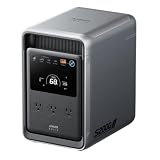
- 𝐔𝐩 𝐭𝐨 𝟑𝟓-𝐇𝐨𝐮𝐫 𝐅𝐫𝐢𝐝𝐠𝐞 𝐁𝐚𝐜𝐤𝐮𝐩: With 6W idle power draw and 10% higher efficiency, this power station runs 20% longer than other 2kWh systems, keeping your fridge powered for 35 hours.
- 𝟏𝟎,𝟎𝟎𝟎-𝐂𝐲𝐜𝐥𝐞 𝐋𝐅𝐏 𝐁𝐚𝐭𝐭𝐞𝐫𝐲: Powered by 314Ah LFP cells, S2000 has a 15-year lifespan, equivalent to 10,000 charge cycles.
- 𝐒𝐦𝐚𝐥𝐥𝐞𝐬𝐭 𝐚𝐧𝐝 𝐋𝐢𝐠𝐡𝐭𝐞𝐬𝐭 𝟐𝐤𝐖𝐡 𝐏𝐨𝐰𝐞𝐫 𝐒𝐭𝐚𝐭𝐢𝐨𝐧: 30% smaller and 25% lighter than the industry average, this power station measures just 8.2 × 11.1 × 12.7 in and weighs only 35.7 lbs.
- 𝐏𝐨𝐰𝐞𝐫𝐬 𝟗𝟗% 𝐨𝐟 𝐇𝐨𝐦𝐞 𝐄𝐬𝐬𝐞𝐧𝐭𝐢𝐚𝐥𝐬: 1,500W continuous output and 3,000W peak output keep nearly every essential appliance running. Actual runtime will vary depending on your refrigerator model, usage habits, and ambient temperature.
- 𝟔 𝐖𝐚𝐲𝐬 𝐭𝐨 𝐑𝐞𝐜𝐡𝐚𝐫𝐠𝐞: Supports up to 400W solar input. Power up via AC + solar, a wall outlet, a generator, solar panels, an alternator charger, or a car outlet—anytime, anywhere.
2. Consider fuel that became stale during storage
Gasoline changes during storage and can leave deposits that restrict a carburetor or fuel passage. Generac states that, for its portable-generator guidance, unstabilized fuel stored in the generator for more than 30 days, or stabilized fuel stored for more than six months, may require carburetor cleaning. Those are Generac thresholds for the models and conditions it describes, not a guarantee for every fuel or engine.
Adding fresh gasoline does not automatically clear a blocked carburetor. Follow the manual’s draining and cleaning instructions, or have a qualified service dealer clean the fuel system. Honda’s generator operating guidance likewise cautions against stale or contaminated gasoline.
3. Check oil on level ground
Move the portable generator to level ground and check the oil exactly as the manual illustrates, including whether the dipstick is threaded in or merely resting on the filler neck. Low-oil protection can stop an engine from starting or can shut it down shortly after it starts. Add only the specified oil to the stated level; overfilling can create a separate running problem. Never disconnect or bypass the low-oil sensor to force a start.
Rank #3

- 9500 Running Watts and 12500 Peak Watts (Gasoline); 8500 Running Watts, 11200 Peak Watts (Propane); Remote Start with Included Key Fob, Electric and Recoil Start; Up to 12 Hours of Run Time on a 6. 6 Gallon Fuel Tank with Fuel Gauge
- Features Two GFCI 120V 5–20R 20A Standard Household Receptacle, One Transfer Switch Ready 120V L14-30R 30A, and One RV Ready 120/240V 14–50R 50A; All Outlets Have Rubber Covers for Added Safety
- Powered by a Heavy Duty 457cc Westinghouse 4-Stroke OHV Engine Featuring a Long-Lasting Cast Iron Sleeve with Automatic Low Oil Shutdown and Digital Hour Meter. VFT display gives you real time updates with the voltage output, frequency, and lifetime hours
- Plug-and-Play: Comes with a Remote Start Key Fob, 12V Battery Charger, Oil, an Oil Funnel, a Tool Kit, and a User’s Manual to Get You Started Right Out of the Box (Minimal Assembly Required)
- All Westinghouse Portable Generators are Functionally Tested in the Factory and May Contain Minimum Residual Oil and/or Fuel Odor; EPA Compliant; Backed By 3-Year Limited Service, Labor, and Parts Coverage and Nationwide Customer Service Network
4. Set the choke and switch for the engine’s temperature
A cold engine normally needs the cold-start choke position, while a warm engine generally needs less or no choke. Generac’s portable instructions describe full choke for a cold unit and half or no choke for a recently operated warm unit, but the lever positions and automatic-choke behavior vary. Set the run or ignition switch correctly, then follow the manual’s exact starting sequence rather than holding the choke closed indefinitely.
5. Inspect the spark-plug connection and air intake
With the engine stopped and cool, confirm that the spark-plug boot is fully seated. If the manual permits owner inspection, remove and examine the plug for fouling or damage and replace it only with the model-specified part and gap. A faulty plug is one possible cause, not a default diagnosis, and a new plug will not correct stale fuel, a blocked carburetor or low compression.
Check that the air filter is installed, clean and unobstructed. A restricted filter can upset the air-fuel mixture, while an incorrectly fitted filter can allow dirt into the engine. Do not test for spark beside spilled fuel or fuel vapors, and do not spray starting fluid into the intake.
Rank #4

- Powerful yet Compact: Boasting a 1,500W AC output and a 3,000W surge peak, the Solar Generator 1000 V2 can power multiple appliances, including AC units, fridges, and electric pots. With a 1,070Wh capacity and a lightweight build of only 23.8 lbs, along with a foldable handle, it makes an excellent companion for outdoor camping, road trips, or emergencies.
- One Hour Fast Charging: Charge your Explorer 1000 v2 Portable Power Station from 0% to 100% battery level in just one hour with emergency charging activated via the Jackery App. It defaults to 1.7 hours for a full charge to optimize battery health. Engineered with advanced ChargeShield 2.0 technology, this power station charges safer, faster, and smarter.
- 10 Year Lifespan: The Explorer 1000 v2 portable power station is equipped with a durable LFP battery, maintaining over 70% of its original capacity even after 4,000 charge cycles, offering longevity exceeding 10 years.
- Tailored for Versatility: Featuring two USB-C ports, one USB-A port, one DC car port, and three pure sine wave AC ports, along with LED lights, the Solar Generator 1000 V2 is capable of charging multiple devices simultaneously, meeting power needs in various scenarios. PD 100W fast USB-C charging ensures a rapid charging speed, even without power adapters.
- Smart App Control: Effortlessly switch between different charging modes with Jackery’s App—including one hour emergency charging from 0 to 100%, 30 dB quiet overnight charging mode, and energy efficiency mode. Maximize the freedom to adjust the power station to meet your needs.
6. Recognize when the fault is internal
If correct fuel, oil, choke, plug connection and air-filter checks do not change the symptom, the problem may involve a blocked or damaged carburetor, a damaged fuel line, a stuck valve, ignition components or lost compression. The Generac GP6500 and GP8000E manual lists stuck valves and lost compression among causes requiring an authorized independent service dealer. Persistent cranking is not a substitute for diagnosis; it can discharge the battery and wash fuel into the engine.
Independent reader supportYour contribution helps us test, update, and keep practical guides available for everyone.Portable and permanently installed standby generators are not diagnosed the same way
A portable generator usually exposes a fuel valve, choke, recoil or electric starter and a low-oil indicator. An installed standby system may start automatically through a controller, sense utility power through an automatic transfer switch, rely on a maintenance battery and use a fixed natural-gas or propane supply. Its fault codes, exercise schedule and shutdown logic are model-specific.
What’s actually slowing this PC down?
Pick the symptom - the matching free tool is one click away.
For a standby unit, record the exact code and the time or condition when it appeared. Check only owner-approved status items such as the controller’s operating mode, visible fuel-supply status and battery indication. Do not remove covers, work inside the transfer switch, alter gas pressure or reset a protective fault repeatedly. Contact the installing company or an authorized service provider that supports the brand and model, especially when the issue involves the controller, transfer switch, fixed fuel supply, wiring or an internal engine fault.
Best Value

- 𝗣𝗼𝘄𝗲𝗿𝗳𝘂𝗹 𝗢𝘂𝘁𝗽𝘂𝘁 - 4400 peak watts and 3400 running watts, perfect for RV camping and home backup
- 𝗠𝘂𝗹𝘁𝗶-𝗢𝘂𝘁𝗽𝘂𝘁 𝗢𝗽𝘁𝗶𝗼𝗻𝘀 - Includes 2*120V AC ports, 1*12V DC port, 1*RV port
- 𝗟𝗼𝗻𝗴 𝗥𝘂𝗻𝘁𝗶𝗺𝗲: Runs for up to 14 hours at 25% load with ECO mode, 2 gallon fuel tank with fuel gauge, allows you to check fuel levels at a glance, keeping you prepared
- 𝐋𝐨𝐰 𝐍𝐨𝐢𝐬𝐞: Under 72 dBA from 23FT away, this generator provides steady power for your home during a power outage or RV nights
- 𝗟𝗶𝗴𝗵𝘁𝘄𝗲𝗶𝗴𝗵𝘁 𝗮𝗻𝗱 𝗣𝗼𝗿𝘁𝗮𝗯𝗹𝗲: Only 56lbs, easy to move around
A symptom-to-action checklist
| Symptom | Safe owner checks | Stop and obtain service when |
|---|---|---|
| No sound or movement when starting | Switch position, fault display, disconnected loads, secure battery cables and approved battery charge | The battery, starter, control circuit or standby controller still fails |
| Starter turns engine slowly | Battery condition, cable corrosion and correct charging method | Charging does not restore normal cranking or cables/terminals are damaged |
| Normal cranking, no combustion | Correct fresh fuel, fuel valve, oil level, choke, plug boot and air filter | Fuel-system, compression, valve or ignition fault is suspected |
| Starts and stops within seconds | Low-oil indication, choke position, fuel flow and fault code | Protection activates again or the unit leaks fuel, overheats or smokes abnormally |
| Standby unit will not start automatically | Controller mode, displayed code and owner-approved battery or status checks | Any transfer-switch, fixed-fuel, wiring or energized-equipment diagnosis is needed |
Common mistakes that make a no-start problem worse
- Starting with appliances connected. The engine may be overloaded before it stabilizes, and the manual’s starting sequence is being ignored.
- Assuming a full tank means good fuel. Old gasoline can remain in the carburetor even after fresh fuel is added.
- Using the wrong fuel or additive. E85, oil-and-gas mixtures and unapproved additives can damage an engine designed for a different specification.
- Overfilling or bypassing oil protection. Both actions can create engine damage or defeat a critical shutdown.
- Replacing parts by appearance. Spark plugs, batteries and chargers must match the exact model and specification; a visually similar part can be electrically or mechanically wrong.
- Repeatedly cranking without a plan. This drains an electric-start battery and can flood the engine. Pause, reread the manual and escalate when the basic checks are exhausted.
- Opening an installed system while energized. Transfer switches and control cabinets can remain hazardous even when the utility is out.
After it starts: warm-up and load connection
Once the engine starts, let it run unloaded for the warm-up or stabilization time specified by the manual. Generac and Honda guidance both emphasize following the model’s operating sequence before applying loads. Connect only rated appliances and cords, avoid exceeding the generator’s output and monitor for abnormal noise, smoke, fuel odor or a warning light. If it stops again, record the exact timing and any indicator before attempting another start; that information helps distinguish a protection shutdown from a fuel or mechanical fault.
Preventing the next no-start event
- Use the fuel grade and ethanol limit specified for the model.
- For seasonal storage, follow the manual’s fuel-draining or stabilization procedure. Stabilizer helps prevent deterioration during storage; it is not a cure for gasoline that has already gone stale or for a clogged carburetor.
- Run the maintenance schedule for oil, air filter, spark plug and battery, and keep service records with the model and serial number.
- Store the owner’s manual where the generator is kept and label the correct fuel and starting sequence.
- Exercise a standby generator only according to its controller and manufacturer schedule, and have fixed fuel, transfer equipment and batteries serviced by qualified personnel.
- Test carbon-monoxide alarms and keep the required outdoor clearance before an outage occurs.
When to stop troubleshooting and call a professional
Arrange manufacturer or authorized service when the generator still will not start after the manual’s basic checks, when a fault code returns, or when the suspected cause is a carburetor, fuel line, valve, compression, starter, control board, transfer switch or fixed fuel supply. Service selection should match the brand and model, the fuel system and, for standby equipment, the installer’s authorization and ability to work on automatic transfer equipment in your area.
The safest diagnosis is symptom-led and model-specific: secure the location, remove loads, separate no-crank from crank-no-start, verify the manual’s fuel and oil requirements, and stop before an electrical, fuel or internal-engine repair exceeds an owner check.
Recommended Free Tools
Quick Recap
Product prices and availability are accurate as of the date/time indicated and are subject to change. Any price and availability information displayed on Amazon at the time of purchase will apply.

