What’s actually slowing this PC down?
Pick the symptom - the matching free tool is one click away.
In England, the organisation responsible for the land normally arranges clearance from public land, while a private landowner or land manager usually has to arrange and pay for removal from private land. Local authorities handle most incidents. The Environment Agency has no general duty to clear waste, although it may become involved in larger, serious or immediately dangerous cases. Reporting a dumping incident does not guarantee that an authority will remove it or reimburse a private owner.
Who pays: the short answer
| Where the waste is dumped | Who normally arranges clearance | Who normally pays initially | Important qualification |
|---|---|---|---|
| Publicly accessible land controlled by a duty body | The body responsible for that land, usually the local authority | That responsible body, from its own public funds | The precise duty follows control of the land, not simply whether people call it “public”. |
| A highway | The authority or national/strategic highway body assigned responsibility for that road | The assigned highway body | Different roads can have different responsible bodies. |
| Private land | The landowner or land manager normally arranges a contractor | The landowner or land manager | A council might help, but can choose whether to investigate a private-land report and may charge for removal. |
| Large, hazardous or organised incidents | Usually the ordinary responsible body, with possible Environment Agency involvement | Initially the responsible body or landowner; recovery may be attempted later | The Environment Agency has no general clearance duty. |
What counts as public land for this purpose?
England’s statutory litter-and-refuse code places duties on specified bodies for relevant land under their control. In broad terms, that land is open to the air, directly controlled by a duty body and publicly accessible. “Public land” is therefore useful shorthand, but the legal question is which organisation controls the particular site.
As an Amazon Associate I earn from qualifying purchases.
Local authorities deal with most fly-tipping. A council must keep the relevant land and highways assigned to it clear, so it normally arranges removal and bears the immediate cost when waste is dumped in a park, public verge, council car park or other land within its responsibility. A different highway authority may be responsible for a particular road, including some roads managed by national or strategic highway bodies.
The Tool Desk
Outbyte Driver Updater FREEScan for outdated or missing drivers - takes under a minuteDriver Scan →Outbyte PC Repair FREEClear out junk files and repair common Windows errorsFree Scan →If you are unsure who controls a verge, access road or open space, report the incident to the local council with the exact location. The council can identify whether it is the responsible body or pass the report to the appropriate highway or land manager.
#1 Best Overall

- Unscented Large Garbage Bags-This package contains 56 Hefty Strong Large 30 Gallon Trash Bags in Black, Unscented
- Superior Puncture Resistance-Composed of signature Hefty quality and thick 1.05 mil plastic, these large trash can liners help contain sharp indoor and outdoor debris
- Toughness You Can Trust-Tackle everyday kitchen waste, post-party debris or your next big cleanup project with these strong, versatile drawstring black trash bags
- Dependable Drawstring Closure-These 30 gallon drawstring trash bags make it easy to transport heavy loads of donations, seasonal items and more to the curb
- 100% Satisfaction Guarantee-We want you to be happy with your purchase; if you have any issues with our Hefty trash bags 30 gallon size, contact us via the hotline number on the back of the package so we can help
Who clears fly-tipping on private land?
On private land, the landowner or land manager generally has to arrange safe removal and pay the removal and disposal bill, even when they were the victim of the dumping. That can include owners of farms, development plots, commercial yards, managed estates and privately owned access roads.
Contacting the council or the Environment Agency is still important. A report can support investigation and enforcement, create an incident record and help identify linked dumping. It does not transfer the immediate clearance obligation to the regulator.
Will the council remove rubbish dumped on my land?
A council has a duty to clear waste from land it is required to keep clear. It may decide to remove waste from private land, but it can charge the landowner for doing so. Council guidance also says the council can choose whether to investigate reports made about private land. Ask what service, if any, is available and obtain the charging terms before assuming the council will attend.
Do these 3 things before closing this tab:
1Fix the driver behind crashes, sound loss and screen glitches2Repair Windows errors before they cause bigger problems3Scan for outdated or missing drivers - takes under a minuteDo not leave waste indefinitely while waiting for a decision. Waste can become a safety, fire, pollution or access problem, and the owner remains responsible for arranging lawful disposal unless an authority expressly takes the job on.
Rank #2
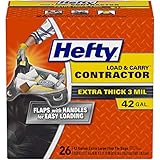
- LARGE GARBAGE BAGS—This package contains 26 Hefty Load & Carry Heavy Duty large, black, unscented, 42 gallon contractor trash bags
- HANDLE FLAPS FOR EASY LOADING—Load, carry & tie up the toughest trash with the only trash bags to feature extra-long tie flaps with handles
- INDUSTRIAL-STRENGTH TOUGHNESS—Composed of signature Hefty quality & thick 3 millimeter plastic, these Hefty trash bags help contain sharp indoor & outdoor debris without tearing or puncturing
- VERSATILE & RELIABLE—Trust these Hefty garbage bags to take on the toughest jobs, from DIY remodeling to professional construction, with ease
- 100% SATISFACTION GUARANTEE—We want you to be happy with your purchase! If you have any issues with our garbage bags, contact us via the hotline number on the back of the package so we can help
What the Environment Agency does—and does not do
“The Environment Agency has no duty to clear waste.”
The Environment Agency focuses on larger, more serious or organised incidents rather than acting as a general clearance service. It may consider clearance in limited circumstances, such as an immediate and significant risk to human health or the environment. In an ordinary private-land dumping case, the owner should not wait for the agency to arrange a clean-up.
For England council referrals, guidance gives examples of cases that should be referred to the Environment Agency:
- more than 20 tonnes of waste (approximately 20 cubic metres);
- more than 5 cubic metres of fibrous asbestos;
- more than 75 litres of potentially hazardous waste in drums or containers; or
- possible links to criminal business activity or organised crime.
These are referral examples in England guidance, not a universal threshold for every UK nation or every type of incident. If asbestos is found, the guidance also says to report it to the Health and Safety Executive. Keep people away from suspected hazardous material and arrange specialist handling rather than treating it as ordinary rubble.
Rank #3

- Frustration Free - Our Commander industrial contractor trash bags are as tough as it gets. 3 Mil thick gauge means your project will stay puncture, tear, and frustration free.
- Save Money - Commander premium contractor bags are tough on debris; not on your wallet. We provide the same value the big brands do at half the price.
- Never Waste a Bag - Bags are packed neatly and disperse one at a time so no bag ever goes wasted.
- Proudly Made in the USA - All Commander products are carefully and proudly made in the United States of America.
What to do when waste is dumped on private land
- Record the incident. Note the date, time, precise location, waste type and approximate amount. Record vehicle registration numbers, descriptions, photographs and any CCTV or witness information that can be preserved safely.
- Report it promptly. Send the details to the local council or Environment Agency, using the Environment Agency route for the larger, hazardous or potentially organised cases described above. Reporting is for investigation and enforcement; it is not a promise of free clearance.
- Assess the waste before moving it. Do not mix suspected asbestos, chemicals, clinical material, gas cylinders or other hazardous waste with general waste. Ask an appropriately qualified contractor how the material must be contained and transported.
- Obtain removal quotes. Ask each contractor to separate labour, transport, disposal and any hazardous-waste surcharge. Confirm what volume and waste categories the quote covers, and whether the destination is included.
- Check authorisation before handover. Verify that the carrier is currently authorised to take the waste. England’s duty-of-care guidance points to the Environment Agency register. The receiving site must also be permitted or exempt for the waste being accepted.
- Keep a file. Retain photographs, contractor details, carrier-registration checks, transfer documentation, invoices and payment records. The code does not require you to retain records of every carrier check, but these documents can demonstrate that you took reasonable duty-of-care steps if the waste is later investigated.
- Confirm completion. Obtain confirmation of where the waste went and keep the final receipt or transfer record with the incident report. Recheck the site for residual contamination or further dumping after access is restored.
Choosing a lawful disposal route
Anyone transferring waste has a duty to use an authorised person. In England and Wales, householders must transfer household waste only to an authorised person, and failing to take reasonable measures to meet the duty of care can be a criminal offence. That rule concerns waste you arrange to transfer; it does not make a landowner the original fly-tipping offender merely because someone else dumped waste on the land.
For a private clean-up, ask for the carrier’s current authorisation, the waste categories it covers and the receiving site’s permit or exemption. If the contractor cannot explain those points, do not hand over the waste. In Wales, the relevant carrier register is maintained by Natural Resources Wales; the clearance rules explained in this article are otherwise England-focused.
Can the person who dumped it be made to pay?
A council or the Environment Agency may try to recover investigation, clearance or enforcement costs from the polluter. Depending on the circumstances, recovery may also be pursued from an occupier or landowner. Recovery is not automatic, and a private owner should not assume that paying for a clean-up will later be reimbursed.
Free tools Windows power users keep installed
One-click scans. No signup required.
Preserve evidence that could help identify the dumper: clear vehicle details, time-stamped footage, photographs showing distinctive packaging or documents, witness statements and contractor records. Give that information to the investigating authority rather than confronting a suspected dumper or moving evidence unnecessarily.
Rank #4

- Contractor Garbage Bags: 55 Gal | 20 Bags | Black | Heavy Duty
- Heavy Duty: Thick 2 mil contractor trash bags, designed to hold heavy loads and construction debris
- Large Contractor Bags: 55 Gallon Trash Bags (36" x 56"), for large construction projects
- Convenient: Contractor garbage bags in dispenser box (55 gal heavy duty) | Easily access & store your contractor bags
- Contractor Trash Bags: 55 Gallon, heavy duty, tear-resistant, puncture-proof. Ideal for large projects and industrial use
Fly-tipping law and the landowner’s position
Fly-tipping is the illegal deposit of controlled waste, or knowingly causing or permitting it to be deposited, without an environmental permit. The offence is identified in section 33(1)(a) of the Environmental Protection Act 1990.
The fact that waste appears on your land does not by itself mean you committed that offence. Your separate duty is to manage any waste you choose to transfer, including checking that a carrier and destination are authorised. Keep the two issues distinct: enforcement penalties apply to an offender if proved, while the practical cost of making private land safe usually falls first on the owner or manager.
Current England enforcement figures
Defra reported the following England figures for 2024/25:
Recommended Free Tools
| Measure | Reported count |
|---|---|
| Statutory notices | 21,000 |
| Fixed penalty notices | 69,000 |
| Waste duty-of-care inspections | 29,000 |
These figures describe enforcement activity, not the total number of fly-tipping incidents or the number of private-land clean-ups paid for by owners. Defra notes that incident-size counts may not match land-type totals, particularly because authorities may not clear incidents on private land.
Best Value

- Contractor Garbage Bags: 55 Gal | 40 Bags | Black | Heavy Duty
- Heavy Duty: Thick 2 mil contractor trash bags, designed to hold heavy loads and construction debris
- Large Contractor Bags: 55 Gallon Trash Bags (36" x 56"), for large construction projects
- Convenient: Contractor garbage bags in dispenser box (55 gal heavy duty) | Easily access & store your contractor bags
- Contractor Trash Bags: 55 Gallon, heavy duty, tear-resistant, puncture-proof.
How the answer changes by situation
A sofa dumped in a council park
Report it to the council responsible for the park. That council normally arranges clearance as part of its duty for the relevant land.
Builders’ waste dumped on a farm
The farmer or landowner normally arranges and pays for removal, reports the incident and supplies evidence. If the quantity suggests a larger or organised operation, make the additional Environment Agency referral.
Suspected asbestos on a private development site
Keep people away, report the incident, notify the Health and Safety Executive as stated in the guidance, and use a contractor equipped to handle asbestos. Do not put it into a general waste load.
Windows Errors? Fix Them Before They Spread
Repair common Windows errors and clear accumulated junk for a smoother, more stable PC - no reinstall needed.Free scan · no reinstallCrashes, No Sound, or Screen Glitches?
Random freezes, missing sound and display glitches usually trace back to one bad driver. Find and replace yours safely.Free scan · under a minuteWaste on a roadside verge
Report the exact road and direction of travel to the council. The responsible body may be a local authority or another highway authority, depending on the road.
England-only scope
The statutory clearance and referral material summarised here is England-focused. Do not assume the same division of duties applies in Scotland or Northern Ireland without checking the relevant national rules. The carrier-register point for Wales is included because duty-of-care guidance uses a separate Welsh register, but this article does not establish Wales-wide clearance responsibilities.
Quick Recap
Practical decision checklist
- Identify who controls the land or highway.
- Report the incident with location, timing, waste description and vehicle evidence.
- For private land, budget for lawful removal unless an authority expressly accepts responsibility.
- Escalate larger, hazardous or potentially organised incidents using the England referral examples.
- Use only an authorised carrier and an appropriate permitted or exempt destination.
- Keep evidence and disposal records, while recognising that cost recovery is uncertain.
Product prices and availability are accurate as of the date/time indicated and are subject to change. Any price and availability information displayed on Amazon at the time of purchase will apply.

