Free tools Windows power users keep installed
One-click scans. No signup required.
There is no universal payer for indoor mobile coverage. The building owner, a mobile operator, an enterprise or tenant, or a neutral-host provider may fund the installation, while a managed-service contract can replace a large upfront payment with a recurring fee. The responsible party is determined by the deployment model, lease and access terms, participating operators, and the system’s design.
For a real building, the only reliable way to establish the amount and allocation is to commission an indoor survey and obtain a written proposal that separates equipment, installation, operator connection, maintenance, upgrades and end-of-contract obligations.
As an Amazon Associate I earn from qualifying purchases.
What “paying for coverage” includes
Indoor mobile coverage is not one line item. A commercial project can involve radio equipment, antennas, cabling, power, backhaul, structural supports, fire-stopping, design, testing, operator interconnection, monitoring and future upgrades. One party may fund the construction while another owns the equipment, and a third may operate it.
Contracts should therefore distinguish between:
- Initial deployment: surveys, design, permits, materials, installation, commissioning and acceptance testing.
- Connection and integration: work needed to connect participating mobile operators to the indoor system and configure their frequencies or radio services.
- Ongoing operation: monitoring, fault response, electricity, software, site visits, insurance and replacement parts.
- Changes over time: extra floors, new tenants, additional operators, capacity expansion, technology refreshes and building alterations.
- Exit obligations: equipment ownership, removal, reinstatement of landlord areas and service continuity if the agreement ends.
A proposal that quotes only an installation figure does not answer who pays for the complete service. Ask for each category in writing.
#1 Best Overall

- 【Ready for 5G】- The booster is designed for the largest cell carriers - Verizon and AT&T, boosts 4G LTE and 5G signal for all cellular devices operating on band 12, band 13 and band 17. Note: The booster only supports 5G band that largely deployed in current bands 12, 17 and 13 by Dynamic Spectrum Sharing by carriers. If you need a 5G cell booster, please ensure that you have a 5G phone and your carrier has deployed 5G in the 4G band of 12,13 and 17 before purchase.
- 【Advanced Features & Smart Device】- The booster uses AGC(Automatic Gain Control) function, which can intelligently detect the existing signal strength, and adjust itself for best performance, then reflect its working condition through LED indicator. Buy it once, and boost for life.
- 【Better Data & VoLTE】- Enhances 4G LTE data speed signals and volte, enjoy faster uploads and downloads to stream videos smoothly in your house, office, cottage, cabin, camper, basement etc., get rid of expensive monthly internet fees. Supports multiple users simultaneously.
- 【Powerful Antennas & Large Coverage】-This booster comes with high gain directional antenna, allow you to point it to the nearest signal tower more accurate and get more signals, expanding the indoor coverage up to 4,500sq ft. DIY Installation.
- 【Reliable Service Guarantee】- FCC Certified, 30-day return, 3-month replacement, Up to 3-year manufacturer repair, lifetime professional technical Support.
The four main funding models
| Model | Typical funder or financier | How it works | Points that still require agreement |
|---|---|---|---|
| Owner-funded | Building owner or landlord | The owner purchases or commissions the system, either as a capital project or through a managed service. | Whether tenants contribute through service charges, which operators are included, who owns the equipment and how upgrades are funded. |
| Carrier-led | One mobile operator or several operators | A carrier designs or funds a system to improve service for its customers, sometimes with shared access for other carriers. | Operator participation, design standards, access rights, cost sharing and what happens if the carrier later changes its network strategy. |
| Enterprise- or tenant-led | Occupier, anchor tenant or enterprise | A tenant pays because reliable cellular service is important to its staff, customers, safety procedures or business operations. | Landlord consent, lease term, equipment ownership, responsibility for common areas and removal or transfer at lease expiry. |
| Neutral-host-led | Neutral-host provider, with costs recovered from the owner, operators or users | A third party deploys or manages shared indoor infrastructure for multiple participating operators. | Monthly charges, operator onboarding, service levels, capacity allocation, upgrade triggers and the provider’s rights at contract end. |
These are commercial structures, not guarantees. Ericsson’s explanation of indoor connectivity identifies owner, carrier, enterprise or tenant and neutral-host approaches, but it does not promise that an operator will pay for a particular building. The contract for the specific site controls.
Owner-funded projects
An owner may treat coverage like other building infrastructure, such as a riser, generator or access-control system. The owner can pay directly from a capital budget or buy a managed service. A landlord may see value in better tenant experience and easier leasing, but that is a business rationale rather than a rule that landlords always pay.
If tenants are expected to contribute, the lease or service-charge documents should state the charging method, allocation period, treatment of vacant space and approval process for future works. A tenant should not assume that a general service charge automatically covers a new radio system.
Carrier-led projects
A carrier-led solution can be carrier-funded, particularly where a venue has a large customer population or a strategic location. In a multi-operator building, however, the carriers must align on technical criteria, access, ownership, maintenance and cost sharing. That coordination can delay a project even when one operator is willing to proceed.
Ask whether the proposed system supports only the sponsoring carrier or is designed for several operators. A single-carrier installation may leave other occupants without service and may require a second, incompatible system later.
Rank #2

- 📶 𝐁𝐨𝐨𝐬𝐭 𝐒𝐢𝐠𝐧𝐚𝐥 - HiBoost cell phone signal booster for 2000 Sq.ft. Enjoy lag-free cell phone signal, faster internet connections for streaming, faster to download and upload. High power outside antenna, receive longer distance signal. (It requires at least one bar of signal for the cell phone booster to enhance the signal.)
- 📶 𝐖𝐨𝐫𝐤𝐬 𝐎𝐧 𝐀𝐥𝐥 𝐔.𝐒. 𝐂𝐚𝐫𝐫𝐢𝐞𝐫𝐬 - HiBoost cell phone booster for home works on all cellular service providers - Verizon, AT&T, Sprint, T-Mobile, Straight Talk, and U. S. Cellular. Supports bands of 700-750MHz (band 12, 13, 17), 800-850MHz (band 5), 1900MHz (band 2/25) and 1700~2100MHz (band 4).
- 📶 𝟓𝐆 𝐂𝐨𝐦𝐩𝐚𝐭𝐢𝐛𝐥𝐞 - HiBoost cell booster for home compatible with the latest 5G and 4G LTE technology, supports multiple devices simultaneously. The lte cell booster aid to eliminate weak signal areas, continuously provide you with a reliable cellular connection so that no more dropped calls when you at home
- 📶 𝐔.𝐒. 𝐋𝐨𝐜𝐚𝐥 𝐂𝐮𝐬𝐭𝐨𝐦𝐞𝐫 𝐒𝐮𝐩𝐩𝐨𝐫𝐭 - You can easily get help from installation to use. 30-Day Money Back, 3-Year Warranty - within 3 years of receipt of delievery, for any quality issue, simply reach us and we'll solve it. HiBoost cellular service booster meet all FCC guidelines, there is no need to ask the cellular provider for their consent, no monthly subscription fees required
- 📶 𝐋𝐂𝐃 𝐚𝐧𝐝 𝐀𝐏𝐏 𝐌𝐨𝐧𝐢𝐭𝐨𝐫 𝐇𝐞𝐥𝐩 𝐄𝐚𝐬𝐲 𝐈𝐧𝐬𝐭𝐚𝐥𝐥𝐚𝐭𝐢𝐨𝐧 - The color LCD screen on the cellular boosters clearly shows the real-time signal strength, you can cooperate with a partner to locate the best installation point of the outside antenna accurately, or you can achieve the same purpose through the HiBoost Signal Supervisor APP on your own, then place the booster with whip antenna on any desktop you want to get the ideal signal boost
Enterprise or tenant funding
An enterprise may pay when cellular service affects operational continuity, mobile point-of-sale devices, lone-worker communications, logistics, clinical workflows or customer experience. The tenant should confirm that its lease permits antennas, cabling, equipment rooms, roof access and any penetrations. If the system serves shared areas, the tenant must also document the landlord’s rights and responsibilities.
Where a tenant funds the work, negotiate what happens when it relocates. Possible outcomes include transfer to the landlord, assignment to a replacement tenant, removal at the tenant’s cost or continued operation under a separate agreement.
Neutral-host arrangements
A neutral host deploys or manages shared infrastructure so participating operators can use the same indoor distribution network. This can avoid multiple parallel antenna and cable systems, but it does not make the service free. The neutral host may recover its investment through an owner payment, operator fees, tenant charges or a combination.
One provider, Proptivity, describes a package covering design, installation, operator coordination and ongoing operation for a fixed monthly fee. Treat that as a provider-specific offer, not a standard market price or universal payment model. A monthly fee may move expenditure from capital cost to operating cost, but the total contract value, indexation, minimum term and charges for expansion still matter.
How the technology changes the commercial decision
The coverage method affects both scope and who has a reason to fund it. A survey should test outdoor signal, internal losses, floor layout, materials, user density, traffic demand and the operators required by occupants.
Rank #3

- 【Boost Your Signal】-- The cell booster can be used without registering with the carrier. Enjoy fewer dropped calls, incredibly fast data speeds, better voice quality and worry-free streaming through ZORIDA signal booster with 72dB max gain. Enhance the signal in rural areas, home, cabin, shop, office, building, warehouse, basement or garage. Higher gain helps save your battery life of phones on standby mode. (Please ensure you have the 1-2 bars signal outside of your home before using)
- 【All US Carriers & 5G Compatible】-- ZORIDA cellular signal booster supports All US carriers from Verizon, AT&T, T-Mobile, US Cellular, and more. Works on various band 12/17, 13, 5, 4, 2/25. Boost 3G & 4G LTE, 5G signal. 5G technology allows you to experience ultra-fast and stable network connectivity at home.(Tips: If you want to use 5G, please make sure your area provides 5G service in the existing 4G frequency band before purchasing)
- 【Affordable & Effective】-- ZORIDA cell phone signal booster enhances cell signal for multiple devices simultaneously up to 2000 sq ft, and it offers an ideal solution for small homes, studios or a single room. No subscriptions or hidden fees. ZORIDA ACE 5S is an affordable yet effective way to solve your connectivity issues. (Note: the coverage range of the booster depends on your outdoor signal strength)
- 【Easy Installation & App Service】-- Cell phone signal booster for home features a compact indoor whip antenna that you can easily attach to the cellular booster, then place it on the wall or directly on the table. By registering ZORIDA APP, we provide online 1v1 technical support to guide installation. You can also find the best installation place of outdoor antenna, view step-by-step videos and instructions, and see your signal data before and after Installation.
- 【US-based Service & FCC IC Certified】-- FCC & IC Certified. ZORIDA cell booster for home promises 30-day money-back and a 3-year warranty. Lifetime US-based tech-support-online app chat, phone and email; Contact with us anytime anywhere when you need.
Distributed antenna systems
A distributed antenna system (DAS) uses a network of cables and antennas to distribute mobile signals through a building. It can suit large or complex premises and multi-operator requirements, but it may involve substantial design, cabling, equipment-room and integration work. The proposal should identify whether the DAS is passive, active or hybrid, which radio bands are supported and how future bands will be added.
Crashes, No Sound, or Screen Glitches?
Random freezes, missing sound and display glitches usually trace back to one bad driver. Find and replace yours safely.Free scan · under a minuteWindows Errors? Fix Them Before They Spread
Repair common Windows errors and clear accumulated junk for a smoother, more stable PC - no reinstall needed.Free scan · no reinstallIndoor small cells
Small cells place low-power cellular access points inside the building, usually connected to a suitable backhaul network. They can provide targeted capacity and may be attractive for offices, campuses or high-density areas. Confirm who supplies the radio units, who provides backhaul, how many cells are included and whether each operator requires separate equipment or a shared platform.
Signal boosters
A booster can address a limited coverage problem by receiving an outdoor signal and retransmitting it indoors. It is not automatically suitable for a whole commercial building. A booster may lack the capacity, operator compatibility, isolation or control needed for a large, multi-floor site. Use one only after a professional assessment confirms that it is lawful, technically appropriate and accepted by the relevant operator or regulator.
Shared neutral-host infrastructure
Neutral-host infrastructure can combine shared indoor distribution with connections to several mobile operators. The commercial benefit is potential sharing of space and power, but the agreement must define each operator’s capacity, service level and upgrade path. The ONGO Alliance’s 2024 white paper describes signal boosters, Wi-Fi, small cells, DAS and neutral-host networks as distinct approaches; they should not be treated as interchangeable products.
Access rights and local rules
Payment can be affected by property-access law as well as by the commercial contract. In the United Kingdom, a telecom access agreement may be documented as a wayleave or lease. It can grant a provider rights to enter the property, install equipment and maintain it. The agreement should state access hours, notice, safety procedures, reinstatement, insurance and any rent or fee.
Recommended Free Tools
Rank #4

- 【𝟑𝐊 𝐇𝐞𝐫𝐨 𝐁𝐨𝐨𝐬𝐭𝐞𝐫 𝐏𝐞𝐫𝐟𝐞𝐜𝐭𝐥𝐲 𝐁𝐨𝐨𝐬𝐭 𝐖𝐞𝐚𝐤 𝐒𝐢𝐠𝐧𝐚𝐥】The Hiboost Hero Cell Phone Booster perfectly improves cellular signal in spaces up to 3,000 square feet. With up to 65dB of max gain, will experience fewer dropped calls, better voice quality, and faster internet speeds. Boost your signal in your home, office, garage, farm, remote areas, warehouse, and metal buildings with Hero. 𝙉𝙤𝙩𝙚: Check signal strength (1-2 bars) outside before buying.
- 【𝐒𝐮𝐩𝐩𝐨𝐫𝐭 𝟓𝐆 𝐯𝐢𝐚 𝐃𝐒𝐒 𝐢𝐧 𝟒𝐆 & 𝐏𝐫𝐞𝐦𝐢𝐮𝐦 𝐐𝐮𝐚𝐥𝐢𝐭 𝐲】Compatible with 5G, ensures you enjoy high-speed cellular signal. 𝙉𝙤𝙩𝙚: it is designed according to 5G within the FCC regulation permitted bands. Please consult your carrier on whether to deploy 5G by DSS in 4G band. Only support bands in 12,13,17, 5, 2/25, 4 of US carrierThe Booster is built with cutting-edge chipsets, it is guaranteed to provide maximum signal amplification and long - lasting durability.
- 【𝐓𝐰𝐨 𝐎𝐩𝐭𝐢𝐨𝐧𝐚𝐥 𝐈𝐧𝐝𝐨𝐨𝐫 𝐀𝐧𝐭𝐞𝐧𝐧𝐚𝐬 𝐟𝐨𝐫 𝐃𝐢𝐟𝐟𝐞𝐫𝐞𝐧𝐭 𝐍𝐞𝐞𝐝𝐬】The Cell Booster comes with two indoor antenna options to cater to different requirements. The ultra-powerful panel antenna provides an extended coverage range of up to 3000sq.ft, making it perfect for larger spaces; The compact whip antenna is designed for mobile applications and on-the-go use. Choose the antenna that best suits your needs and experience the benefits of improved signal strength.
- 【𝐇𝐢𝐛𝐨𝐨𝐬𝐭 𝐀𝐩𝐩 𝗔𝘀𝘀𝗶𝘀𝘁 𝐈𝐧𝐬𝐭𝐚𝐥𝐥𝐚𝐭𝐢𝐨𝐧】The Hiboost App remotely monitors and helps install a high-gain directional outdoor antenna to find the best signal. It offers one-on-one live tech support and guidance, recommending adjustments for optimal booster performance. Note: Outdoor antenna installation and cabling are required. Our app support team provides step-by-step visual and phone assistance to ensure a smooth setup—most users complete the installation within 2 hours using our guided.
- 【𝟑 𝐘𝐞𝐚𝐫𝐬 𝐖𝐚𝐫𝐫𝐚𝐧𝐭𝐲 & 𝐑𝐞𝐥𝐢𝐚𝐛𝐥𝐞 𝐂𝐮𝐬𝐭𝐨𝐦𝐞𝐫 𝐒𝐮𝐩𝐩𝐨𝐫𝐭】We are committed to providing our customers with the highest quality products and a worry-free shopping experience. Our Hero boosters come with a 30-day money-back guarantee and a three-year manufacturer's warranty. If you have any questions or concerns about our cell phone signal booster for home, please don't hesitate to contact us. We are here to assist you.𝙉𝙤𝙩𝙚:Hotspot devices cannot boost signal.
Hong Kong illustrates why local rules cannot be generalized. Under its specified-building regime, authorized mobile operators may access reserved space and mobile access facilities without paying a fee to the relevant landowners when the stated qualifying conditions apply. That rule is limited to the buildings and circumstances defined by the Office of the Communications Authority. It does not establish a worldwide entitlement to free access, nor does it determine who pays for equipment, power or maintenance elsewhere.
Before signing, obtain advice for the building’s jurisdiction on planning, building control, fire safety, landlord consent, radio licensing, electromagnetic-exposure requirements and access rights. A rule that removes an access fee may still leave construction and operating costs to be allocated by contract.
What to put in a building coverage brief
A precise brief prevents suppliers from pricing different projects under the same headline. Include:
- Building address, use, floor area, floor count, basements, parking and external areas.
- Construction materials, risers, plant rooms, roof areas and restrictions on drilling or visible equipment.
- Required operators and technologies, including any private or dedicated enterprise service.
- Coverage targets for offices, lifts, stairwells, toilets, loading areas, basements and emergency routes.
- Expected user numbers, busy-hour traffic and applications that need capacity rather than merely a signal.
- Construction programme, access windows, landlord standards and coordination with other trades.
- Preferred commercial treatment: capital purchase, service charge, tenant contribution or managed monthly service.
Require the supplier to show assumptions. “Whole-building coverage” can mean a signal in most occupied rooms, a measured percentage of floor area, or a capacity guarantee at a specified busy-hour load. Those are different deliverables.
What’s actually slowing this PC down?
Pick the symptom - the matching free tool is one click away.
How to determine who pays: a practical process
- Identify the service objective. Decide whether the problem is dead zones, poor voice reliability, inadequate data capacity, emergency communications or a combination. Record the areas and operators that matter.
- Commission an independent or clearly scoped survey. Measure each relevant operator and technology throughout the building. Request heat maps, signal levels, capacity findings and a list of assumptions.
- Choose the deployment model. Compare owner, carrier, tenant and neutral-host options against coverage, capacity, control, term and future expansion. Do not select a payment model before knowing what system is required.
- Obtain written proposals. Ask for separate initial, recurring, operator-integration, power, maintenance, upgrade and removal costs. State whether prices are one-time, annual, indexed or subject to a minimum term.
- Confirm operator participation. Get written confirmation of which operators will connect, who pays their connection work and what happens if an operator declines or withdraws.
- Negotiate property rights. Document equipment rooms, risers, roof or façade access, working hours, security, health and safety, insurance, reinstatement and access for future maintenance.
- Assign ownership and risk. State who owns each component, who carries failure risk, who replaces obsolete equipment and who is responsible for regulatory compliance.
- Set acceptance tests and service levels. Define measurable coverage and capacity thresholds, test locations, outage response, reporting and remedies if the system misses the agreed result.
- Plan for change and exit. Cover new floors, refurbishment, new operators, technology upgrades, assignment to a new owner, removal and continuity during disputes.
Questions to ask when comparing proposals
| Question | Why it affects payment |
|---|---|
| Who owns the equipment during and after the term? | Ownership determines depreciation, insurance, replacement and removal obligations. |
| What is included in the initial price? | Some proposals exclude survey, structural work, power, backhaul, fire-stopping or operator integration. |
| What is the recurring fee and what can change it? | Check indexation, minimum charges, energy, monitoring, site visits and additional-operator fees. |
| Which areas and performance levels are guaranteed? | Area coverage without a capacity or service-level definition may not meet the operational need. |
| Which operators participate? | A system that supports one operator may not satisfy tenants or visitors using another. |
| Who coordinates operator connections? | Coordination can require technical approvals, testing and schedule management that otherwise fall to the owner. |
| Who pays for upgrades? | New spectrum, increased occupancy, refurbishment and additional operators can create material costs. |
| What happens if the contract ends? | Clarify continued service, equipment transfer, removal, reinstatement and access during transition. |
Common mistakes and how to avoid them
Assuming the landlord must pay
There is no general rule that a commercial landlord funds indoor cellular systems. Check the lease, service-charge provisions, landlord standards and the owner’s business case. If coverage is essential to a tenant, propose a cost-sharing or managed-service structure rather than relying on an assumption.
Best Value
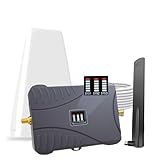
- Product Function— The cell phone amplifier boosts weak signal in 1-2 rooms, up to 2000 sq ft inside any home & office. This results in fewer dropped calls, improved battery life, higher audio quality, and faster data and streaming for All U.S. Cellular and many more And boosts 5G/4G LTE voice, text and data signals for all North American cell carriers, including Verizon’s 5G Nationwide data signals..Maximum Gain: 70 dB,Maximum Outpower: 17 dBm
- 5G Compatible:Cell phone booster support 5G and deliver amazing speeds; Only 5G that carriers have deployed in large numbers in existing 4G brands through DSS (Dynamic Spectrum Sharing), the FCC has not yet allowed the new mmWave 600MHz cellular enhancers, so if you must use 5G, Make sure your area has 5G services in the existing 4G band before you purchase.
- Coverage Area— The indoor coverage area that cell booster varies based on existing signal at the exterior antenna location: :1-2Bars~ 300 square feet, 3-4 bars ~ 800 square feet, 5Bars~ 2,000 square feet, and the signal booster will not work if there is no signal available to boost it at the external antenna location.
- Eay Installation Keep the power is off during installing/adjusting antennas. Simply set up the outdoor Log-periodic antenna, and place signal booster where you want. Make sure the distance between the outdoor antenna and indoor antenna should be about 32ft. Following the user manual, you can easily set it up.
- FCC & IC Certified: :Cell booster complies with all FCC and IC guidelines and meet the requirements of application standards,does not interrupt or compromise any carrier's signal to and from the cell tower.
Assuming a mobile operator will install it for free
Carrier-led funding exists, but operators assess commercial value, technical feasibility and strategic priority. Obtain a written commitment before designing the project around carrier funding.
Comparing only the headline capital price
A low installation quote can exclude operator connections, power, monitoring, maintenance, access works or future expansion. Compare whole-life cost and contractual responsibilities.
Buying a booster before surveying the building
A booster may solve a small weak-signal area but fail in a high-density or multi-operator environment. Survey first and verify compatibility and regulatory conditions.
Leaving shared-space access undocumented
Equipment in a riser, roof, plant room or landlord corridor needs durable access rights. Without them, maintenance can be blocked when a tenant changes or a building is sold.
What the available market evidence can—and cannot—tell you
The Small Cell Forum reported that neutral-host and other alternative deployers represented more than half of new indoor deployments in an approximately 2020 statement. That is an older, broadly described industry statistic, not a current global measure of funding or a prediction for a particular building.
No standard price, universal landlord contribution or current worldwide split of payments has been established. Costs vary with area, construction, operator count, capacity, access conditions, backhaul, labour and the chosen ownership model. A building-specific survey and commercial proposal remain necessary.
For a named Oslo deployment announced by Ericsson in April 2026, an Ericsson executive described a digital indoor feature as giving operators and hosts greater flexibility, resource efficiency and a scalable rollout. That statement concerns the named deployment and feature; it is not evidence that every host or operator uses the same funding arrangement.
The Tool Desk
Outbyte PC Repair FREEClear out junk files and repair common Windows errorsFree Scan →Outbyte Driver Updater FREEScan for outdated or missing drivers - takes under a minuteDriver Scan →Bottom line for owners, tenants and contractors
Indoor mobile coverage is a negotiated infrastructure project, not a universally landlord-paid utility. The owner may fund it, a carrier may lead it, a tenant may commission it, or a neutral host may finance and operate shared equipment in return for recurring payments. The correct answer for a particular building comes from the survey, the operator commitments, the access regime and the signed allocation of capital, operating, upgrade and exit costs.
Quick Recap
Product prices and availability are accurate as of the date/time indicated and are subject to change. Any price and availability information displayed on Amazon at the time of purchase will apply.

