Quick wins for a faster PC:
Fix the driver behind crashes, sound loss and screen glitchesFind Drivers →Clear out junk files and repair common Windows errorsFree Scan →Some links on this page are affiliate links: if you buy through them we may earn a commission, at no extra cost to you.
The best firewood for heating a home is dense wood that is genuinely dry, sold in a measured full cord, and readily available where you live. In Oklahoma State University Extension’s regional table, dry osage-orange has the highest listed heat value at 30.0–32.9 million Btu per cord. Hickories and several oaks also rank near the top. That ranking is useful for comparing dry, full-cord loads, but it is not a guarantee of heat delivered by every stove or fireplace. A smaller load of wet premium species can produce less useful heat than a correctly measured cord of ordinary wood that has reached 20% moisture or less.
What is the best firewood for heat?
Choose the densest dry species you can obtain legally and sustainably in your area, then verify both moisture and quantity. Density matters because a cord is a fixed volume: heavier wood puts more dry fuel into that 128-cubic-foot stack. At equal moisture content, most species contain roughly the same energy per pound. The difference between a low- and high-performing cord is mainly how many pounds of dry wood fit into the cord.
As an Amazon Associate I earn from qualifying purchases.
What’s actually slowing this PC down?
Pick the symptom - the matching free tool is one click away.
For a practical decision, use this order:
- Verify dryness: target 20% moisture or less on a moisture meter.
- Verify quantity: make sure the seller means a full cord, not a face cord, rack, or loosely piled load.
- Choose density: osage-orange, hickories, locusts and oaks are high-value examples in the Oklahoma table.
- Consider local reality: a species that is available, split, stored and legal to move in your region is usually a better buy than a theoretically superior species that arrives wet or in an undersized stack.
The heat figures below are recoverable heat values for dry wood from Oklahoma State University Extension’s Oklahoma-focused publication. They are regional comparative estimates, not appliance-output measurements or promises about a particular delivered load.
Heat value chart: million Btu per full cord
A full cord is 128 cubic feet of tightly stacked firewood. The table’s ranges reflect the variation shown in the Extension source; they should not be read as a guaranteed result for every tree, moisture level or stove.
#1 Best Overall

- ✅【Accurate & Trusted Measures, Identify Moisture Level】With accurate & trusted performance, Mecurate moisture meter can detect moisture content from wood to building material. A reliable must-have tool for home owners, woodworkers, painters & architects to detect moisture level and spot hidden damage, which would save potential expensive repairs.
- ✅【2 Mode 8 Scale,Guaranteed Accuracy】With 0.1% resolution, the moisture meter has 2 mode : wood and building material. Wood mode has 8 calibrated scales for different wood types with full list on manual. Integrated with "Self-Testing" Aid on protective cap, users can calibrate the tool before use.
- ✅【3 Colored Indicators, Fast Spot Problem】Integrated with 3 colored indicators, together with intuitive on-screen icons for low/medium/high moisture content. Fast and accurately identify the dampness.
- ✅【Multi Function Easy Use】Integrated with temperature detection in °C/°F, one button click to know ambient temperature. Hold button to freeze the reading plus low battery icon to remind battery replacement. Comes with a jumbo smart backlit display, gives extended visibility suited to any ambient brightness. Side covered with anti-slip material, provides comfort firm grip.
- ✅【Packed for Convenience】Comes with a water resistant carry pouch. A "Wood Type Quick-Search Index Table" printed on back of the device, help adjust setup quick-and-easy.A full wood list on user manual to help quick identify correct scale.
| Species | Million Btu per cord (dry wood) |
|---|---|
| Osage-orange | 30.0–32.9 |
| Hickory, butternut | 26.7 |
| Oak, pin | 25.9 |
| Persimmon | 25.8 |
| Hickory, shagbark | 25.3–27.7 |
| Oak, white | 24.0–29.1 |
| Locust, honey | 23.7–26.7 |
| Hickory, bitternut | 23.7–26.5 |
| Oak, post | 23.7–25.6 |
| Locust, black | 23.2–28.3 |
| Mulberry, red | 23.2–25.8 |
| Maple, sugar | 23.2–24.0 |
| Oak, bur | 22.7–26.2 |
| Oak, red | 22.1–25.9 |
| Ash, white | 21.6–24.6 |
| Sweetgum | 21.3 |
| Pecan | 21.1–28.0 |
| Walnut, black | 20.0–22.6 |
| Ash, green | 19.9–21.1 |
| Hackberry | 19.5–21.7 |
| Cherry, black | 19.5–20.5 |
| Elm, slippery (red) | 19.0–21.7 |
| Elm, American | 18.4–20.5 |
| Maple, red | 18.1–20.0 |
| Sycamore | 17.9–20.2 |
| Basswood | 13.5–15.2 |
| Willow | 13.2–17.6 |
| Cottonwood, eastern | 12.6–13.5 |
Examples from the chart show the spread: osage-orange is listed at 30.0–32.9 million Btu per cord, white oak at 24.0–29.1, and basswood at 13.5–15.2. Those are values for dry wood in the source’s regional context. They do not account for chimney draft, stove design, combustion settings, heat sent up the flue, or heat lost from an open fireplace.
Why dense wood gives more heat per cord
Wood species do not differ as dramatically in energy per pound as they do in weight per cubic foot. Iowa State University Extension gives an illustrative comparison: basswood weighs about 25 pounds per cubic foot, while shagbark hickory weighs about 51 pounds per cubic foot. A cord made from the hickory therefore contains roughly twice as much dry wood mass in the same stacked volume.
Iowa State also publishes an estimate of approximately 7,000 Btu per pound for firewood at 20% moisture or air-seasoned for at least one year. That figure is a general estimate from Iowa State, separate from the Oklahoma cord table. It helps explain why buying by volume requires attention to species and density, while buying by weight would require accounting for water content.
High-heat choices in the chart
Osage-orange leads the listed range. Butternut and shagbark hickory, pin and white oak, persimmon, and several locust entries are also among the higher values. These woods are attractive for long, hot burns when they are available and properly seasoned.
Middle-range hardwoods
Red mulberry, sugar maple, bur and red oak, white ash, pecan, black walnut and related entries provide substantial heat per cord. A local load from this group can be an excellent heating fuel if it is dry and accurately measured.
Lower-density entries
Basswood, willow and eastern cottonwood have lower listed heat per cord. They can still be useful for shoulder-season fires, kindling-sized splits or situations where they are the dry wood you can obtain locally. You will generally need more cord volume for the same potential heat than with dense oak or hickory.
Crashes, No Sound, or Screen Glitches?
Random freezes, missing sound and display glitches usually trace back to one bad driver. Find and replace yours safely.Free scan · under a minutePC Slower Than It Used to Be?
A free scan shows the junk files, broken settings and background clutter dragging Windows down - then fixes them in one click.Free scan · Windows 10 & 11Rank #2
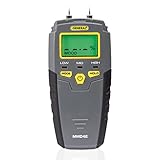
- HUMIDITY SENSOR: Our handy meter tool can quickly determine what level of remediation is needed to keep your family safe from black mold. High levels of dampness that go untreated are the leading cause of harmful fungus growth in the home.
- WATER LEAK DETECTOR: Finding the moisture content in your wood or drywall is the first step in early prevention. Continuously check and test suspicious water stains around the house so you can determine whether the area is wet or has already dried. Low, medium and high moisture tones and on-screen icons, Reading HOLD button
- MOISTURE READER: The mold test features large 0.3" high digits in a backlit LCD for quick and easy detecting. Our mildew scanner includes extra 8mm stainless steel pins, a protective cap that doubles as a calibration checker, and a “9V” battery.
- MOLD TESTER: For an accurate test read, stick the stainless steel pins into the surface of what you're measuring. The gauge has a broad range of 5 - 50% for wood and 1.5 - 33% for building materials such as concrete and drywall.
- GENERAL TOOLS: We're a recognized leader in designing and developing specialized precision tools dedicated to delivering exceptional customer service. We encourage artisans and DIYers to work smarter, measure better, and repair more productively.
How dry should firewood be?
Use 20% moisture or less as the operating target. The U.S. Environmental Protection Agency recommends at least six months of drying for softwood and at least 12 months for hardwood, but calendar time is only guidance. Climate, log diameter, stacking and weather can make a year-old pile either ready or still too wet. Measure the actual pieces.
Season wood so air can reach it
- Split it: EPA guidance recommends pieces about 6 inches in diameter or smaller. Splitting exposes more surface area and shortens drying time.
- Keep it off the ground: Use a pallet, rails or another support so air can circulate underneath and soil moisture cannot wick into the stack.
- Stack for airflow: Leave exposed sides rather than packing the pile tightly against a wall or enclosing it in plastic.
- Cover only the top: A top cover protects against rain and snow while allowing wind to move through the sides. Wrapping the entire pile can trap moisture.
- Rotate and test: Bring the oldest dry wood forward, then check a representative split before burning.
Measure the newly split face
A pin-style firewood moisture meter can check the condition that matters inside a log. Split a piece, wait briefly for the surface to settle, and press the meter into the newly exposed face according to the meter’s instructions. Testing only the dry-looking outer bark can give a misleadingly low reading. Test several pieces from different parts of the stack; one dry split does not prove the whole load is ready.
Why wet wood wastes heat
Water in the fuel must be heated and driven off before the wood gases burn efficiently. The EPA states: “Wet wood can create excessive smoke which is lost heat.” Wet fuel also tends to smolder, dirty the appliance and increase chimney deposits. If smoke continues indoors or pours from the chimney after you have confirmed dry fuel and correct operation, EPA advises contacting a qualified Chimney Safety Institute of America or National Fireplace Institute professional to evaluate the appliance and chimney.
How to buy a full cord instead of a smaller load
Ask the seller to state the quantity in stacked dimensions. A full cord is 128 cubic feet; a common configuration is 4 feet high by 4 feet deep by 8 feet long, although other dimensions can total the same volume. A “face cord,” “stove cord,” rack or pickup load is not automatically a full cord. Those terms can represent different lengths and amounts in different markets.
Questions to ask before delivery
- Is the quoted quantity a full cord, and what stacked dimensions will arrive?
- What species or species mix is included?
- Was the wood split recently or seasoned, and how was moisture measured?
- Will the pieces be cut to a length your appliance accepts?
- Was the wood cut locally, and are there movement restrictions in your jurisdiction?
Compare delivered dry volume, not just the species name or a truck-bed photo. A high chart value cannot compensate for a short stack, loose loading or water-heavy logs. If the load is mixed, ask for the approximate proportions rather than assuming every piece has the highest listed value.
Choose by your actual heating priority
| Your priority | Best approach | What to verify |
|---|---|---|
| Maximum potential heat per measured cord | Select an available, dry, dense species such as osage-orange, hickory, locust or oak. | Moisture at or below 20%, full-cord dimensions and legal, sustainable sourcing. |
| Reliable local supply | Buy the dry hardwood commonly sold in your region rather than chasing a rare species. | Species mix, moisture readings and delivered stacked volume. |
| Fastest preparation | Split smaller pieces, stack off the ground and top-cover the pile. | Measure readiness; do not assume a six- or 12-month calendar rule was met. |
| Shoulder-season or quick fires | Use smaller, lower-density splits when long overnight output is unnecessary. | Dryness and safe piece size for the appliance. |
| Lower pest-transport risk | Buy and burn wood cut close to where it will be used. | Local rules and any quarantine restrictions. |
The EPA’s historic firewood guidance recommends buying and burning locally cut wood to reduce the risk of transporting invasive forest pests. Its Burn Wise program notes that content stopped being updated on October 30, 2025; local forestry agencies remain the right place to check current movement rules.
Rank #3
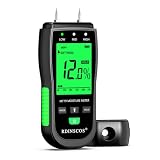
- FIND HIDDEN WALL MOISTURE EARLY — Check suspicious drywall and building surfaces after a leak, water stain, or other moisture concern. Detect abnormal moisture before a small issue develops into more extensive damage and costly repairs
- CHECK BEFORE YOU REPAIR — Don't rely on a wall looking or feeling dry. Use the moisture meter to check questionable areas before painting, repairing, or covering the surface, helping you make decisions based on actual moisture readings.
- CHECK FIREWOOD BEFORE YOU BURN — Test firewood before placing it in your fireplace or wood stove. Knowing the moisture level of your firewood helps you choose wood that is ready for burning and avoid relying on appearance alone.
- PIN-TYPE TESTING FOR DIRECT MEASUREMENTS — The contact pins penetrate the material to measure moisture inside wood and building materials. This makes it useful for checking areas where surface conditions may not tell the whole story.
- ONE TOOL FOR TWO IMPORTANT HOME CHECKS — Keep it ready for two practical jobs: checking walls for hidden moisture and checking firewood before burning. A simple way to make informed decisions before a moisture problem becomes expensive or wood goes into the fireplace.
Firewood heat is not the same as heat delivered to the room
The chart estimates fuel energy per cord. Your home receives only the portion transferred by the appliance. EPA defines appliance efficiency as the share of the fuel’s heat that is transferred to the space. A modern closed stove operated correctly can deliver heat differently from an open fireplace, and two appliances can produce different room temperatures from the same dry load.
Do not multiply a cord figure by the appliance’s nameplate rating without checking what the rating means. In practice, useful heat depends on dry fuel, loading pattern, draft, combustion air, appliance condition, chimney design and whether the unit is intended to heat one room or an entire house. Follow the appliance manufacturer’s approved fuel size and operating instructions.
Recommended Free Tools
A repeatable process for preparing and burning firewood
- Plan the season: Estimate the amount of wood you need, then obtain it early enough for the species and local climate to dry.
- Split to manageable size: Keep pieces near or below 6 inches in diameter where practical, while staying within your appliance’s permitted dimensions.
- Build an airy stack: Support it above soil, leave the sides open and place a cover over the top.
- Check moisture: Split sample logs and measure the fresh interior face in several locations. Set aside pieces above 20% for more drying.
- Confirm the load: Measure stacked length, height and depth to verify a full cord or the smaller quantity you were promised.
- Load for the appliance: Use only dry, untreated natural firewood. Never burn painted, pressure-treated or construction debris; chemicals and fasteners can damage equipment and create hazardous emissions.
- Watch the exhaust: Persistent heavy smoke, poor draft, unusual odors or smoke entering the room are reasons to stop and have the system inspected.
Common mistakes and fixes
“It has been stacked for a year, so it must be dry.”
Problem: Large unsplit rounds, shade, rain and humid weather can delay drying beyond a calendar year.
Fix: Split the wood, improve airflow and verify the interior moisture with a meter.
“The seller says it is a cord, but the load looks small.”
Problem: Face cords and loosely thrown loads are often confused with full cords.
Fix: Request stacked dimensions and calculate the volume. A full cord totals 128 cubic feet.
Rank #4

- Easy to Read with Large LCD Screen: This wood moisture meter is easy to get an accurate reading from the surface of materials and displays accurate moisture readings on the 2.25" big screen. Use this handheld meter to check the moisture content in firewood or drywall, it can stand up on the table, the moisture content is displayed with a bar graph and percentage (_%RH) on the screen. Date Hold and Max/Min function is used to freezes readings, useful for writing down data
- Tricolor Backlight Display, Easy to Use: TopTes Moisture Meter TS-630 features an HD tri-color backlight to easily know if the wood/wall humidity is Dry, Moist, or Wet. Green backlight for Low moisture, orange backlight for middle moisture, and red moisture for high moisture. After selecting the mode, and putting pins into the firewood, easy and quick to get a visible alert from the clear screen
- Seven Calibration Scales, Two Material Mode: It is designed with built-in characteristic parameters of 7 calibration scales for wood and building material, ranging from 0.0% to 57%. This humidity meter is perfect for woodworking, water damage restoration, building construction, and home renovation. Easily Check and test suspicious water leaks around the wall/floor so you can quickly determine what level of remediation is needed
- Pin Type & Battery Operated: TopTes TS-630 moisture meter is a pin-type moisture meter and operates on batteries. With a high precision multi-material sensor, DON’T need calibration. It’ll support an accurate reading after inserting the stainless steel pins into the surface of the wood or building materials. It will auto shut off after 10 minutes of non-use to help save energy. A low-battery indicator will appear on the screen when the battery is running out
- What's in the Box: One TS-630 Moisture Meter, three AAA Batteries, one User Manual, one Carry Pouch, one Pair of Test Pins, one Mini Wrench
“The best species should always burn best.”
Problem: Species rankings assume dry wood and comparable cord volume. Wet high-density wood can release less useful heat than dry lower-density wood.
Fix: Put moisture and measured quantity ahead of the label, then compare density among the dry options actually available.
“More smoke means more heat.”
Problem: Smoke represents unburned or incompletely burned material and can indicate wet fuel or an appliance problem.
Fix: Burn wood at 20% moisture or less, operate the appliance as instructed and arrange a professional chimney or appliance inspection if smoke persists.
Regional limits of the heat chart
The Oklahoma State University Extension table was prepared for species commonly found in Oklahoma. Trees sold under the same common name can vary in density, and many regions do not have the same species mix. Treat the numbers as a way to compare dry wood, not as a nationwide ranking or a promise of delivered heat. Local extension forestry guidance can help identify unfamiliar species and legal firewood-movement rules.
When two local suppliers offer similar dry, measured quantities, favor the load that has been split correctly, stored with airflow and documented with a moisture reading. That combination usually matters more than a small difference between neighboring entries in the chart.
Bottom line for heating a home with wood
For the highest potential heat per full cord, dry dense wood is the answer; osage-orange tops the cited Oklahoma table, with hickories, locusts and oaks also strong choices. The practical winner for your home is the dry, locally appropriate, correctly measured load that your appliance is designed to burn. Check the newly split face for 20% moisture or less, confirm the stack equals the quantity sold, and treat appliance efficiency and chimney performance as separate factors from the wood’s laboratory heat value.
Quick Recap
Product prices and availability are accurate as of the date/time indicated and are subject to change. Any price and availability information displayed on Amazon at the time of purchase will apply.
Do these 3 things before closing this tab:
1Scan for outdated or missing drivers - takes under a minute2Repair Windows errors before they cause bigger problems3Fix the driver behind crashes, sound loss and screen glitches
