Recommended Free Tools
Hire a water damage restoration company promptly when water is contaminated, the affected area is extensive or hidden, materials stayed wet for more than 24–48 hours, mold covers about 10 square feet or more, HVAC or building systems are involved, or entering and drying the space is unsafe. A small clean-water leak can sometimes be handled by an occupant when the source is stopped, electricity is safe, all wet materials are accessible, and complete drying can be verified. The decision is about safety and whether you can reliably remove contamination and moisture—not simply how much water you can see.
Use this decision test first
Work through the questions below before moving furniture or switching on equipment. If any answer points to a hazard or uncertainty, stay out of the affected area and call a qualified professional.
As an Amazon Associate I earn from qualifying purchases.
| Situation | Recommended action | Why it matters |
|---|---|---|
| Sewage, floodwater from outside, chemicals, or an unknown source | Keep people and pets out; arrange qualified contaminated-water cleanup. | Floodwater can contain sewage, pathogens, and chemicals that ordinary household cleaning cannot make safe. |
| Standing water near outlets, appliances, panels, or damaged wiring | Do not enter until the electrical hazard is isolated by an appropriate professional. | Water and electricity can create a fatal shock or fire risk. |
| Structural movement, sagging ceilings, damaged stairs, or a strong gas or chemical odor | Leave and contact emergency or specialist services. | Restoration work cannot safely begin in an unstable or hazardous structure. |
| Wet walls or floors, water under cabinets, or moisture in multiple rooms | Call a restoration company promptly. | Water may be inside assemblies that cannot be dried with household fans. |
| Drying was not completed within 24–48 hours | Assume mold may have begun and seek a moisture and mold assessment. | The U.S. Environmental Protection Agency (EPA) uses this period as a warning sign for flooded homes and belongings. |
| Visible mold larger than about 10 square feet (roughly a 3-foot by 3-foot patch) | Consult professional mold-remediation guidance. | EPA’s size guidance is a screening point, not a legal cutoff or a guarantee that a smaller patch is harmless. |
| Musty odor without visible growth, health complaints, or suspected contaminated HVAC | Arrange an inspection before disturbing materials or running the HVAC system. | Hidden mold or contaminated ducts can spread particles through the building. |
| Small, isolated clean-water spill with accessible materials | Self-clean only if you can stop the source, work safely, and verify complete drying. | Limited incidents may not require a contractor when there is no hidden moisture or contamination. |
These are practical screening rules, not guarantees. The source of the water, the materials affected, how long they stayed wet, access behind finishes, and the occupants’ health and safety all change the decision.
Quick wins for a faster PC:
Repair Windows errors before they cause bigger problemsFix Now →Scan for outdated or missing drivers - takes under a minuteDriver Scan →Clear out junk files and repair common Windows errorsFree Scan →Call immediately for contaminated water or unsafe conditions
Sewage and other contaminated water
Water from a backed-up drain, toilet overflow, flood, failed sewer line, or unknown external source should be treated as contaminated. EPA guidance says flood cleanup can be difficult and dangerous and recommends a professional experienced in contaminated-water damage. Do not rely on bleach, a shop vacuum, or a household carpet cleaner to make sewage-impacted drywall, insulation, carpet pad, or porous furnishings sanitary. Contaminated materials often need controlled removal and disposal, while salvageable surfaces require appropriate cleaning and drying.
#1 Best Overall

- PORTABLE: Lightweight, 2.5-gallon wet dry shop vac offers unparalleled mobility
- IDEAL FOR SMALL MESSES: Perfect for the home, garage, cars, trucks and vans
- EASY TO STORE: Compact size, carry handle and cord wrap feature allow for easy storage
- TWO-IN-ONE CAPABILITY: Shop vacuum can be used as a blower for added versatility
- DESIGNED FOR TIGHT SPACES: 1-1/4 in. shop vacuum accessories allow for maneuverability in tight areas
Electrical, structural, and air-quality hazards
Do not wade into standing water to reach a breaker or unplug equipment. If it can be done without entering the water, have the electrical supply shut off by a qualified person; otherwise leave the property and obtain emergency assistance. A swollen ceiling, buckled floor, shifting wall, damaged stairs, or strong fuel or chemical odor is a reason to leave rather than begin cleanup. People with asthma, severe allergies, immune suppression, or other respiratory vulnerabilities should avoid moldy or contaminated areas until they are assessed and made safe.
How size, time, and hidden moisture change the answer
The 24–48-hour drying warning
EPA’s flooded-home guidance says to assume mold growth if a flooded home, including furniture and belongings, was not dried within 24–48 hours. That does not prove that every surface is moldy, but it means visual inspection alone is no longer enough. A restoration technician can map moisture in walls, floors, ceilings, and contents, identify materials that must be removed, and set up extraction and drying equipment based on measurements.
About 10 square feet of mold
EPA’s Mold Cleanup in Your Home page advises consulting professional guidance when mold covers more than about 10 square feet. A 3-by-3-foot patch is an easy way to picture that area. The number is not a legal threshold, and a smaller patch can still require help if it is inside a wall, results from sewage, keeps returning, or affects someone with a serious respiratory condition. Conversely, a larger area may be manageable only by a trained remediation team with the right containment and documentation.
Free tools Windows power users keep installed
One-click scans. No signup required.
Rank #2

- CORE ADVANTAGE. Vacuum wet/dry messes AND mop tough stains simultaneously—no pre-sweeping! Clean pet-messy floors faster and more efficiently.
- PET-FOCUSED DESIGN. Powerfully tackles hair & odors! Features a tangle-free brush, hair guard to prevent clogs, & specialized pet solution to remove stains, neutralize odors, and leave freshness.
- VERSATILE USE. Safely cleans all hard floors (tile, wood, laminate, vinyl, linoleum) plus area rugs/mats. One machine for your whole house.
- CLEAN/DIRTY WATER SEPARATION. Dual-tank system keeps fresh solution and dirty water separate, preventing cross-contamination for a truly hygienic clean.
- VALUE BUNDLE & PURPOSE. Includes: 1 tangle-free roller brush, 2 bottles (8oz each) of Pet Solution & self-cleaning tray. Every purchase helps BISSELL save homeless pets!
Hidden water and assemblies you cannot inspect
Water can travel beneath flooring, behind baseboards, into insulation, under cabinets, and through ceiling cavities. A musty smell with no visible mold, recurring staining, or a known leak followed by coughing or irritation are reasons to look for concealed moisture. Removing finish materials without a plan can spread dust and mold; leaving them in place can allow deterioration to continue. Professional moisture measurements and a written removal-and-drying plan reduce both risks.
HVAC contamination requires a separate decision
Do not run a furnace, air conditioner, or air handler if floodwater or mold may have reached it, the ductwork, insulation, or the return-air path. The system can distribute contaminants to otherwise clean rooms. EPA notes that HVAC cleaning and drying can be complicated and suggests professional help when possible. The assessment should identify which components were wet or contaminated, whether they can be cleaned and dried, and which items require replacement. A portable fan or dehumidifier is not a substitute for evaluating a contaminated air-distribution system.
When a small clean-water incident may be a DIY job
Self-cleanup is reasonable only when every condition below is true:
Rank #3
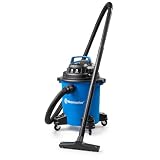
- MADE FOR: Everyday wet and dry pick-up
- POWERFUL AIRFLOW: 65 CFM easily sucks up more debris
- EXTENDED CLEANING REACH: 16-feet of cleaning reach with hose and power cord
- FEATURES: 8 accessories, including a cartridge filter for dry pick-up and a foam wet filter for wet pick-up
- COMPLETE VAC ORGANIZATION: On-board hose, cord and accessory storage
- The source was clean water, such as a promptly stopped supply-line or appliance leak, not sewage, floodwater, or an unknown source.
- The leak is fully stopped and someone has responsibility for repairing the failed pipe, roof, appliance, or fixture.
- There is no electrical, structural, chemical, or unsafe-air hazard.
- The affected area is small and fully accessible, with no suspicion of water inside walls, ceilings, insulation, cabinets, or subflooring.
- Wet materials can be removed or cleaned, and you can provide continuous air movement and dehumidification.
- You can verify that materials are dry rather than relying only on a surface that feels dry.
Escalate if odor, staining, swelling, recurring dampness, hidden moisture, health symptoms, or uncertainty appears. A small visible puddle can conceal a much larger wet assembly.
What to do before the restoration company arrives
- Protect people first. Keep children, pets, and vulnerable occupants away. Do not enter unsafe water or disturb suspected asbestos, lead paint, or other hazardous materials.
- Stop the source only if safe. Close an accessible supply valve or shut off an appliance. Do not attempt a repair that requires entering a hazard.
- Document conditions. Take photographs and video from a safe location, note when the incident occurred, and list rooms and belongings affected. EPA advises documenting damage and contacting your insurer as relevant before flood cleanup.
- Move only what can be moved safely. Lift furniture onto blocks or move it to a dry area if doing so will not spread contamination or damage flooring. Do not carry heavy, waterlogged items alone.
- Ask for an emergency scope. When you call, describe the source, time wet, affected rooms, visible mold, HVAC involvement, electrical concerns, and whether sewage or chemicals are present.
How to choose a competent restoration company
Check qualifications without treating them as a guarantee
Ask for relevant water-damage and mold-remediation training, experience with incidents like yours, references, and proof of any credentials required in your state. EPA identifies organizations such as the National Environmental Health Association (NEHA), American Industrial Hygiene Association (AIHA), Institute of Inspection Cleaning and Restoration Certification (IICRC), and American Council for Accredited Certification (ACAC) as examples of professional organizations or certification bodies. EPA does not certify contractors or maintain a list of flood-cleanup contractors, and a credential alone does not guarantee workmanship.
Demand a written scope and clear exclusions
The estimate or work authorization should identify rooms and materials affected, extraction and drying methods, monitoring frequency, containment, cleaning, demolition, disposal, reconstruction, and any exclusions. Ask how moisture readings will be taken and documented, what happens if hidden damage is found, and whether mold remediation is included or requires a separate specialist. Avoid choosing on price alone when scopes are different.
Rank #4

- Beast Series High-Performance Motor with 320 Air Watts of Power, 20kPa
- Equipped with High-Efficiency Cartridge Filter & Dust Bag for Capturing Fine Dust Particles Down to 1 Micron in Size
- 25-Feet of Cleaning Reach with Premium Kink-Resistant Hose and Power Cord
- 9 Accessories, including a Car, Utility, and Crevice Tool for Various Tasks
- Complete Vac Organization with On-Board Hose, Cord and Accessory Storage
Assign responsibility for the leak
The ANSI/IICRC S500 overview states that correcting the underlying cause of water intrusion is the property owner’s responsibility unless the restorer or another specialist is separately contracted for it. Your plan should name who will stop the leak and who will repair the roof, plumbing, appliance, foundation, or other source. Drying damaged materials without correcting the source invites repeat damage.
What professional restoration should include
- Inspection and hazard control: identify the source and category of water, isolate unsafe areas, and protect occupants and workers.
- Water extraction: remove standing water with equipment suitable for the volume and contamination level.
- Controlled removal: take out materials that cannot be cleaned and dried, such as certain saturated porous products, while containing dust and debris.
- Drying and dehumidification: place air movers and dehumidifiers, open or remove assemblies when necessary, and record moisture readings until targets are reached.
- Cleaning and treatment: clean remaining surfaces and contents using methods appropriate to the material and contamination.
- HVAC and contents decisions: evaluate air handlers, ducts, furnishings, and equipment rather than assuming they are unaffected.
- Repair and documentation: provide a record of removed materials, drying measurements, cleaning performed, unresolved conditions, and reconstruction responsibilities.
A portable dehumidifier can help manage humidity after the home is clean and safe. EPA advises keeping relative humidity below 60 percent, ideally 30–50 percent, during normal operation. That guidance does not mean a consumer unit can dry a concealed wall, remove sewage, or replace commercial extraction and monitoring.
Standards that help define the work
| Standard | What it addresses | How to use it as a homeowner |
|---|---|---|
| ANSI/IICRC S500 | Professional water-damage restoration procedures and precautions for buildings and contents. | Ask the contractor to explain the water source, drying plan, measurements, and source-correction responsibility. The consensus body has begun work to revise the 2021 edition, so do not assume 2021 is the newest edition. |
| ANSI/IICRC S520:2024, Fourth Edition | Mold-remediation qualifications, safety, documentation, inspection, structural and HVAC work, contents remediation, and post-remediation verification. | Use it to ask whether the proposed mold work covers containment, documentation, and verification rather than only spraying or painting. |
State and local rules may require particular licenses, training, or examinations. Verify those requirements where the property is located.
Best Value

- Terrific Suction : Our wet and dry vacuum cleaners with 2 HP motors provide 660W power, and the powerful suction deals with daily wet/dry pickup quickly.
- Portable and Compact : The 4-gallon durable pp tank is perfect for small messes and the wheel-base and top handle make it easy to carry on the job.
- Versatile and Handy : The nozzles and brush meet different cleaning needs; with an 15 ft cord and 6 ft hose, easy to reach further and higher without bending over or repeatedly moving the machine.
- Easy to Assemble and Use : Comes ready to use out of the box, just snap on the casters and piping. Easily switch to the blowing mode.
- Applications Target : Lightweight, versatile, suitable for home, basement, garage, workshop, woodshop, hotel, car wash, laundry, shop, etc.
How to tell whether the job is complete
Do not close the project because equipment has been removed or a room looks tidy. Ask for evidence that:
- Wet materials that could not be cleaned and dried were removed or replaced.
- Remaining structural materials and contents are dry, with readings or other monitoring records supplied.
- Surfaces and salvageable contents were cleaned, and debris was removed.
- HVAC components were evaluated before the system was returned to service.
- There is no visible mold growth, water damage, or persistent musty odor.
- The report identifies any work still needed to repair the original leak or rebuild removed materials.
EPA generally does not recommend mold sampling as the first response. Careful inspection, confirmed dryness, and the absence of visible contamination, dust, and musty odors are more useful initial indicators. If odor, visible growth, or respiratory symptoms continue, stop occupying the affected area as appropriate and request reassessment by a qualified professional.
Insurance and records
Coverage depends on the policy, cause of loss, exclusions, deductibles, and insurer decisions; no contractor can promise payment. Notify your insurer when appropriate, preserve photographs and receipts, and keep the restoration company’s scope, daily moisture logs, invoices, and correspondence. Separate emergency mitigation from reconstruction in writing so you know which work is being authorized and by whom.
What’s actually slowing this PC down?
Pick the symptom - the matching free tool is one click away.
Bottom line
Hire a restoration professional when contamination, safety hazards, hidden or widespread moisture, delayed drying, mold of about 10 square feet or more, or HVAC involvement makes reliable cleanup uncertain. Handle only a small, accessible clean-water event yourself when the source is stopped and you can document complete drying. In every case, the project is not finished until the building and contents are clean and dry, the original water source is assigned for repair, and no visible mold, water damage, or lingering musty odor remains.
Quick Recap
Product prices and availability are accurate as of the date/time indicated and are subject to change. Any price and availability information displayed on Amazon at the time of purchase will apply.

